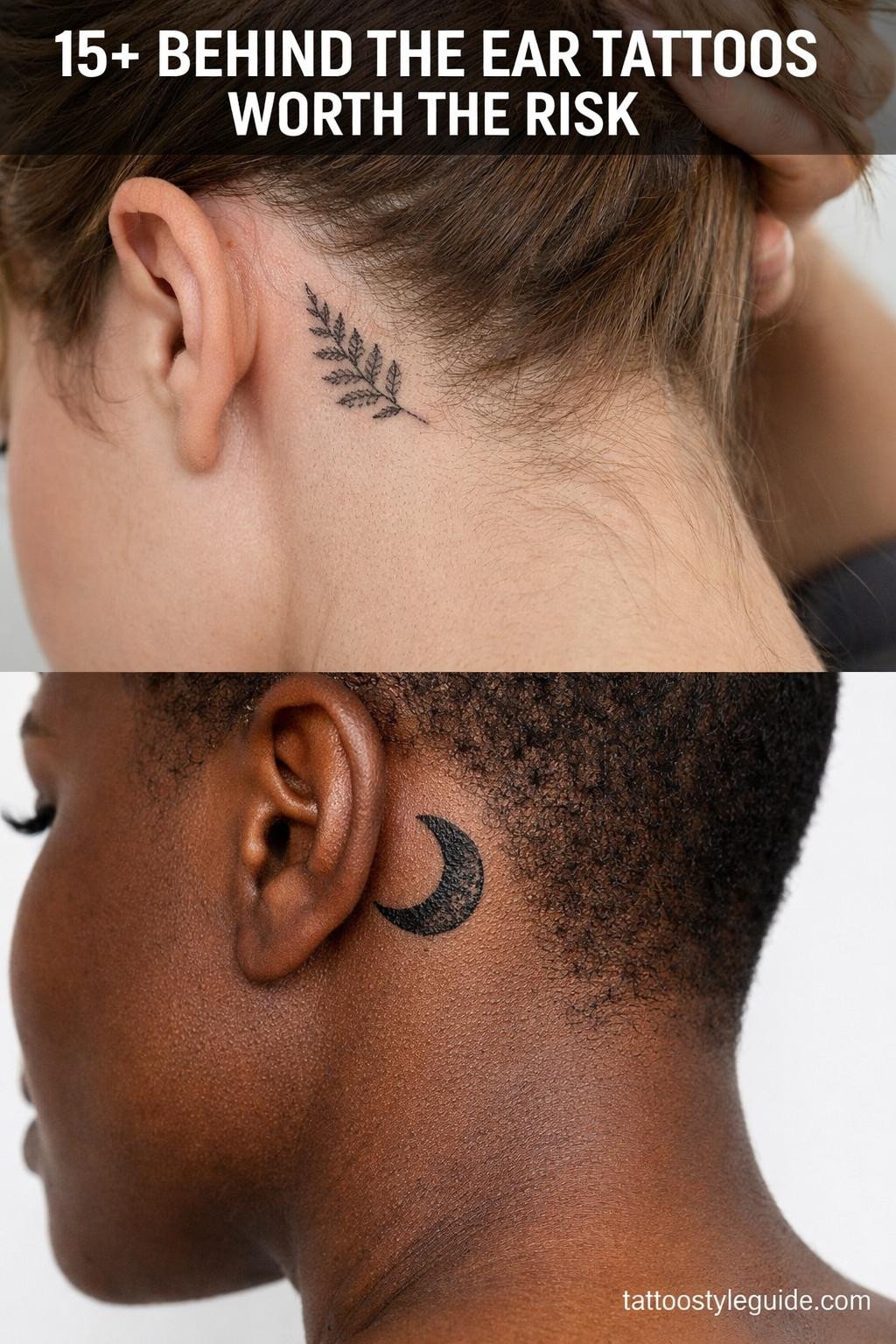
Behind the ear tattoo ideas fail most often for one reason: artists underestimate how quickly the skin there moves during healing. The cartilage ridge, the hairline proximity, the constant fold pressure. Designs that survive all of that share one trait: restraint in scale and line weight.
Fine line work below 1RL in this zone is a gamble. The skin is thin, the surface is irregular, and touch-ups are harder to execute cleanly than the original session. Bold enough to heal, small enough to fit. That’s the spec.
Geometric Dotwork Behind the Ear: Density That Survives the Fold
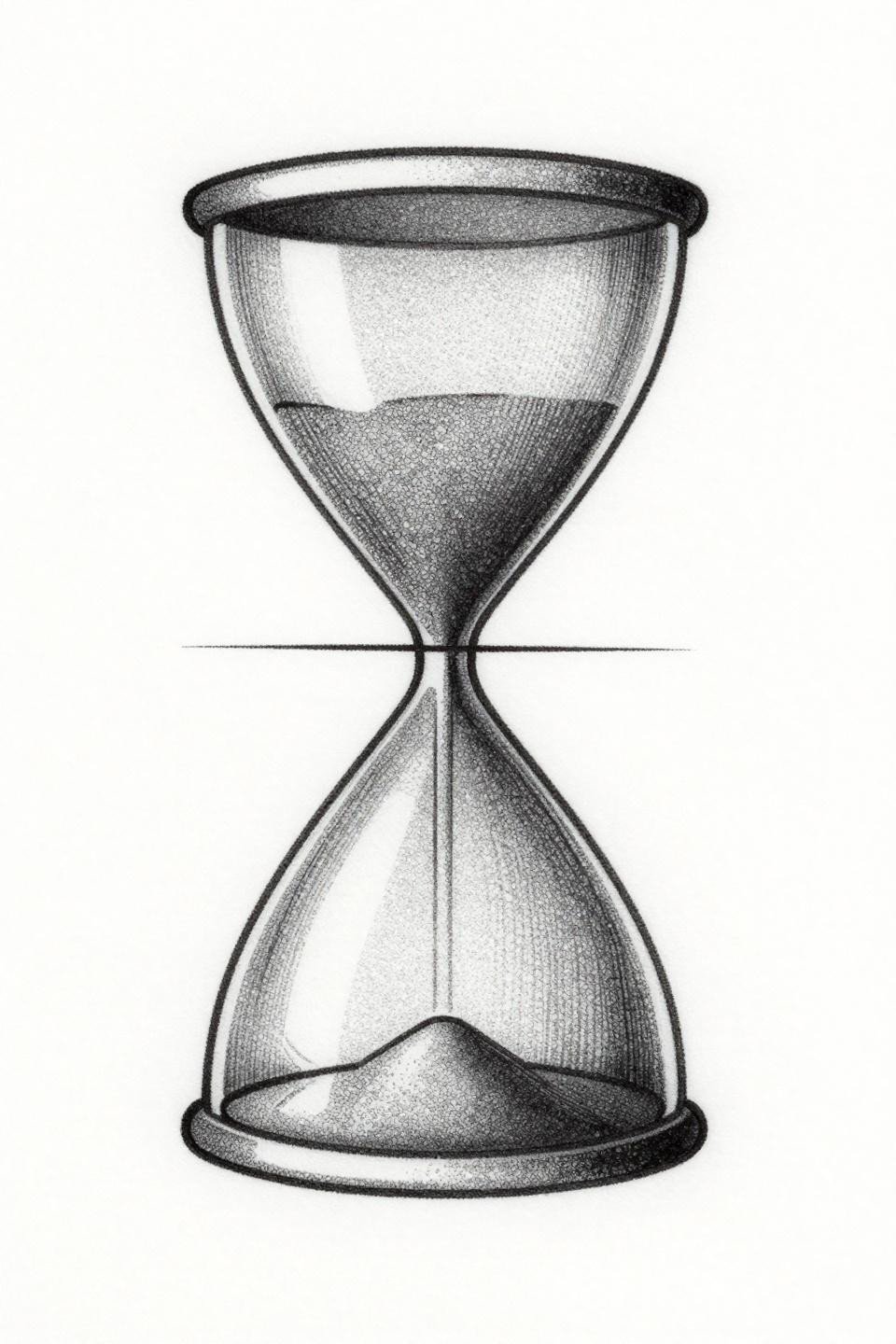
A blackwork hourglass in crosshatch engraving linework works behind the ear because the geometric symmetry reads clearly even at 2cm scale, and the hatching fills hold contrast without relying on delicate gradients.
Dotwork and crosshatch at this density age well in protected placements. The hatched chambers retain legibility at year five if the artist saturates each pass fully instead of rushing a single light layer.
Back Of Ear Compass: When Center Placement Actually Pays Off
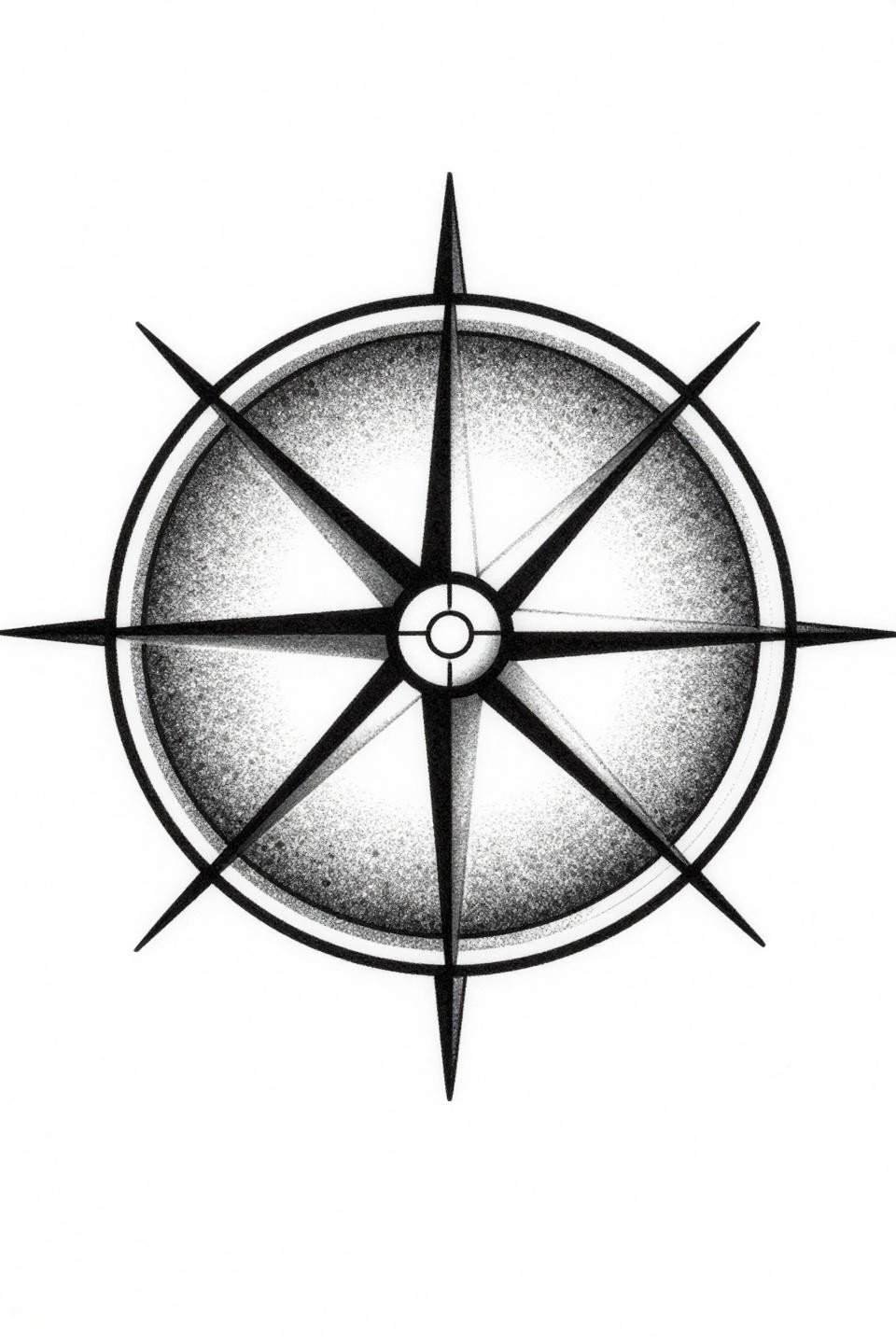
This compass rose uses a stipple dot gradient that runs from dense black at center to open negative space at the outer ring, a structure that maps well onto the rounded surface behind the ear without crowding the hairline.
On olive and darker skin tones, this level of dot density needs tighter center packing to maintain contrast as the skin heals. Check the artist’s healed portfolio specifically for dotwork at this scale before committing.
Skeleton Key on the Neck: Scale Is the Only Decision That Matters
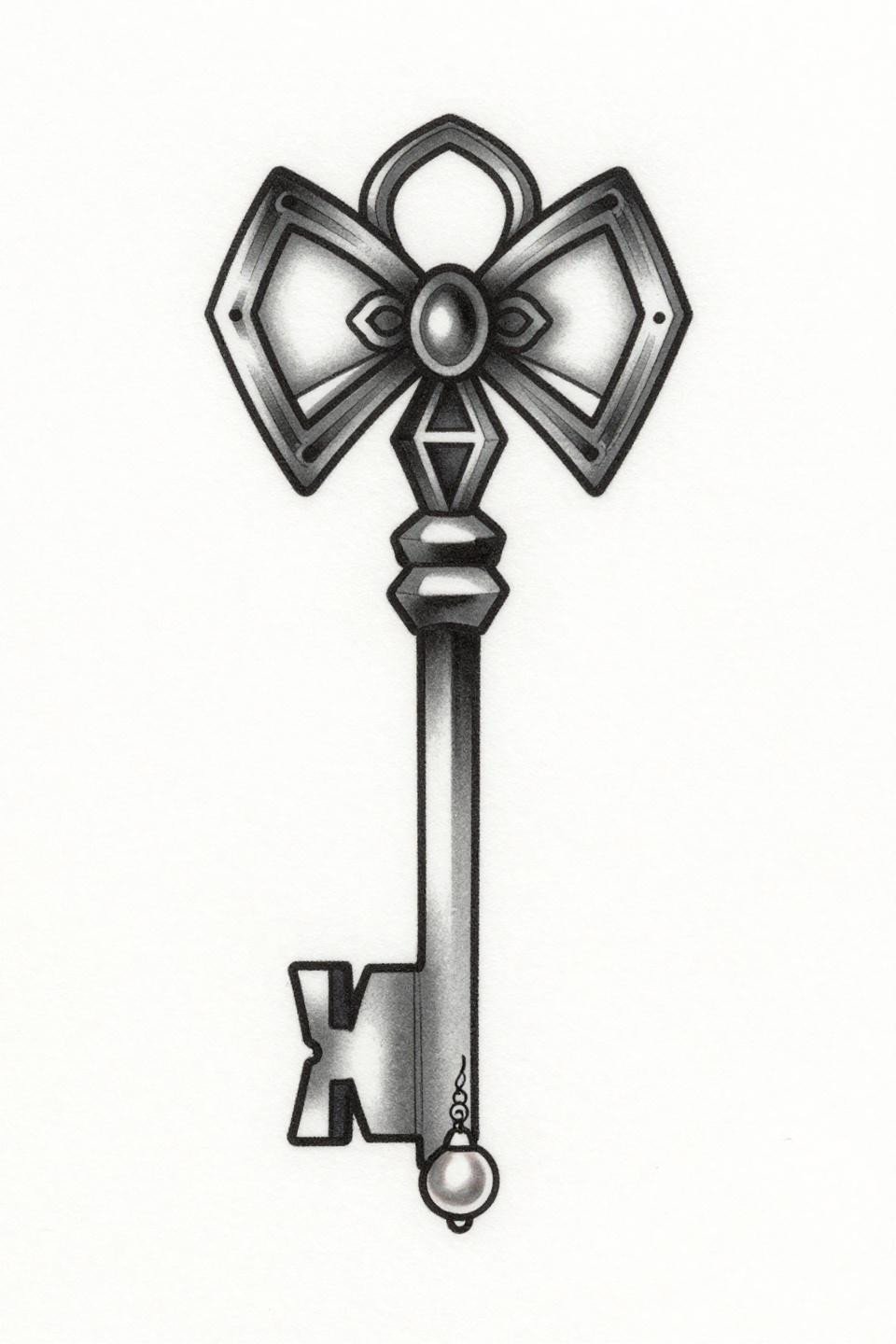
This art deco skeleton key with a suspended teardrop chain is designed for vertical placement along the neck, where the narrow shaft aligns naturally with the body’s axis and the bold 2-3pt outline weight guarantees decade-long legibility.
The chain detail is the fragility point here. Single-needle hairline chain links on neck skin fade within two to three years. Ask your artist to bump that detail to at least a 1RL weight.
Scattered Stars: Why Negative Space Is Doing All the Work
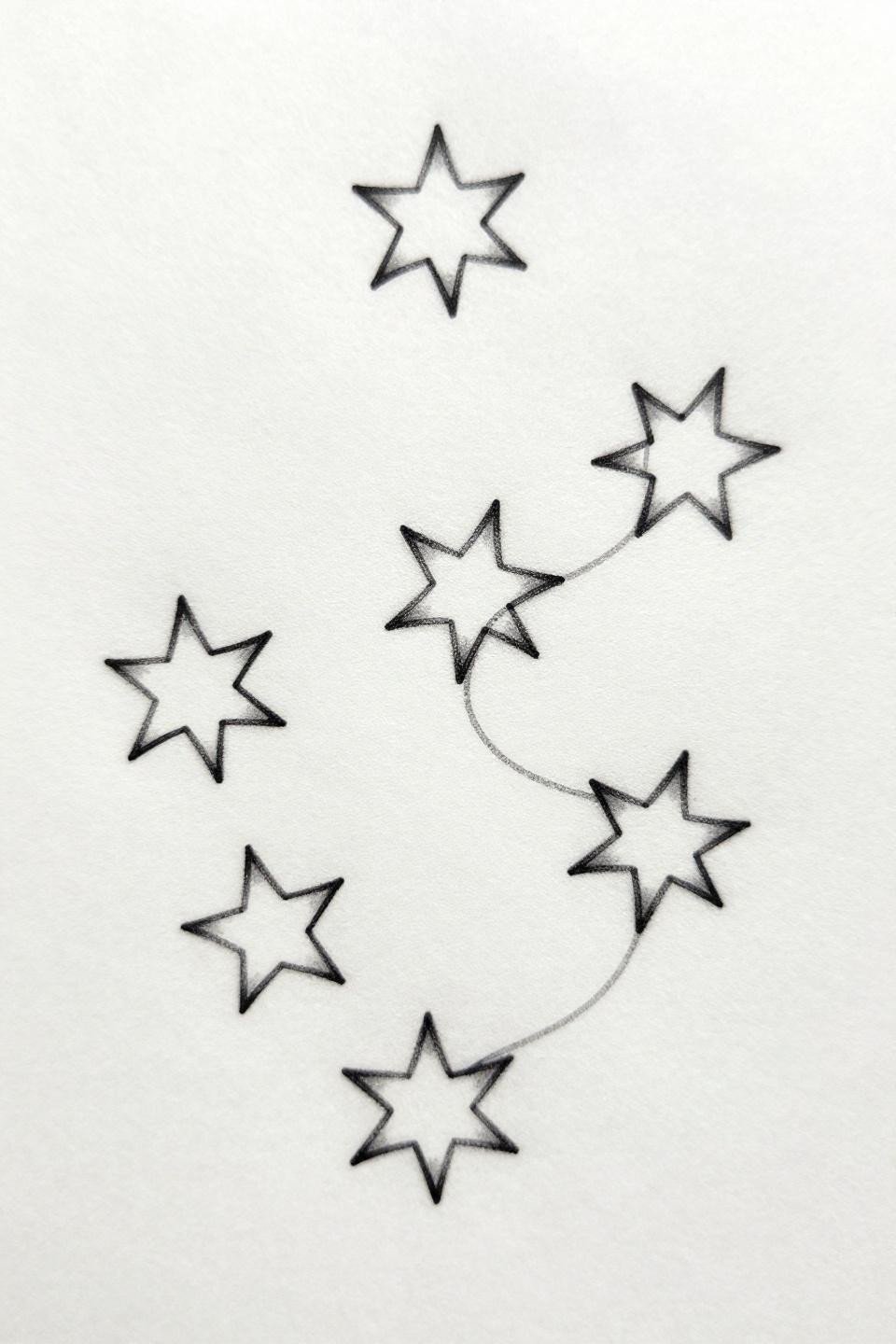
Five asymmetrically scattered stars connected by hairline thread strokes: this is a design built entirely on negative space dominance, where the ink occupies maybe 15% of the total composition area.
Single-needle 1RL work at this weight needs an artist who controls machine speed precisely. Behind the ear, where skin tension shifts constantly during the session, uneven speed produces wobble that reads immediately in this style.
Tribal Triangle at the Ear: Bold Geometry That Ages Without Help
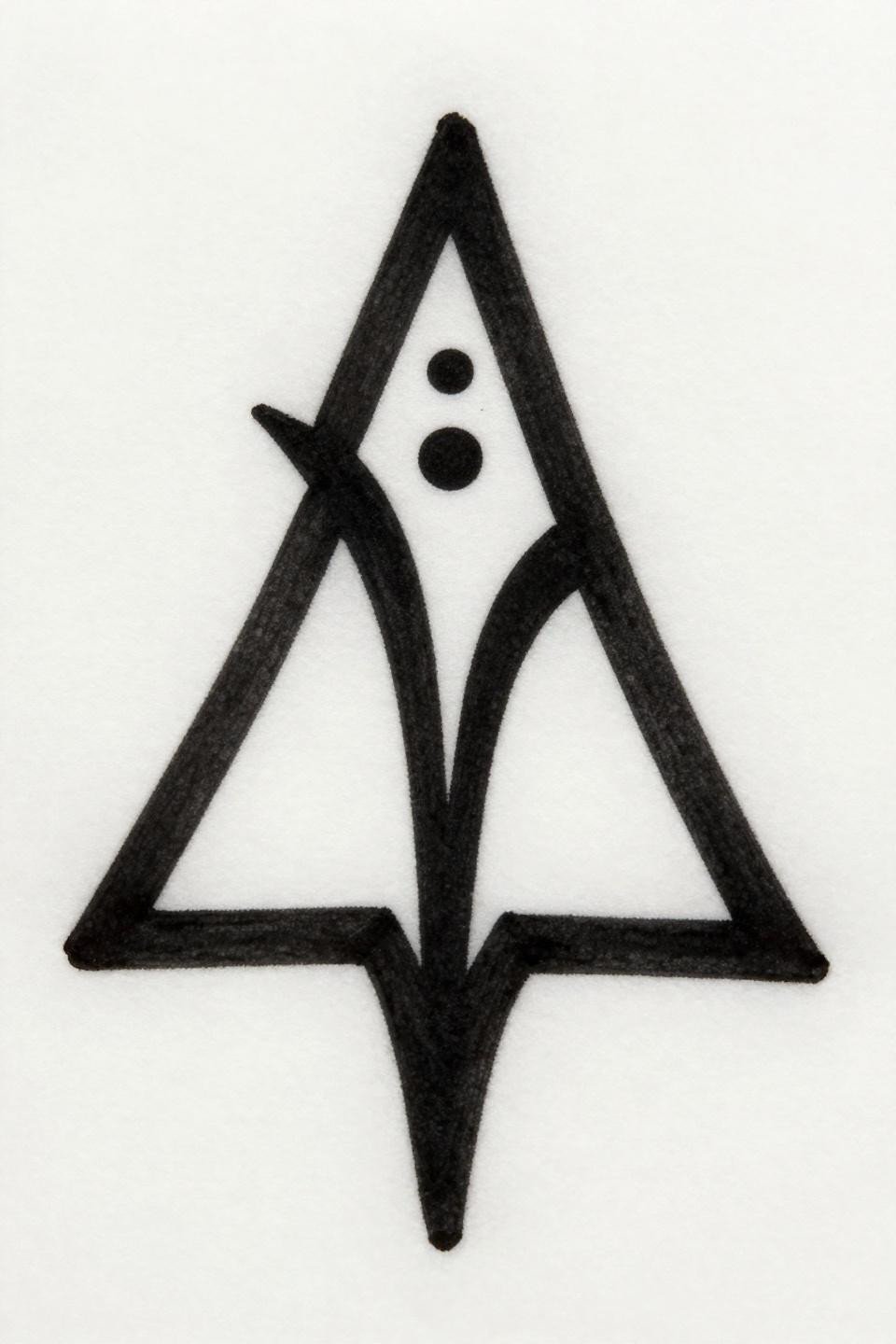
A filled equilateral triangle with a bisecting vertical line and apex dot cluster: this is the lowest-risk geometric option for the side-of-ear placement because flat black fills require no gradient precision and zero maintenance after healing.
Blackwork at full saturation holds density indefinitely when the artist commits to layered passes. The flat fill here should take two minimum, not one rushed session pass.
Moon and Star Behind the Ear: Organic Edges on an Irregular Surface
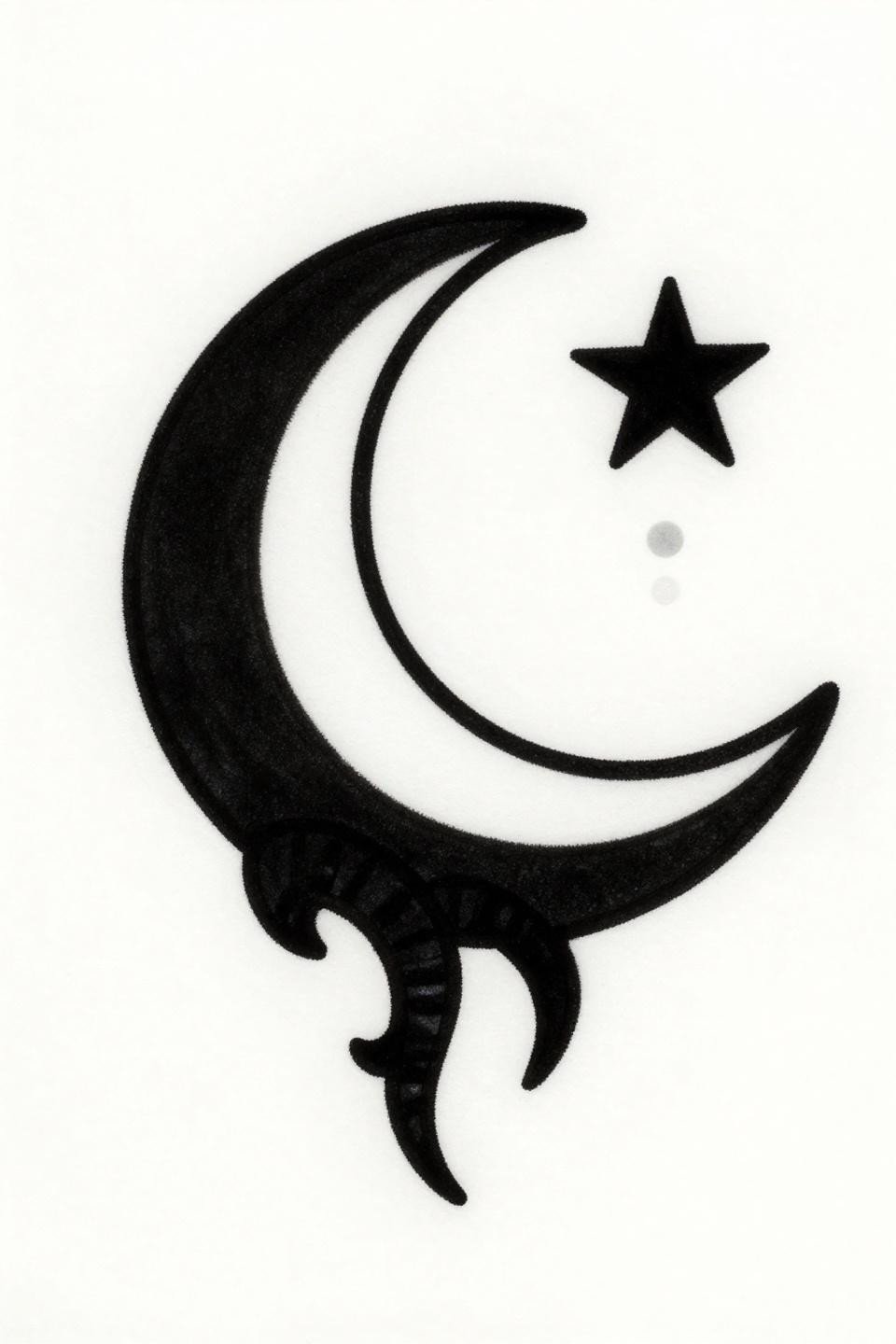
This crescent moon with a positioned star accent uses art nouveau flowing outlines at 2-3pt weight, a style that suits women’s behind-ear placement because the curved forms echo the cartilage ridge rather than fighting its geometry.
The hollow moon interior is smart design for this zone. Solid black fills behind the ear can spread slightly at the edges during healing, so negative space in the center gives the outline room to settle without the design reading as blobbed.
Fine Line Dragonfly in Profile: The Case for Side Orientation
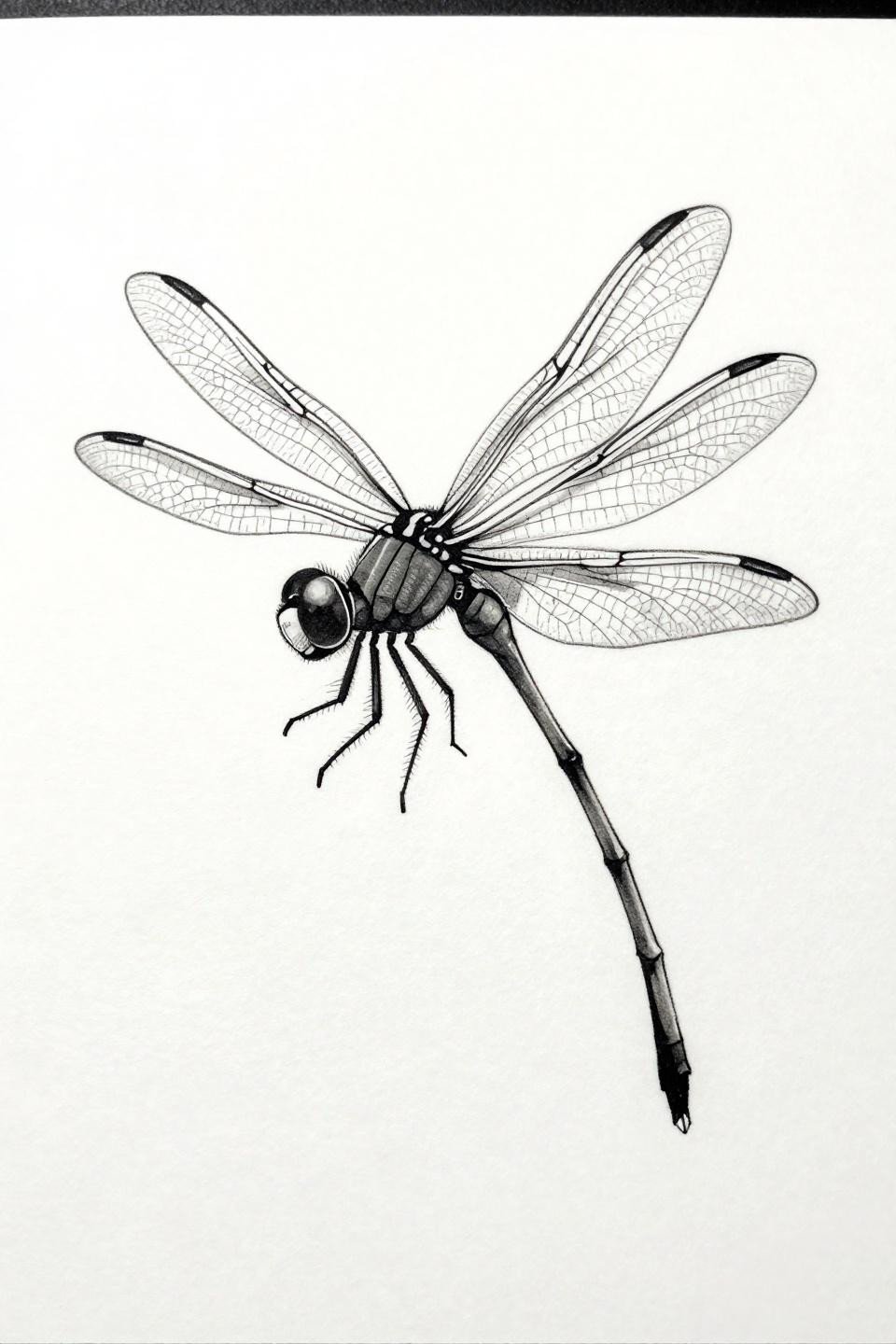
A side-profile dragonfly with one raised wing and hairline vein detail rendered in parallel strokes: this orientation places the elongated body vertically, which maps directly onto the natural drop from the ear base to the neck.
Fine line transparency effects on wing veining are the first detail to soften on this skin zone. Protected placement behind the ear extends shelf life compared to wrist or finger, but expect the finest parallel strokes to blur slightly by year four.
Botanical Vine on the Back of Ear: Diagonal Flow on a Tight Canvas
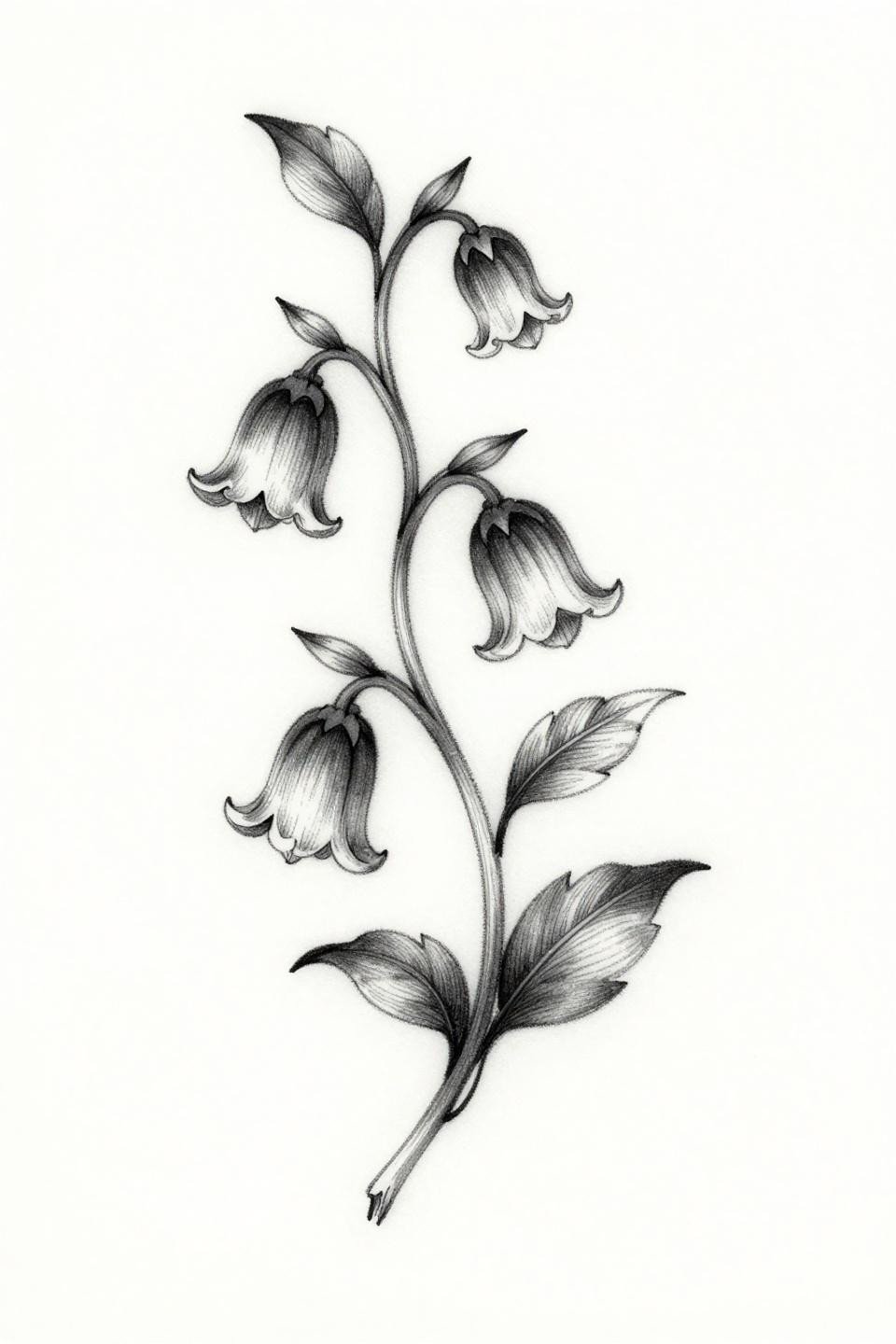
This botanical vine uses a diagonal drift across the composition, three bell flowers with paired leaves on a tapered stem, executed in botanical scientific linework with deliberate weight variation from thick stem base to hairline petal edges.
The asymmetric flow gives the artist flexibility to wrap the design naturally around the ear curve without forcing symmetry on a surface that doesn’t offer it. This is one of the more artist-dependent designs in this collection: ask to see their botanical healed work.
Geometric Feather in Diamond Frame: Etching Logic Applied to Ear Scale
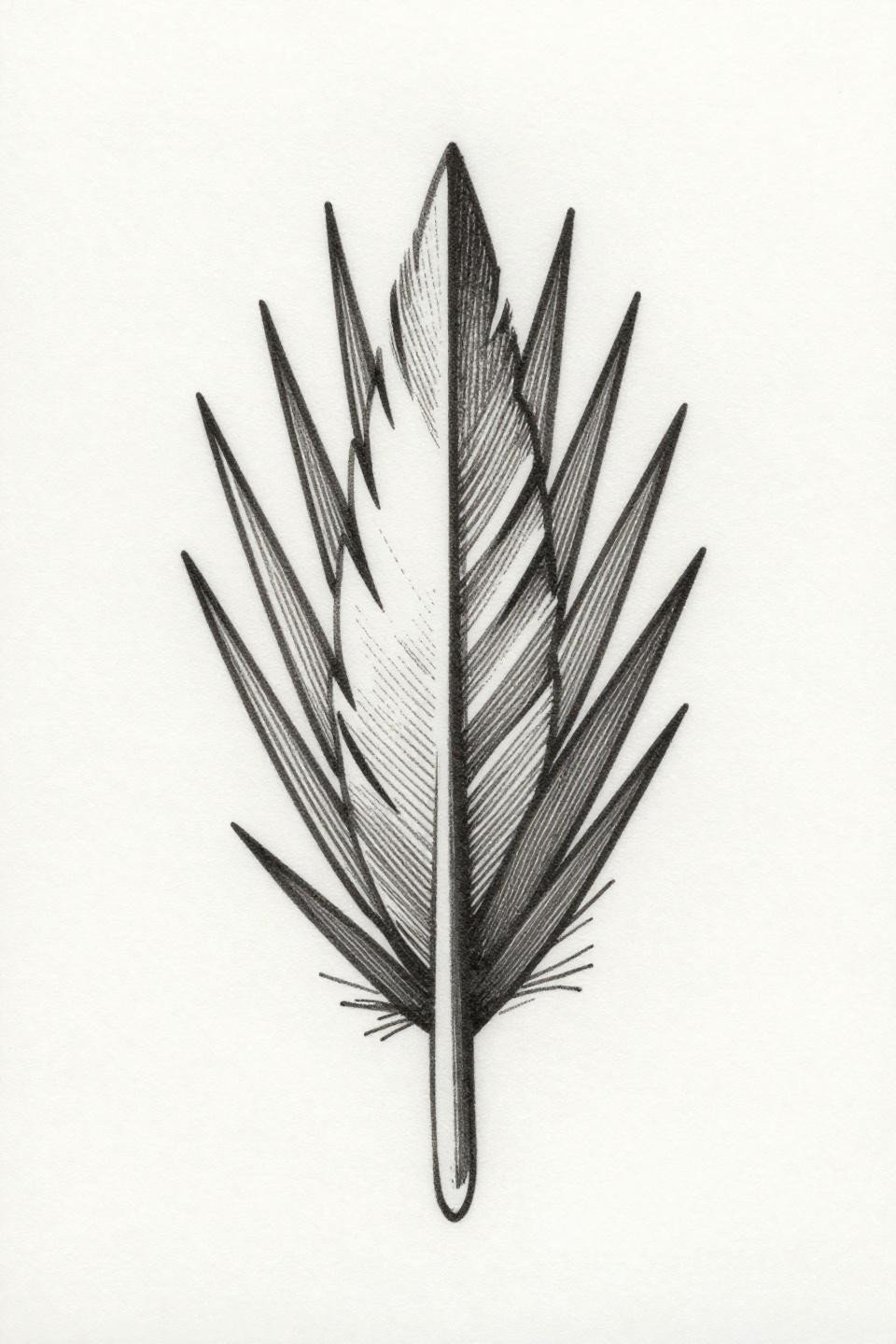
A feather reduced to its geometric logic: vertical shaft, alternating angled barbs at 45 degrees, carved space between parallel crosshatch lines in an etching style that reads as texture without requiring precise gradient blending.
Inner ear placement is the hardest zone in this category to execute and the hardest to photograph healed, which means most portfolio shots you’ll see are fresh. The diamond frame composition here is smart because hard edges heal more cleanly than organic outlines on folded skin.
Neo-Traditional Dragonfly on the Side Neck: When Bold Outlines Justify the Placement
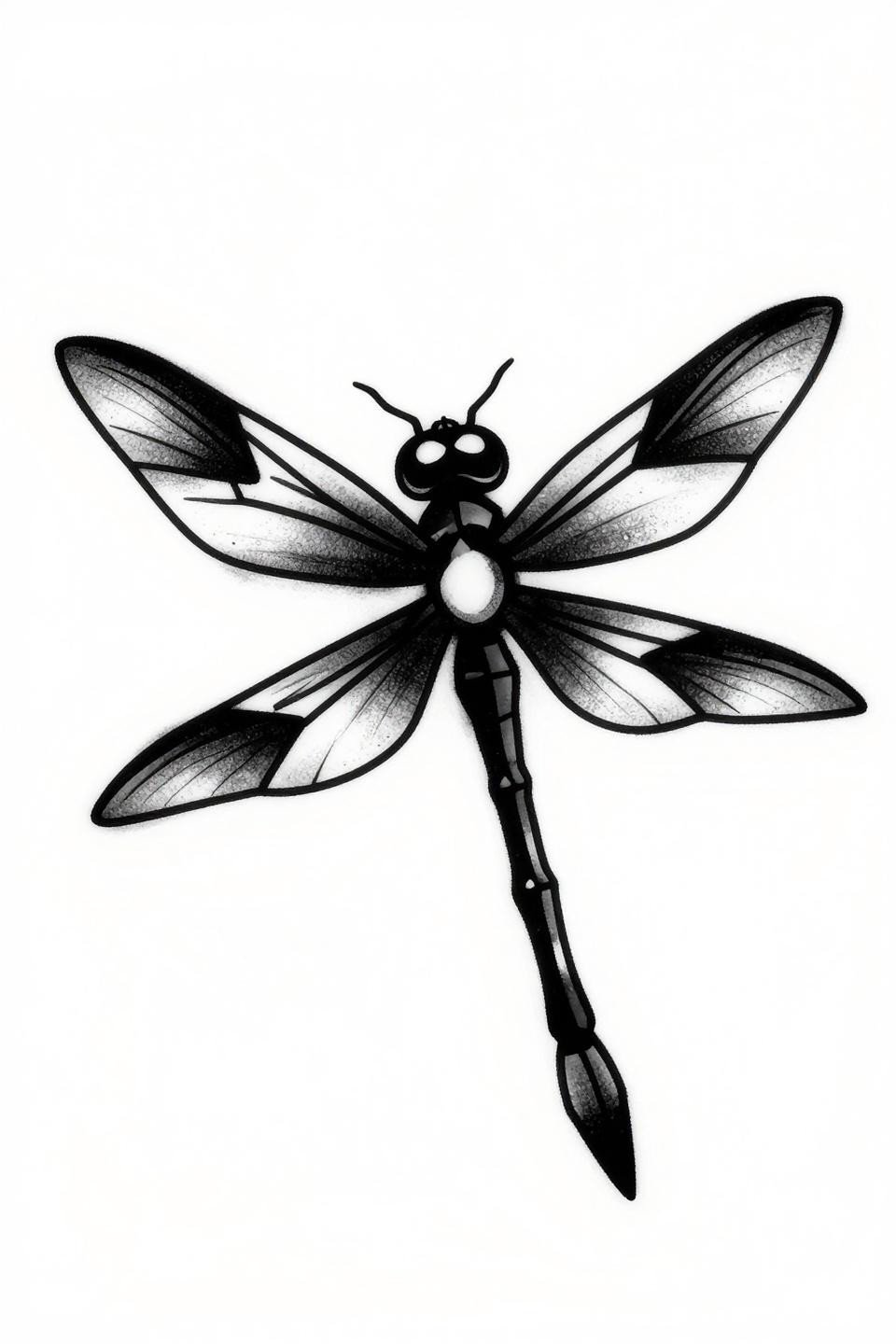
This neo-traditional dragonfly viewed from above uses four angular geometric wing planes and a bold filled compound eye, a design built for side neck placement where high contrast and thick outlines compensate for the visibility challenges of darker or sun-exposed skin.
Side neck skin moves constantly with head rotation, making it one of the harsher healing environments in this placement family. The 2-3pt outline weight here is not decorative: it’s the minimum spec that holds legibility on a surface with that much mechanical stress.
Single-Line Crescent Moon: Continuous Stroke as Skill Signal
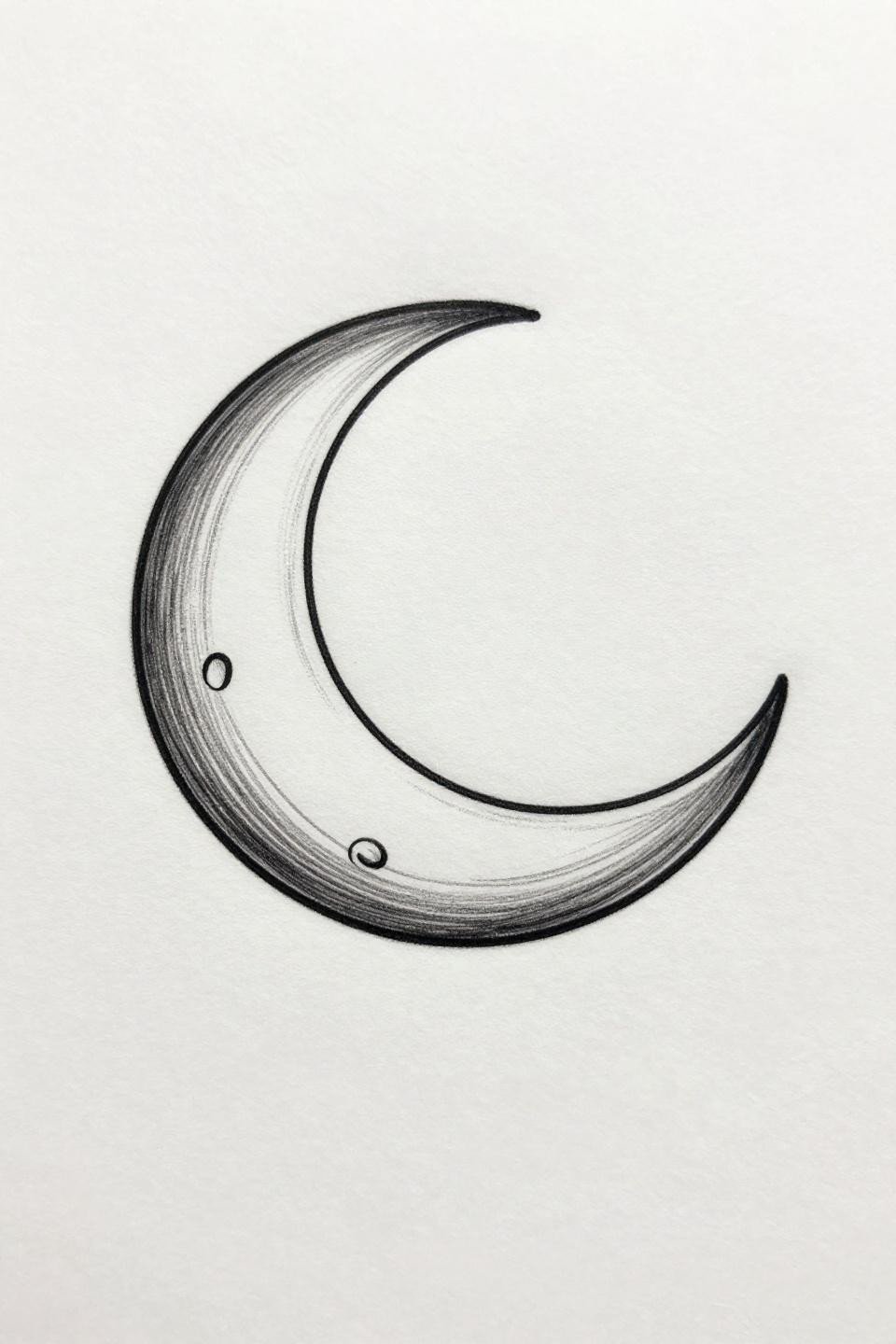
A crescent moon formed from one unbroken continuous line, enclosed in a delicate orbit ring: the single continuous line technique is one of the clearest skill signals in fine line work because any speed inconsistency or hand tremor breaks the stroke’s visual integrity immediately.
Finger placement for this style is aggressive. The friction, sun exposure, and constant flexing will soften the hairline strokes within two years. If you want this design for fingers specifically, expect a touch-up cycle and size it up slightly from what’s shown here.
Save three to five of these references, not the whole set. Narrow by placement first: behind the ear, side neck, and inner ear each require different line weight minimums from your artist. Bring the shortlist to your consultation and ask specifically about their healed work at this scale.