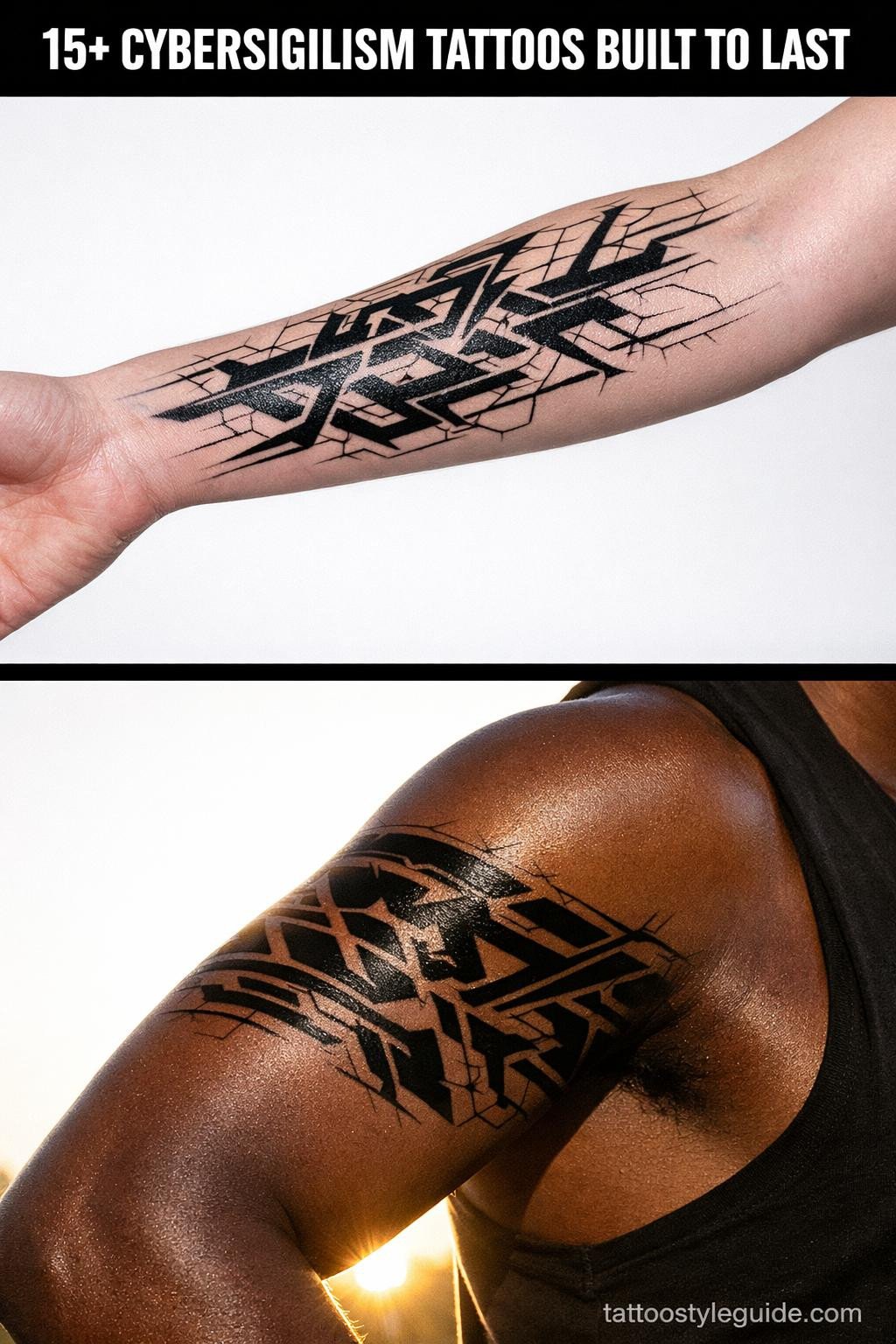
Cybersigilism tattoos fail when artists treat the negative space as leftover white paper instead of the actual design. The void is load-bearing. Every carved interior, every open terminal, every white gap between hard black lines is a deliberate structural decision, not an absence.
Most collectors picking this style underestimate how much execution weight falls on line consistency. A 0.5mm hairline that wavers even slightly reads as amateur at this scale. The style has near-zero tolerance for wobble.
When the Continuous Line Is the Whole Composition
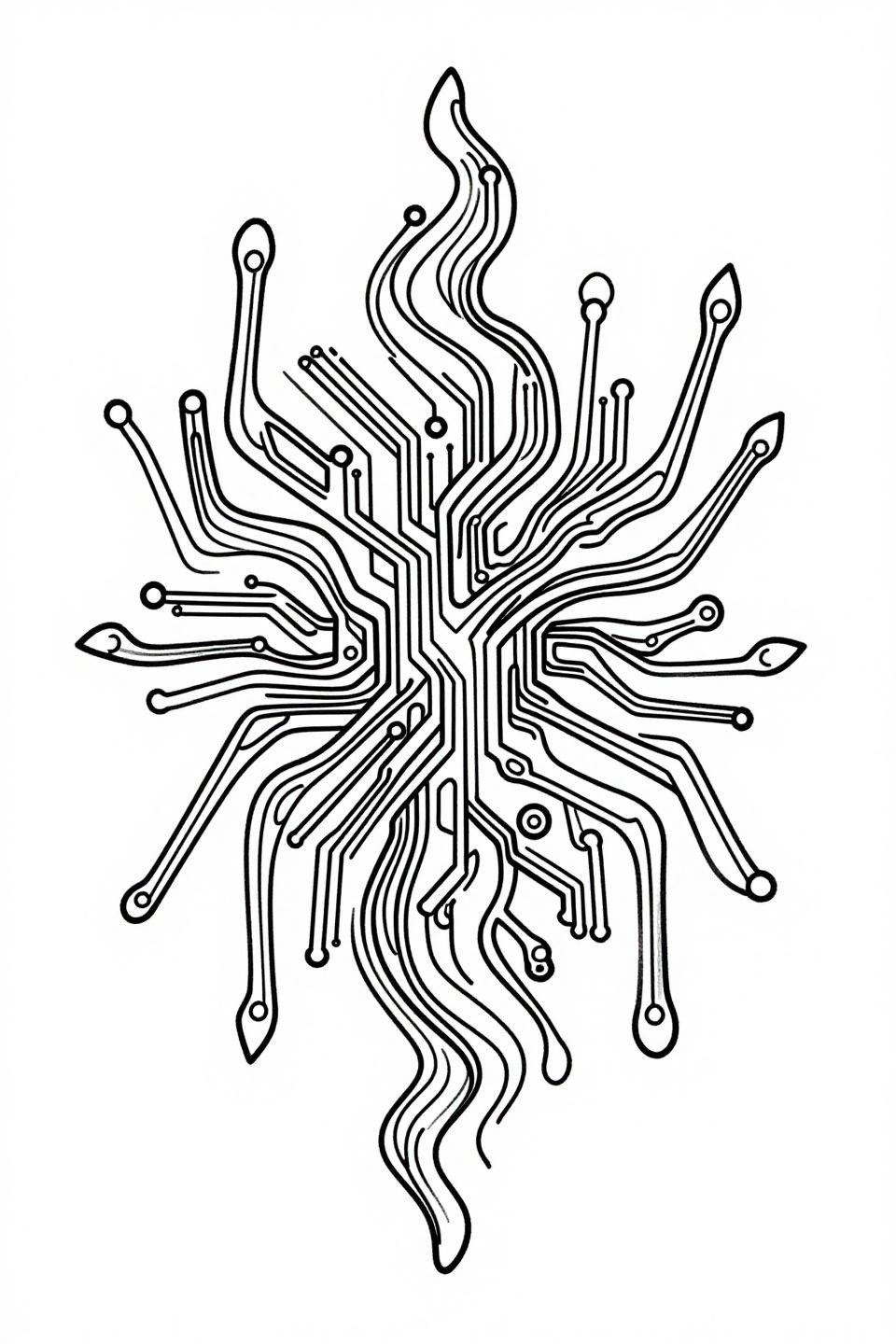
A single unbroken hairline traces 4 to 5 recursive revolutions outward, with arms tapering asymmetrically to void terminals and all interior geometry defined entirely by negative space, no fills at all.
Single needle 1RL work at this weight requires an artist who controls speed precisely. Any hesitation registers as a thickness variation that breaks the continuous-line illusion the whole design depends on.
Blackwork Sacred Geometry Built to Hold a Decade

A corrupted circuit-board core sits in dense flat black, with three tribal void-carved terminals radiating at non-uniform angles, each tapering to a hard spear point defined only by its black boundary.
Bold 2 to 3pt outlines at this weight are the longevity signal here. Blackwork at full saturation with zero gradient holds density indefinitely when the artist commits to layered passes through each fill zone.
Tribal Arms That Feed the Sigil Instead of Framing It
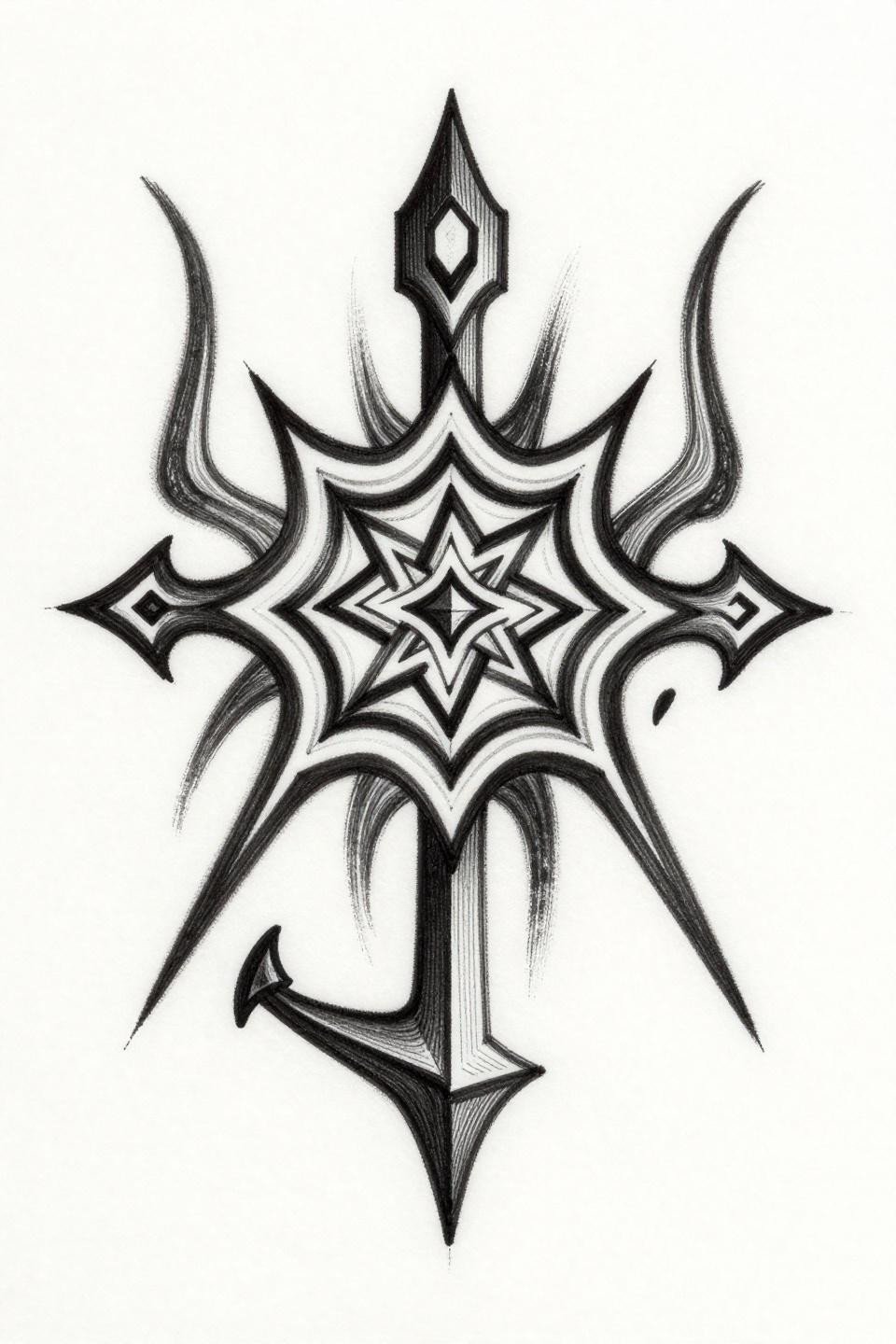
Hard angular sigil geometry anchors the center while variable-weight organic tribal extensions wrap and feed into it rather than radiating outward, reversing the typical neotribal compositional logic.
The transition point where brush-stroke tribal weight meets the hard-edge geometric anchor is where artist skill shows. Flat fills with no patchiness at that merge line separate veterans from beginners.
Botanical Geometry: Nature Consuming the Circuit

Crystalline sigil geometry with hard rune terminals at the core, vine networks and root fragments threading through the carved voids, organic forms consuming the digital structure from the outside in.
This composition scales down well for wrist or forearm placement. On olive and darker skin tones, the botanical fine lines need sufficient weight to maintain contrast as the ink settles over the first year.
Dotwork Density as Structural Gradient, Not Decoration
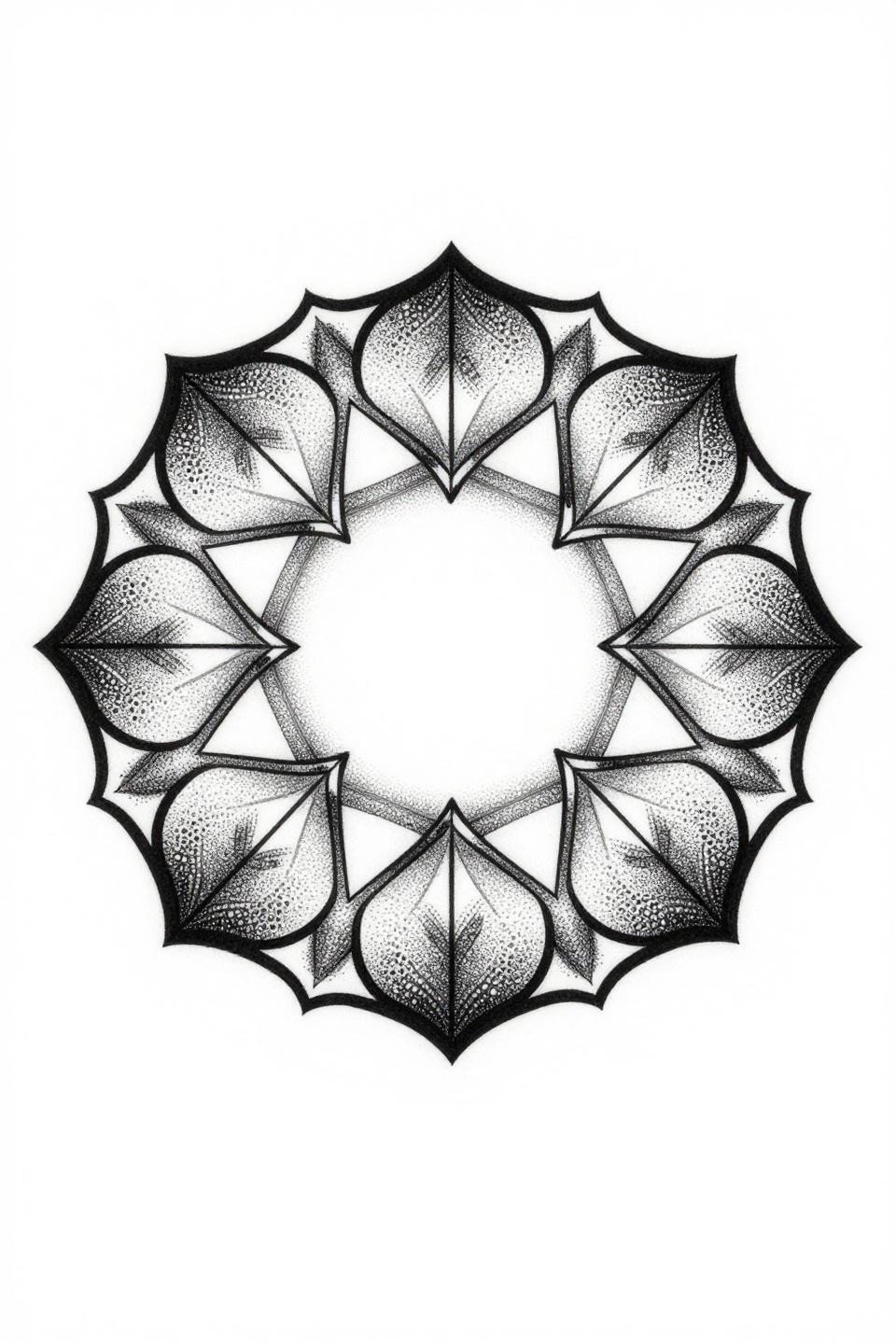
An 8-point radially symmetric mandala built on crystal-facet geometry, with stipple dot density running from open void at center out to 95 percent saturation at petal tips.
Look for consistent dot size across the full gradient. Uneven dot sizing in the mid-ring transition zones is the most common technical failure in dotwork mandala execution at this geometric complexity.
The Diamond Format That Solves Placement Problems
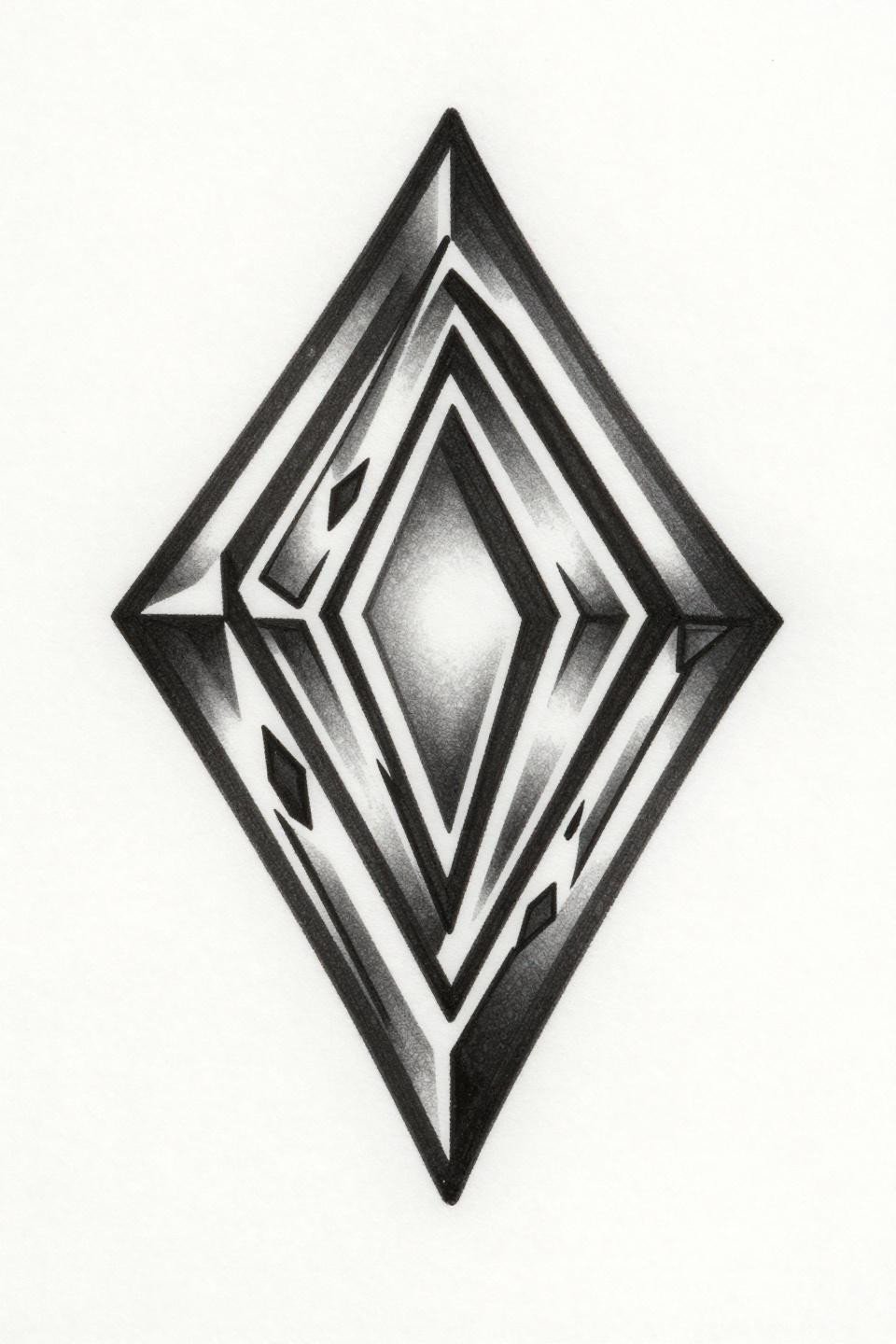
A unified vertical diamond frame compresses all sigil geometry inward, with crystalline void-shards fracturing the interior and angular data-shard terminals at cardinal points, zero curves anywhere in the composition.
The diamond format solves a real placement problem. It maps cleanly onto sternum, spine, and shin placements where the natural body axis aligns with the vertical, and protected placements like sternum give this style its best shelf life.
Fractal Decay at the Spiral Terminals
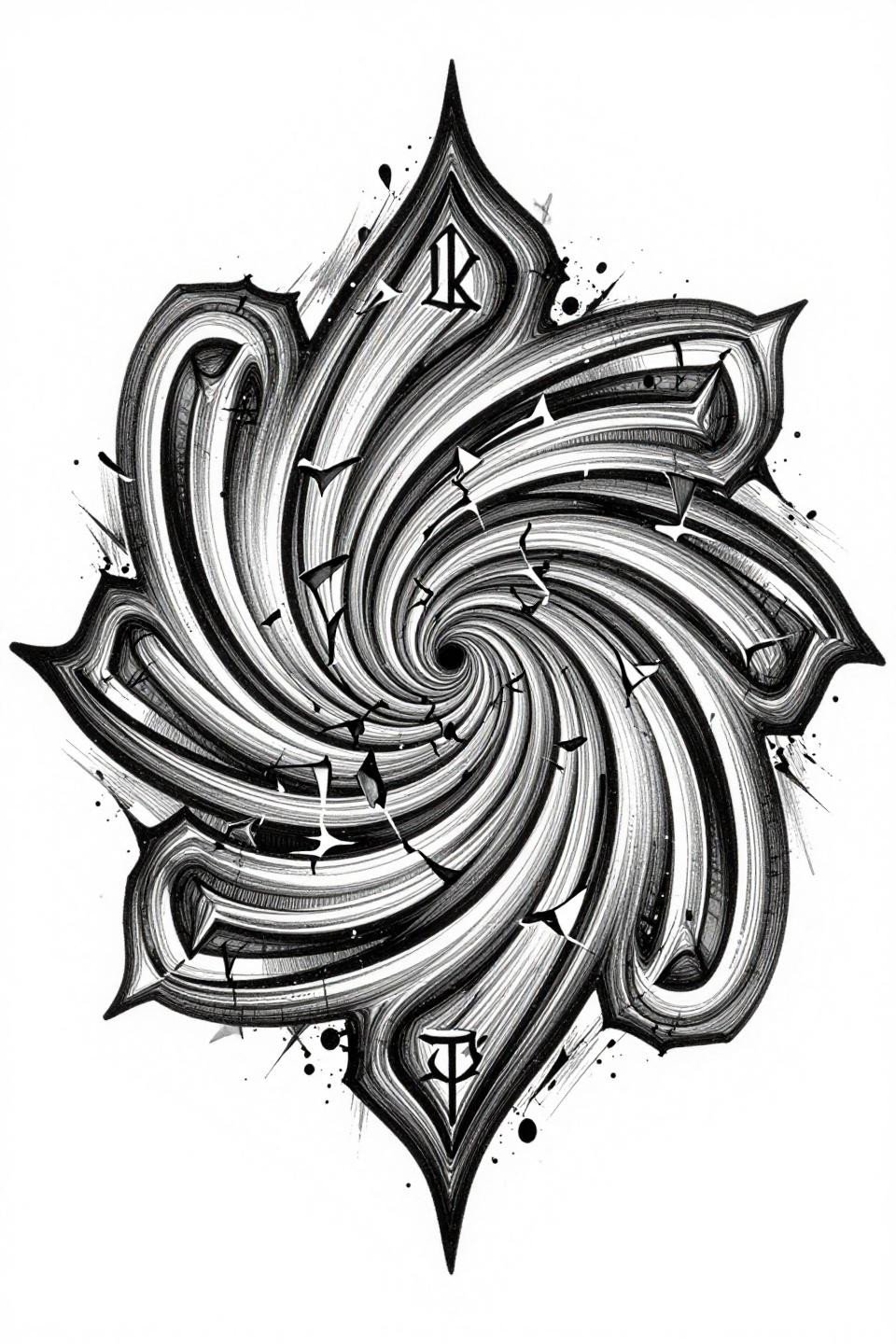
A spiral vortex core with recursive fractal arms decaying outward into glitch-break fragments, progressive parallel-line shading increasing toward the center, and void-carved rune shards at the disintegrating terminals.
Parallel-line shading at this density reads well on all skin tones because it creates value through structure rather than grey wash dilution. Grey wash muddies on olive skin within 3 to 5 years. This approach does not have that problem.
Vertical Spine Architecture With Dotwork Fill Logic
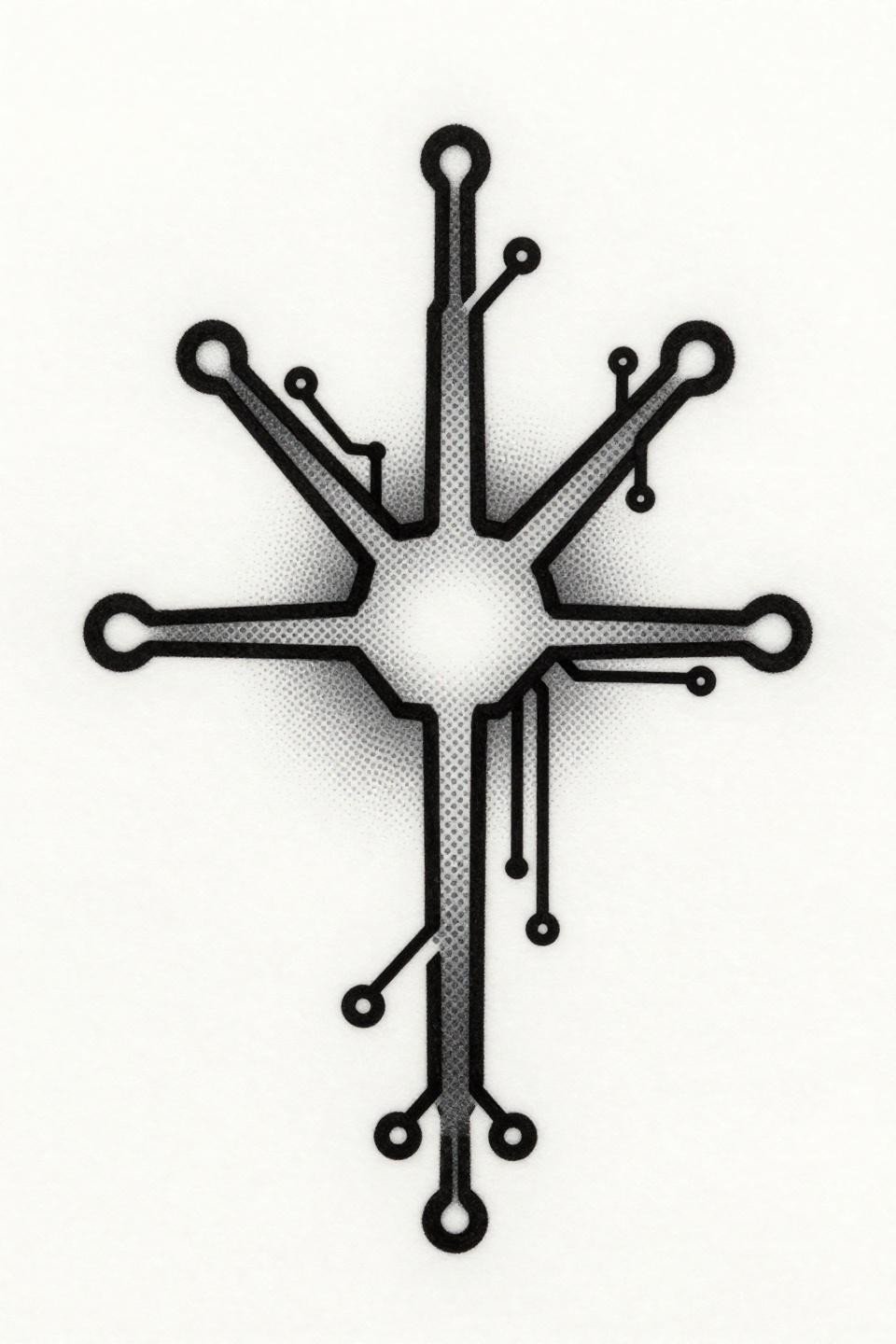
A strong vertical spine with bilateral horizontal data-stream arms, sharp triangular terminals on each side, and a circuit-board void grid filling the interior at 80 percent dotwork density.
The vertical orientation makes this a natural forearm centerline piece or a sternum anchor. Check the artist’s healed work portfolio specifically for dotwork grid interiors at this density, not just fresh shots where the black still looks uniform.
Void Carving Without a Single Outline
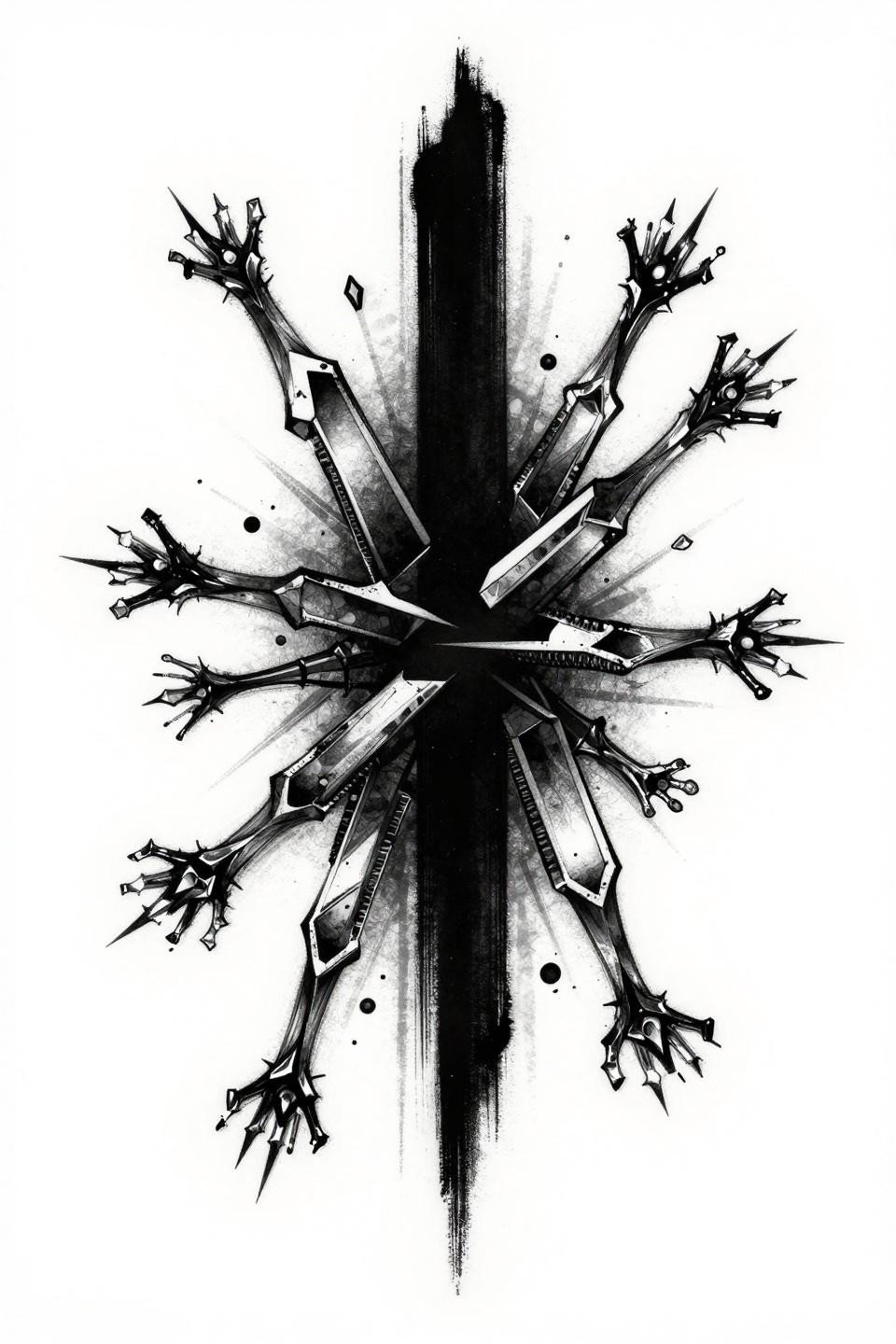
A thick black spine fractured by carved void rectangles suggesting glitch corruption, with crystalline splinter arms radiating at non-uniform angles and the entire interior form defined as white negative space, no outlines used anywhere.
No-outline void carving places extreme demand on ink saturation evenness. Any patchiness in the black field reads immediately as execution failure because there is no linework to soften the edge transitions.
Corrupted Hex Core: Gothic Power Through Tribal Geometry
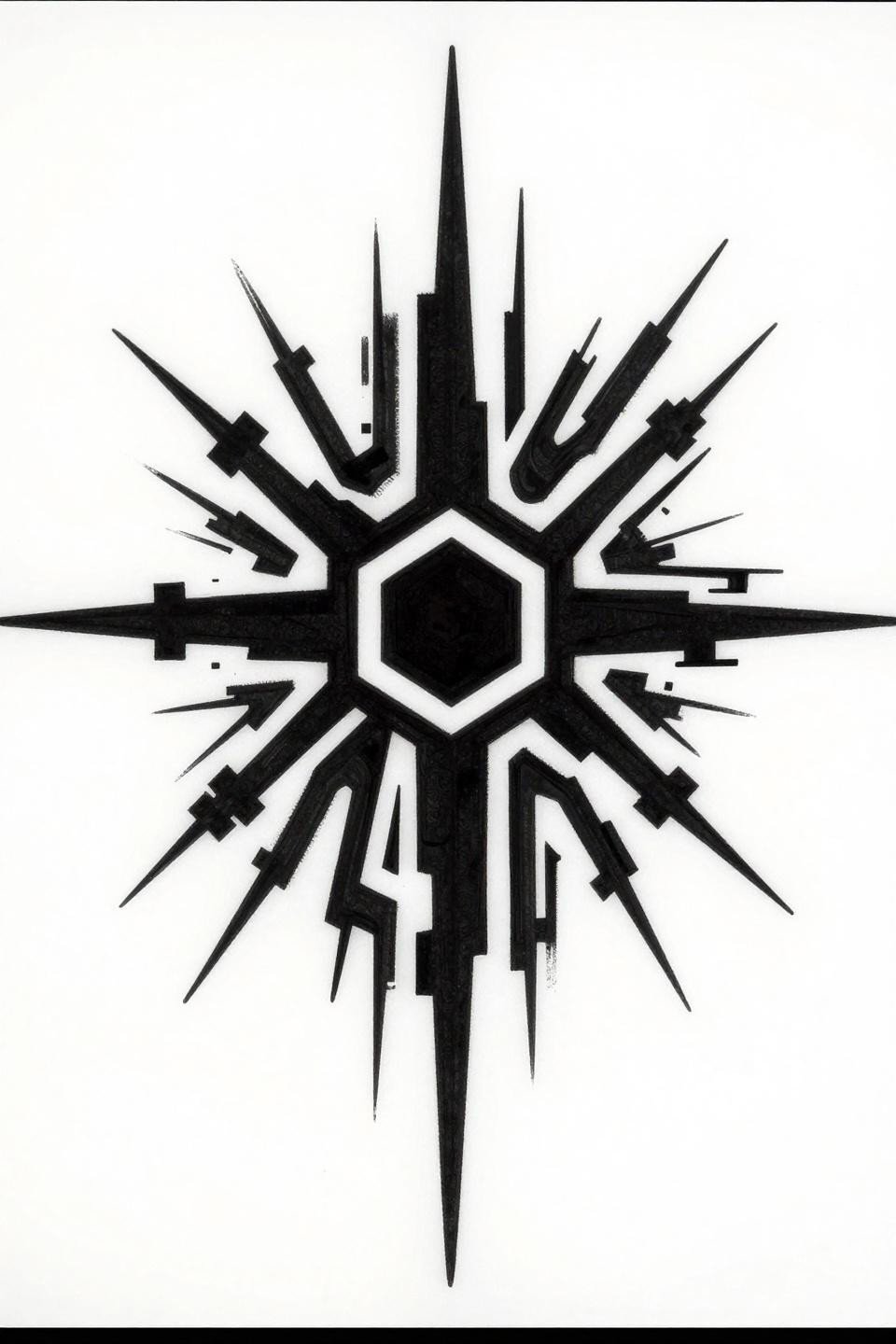
A corrupted hexagonal core with hard angular tribal arms radiating horizontally outward, solid black fills, void-carved negative space between fills, and glitch-break interruptions on the core edges.
The horizontal-dynamic composition maps well onto collar bones, across the upper chest, or wrapping forearm circumference. Bold 2 to 3pt outlines with hard-edge tribal solid fills at this scale age with almost no visual drift.
Negative Space as the Entire Subject
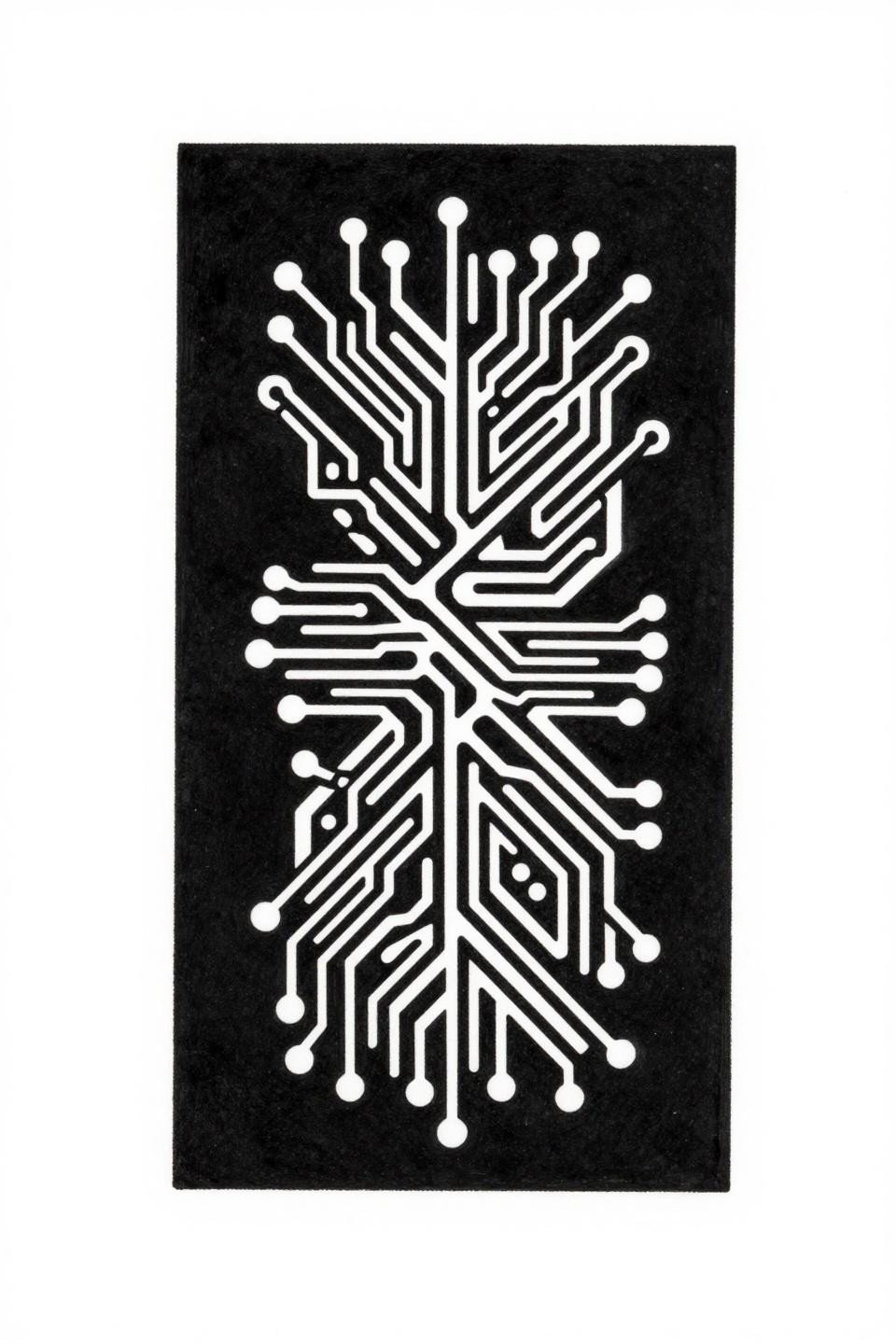
A dense solid black rectangular field with a singular vertical sigil carved entirely from negative space: circuit-board void geometry, angular rune arms, and glitch-decay fractured edges defining the white interior form.
This approach requires an artist who commits to fully saturated black across the entire field, multiple passes without hot spots. Large black fills on dry or mature skin take more passes than on younger skin to reach true density.
Splitting the Sigil: Organic Left, Digital Right
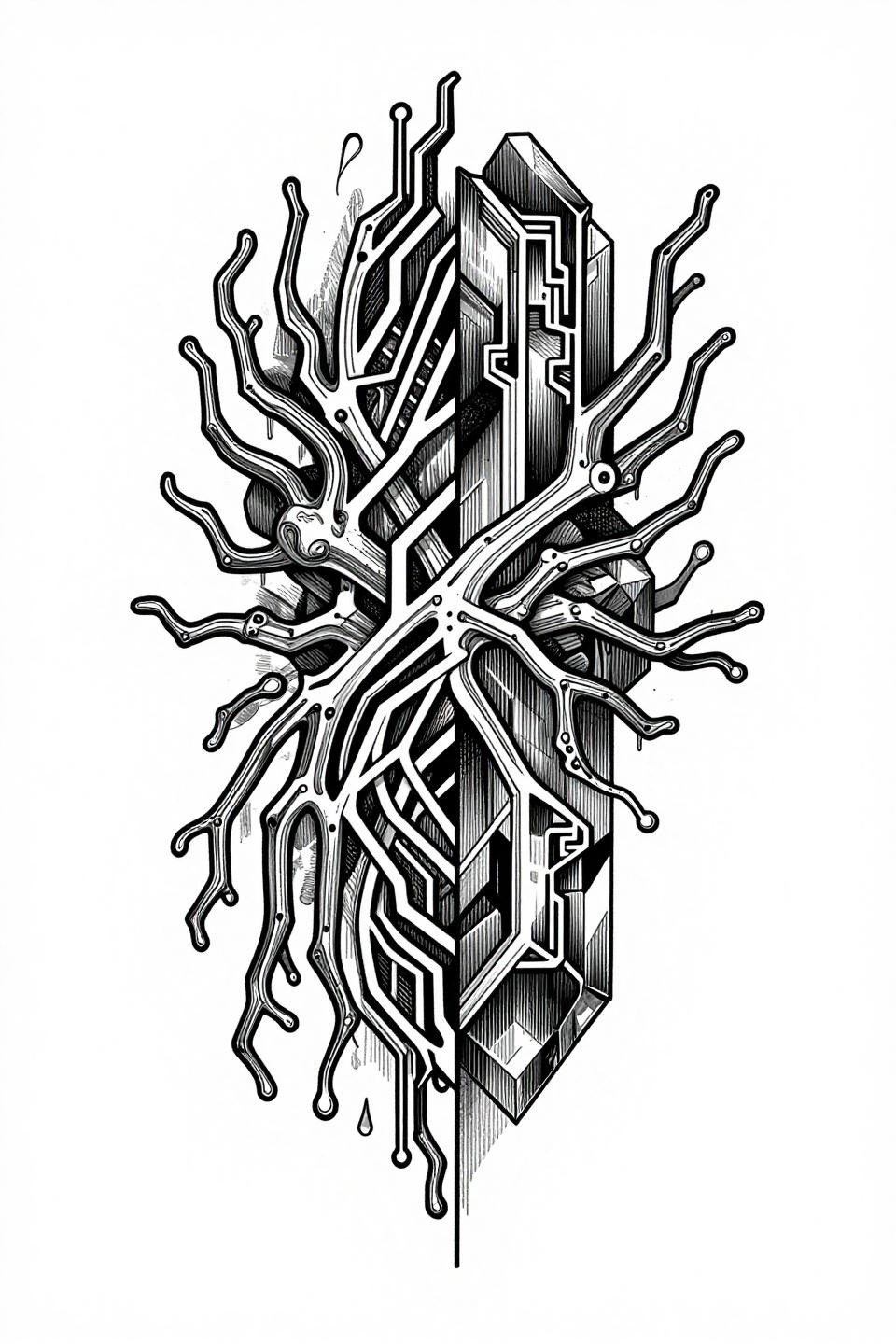
A vertical split-axis design with organic branching nerve-circuit pathways on the left and hard crystalline data-matrix geometry on the right, bio-circuit arms extending outward from both halves like neural branches.
The bilateral asymmetry here is technically demanding. The tell is the central spine: any wobble at that axis reads immediately because both halves compete for visual dominance and the line between them is the fulcrum of the whole piece.
Glitch Fracture as Compositional Logic
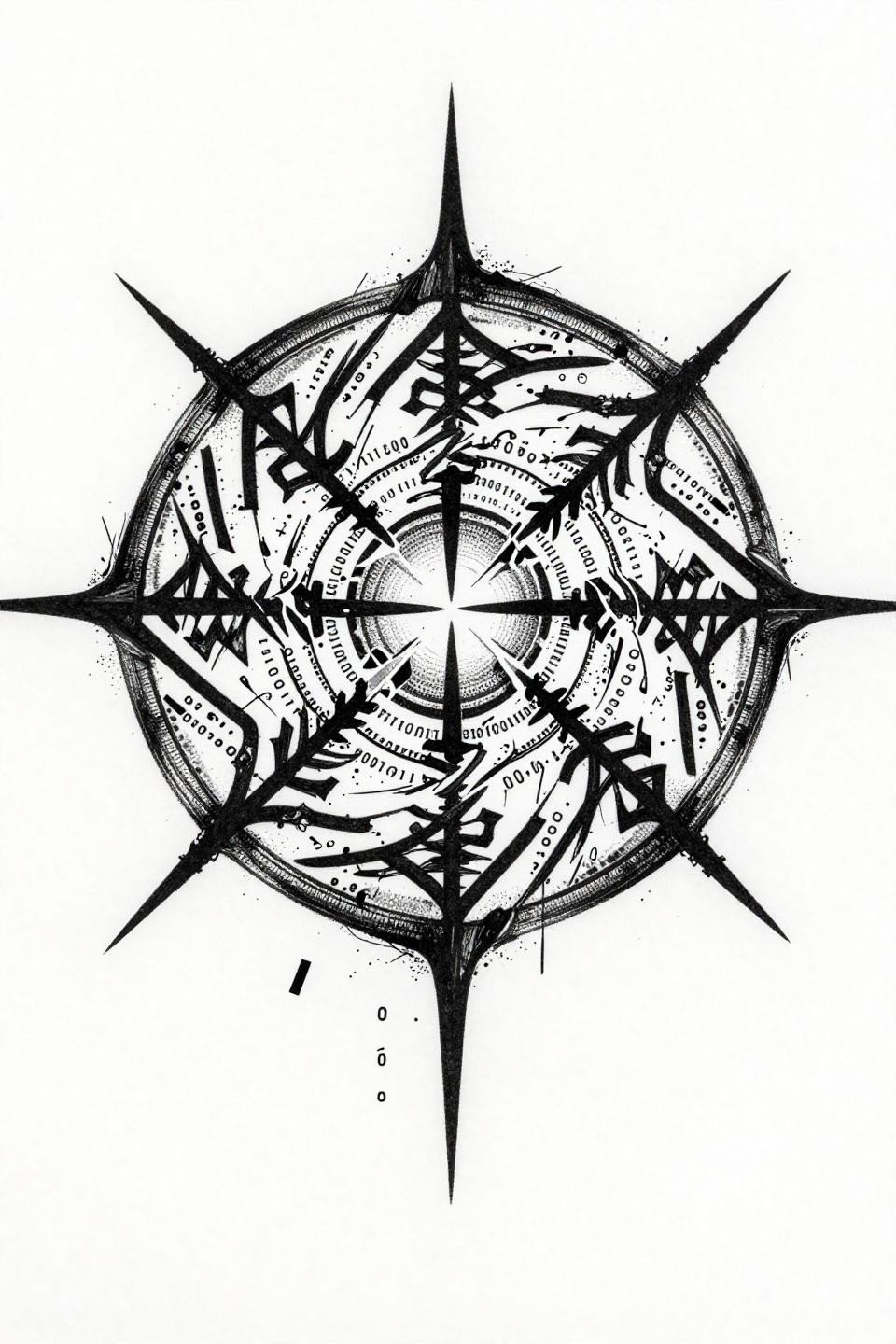
A corrupted binary mandala with deliberately shattered symmetry, broken recursive spiral arms disintegrating into scattered tribal geometry fragments, and stipple void fills in the corrupted core zones.
Shattered symmetry is harder to execute than true symmetry because every intentional break still needs to read as controlled rather than as a mistake. The collector’s eye for this piece will be sharp. Only show this reference to artists whose portfolio already contains intentional asymmetric blackwork.
Concentric Rings With Stipple Gravity at the Core

Recursive nested concentric circles with binary code sequences threading between rings, sacred geometry triangles and a Fibonacci spiral radiating from a central void, stipple density running from maximum at core to open white at the outer ring.
Grey wash dilution at the outer transition zones is used here deliberately, and it is the one zone in this design that will soften over 5 to 8 years. On lighter skin tones the transition reads crisp at first. On olive skin, push the outer ring stipple 10 to 15 percent denser at application to compensate for how the pigment settles.
Pull 3 to 5 of these references based on placement first, style second. A void-carving piece that works on an upper arm reads completely differently jammed onto a wrist. Match the compositional axis of the design to the natural axis of the body part before sending anything to an artist.
Narrow it down before the consultation. Your artist needs a clear direction, not a stack of references that covers every execution approach in the style. Pick the ones where scale, contrast level, and placement logic already align with what you want.