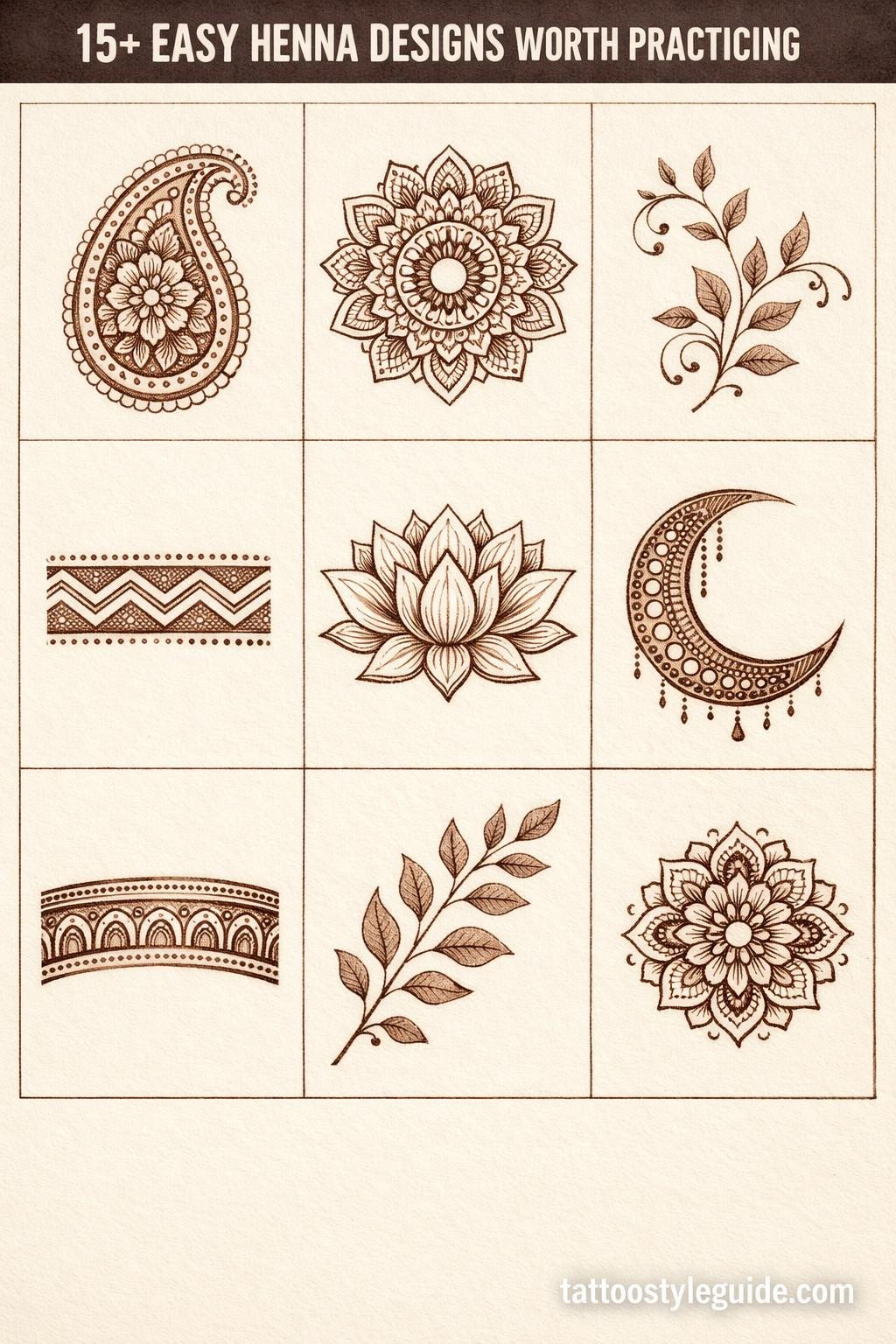
Easy henna designs are harder to execute cleanly than they look. The cone tip requires consistent pressure and a steady drag speed, and any hesitation shows immediately in the line weight. That gap between “simple design” and “clean execution” is exactly why practicing from solid flash references matters.
The designs below are organized by technical demand, not aesthetic category. Use them as practice templates before committing to skin.
The Paisley That Teaches You Flow Control
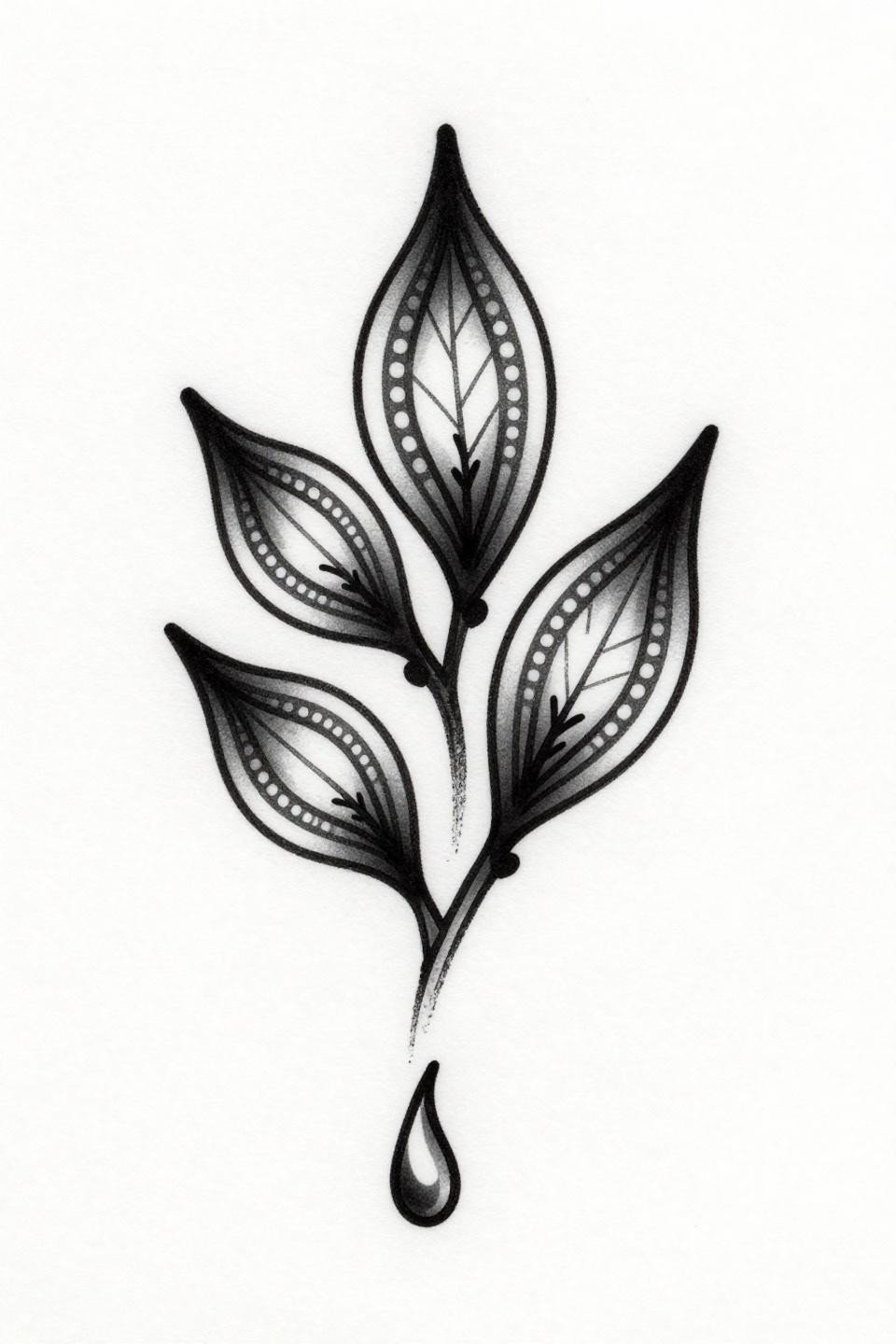
A neo-traditional paisley with internal spiral vein work and three asymmetric leaflets, the crescent at the teardrop tip is the detail that separates a practiced hand from a beginner. Bold 2-3pt outlines at this weight give the form its structure and make the negative space legible at small scale.
This is a strong first practice shape. The teardrop silhouette forces you to hold a consistent curve, and the interior detail only goes in after the outer form is locked.
Dotwork Spiral That Exposes Inconsistent Pressure
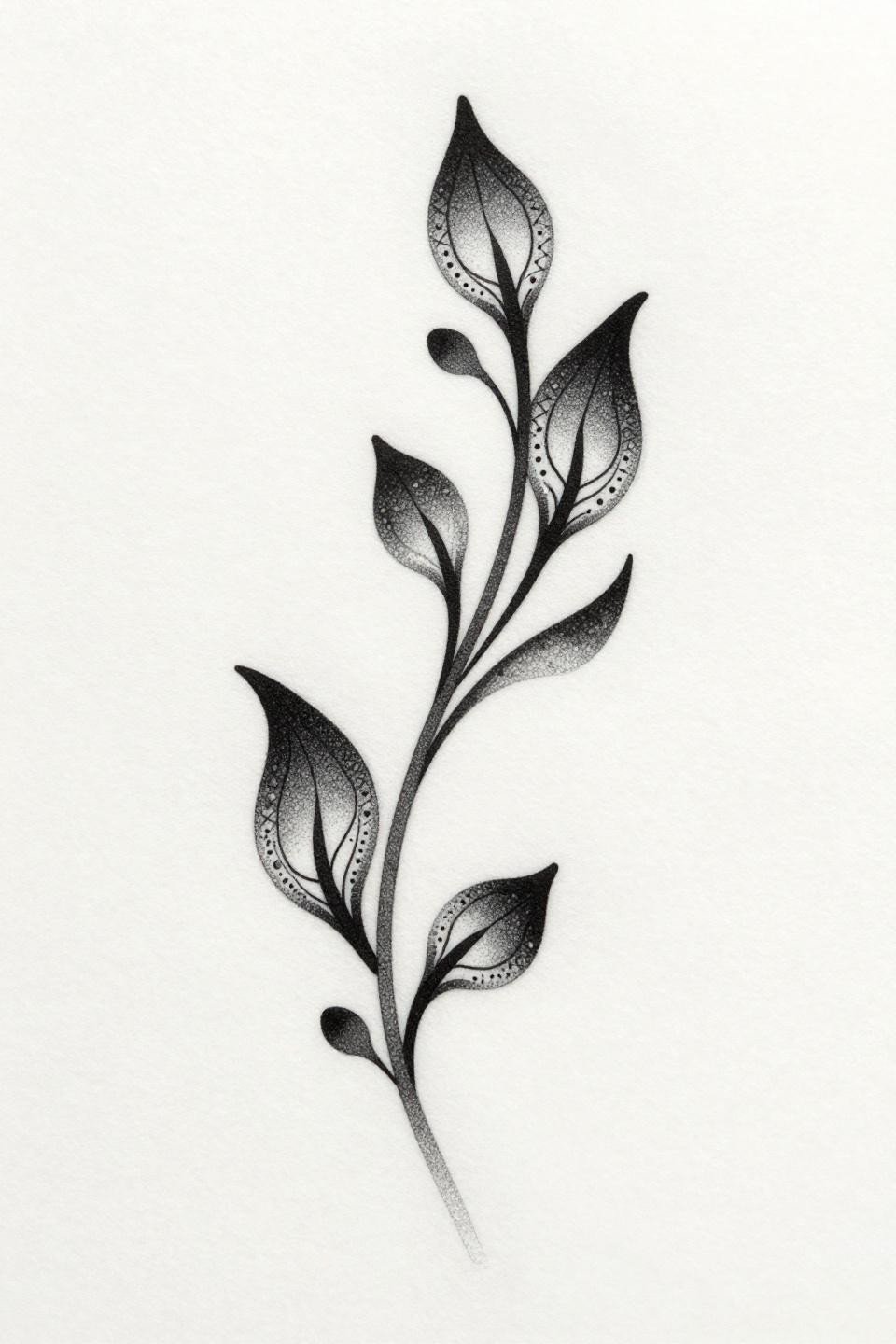
A dotwork spiral vine built entirely from stipple gradients, no solid outlines, density shifting from tight at form edges to open at center. Stipple dot consistency across the full gradient is the technical benchmark here. Uneven dot sizing reads as muddy, not textured.
This format exposes pressure control problems faster than any other henna structure. If your dots vary in size across the vane, slow your pace before adding more cone pressure.
Five Blossoms That Demand Vertical Symmetry
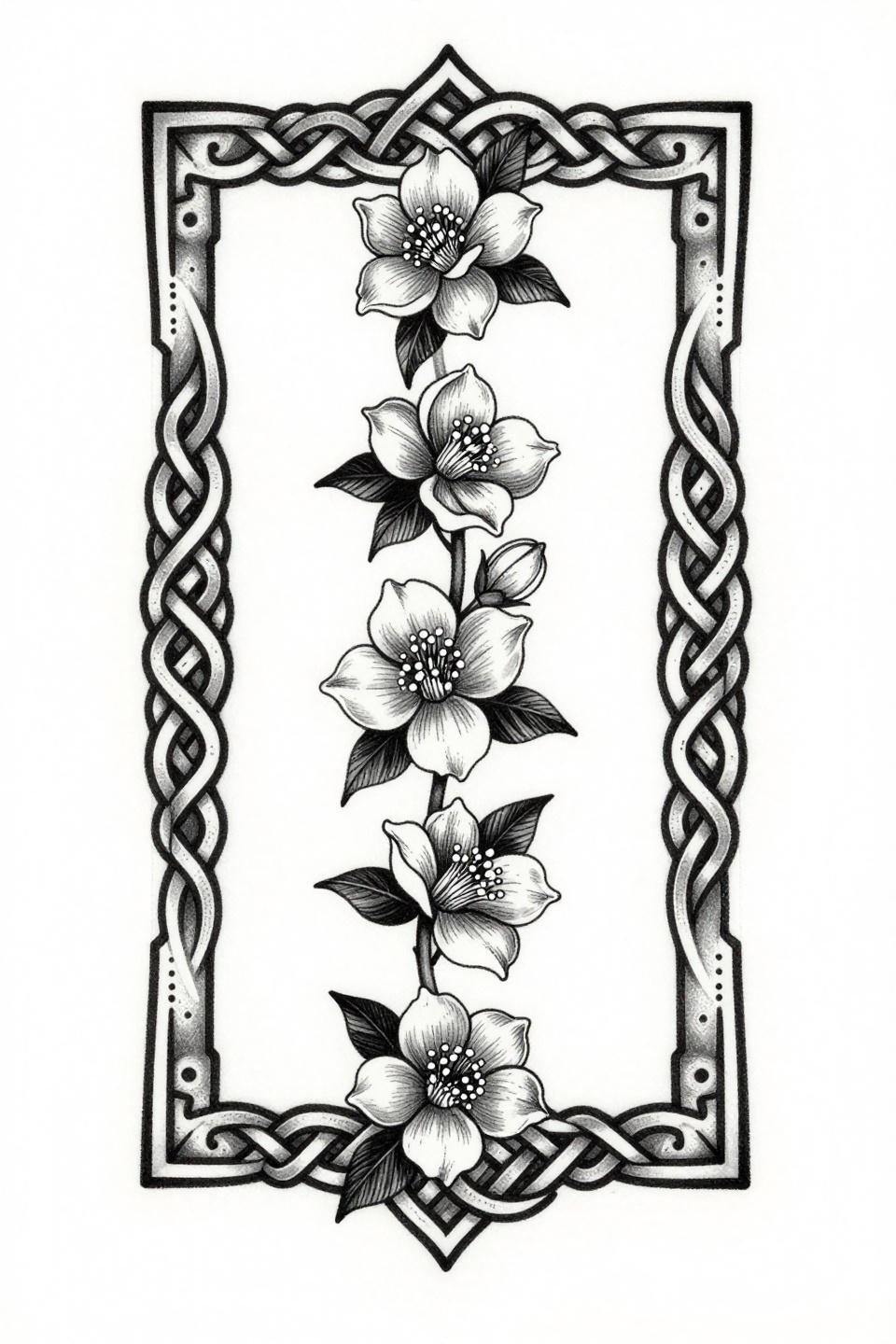
Five jasmine blossoms in a stacked vertical cascade, framed by Celtic knotwork borders with crosshatch shadow accents at each corner. The parallel line engraving technique used for shadow here requires a fine-tipped cone and a consistent drag angle across each pass.
Vertical compositions like this are unforgiving on the hand. Any asymmetry in the leaf pairs reads immediately. Practice the stem line first as a single confident stroke, then build outward. Check out simple mehndi designs for beginners if this level of stacking feels premature.
Where Negative Space Does More Than the Line
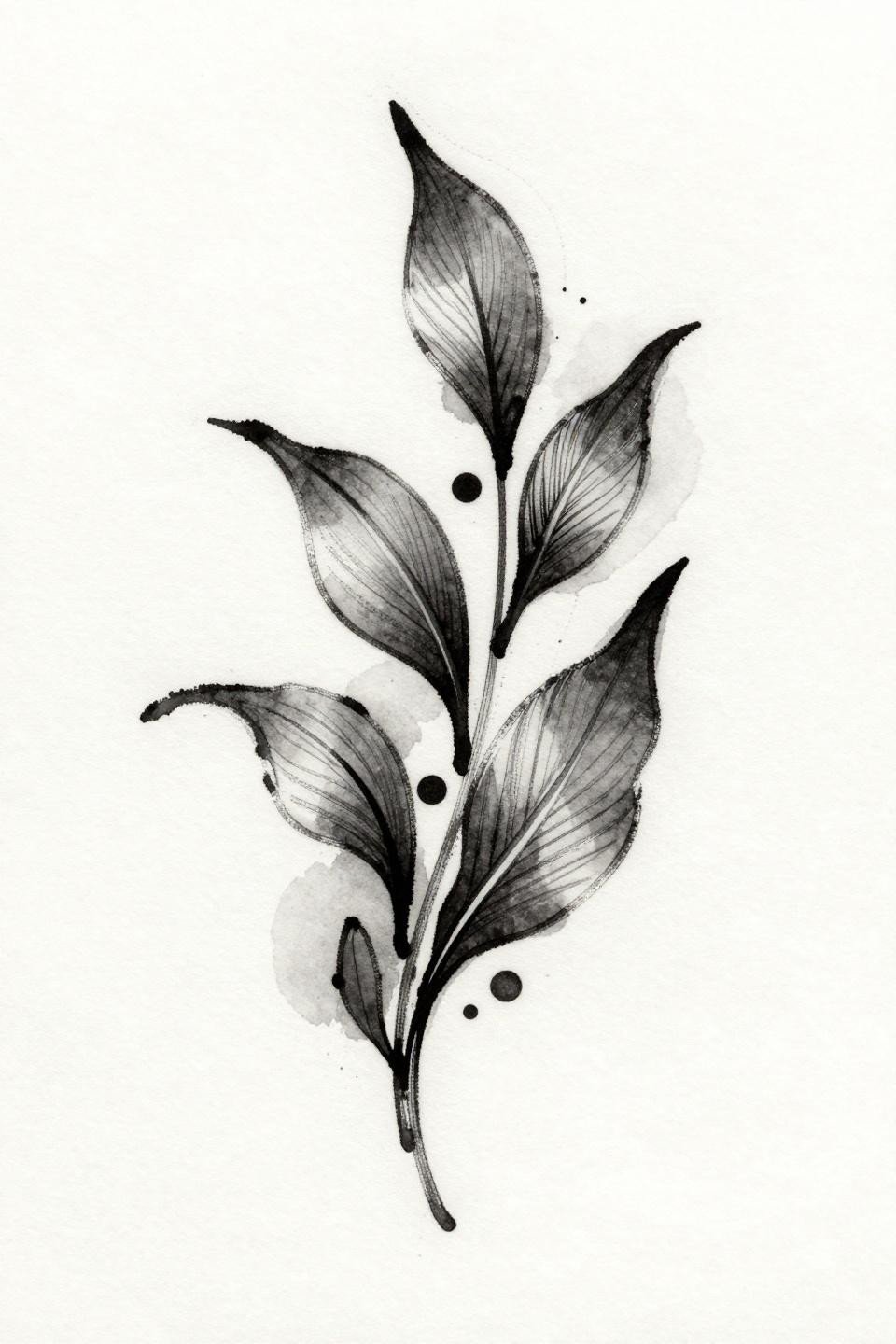
A leaf spray in watercolor-influenced flash style, five organic fronds with wet-bleed edges and open negative space dominating the composition. Calligraphic stroke quality is the whole technique here. The line has to be loaded and dragged in a single pass without hesitation.
Minimal henna designs age best in protected placements. On the back of the hand or wrist, open-space compositions like this one hold their reading longer than dense-fill formats because there is less bleeding between elements.
The Mango Motif and What Sketchy Lines Actually Require
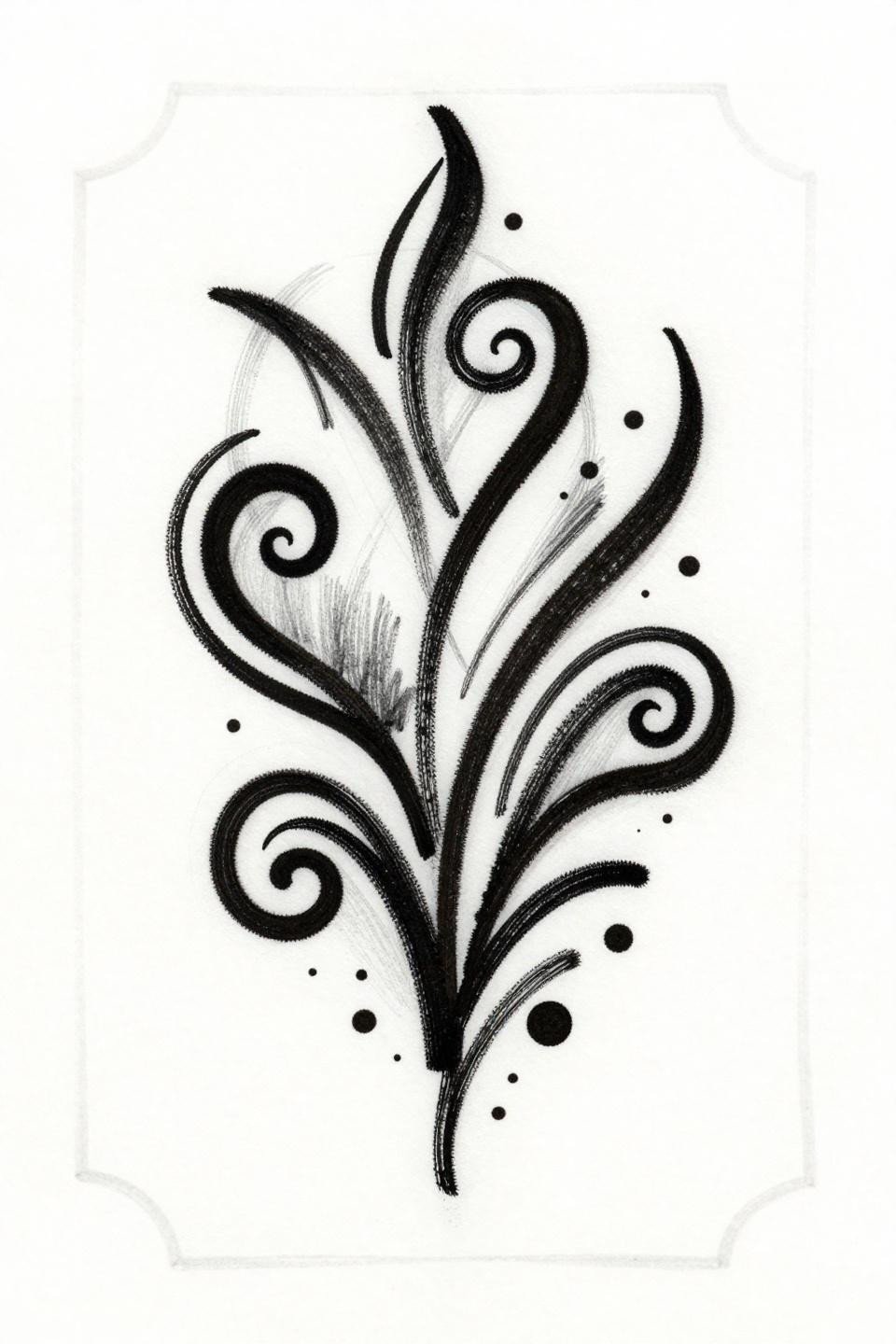
A mango motif rendered in raw sketch style, with deliberately imperfect asymmetry, visible hesitation marks, and bold 2pt outlines around a flat-filled interior. The gestural imperfection in this format is a conscious technical choice, not beginner error. It still requires a confident stroke to read correctly.
This is one of the most practical entry-point shapes for henna practice. The curved seed outline is a single motion, and the spiral tendrils are forgiving of minor wobble because organic irregularity is built into the style.
Art Deco Vine Inside a Diamond Frame
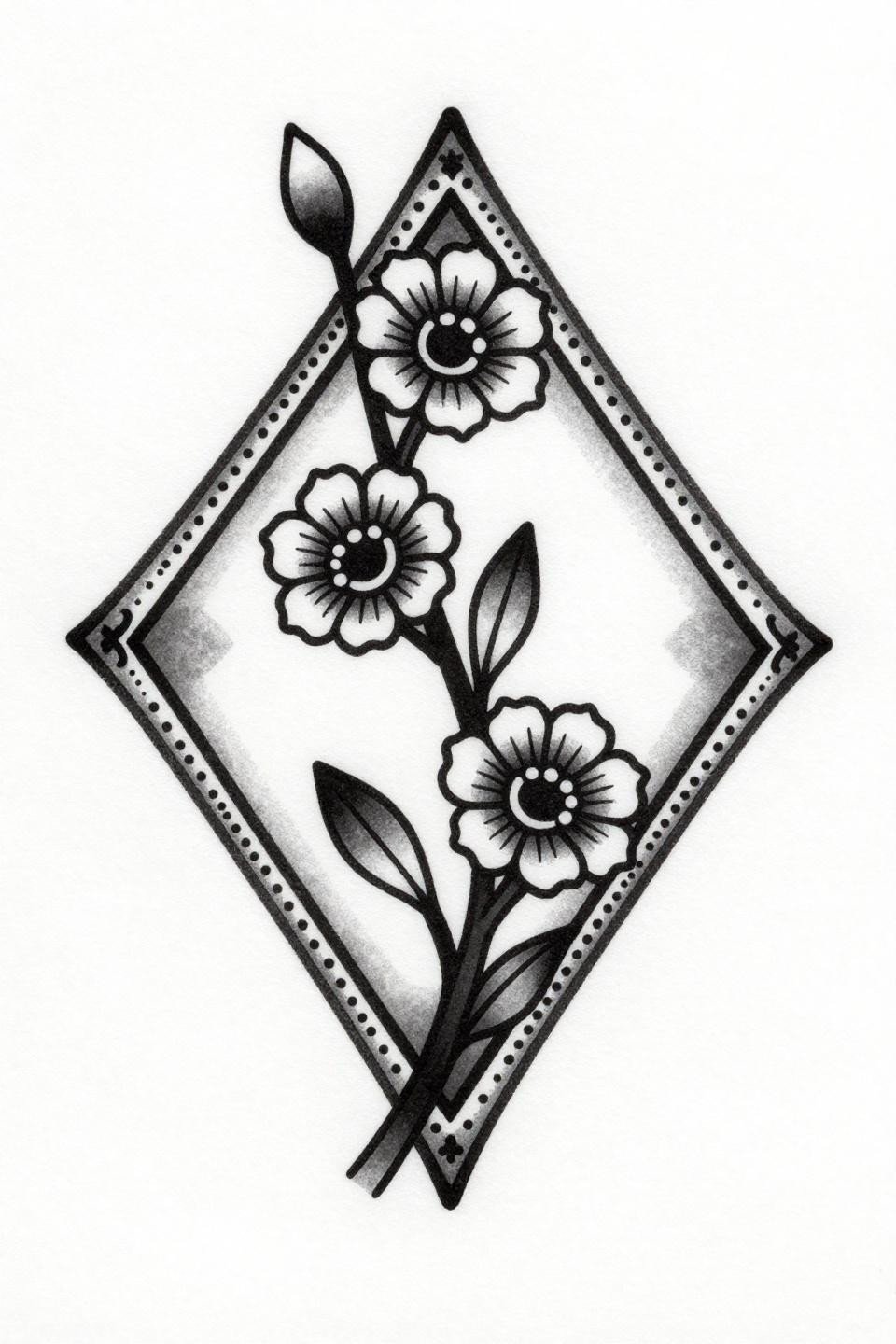
An art deco vine with three teardrop blossoms enclosed in a rigid diamond lattice frame, bilateral symmetry counterbalanced by the organic stem curve inside. The diamond lattice containment structure teaches a critical skill: fitting organic henna motion inside geometric boundaries without the two fighting each other.
This design is a useful reference for anyone preparing henna designs beyond festival season because the clean framing translates well to formal contexts where loose organic-only layouts feel too casual.
Single Stroke Lotus: No Corrections Allowed
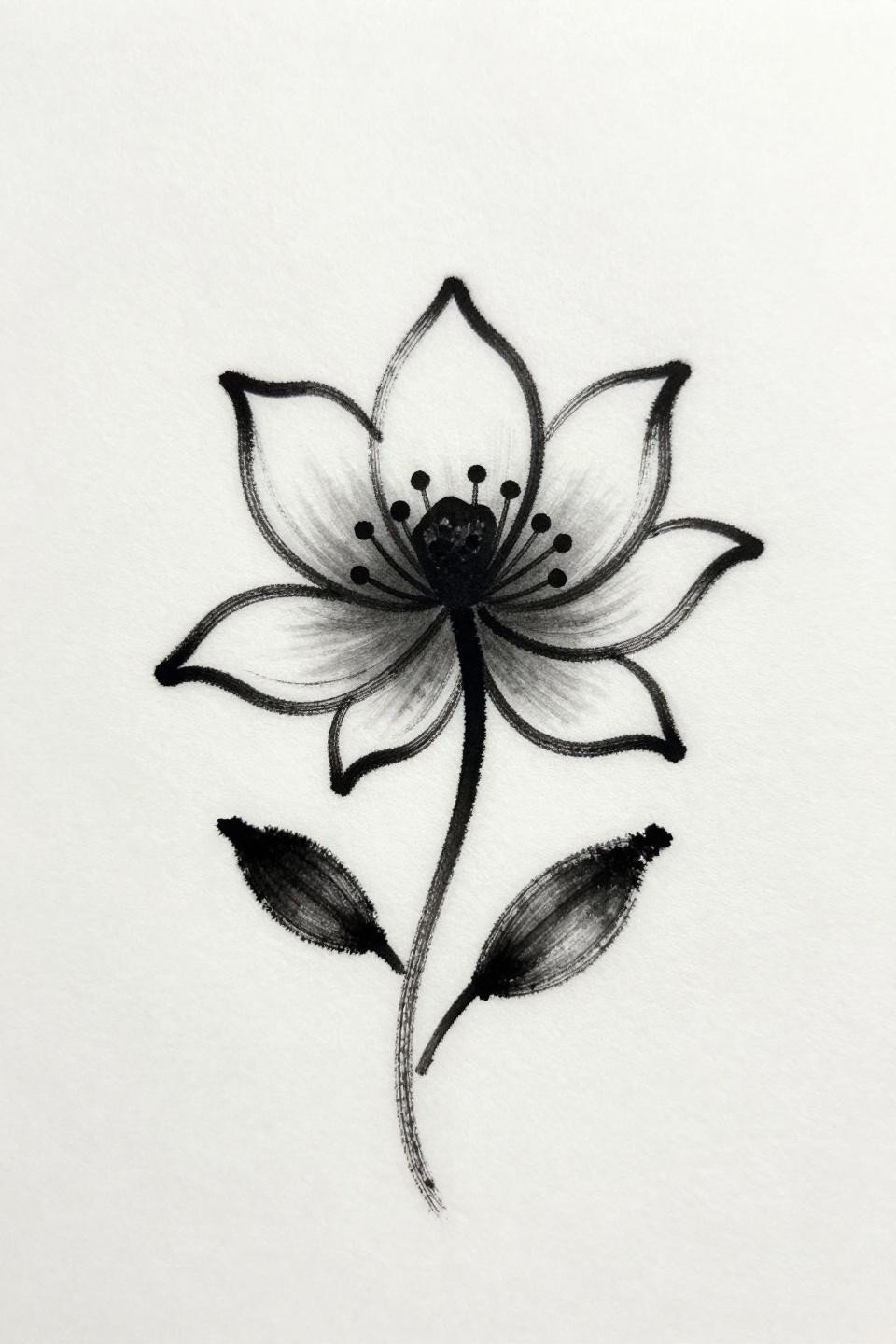
A minimalist lotus in single-line style: four petals, radiating stamens, and a curved stem rendered in one unbroken calligraphic stroke. Continuous line discipline demands no lifted tip and no backtracking. Every directional change has to be pre-planned before the cone touches the skin.
Single needle 1RL work in permanent tattooing demands the same skill this design builds in henna. Practice the full stroke path dry, tracing it in the air, before applying paste.
Crosshatch Feather: Density Control From Shaft to Edge
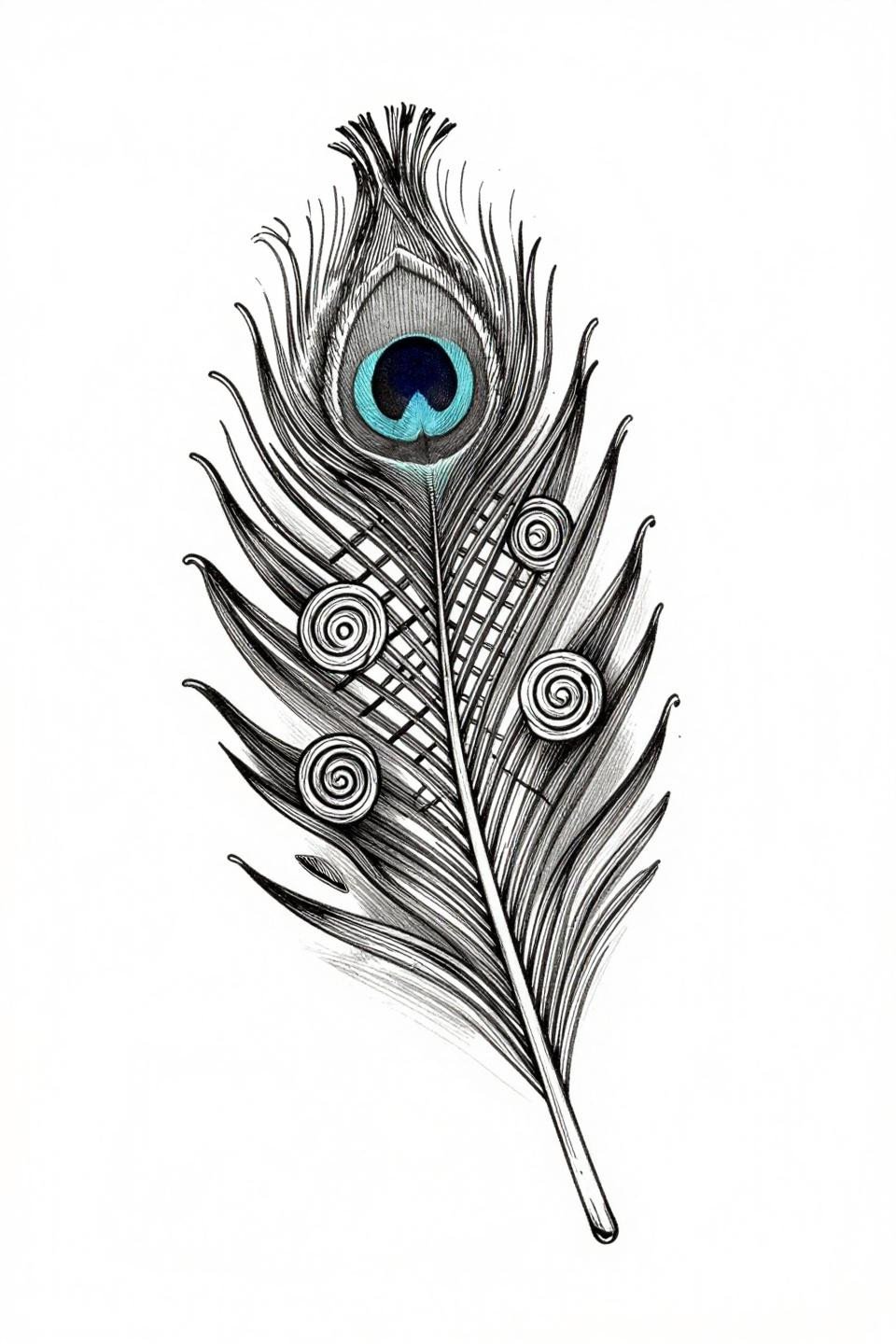
A peacock feather in etching style, crosshatch lattice filling the full vane with density shifting from heavy at the shaft to open at the outer edge. Crosshatch shading density is the signal here. Consistent line spacing across the diagonal grid separates clean execution from a muddy fill.
On olive and darker skin tones, this level of fine-line internal detail needs slightly heavier line weight to maintain contrast after the paste lifts. Draft it bolder than you think you need.
Ignorant Style Mango: When Raw Is the Point
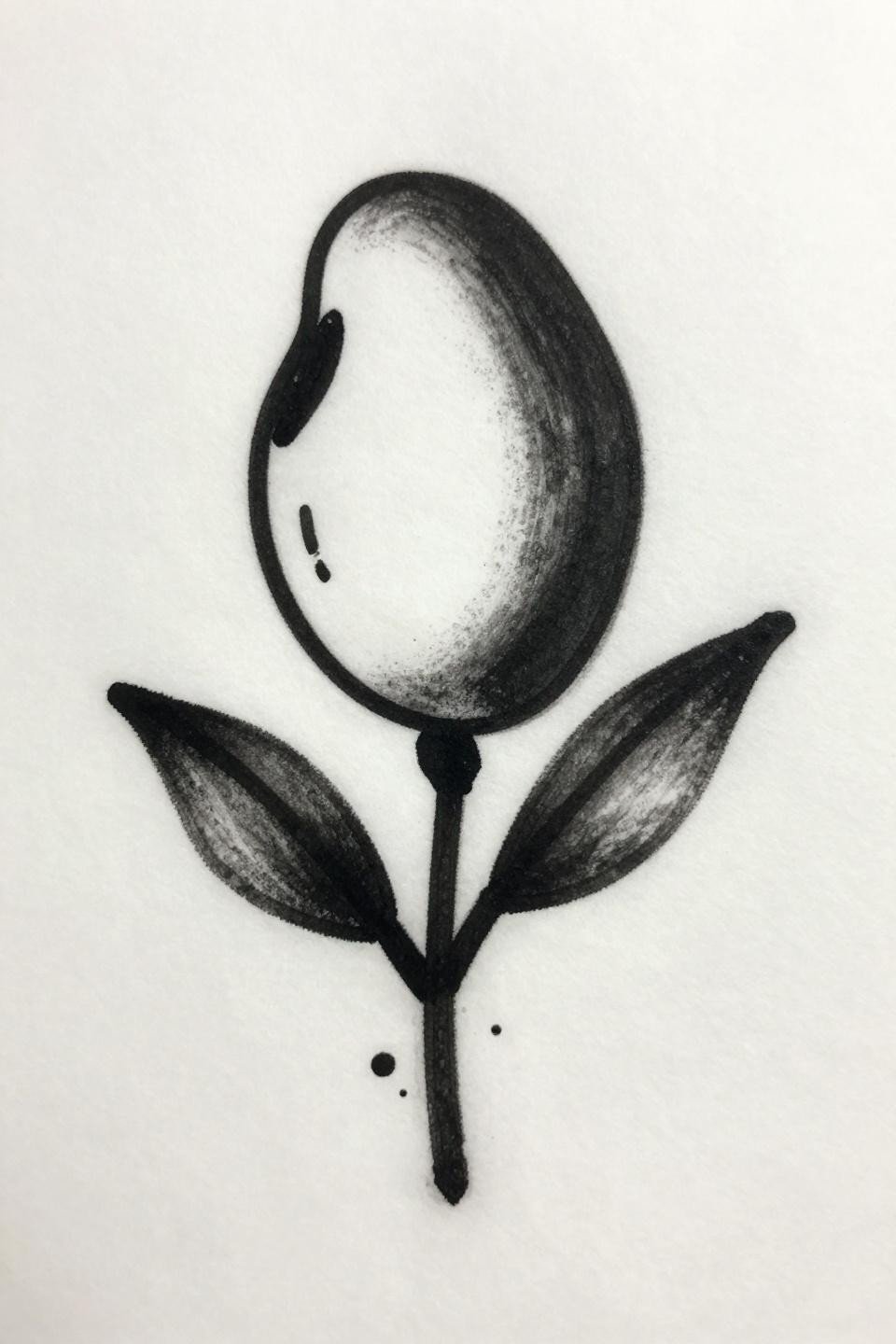
An ignorant-style mango motif built on bold 2-3pt outlines, flat black fills, and zero stippling. Raw confident strokes with intentional irregular edges. The ignorant style flat fill reads as deliberately unrefined, but the outline weight is doing serious structural work underneath.
This is a direct reference for anyone building hand speed and outline confidence. The simplified interior means there is nowhere to hide hesitation in the outer curve.
Japanese Peacock With Henna Motifs Mapped to Body Panels
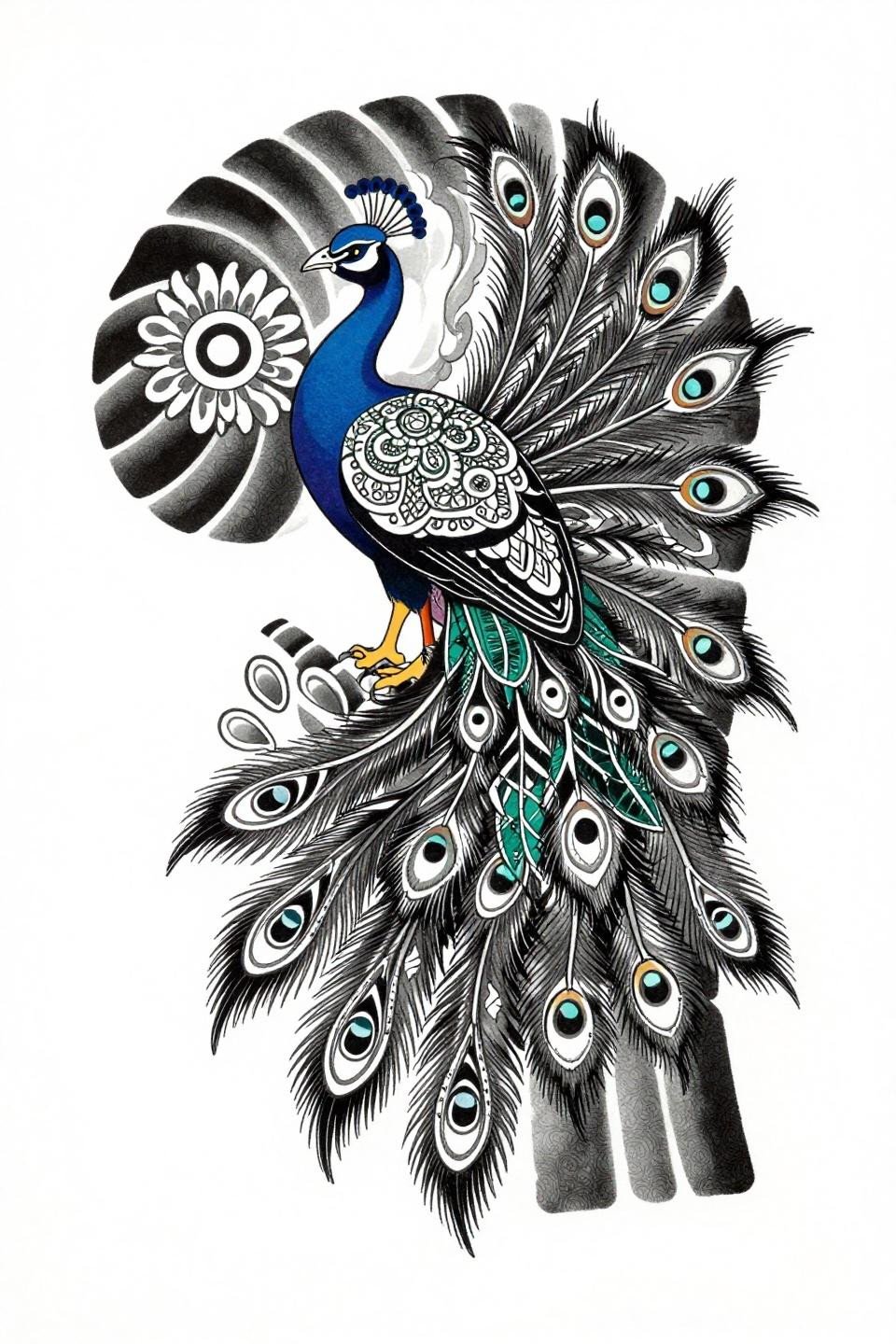
A Japanese irezumi peacock with henna paisley florals filling the body panels and geometric eye feathers on the fan tail. Bold block-work outline weight at 2-3pt unifies the two visual systems, irezumi structure and henna surface ornament, into a single readable form.
This is a collector-level reference, not a beginner practice piece. Use it to understand how henna motifs integrate into larger figural compositions rather than as a direct application template.
Tribal Geometry Against an Organic Silhouette
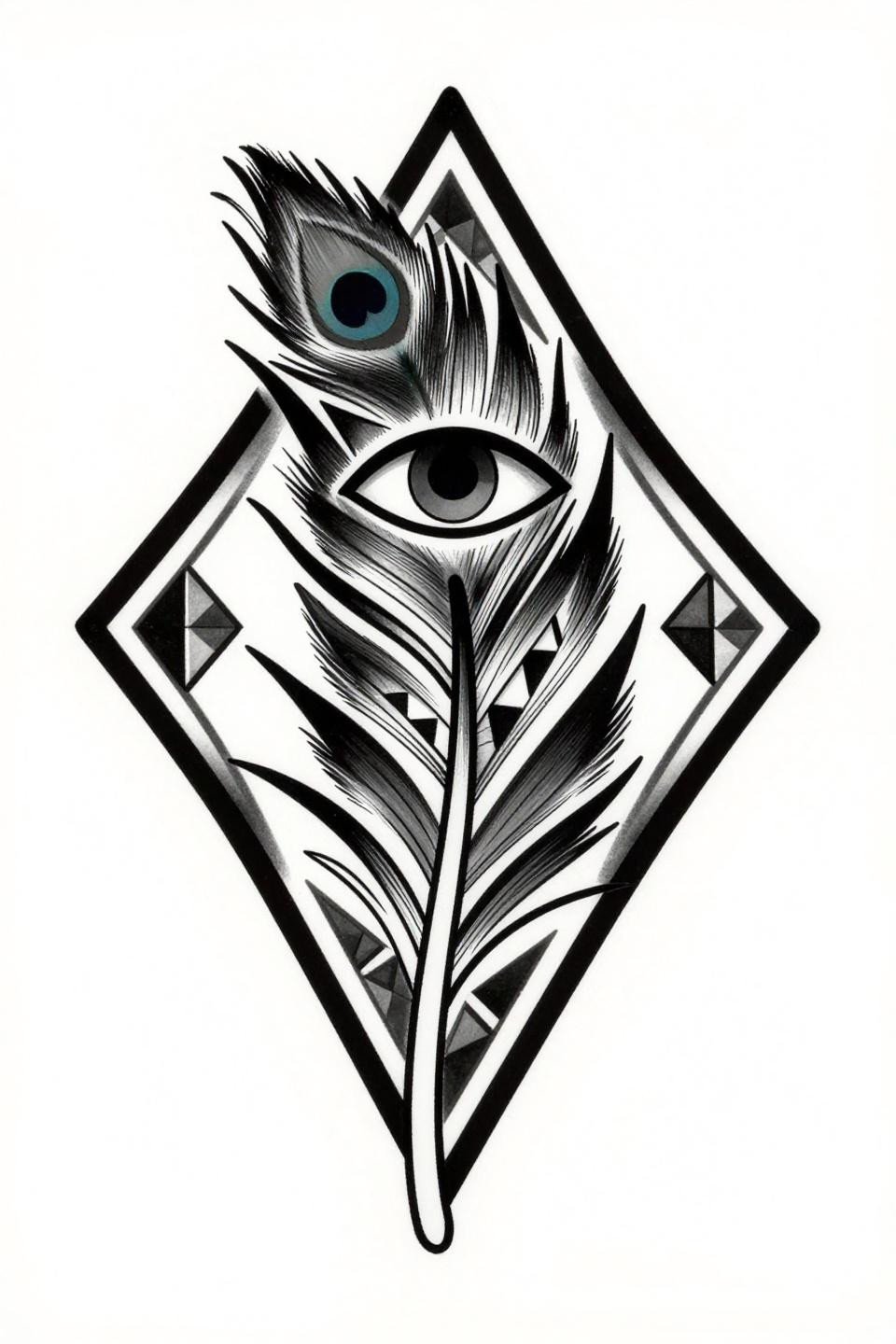
A tribal geometric peacock feather with a diamond-framed central eye, triangular tile lattice fills across the vane, and a sharp tension between the angular interior and the organic feather silhouette. Triangular tile lattice at this scale requires consistent fill pressure across each cell to avoid patchy reads.
Protected placements on the upper back or sternum give geometric henna art its best longevity. Knuckle and finger placements with this level of interior geometry will need touch-up within the first year. See modern mehndi designs for inspiration on how geometric formats translate to permanent work.
Art Nouveau Mandala: Where Symmetry Gets Tested
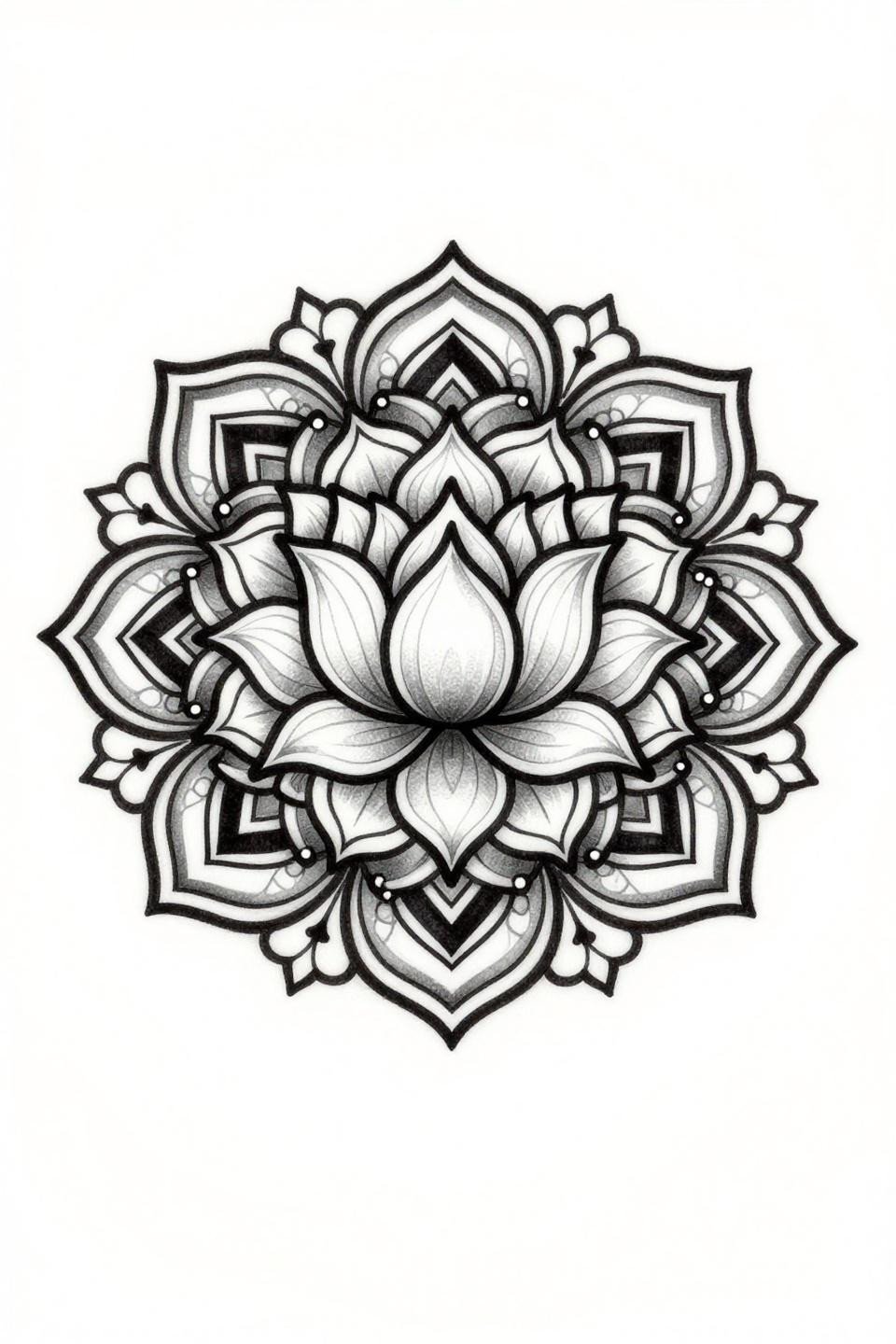
An art nouveau mandala built from eight concentric petal layers radiating from a central lotus bud, thin vine connectors between layers, and diamond lattice fills in alternating sections. Concentric petal alignment is the technical challenge. Any drift between layers collapses the radial symmetry.
Mandala formats are a direct test of rotational consistency. Draw the cardinal axes first, then build each quadrant independently before connecting them. Misalignment caught early costs nothing. Misalignment caught after full fill costs the whole piece.
Fine Line Peacock: What 1pt Outlines Actually Demand
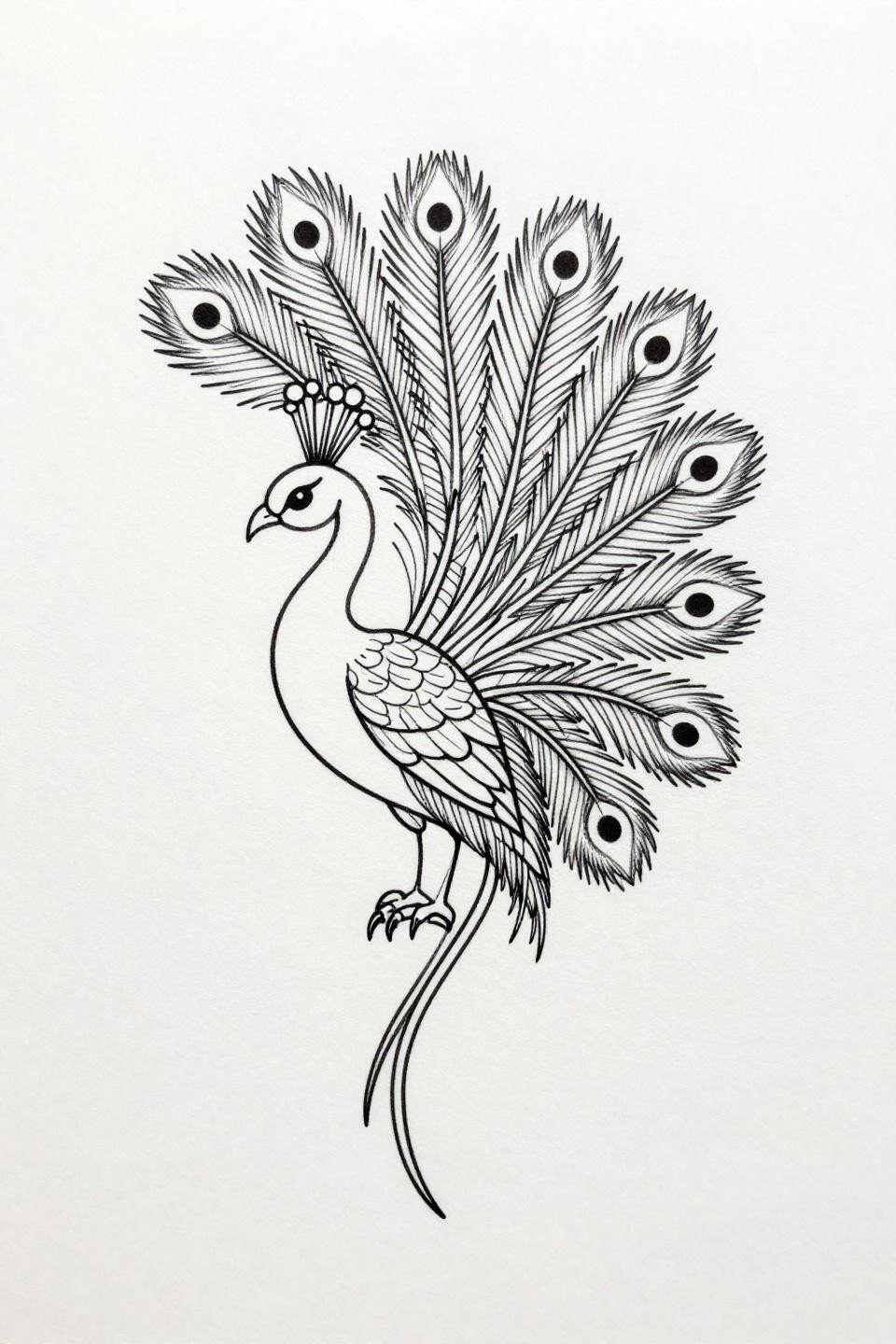
A fine line minimal peacock with 1pt crisp outlines, three geometric botanical tail feathers, and a single dot eye accent in open negative space. Hairline 1pt outline weight demands tip consistency and cone pressure that beginners almost always underestimate. Even a slight drag variation reads at this scale.
Fine line henna on the back of the hand fades unevenly because skin movement is constant there. If this is the target placement, rehearse on paper at the exact scale before applying paste.
Sak Yant Dotwork Mandala: Spacing Over Speed
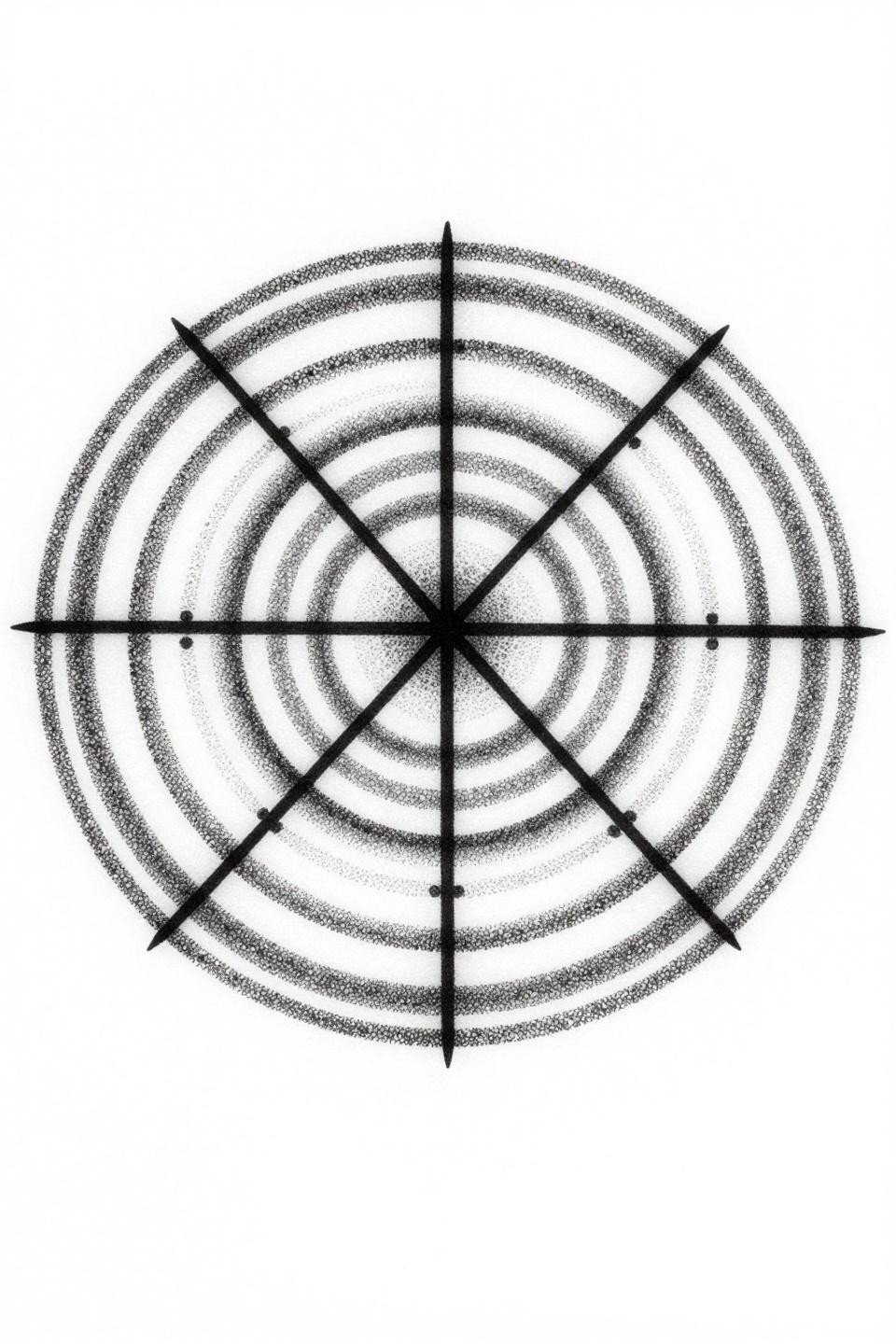
A sak yant-influenced dotwork mandala built from seven concentric circles of stipple dots, cardinal point accents on each ring, and three bold radiating lines at center. Ring spacing consistency is everything. Uneven gaps between concentric circles collapse the geometric authority the format depends on.
Look for consistent dot size across the full gradient, not just the dense inner rings. The outer open rings expose pressure inconsistency more than any other zone in this composition.
Botanical Vine in Continuous Hairline: No Fill Required
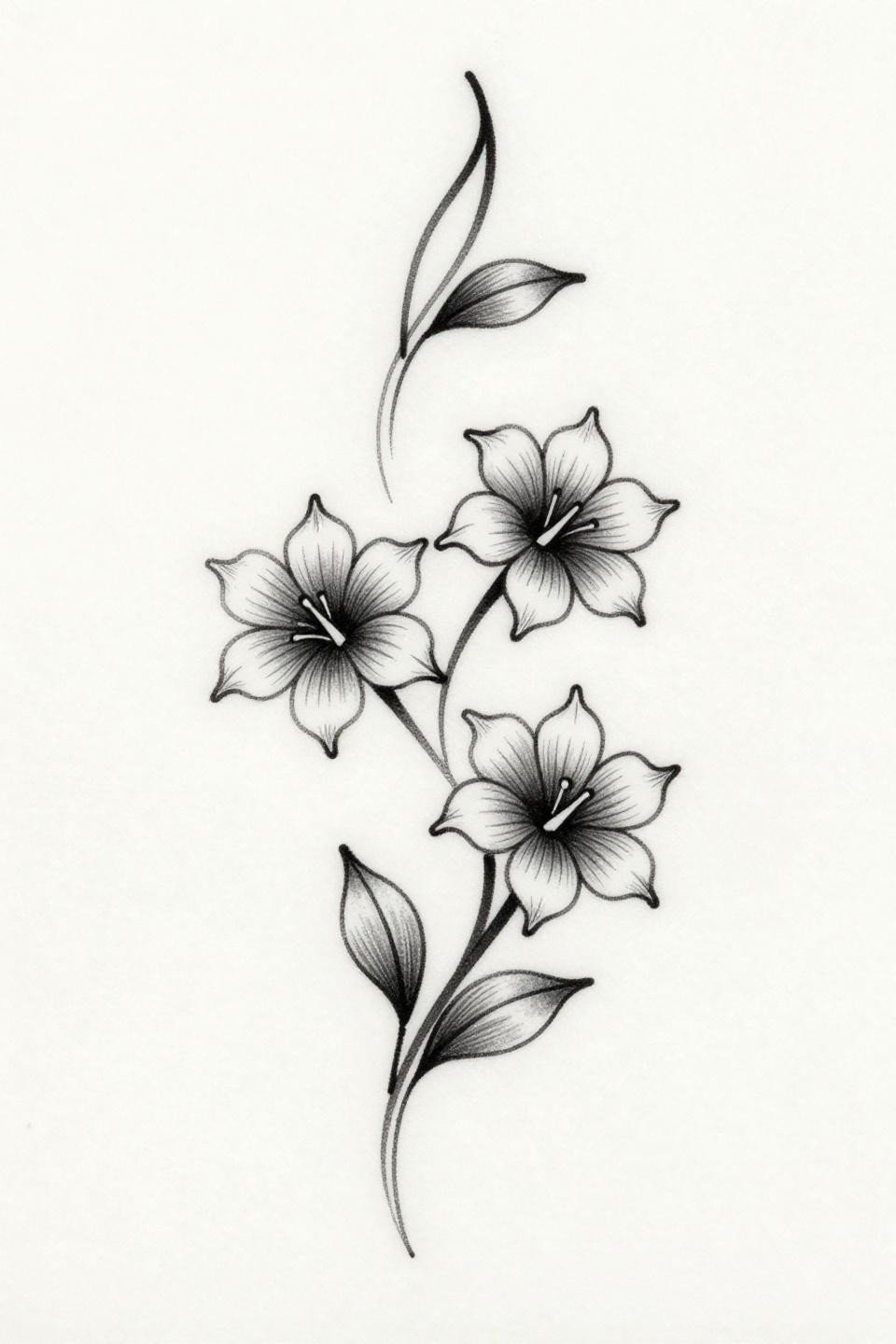
A botanical-style henna vine with three teardrop flowers and organic leaf tendrils, rendered entirely in unbroken 0.5mm hairline strokes with no fill. Single-continuous-line botanical work at this scale is the most demanding format in the collection. There is no fill to hide a hesitation, no interior detail to redirect the eye.
Save this one for after the solid-outline designs are consistent. It earns its place as a final practice benchmark before committing any of these formats to skin.
Pick three of these based on your current skill level, not your preferred aesthetic. Start with the ignorant-style mango or the sketch mango motif, build toward the fine line peacock or the botanical vine. Bring the flash reference to your session at the exact scale you want applied.