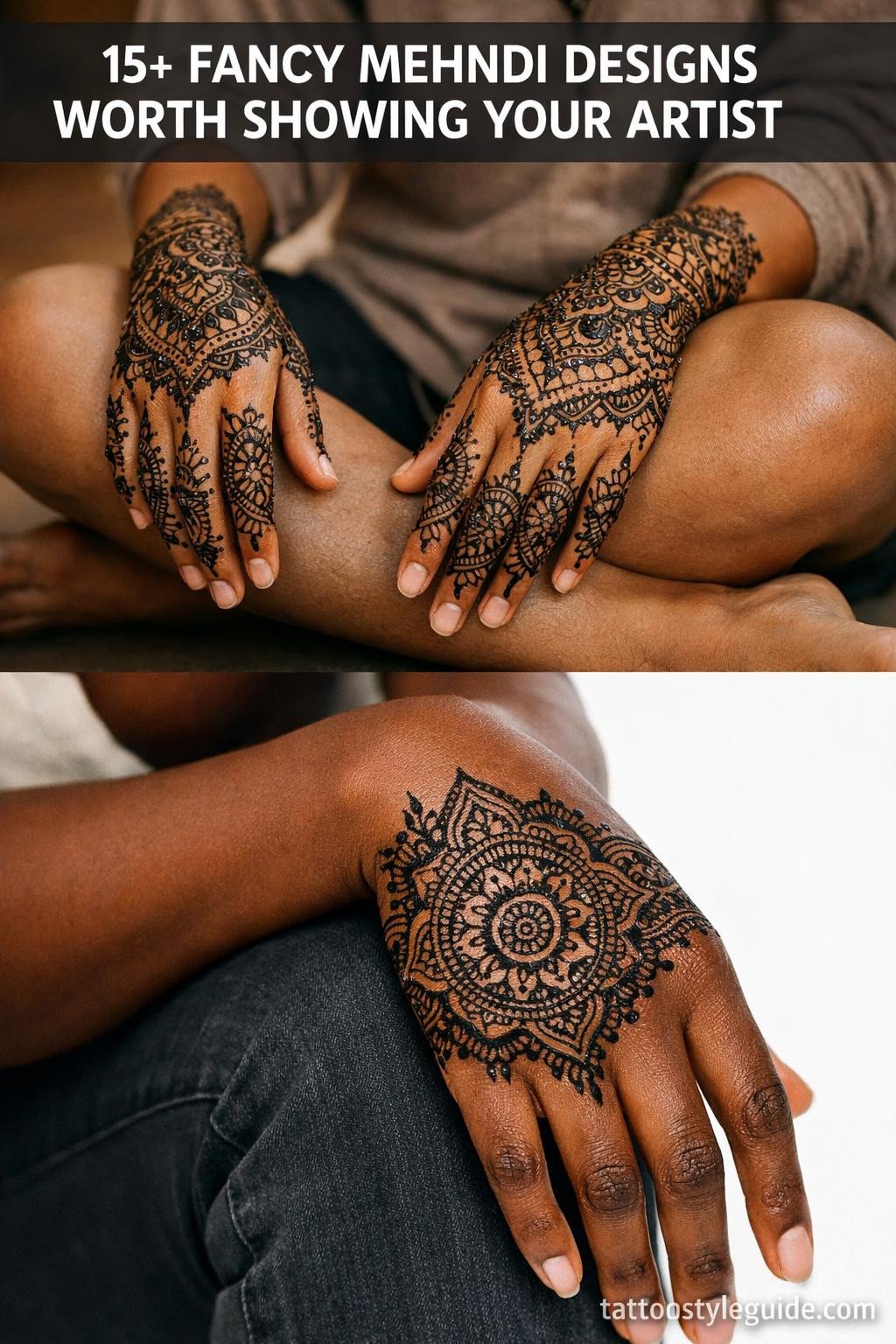
Fancy mehndi designs punish artists who treat them as decoration. The density of motifs, the layering of geometric fills inside organic vine work, the balance between positive and negative space: these are compositional decisions that determine whether a piece reads as controlled or chaotic at arm’s length.
Most reference images circulating online are photographed fresh, on pale skin, in flattering light. That tells you nothing about how the linework holds over time or how the design reads on deeper skin tones. The references below are rendered as flash, which means you see the actual line weight, fill density, and structural logic without distraction.
Art Deco Geometry Meets Mango Cluster: A Tension That Works
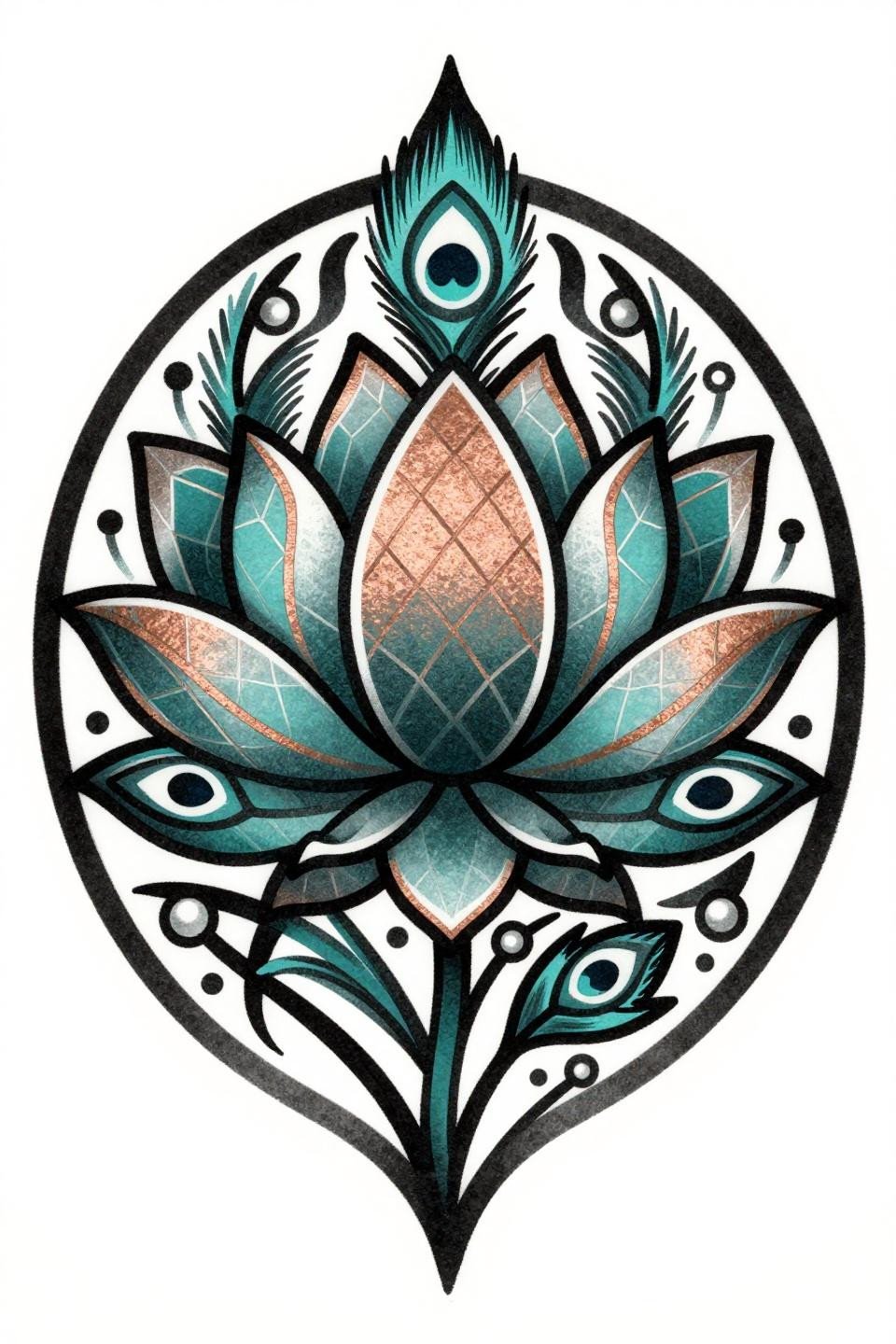
This piece runs a central lotus through faceted angular petals, locks in mango teardrop clusters with diamond lattice fills, and frames everything in a circular tondo border with pearl dot vine terminals. The deep teal and copper accent palette is doing real structural work here, not cosmetic.
Bilateral symmetry at this complexity level is the artist’s hardest test: any drift in the mango clusters or chevron facets reads immediately on a flat canvas, let alone on a curved hand or forearm.
Dense Floral Mandala Inside a Mirror Frame: Composition Logic
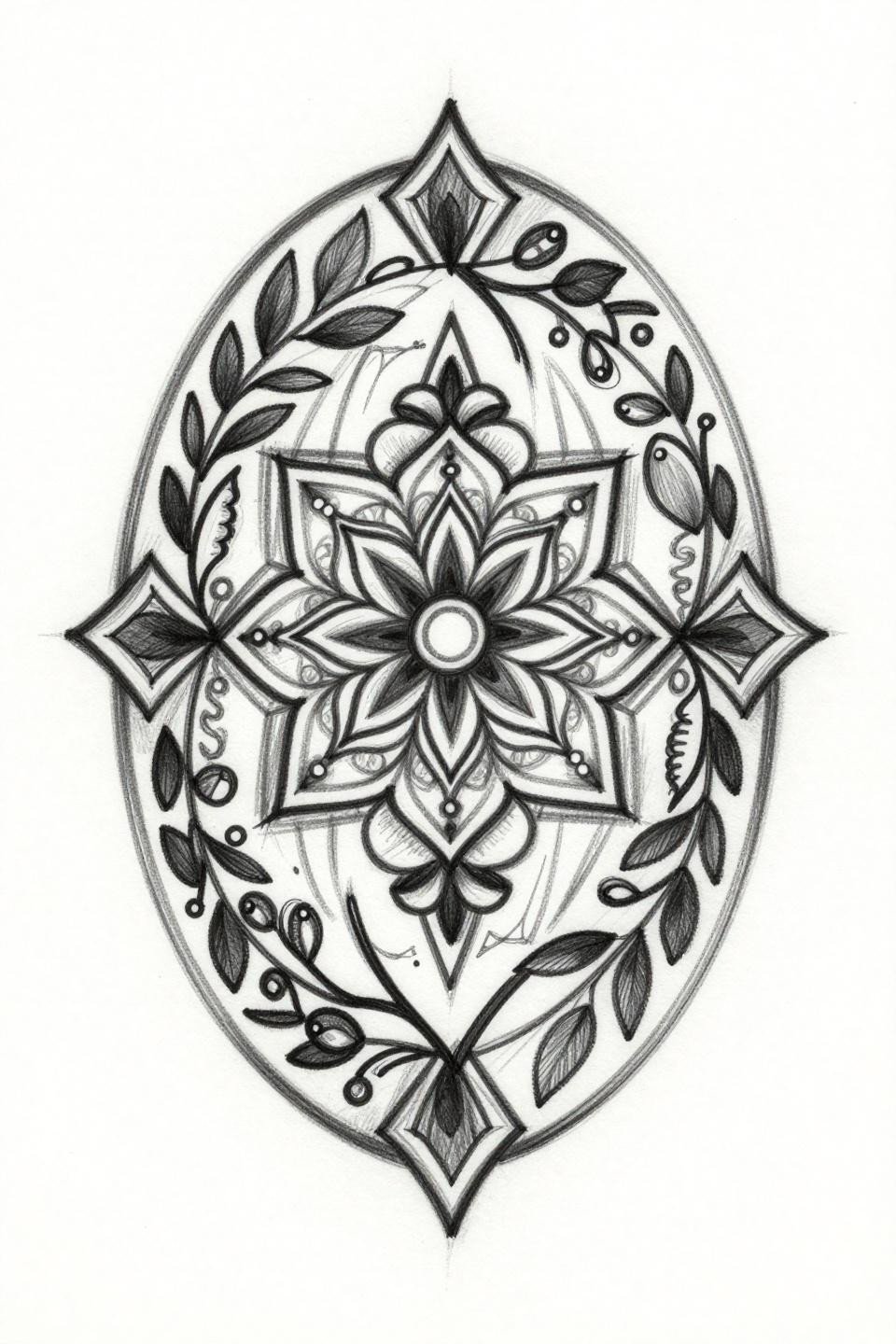
The oval mirror frame containing nested floral mandalas is a classic Pakistani mehndi structure, and the sketch-raw rendering here exposes exactly how the hexagonal lattice weaves through the organic vine work. Loose confident linework with grey wash midtones gives this its depth.
Pakistani compositions at this density work best on the back of the hand and upper forearm, where the canvas is flat enough to keep the negative space geometry legible after healing.
Neo-Traditional Thistle and Teardrop: When Crimson Does the Heavy Lifting
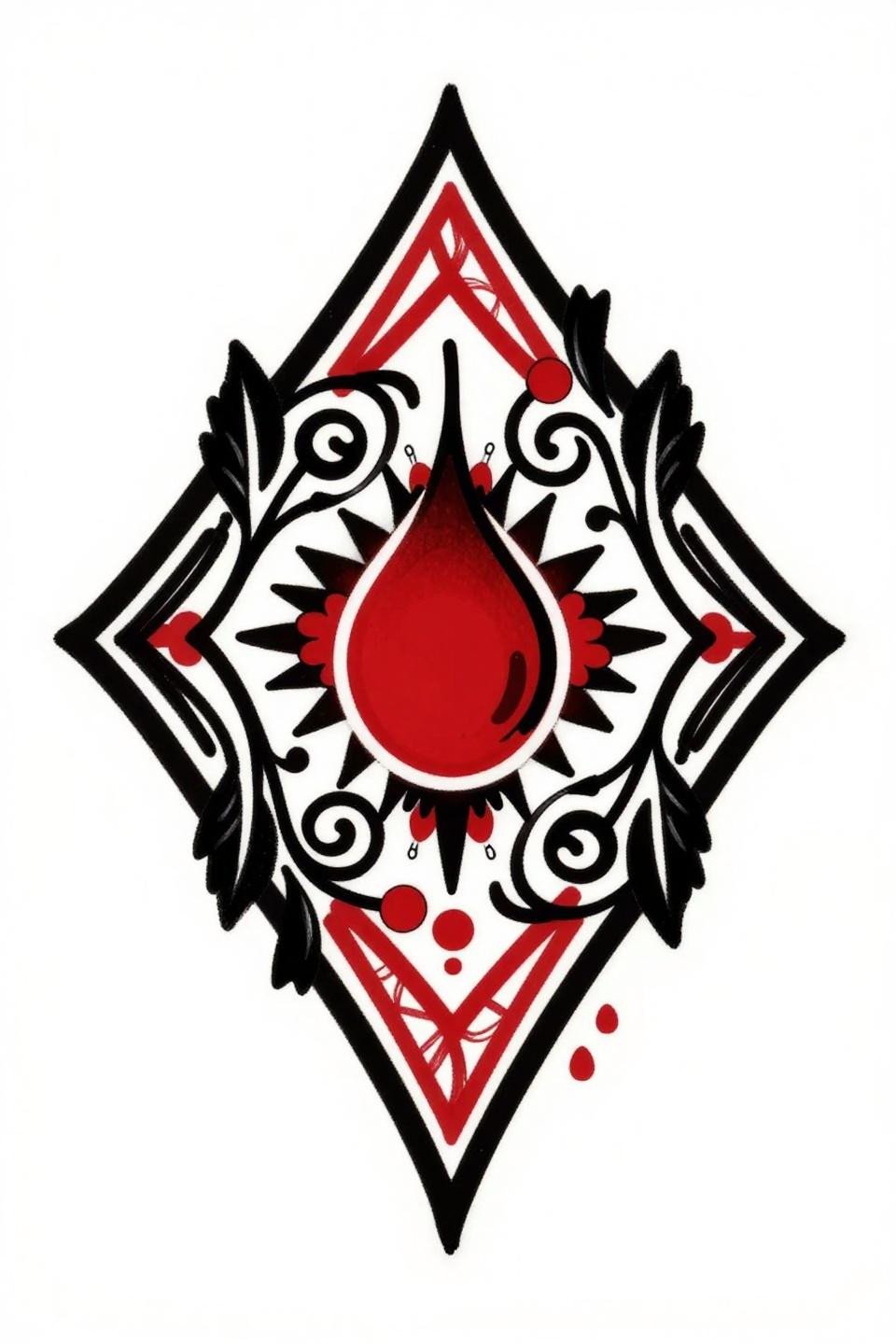
Neo-traditional rendering locks this motif into the front hand without softening the geometry: concentric arcs radiate from the central teardrop, thistle spikes push outward with berry clusters, and the diamond frame contains the whole composition. Crimson accent on solid black is the color call that separates this from standard blackwork mehndi flash.
Bold 2-3pt outlines at this weight hold clean for 10 or more years, which matters on a front-hand placement that takes daily sun and friction. Check your artist’s healed work, not just fresh shots, before committing.
Dotwork Sunburst in a Diamond Frame: Stipple Density as the Real Design Element
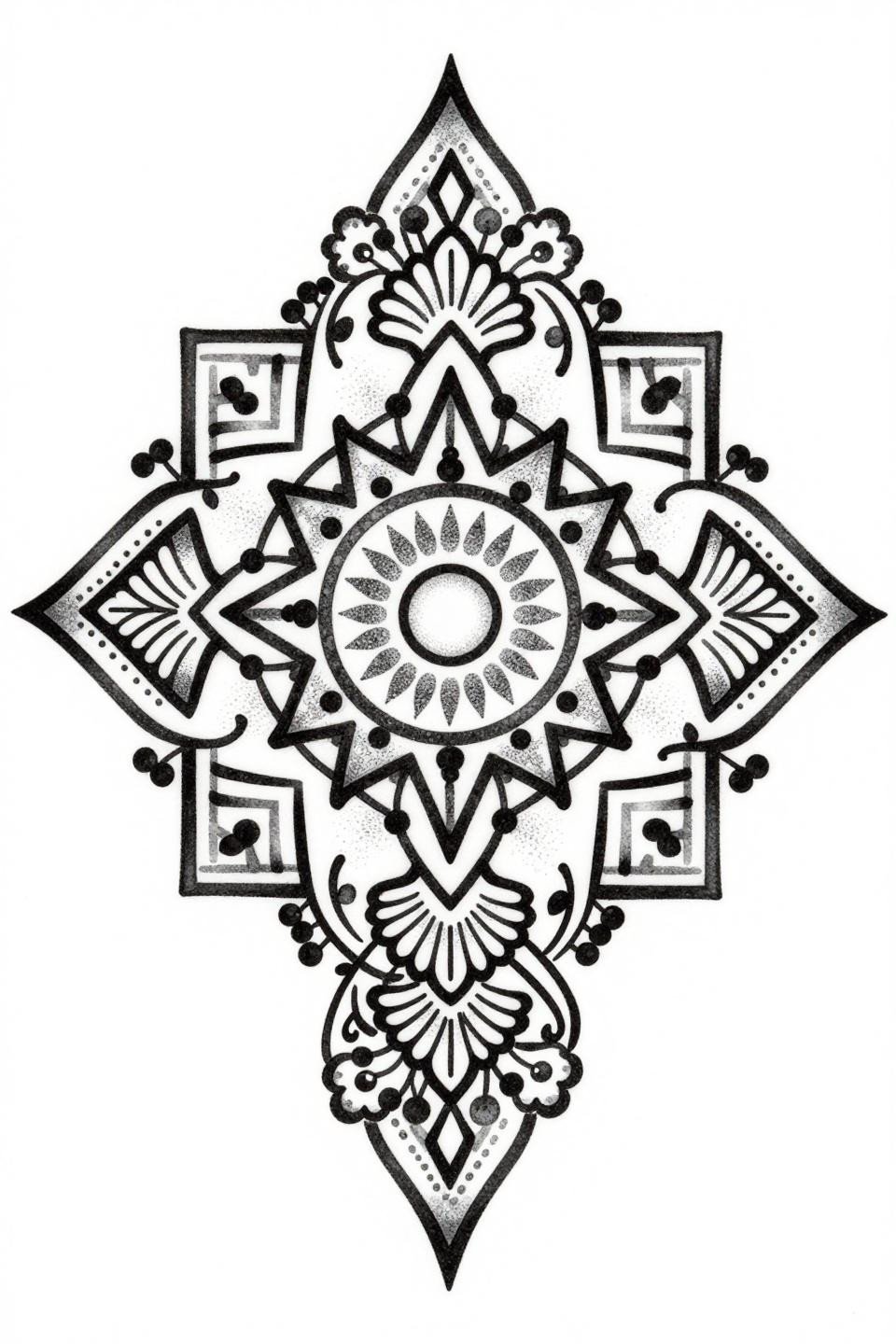
The stipple density here runs from 90 percent at the center sunburst out to open negative space at the frame edges, with corner floral cartouches anchoring the diamond layout. No flat fills, no linework shading: purely dot gradient construction handling all tonal work.
Dotwork at this scale on a hand placement needs an artist who controls needle speed precisely. Look for consistent dot size across the full gradient in their portfolio, not just overall composition.
Fine Line Lotus and Fern: The Asymmetry Call That Changes the Read
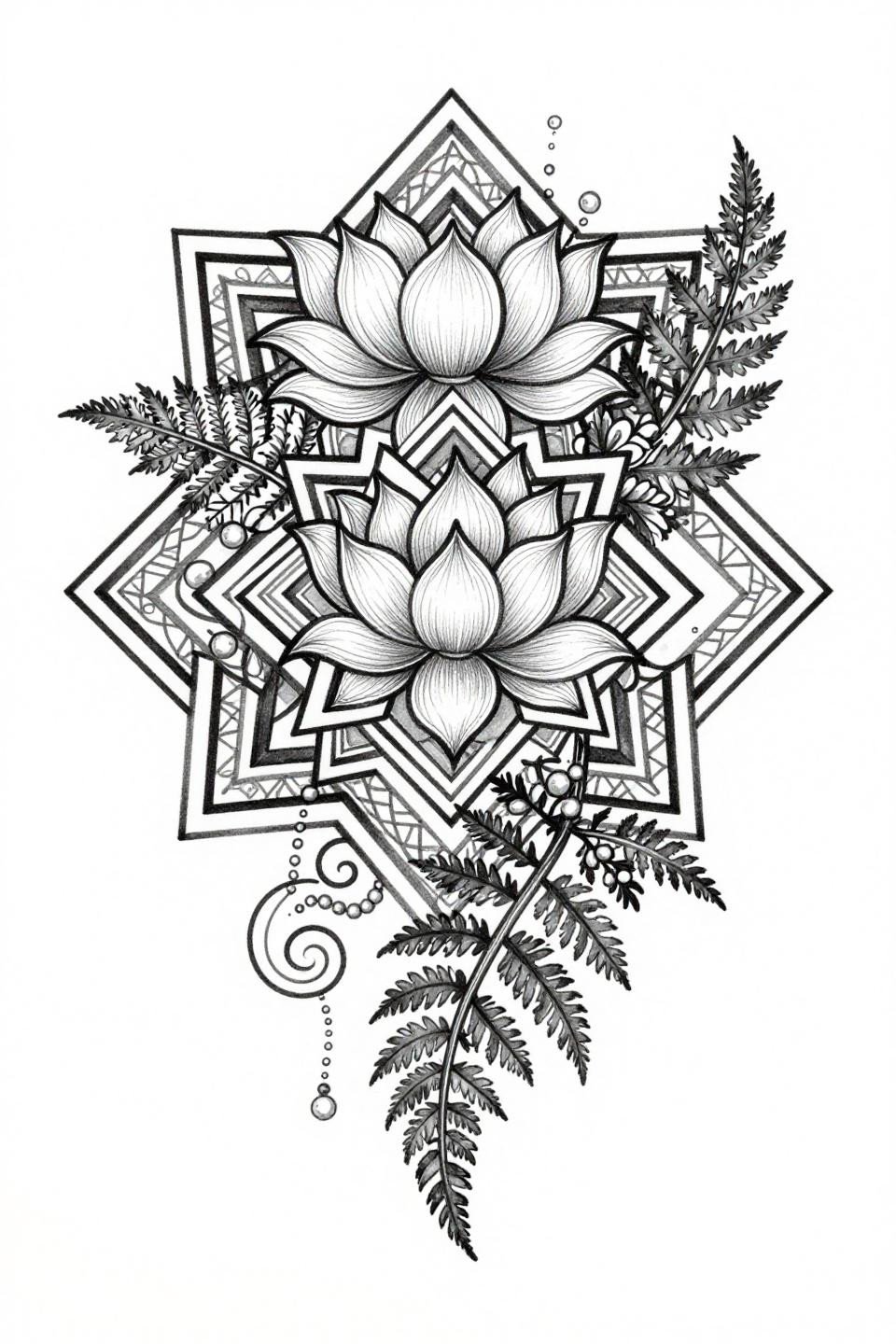
Hairline 0.5mm linework builds an asymmetric cascade of lotus petals into nested geometric squares, with fern fronds trailing downward and pearl dot spiral terminals marking the endpoints. The open negative space is doing compositional work, not just filling area.
On lighter skin tones this reads with strong contrast; on olive and deeper tones, fine single-needle line weight like this needs bolder anchor lines at the outer frame or the detail loses definition within two years. Pair this with a protected placement for best shelf life, as explored in henna designs beyond special occasions.
Single Continuous Line Mandala: What No Shading Actually Demands
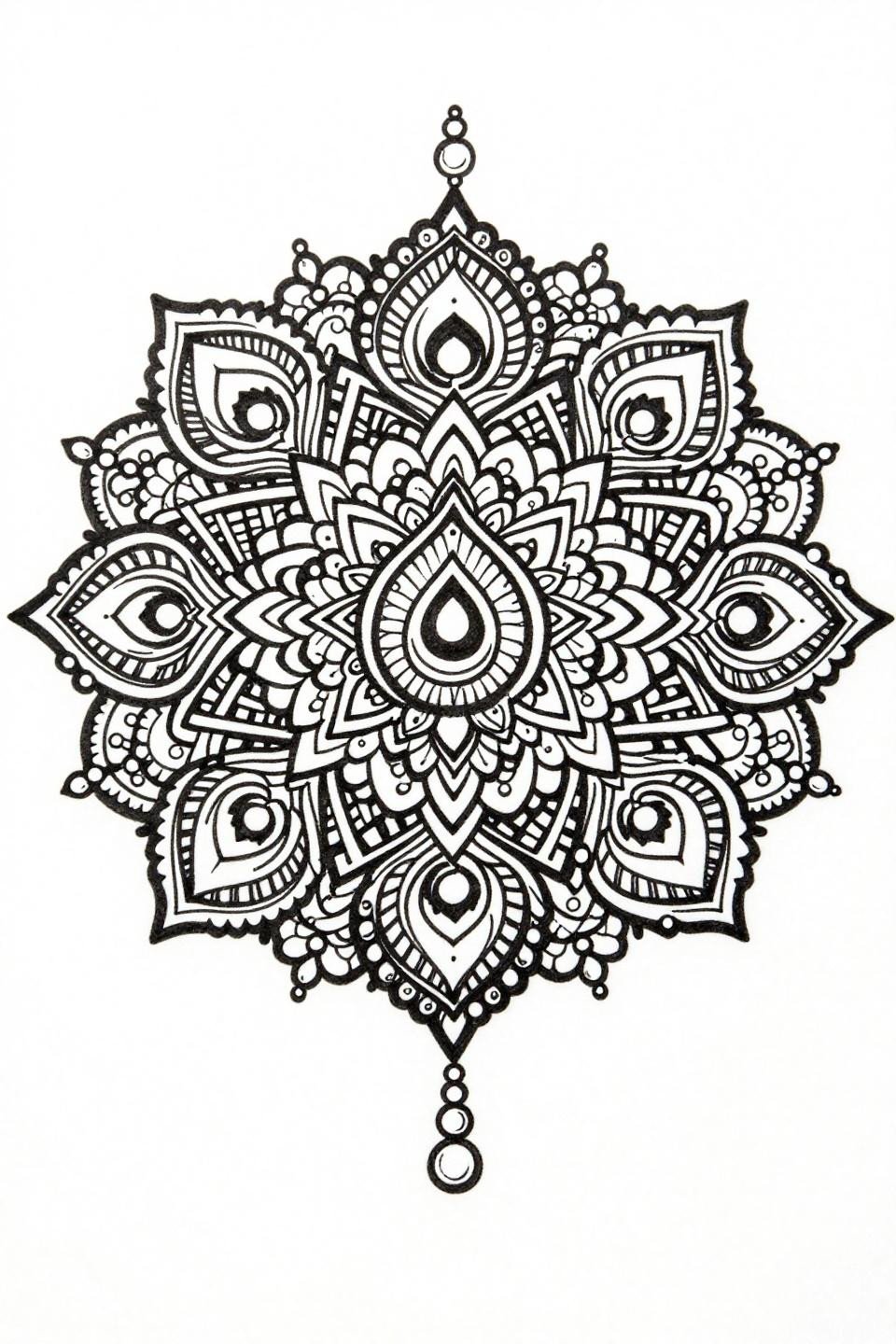
Pure outline, no shading, single-weight continuous linework through a full radial mandala with peacock eye shapes, interlocking floral buds, and pearl dot cluster terminals. Every structural decision is visible because there is nowhere to hide a wobble or a gap.
This style signals an artist who controls line speed and pressure consistency across an entire composition without tonal correction. The tell is the curves: no hesitation marks at direction changes.
Sak Yant Rose Stack: When Thai Temple Geometry Frames Mehndi Motifs
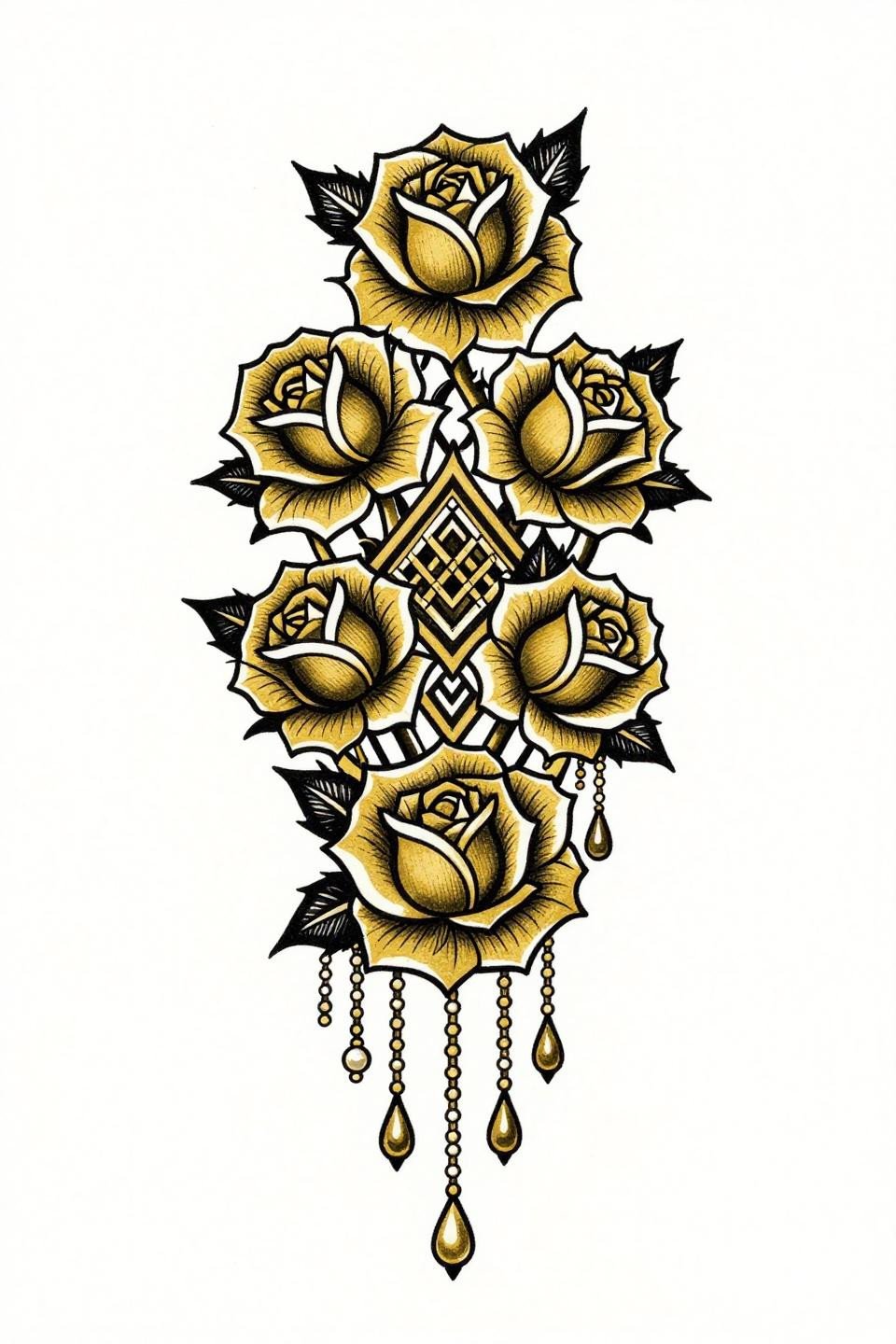
Stacked rose blooms with thorny vines, diamond lattice fills, and cascading teardrop chains sit inside Thai temple geometry framing, rendered with bold 2-3pt outlines and flat gold and black fills. The vertical stacked composition reads cleanly on a forearm or shin without needing the canvas to bend around it.
For collectors interested in modern mehndi designs with contemporary flair, this cross-cultural structural approach is one of the more technically honest fusions in current flash work.
Japanese Irezumi Structure Holding Mehndi Geometry: A Legitimate Hybrid
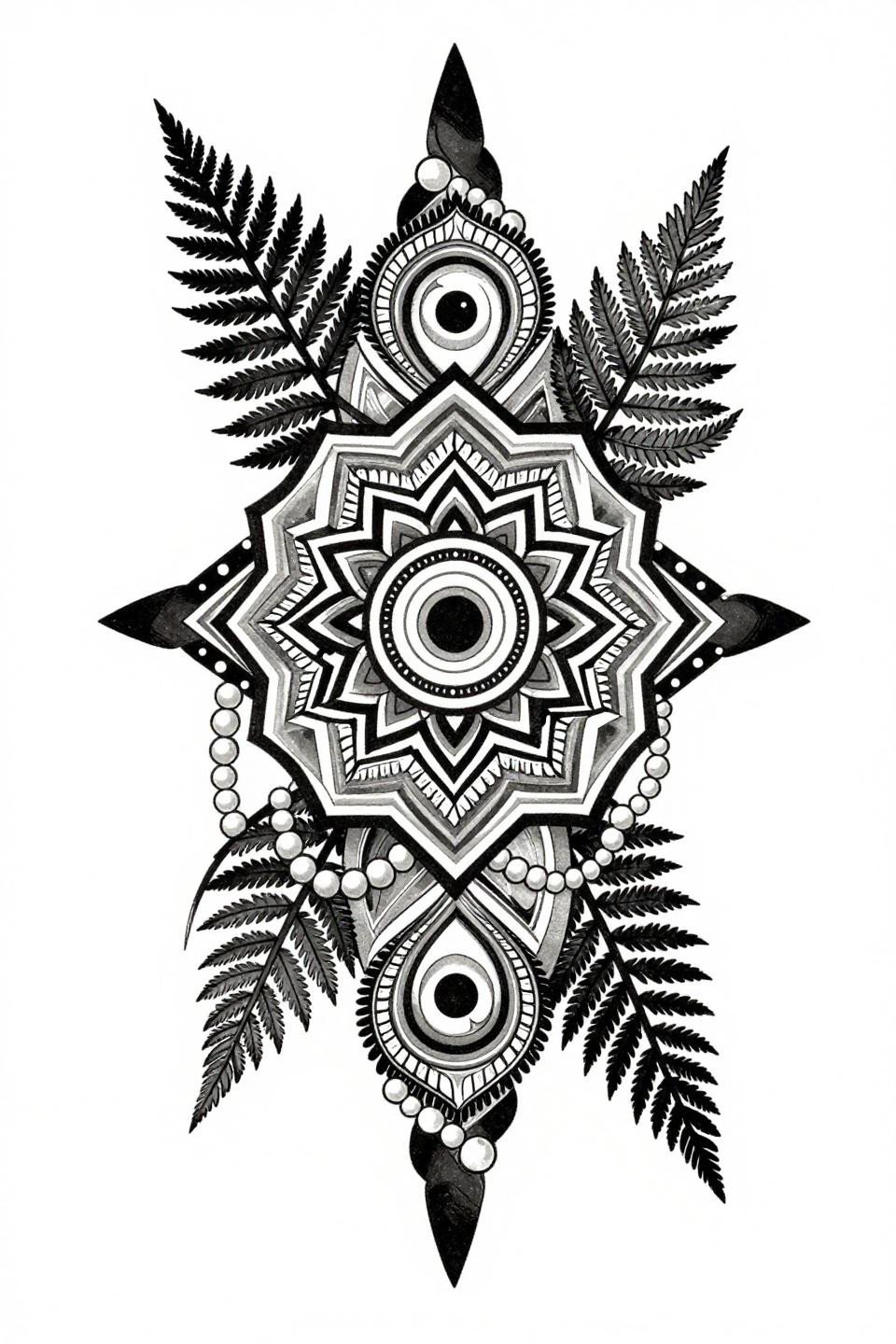
Japanese Irezumi line discipline applied to a hexagonal geometric mandala with radiating peacock feather eye motifs and fern fronds interwoven with pearl dot chains: the bilateral vertical symmetry here is structured exactly as a back panel composition would be, just scaled to hand size.
Dense black ink with grey wash midtones at this structure holds definition for decades on upper arm or thigh placements where sun exposure is limited.
Etching Crosshatch on a Peacock Body: Shadow Logic Over Flat Fill
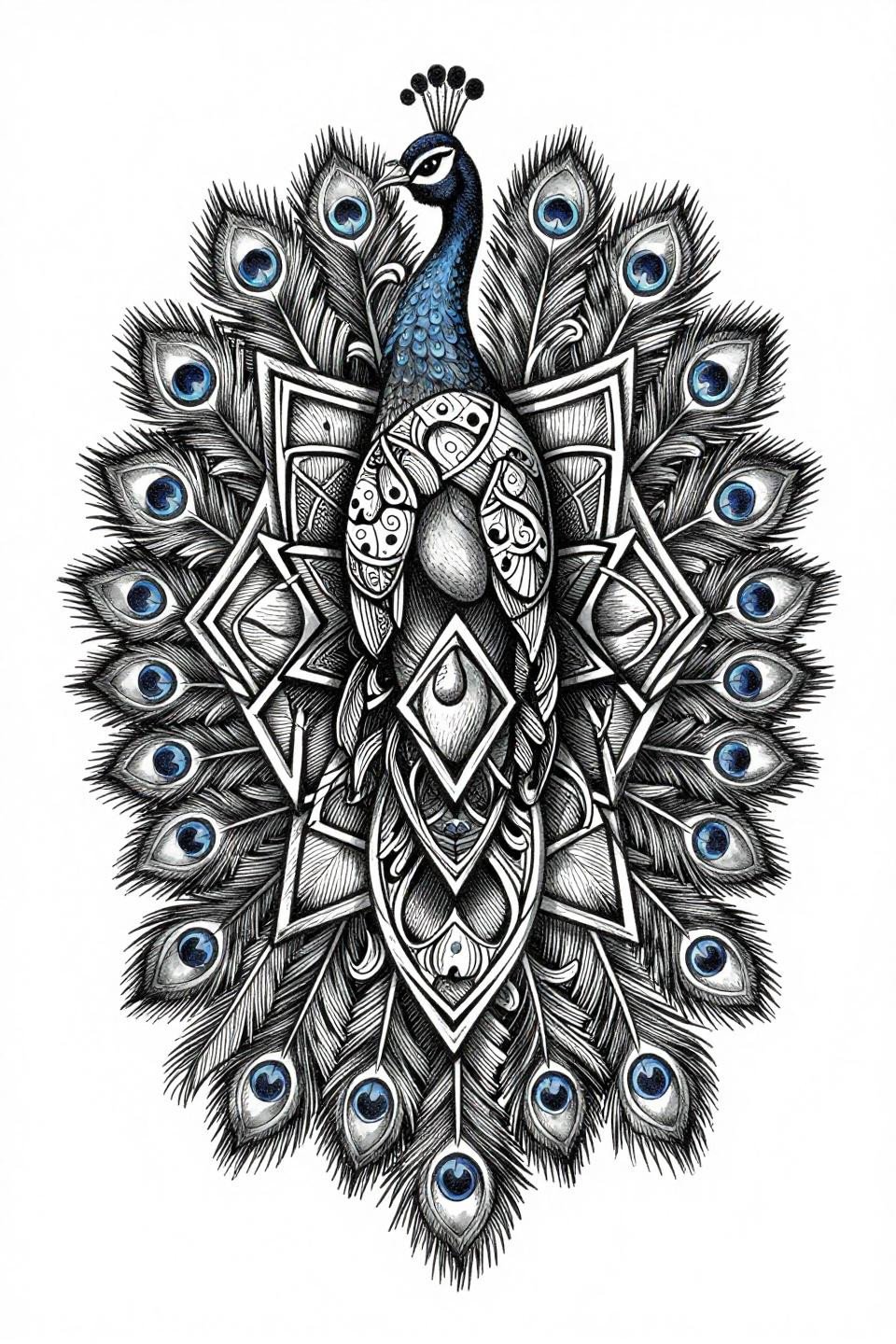
A mirrored peacock with radiating tail feathers built from nested geometric diamonds and mango shapes, shaded entirely through crosshatch etching parallel lines rather than grey wash or flat fills. This is the most technically demanding render method in the collection because every tonal value is constructed from line direction and density.
Woodcut-style crosshatch tattoos need an artist who has practiced the technique specifically, not just someone who does blackwork broadly. Their portfolio should show consistent line spacing without patchiness in the mid-tone zones.
Art Nouveau Diagonal Flow: Breaking Radial Symmetry on Purpose
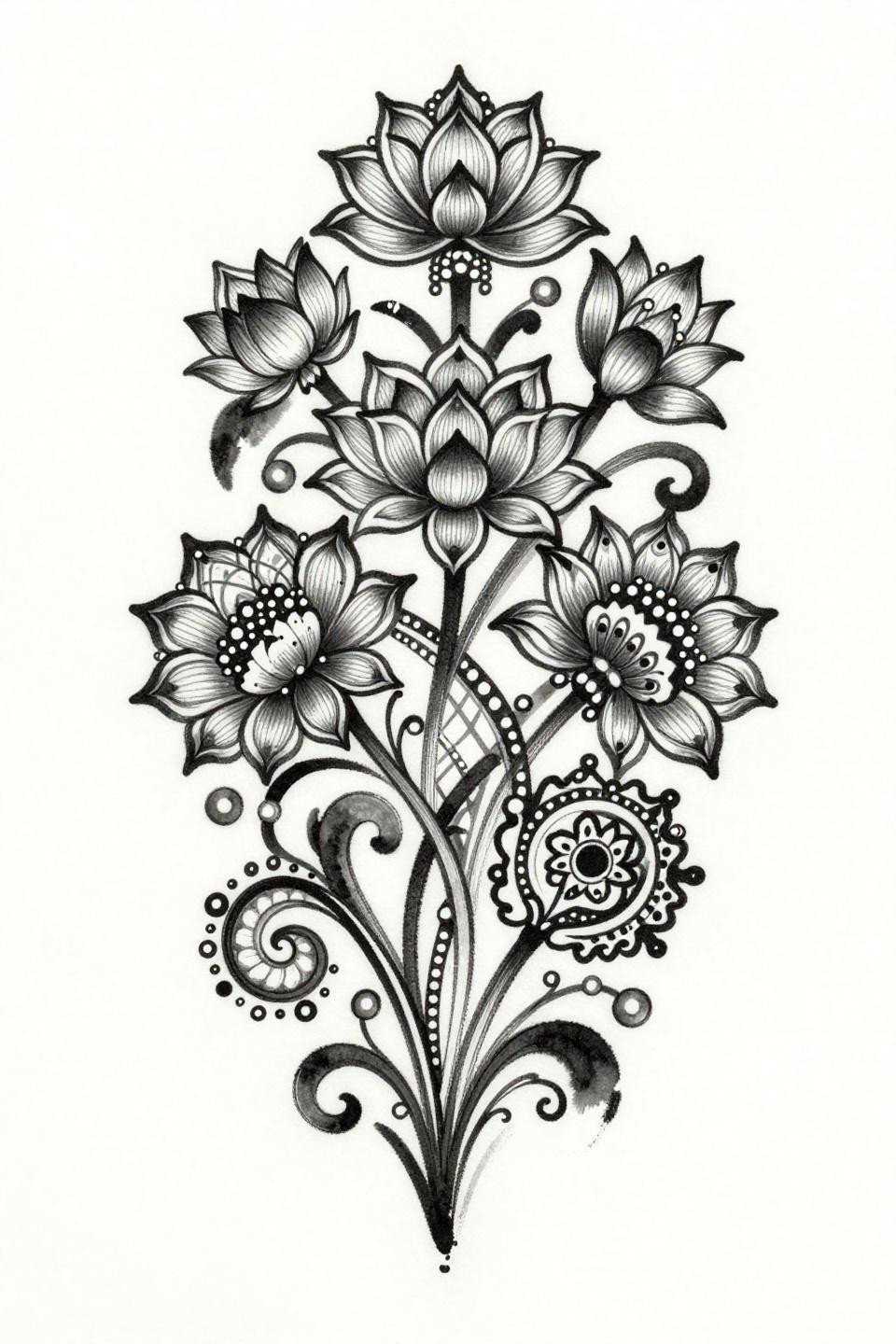
Diagonal asymmetric composition through nested lotus blooms, vine spirals, and paisley negative space fills rendered with calligraphic brush-and-ink marks: wet ink fluid stroke quality is what separates art nouveau mehndi flash from standard blackwork floral work.
The flowing asymmetry makes this a strong forearm or thigh reference, where the design can follow the limb’s natural line rather than centering on a joint. Compare this approach to simple mehndi designs for everyday wear to understand how much compositional weight the diagonal structure adds.
Tribal Geometric Mandala: Stipple Gradient as Structural Architecture
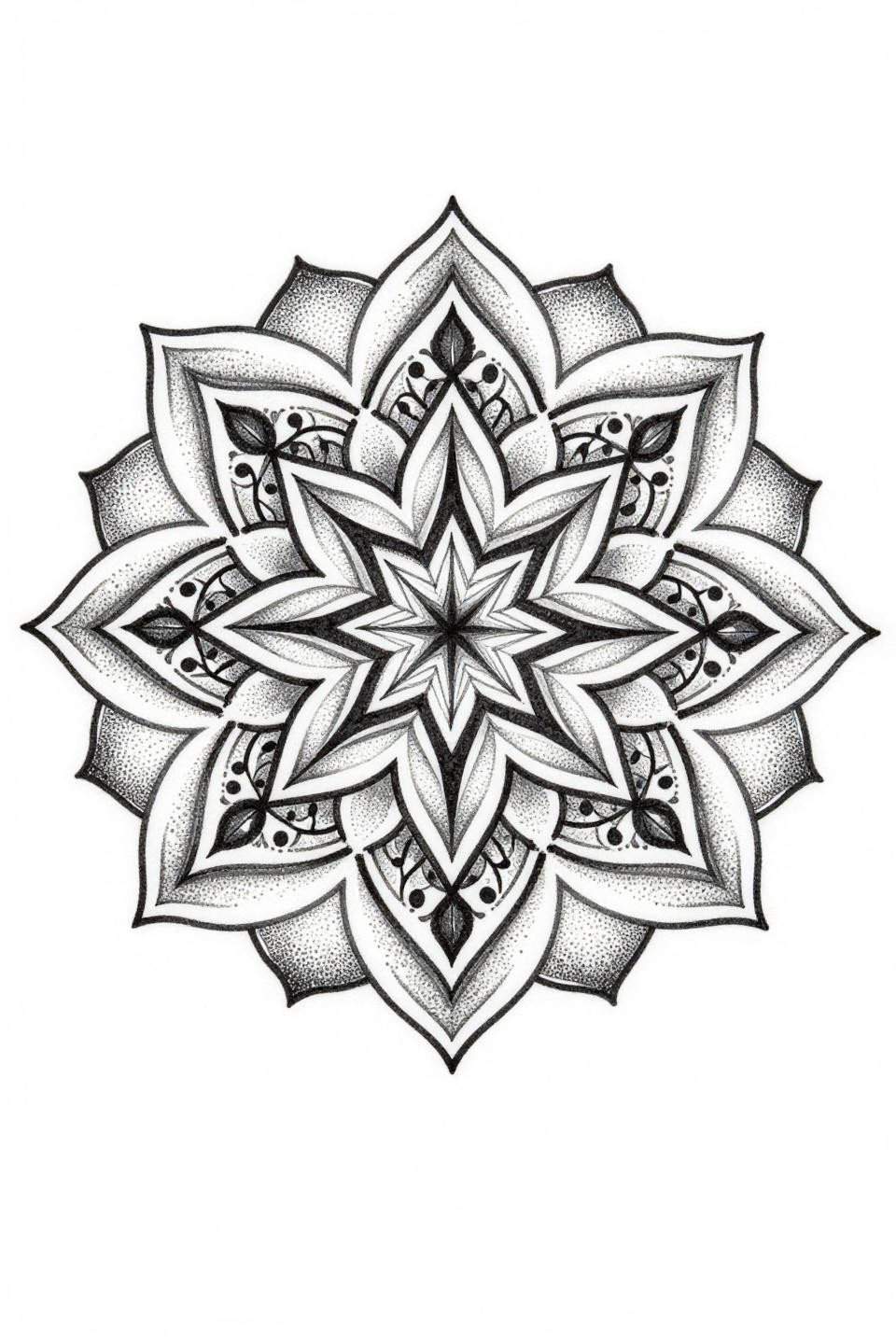
An 8-pointed star anchors concentric circles of stipple dotwork with teardrop leaf vine motifs carved into the negative space, the gradient running dense at center out to open at the perimeter. Negative space carving between elements is what gives this mandala its dimensional read without any grey wash.
This structure translates directly to a palm or back-of-hand placement, where the radial symmetry aligns with the hand’s natural focal geometry.
Botanical Single Needle: Peacock Feather as Structural Spine
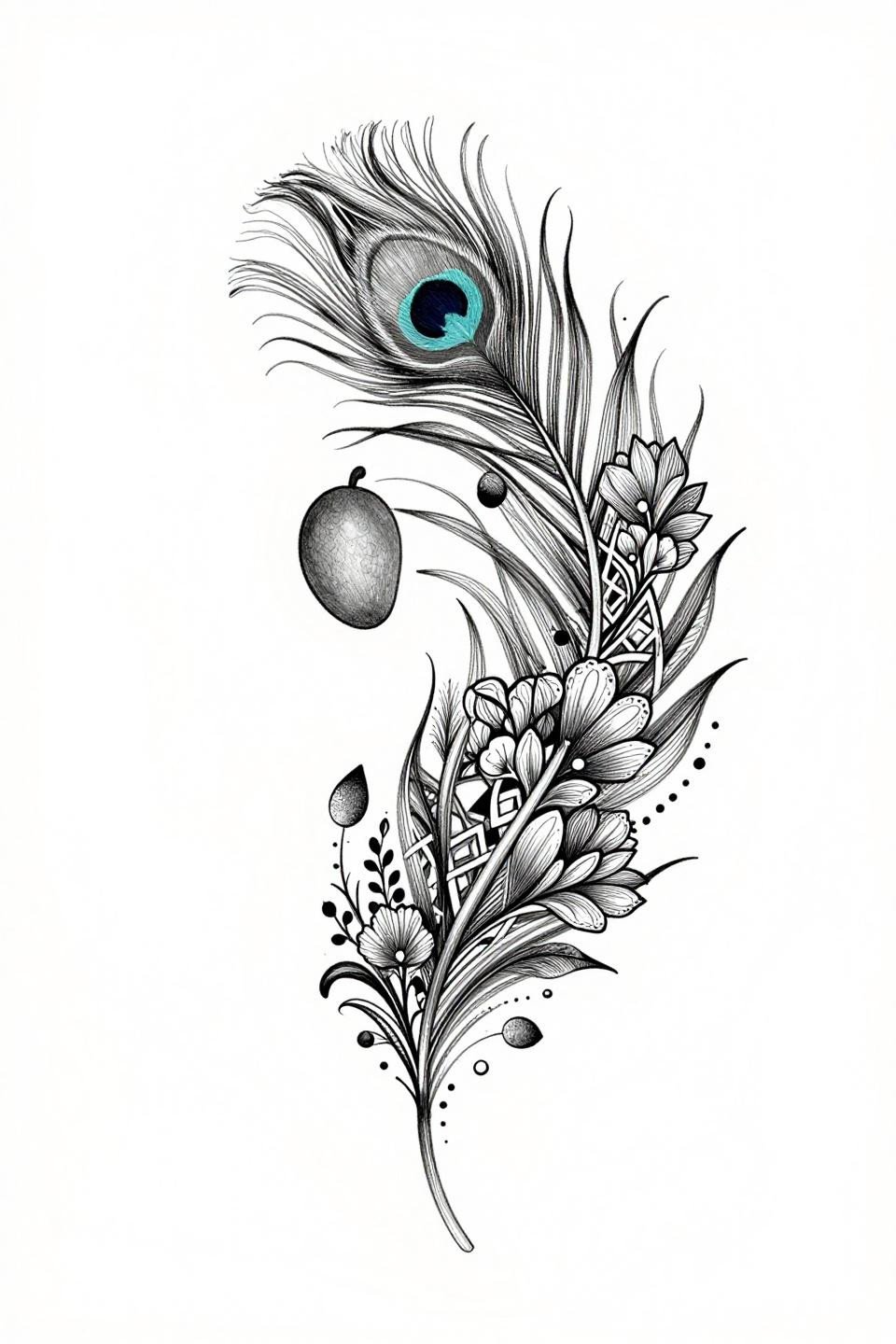
Hairline single-needle strokes build a peacock feather with asymmetric Persian floral vine branches, nested mango teardrop motifs, and fine trailing dotwork lines creating a downward flowing composition. The botanical scientific render style keeps the organic motifs structurally precise without flattening their natural weight.
Single needle 1RL work like this needs an artist who controls machine speed: on olive and deeper skin tones, the hairline weight requires careful depth management to read cleanly after healing. This reference, alongside others in the collection, covers the full range of what’s possible when henna designs beyond special occasions inform permanent tattoo flash.
Pick three references from this collection, not twelve. Your artist needs a direction: line weight, fill style, and composition type. Narrow to those three variables and the consultation becomes a technical conversation instead of a guessing game.