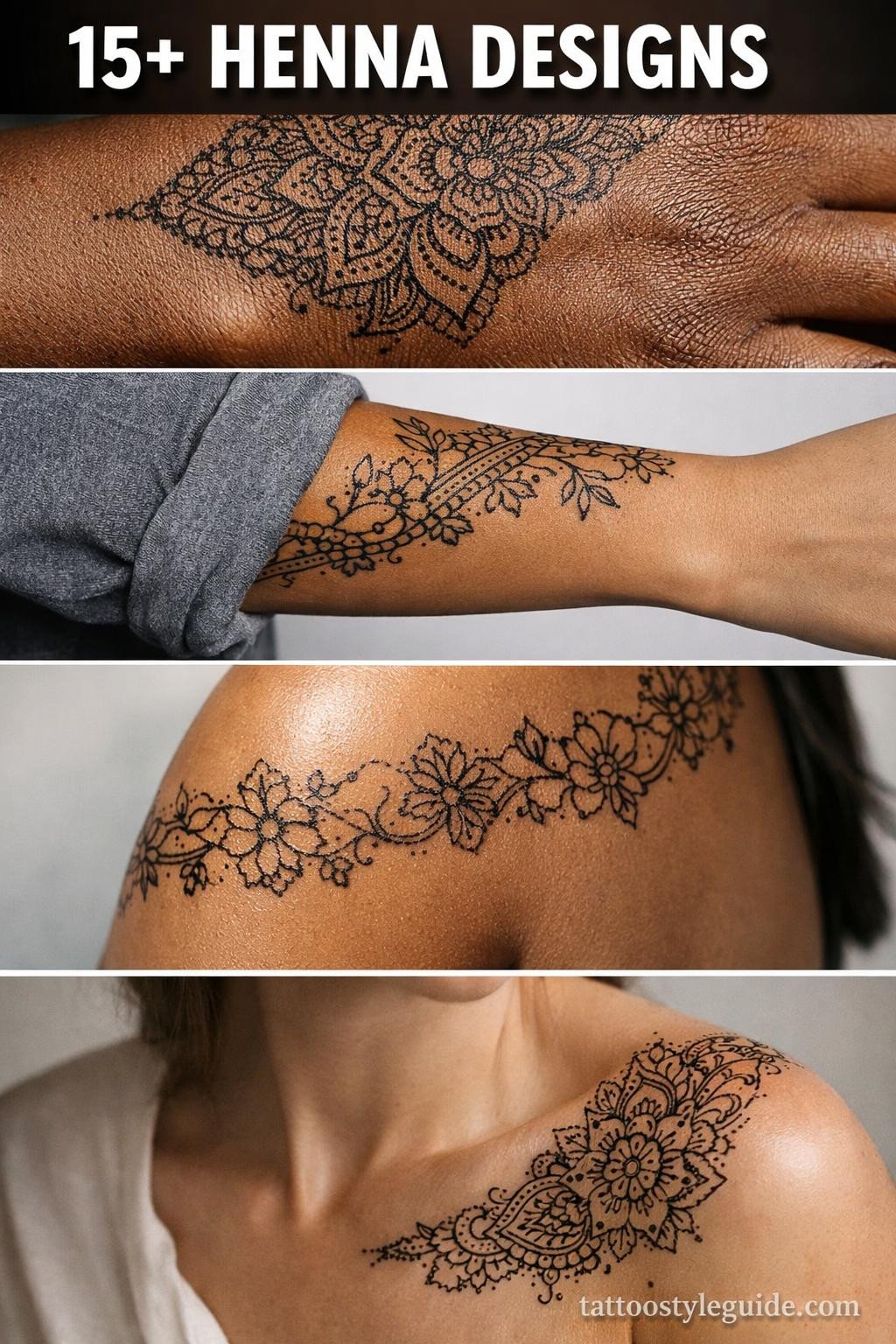
Henna paste fades in two weeks. That’s the whole point, and also why so many people underestimate how much technical precision goes into designs meant to last only 14 days. The linework discipline required for traditional mehndi translates directly into permanent tattoo composition, which is why artists who study henna flash produce some of the tightest geometric work in the shop.
Henna art designs: where mandala geometry meets controlled linework
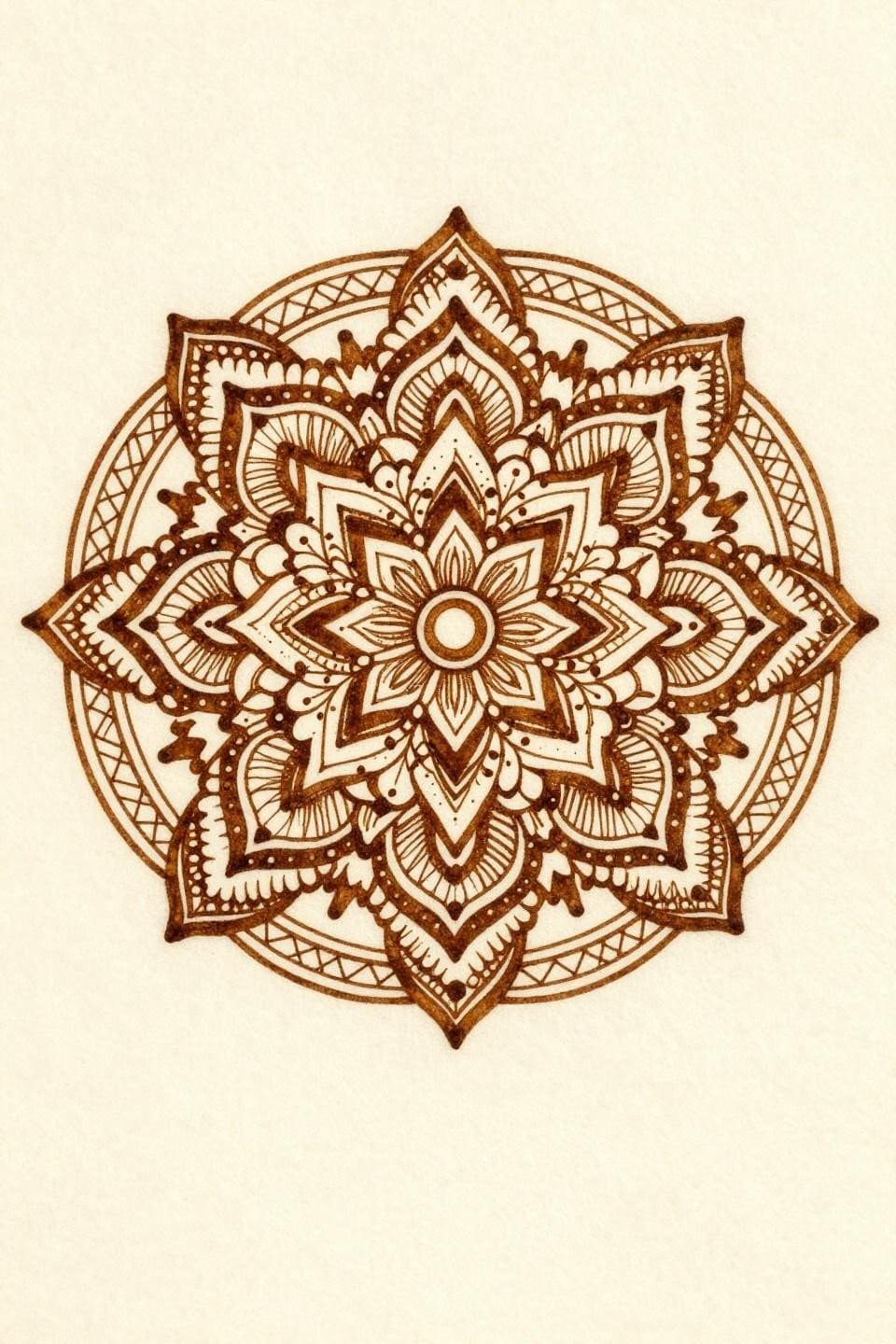
The crosshatch infill on traditional henna art designs isn’t decorative filler, it’s a structural decision. When translated to skin using a 5RL needle grouping, that dense interior shading creates the tonal contrast that makes a mandala read from across a room. On medium and olive skin tones, the open negative space borders pop harder than on fair skin, where the contrast is softer.
Simple henna tattoo: why restraint reads better than complexity
A simple henna tattoo done with 0.3mm hairline linework using a 3RL needle will outlast an overcrowded design every time. Dot accents at petal tips are a deliberate breathing technique, they stop the eye before a section gets visually muddy. Keep negative space intentional, not accidental.
But placement matters more than complexity here. Inner wrist and forearm placement gives this style room without distortion. Avoid the ribcage unless you’re committed to a touch-up at the 8-week mark, skin movement in that zone breaks fine lines fast.
Simple henna designs: the stipple gradient that makes flat look dimensional
Stipple fill transitioning from dense center to open filigree at the edges is the technique that gives simple henna designs their dimensional pull. In permanent ink, this is achieved with dotwork stippling using a 3RS needle, building saturation in layers rather than single-pass packing. And on darker skin tones, deep brown through dark mahogany, this graduated approach reads with far more clarity than solid black fill.
Henna inspo: the paisley teardrop as a standalone composition
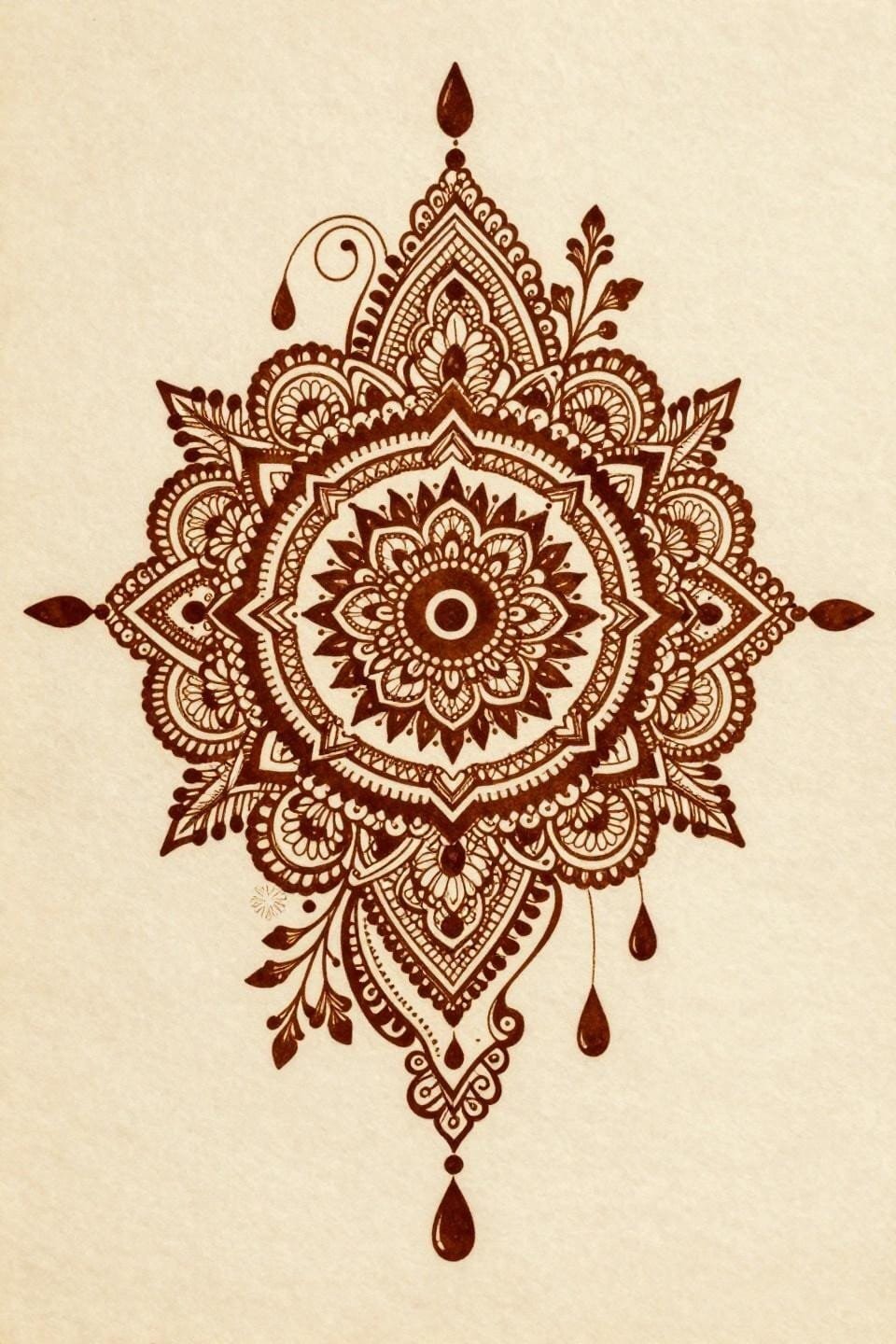
Paisley teardrops radiating outward from a mandala center are the most borrowed element in henna-inspired tattoo work. The burnt sienna and terracotta ink palette in traditional mehndi translates to warm brown tattoo ink , Eternal Ink’s Raw Sienna holds its warmth on olive skin for years without the grey drift that plagues cheaper brown pigments.
Cute henna tattoos: dense stipple infill with open lace contrast
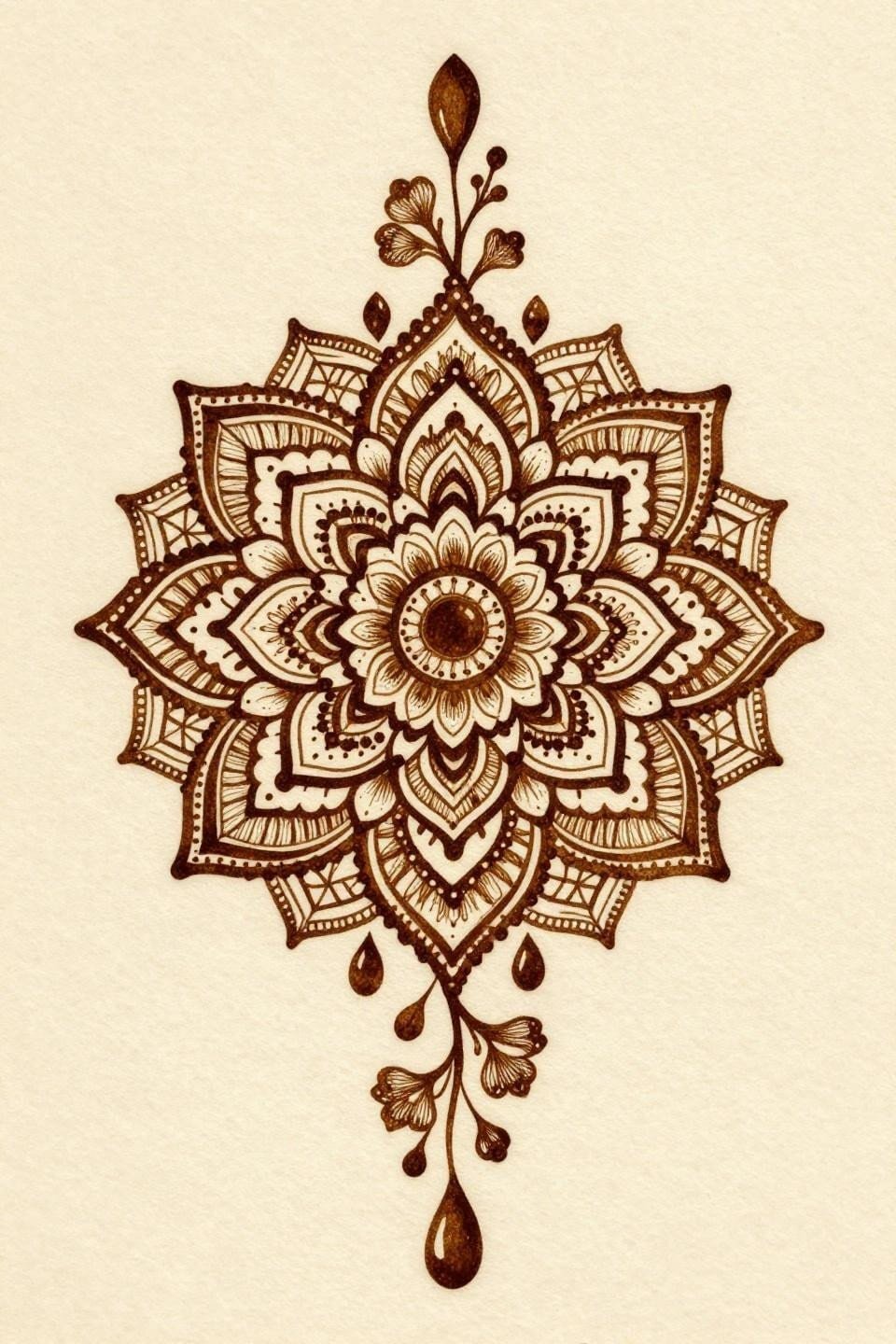
The appeal of cute henna tattoos isn’t softness, it’s precision at a small scale. A 0.5mm linework standard with dense stipple infill creates that lace-over-skin effect that photographs well and holds structure during healing. Expect 2-3 weeks of peeling before the design settles, and avoid petroleum-based aftercare that breaks down fine line edges.
Easy henna designs: the paisley centerpiece as a beginner-friendly anchor
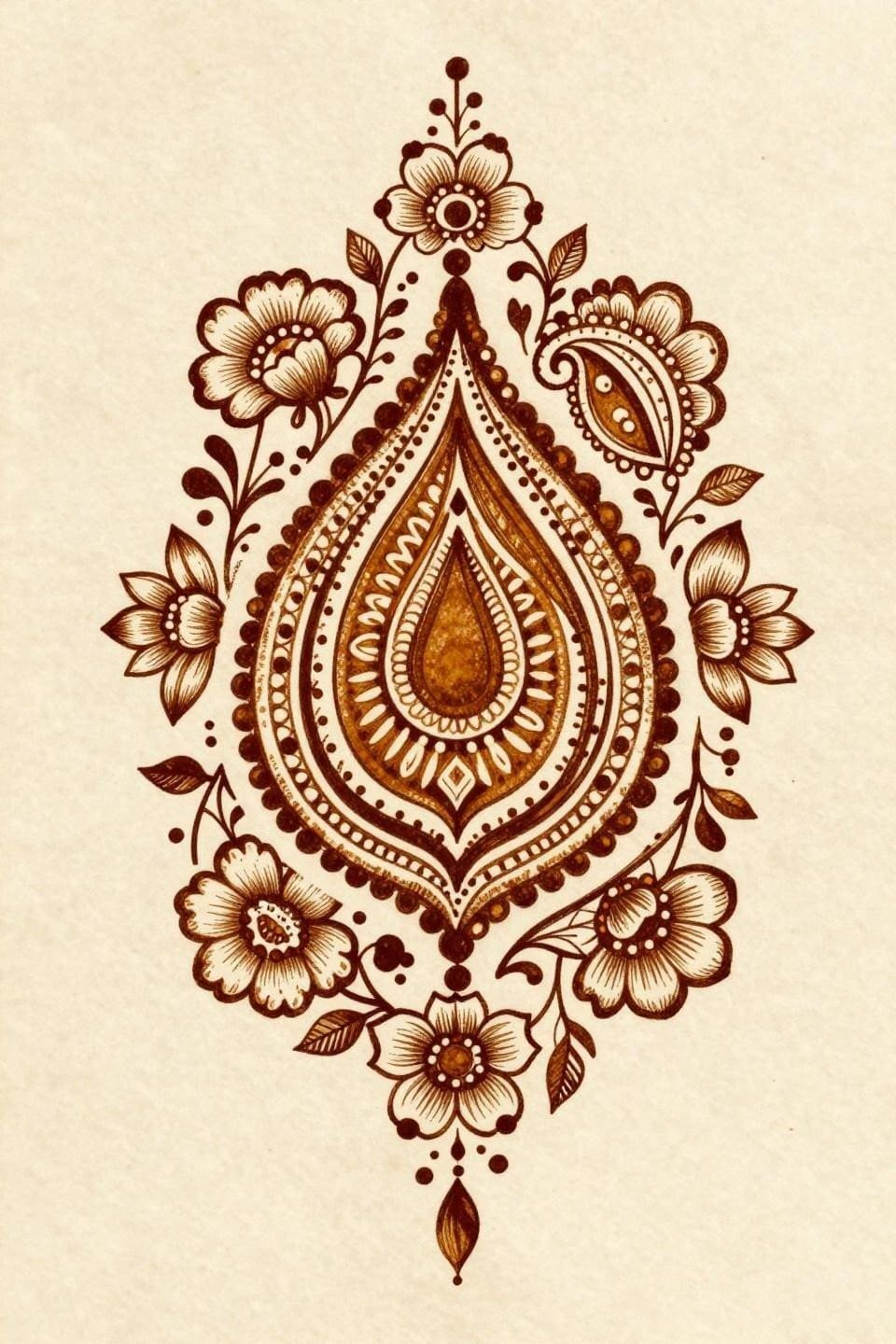
Easy henna designs build from a single paisley centerpiece outward, which is also the smartest composition strategy for a first tattoo in this style. The form is forgiving enough to scale down to a 3-inch piece on the inner forearm without losing legibility. And dotwork fill around the main motif means a less experienced artist can execute it cleanly without needing years of mehndi-specific training.
Cute henna designs: lotus core symmetry and why it holds on all skin tones
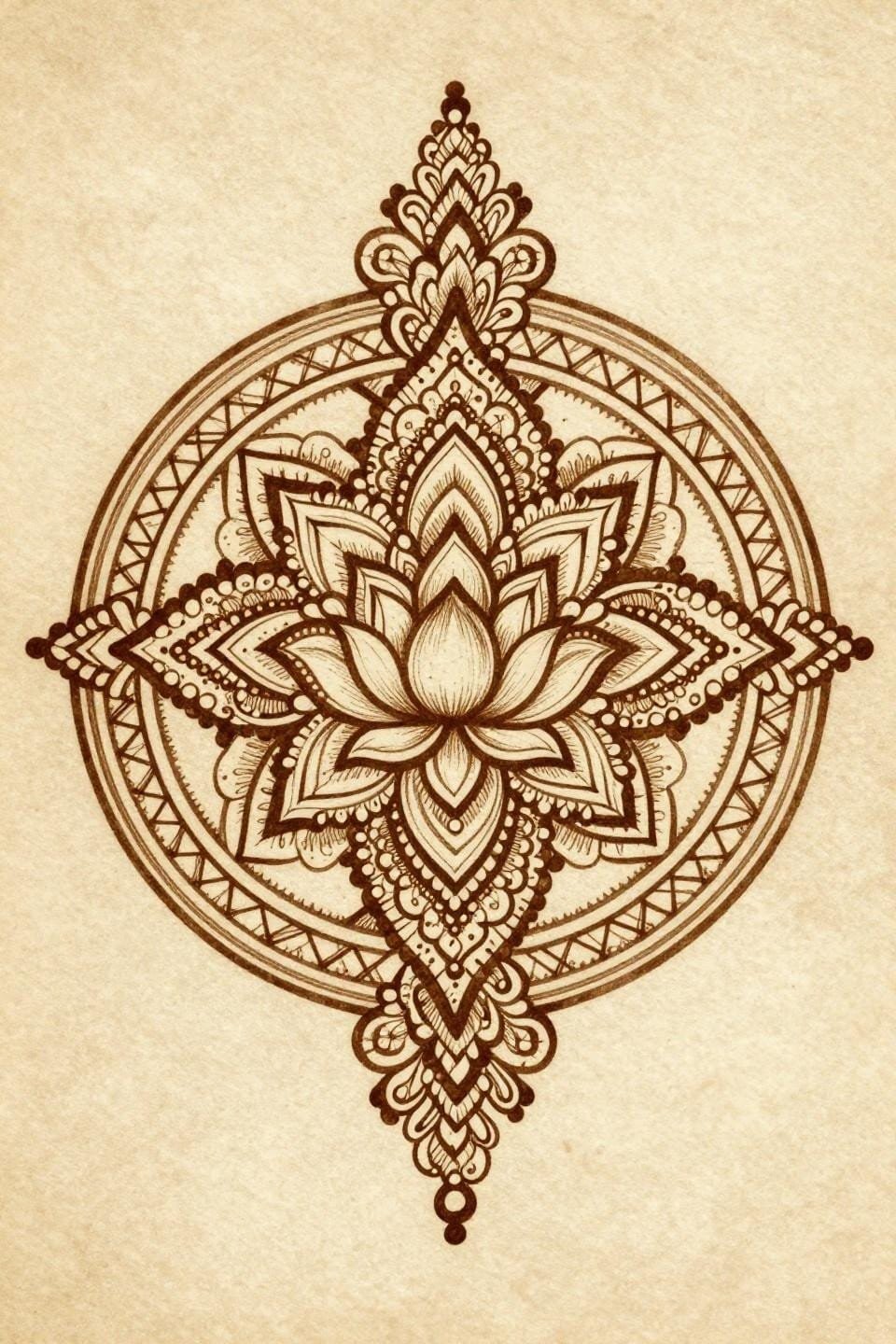
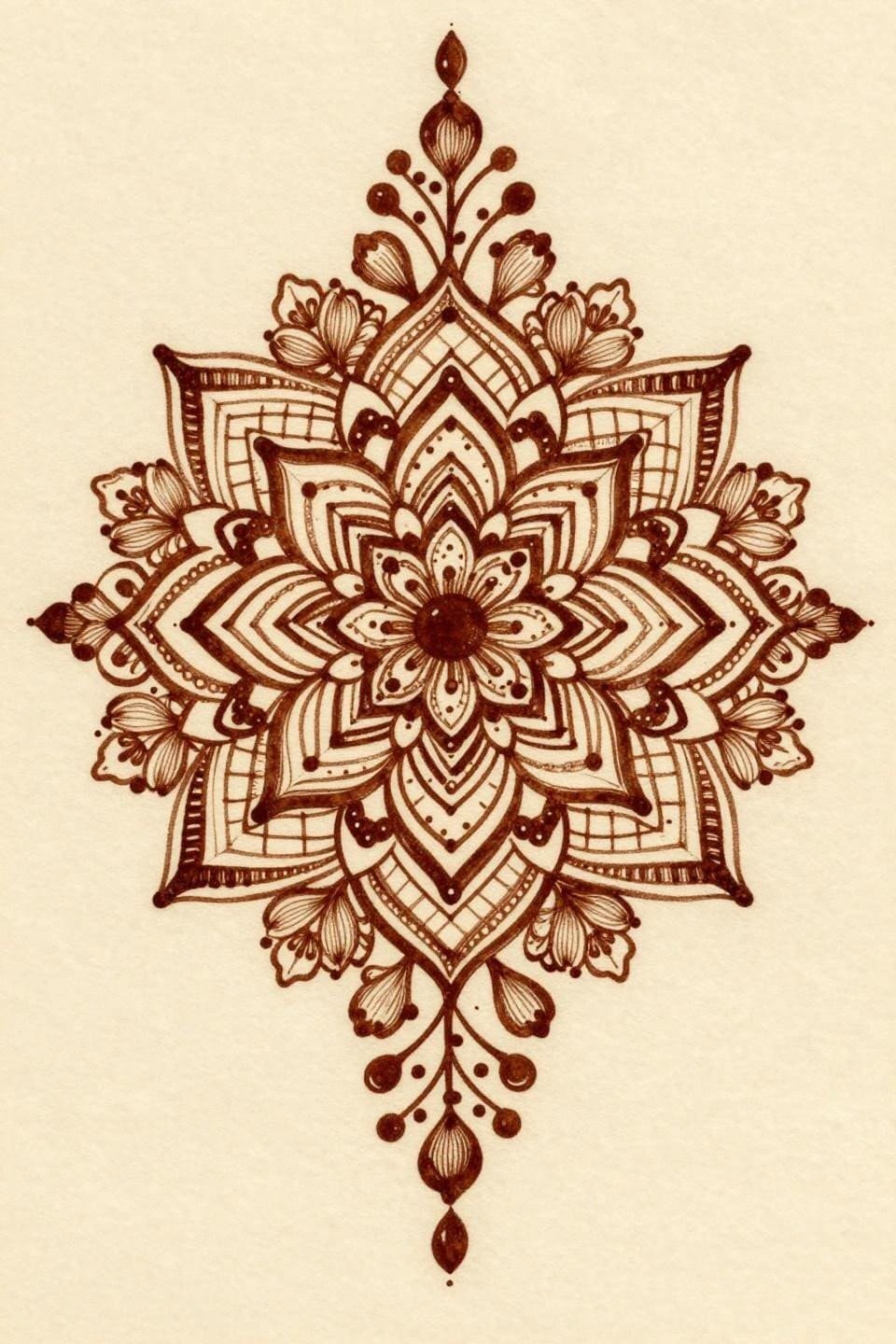
A lotus core inside a mandala is the structural anchor that keeps symmetrical henna designs from collapsing visually. The open negative space lace pattern around the outer edge does real work on dark skin tones, where solid fill designs can read as a single dark mass, the filigree border holds individual detail at the surface. This is where monochromatic warm sepia ink outperforms black for skin tones in the medium-to-deep range.
Small henna designs: stipple center to open filigree, scaled for wrists and ankles
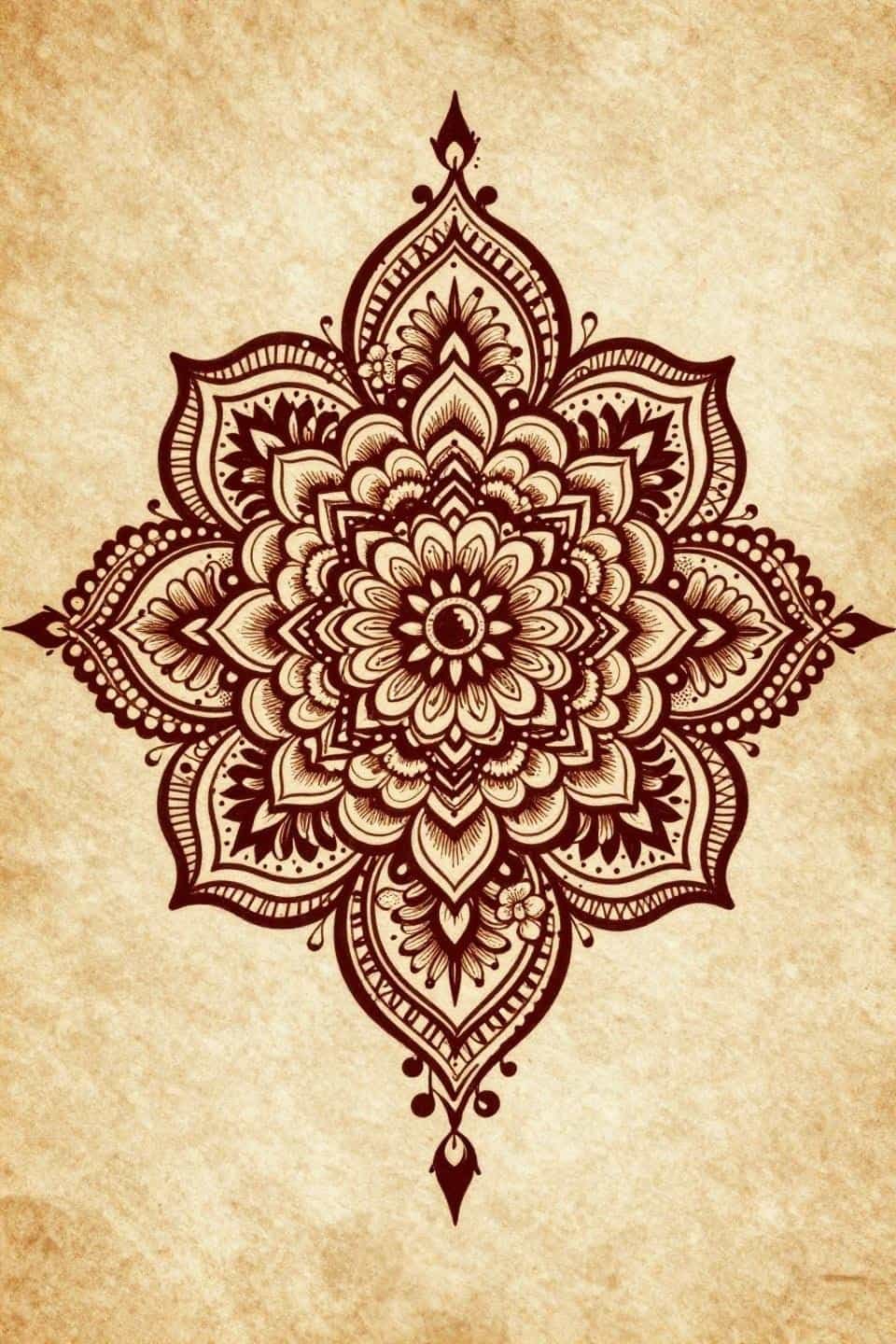
Small henna designs scaled to wrist or ankle placement need a specific density adjustment: the center stipple fill should compress to no smaller than 2mm groupings or it will bleed together during healing. The outer filigree stays open. At this scale, a 3RL needle on a rotary machine gives more consistent pressure control than a coil, less vibration means tighter linework on curved, thin-skinned placement areas.
Modern mehndi designs: the hamsa hand as a bridge between tradition and contemporary flash
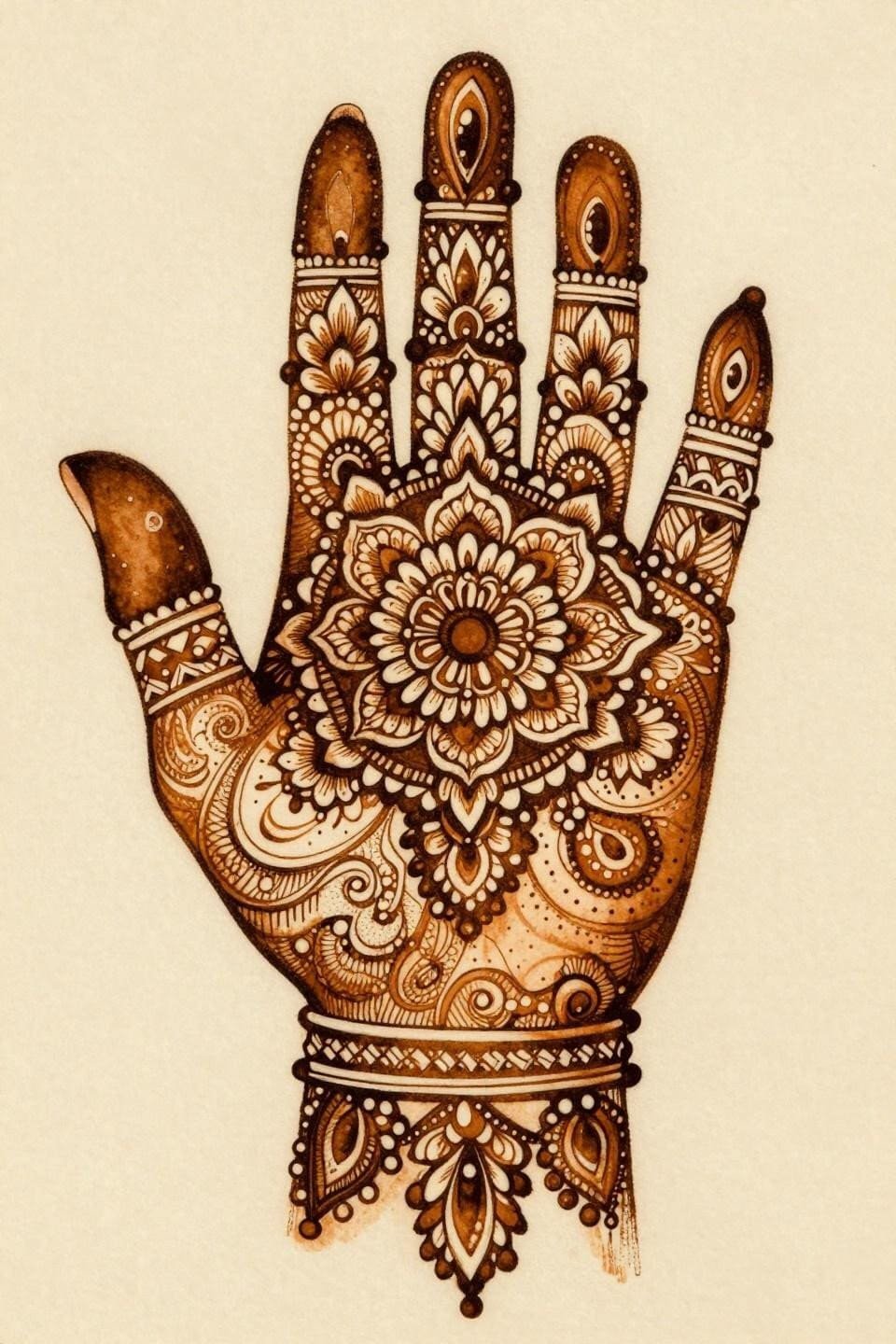
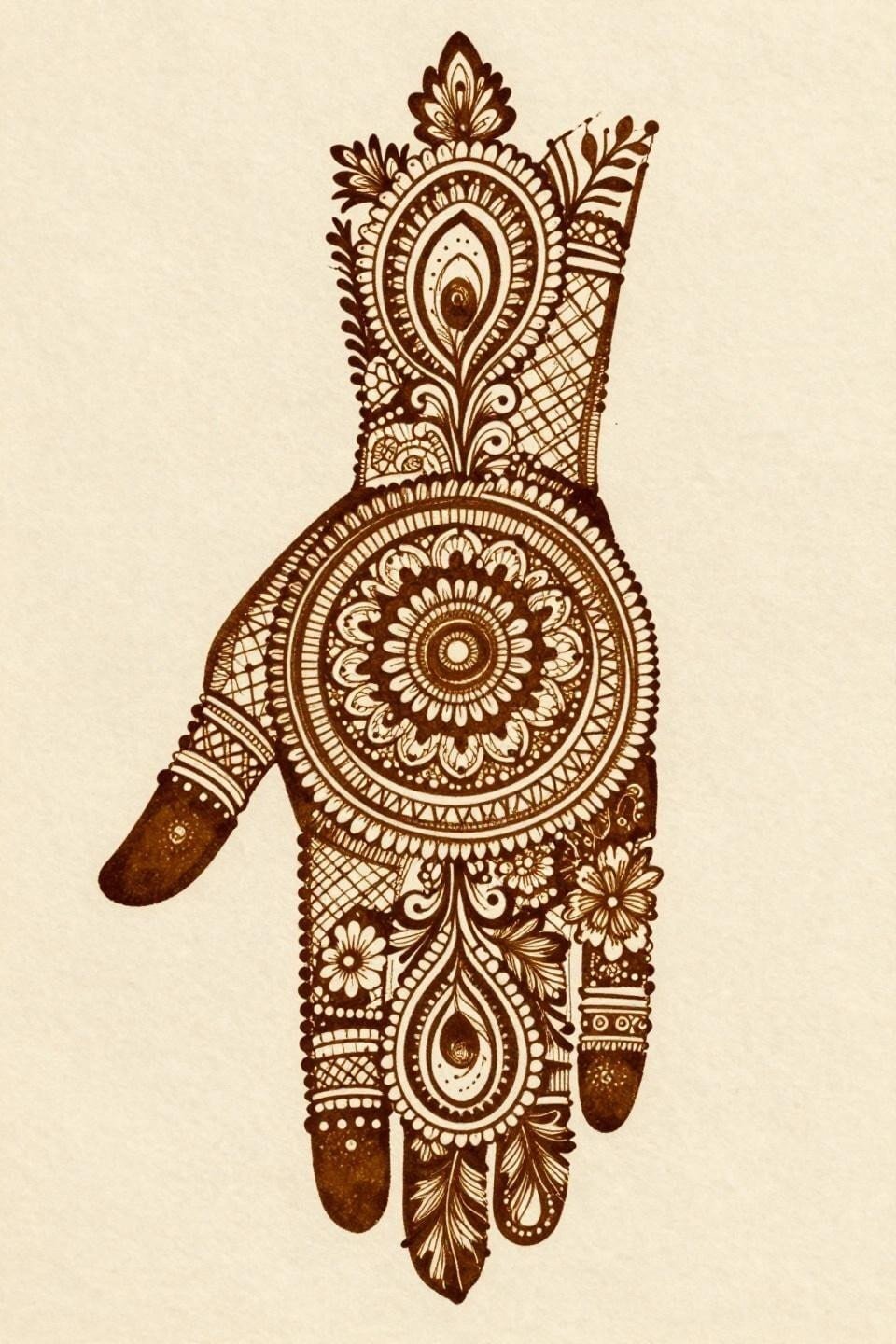
Modern mehndi designs have moved the hand motif, historically the hamsa, into contemporary flash format by stripping the symbolic weight and keeping the structural logic: mandala center, radiating paisley fronds, geometric border bands. The 0.3mm hairline linework standard holds here, but the hand silhouette requires a larger canvas. Minimum 5 inches to keep inner lattice detail from collapsing post-heal.
On olive skin, the deep sepia and burnt umber palette stays warm for 3-5 years before the brown begins to cool. Lighter ink coverage in the lattice sections will shift first, plan for a single touch-up around year three.
Henna main: the full mandala composition as a placement-aware decision
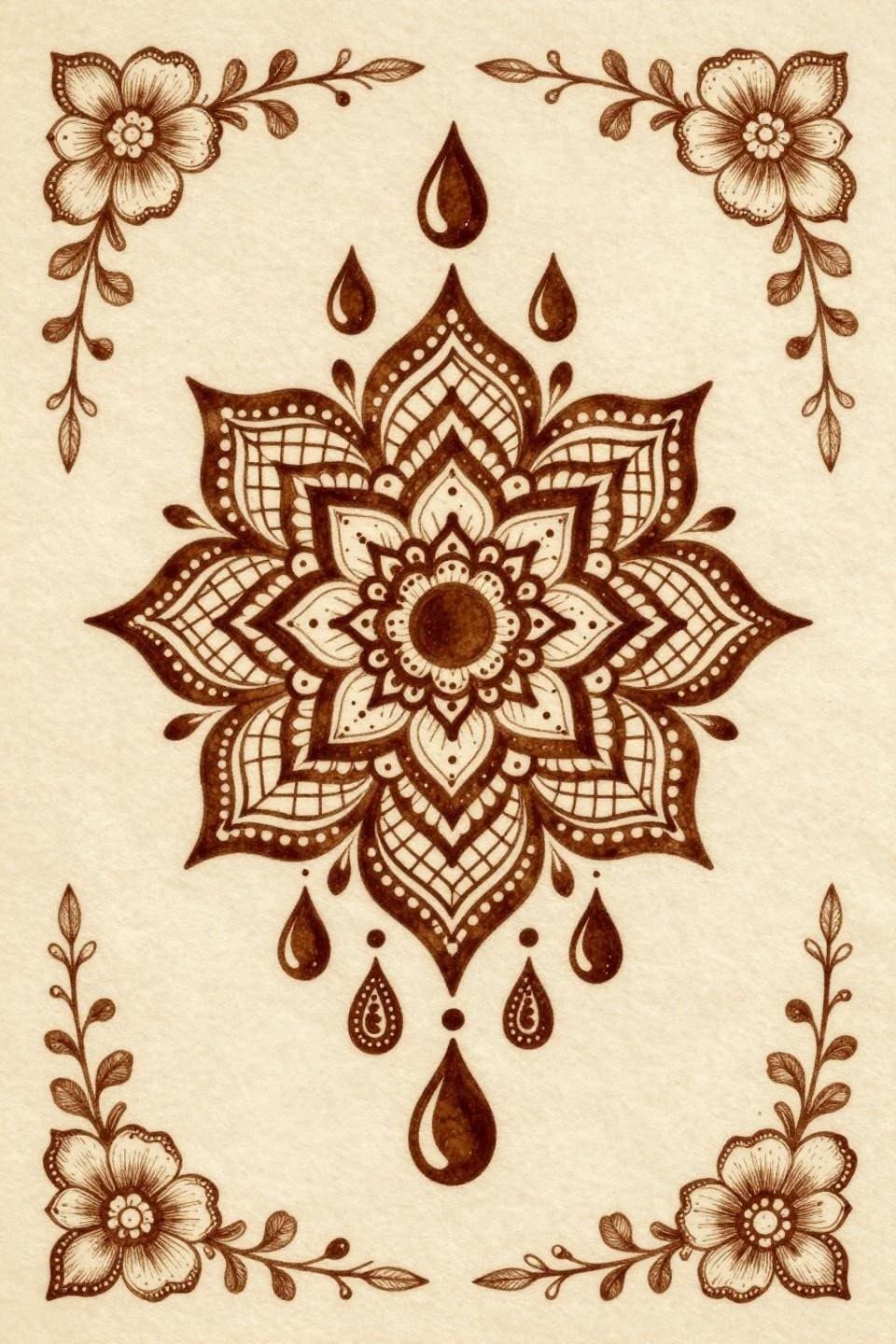
The full mandala henna composition is a placement negotiation first, design choice second. A circular composition above 6 inches works on the thigh, upper back, and outer shoulder, areas with minimal skin movement that won’t distort the radial symmetry during healing. Avoid the stomach and inner arm for full mandalas: both zones stretch with body changes and the geometric lattice fill shows distortion within 18 months.
Henna art designs, evolved: crosshatch fill and the case for warm brown over black
Crosshatch fill in henna art designs is a direct translation of the layered paste buildup in traditional mehndi application. In tattoo form, this means multiple directional passes with a 7M1 magnum at low voltage, building density without overworking the skin. And the argument for warm brown ink over black in this style is simple: black reads as a different aesthetic entirely, flatter and harder, while warm sienna keeps the organic softness that makes henna-inspired work read as henna-inspired.
Simple henna tattoo placement: where hairline linework survives long-term
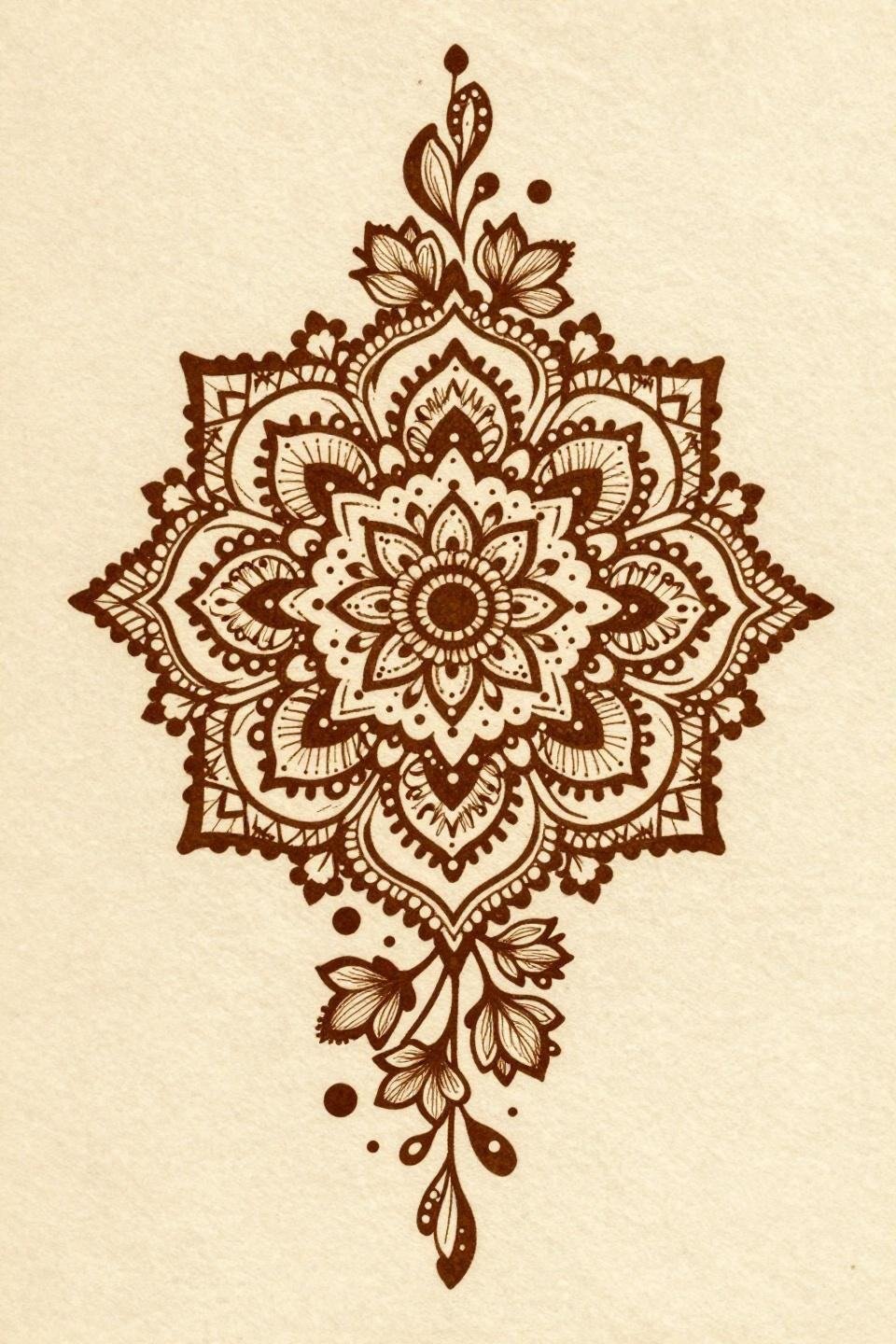
Hairline linework at 0.3mm is the most fragile element in any henna-style tattoo. It survives best on areas with low friction and stable skin: upper arm, sternum, upper back. Skip the foot, friction from footwear destroys fine line integrity within 12 months, and this style’s density of detail makes patchy fading look worse than in simpler designs. Touch-up window is 6-8 weeks minimum after the initial session.
Simple henna designs for longevity: what holds and what doesn’t
The sections of simple henna designs that hold longest are the ones with the most negative space, the open borders and dot clusters age better than dense crosshatch centers, which can thicken and merge on skin with higher oil production. If longevity is the priority, ask your artist to pull back 15% on interior fill density. What looks slightly light on day one will read exactly right at year two.
Full reference boards with healed results and artist-sourced flash at tattoostyleguide.com , the Henna Designs Pinterest board is where the placement comparison shots live.