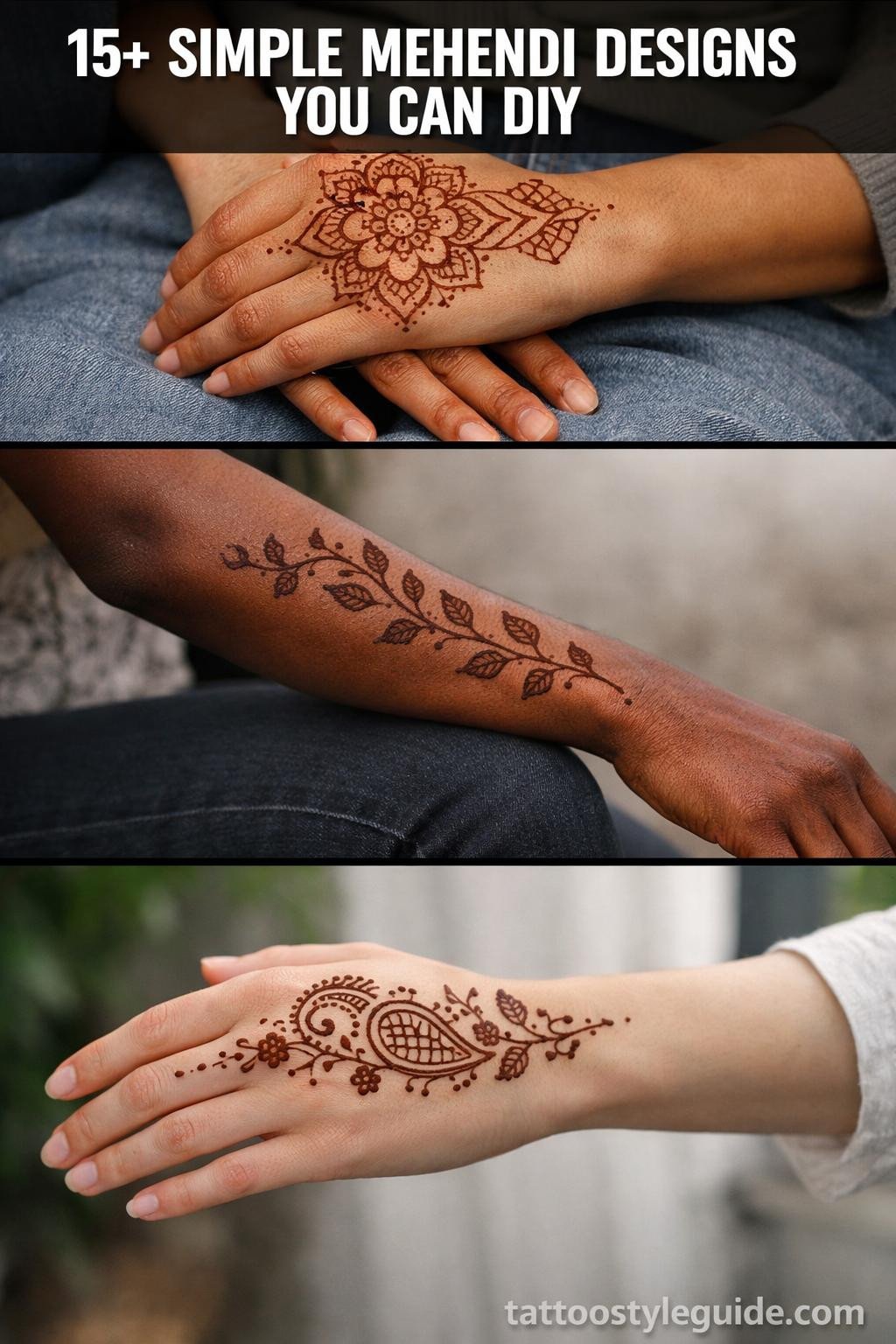
Simple mehendi designs for hands read better when the negative space is intentional, not accidental. Most DIY attempts fail because the cone is overloaded and the lines bleed into each other before the paste dries. Restraint is the actual skill here.
The designs below are organized by complexity and style approach, from minimal single-needle-weight vines to back-hand mandala work. Each one is reproducible with a standard cone and a steady hand.
Three Vines, Diamond Gaps: The Geometry That Holds
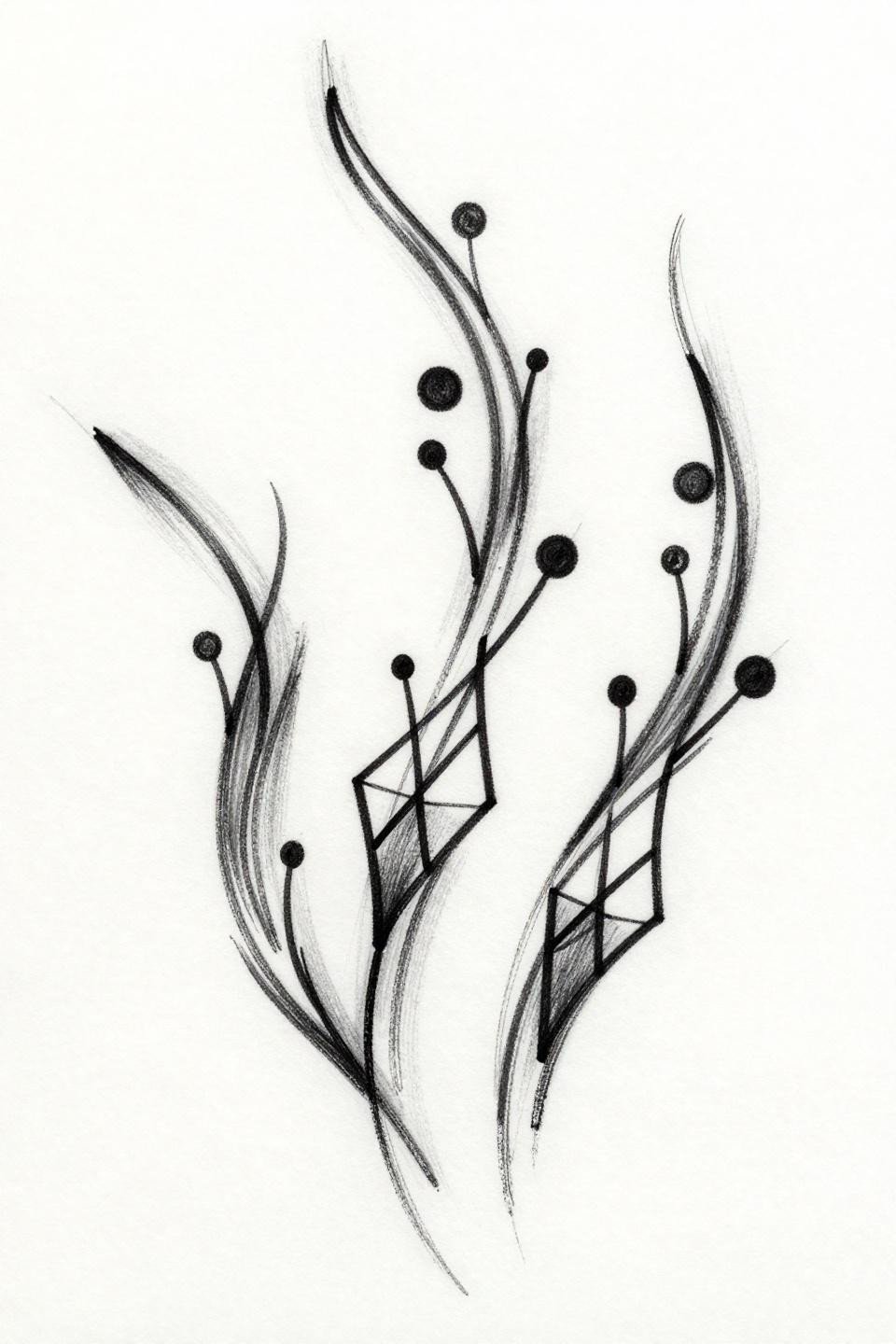
Three ascending vines linked by geometric connectors, with diamond negative space as the functional design element, not just empty areas between motifs. The asymmetric teardrop accents keep the eye moving without overloading the wrist canvas.
This layout maps cleanly to the back of the hand, where the bones create natural ridges that can distort symmetrical designs. Asymmetry here is a technical advantage, not a stylistic preference.
Watercolor Edge Bleed Changes the Whole Cone Technique
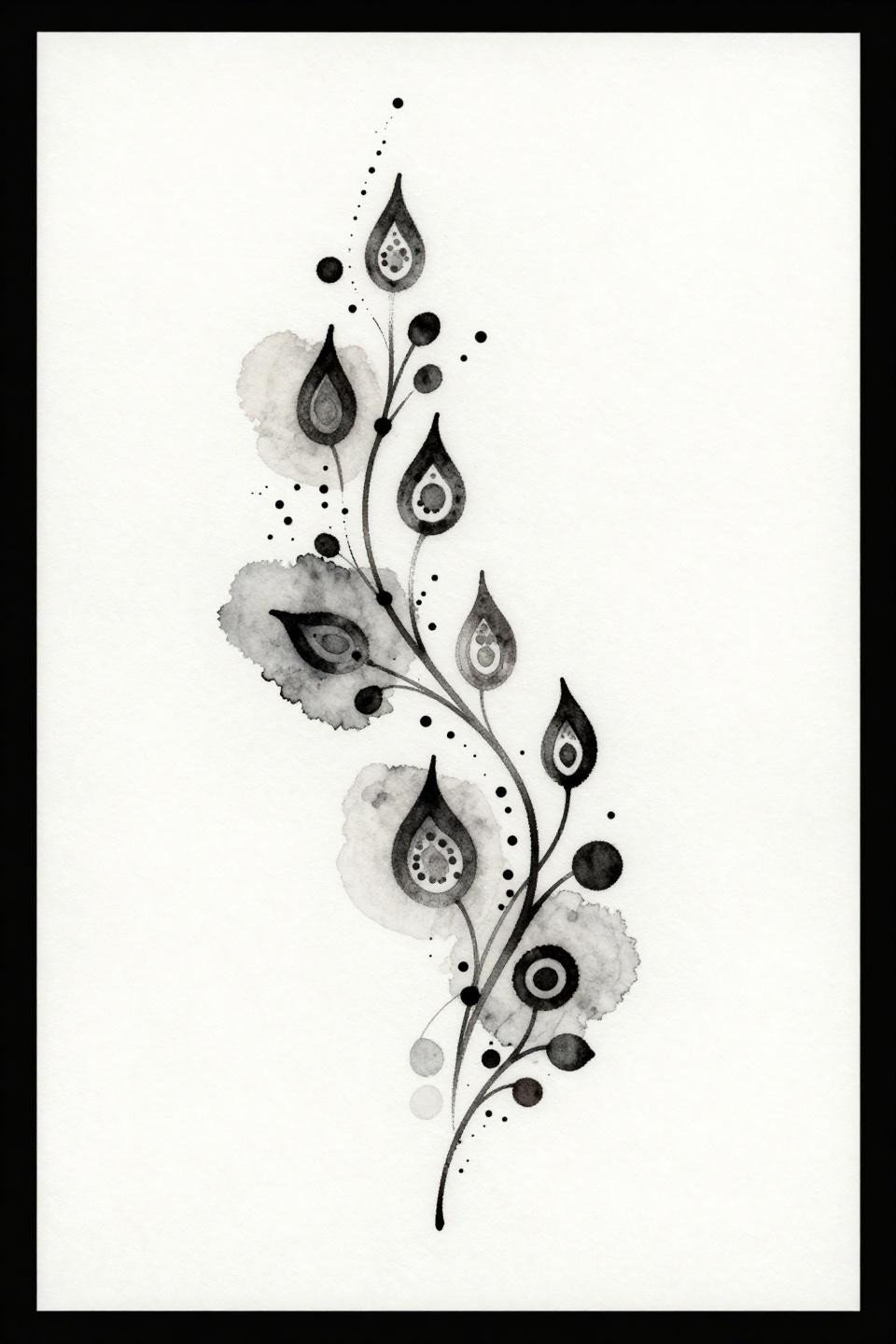
Dual branches with alternating teardrops and circles, rendered in a calligraphic wet-ink weight that mimics the natural variation you get from a well-loaded henna cone at different pressures. The organic splatter at intersection points adds density without adding complexity.
For latest simple mehndi design ideas that hold their visual weight even as the stain lightens, the outer branch lines need to be drawn at the heaviest cone pressure, not the fill clusters.
Lotus Termination Points Replace the Standard Paisley Finish
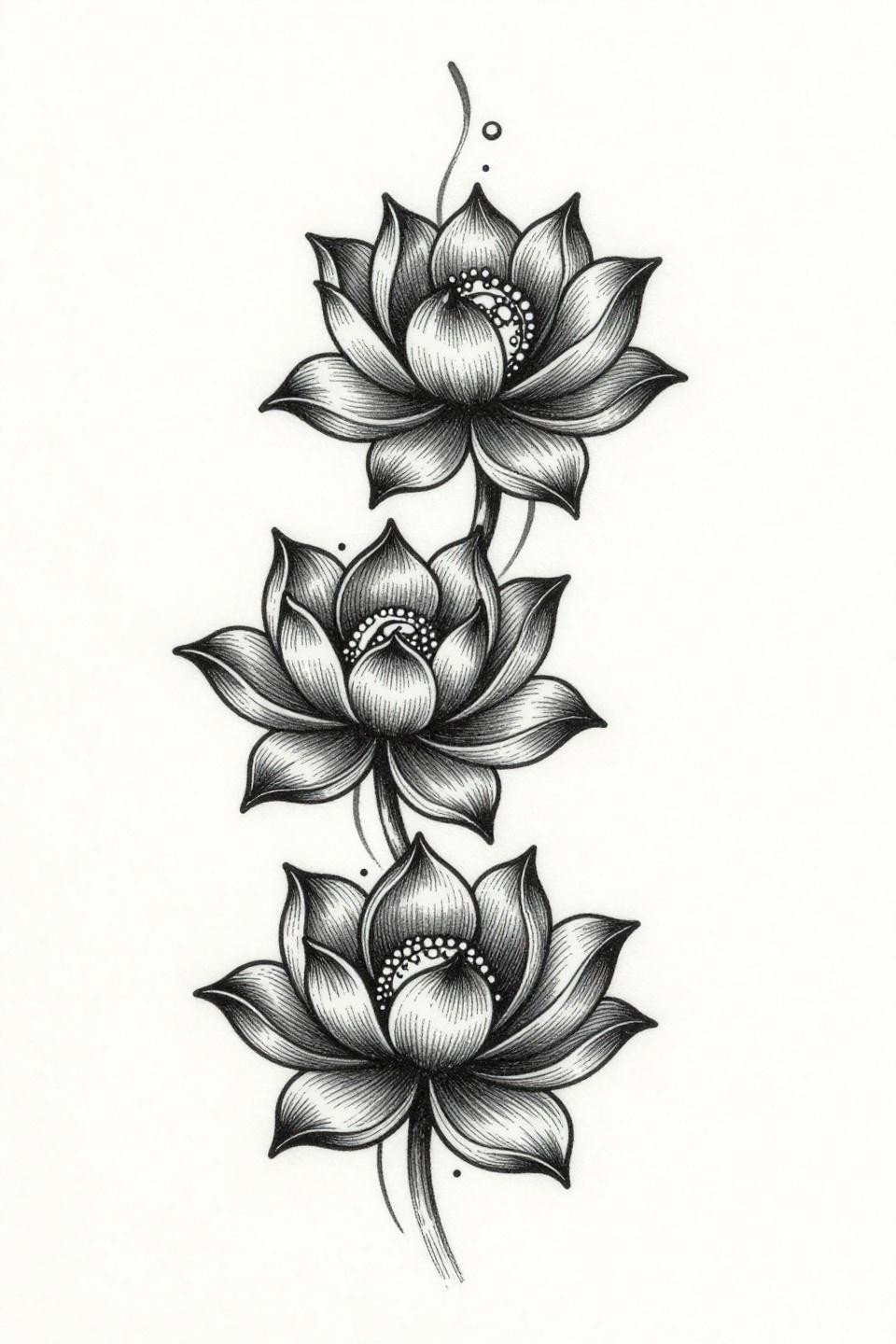
Three spiral curves, each capped with a five-petal lotus bud, linked by hair-thin tendrils at the center points. The crosshatch shadow fill at curve junctions signals where stain concentration should be heaviest for maximum color payoff.
On olive and darker skin tones, the lotus bud tips need to be drawn with at least two passes to build enough paste depth. Single-pass fine lines will stain too light to read at the outer edges.
Dotwork Mandala Nodes: Density Without a Shaky Hand
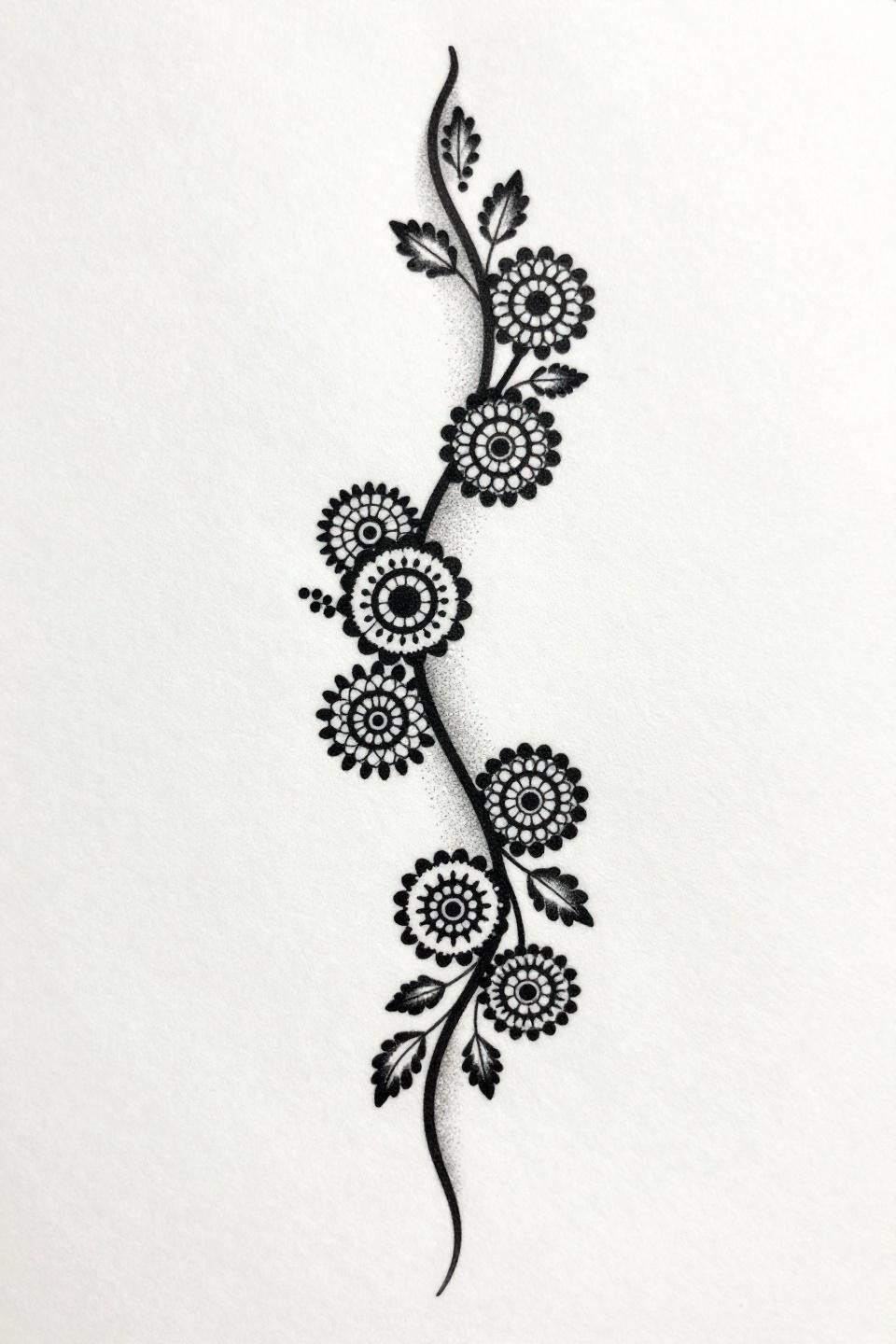
Dual branches bearing four circular mandala nodes each, with stipple dot gradient density running from heavy at node centers to open along the trailing tendrils. This is the same density-mapping principle used in blackwork tattooing applied to henna application technique.
Keep the linking tendrils between nodes at a consistent hair-thin pressure. Any variance there will read as a mistake at this scale, not organic variation.
Nested Triangles Around a Mandala Core: Structural Logic
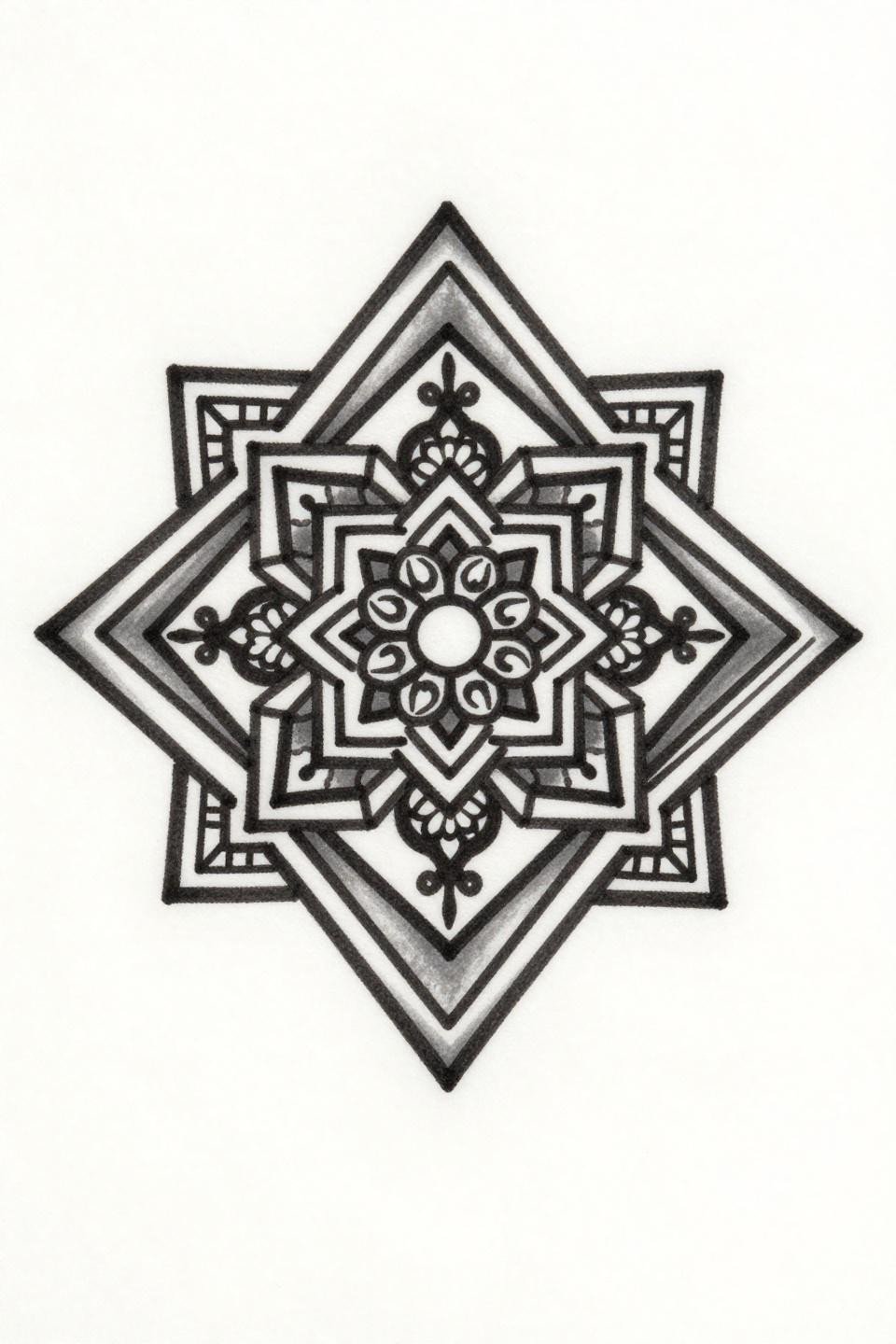
Nested triangular frames enclosing a central mandala, with chevron borders and floral corner fills. The bold 2-3pt outline weight on the outer frame is what prevents this design from blurring into itself as the stain develops over 6-8 hours.
This is a palm-centered composition. It loses its proportional logic if scaled down for wrist placement. Size it to fill the palm or use just the inner mandala core as a standalone motif.
Concentric Petal Layers Read Differently on the Back Hand
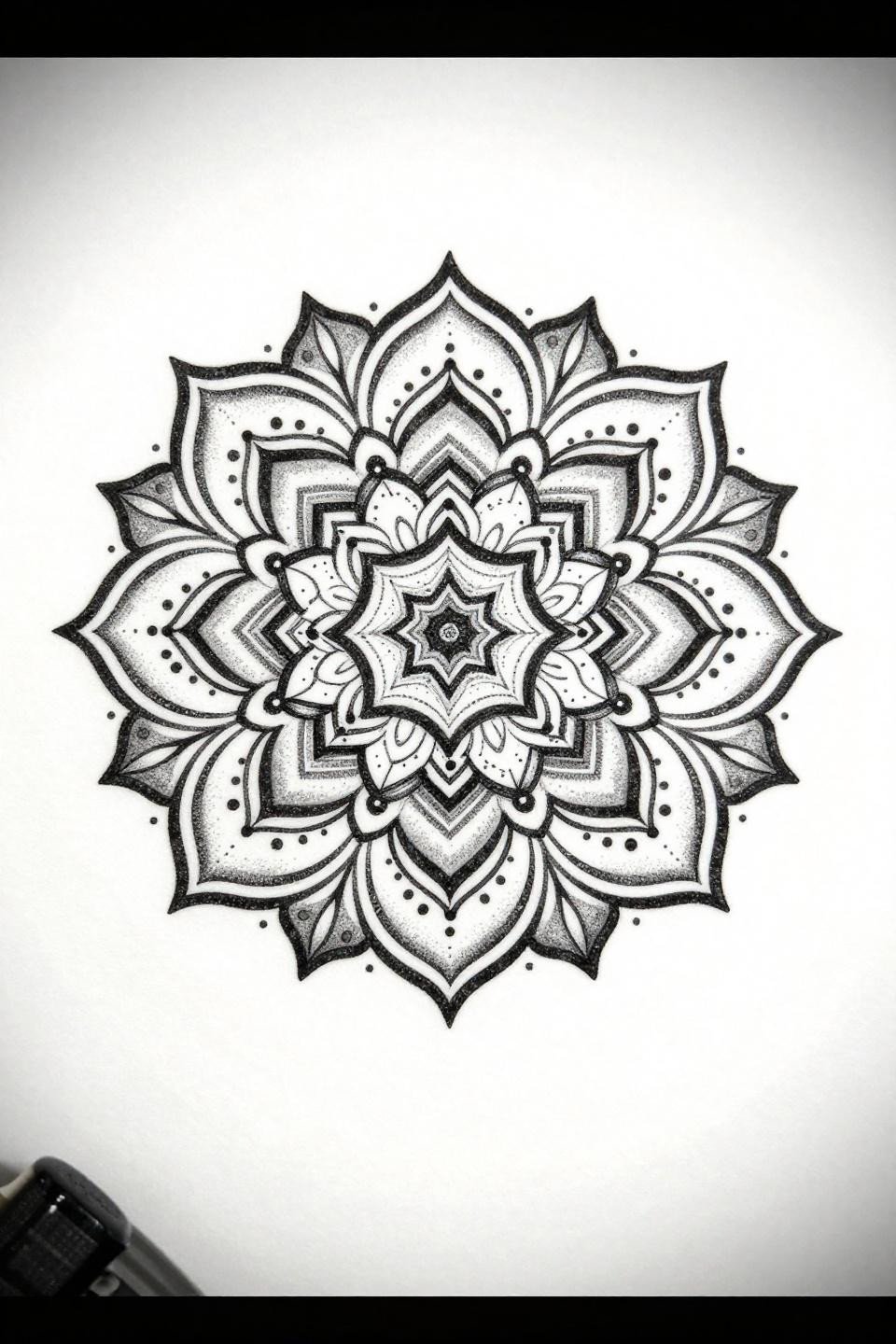
Concentric circles of teardrop petals around a hexagonal star, with radiating fine line rays filling the intervals between petal layers. The stipple gradient opens at the outer edges so the design reads as lighter toward the wrist, heavier at center.
For modern mehndi designs for hands that stay readable past the 48-hour soak window, this concentric structure holds better than vine-based layouts because the bold outer ring acts as a visual anchor.
Leaf Chain Verticals Work With the Finger, Not Against It
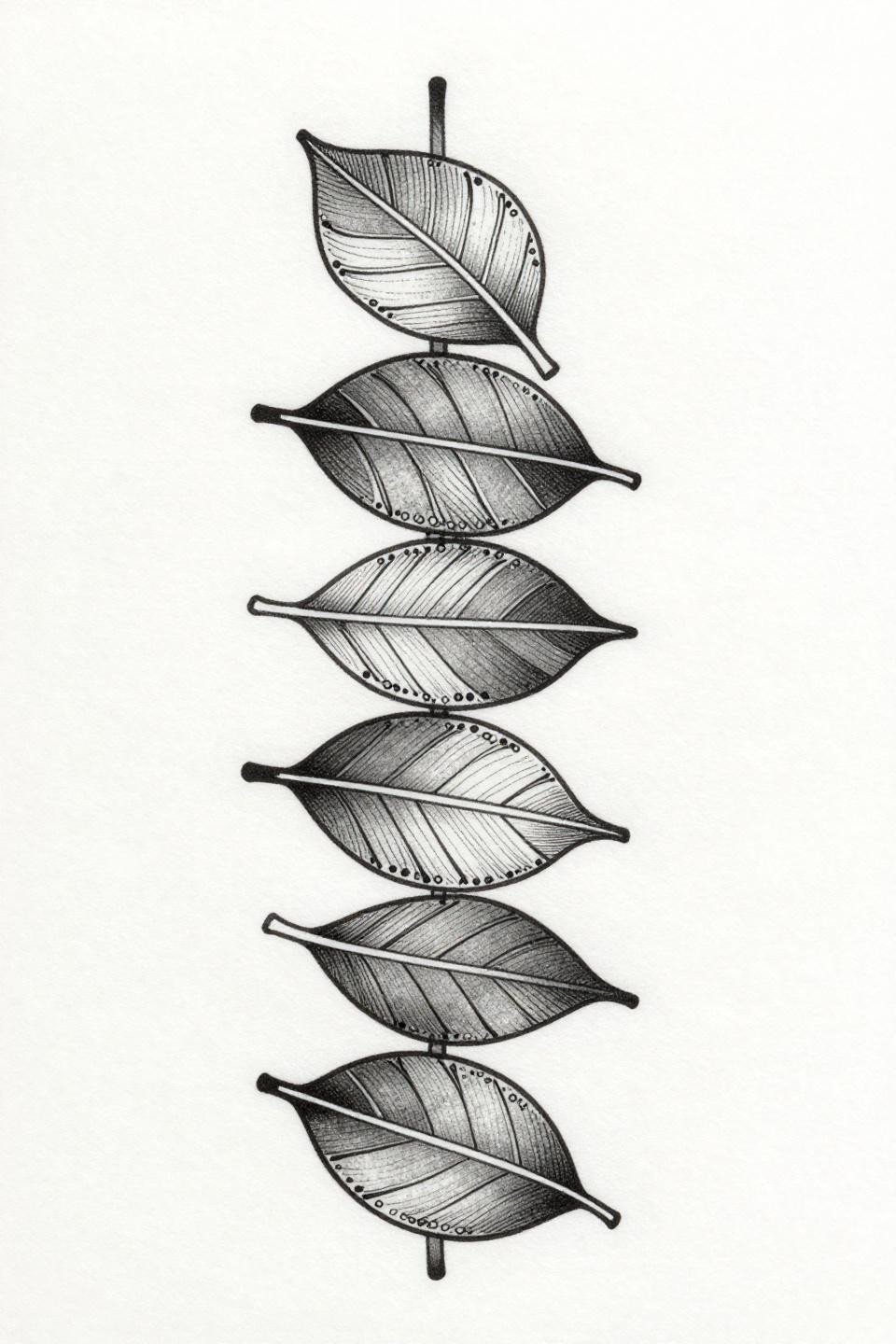
Five leaf motifs stacked in a vertical chain, each with internal parallel vein line engraving and dot clusters punctuating the gaps. This is a finger or side-of-hand composition, not a palm design.
The vein lines inside each leaf are the detail that separates a confident application from a flat one. Draw them at consistent spacing with a single uninterrupted cone stroke per line.
Bilateral Symmetry on Both Hands: Where Matching Fails
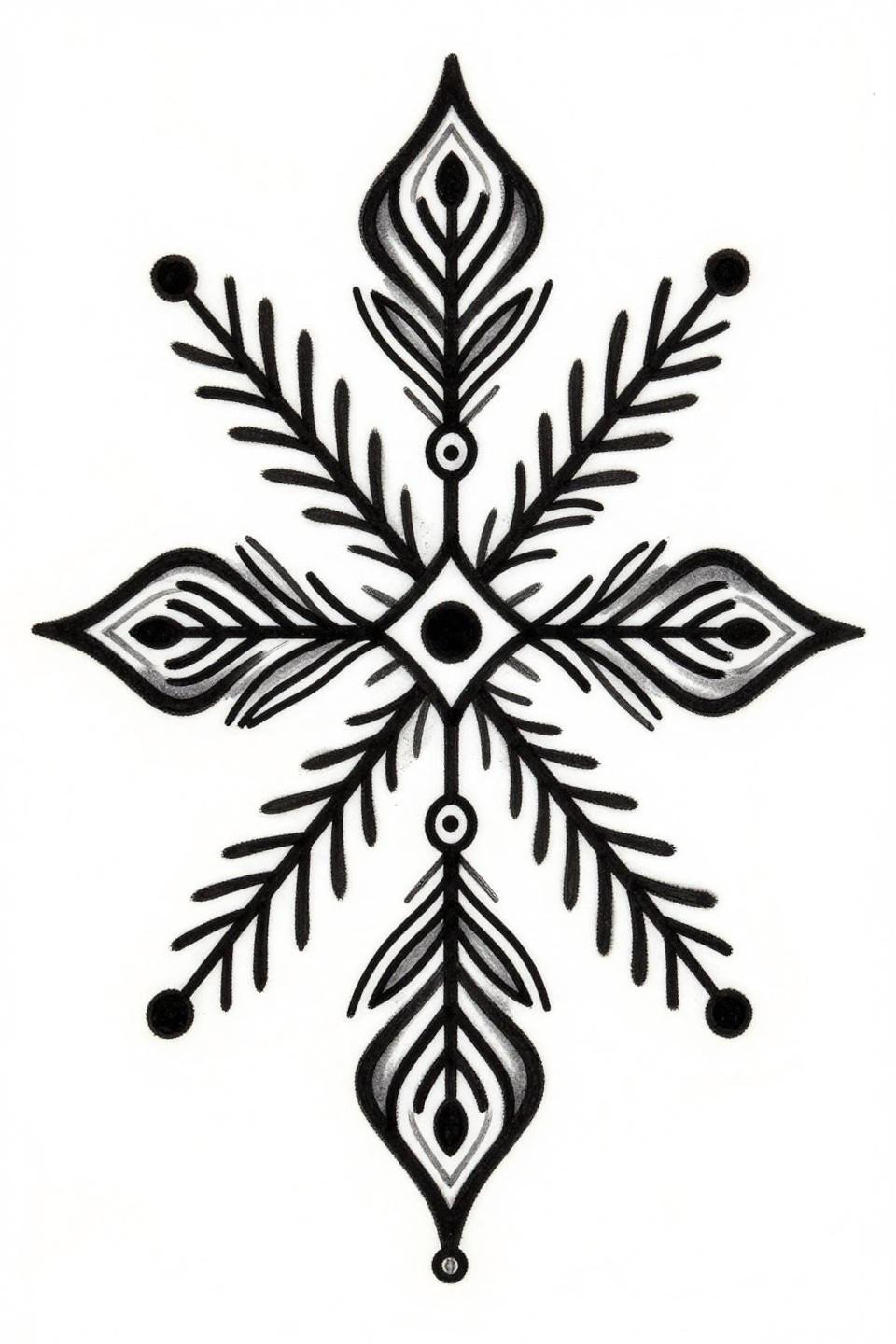
Mirrored vine branches with three diamond clusters each, connected by fine linking lines. The bilateral symmetry axis runs vertically and the open white negative space is load-bearing, not decorative.
Executing this across both hands is where most DIY applications break down. Apply the dominant hand design first, then mirror it freehand. Tracing is the only reliable approach for matching this level of geometric precision.
Single-Line Vines: Where Zero Fills Is the Right Call
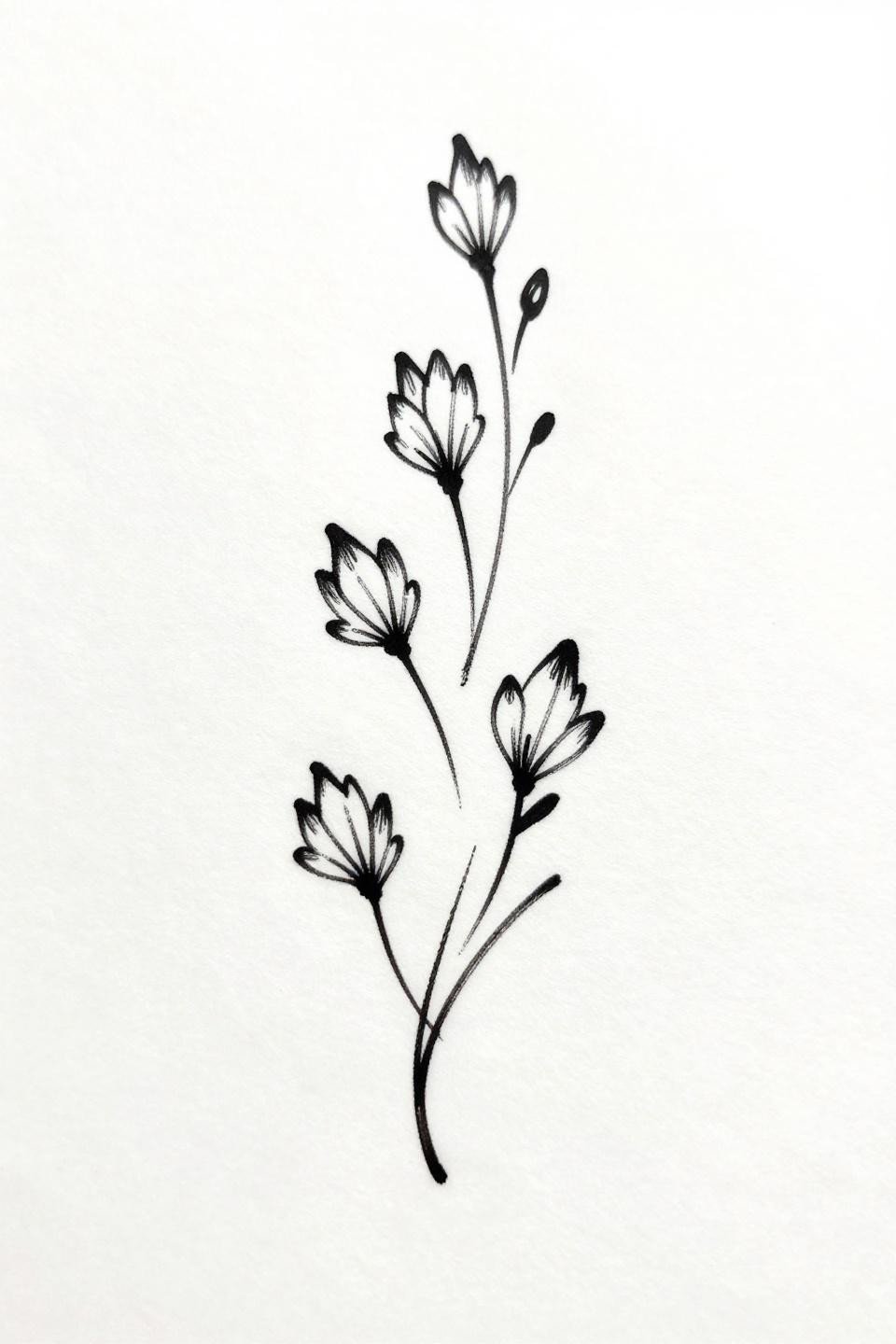
Three single-stem curves ascending asymmetrically, each tipped with a small flower bud cluster. Variable pressure on the cone stroke is the entire design technique here. No fills, no secondary elements, no coverage to hide behind.
This is the highest-skill-floor design in this collection despite being the simplest visually. A shaky stroke is visible across the full length of each stem, with no fill work to distract from it.
Art Deco Peacock Feather: Compass Precision or Nothing
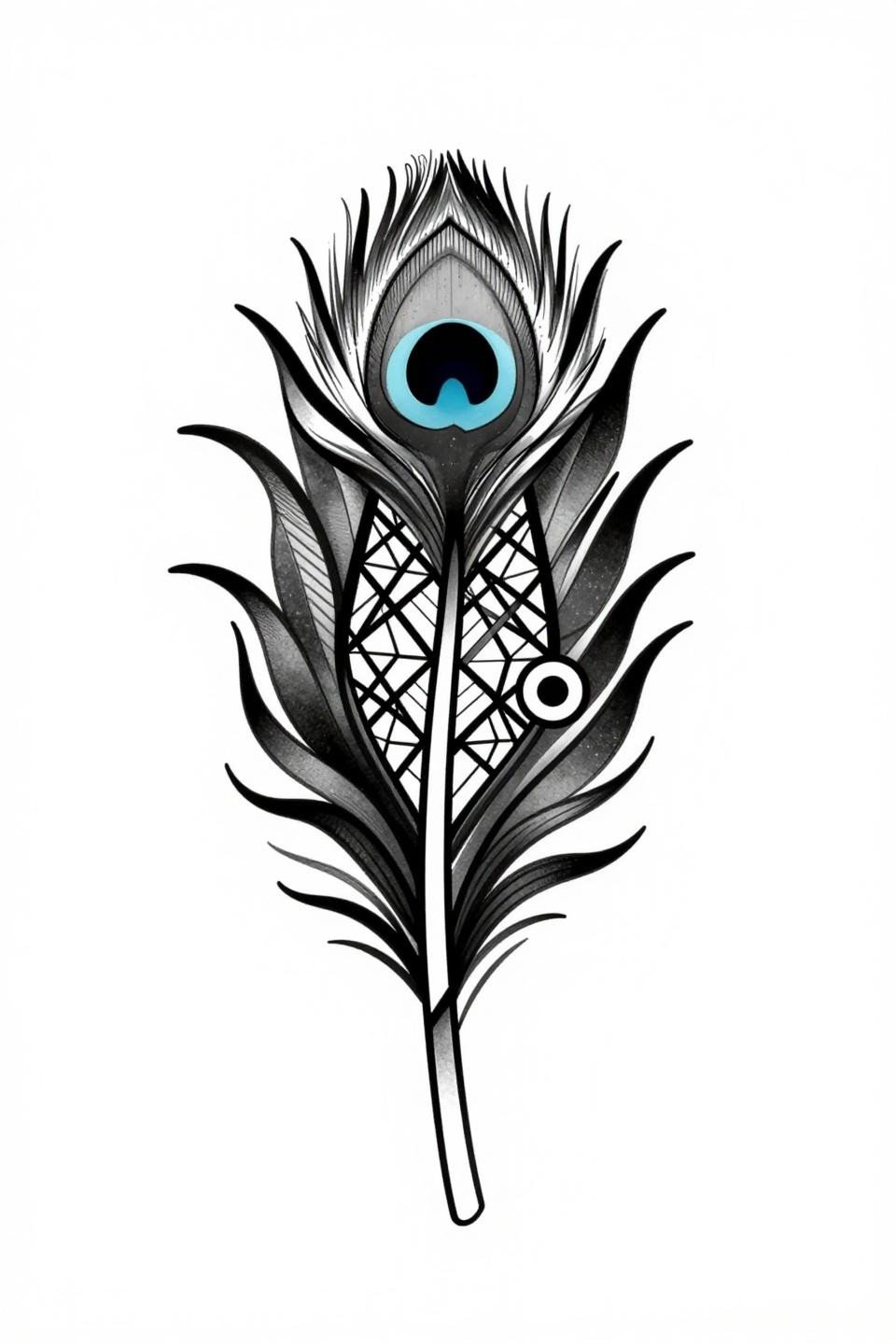
A peacock feather built on a curved spine axis with layered arc segments and geometric diamond lattice infill throughout. No grey wash, flat black fields only, which means the lattice lines need to be drawn at consistent weight or the pattern reads patchy.
For henna designs beyond festival season, this geometric feather is one of the few motifs that reads well in both formal and casual contexts because the structure is architectural, not ornamental.
Botanical Tendrils: The Hairline Stroke as a Skill Test
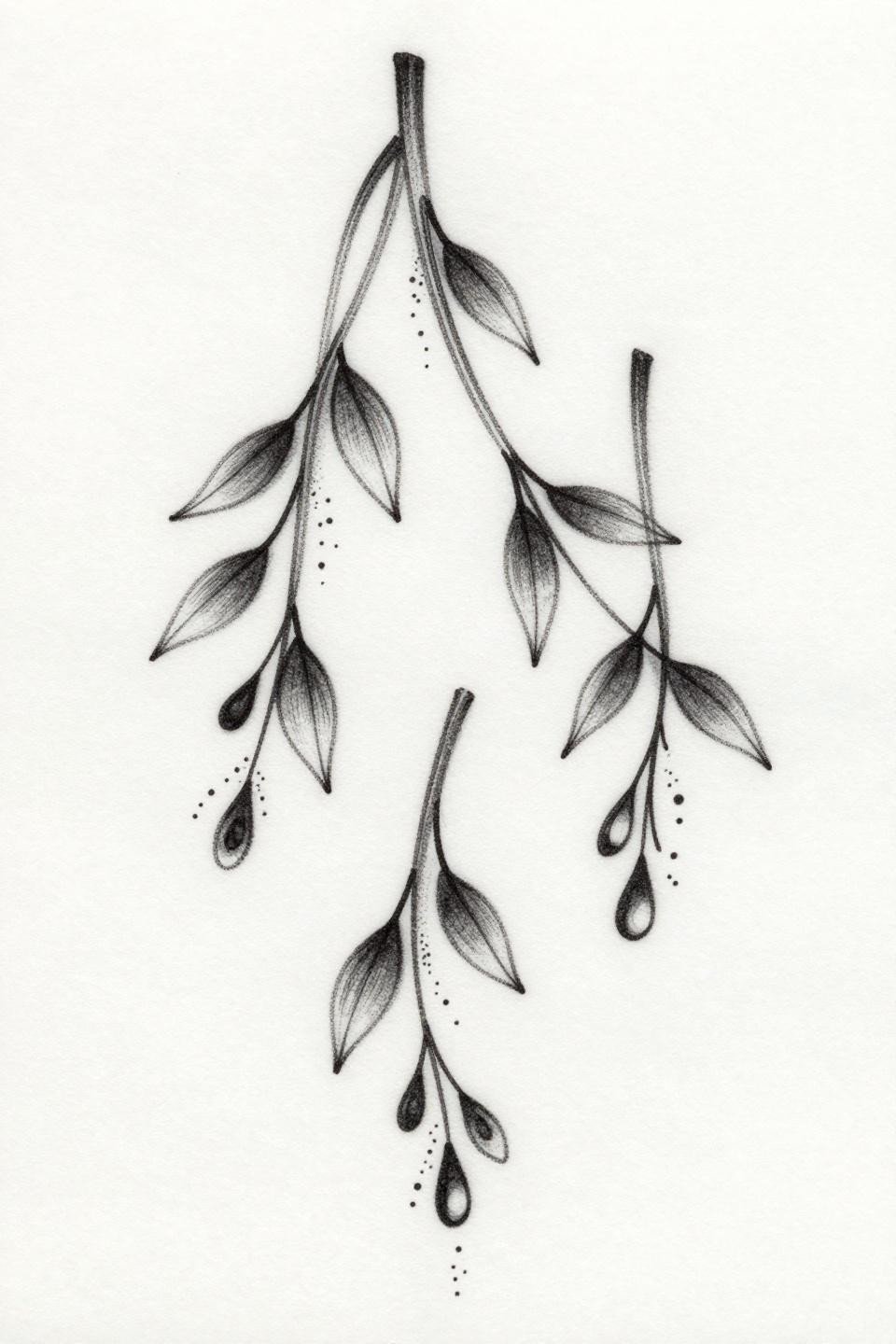
Three vine tendrils flowing asymmetrically downward, with teardrop endpoints and sparse stipple dot accents between stems. The hairline 0.5mm stroke weight used throughout requires a nearly empty cone tip and slow, controlled wrist movement.
This design stains lightest of all the layouts here because of the thin line coverage. On lighter skin it will read copper-amber. On deeper tones, it may need an overnight soak under plastic wrap to develop enough depth to be visible.
Pick two or three designs from this collection that match your actual cone control, not your aspirational skill level. Send the flash reference directly to your henna artist if you want it replicated precisely. Your reference does half the session work.