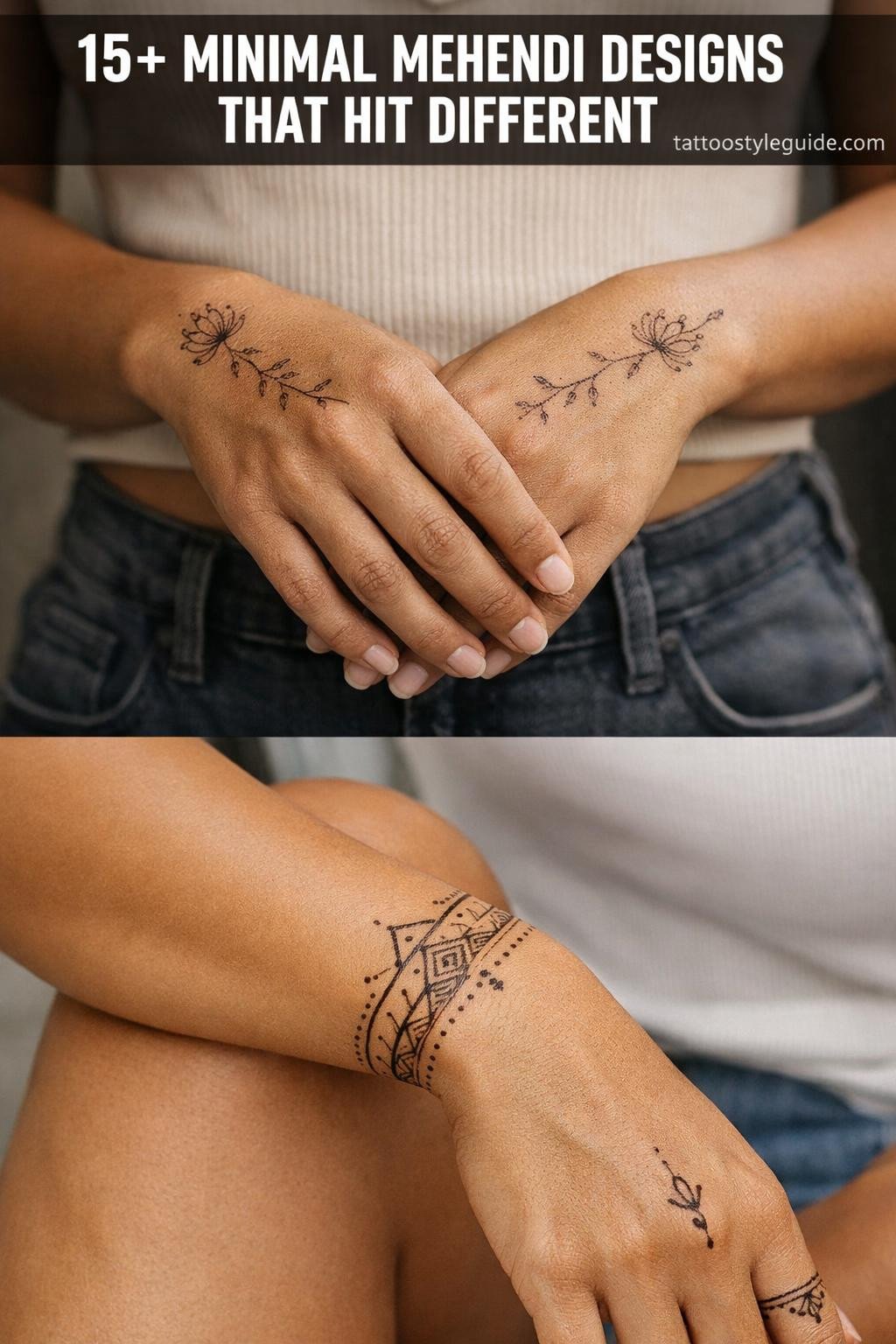
Minimal mehendi designs fail when artists treat negative space as laziness instead of structure. The restraint has to be intentional, every line placed to carry weight, every gap earning its room on the skin.
What separates the good versions from the decorative filler is line confidence. A single 1RL stroke that wavers reads immediately. These references are selected for composition clarity and technical execution, not trend alignment.
Ginkgo Bilateral Symmetry: Where Restraint Earns Its Lines
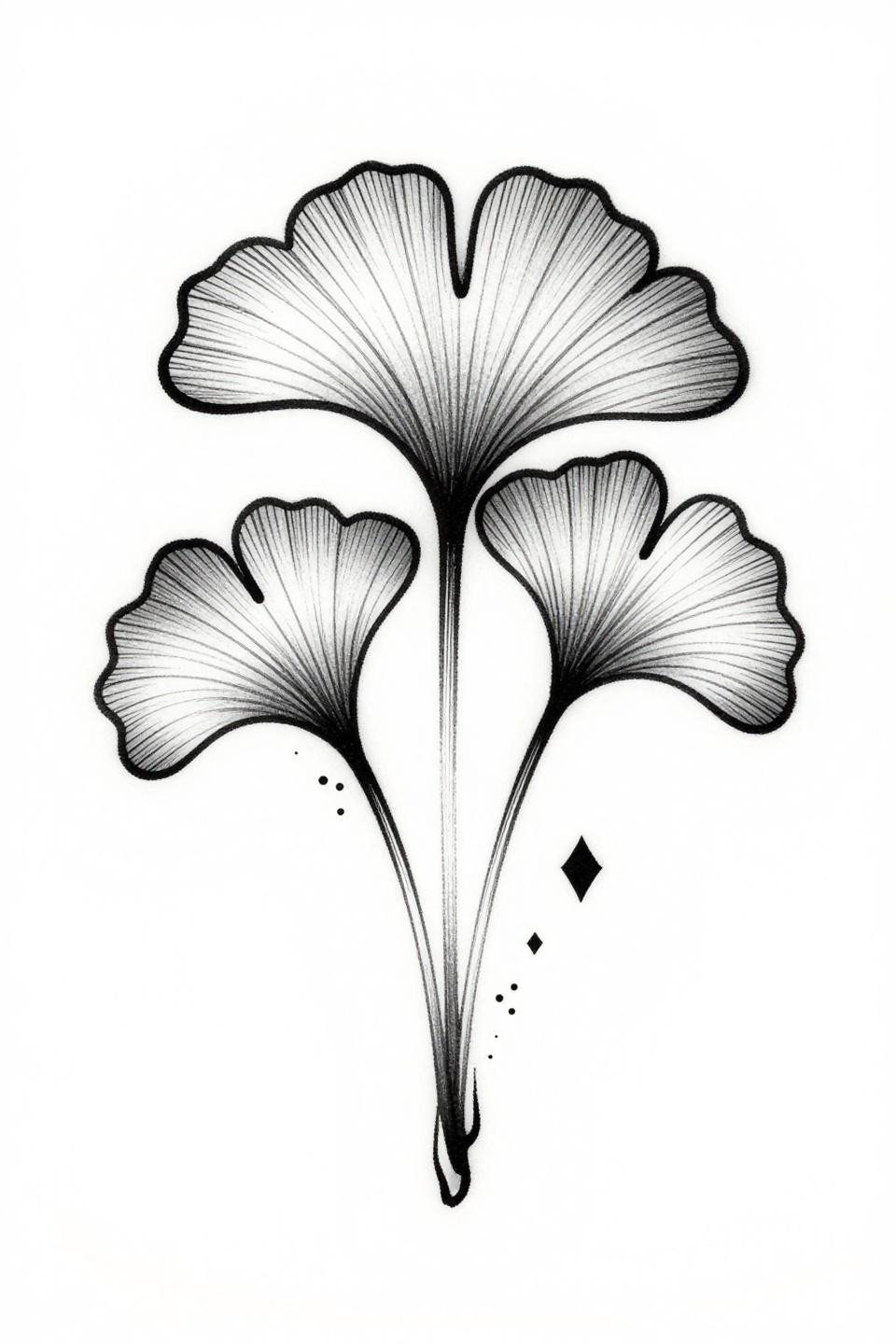
Art nouveau ginkgo motif built on a strict vertical axis, three curved segments per side, a dot cluster at the stem base, and a floating diamond accent that keeps the composition from reading as static.
The bold 2-3pt outline weight here is the longevity signal. On lighter skin this reads sharp at year ten. On olive or deeper tones, this weight maintains contrast where fine line work would fade into the skin.
Neo-Traditional Butterfly With Geometry That Actually Works
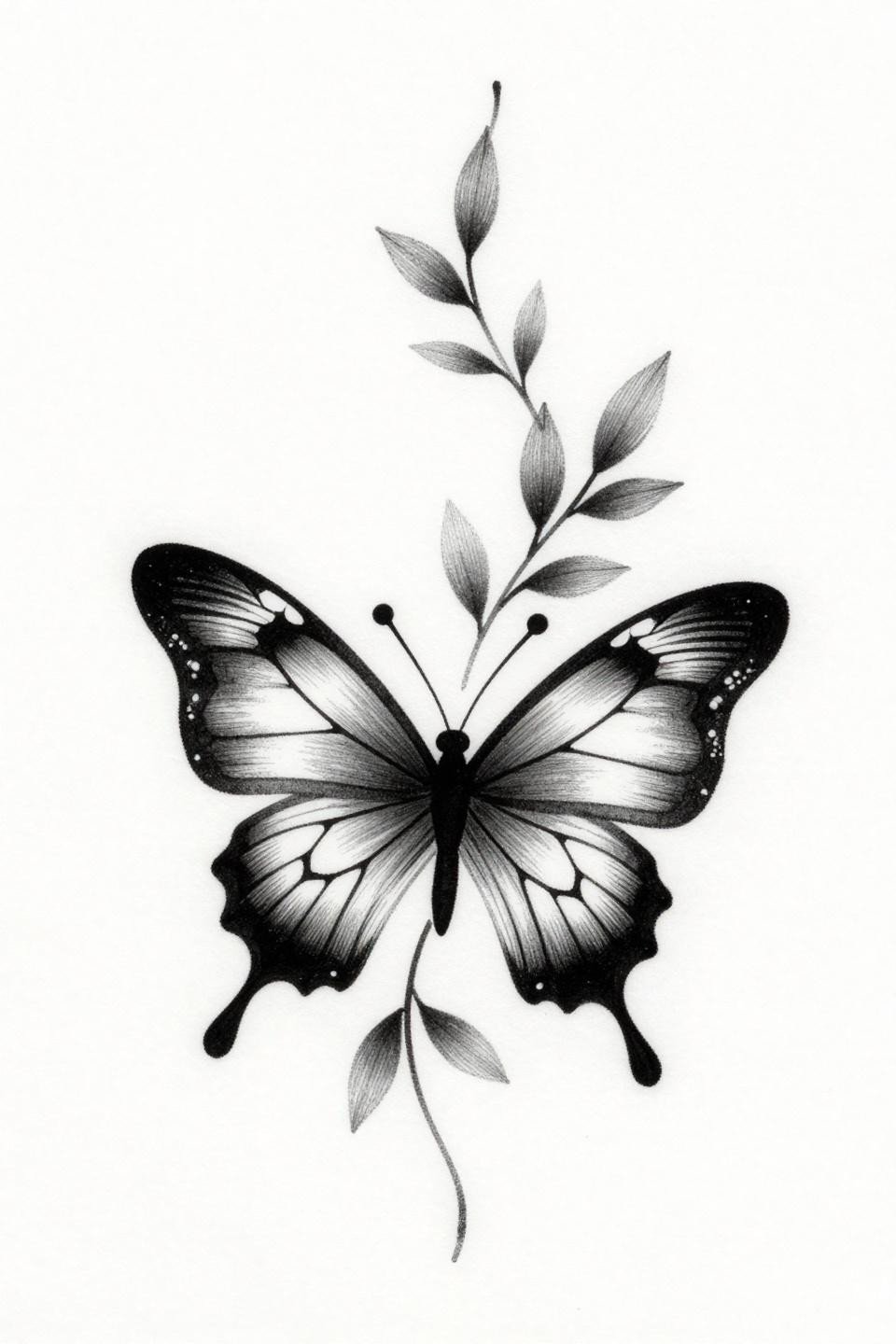
Neo-traditional butterfly built on a single curved body line, hatched geometric wing fills, and a descending vine tendril with asymmetric leaf accents that anchor the composition without crowding it.
The whip shading strokes building grey wash volume are the technical tell here. Consistent stroke direction across the full wing signals an artist who understands form, not just pattern copying.
Sketch Rose: Raw Line Pressure That Ages Differently
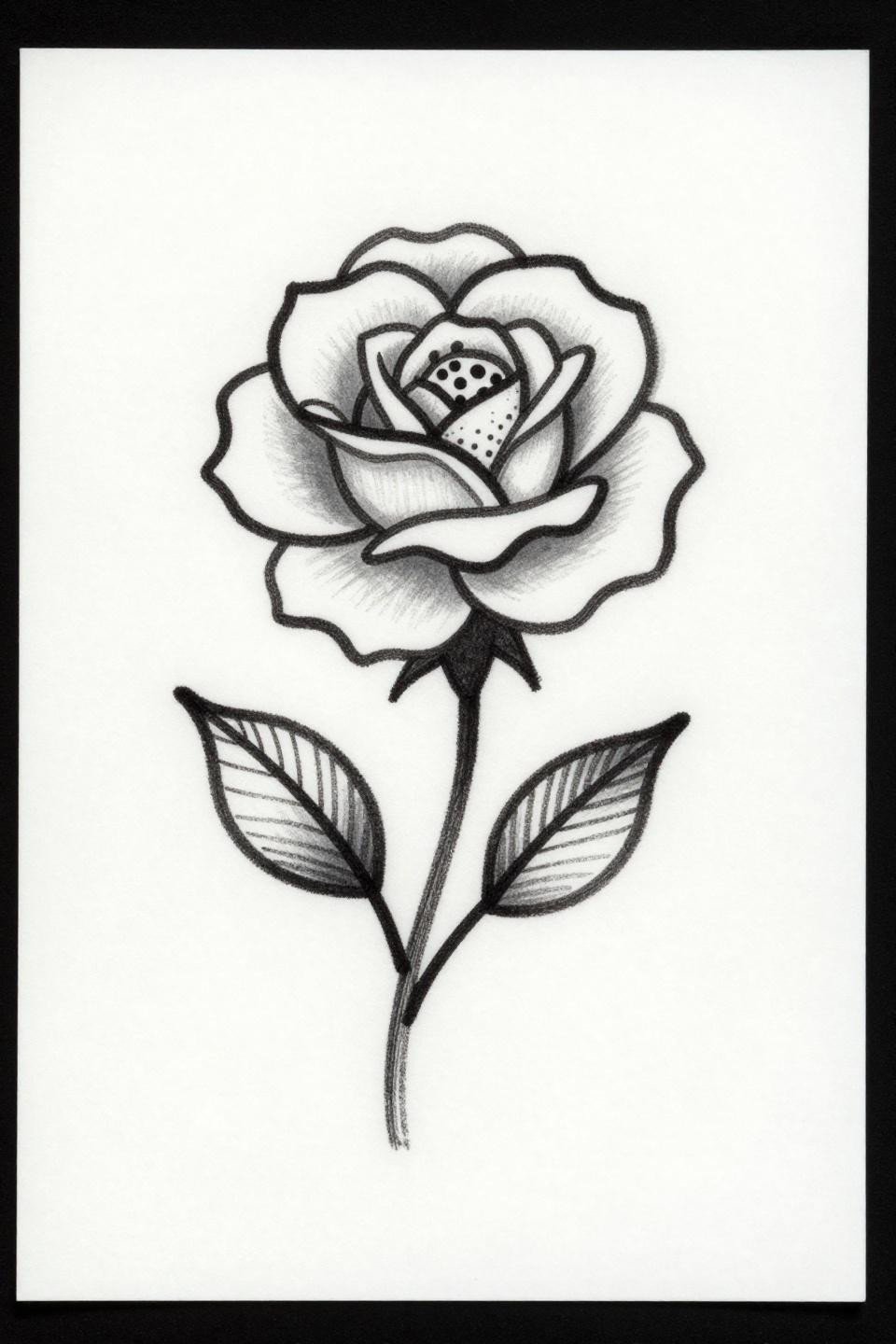
Three-petal sketch rose with a single curved stem, asymmetric hatched leaves, and a dot cluster at the bloom center. The visible pen pressure variation is the design choice, not a technical inconsistency.
For simple mehndi designs for everyday wear, this raw sketch approach translates well to wrist or forearm placements where the organic quality reads as intentional rather than rushed.
Watercolor Jasmine: Why the Anchor Line Is Non-Negotiable
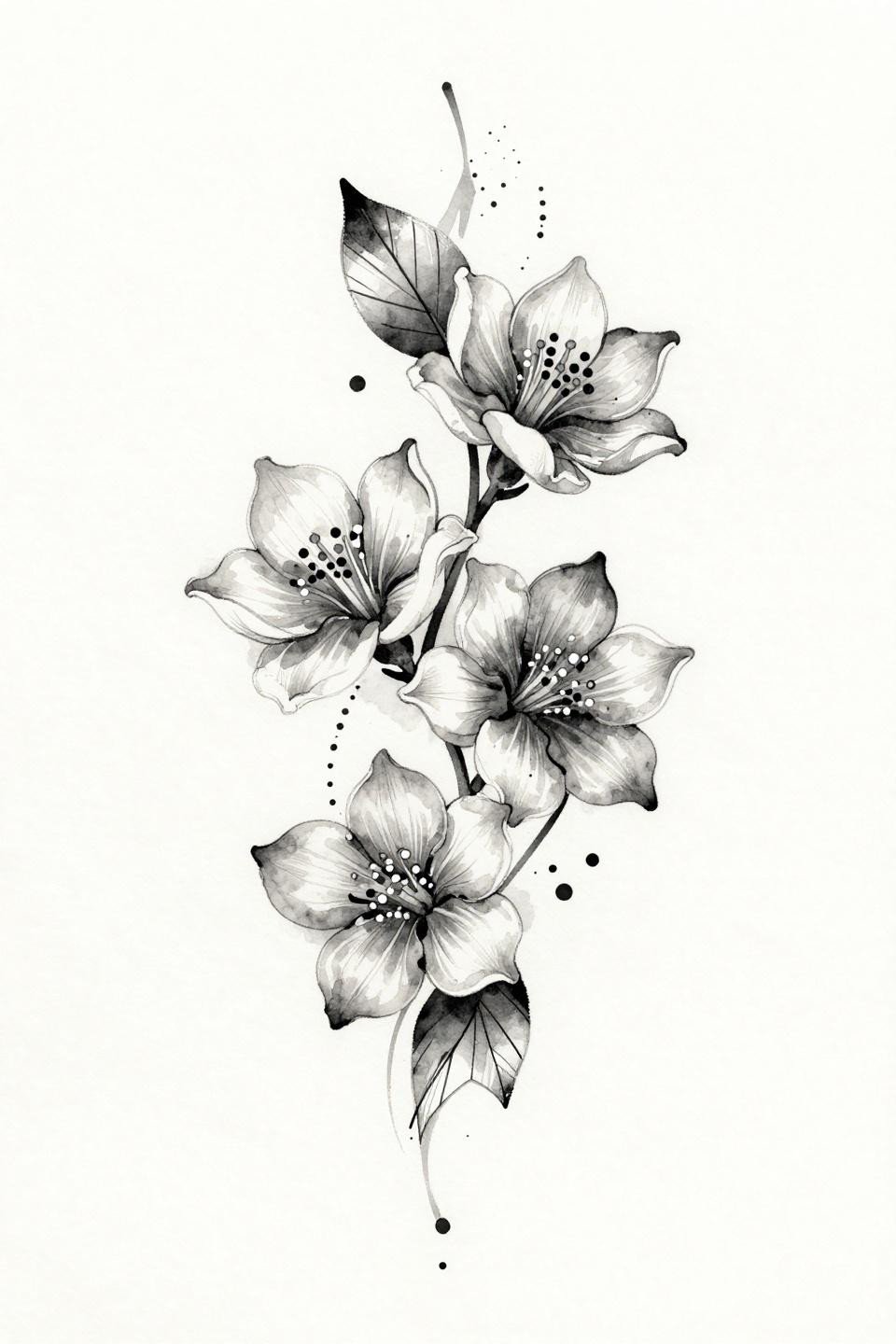
Three jasmine blooms connected by vine threads, with calligraphic brush marks and wet watercolor bleed diffusion at the petal edges creating the softness that defines the mehandi designs aesthetic approach.
Watercolor without a defining outline blurs by year three to five. The brush ink marks here serve as structural anchors. Without them, this composition dissolves into skin noise over time.
Peacock Etching Profile: Engraving Lines That Read on Darker Skin
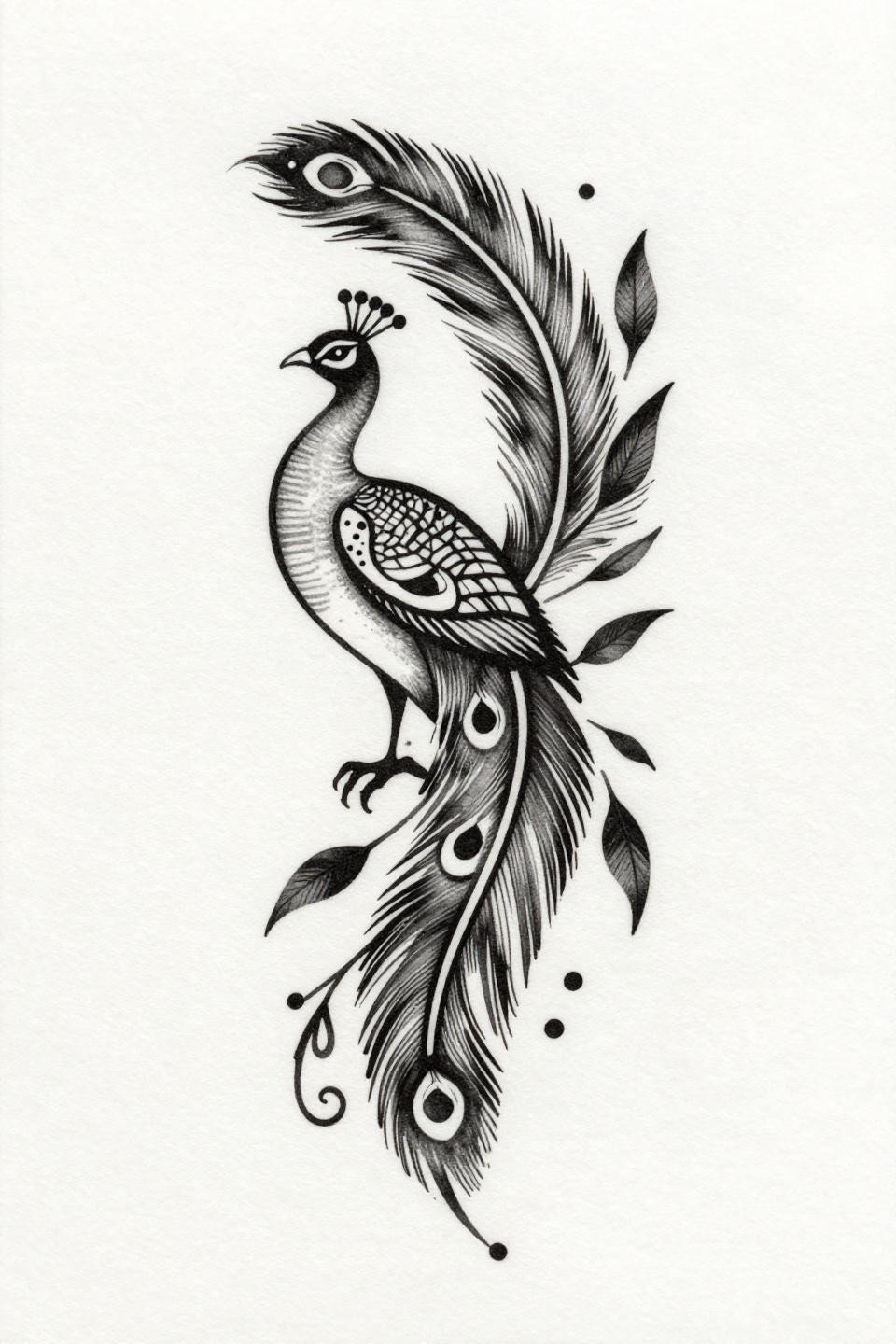
Left-facing peacock profile in etching woodcut style, three geometric open-form tail feathers, and parallel horizontal engraving lines building texture and form without solid fill areas.
On deeper skin tones, parallel engraving line density needs to be tight enough that the texture reads from a normal viewing distance. Sparse lines disappear. This reference sits at the right density threshold.
Dotwork Diamond: What Stipple Gradient Looks Like Done Correctly
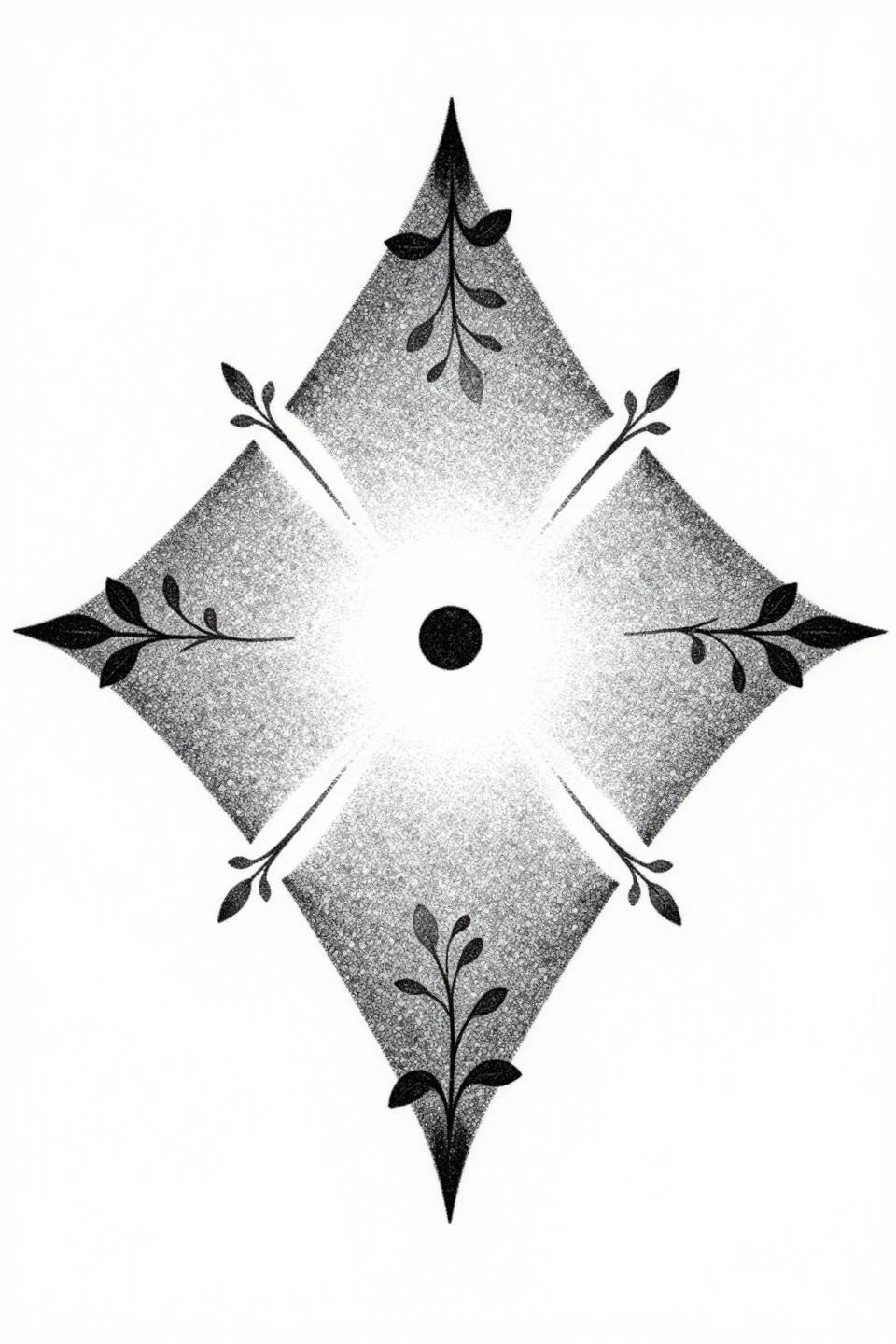
Three nested squares rotated to diamond orientation, a single central dot focal point, and four corner triangular flourishes, built entirely in stipple with no solid line outlines. The gradient runs dense at center, open at the perimeter.
Consistent dot size across the full gradient is the quality signal. Uneven dot sizing collapses the tonal transition and turns a clean geometric into muddy mid-grey. Check healed portfolio shots, not fresh work.
Hand Mandala That Reads at Scale Without Getting Loud
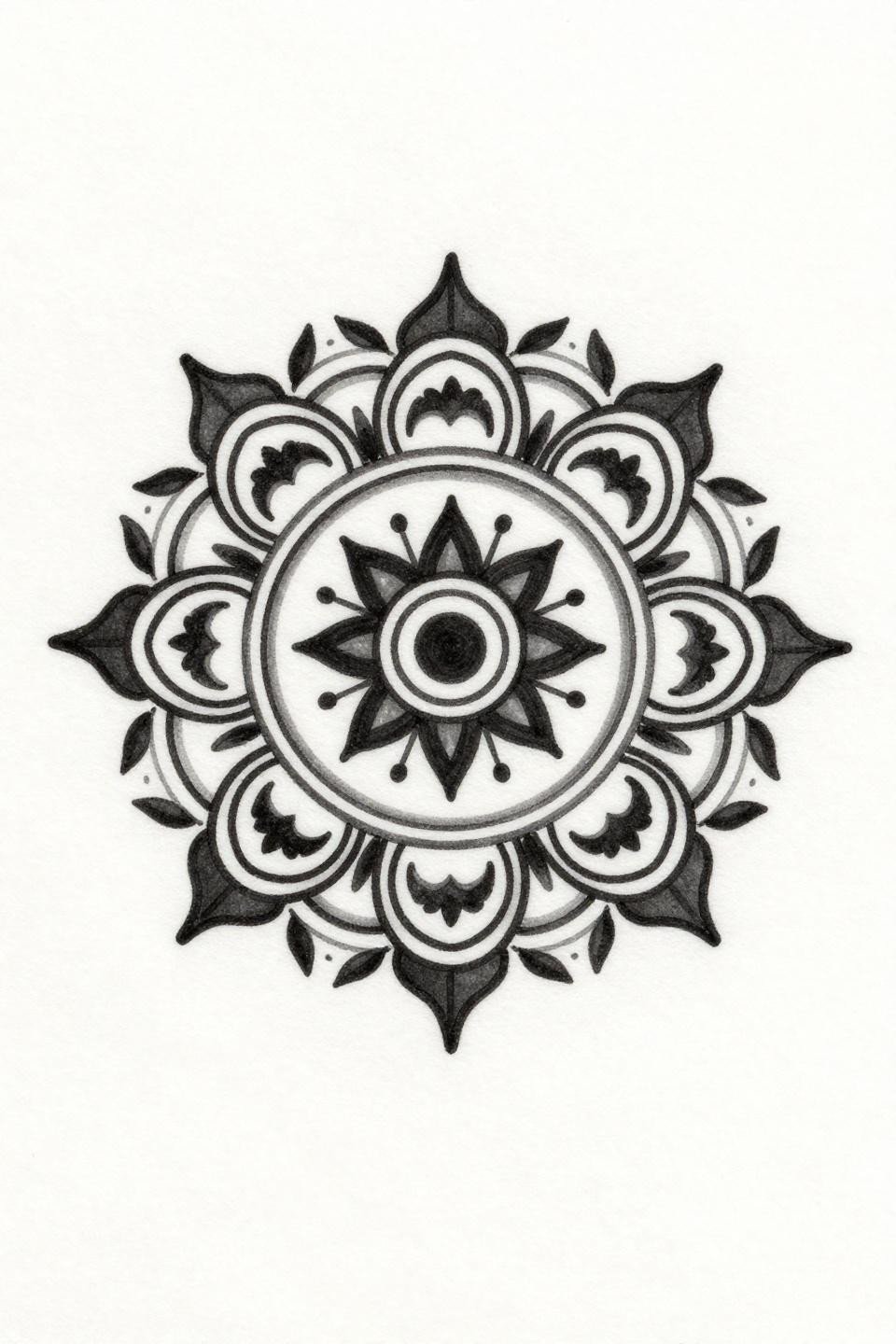
Four-petal minimal mandala with a central dot, open-negative-space petal interiors, a thin concentric perimeter ring, and scattered leaf accents. Bold 2-3pt outlines carry the composition at palm or back-of-hand scale.
This structure suits henna designs beyond festival occasions precisely because the geometry reads as deliberate without the ornamental density that dates quickly at full hand scale.
Fine Line Lotus: How Much Negative Space Is Actually Too Much
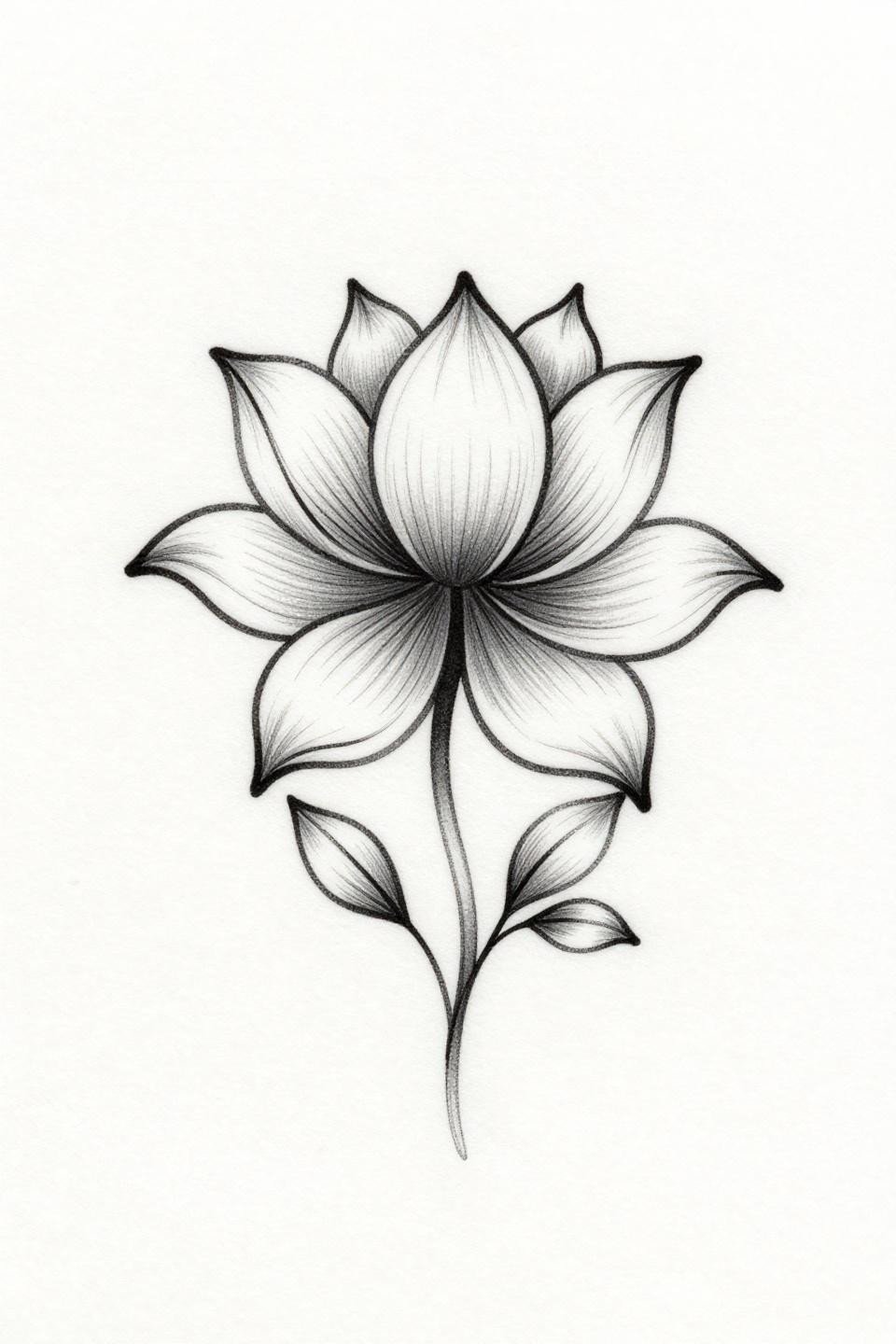
Four-petal lotus on a single vertical axis, vine scroll stem, three leaf accents, rendered in hairline single-needle 0.5mm strokes with maximum open negative space throughout the composition.
Single needle work at this weight needs an artist who controls machine speed. On olive skin, these lines need a skilled hand or the hairlines blur into grey within two years instead of holding definition.
Japanese Peacock Fan: Parallel Engraving as the Only Texture Tool
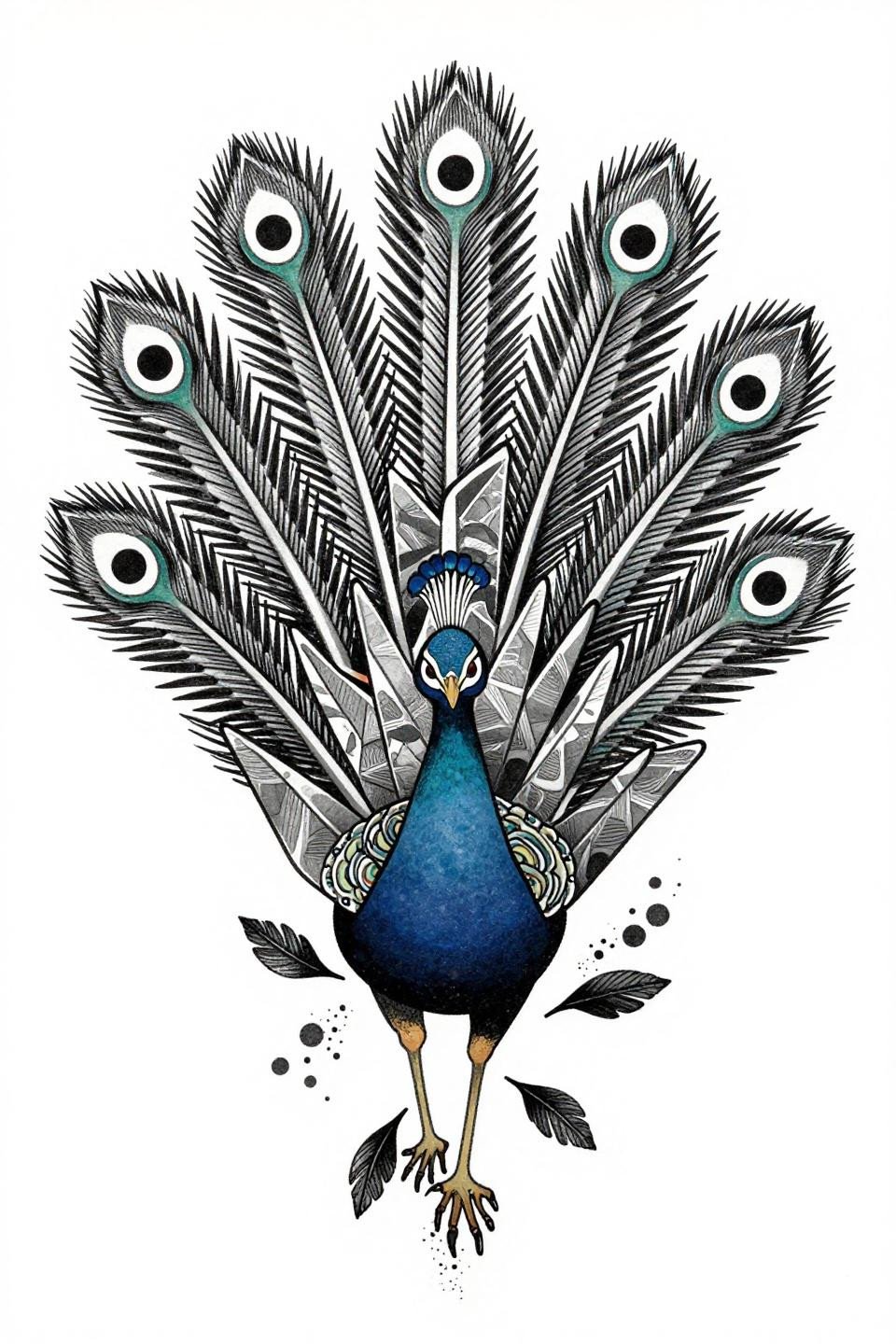
Frontal peacock with a seven-segment geometric tail fan, each segment filled with dense parallel line engraving, a solid dot eye, and dot cluster flourishes at the tail base. The centered vertical axis suits sternum or spine placement.
Protected placements like the sternum give this style its best longevity. The dense parallel engraving fills hold tonal range longer when the skin isn’t subject to constant friction and sun exposure.
Sak Yant Silhouette: When Graphic Closure Beats Ornamental Detail
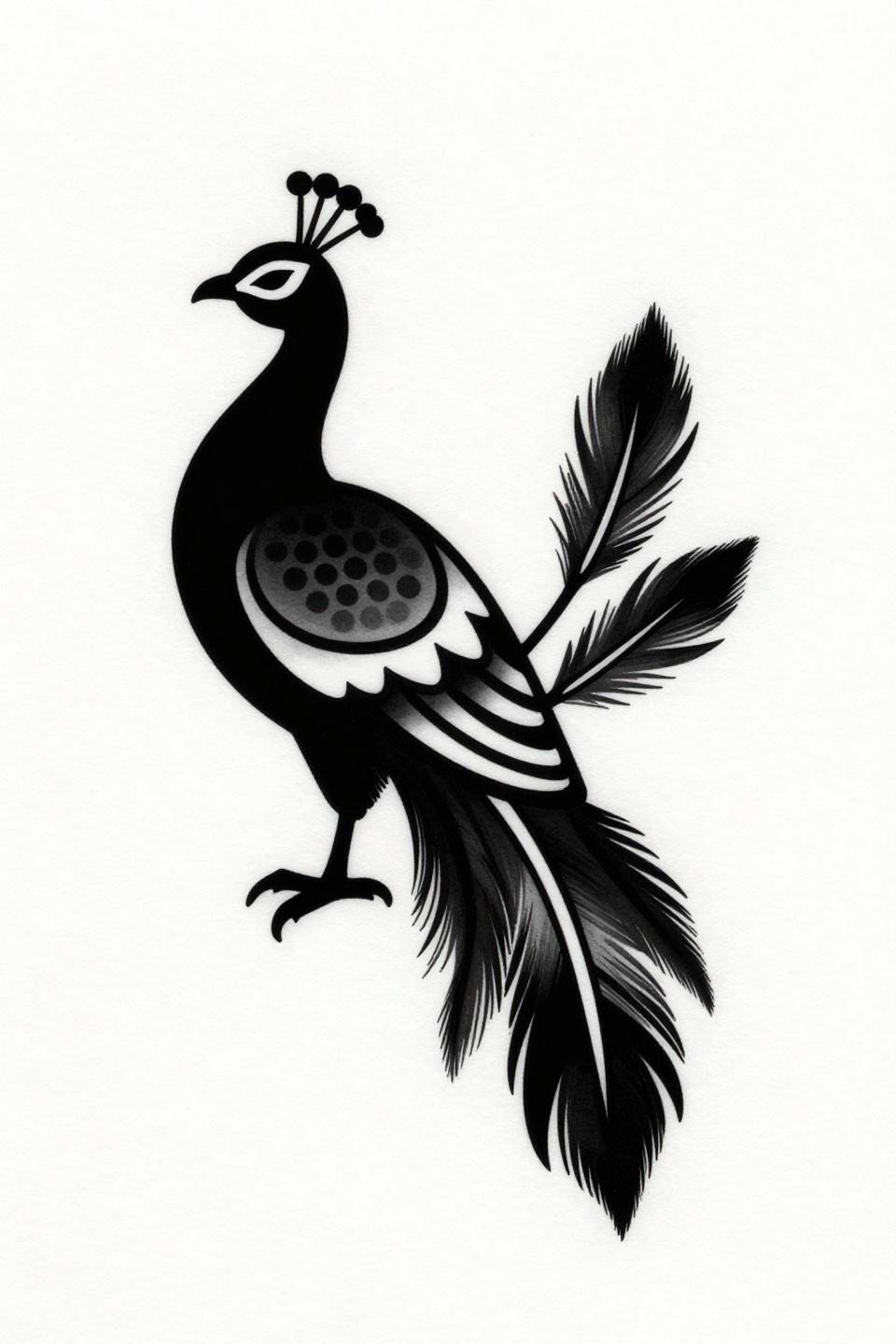
Sak yant-influenced peacock silhouette in a single curved line forming the body, three tail feathers as closed negative space cutouts, flat black fills, and short vine tendrils at the base.
The closed-form graphic approach here ages more predictably than open fine line work. Flat black fills with bold outlines at this weight hold their edge for a decade on most placements without requiring touch-up.
Art Deco Hexagonal Mandala: Compass Geometry Versus Freehand Quality
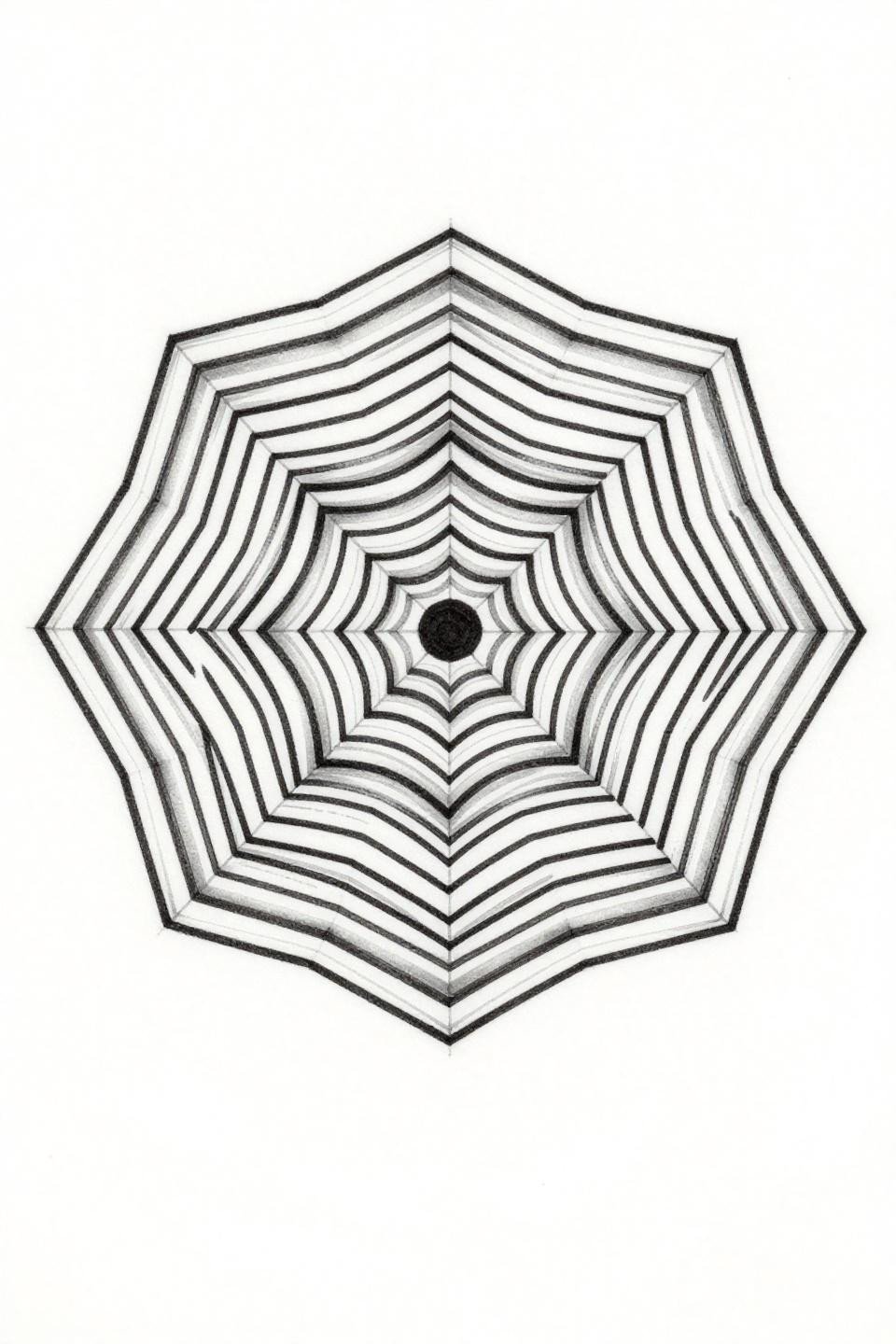
Art deco mandala built on nested hexagons in precise concentric rings, a center dot cluster focal point, and minimal radiating lines at the cardinal points. Modern mehndi designs for contemporary aesthetics lean on exactly this kind of geometric precision over organic ornamentation.
The tell is whether the concentric ring spacing stays perfectly even throughout. Any compression or drift reads immediately at this scale. Vector-level precision in the flash is the minimum requirement before booking the appointment.
Botanical Stipple Vine: Diagonal Flow on a Minimal Footprint
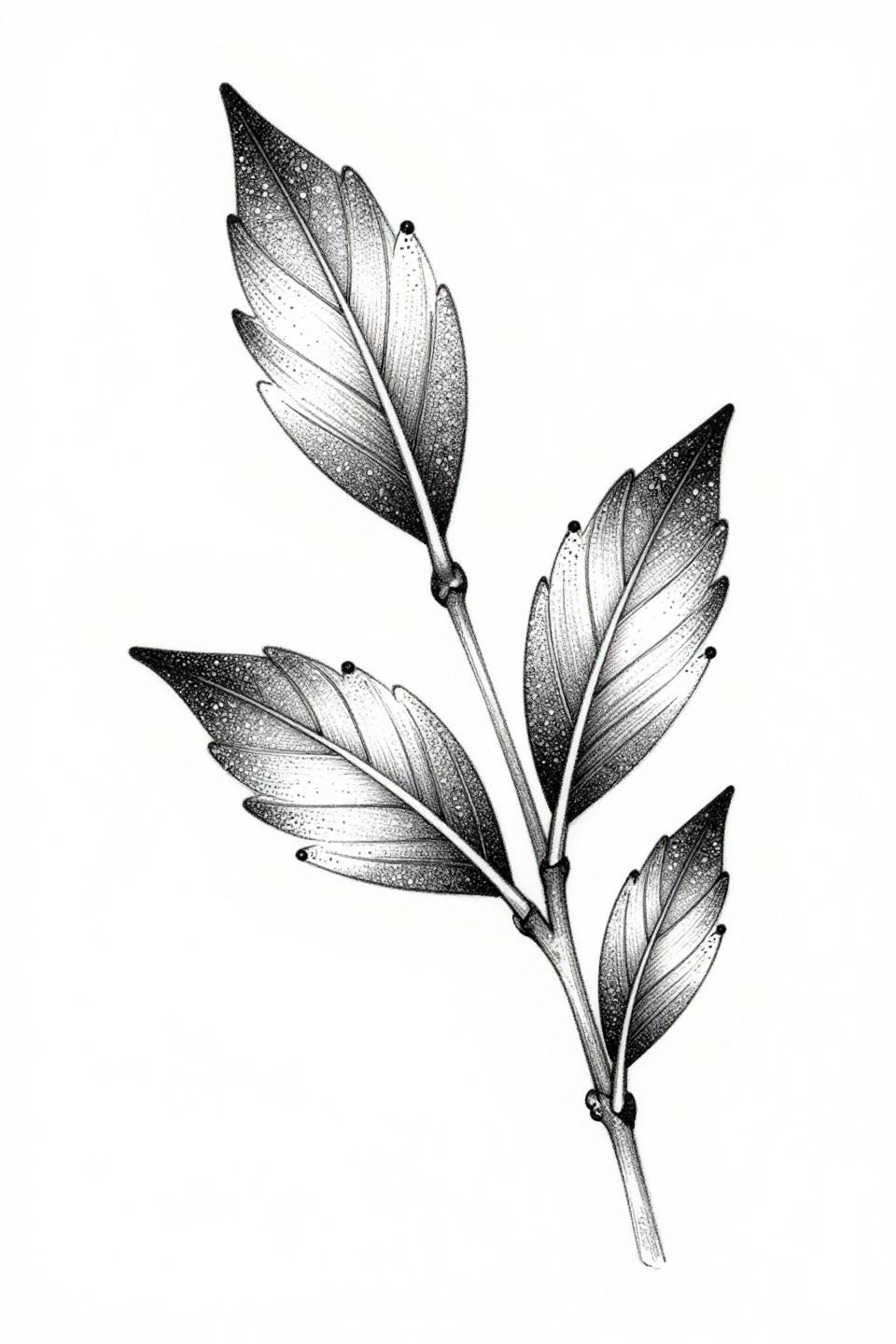
Single botanical vine flowing diagonally upper-left to lower-right, three to four asymmetric leaf clusters, and dense micro-dot stipple at the intersections fading to open spacing between nodes.
This diagonal orientation suits forearm and calf placements where a vertical or horizontal composition would fight the natural limb line. The stipple density at the nodes is the visual anchor that stops the design from floating.
Continuous Line Peacock: Where One-Stroke Technique Either Holds or Collapses
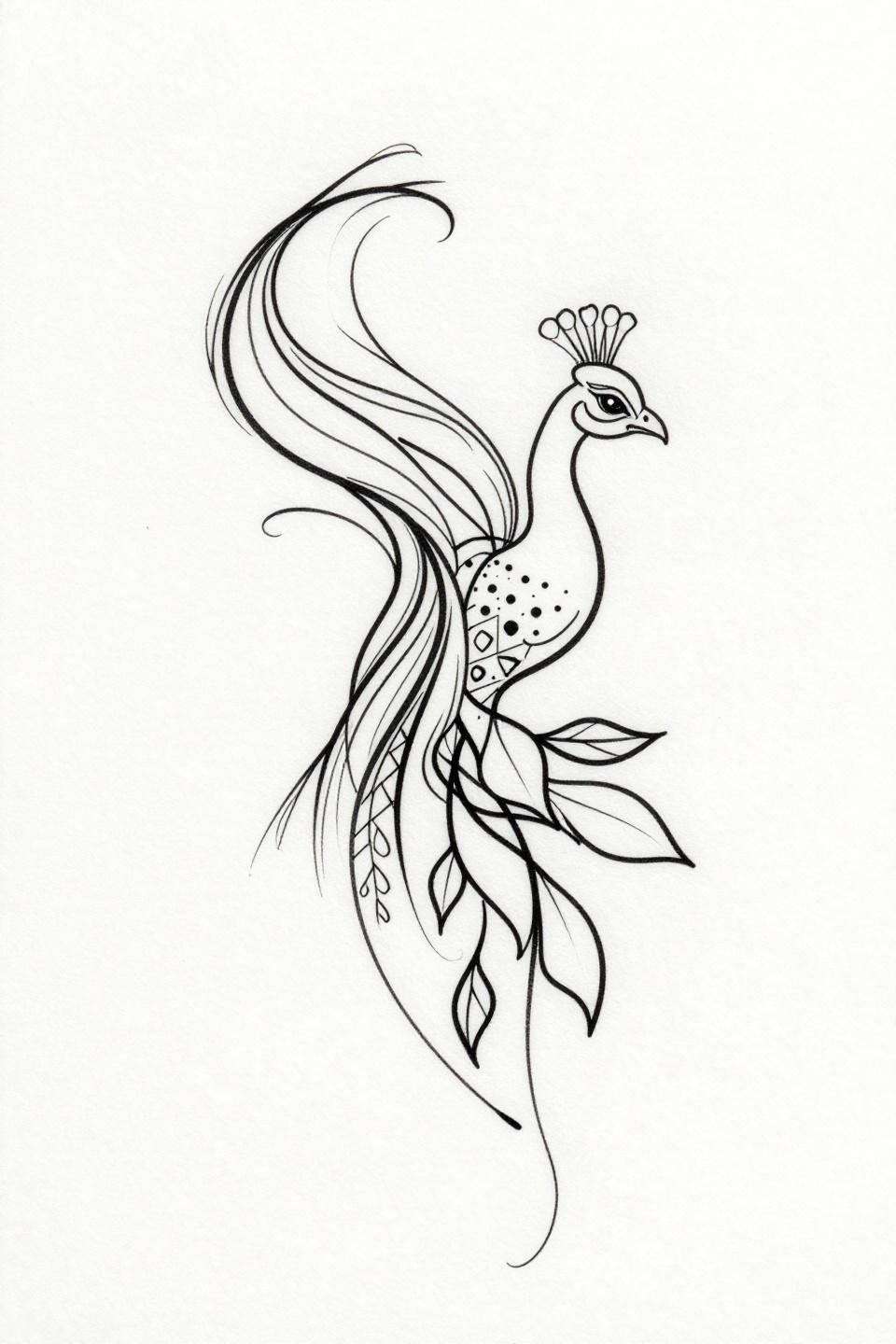
Single unbroken hairline stroke forming a peacock profile, abstract tail flourish, geometric dot cluster at the chest, and angular botanical vine connecting to leaf motifs. No fill anywhere in the composition.
The continuous line format is unforgiving. Any hesitation in the single stroke creates a flat spot that breaks the rhythm of the whole piece. This is an artist confidence test more than a design complexity test.
Take two or three of these references into your consultation, not the full set. Match the style to your placement first, scale second. A sak yant silhouette at wrist scale reads differently than the same design at sternum scale. Size the reference before you show it.