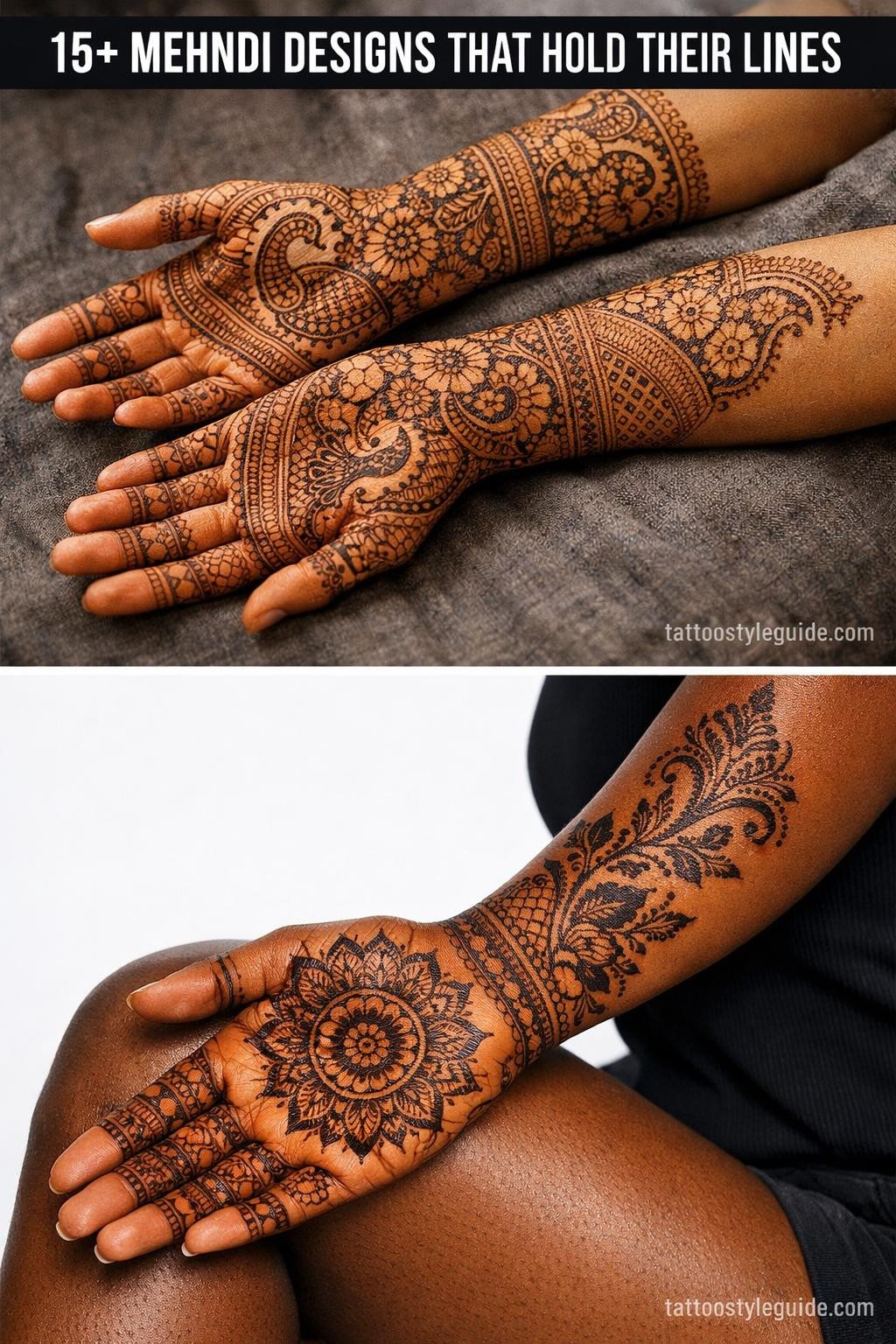
Trendy mehndi designs fail when artists chase surface pattern without understanding the underlying geometry. The spacing logic in traditional henna work exists for a reason: it keeps fills legible at small scale and prevents mud when translated into permanent ink.
The best contemporary references borrow the density hierarchy from classical work, then strip or swap the ornament. What follows covers 13 flash-quality interpretations across rendering styles, each with distinct structural logic.
Ignorant Style Meets Sacred Geometry: A Mandala That Earns Its Chaos
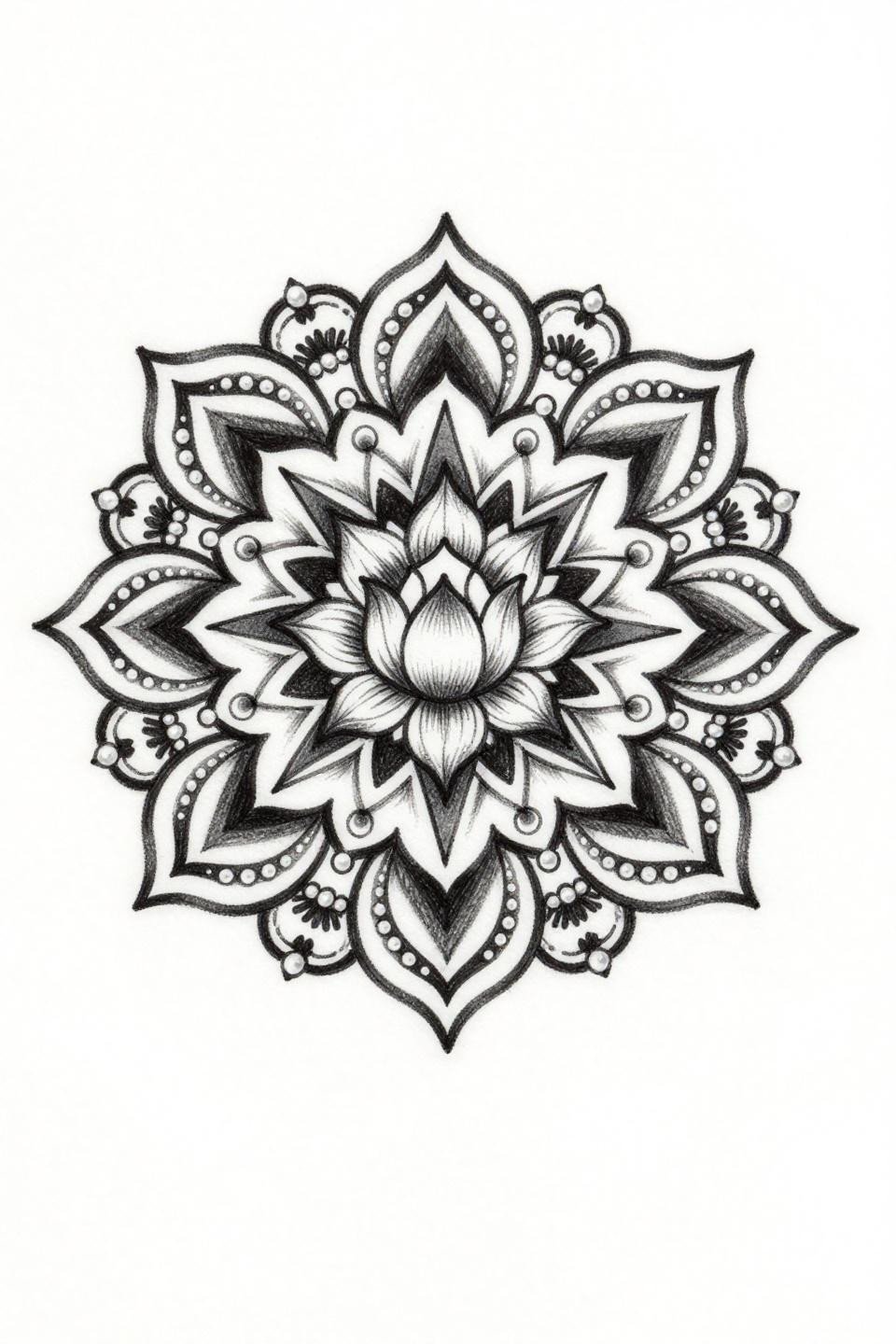
This circular mandala pairs a central lotus with radiating sun ray chambers, rendered in deliberately uneven whip shading that creates raw shadow pools against the white ground.
Intentional line weight chaos is the design signal here: the overlapping strokes read as noise until you map the geometry underneath, which holds clean bilateral structure throughout.
Neo-Traditional Tulip Hub Built for the Back of the Hand
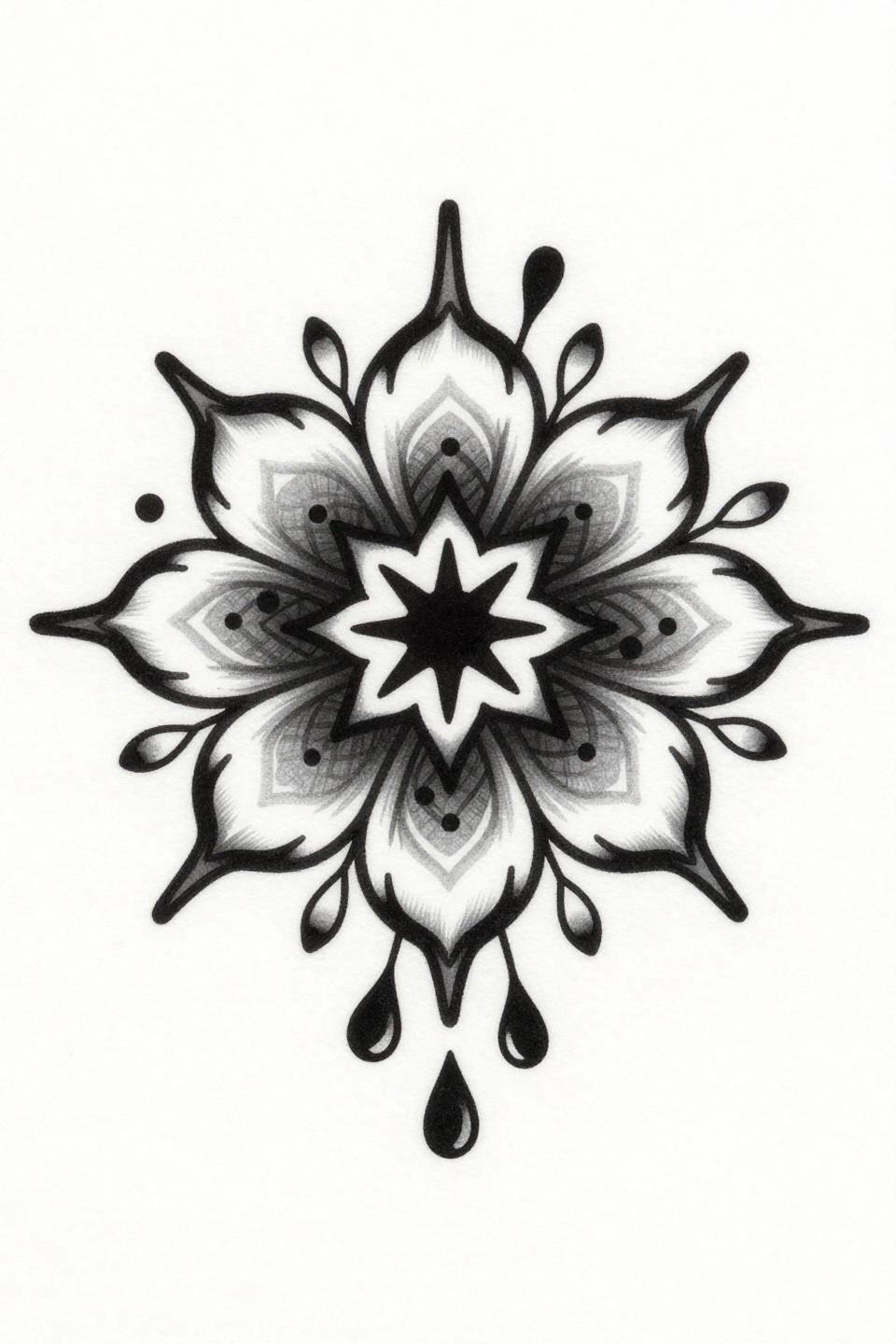
A star-shaped flower hub radiates stylized tulip petals with internal geometric weave, anchored by vine whips and teardrop nodes in a tight bilateral mandala format.
The bold 2-3pt outline weight is what makes this viable for front hand placement: fine line work on palmar skin blurs within two years, but outlines at this weight hold structure through friction and sun exposure. Check out more modern mehndi design inspiration for hand-specific scale references.
Art Deco Paisley: When a Teardrop Becomes a Frame
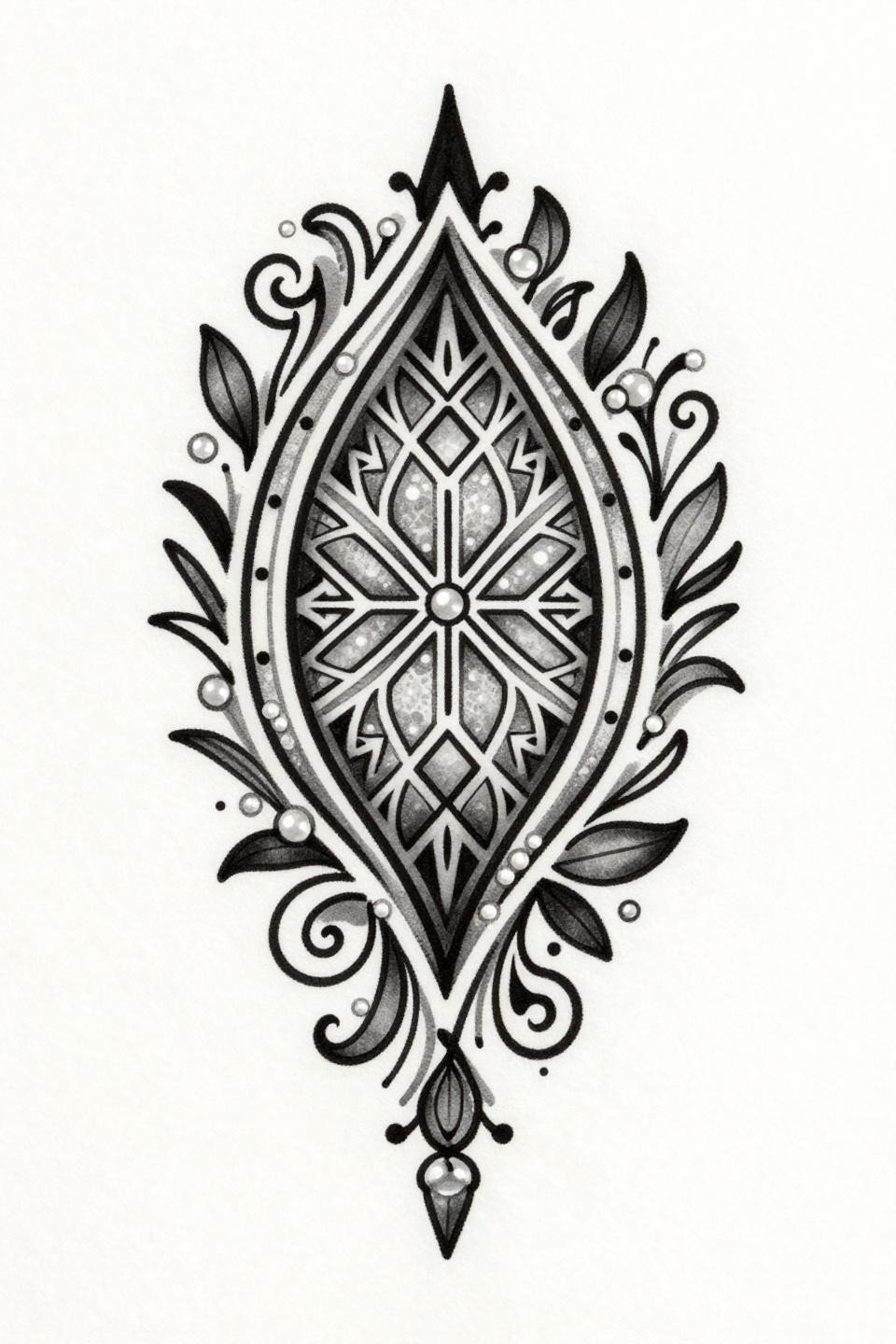
This Art Deco paisley sets a geometric lattice fill inside a classic teardrop form, framed vertically with pearl dot constellations and spiral vine tendrils from the pointed tip.
Flat black fills at 3-4pt outline weight age predictably: the lattice interior may soften slightly at year five, but the outer frame holds definition on most skin tones.
Arabesque Mandala in Sketch Raw: Symmetry That Looks Accidental
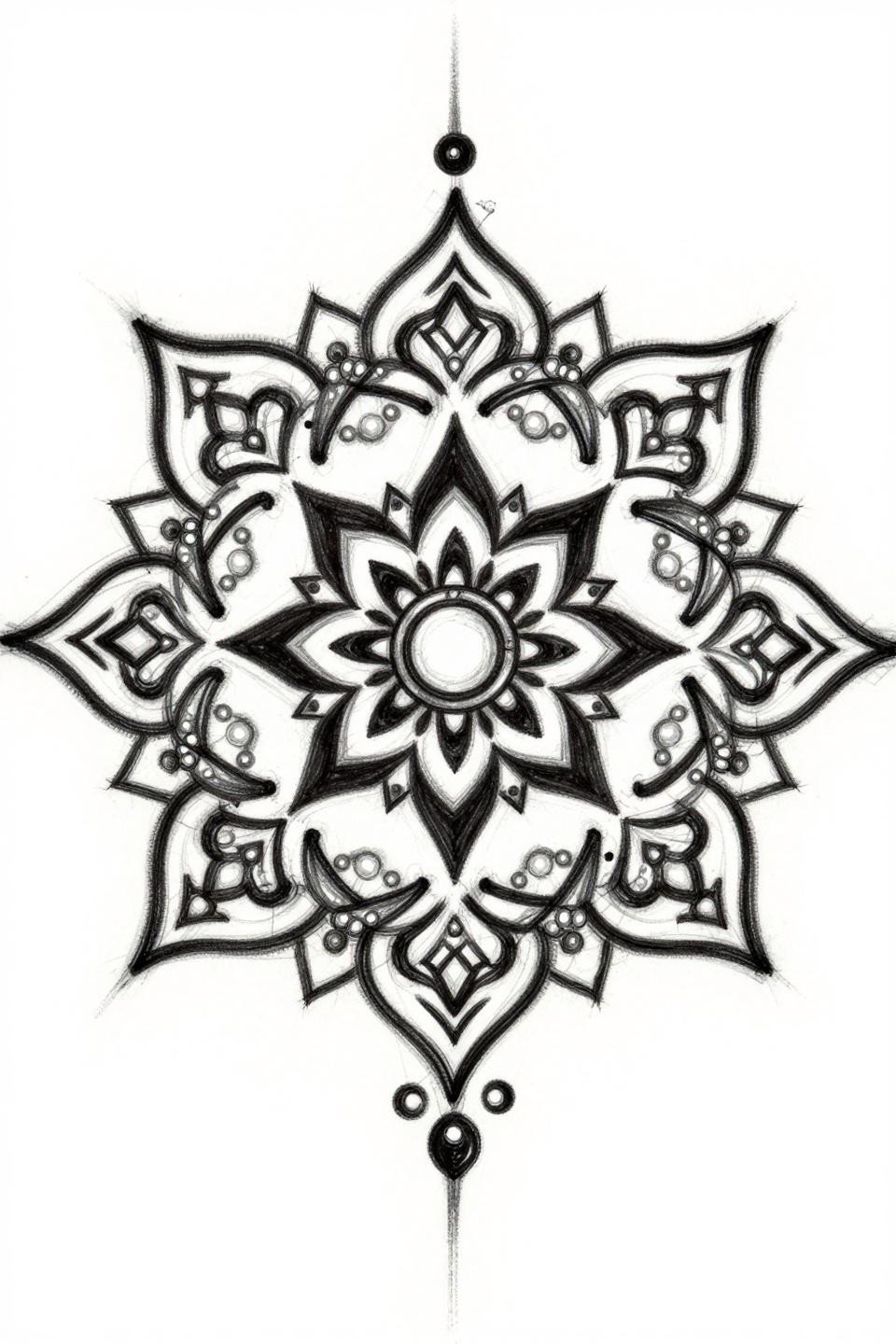
Interlocking vine scrollwork, diamond chambers, and a central lozenge medallion are rendered with rough sketchy pen strokes and visible hesitation marks, giving an organic irregular symmetry to an otherwise classical structure.
For henna designs for everyday wear, this sketch quality translates well into permanent ink because the imperfect line variation reads as intentional at healed stage, where overly precise fine lines can look degraded.
Etching Weight Hatching Inside a Rose Mandala: Tonal Depth Without Grey Wash
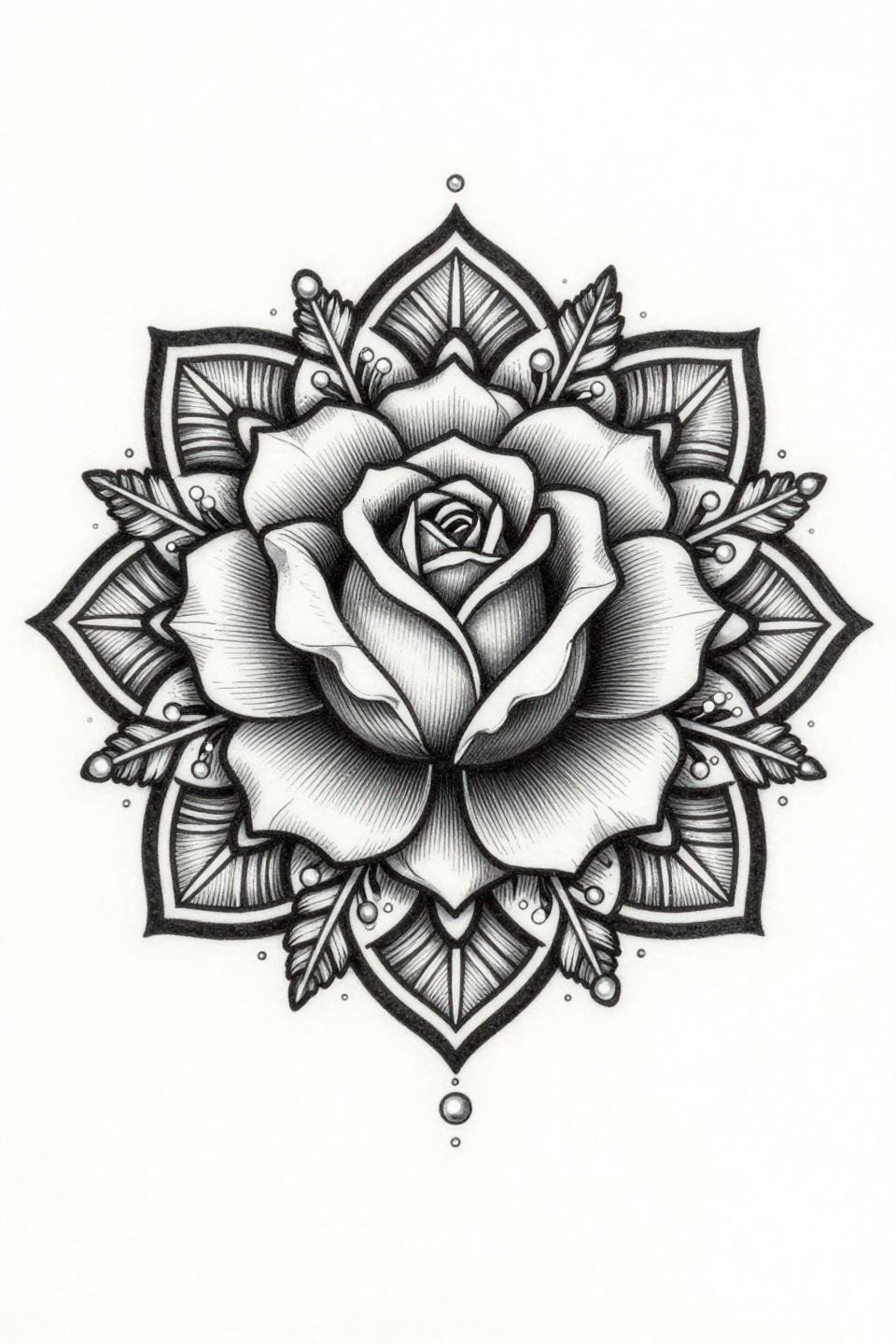
A central rose bloom anchors this circular mandala, with teardrop lattice chambers and outward fern fronds all shaded via consistent 0.5mm parallel line engraving rather than grey wash.
Ruled hatching at consistent spacing is the artist skill signal: any drift in line intervals shows immediately against the white paper ground, so healed portfolio shots reveal more than fresh work here.
Watercolor Peacock: The One Mehndi Format That Needs an Outline Anchor
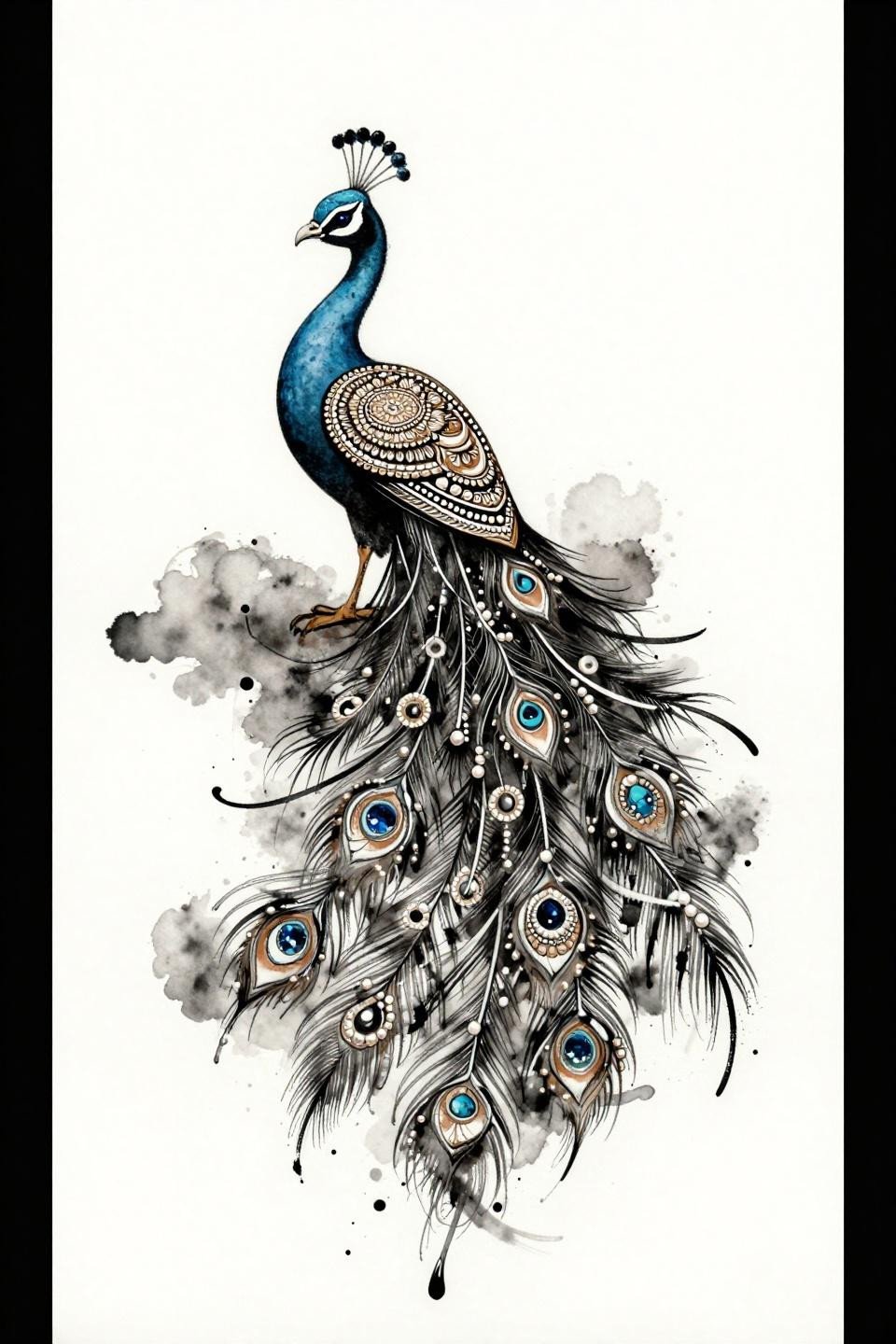
An asymmetric peacock with spread tail feathers dissolves into wet ink floral bleed at the edges, with a teardrop body wrapped in loose vine spirals and pearl dot clusters at feather tips.
Watercolor without an anchoring outline structure blurs by year three to five on most placements. This design retains the calligraphic marks at the core, which gives the healed version something legible to hold onto.
Dotwork Geometric Star: Where Stipple Density Does All the Work
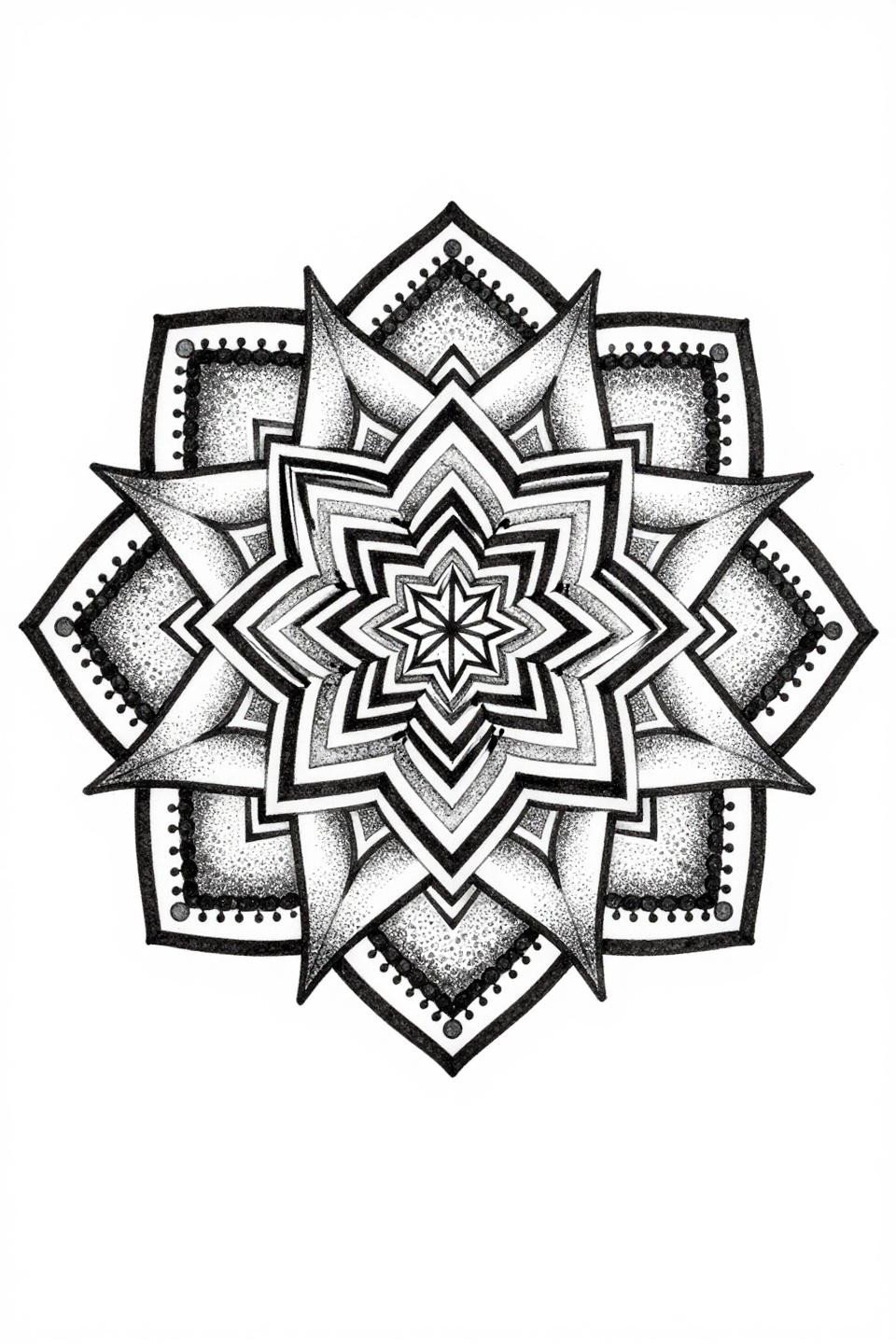
This blackwork mandala uses interlocking hexagonal chambers and radiating triangular rays, with a crosshatch-dense star core transitioning to open dot spacing at the outer edge via stipple dot gradient.
The gradient runs from roughly 90% dot density at center to near-open at the outer rays. Consistent dot size across that full range is the technical demand. Uneven dot sizing collapses the gradient read immediately.
Fine Line Mehndi Mandala: Placement Decides Whether This Survives
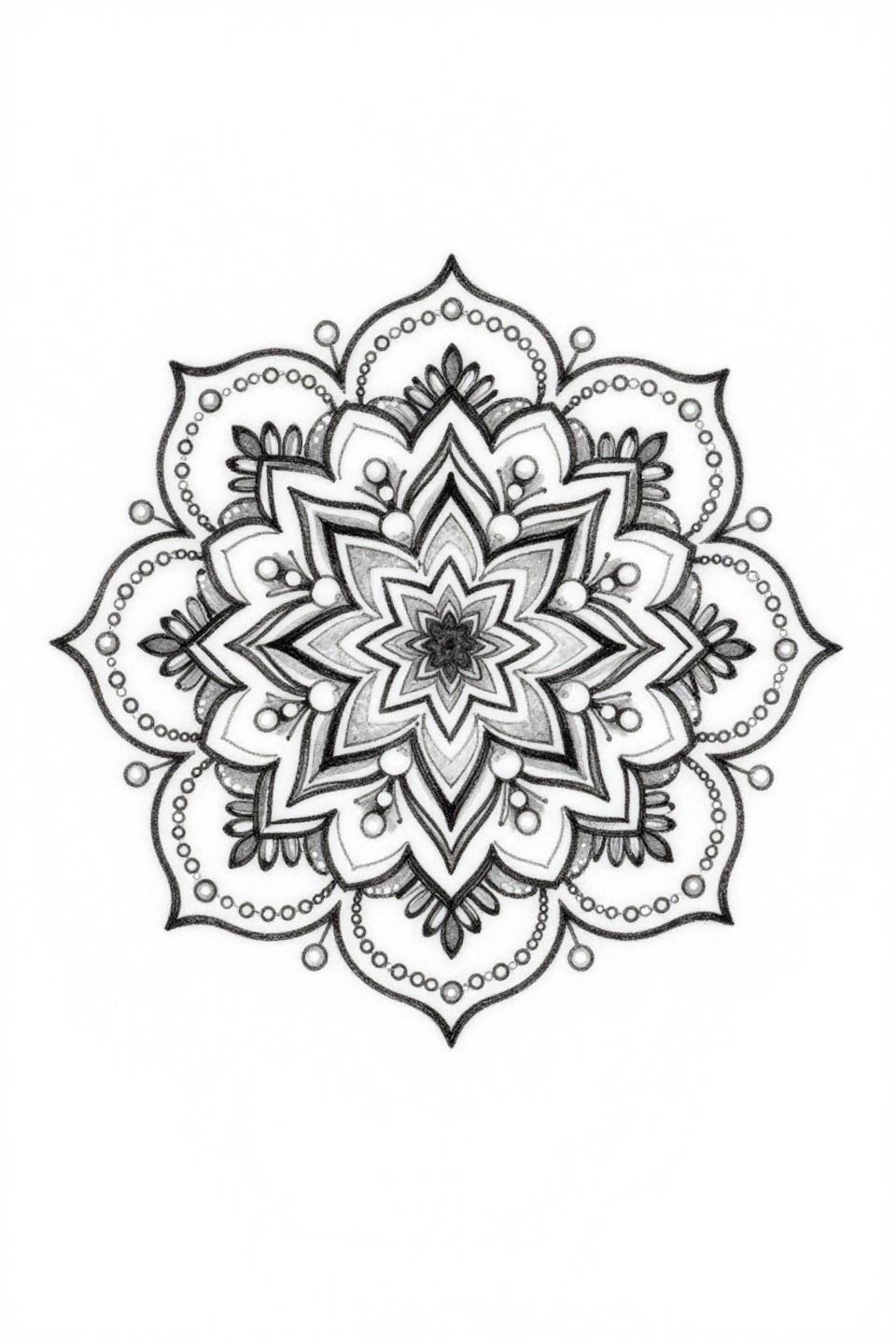
Nested circular petals, an eight-pointed star core, and alternating filled and open geometric chambers rendered in hairline 0.5mm single-needle strokes with sparse dot accents in concentric rings.
Protected placements like the sternum or upper back give this style its best shelf life. On the hand or forearm, single-needle linework at this weight will begin to diffuse within three years. Browse simple mehndi alternatives to trendy styles for placement-appropriate scale references.
Irezumi Lotus in a Diamond Frame: Graphic Weight Crosses Traditions
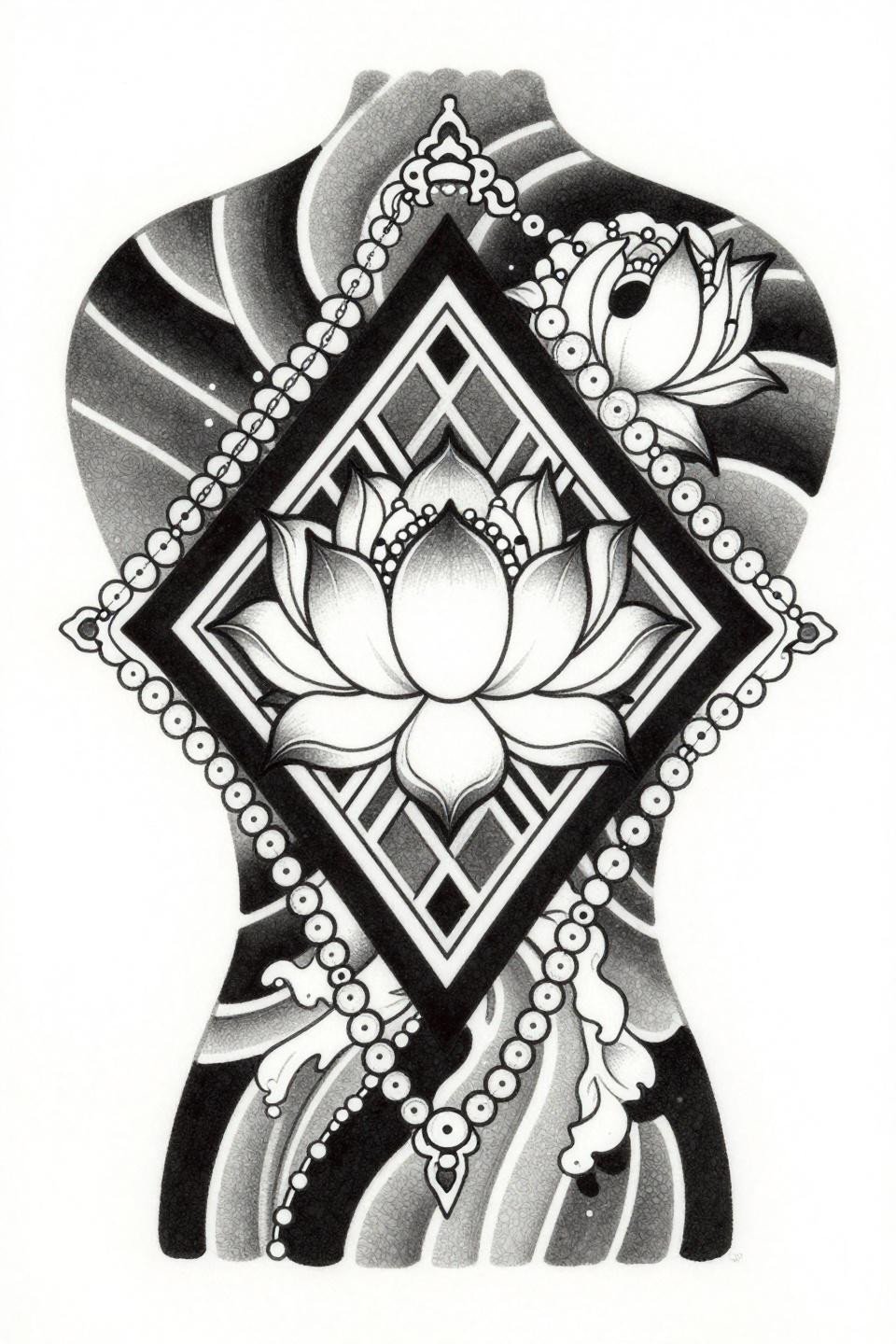
A symmetrical lotus sits inside a bold diamond vertical frame with geometric lattice radiating outward and ornamental bead chain borders, rendered at full irezumi graphic weight with flat black fills.
The 2-3pt outline at irezumi weight means this reads cleanly on olive and darker skin tones where lighter-weight mehndi-derived designs lose contrast. The flat fill approach removes any grey wash that might muddy over time.
Single Continuous Line Mandala: The Calligraphic Discipline Test
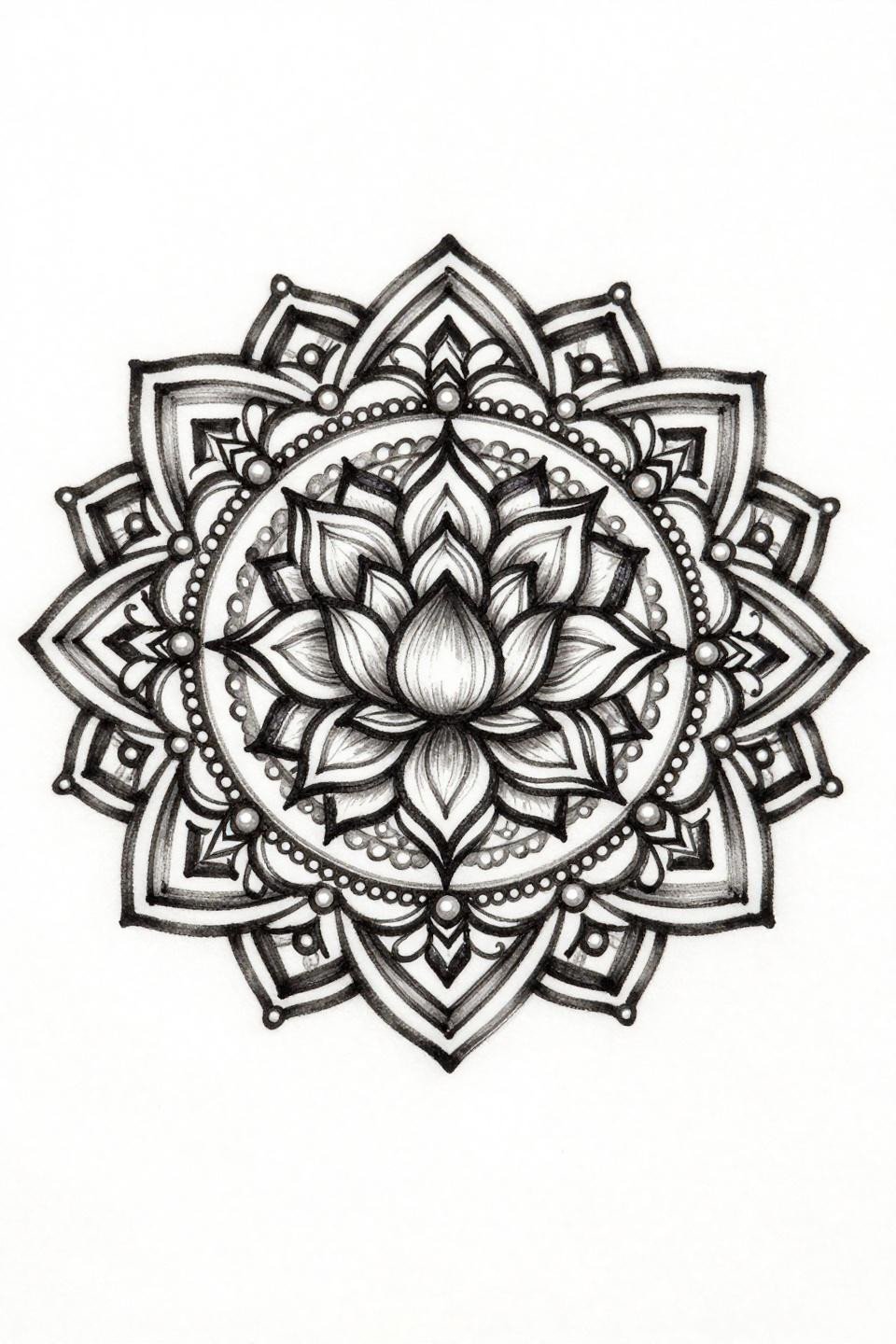
Concentric rings of interlocking diamonds and hexagons around an eight-petal lotus, all constructed via an unbroken calligraphic single flowing line in wet ink quality brush work.
The tell in continuous line execution is the direction changes: any hesitation reads as a wobble where the line doubles back. Clean junction points signal the artist has practiced the full pattern before setting needle to skin.
Tribal Geometric Peacock: Angular Fill Where Organic Form Usually Lives
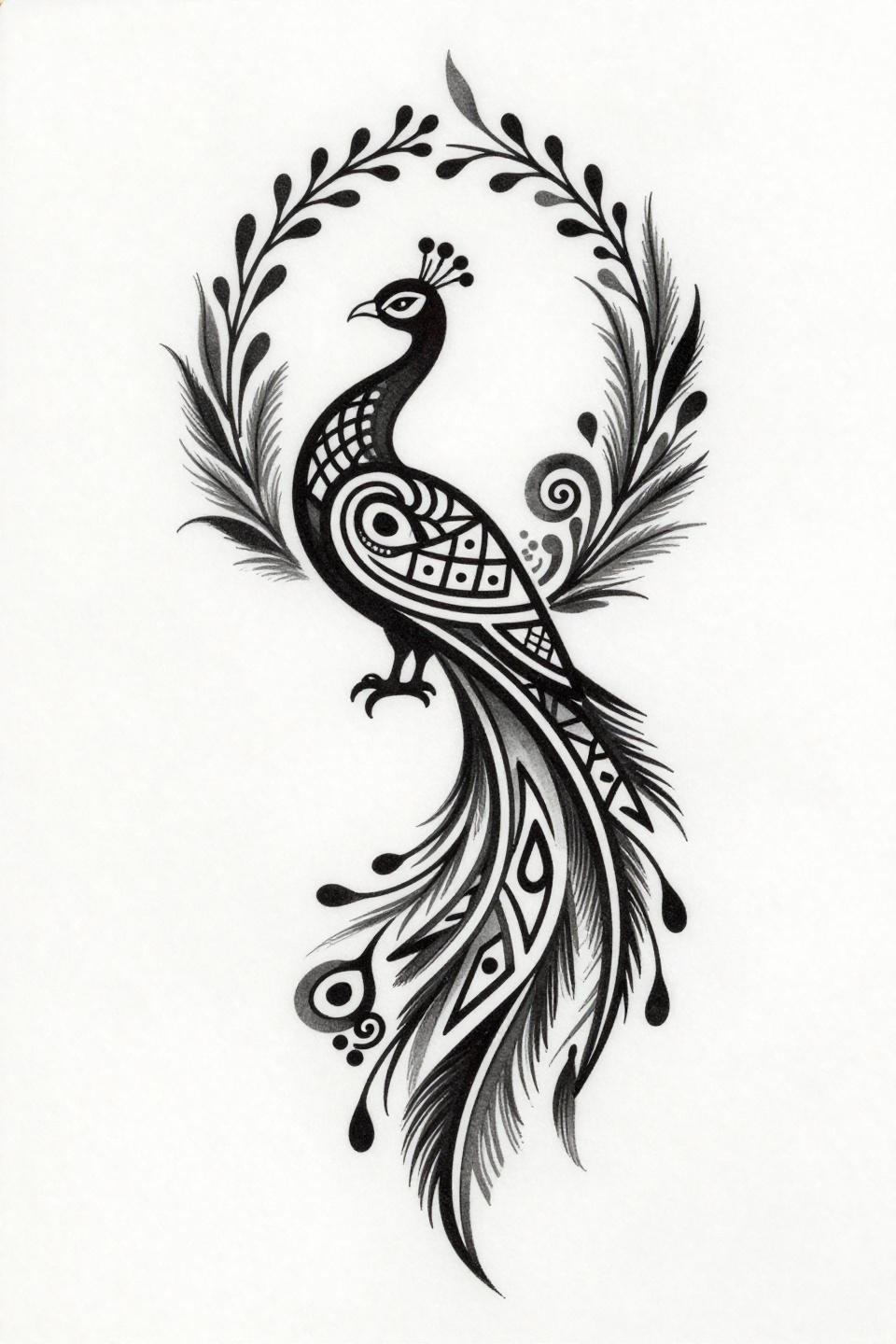
Upright bilateral peacock with coiled spiral tail feathers, body and wing panels filled with angular tribal lattice at bold 2-3pt outline weight, framed by vine tendrils with teardrop accents.
This is a strong reference for collectors who want mehndi motif structure without the fine line risk on active skin zones. The tribal fill panels hold density through friction in ways that stipple or wash-based approaches cannot.
Art Nouveau Crosshatch Arabesque: Density at the Center, Breathing Room at the Edge
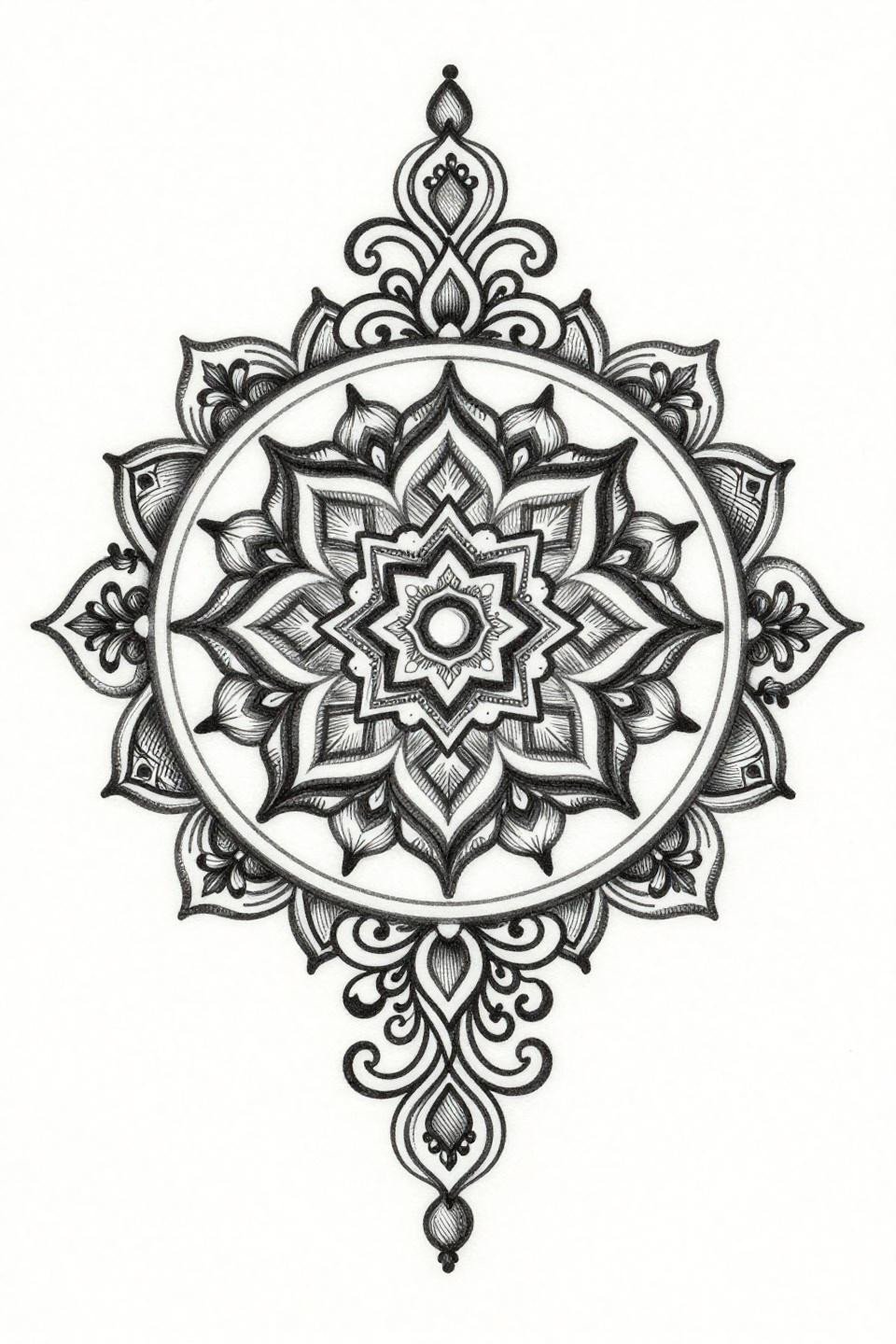
Interlocking vine scrollwork and crosshatch-filled teardrop motifs build toward a central lozenge medallion, with parallel line etching density heaviest at center and opening toward the outer petals.
This density gradient is the structural logic that separates considered design from filler work. On lighter skin tones, the contrast between dense center and open edge reads with maximum clarity at healed stage.
Botanical Peacock: Single Needle Precision in an Organic Layout
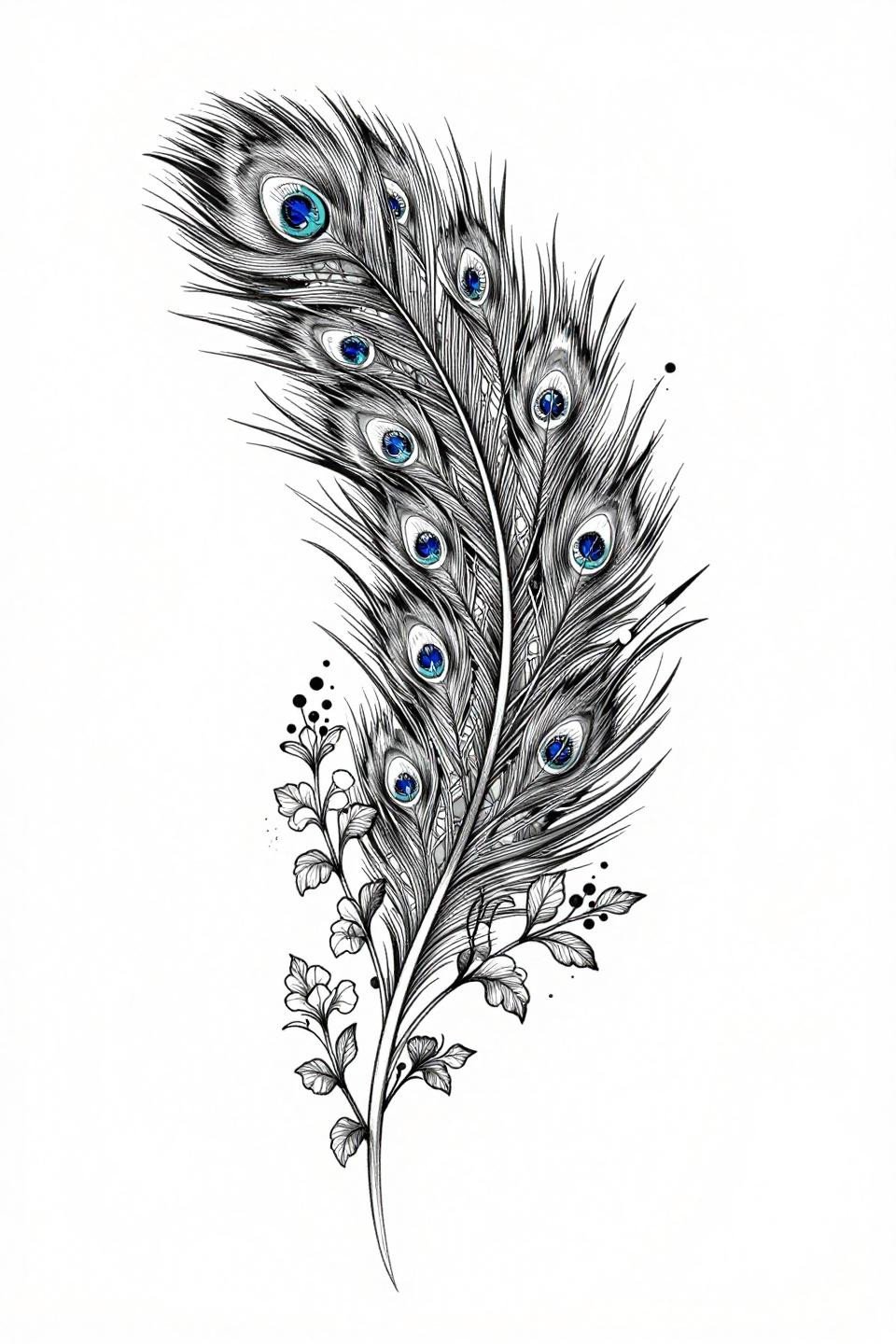
Fanned peacock tail feathers with fine geometric lattice fills in each section, floral vines threading the composition, and dot cluster detail nodes, all in hairline 0.5mm single-needle botanical linework.
Grey wash dilution at this stroke weight demands an artist who controls machine speed precisely: too fast and the wash goes patchy, too slow and the skin overworks. Ask to see healed examples of fine line wash work specifically.
Narrow these down to three references maximum before your consultation. Match placement to line weight first: single-needle and fine line work for protected zones, bold outline formats for hands and forearms. Your artist reads a tight reference set faster and more accurately than a folder of twenty.