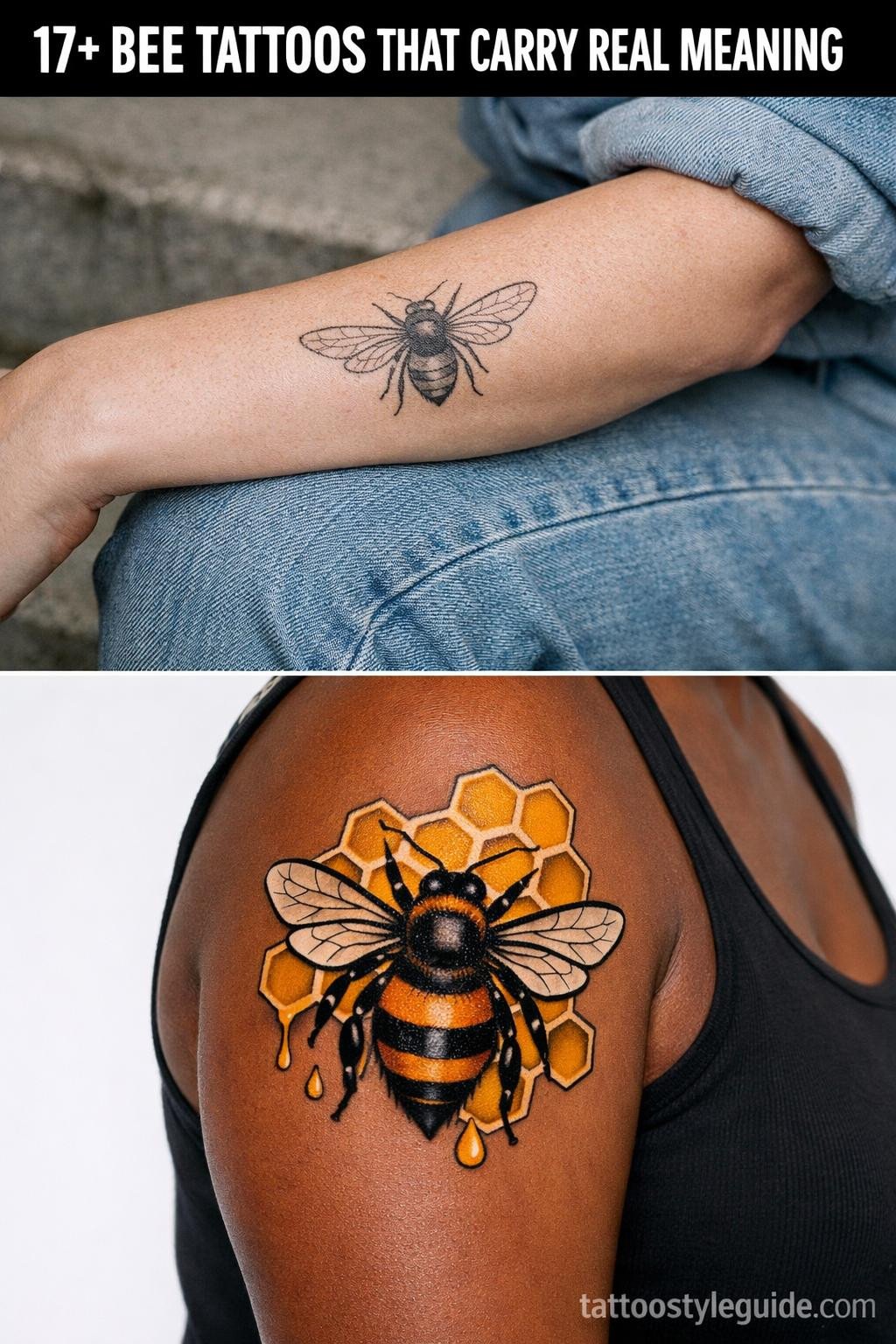
Bee tattoos carry more technical risk than most collectors expect. The small scale, dense anatomical detail, and fine linework common to this subject demand precise needle control, and the difference between a bee that reads at year ten versus one that turns into a blur by year three comes down to line weight decisions made during the initial consult.
The designs below cover the full range of execution styles, from single-needle minimalism to bold old school flash. Each one signals something different about longevity, placement logic, and what to realistically ask of your artist.
Ignorant Style Proves the Bee Needs No Realism to Land
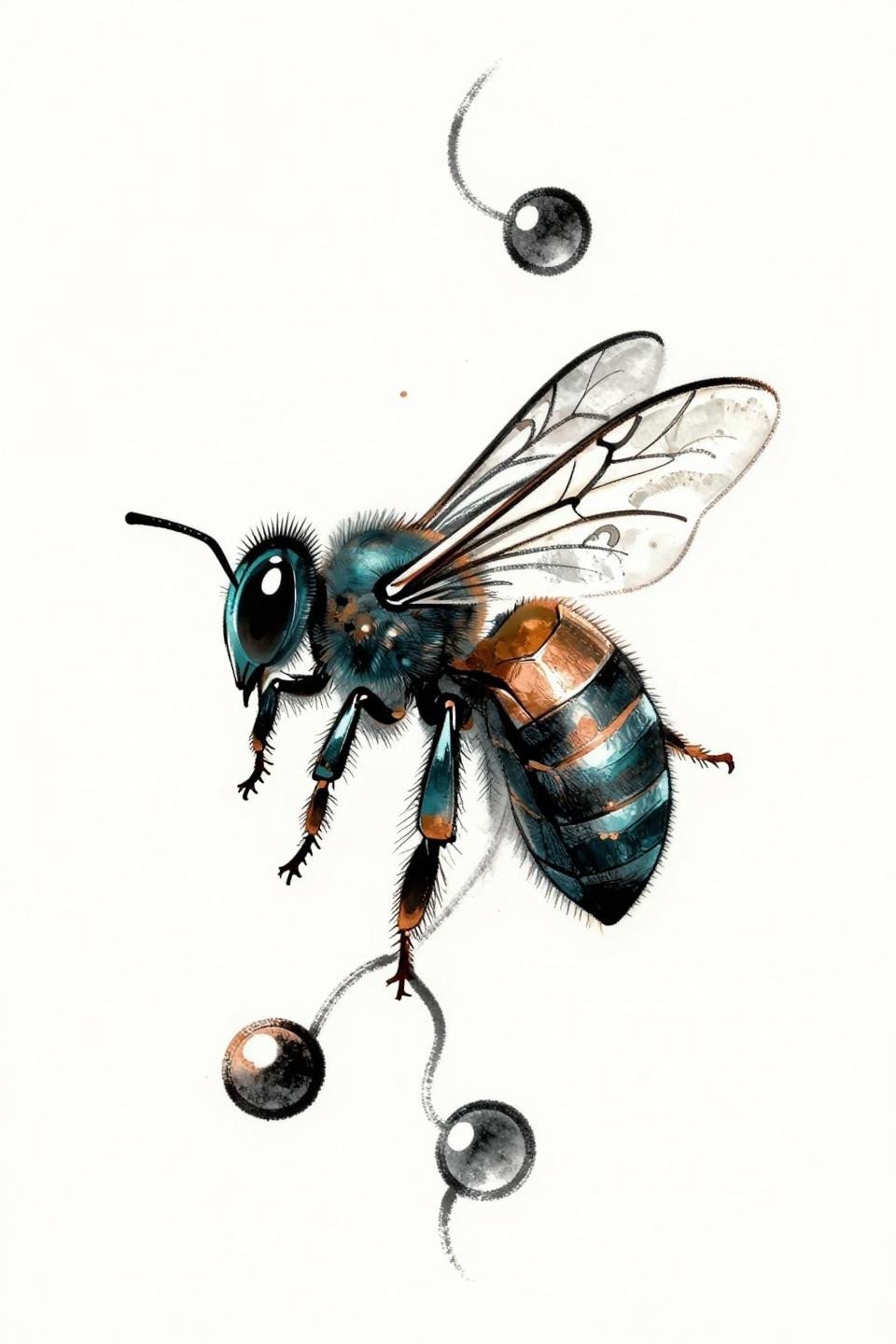
This design uses deliberate line wobble and asymmetric organic flow to build a honeybee in loose dorsal view, hexagonal armor plating and translucent wing panels rendered in deep teal with copper metallic accent.
Ignorant style works here because the wandering line weight reads as intentional craft, not error. Artists who can’t control wobble consistently get exposed fast in this style, so healed portfolio shots are non-negotiable before booking.
When Sacred Geometry Frames the Bee Correctly
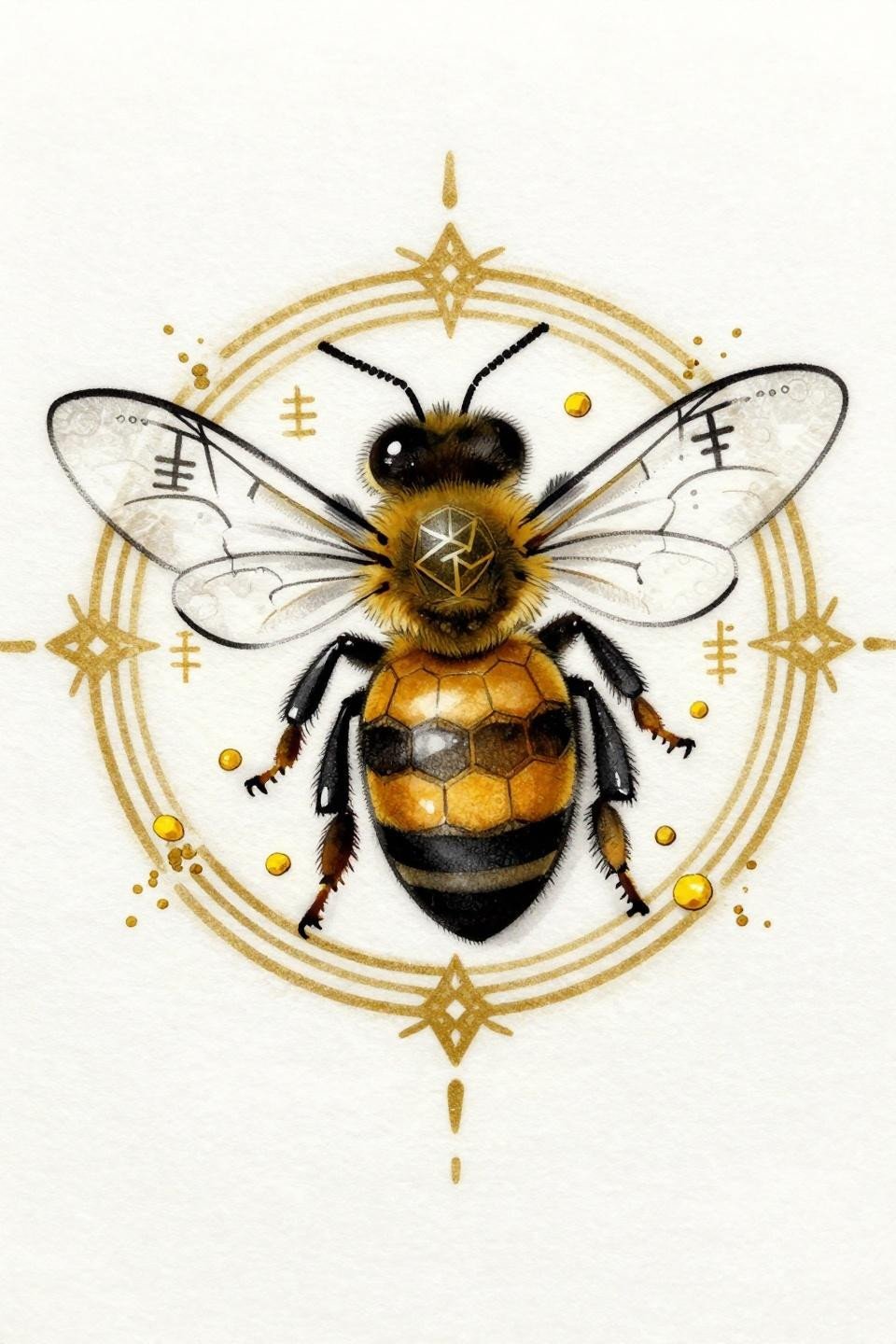
Sak yant structure disciplines the bee into a circular mandala, wings fully extended in strict dorsal view, surrounded by protective yant script and pollen grains in flat gold and solid black.
The circular mandala composition makes this ideal for sternum or upper back placement, where the body’s natural curvature frames the radial symmetry rather than distorting it. Protected placements give this style its best shelf life.
Single Needle Lateral Profile: The High-Risk, High-Reward Build
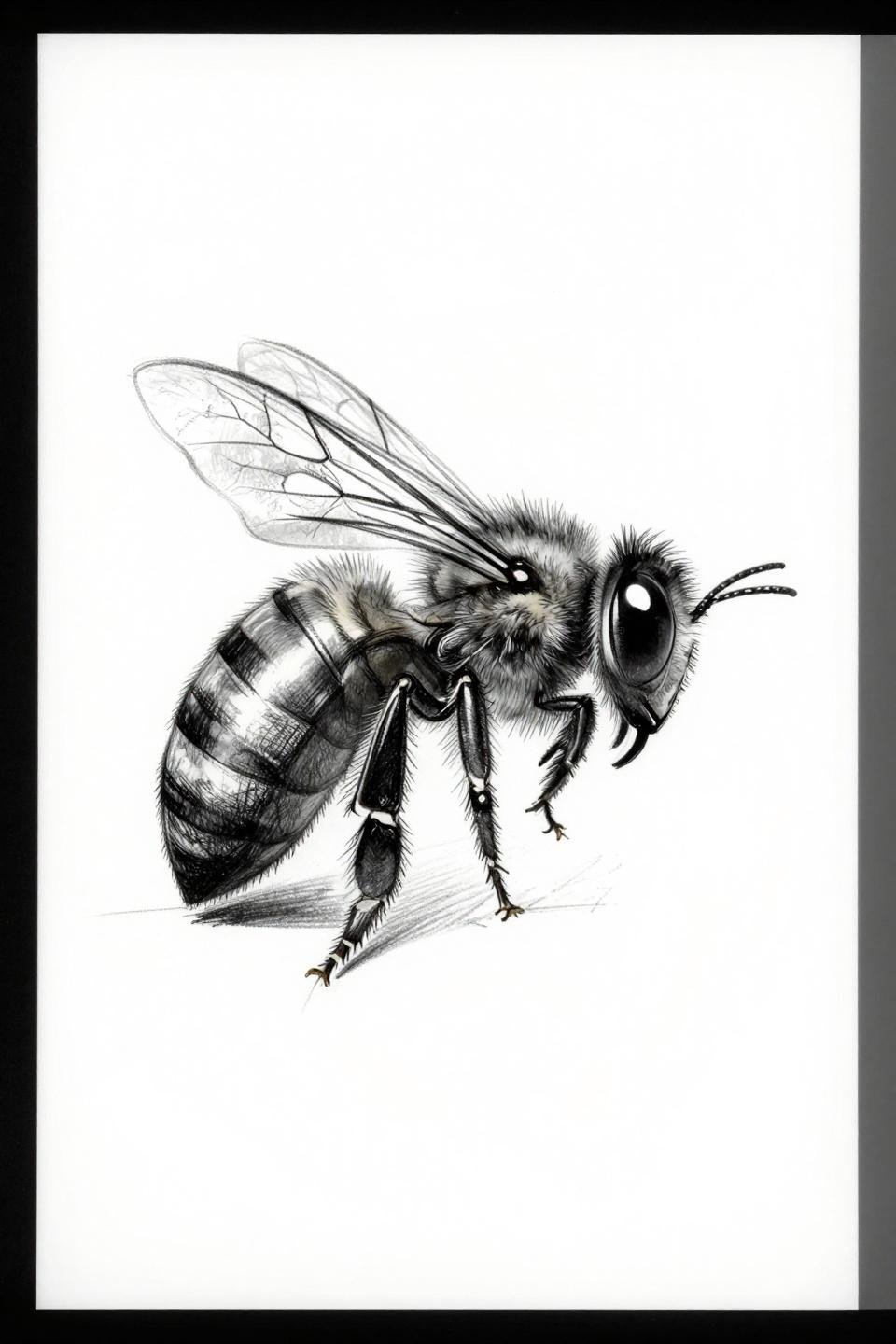
Strict lateral profile with a coiled proboscis and folded wings, executed in hairline 0.5mm single-needle strokes with visible construction lines and grey wash dilution for midtones.
On lighter skin tones, this reads crisp at placement. On olive and darker skin, the 1RL single needle weight loses contrast within a few years, and artists should advise bumping line thickness before committing to this scale.
Celtic Knotwork Turns Anatomy Into Pattern Without Losing the Bee
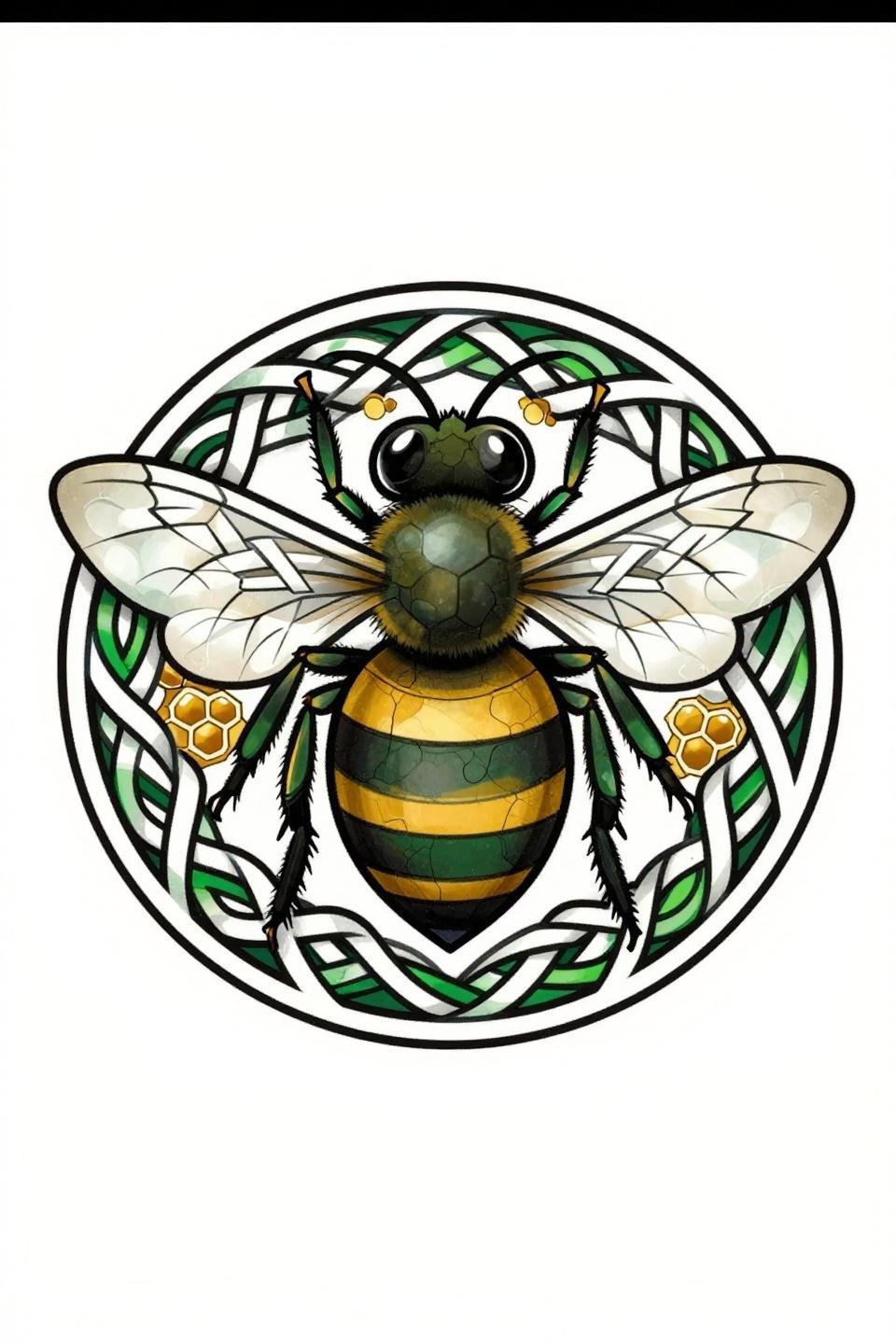
A frontal bee form built entirely from interlaced Celtic knot bands, body stacked in hexagonal segments, wings as radiating knotwork ribbons, enclosed in a circular mandala with bold 2-3pt outlines and flat forest green and gold fills.
Bold outlines at this weight hold clean for 10 or more years. The flat fill zones between knotwork bands are where beginner artists show patchiness, so request healed shots of flat-fill knotwork specifically.
Trash Polka Bee: Why the Diagonal Frame Changes Everything
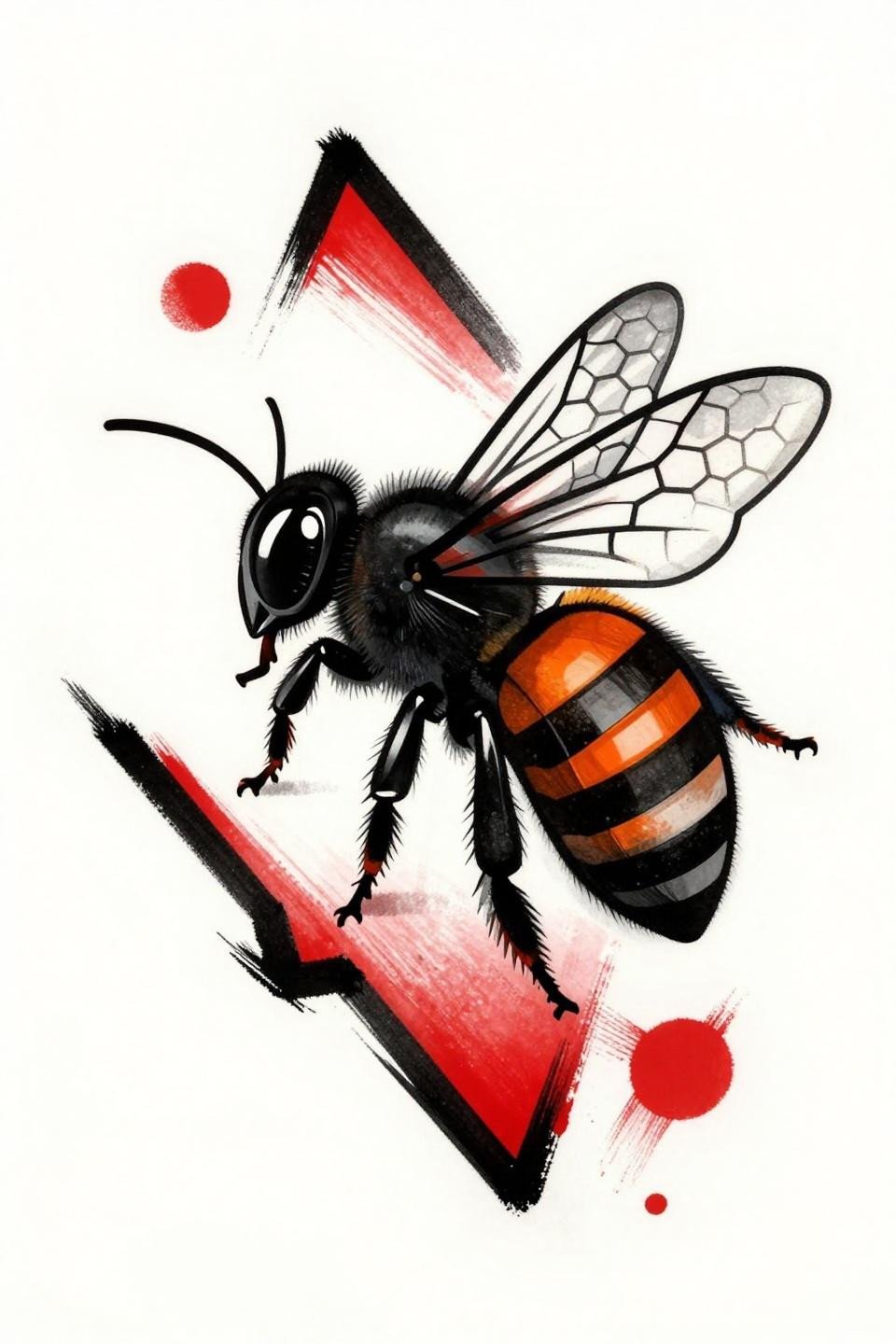
Geometric side profile bee inside a diamond frame with asymmetric diagonal shattering, rendered in crimson red accent against solid black with whip shading and aggressive smear mark-making.
Trash polka is one of the few styles where asymmetry is structural rather than decorative. The diagonal shattering has to read as deliberate fragmentation, not unfinished composition, which separates artists who understand the style from those copying the aesthetic.
Woodcut Engraving Locks the Honeybee in a Diamond Frame
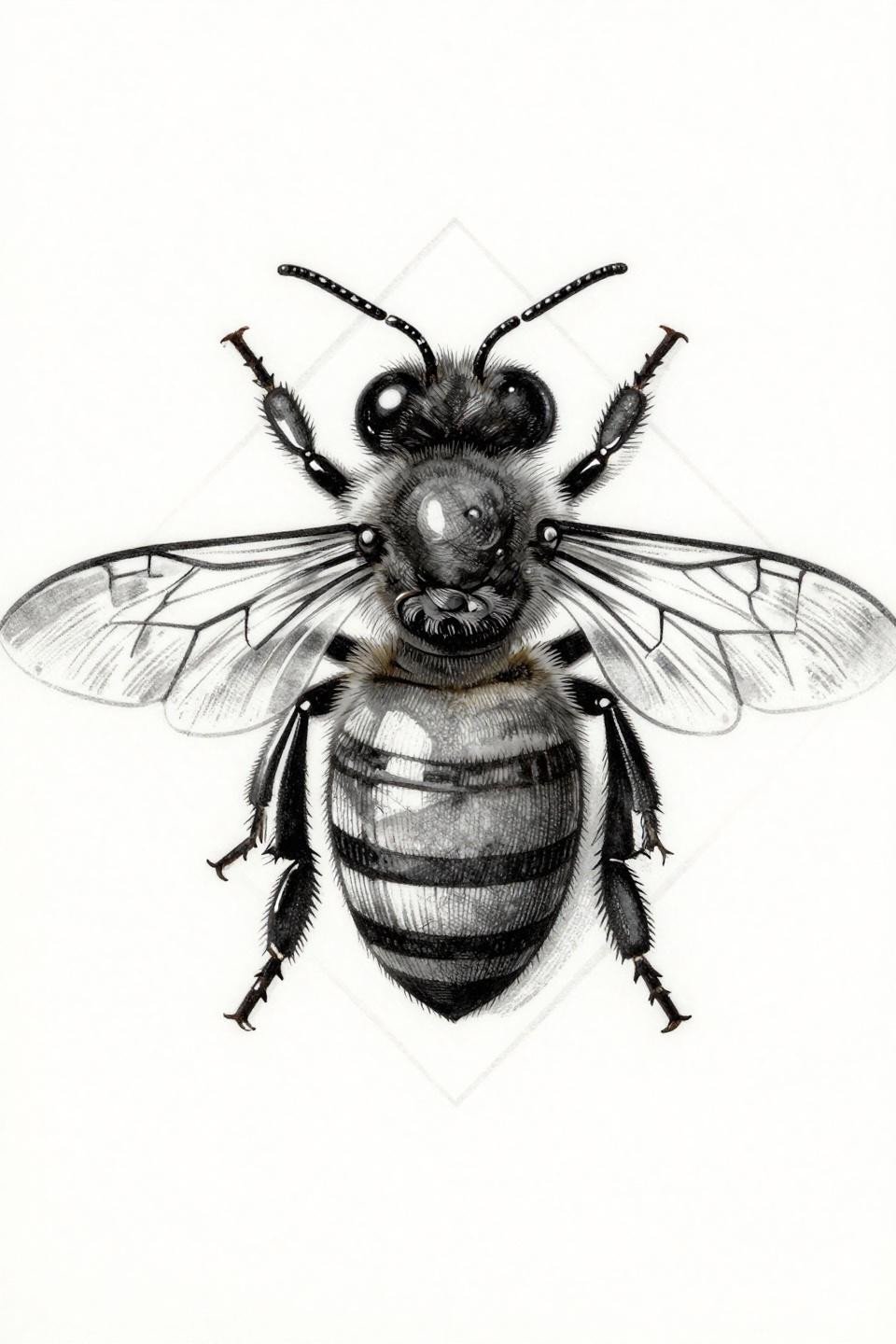
Strict frontal view honeybee centered in a diamond frame, executed in parallel line engraving and dense crosshatch shading with grey wash dilution handling the midtone zones.
Crosshatch shadow density is the technical signal in woodcut-style work. Consistent line spacing across the shadow zones separates a collector-quality piece from one that muddies at scale. Ask to see the artist’s healed woodcut work, not just fresh shots.
Old School Queen Bee Flash: The Crown Solves the Identity Problem
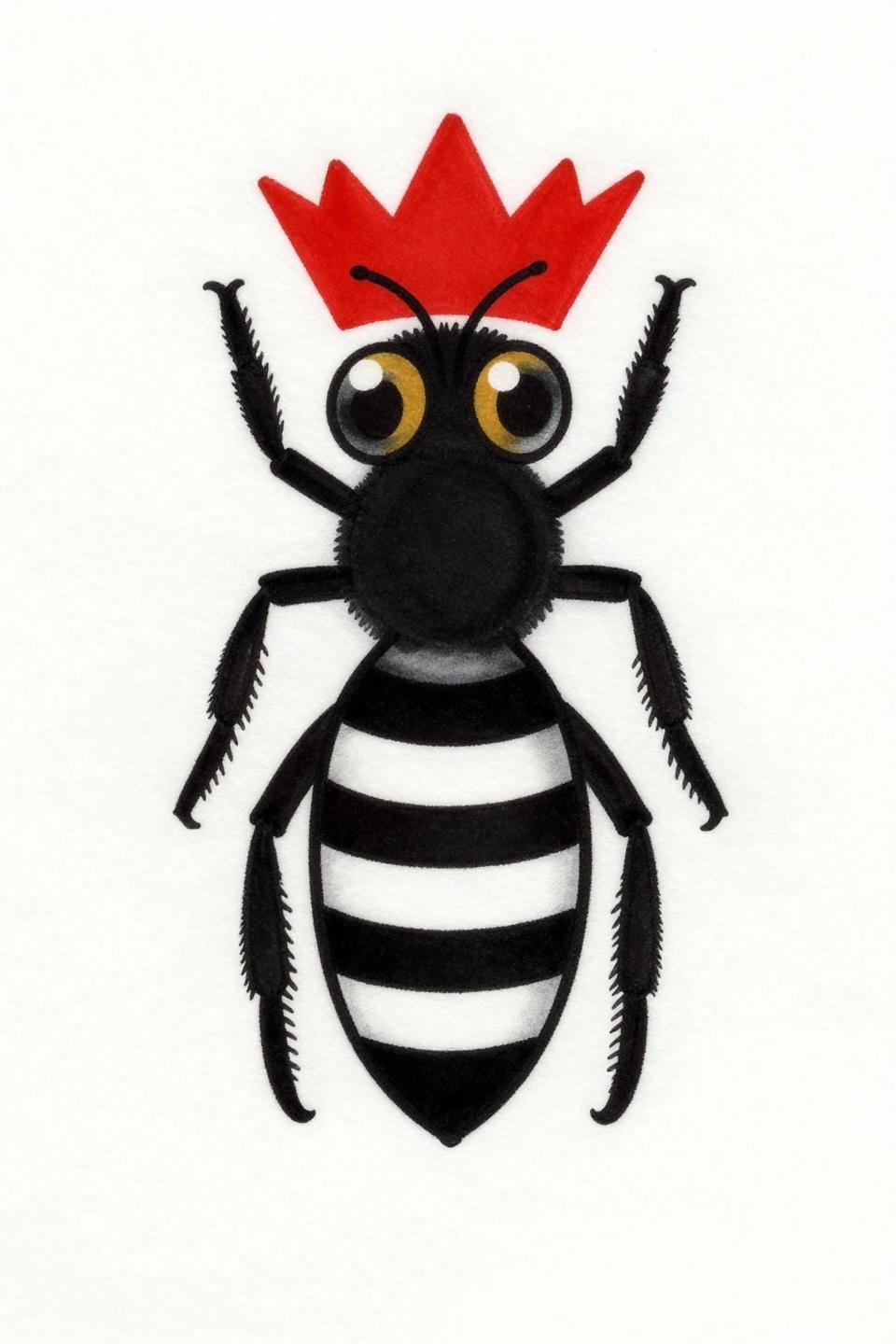
Queen bee in frontal portrait with elongated abdomen, spiral antennae, and a crimson red crown accent on solid black, executed in the flat-fill traditional American approach with bold 2-3pt outlines.
The crimson crown placement above the thorax is what separates this reading as a queen rather than a generic bee. Traditional flash at this outline weight holds its read across decades, making it one of the more durable options in this collection.
Art Deco Geometry Reduces the Bee to Its Essential Architecture
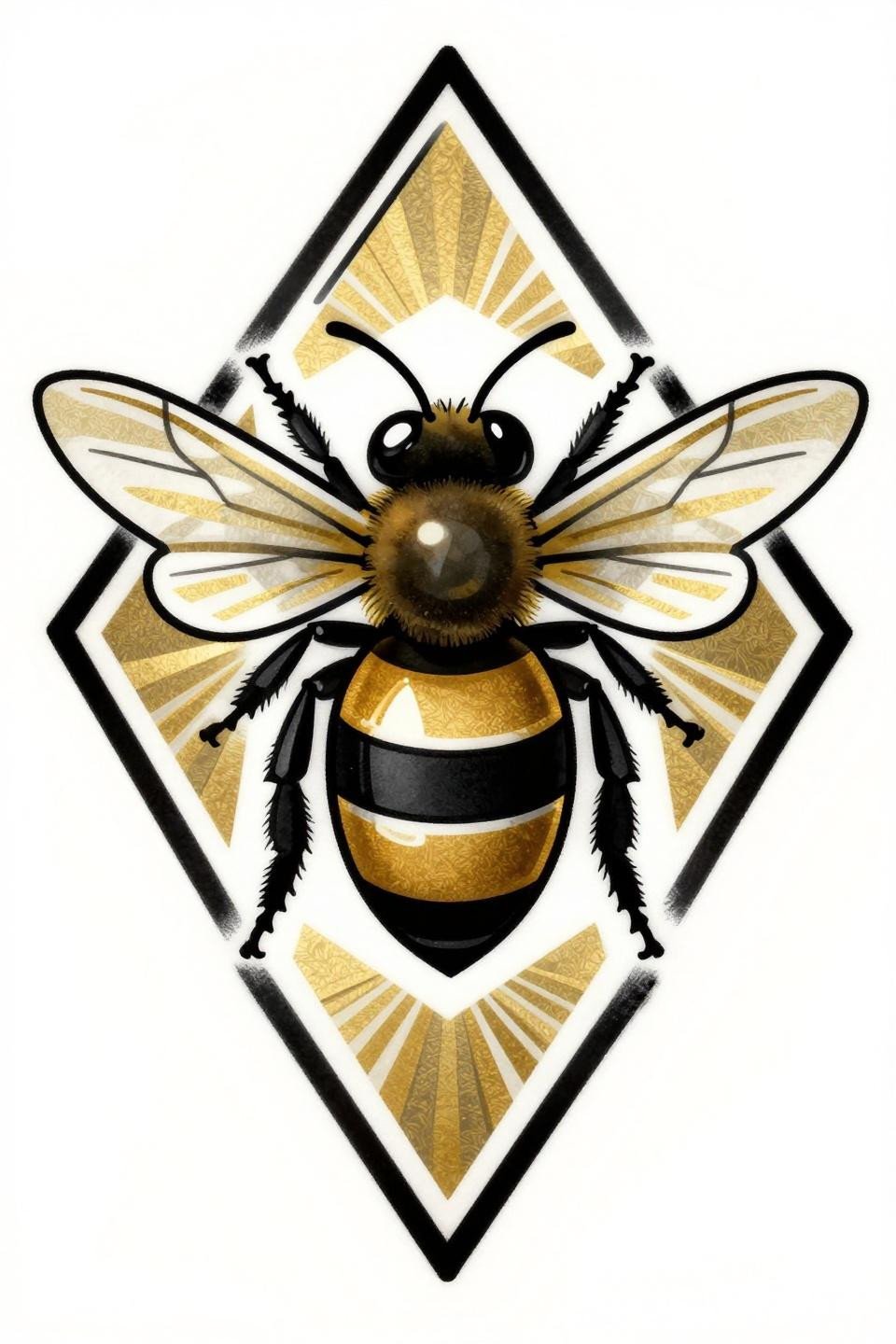
Art deco bee in frontal stance, body rendered as stacked diamonds, wings as parallel sunburst rays, compound eyes as concentric circles, all enclosed in a hexagonal diamond frame with flat gold and black fills.
Minimalist geometric builds like this age well on protected placements, specifically the sternum and upper inner arm, where movement distortion is minimal and the hard geometric edges stay readable long-term.
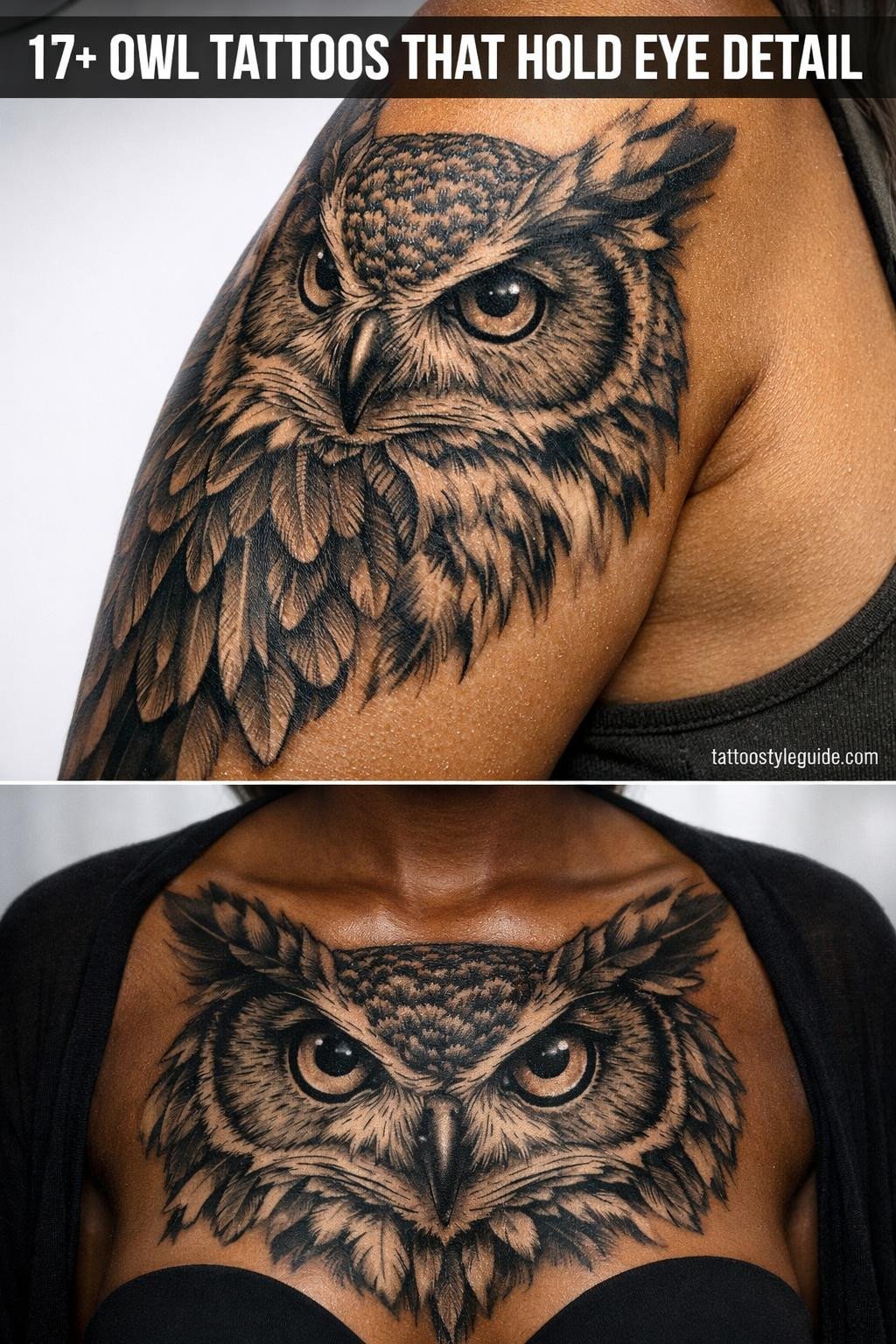
The Owl in a Bee Collection: What It Actually Signals
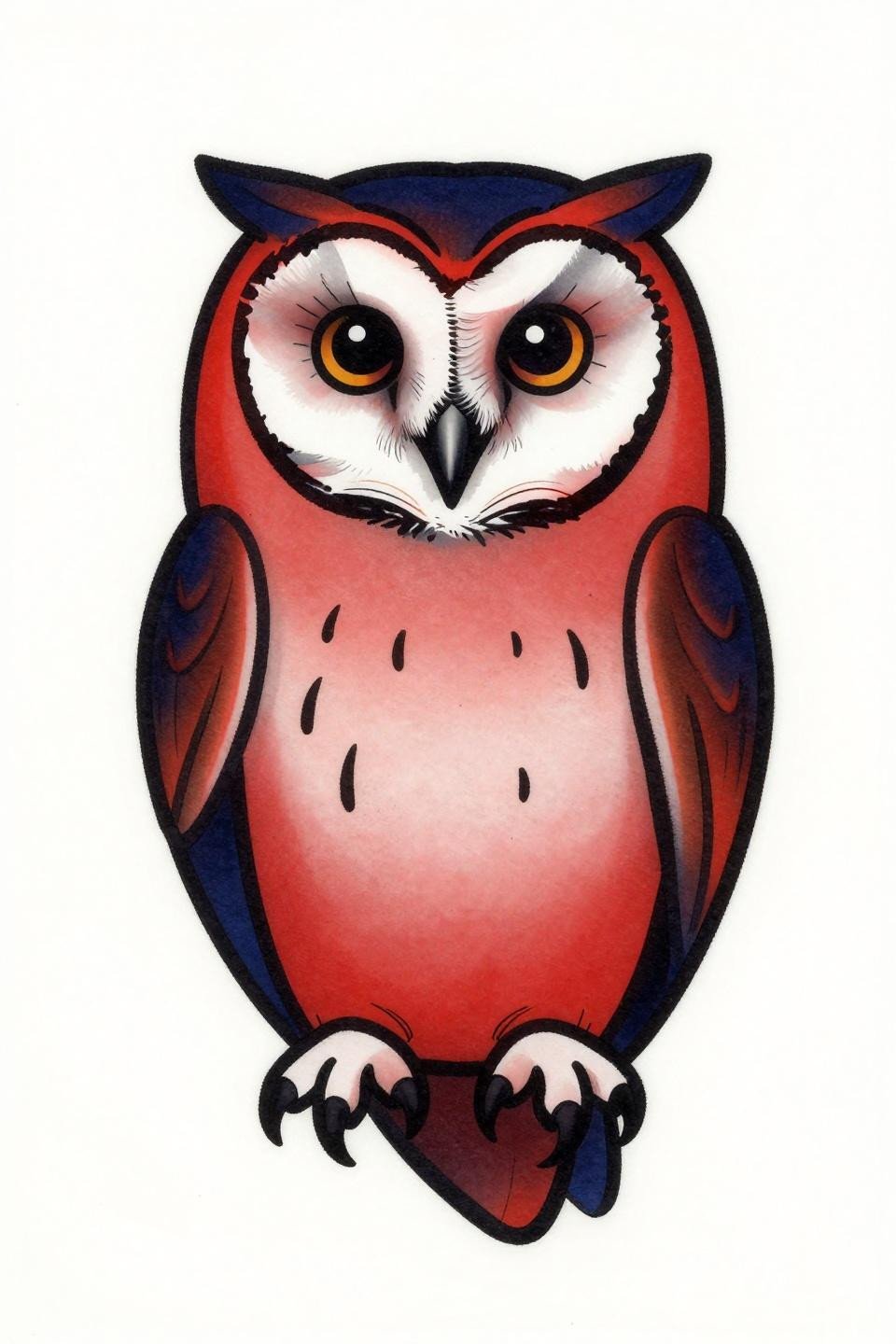
Neo-traditional barn owl in forward-facing portrait, massive facial disc with asymmetric ear tufts and concentric iris rings, rendered in deep indigo and crimson with bold 2-3pt outlines and flat jewel-tone fills.
Owl and bee pairings appear often in collector builds centered on pollinator ecosystems or wisdom and industry themes. Neo-traditional flat fills at this outline weight are among the most durable color tattoo formats available.
Art Nouveau Bee in Profile: Botanical Curve Earns Its Placement
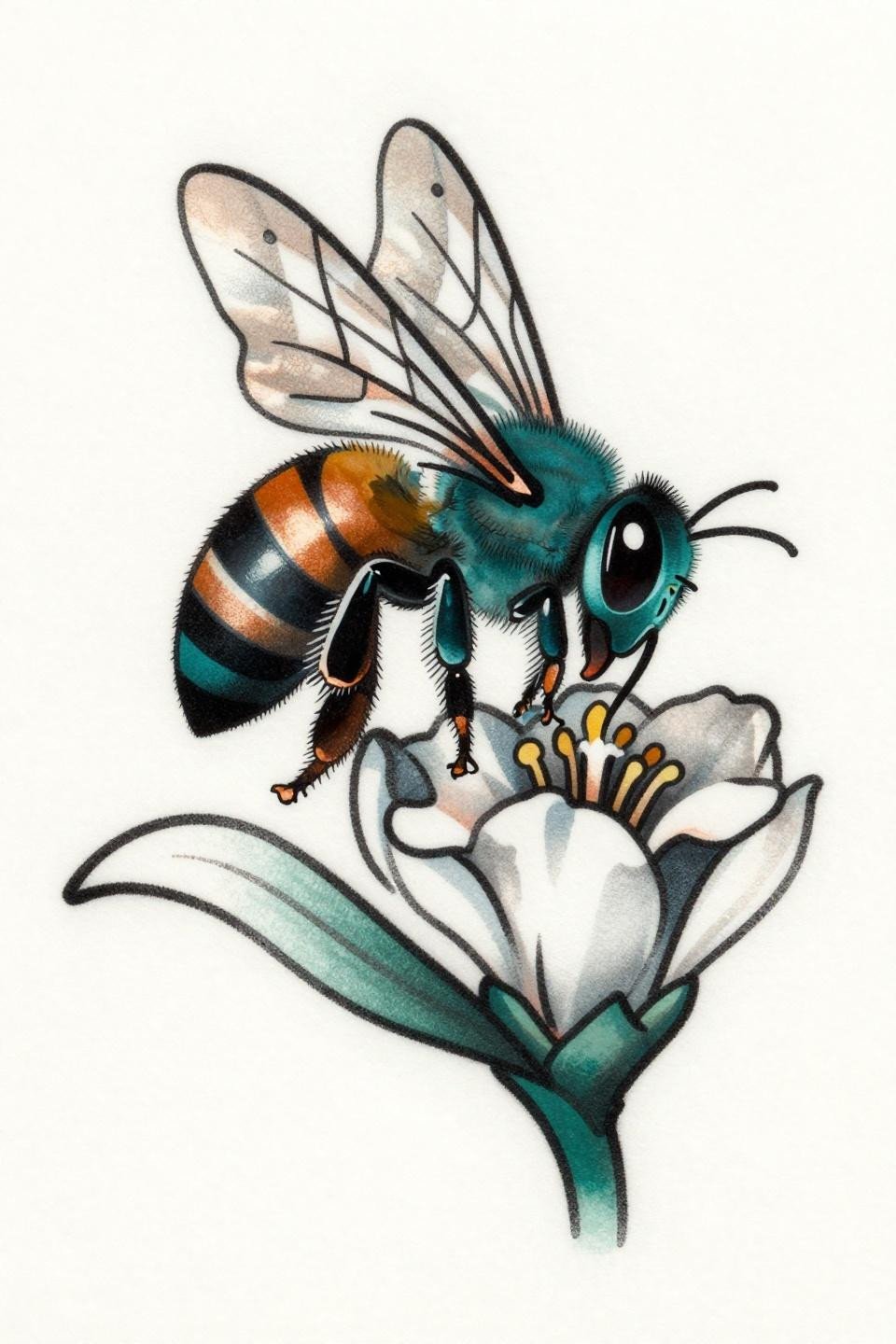
Honeybee in strict lateral profile descending into an open bloom, proboscis fully extended into the floral nectar chamber, executed in flowing art nouveau botanical composition with deep teal wings and copper metallic linework.
The asymmetric downward curve of this composition makes it purpose-built for forearm or calf placement, where the natural taper of the limb carries the botanical flow without the design fighting the body’s shape.
Anatomical Cutaway: When Scientific Illustration Becomes Flash Art
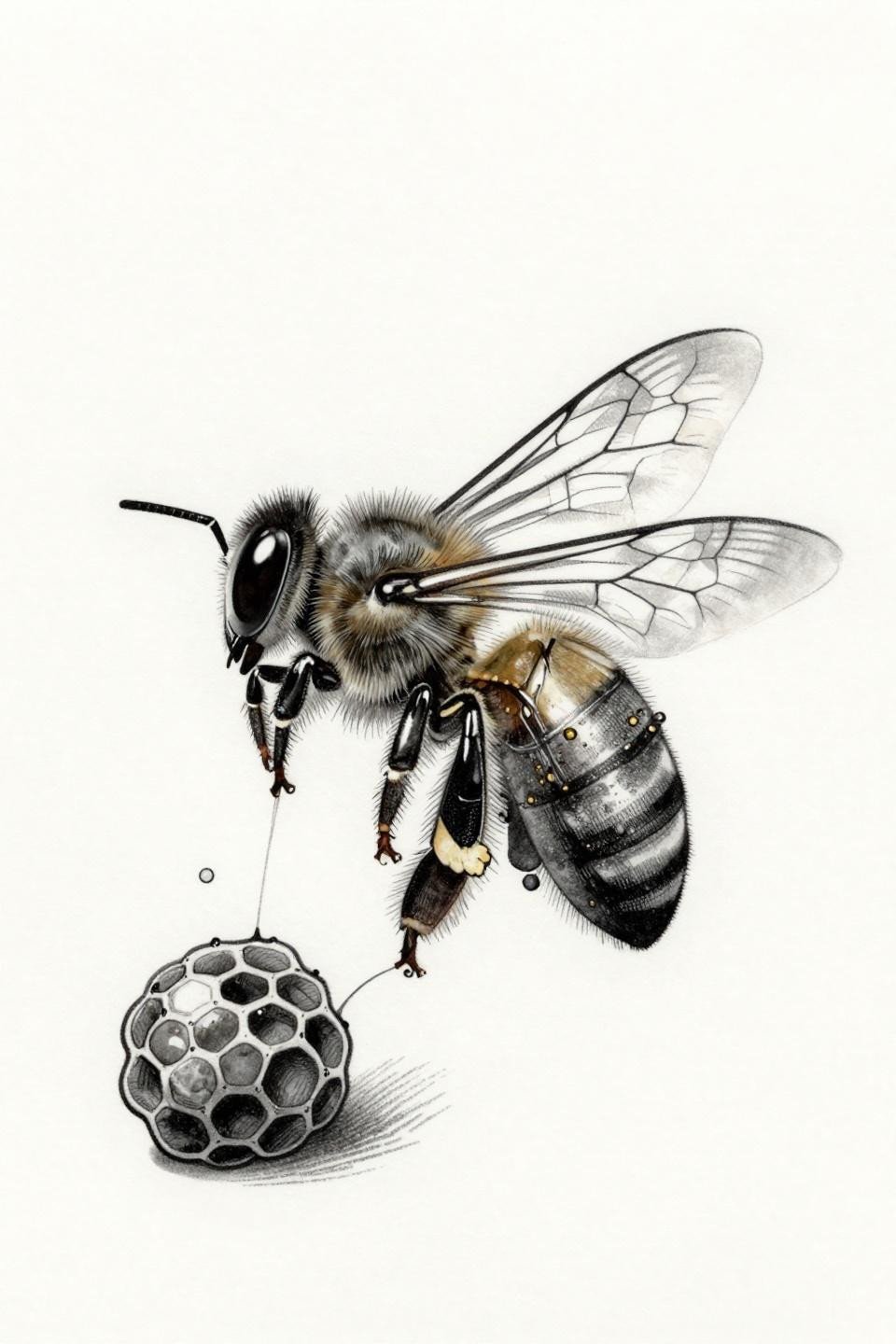
Honeybee in diagonal flight with a transparent cutaway torso revealing internal anatomy and honey sacs, wings mid-beat at 60 degrees, pollen baskets overflowing on hind appendages, rendered in fine crosshatch engraving with grey wash midtones.
The cutaway anatomy detail is the technical flex here. Artists who render this cleanly at tattoo scale have a specific command of fine line density control. Check their portfolio for any scientific illustration style work before booking.
Blackwork Dotwork Mandala: The Heart Antenna Detail That Changes the Read
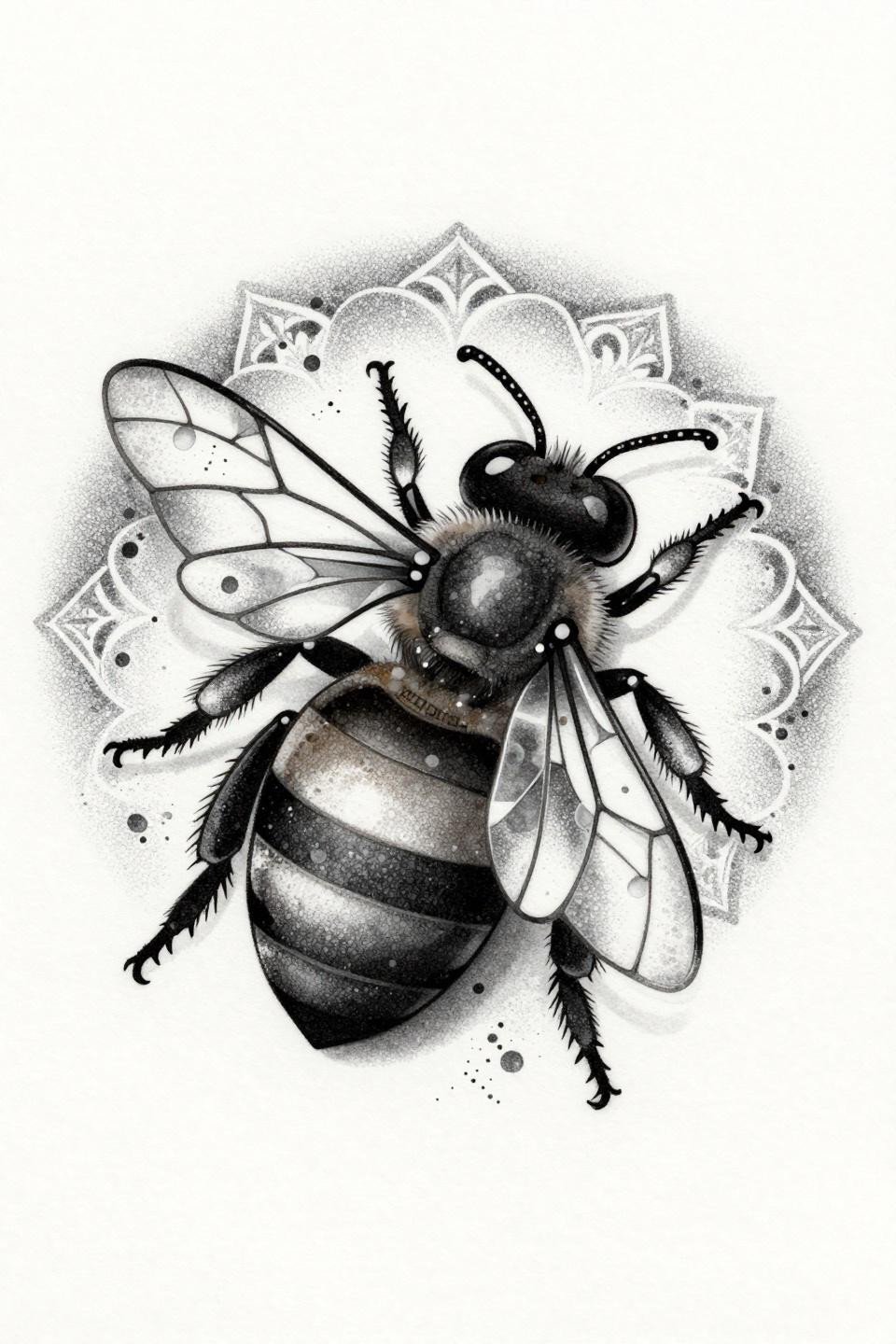
Dorsal view bee in a full circular blackwork mandala, stained glass wing segments, hexagonal body armor, and antennae curved inward to form a heart shape at the top, with stipple density graduating from 90 percent at center to open at the edges.
Consistent dot size across the full gradient is the artist quality signal in dotwork. Any clustering or irregular spacing becomes more visible after healing, not less, so examining healed dotwork portfolios is essential for this style.
Continuous Line Bee: One Path, Zero Margin for Error
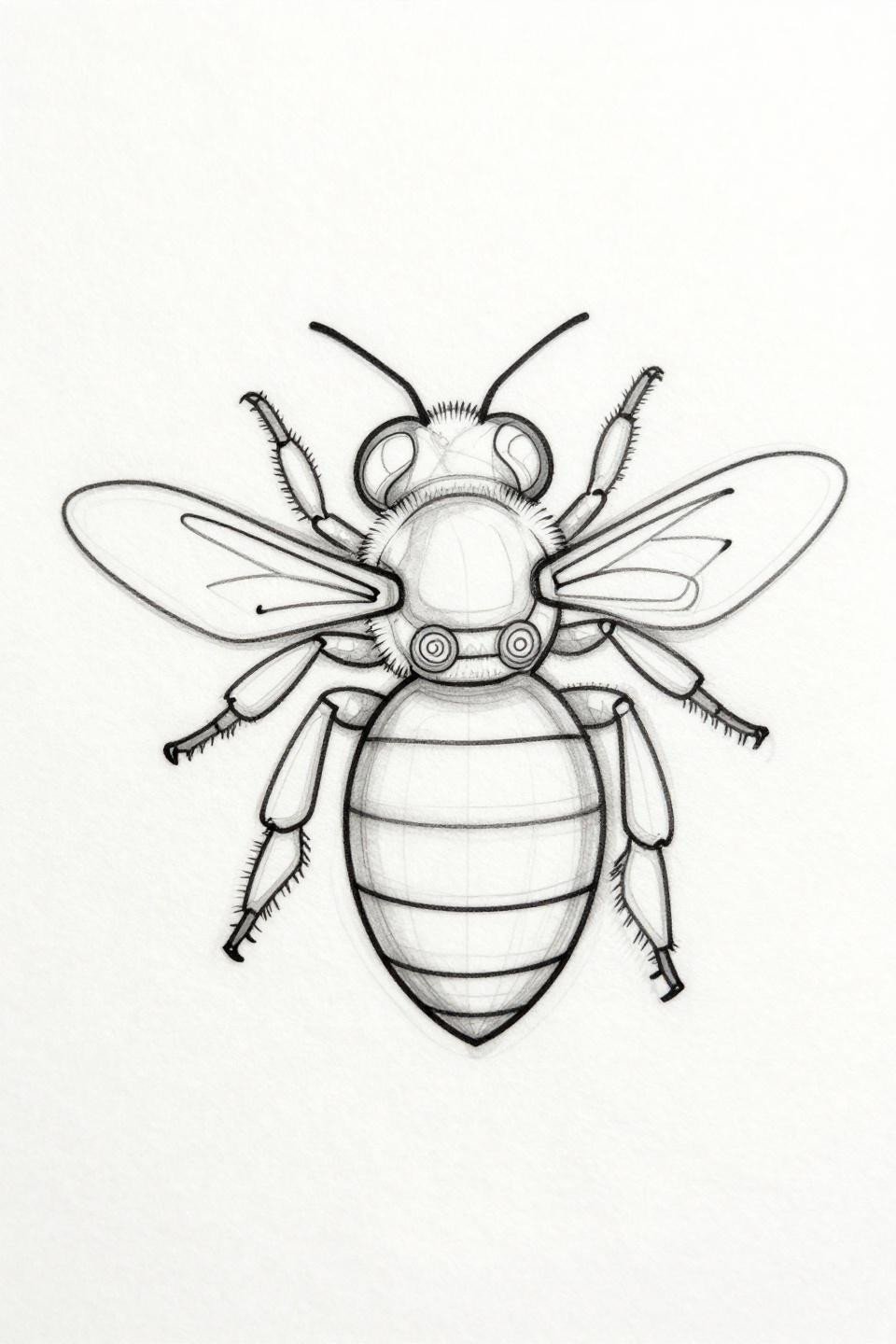
Dorsal view bee traced as a single unbroken 0.5pt path, compound eyes as concentric circles, six legs flowing from one continuous stroke, zero fill, centered in a circular mandala format.
The single continuous path constraint means the composition lives or dies on how the artist handles line weight variation at the joints. Speed control on the machine is everything here, and there is no shading to recover a weak pass.
Tribal Geometric Bee: High Contrast, No Midtone Safety Net
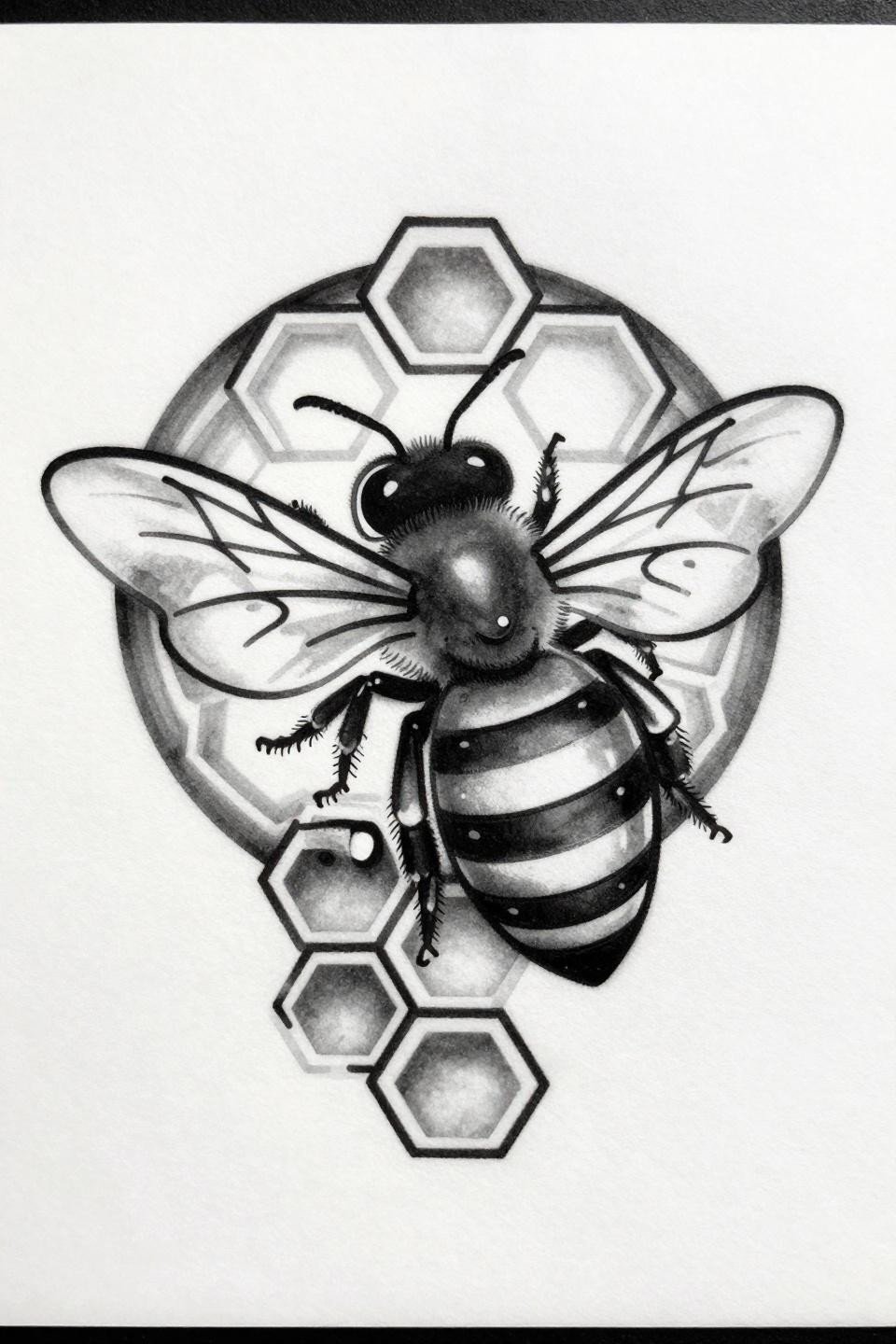
Tribal geometric bumblebee in dorsal view with folded wings, six legs gripping honeycomb cell edge, framed in a circular mandala built from repeating hexagonal negative space geometry, executed in bold 2-3pt outlines with flat solid black fills and no grey wash.
Blackwork at full saturation holds density indefinitely when the artist commits to layered passes. The absence of midtones here is a deliberate choice, not a limitation, and it makes this design one of the most skin-tone-agnostic options in the collection.
Watercolor Bumblebee: The Anchor Line Is What Saves It
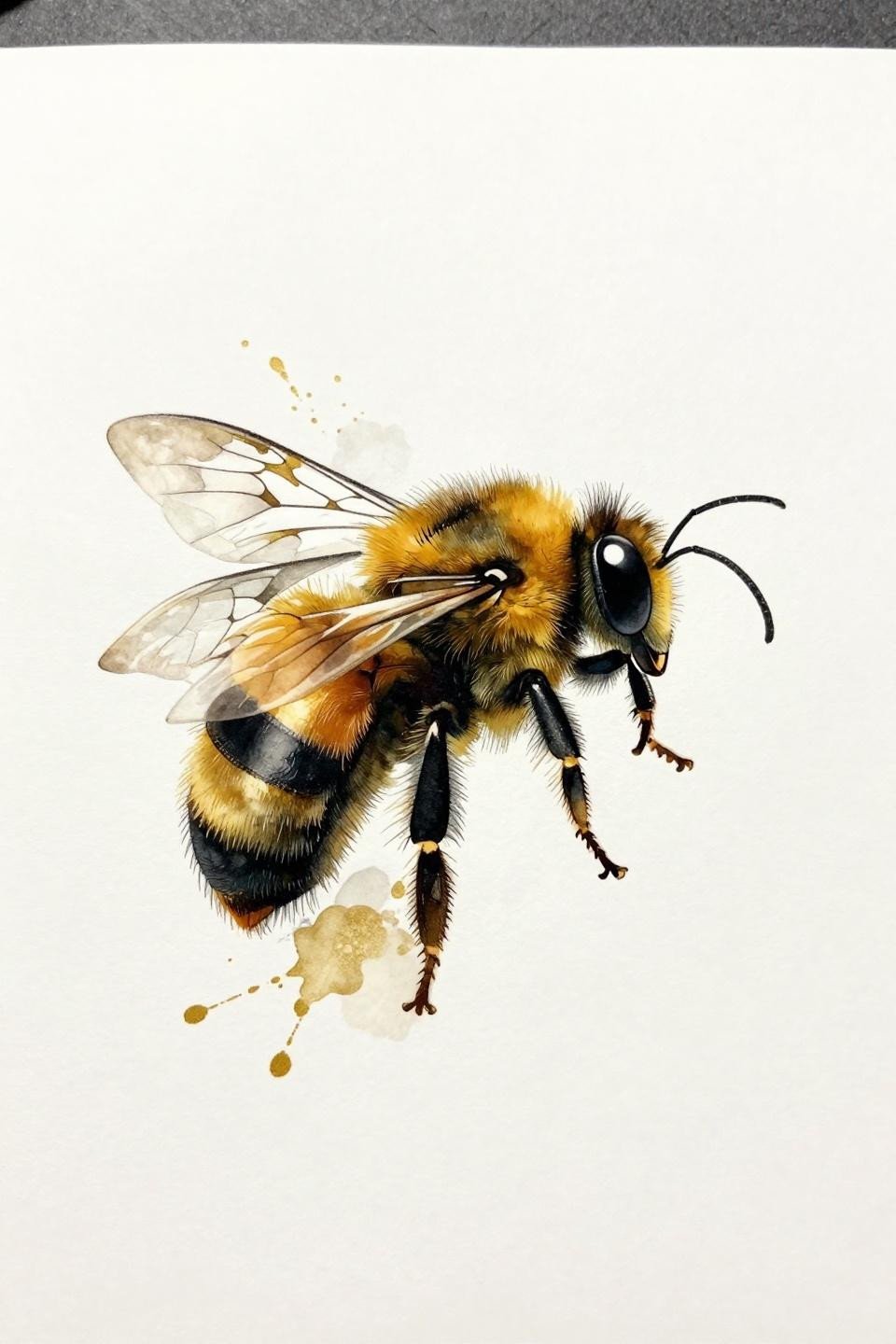
Bumblebee in mid-descent profile with dense hair texture and extended proboscis, the ink skeleton rendered in calligraphic brush strokes with warm amber gold watercolor wash splashing behind it.
Watercolor without a solid anchoring outline blurs by year three to five. This design survives because the calligraphic line skeleton is substantial enough to hold the form even as the wash softens. That structural choice is what to look for in any watercolor bee reference.
Irezumi Bee: Woodblock Energy Without the Full Traditional Commitment
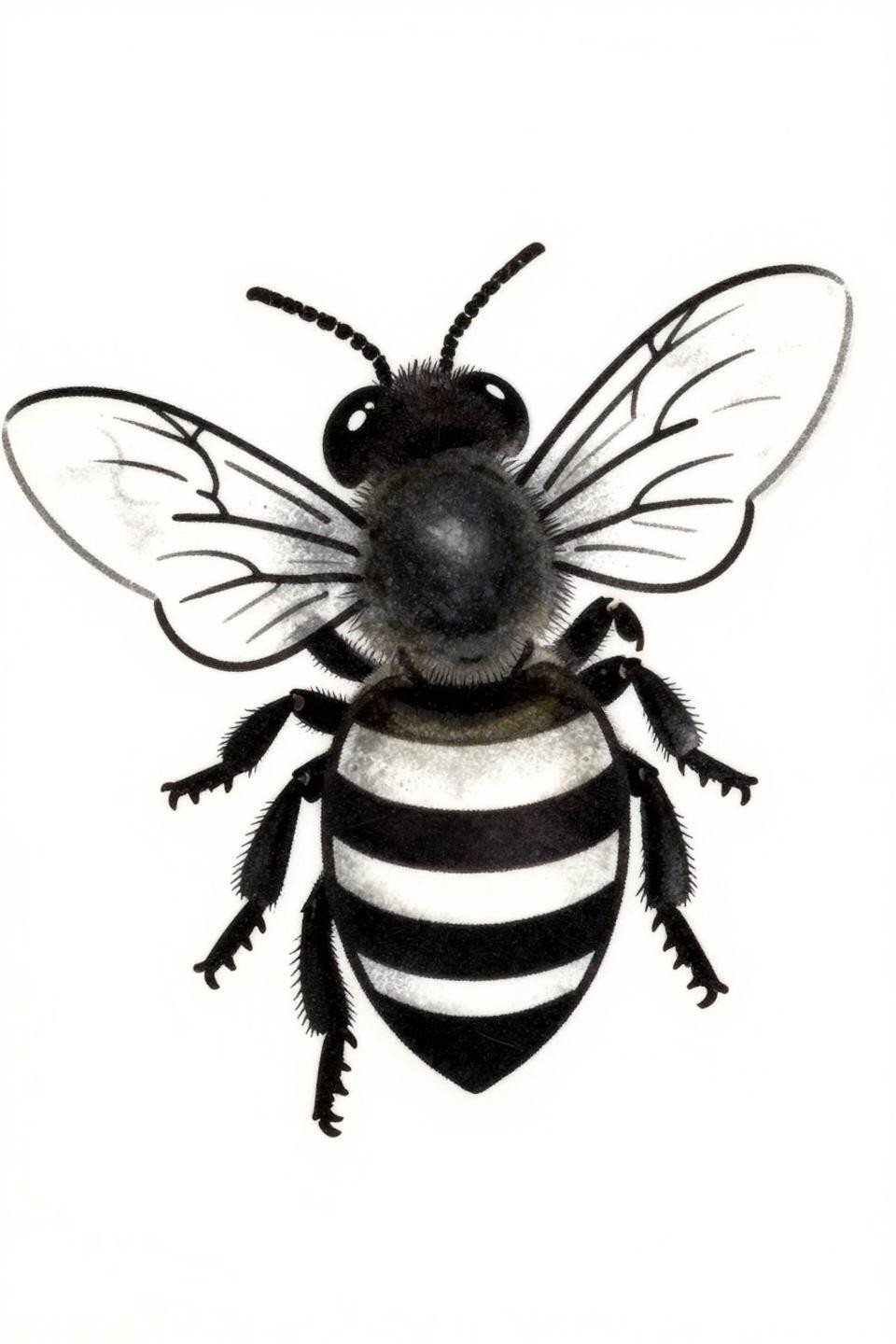
Honeybee in mid-flight landing approach, wings spread at 45 degrees, striped abdomen in alternating black bands, rendered in bold irezumi outlines with flat black fills and woodblock print energy, no grey wash.
The flat fill approach here keeps this placement-flexible. Curved mag shading is not required, which means execution time drops and the risk of overworking delicate wing areas is reduced. A strong choice for upper arm or shoulder blade placement.
Fine Line Queen Bee: When Restraint Is the Skill Signal
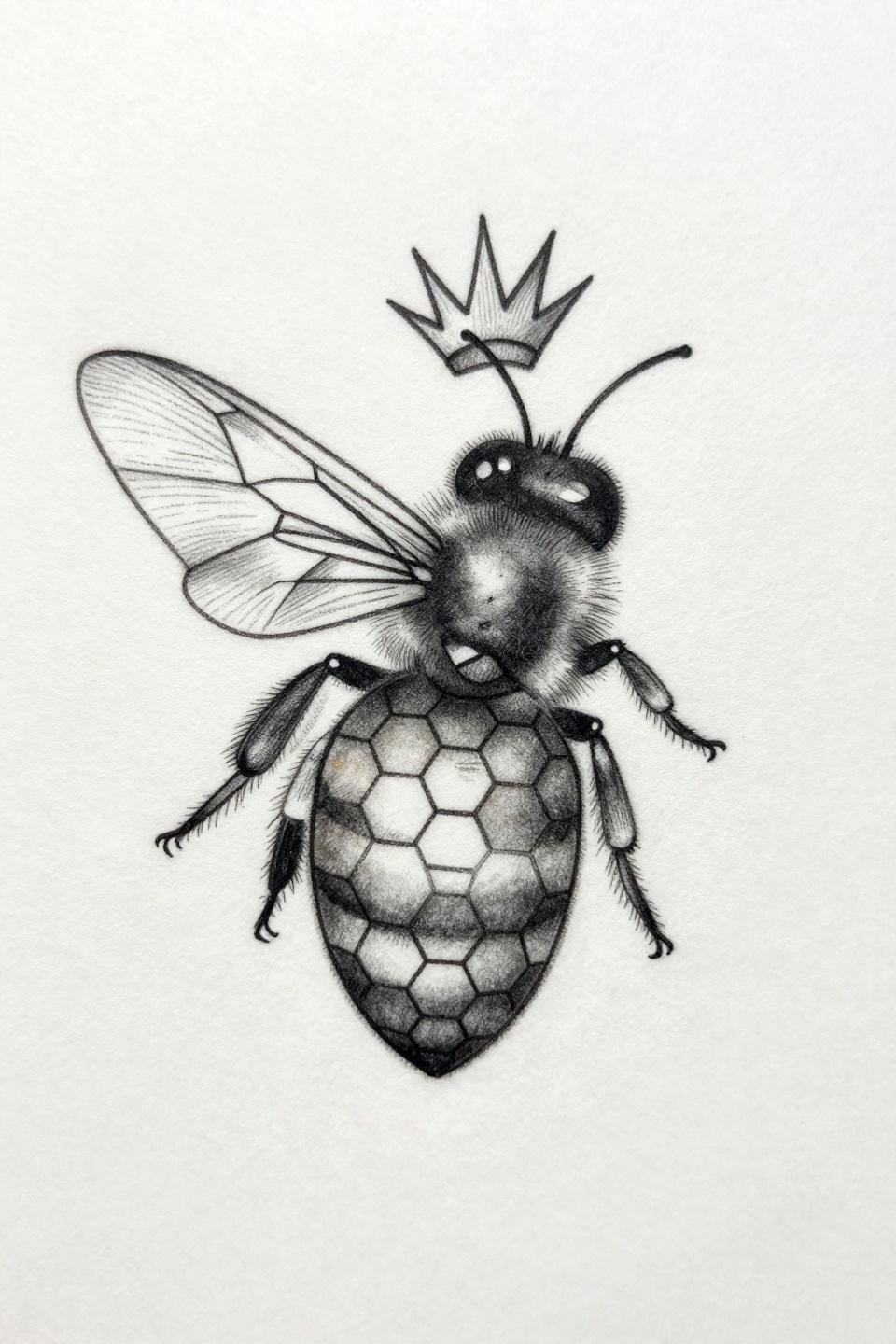
Geometric queen bee in profile, hexagonal hive pattern forming the thorax, a delicate crown of hairline strokes above the head, single antenna curved upward, executed in 0.5mm single needle strokes with open negative space and weight variation at focal joints.
Placement on the inner wrist or collarbone makes the most of the minimal footprint, but both locations demand touch-up every two to three years minimum due to friction and sun exposure. Factor that into the decision before committing to 1RL scale work.
Pick three to five of these references based on your placement and skin tone, not just aesthetics. Send those to your artist before the consult, not thirty screenshots. A focused reference set tells an artist what direction you want and cuts consultation time in half.