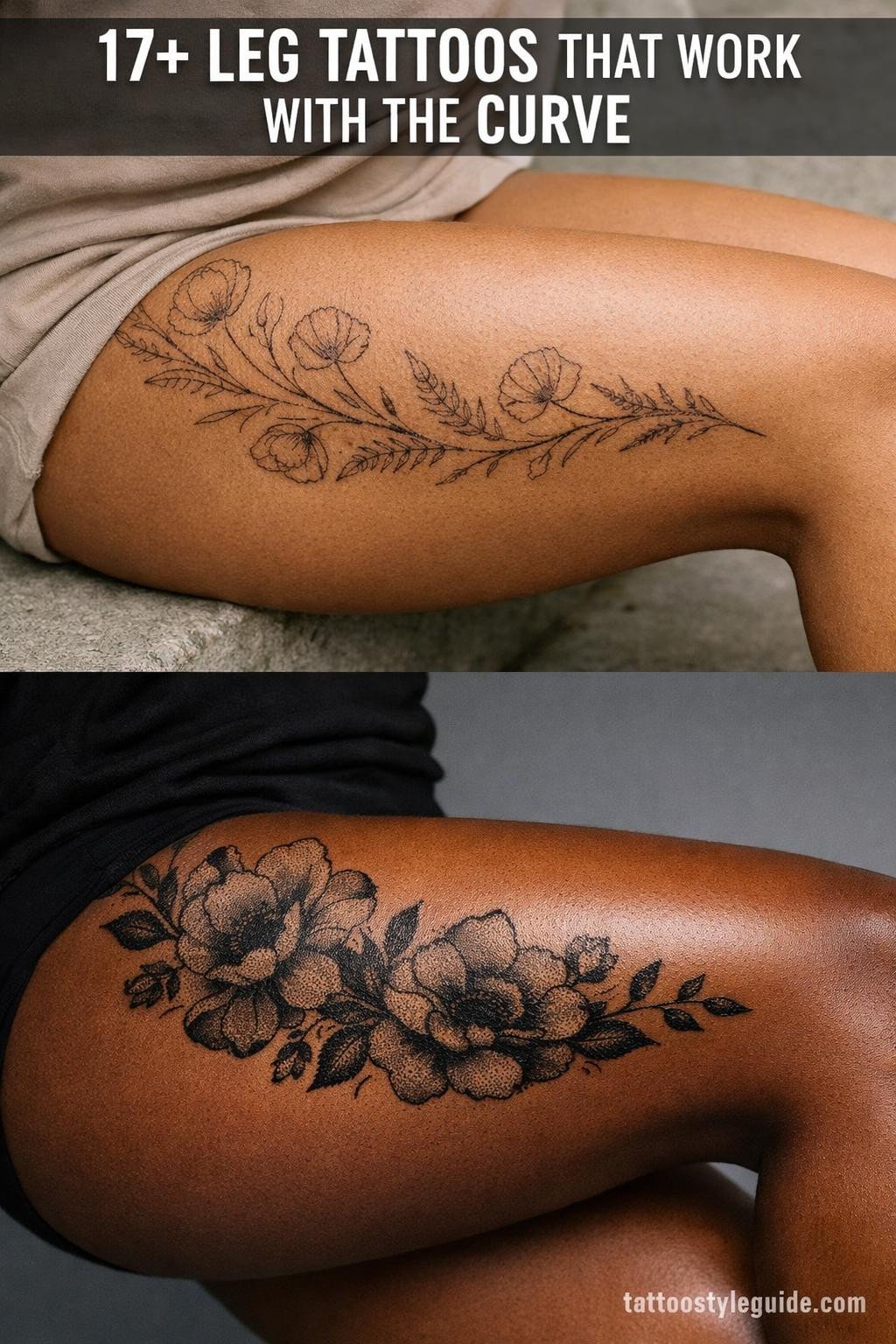
Leg tattoos for women succeed or fail based on one variable most people ignore: how the design moves with the muscle beneath it. A composition that reads flat on paper can distort badly once placed on a calf that flexes or a thigh that shifts with walking.
The sections below cover placements from calf to full sleeve, with flash references built to show exactly what holds up technically at each location.
Feather on the Calf: Why the Vertical Axis Wins Here
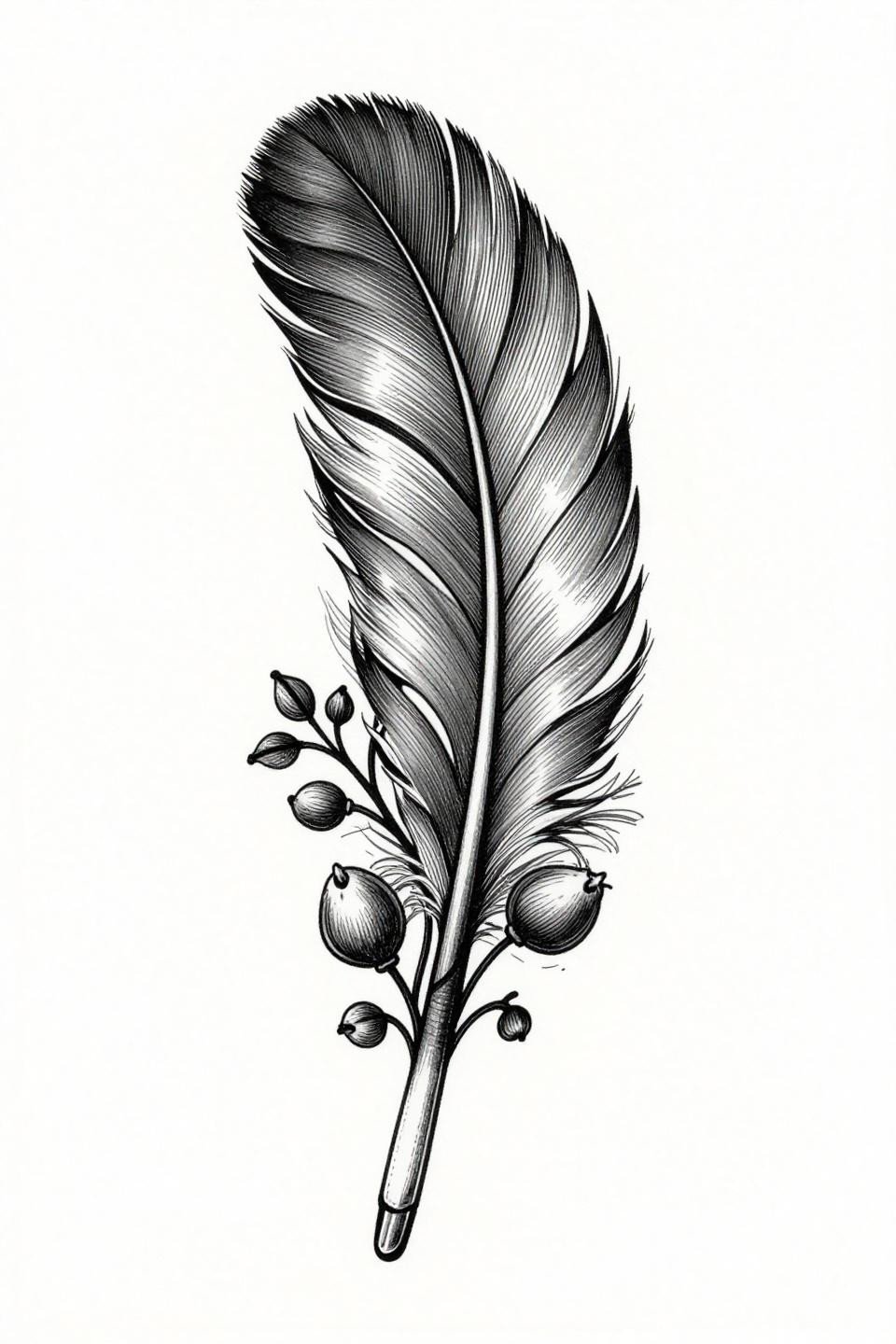
This ornamental feather uses a flowing vertical asymmetric composition with crosshatch etching and grey wash midtones, making it purpose-built for the calf’s long vertical canvas.
The varied line density in the barbs gives this design natural shading depth without grey wash overworking, which means it ages cleanly. On olive and darker skin tones, the bold calligraphic quill line maintains contrast even as finer barb details soften over time.
Tribal Geometry Without the Visual Noise
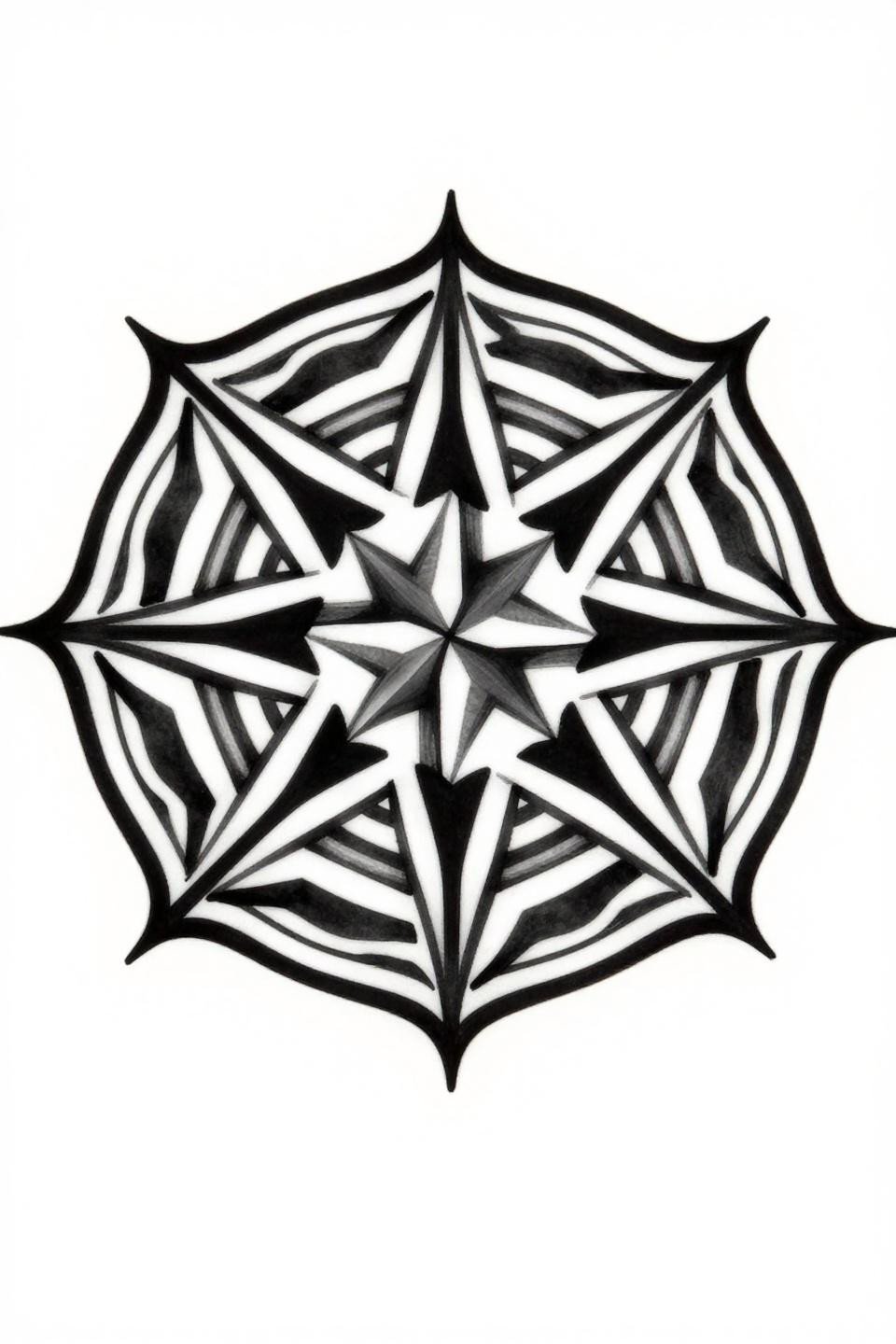
A sacred geometry mandala with hard angular tribal segments and alternating flat black fills against open white negative space. Maximum contrast composition at this scale reads from distance without losing detail up close.
Bold 3pt outlines here are the longevity signal. This design holds its edge geometry at year ten because there is no fine line work to blur out. Circular compositions like this one center well on the upper thigh or just below the knee.
Celtic Knotwork: The Placement Demand Is Real
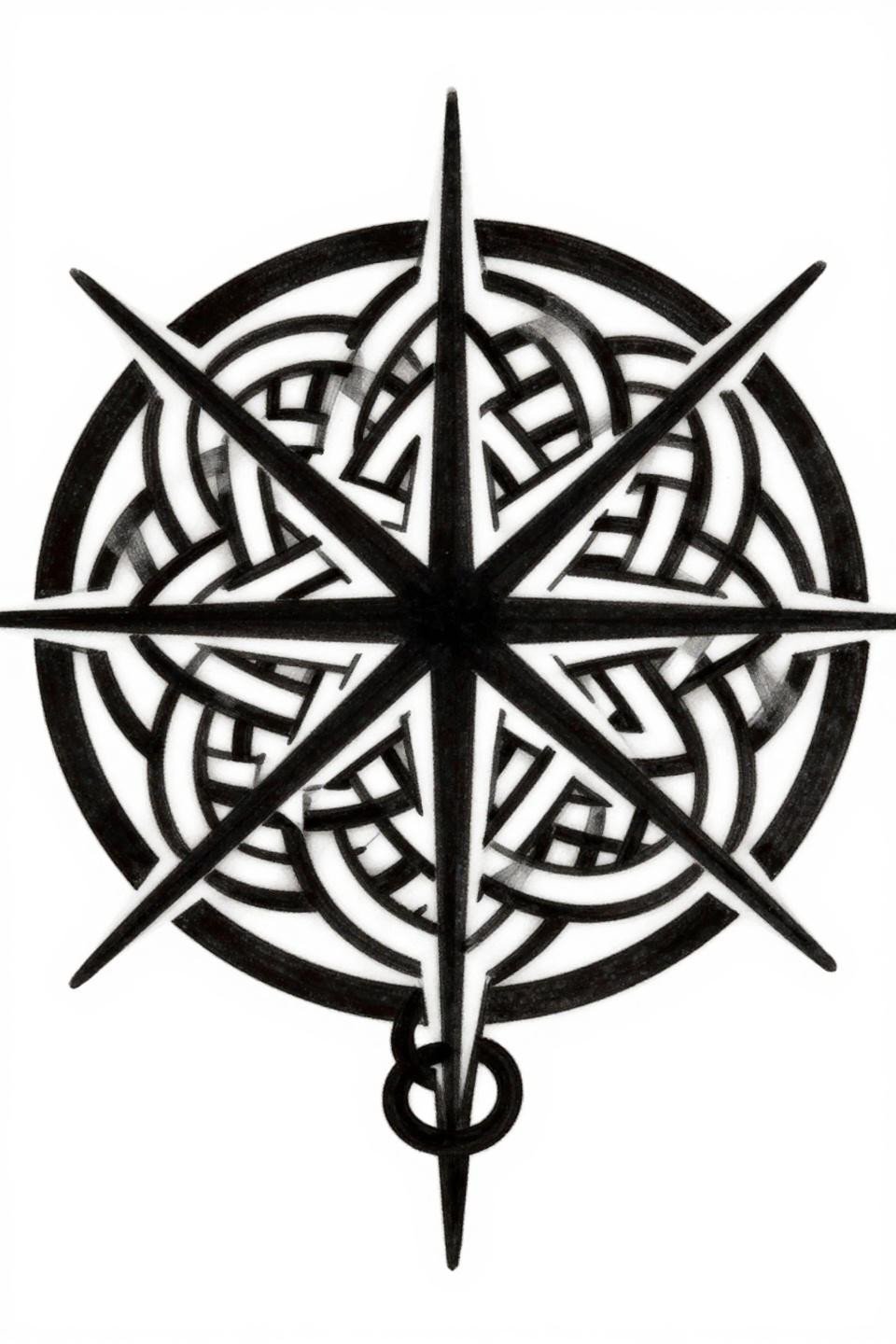
Interlocking Celtic plaitwork with triquetra intersections and a solid black central hub, rendered in bold 2-3pt outlines with flat fills and bilateral symmetry. The knotted terminal loops at cardinal points are what separate finished Celtic work from amateur attempts.
Above-knee placement is demanding because the skin stretches differently when sitting versus standing. An artist who can keep the plaitwork intersections consistent across that curve is signaling real technical control. Check healed portfolio shots, not fresh ones.
Peony at the Knee: Bold Lines Earn Their Place
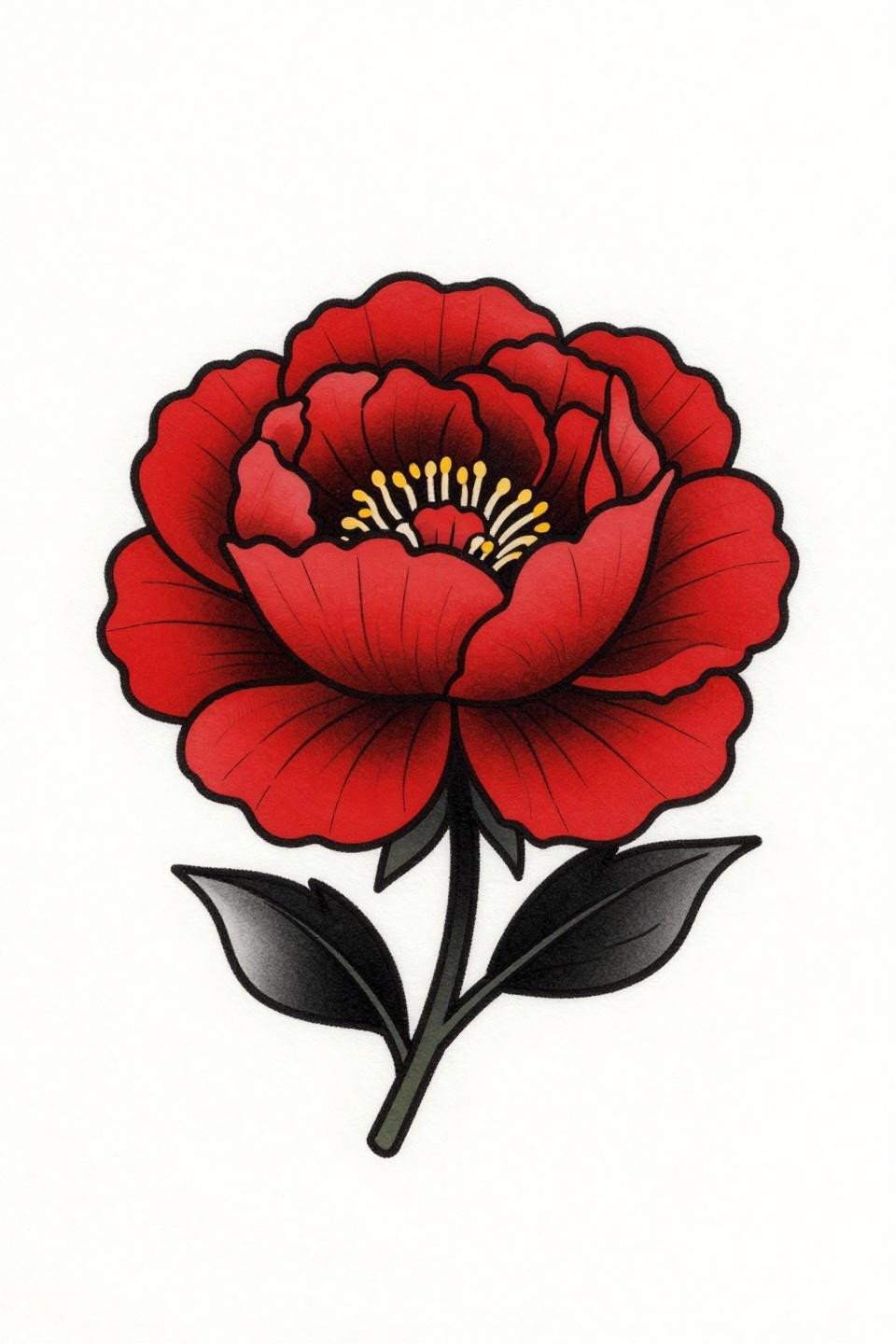
Neo-traditional peony in full frontal display with layered petal structure, fine vein mapping, and a central stamen cluster rendered in crimson red accent against solid black ink. Flat color fills with no patchiness at this level separate veterans from beginners.
Knee placement means the skin folds and flexes constantly. Bold 2-3pt outlines are non-negotiable here. Fine line peonies placed at the knee cap typically need touch-up within two to three years as the skin movement works against lighter linework.
Single Line Iris for the Full Leg Column
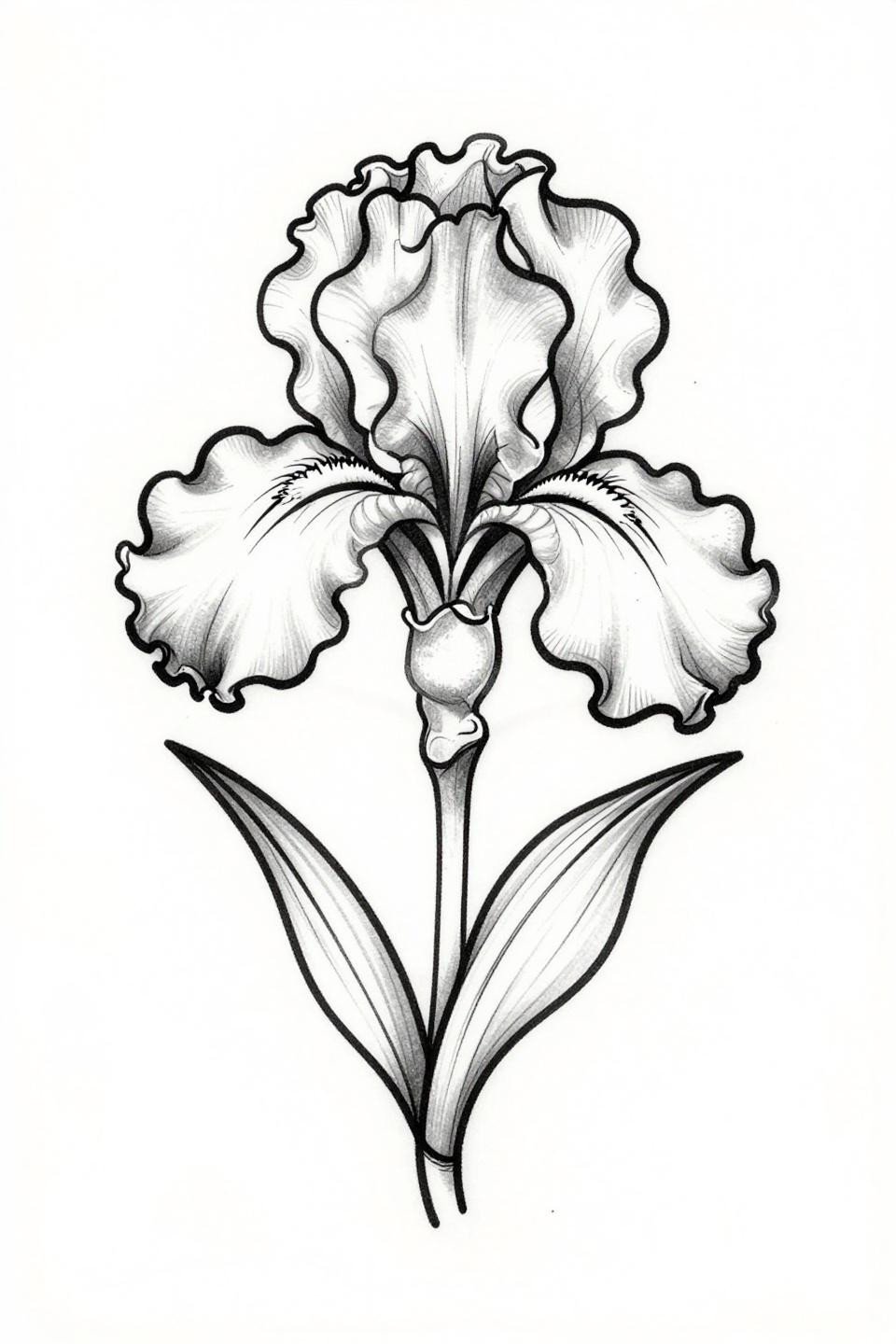
An art nouveau iris traced in one unbroken contour from root to petal tip, with paired leaves in diagonal asymmetric flow and no fill shading. This single continuous line technique demands an artist who controls speed and needle pressure without stopping to reset.
For full leg compositions, this style works as a leading element rather than a standalone piece. The open negative space and diagonal flow give placement flexibility from mid-thigh down to ankle without forcing the design into a fixed zone. See how back tattoo placement ideas for women use similar vertical flow logic on the spine column.
Celestial Moth on the Shin: Watercolor With a Structural Anchor
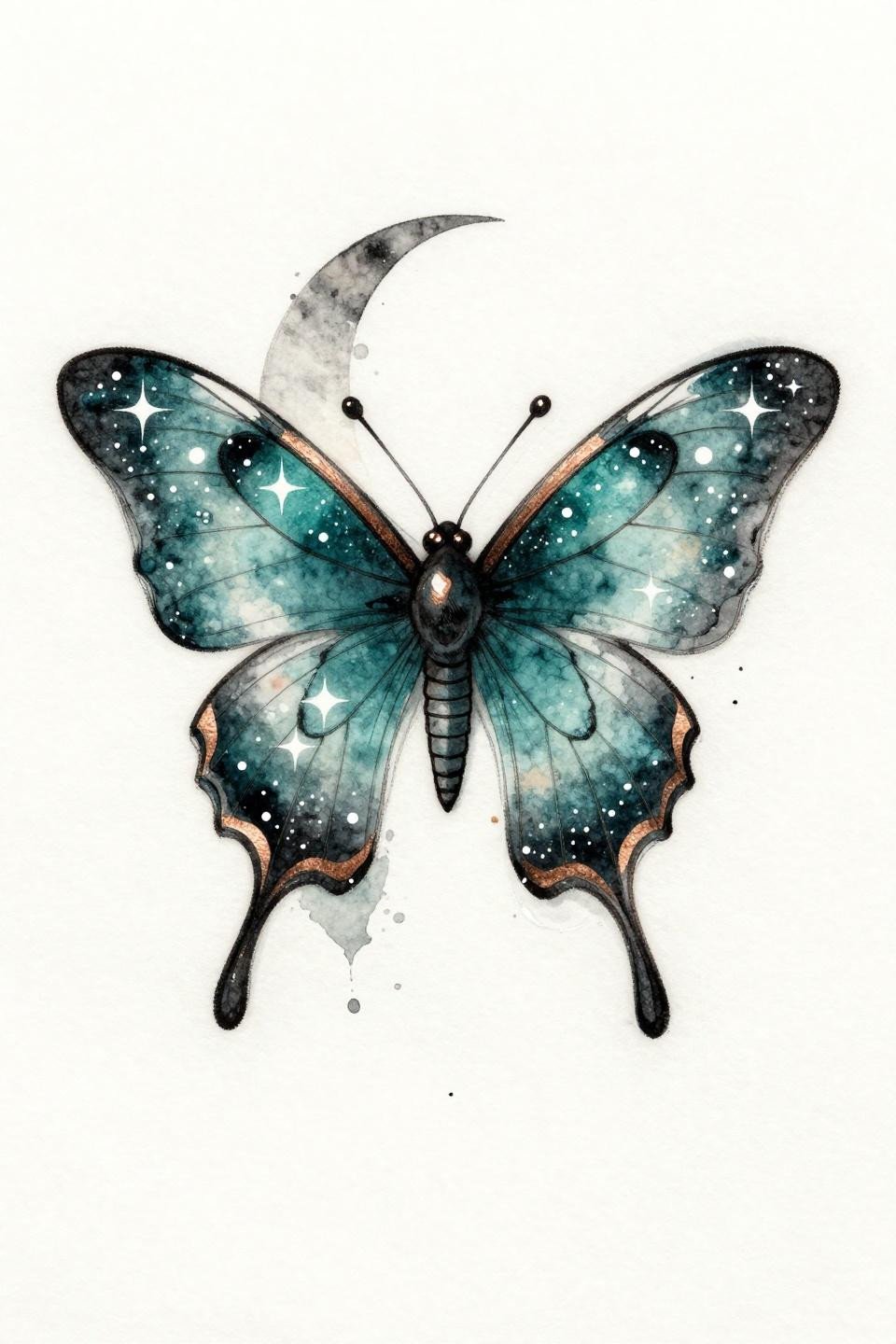
A celestial moth with crescent moon body and star-dotted wings rendered in calligraphic brush marks with watercolor bleed behind the linework, using deep teal and copper metallic accent on black. Bilateral wing symmetry along the vertical axis is what makes this readable on the flat shin plane.
Watercolor without an anchoring outline blurs by year three to five. This design avoids that failure mode because the calligraphic linework gives the color bleed a structural container. The shin’s relatively flat, low-flex surface is one of the better placements for watercolor-adjacent styles.
Dotwork Serpent: Reading the Stipple Gradient as a Skill Signal
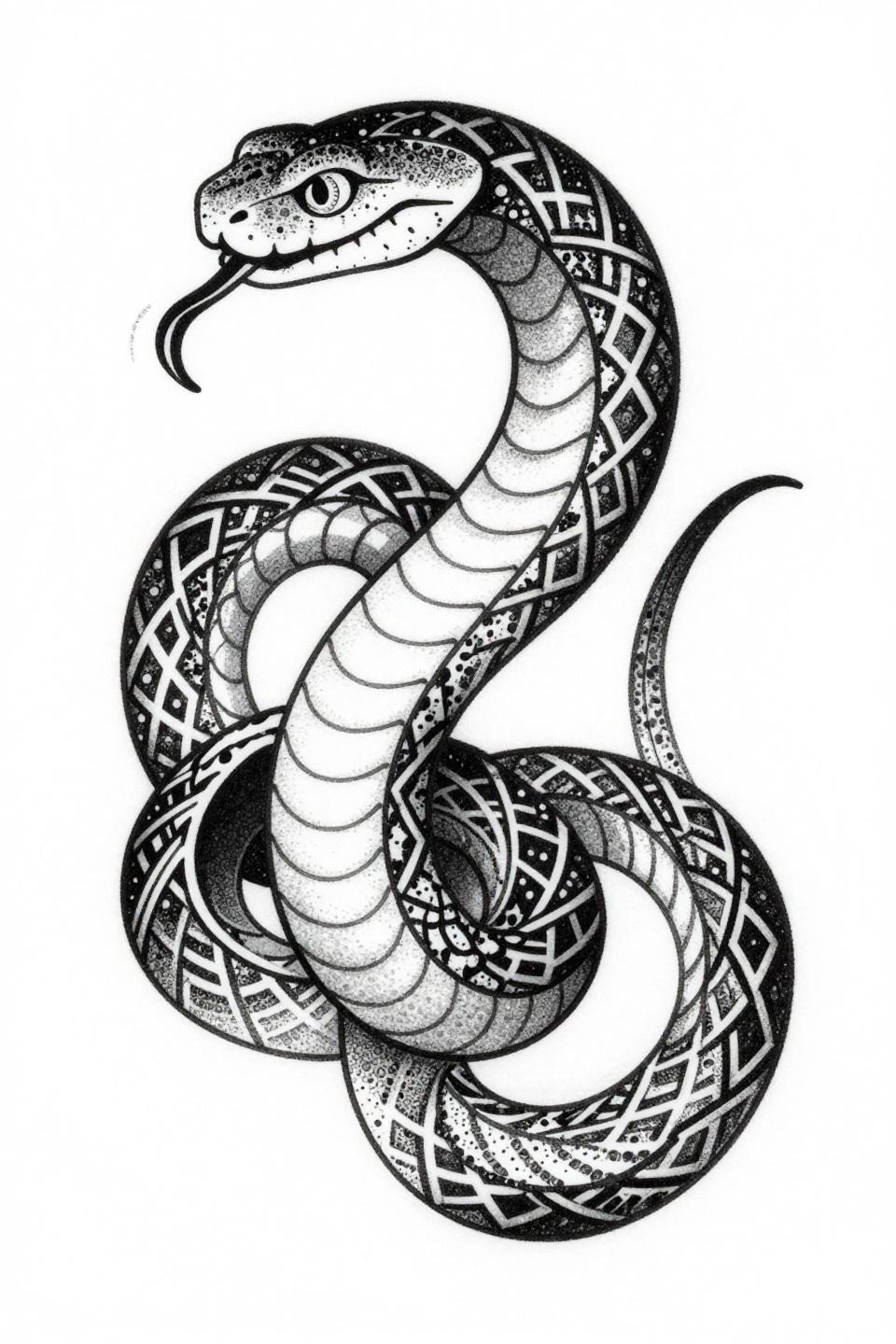
A blackwork dotwork serpent in vertical asymmetric flow with geometric scale patterns mapped in dense stipple clusters, a mandala spiral eye, and open negative space channels through the body curves. Stipple density going from 90% at the core to open at the edges is the technical signature here.
Look for consistent dot size across the full gradient when evaluating an artist for this style. Inconsistent dot sizing reads as muddiness at viewing distance, and on the thigh where the canvas is wide, that inconsistency compounds. This is a piece that rewards slow, methodical execution over speed.
Fine Line Moon: What Thigh Placement Actually Protects
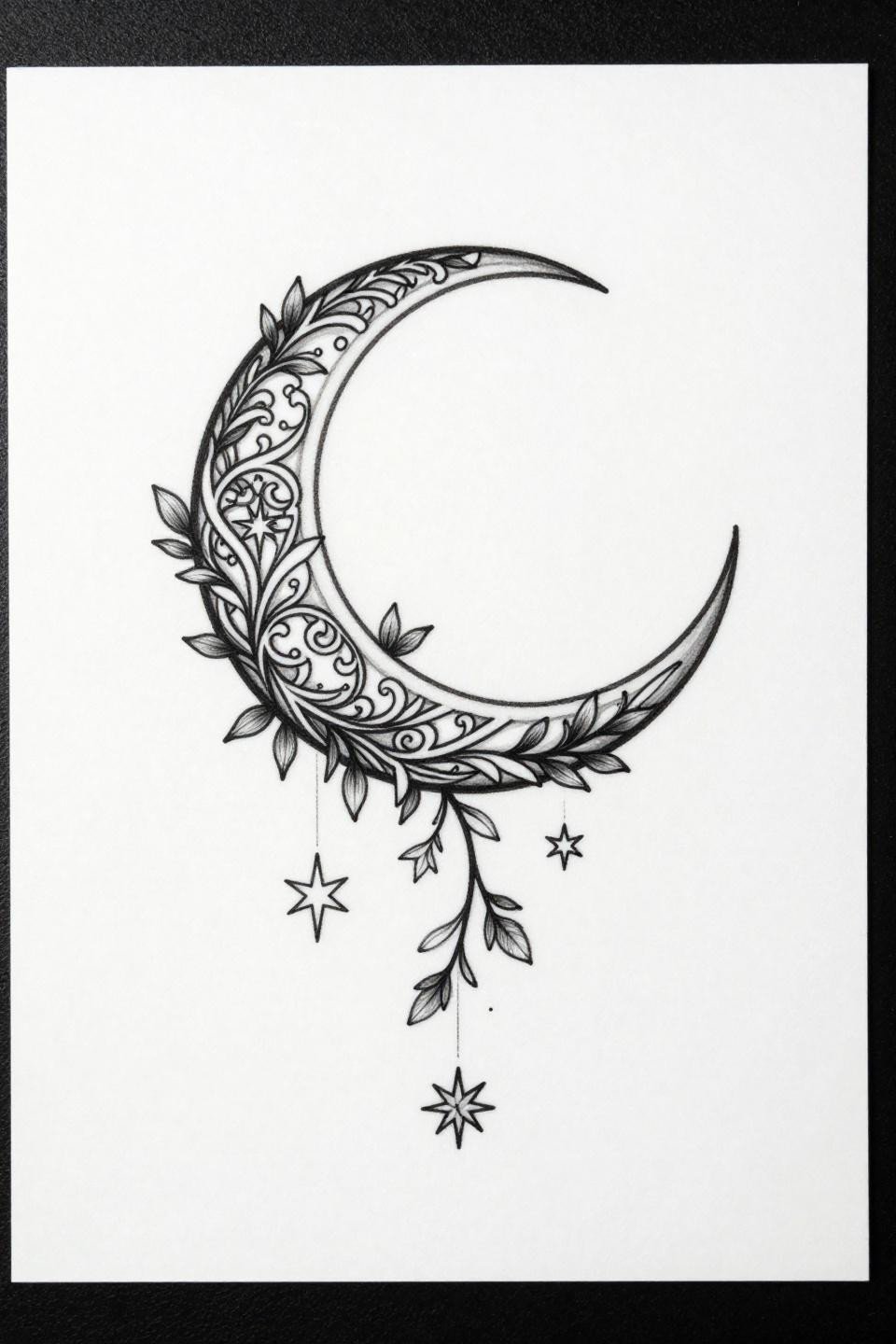
An ornamental crescent moon in filigree cutwork with cascading star clusters and a botanical vine in hairline 0.5mm single needle strokes, using open negative space and weight variation on vine tendrils. The off-center asymmetric composition adapts well to the thigh’s wider canvas.
Fine line single needle work needs a protected placement to age well, and the inner or upper thigh delivers that. Low sun exposure and minimal friction give hairline strokes their best chance at decade-long legibility on lighter skin tones. On darker skin, line weight should move up from 0.5mm to hold contrast.
Art Deco Sunburst Built for the Leg Sleeve Grid
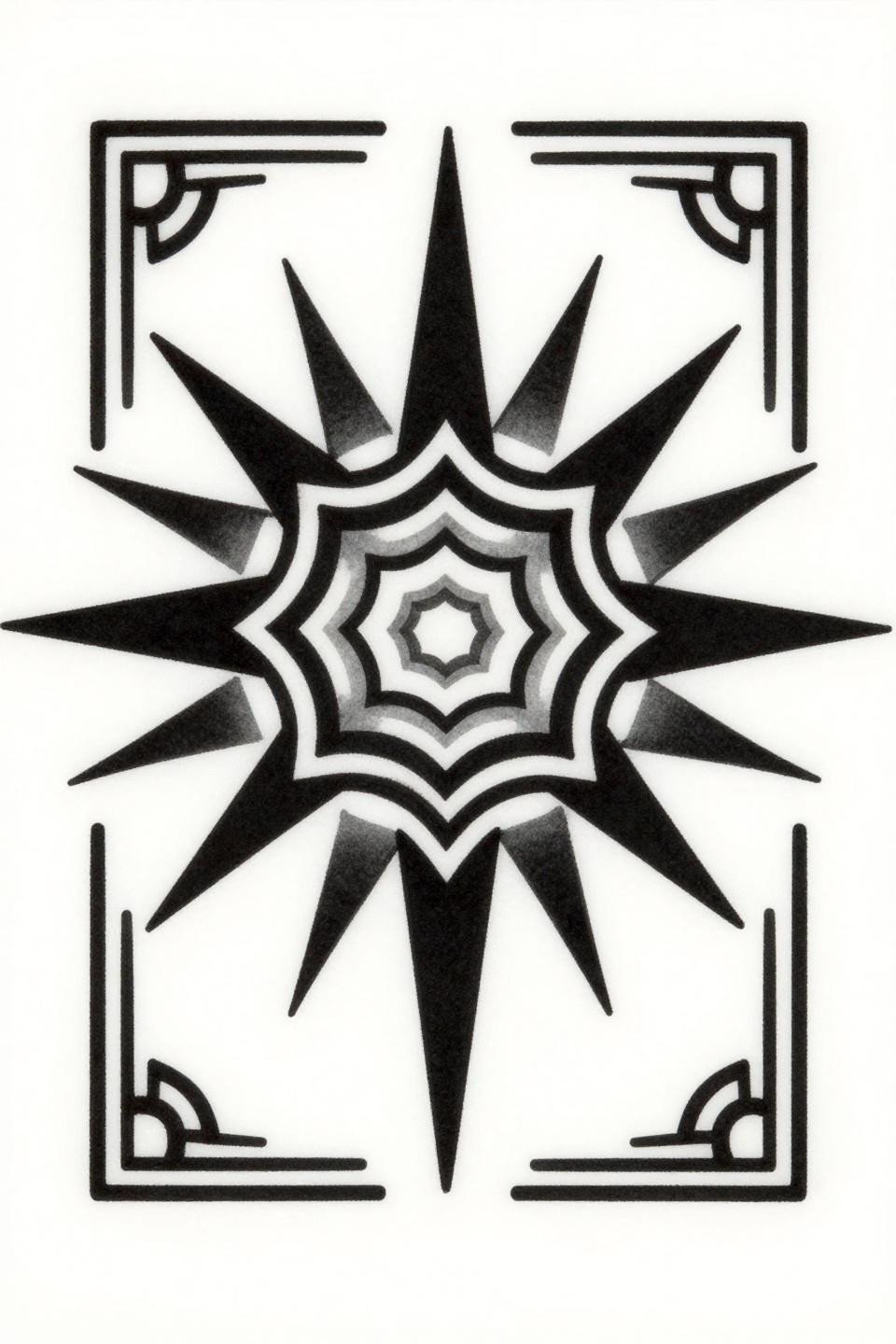
A geometric sunburst with sharp triangular rays, a nested diamond central hub, and bilateral wing flourishes framed in a linear art deco border, executed in bold 2-3pt outlines with flat fills and full bilateral symmetry. Vector-precision bilateral geometry like this functions as a strong anchor point within a larger leg sleeve composition.
Art deco geometric work ages well because flat fills and bold outlines leave no fine detail to blur. The challenge in sleeve context is that this motif demands precise centering relative to the surrounding panels. Any drift in the central axis reads immediately against the strict symmetry of the rays.
Art Deco Mandala as the Defining Female Leg Tattoo Reference
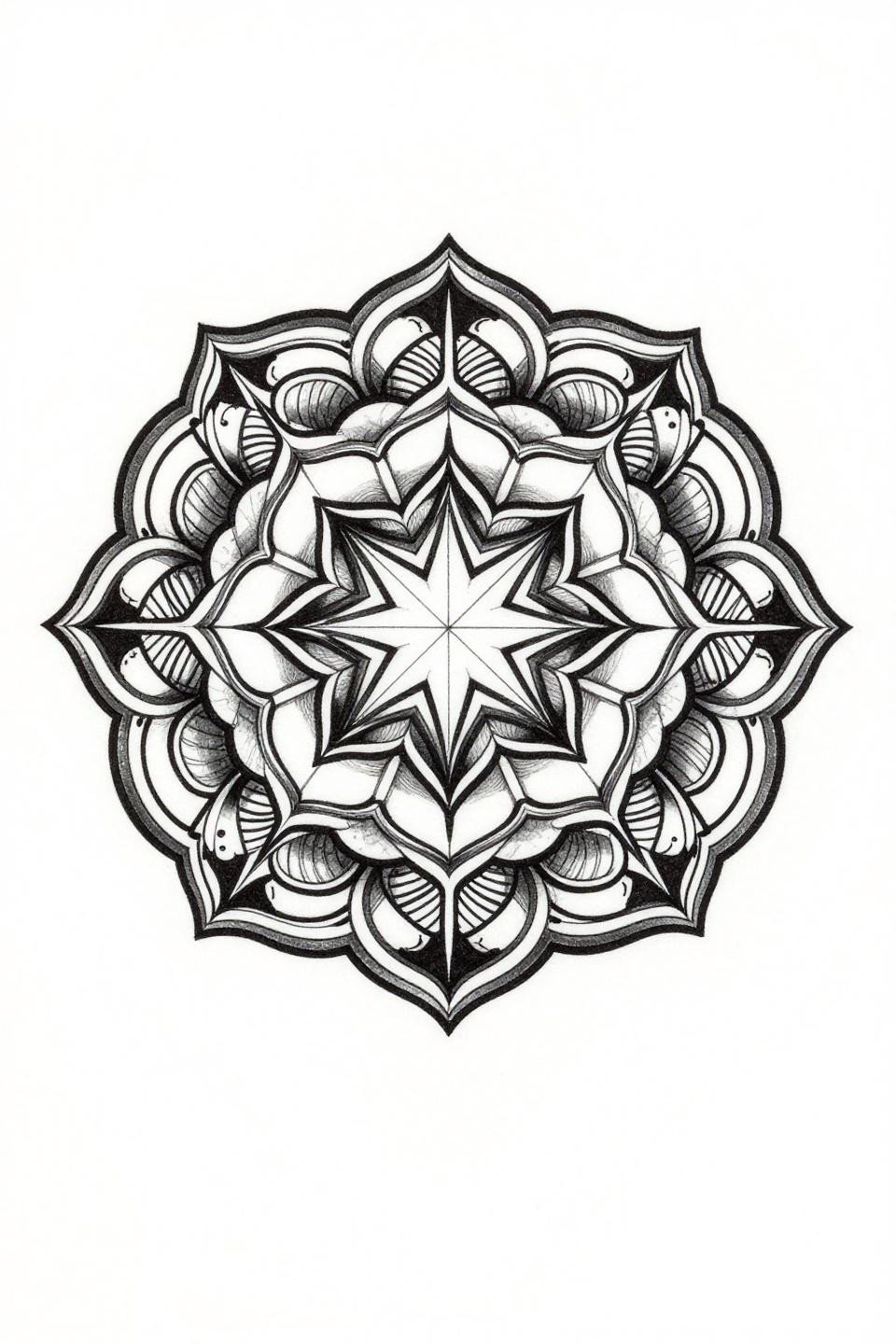
An ornamental mandala with nested circles, geometric petal segments, a central four-pointed star, and radiating web-like fine lines at cardinal flourish points, all executed in compass-drafted geometry with flat solid black fills. Web-like interconnected pathways between the geometric sections are what give this design its visual density without crowding the negative space.
This reads as a standalone thigh or above-knee piece at medium scale, or as a focal medallion in a full leg build. The flat solid fills mean it holds density across decades. Blackwork at full saturation holds indefinitely when an artist commits to multiple layered passes through the fill areas.
Peacock Flash on the Calf: Traditional Structure, Long Silhouette
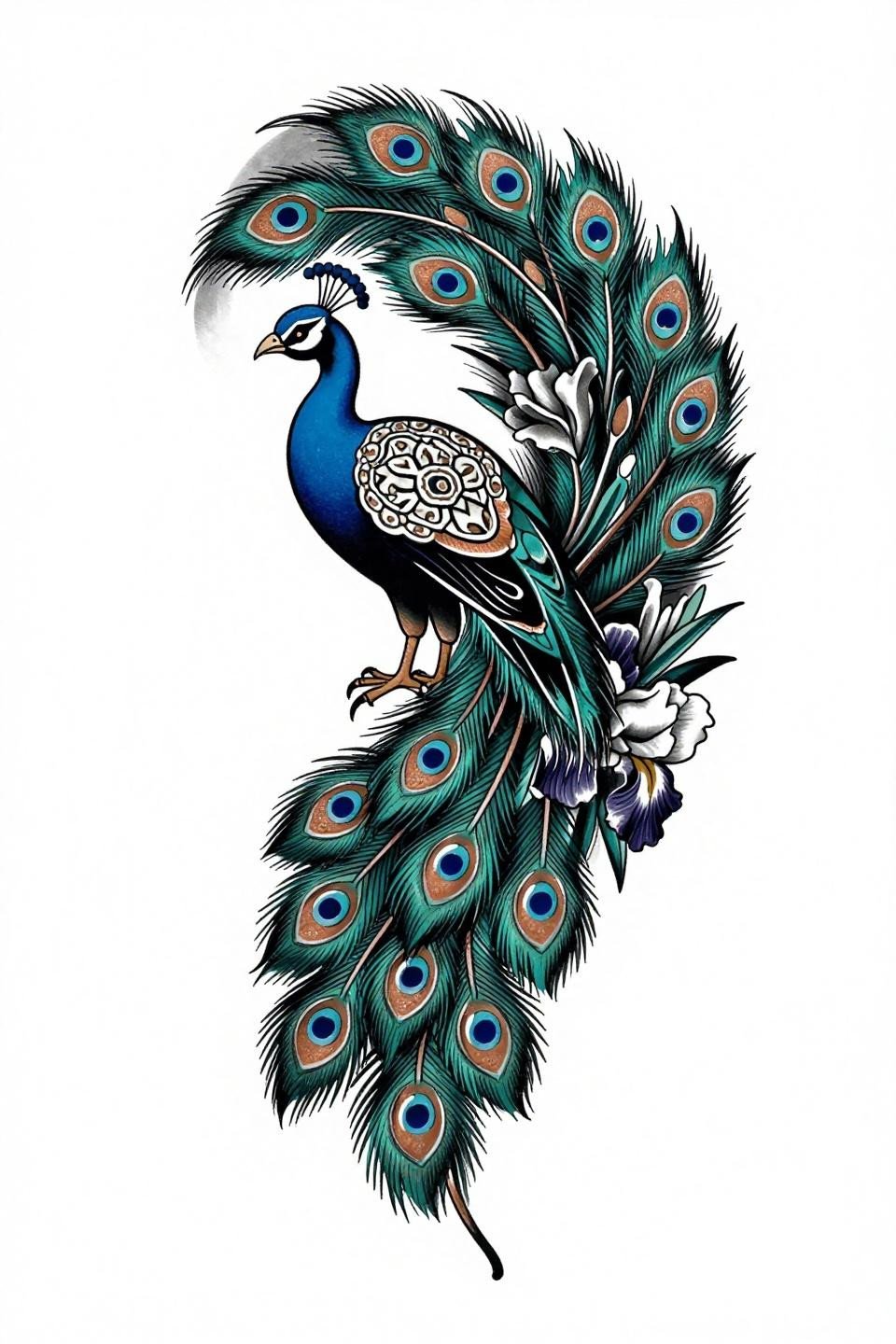
Traditional American peacock with ornamental filigree tail feathers as sweeping arcs, a central eye medallion with nested geometric chambers, and asymmetric iris botanicals woven through the tail structure in deep teal and copper metallic on black. Bold 2-3pt outlines anchor the long vertical silhouette against the calf’s curvature.
The asymmetric vertical flow of this composition is exactly what the calf muscle needs: a design that travels the length of the canvas rather than fighting it. Traditional flat fills with no patchiness are the quality signal here. Request healed calf work from the portfolio before committing.
Pomegranate Dotwork: Meaning Embedded in Technique
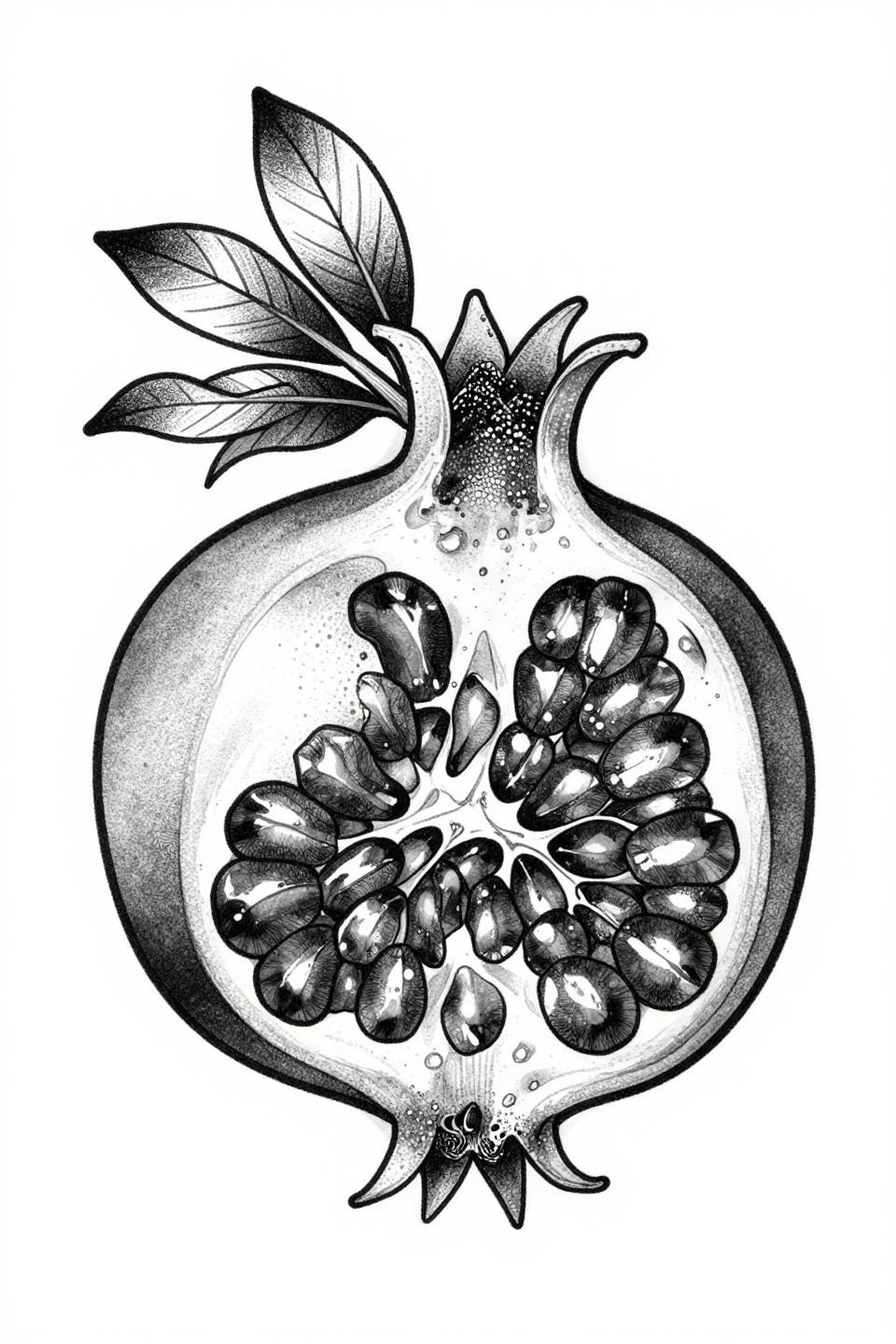
A botanical scientific pomegranate split open to show geometric seed chambers rendered entirely in stipple dotwork with no solid fills, and a delicate leafy stem in asymmetric vertical flow. The stipple dot gradient from dense interior to open edges creates dimensional depth without a single line of traditional shading.
Dotwork botanical work reads as one of the cleaner choices for meaningful tattoos because the subject carries weight without relying on script or literal symbolism. Placement on the outer calf or shin gives the vertical composition room to breathe. On olive skin, the open-edge gradient holds contrast better than dense blackwork fills would.
Japanese Irezumi Snake: Above Knee Placement and the Flex Problem
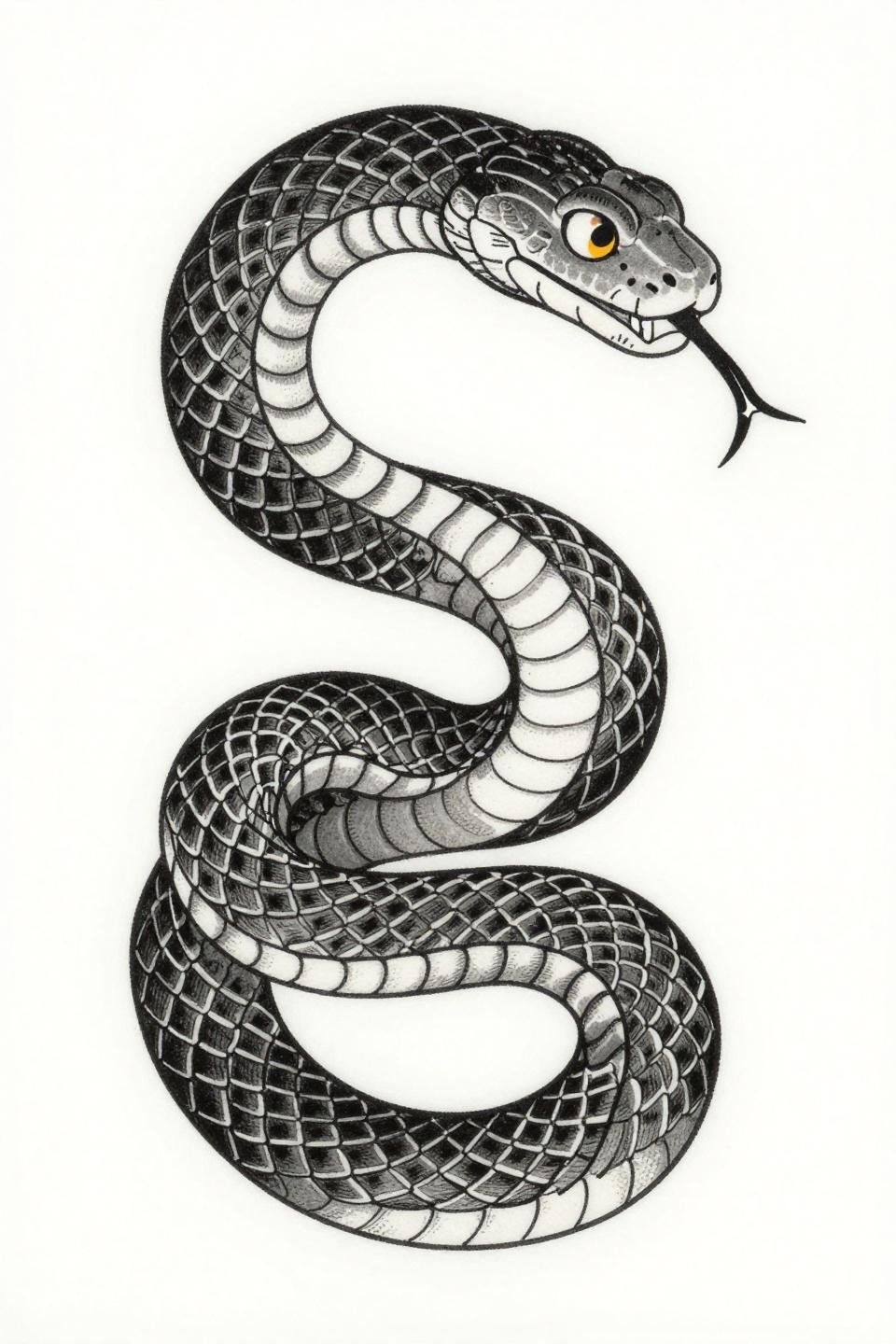
A Japanese irezumi serpent in figure-eight coil pattern with scales rendered in fine parallel engraved lines along dorsal curves, a bold concentric iris eye, and open negative space pockets in the body loops. Parallel line engraving technique for scale mapping is a traditional irezumi signal that separates trained practitioners from decorative interpretations.
Above-knee placement means this design crosses a flexion zone. The figure-eight composition handles that better than a straight vertical coil would because the looping body shape has no single rigid axis that distorts under movement. A diagonal flow composition distributes skin stretch across the design rather than concentrating it at one point.
Art Nouveau Dragonfly: The Knee Cap as a Circular Frame
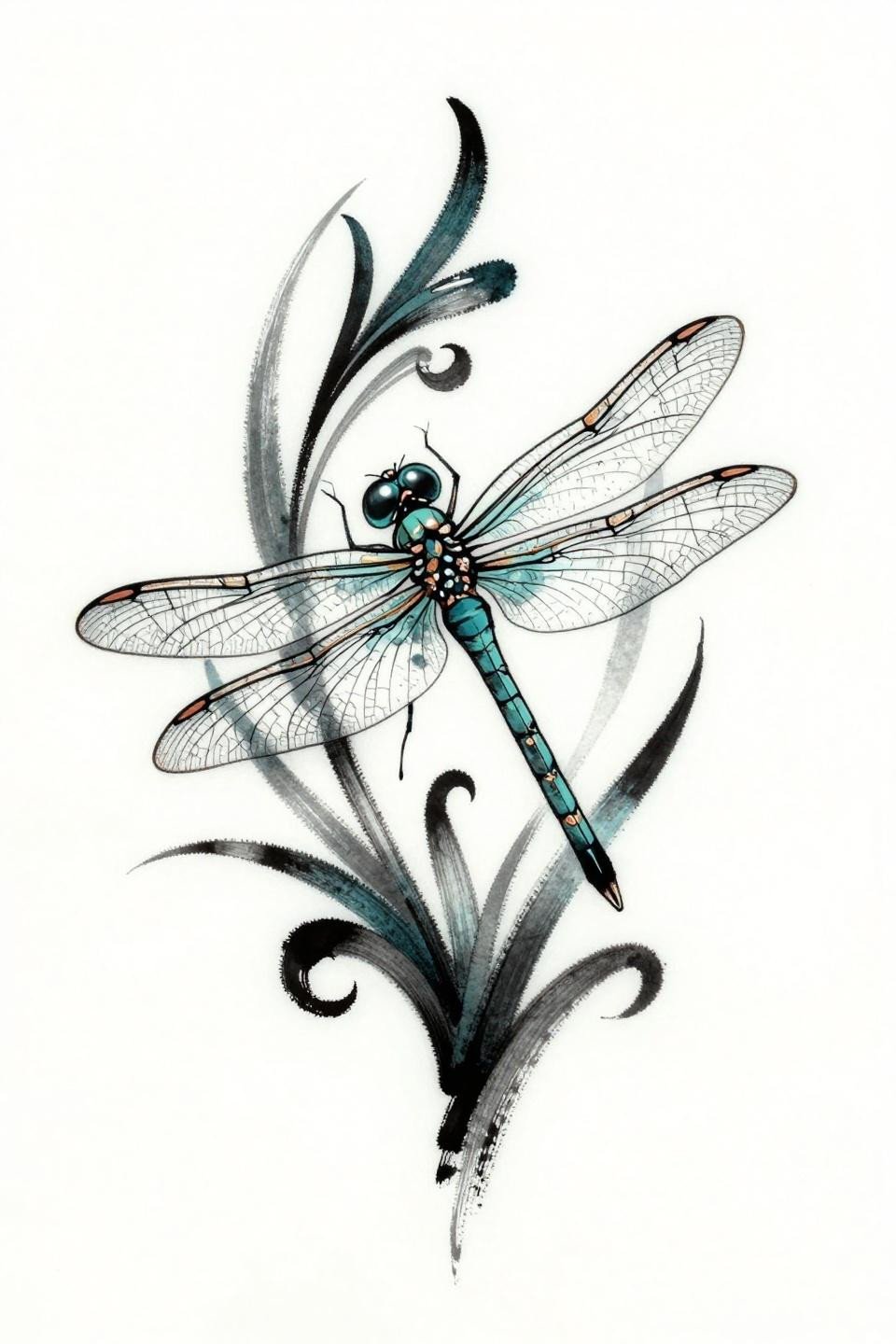
An art nouveau dragonfly with elongated segmented abdomen, transparent wing membranes in fine parallel lines, and asymmetric curling aquatic plant stems in calligraphic brush-and-ink style using deep teal and copper metallic on black. The asymmetric flowing composition allows the design to arc around the knee cap rather than sitting flat across it.
The knee cap is one of the harder placements for any design because it is both convex and a high-movement zone. Designs that flow around the cap rather than centering on it survive better. The plant stems in this piece give the artist natural routing paths to handle the anatomical curve.
Full Leg Geometric Mandala: When Scale Becomes the Point
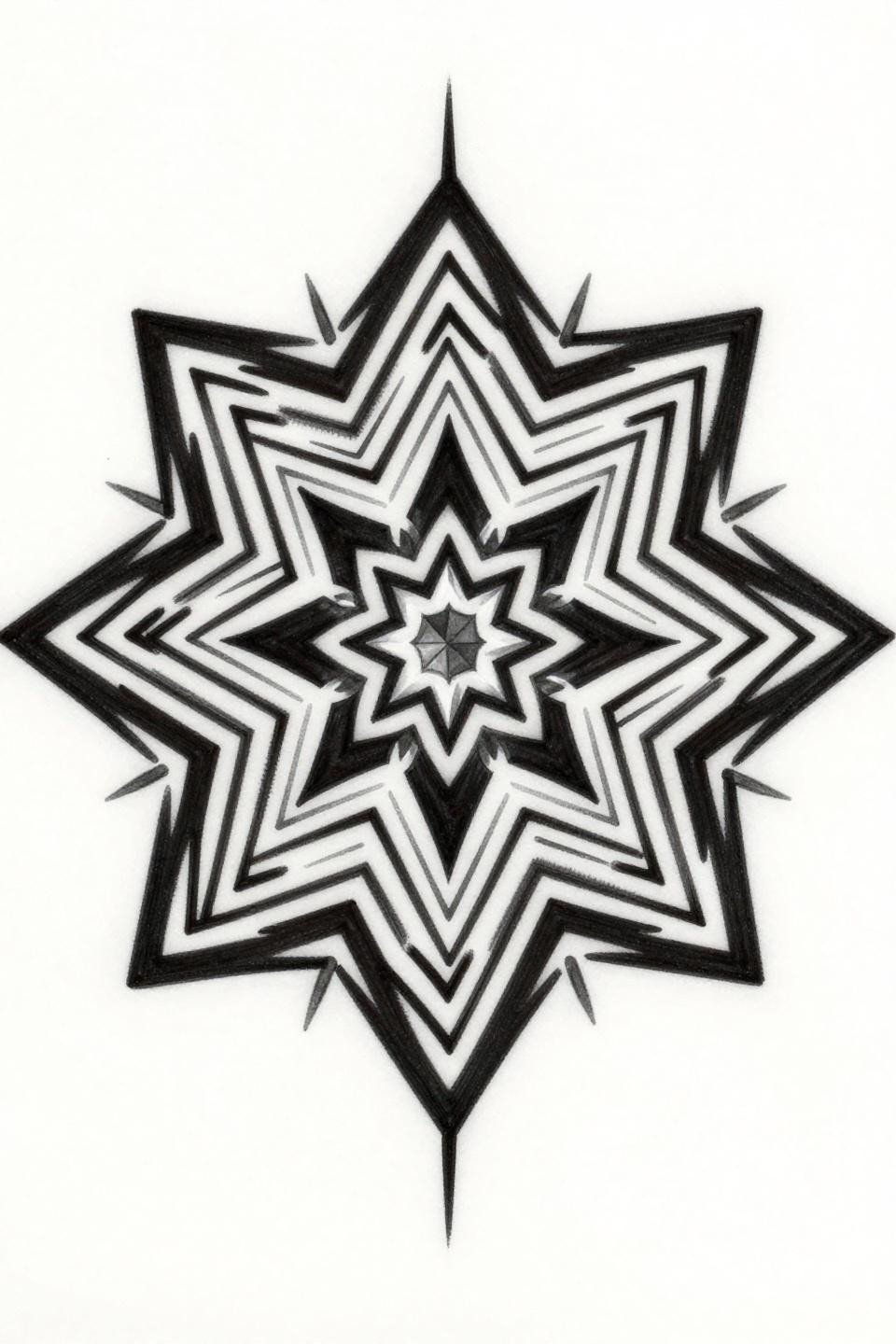
A geometric mandala of nested triangles and hexagons with interconnected fine line pathways and a crystalline central focal point, rendered in bold 2-3pt outlines with flat black fills and asymmetric vertical span. Sharp angular edges at this fill density require an artist who commits to fully saturated black sections without patchiness.
Full leg compositions built on geometric mandala anchors need a planning session before needle touches skin. Scale the medallion to the widest point of the leg canvas first, typically the mid-thigh, then build outward. Blackwork at full saturation holds density indefinitely when the artist layers passes rather than rushing the fill.
Shin Mandala: Fine Line Work in a High-Risk Zone
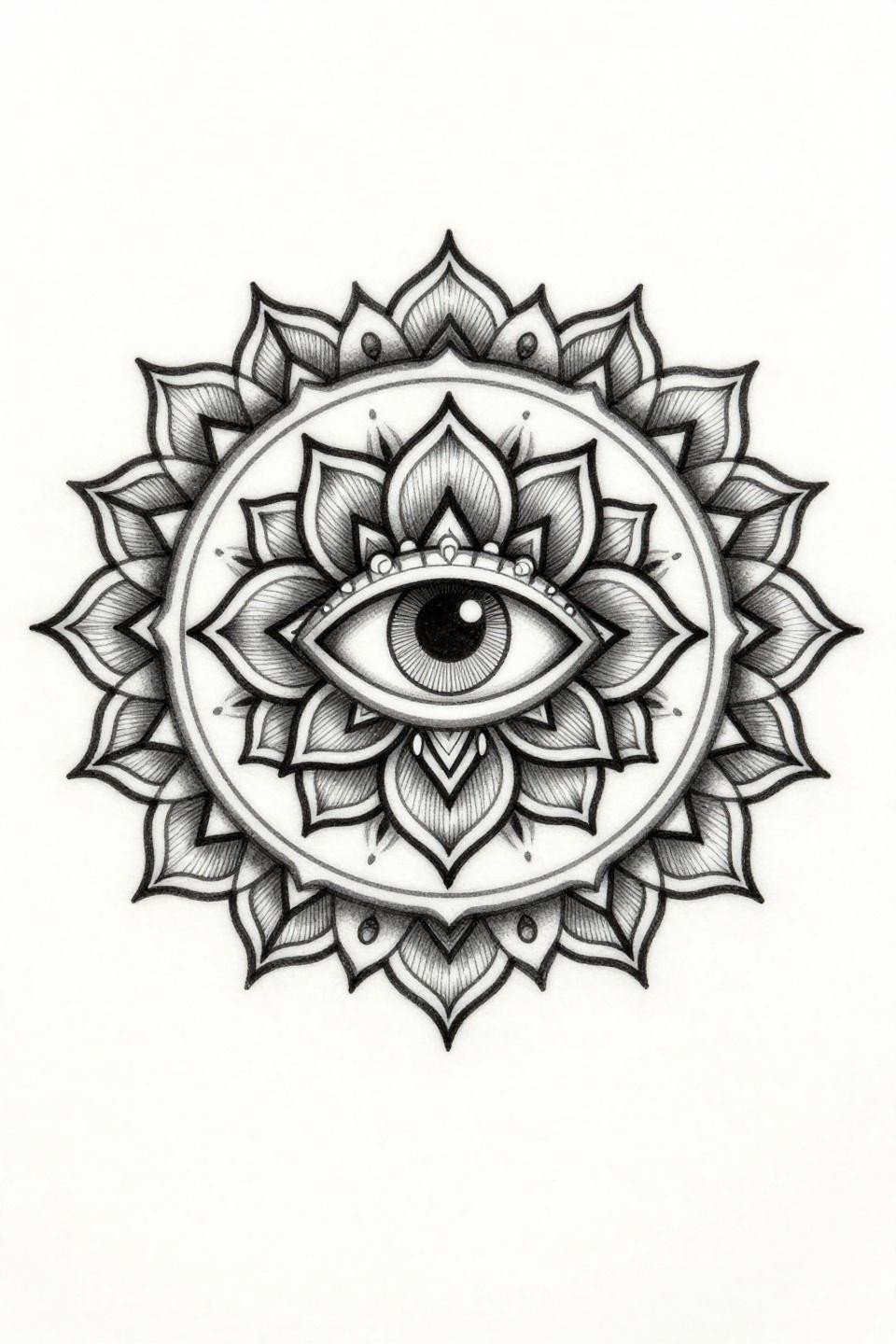
An art nouveau mandala with interlocking lotus petals, a central geometric eye symbol, and concentric circle hairlines in 0.5mm single needle strokes with bilateral symmetry and ornamental cardinal flourishes. Hairline concentric circle spacing at this density is the technical element most artists underestimate in terms of execution difficulty.
The shin is a low-fat, high-bone surface with tighter skin than the thigh or calf. Needle control matters more here because there is less tissue cushion to absorb inconsistent depth. On lighter skin tones this reads clean. Darker skin tones need the line weight moved up from hairline to hold legibility over time.
Compass Rose: The Thigh Piece That Does Not Overstay Its Welcome
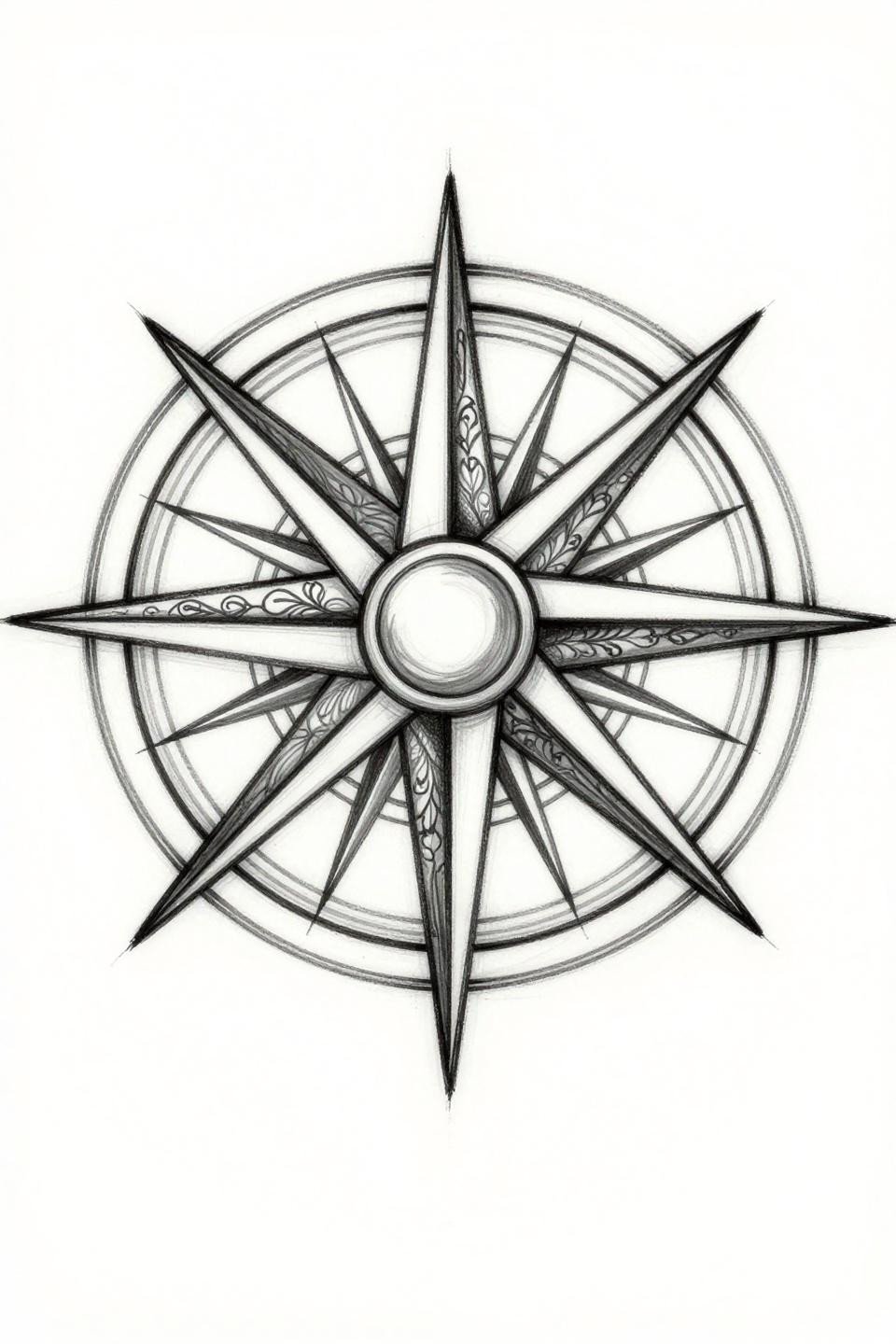
An ornamental compass rose with eight cardinal points, botanical filigree petals, nested circular border with flourish terminals, and bold 2-3pt gestural outlines in raw sketch energy with grey wash midtones. The visible gestural sketch quality distinguishes this from over-polished digital-looking mandala work.
Sketch-style work reads as unique because no two artists execute the raw line energy the same way. This is the right category of thigh reference for collectors who want a piece that looks hand-drawn rather than drafted. The circular format scales from a 4-inch thigh accent to an 8-inch focal medallion without losing legibility.
Pull three to five of these based on your specific placement, not your general aesthetic preference. A shin reference does not help an artist plan a thigh piece. Match the composition format to the canvas first, then sort by style. That narrows the reference set to something your artist can actually use in a consultation.