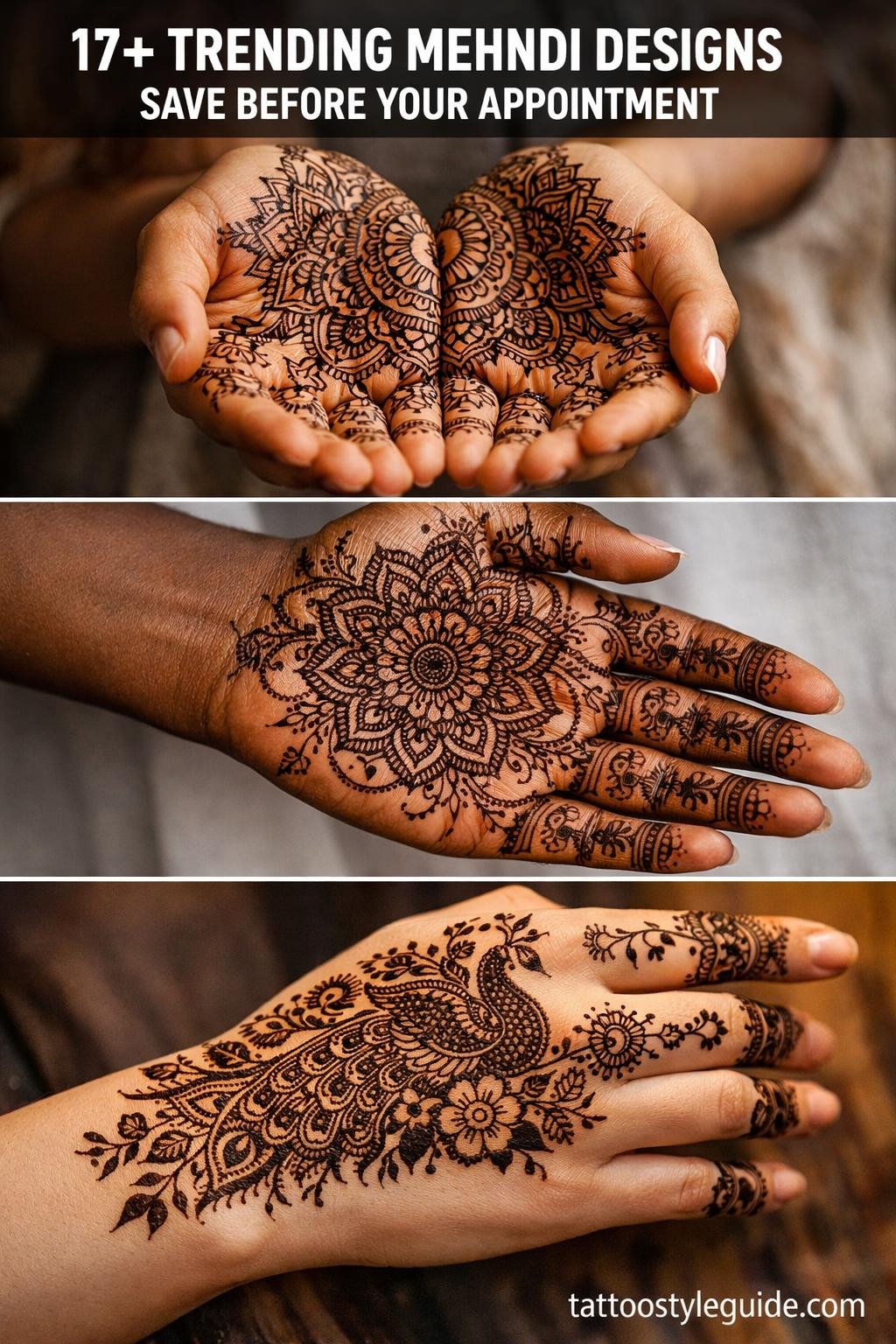
Trending mehandi designs live or die by their negative space management. Too dense and the pattern reads as a dark blob at arm’s length. Too open and it looks unfinished.
The reference you bring to your artist sets the ceiling on what’s possible. These 17 flash-style illustrations cover the full technical range, from single-needle hairline work to bold tribal fills, so the comparison is direct and honest.
When Wobbly Lines Are the Point: Ignorant Style Cuff Flash
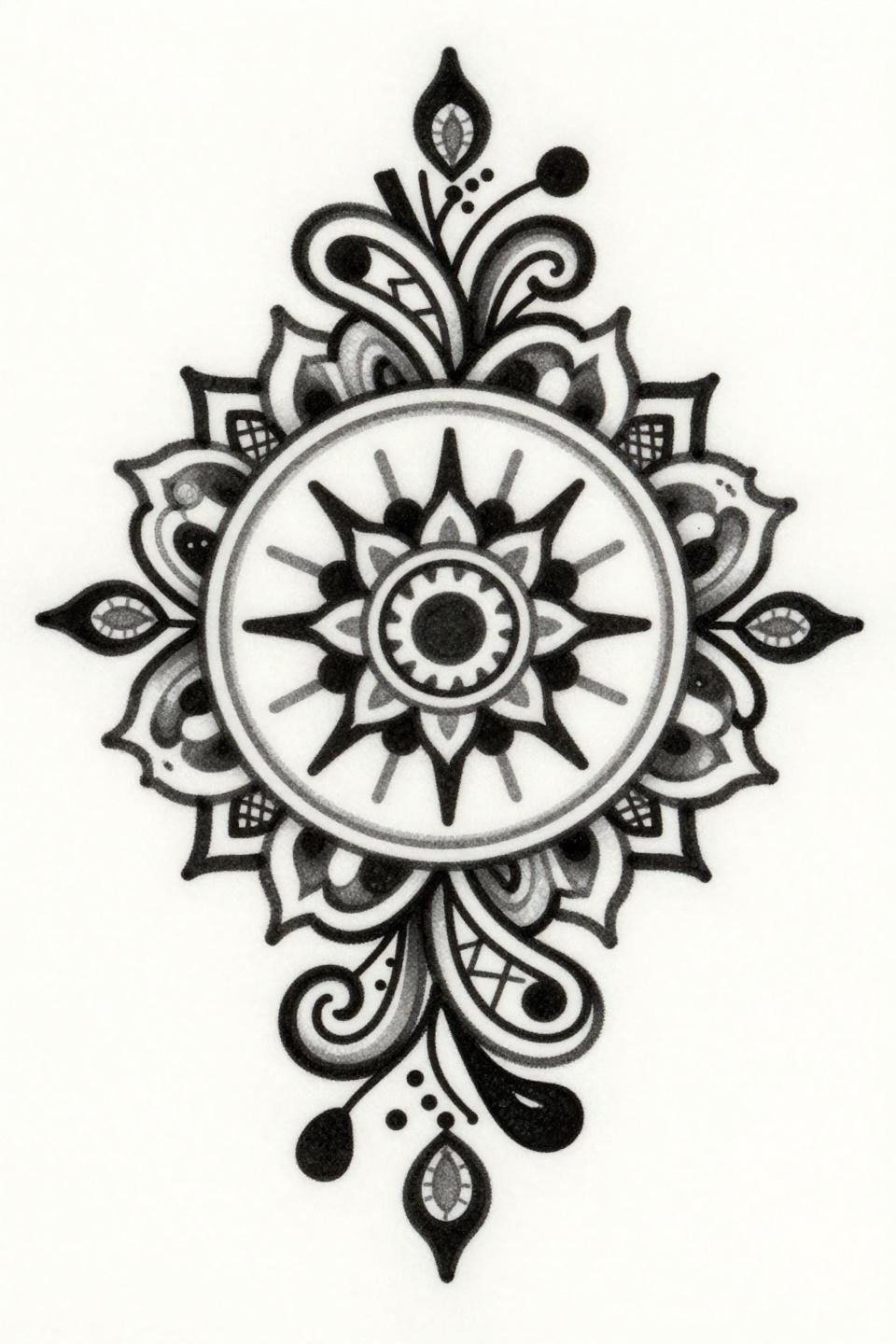
Ignorant-style execution takes the ornamental cuff motif and deliberately breaks its symmetry with wobbly vine spirals, alternating solid and hollow petals, and nested concentric circles that read hand-drawn rather than ruler-perfect.
The imperfect outline weight here is a skill signal, not a flaw. Consistent wobble across a full cuff composition requires controlled speed and needle pressure, and any patch of accidental straightness exposes the artist immediately.
Bilateral Peacocks Demand an Artist Who Can Mirror Freehand
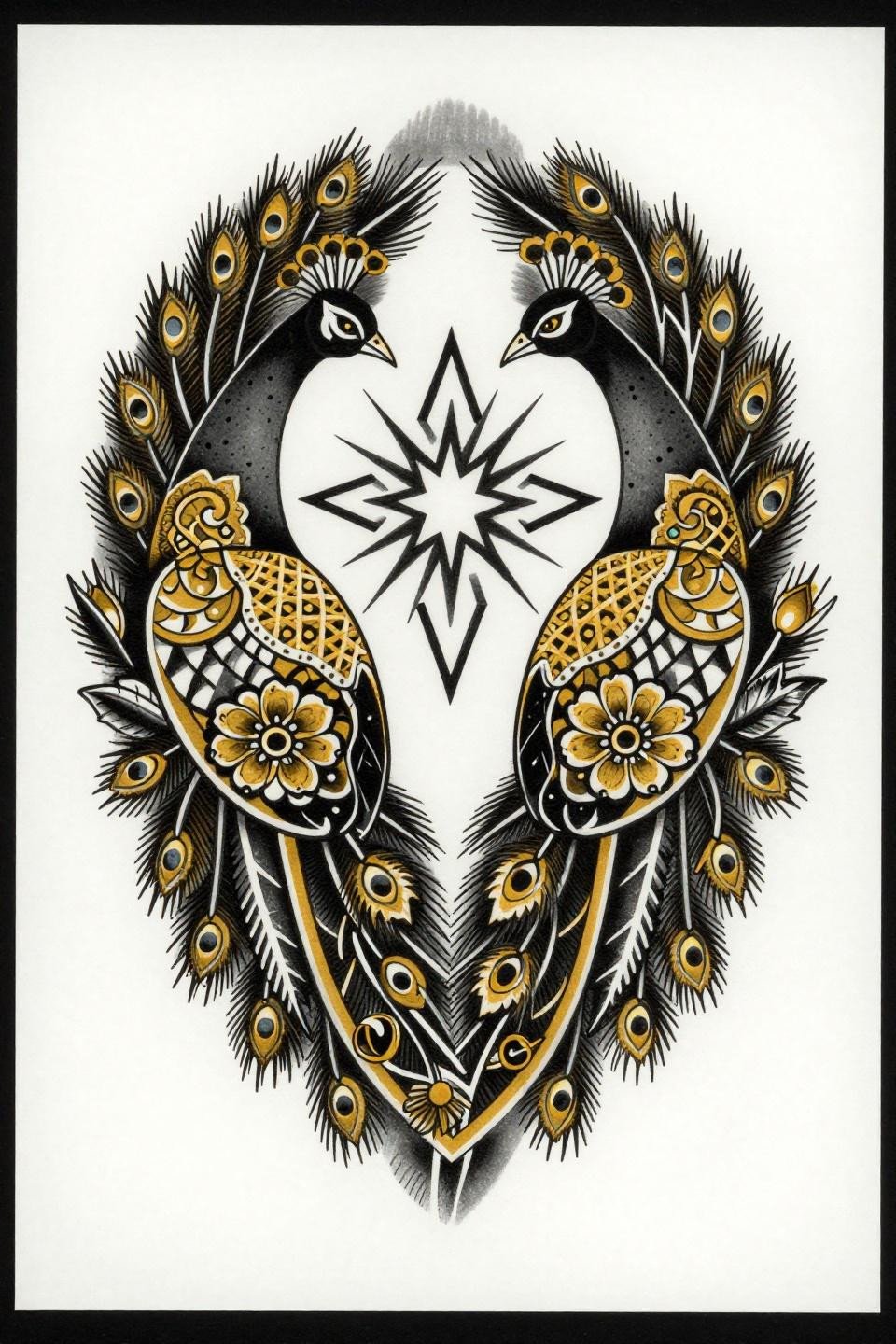
This neo-traditional reference pairs dual peacocks facing inward with a diamond-lattice negative space carve, using flat gold and black fills to keep the plumage reading at distance without relying on grey wash detail.
On simple mehndi designs for everyday wear, this much bilateral complexity would be overkill. For a full hand or forearm placement, the mirrored composition justifies the density.
Grey Wash Mandala: The Longevity Question Nobody Asks
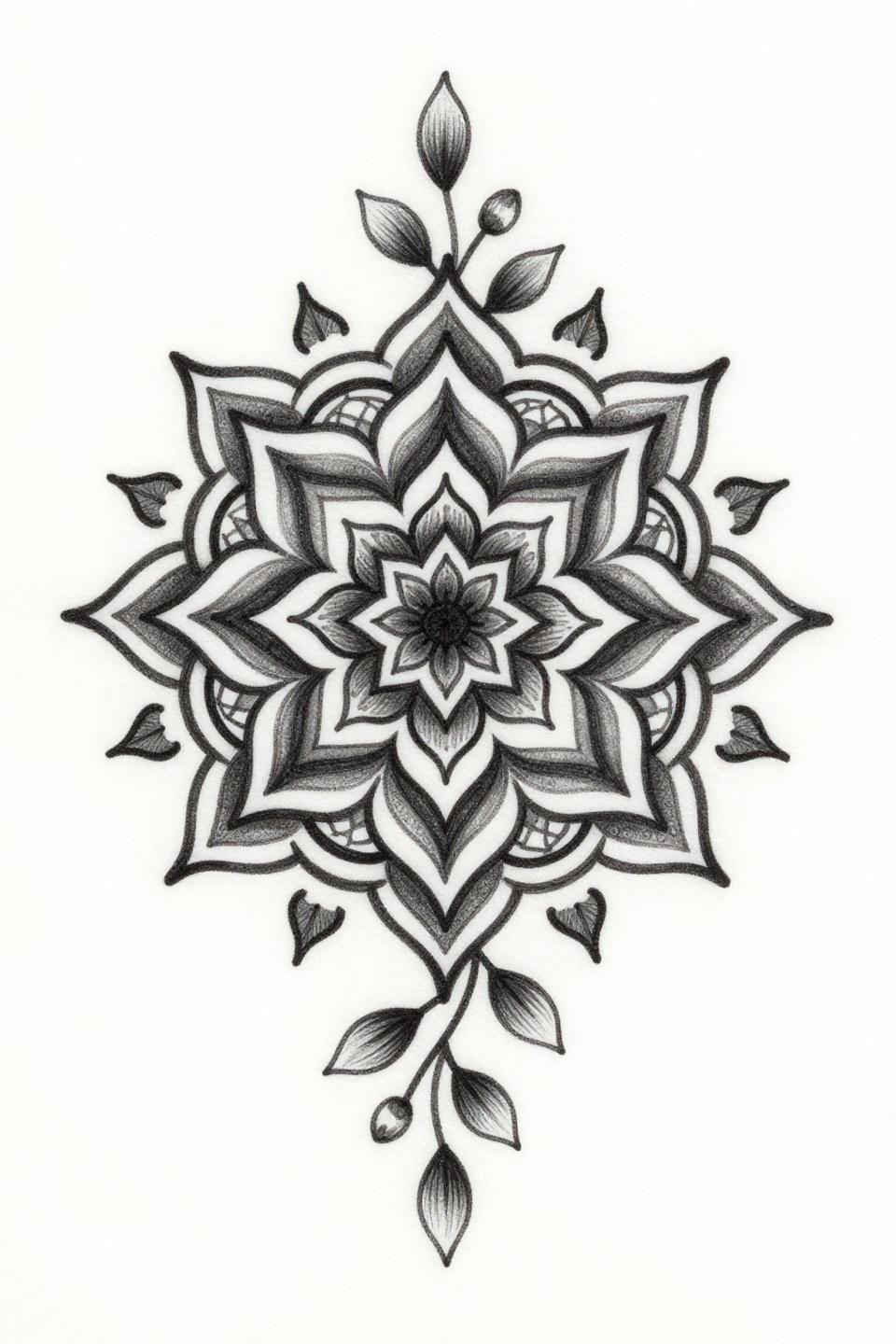
Chicano grey wash applied to a 6-petaled lotus mandala relies on directional whip shading strokes that graduate from dense black at center to near-open at the trailing vine edges.
Grey wash at this dilution range reads clean on lighter skin tones for 8 to 10 years. On olive and deeper skin, the midtones compress faster, and an artist needs to weight the outline heavier upfront to compensate.
Dotwork Paisleys: Where Stipple Density Separates Good from Mediocre
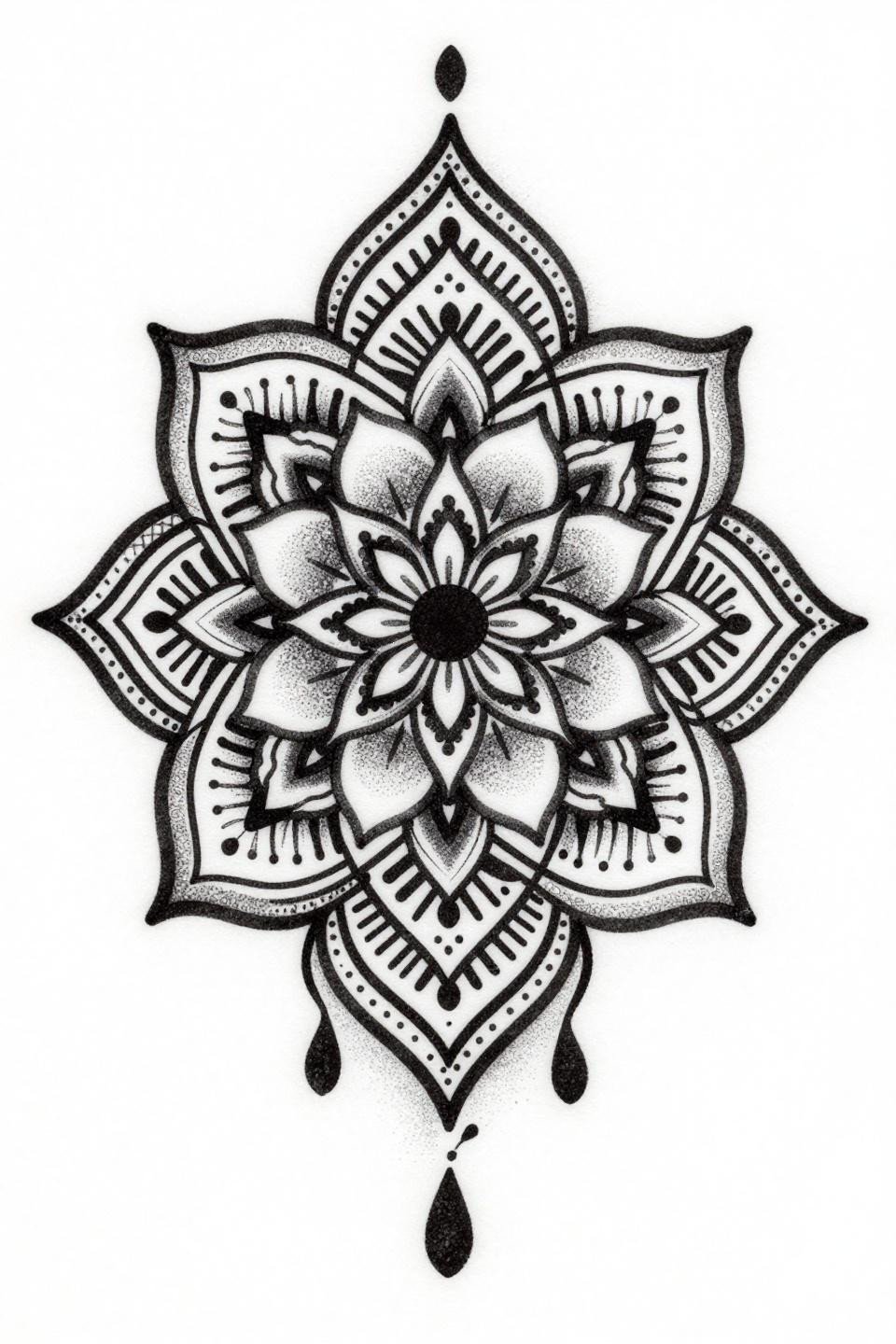
Blackwork dotwork on a hexagonal mandala base uses stipple dot gradient density shifting from tight cluster at center to open scatter at the paisley cascade edges, carving depth without any line shading.
Look for consistent dot size across the full composition when vetting an artist for this style. Dot size variation that isn’t intentional reads as rushed work, and it shows clearly in healed photographs.
Teal and Copper Peacocks: When Ink Chemistry Matters
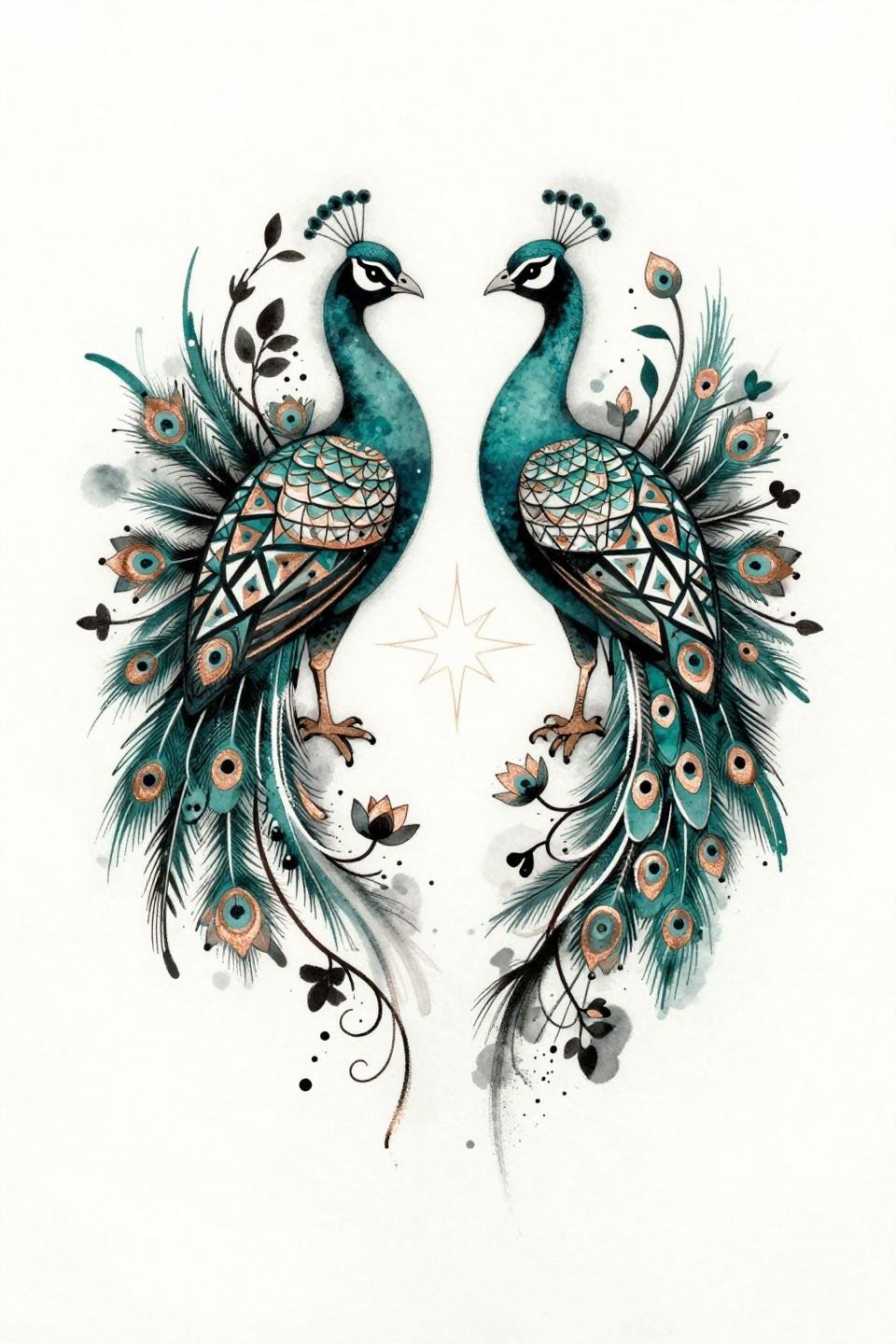
This watercolor-splash reference deploys deep teal with copper metallic accent ink over calligraphic brush marks, giving the peacock tail plumage a wet-ink quality that flat black outlines alone can’t achieve.
Metallic inks require a separate conversation with your artist about brand compatibility and long-term oxidation. Copper-adjacent pigments can shift warmer over years, which either ages gracefully or reads muddy depending on the surrounding black density.
Single Continuous Line: The Execution Margin Is Almost Zero
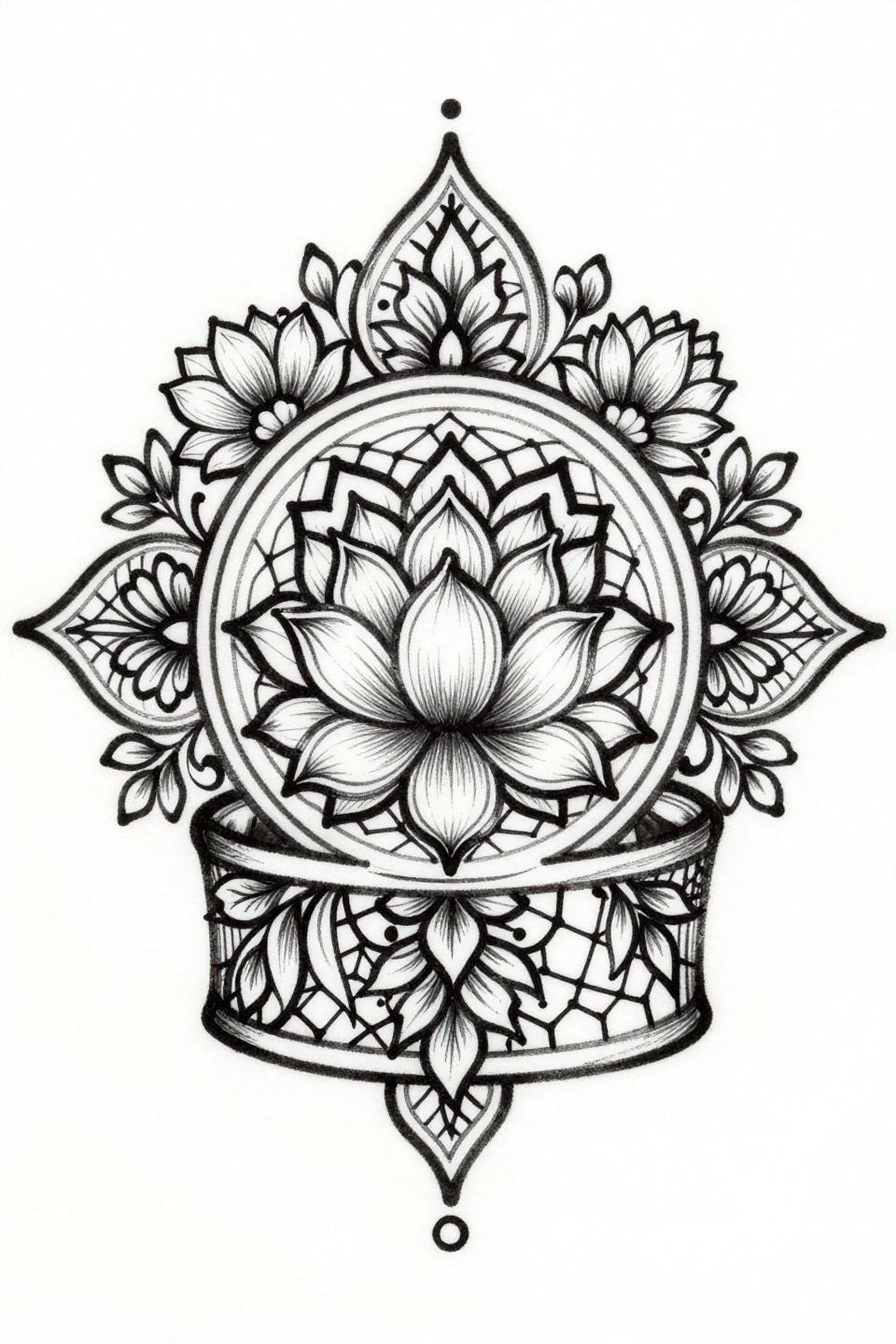
A single-line henna cuff rendered as one unbroken calligraphic gesture forces every nested lotus and hexagonal lattice infill into the same pressure rhythm with no opportunity to restart.
This is among the modern mehndi designs with contemporary flair that look deceptively minimal. The technical demand is high: any hesitation in the brush stroke registers permanently in the line quality.
Sketch-Raw Cuffs: Stipple Gradient Over Lace, Not the Reverse
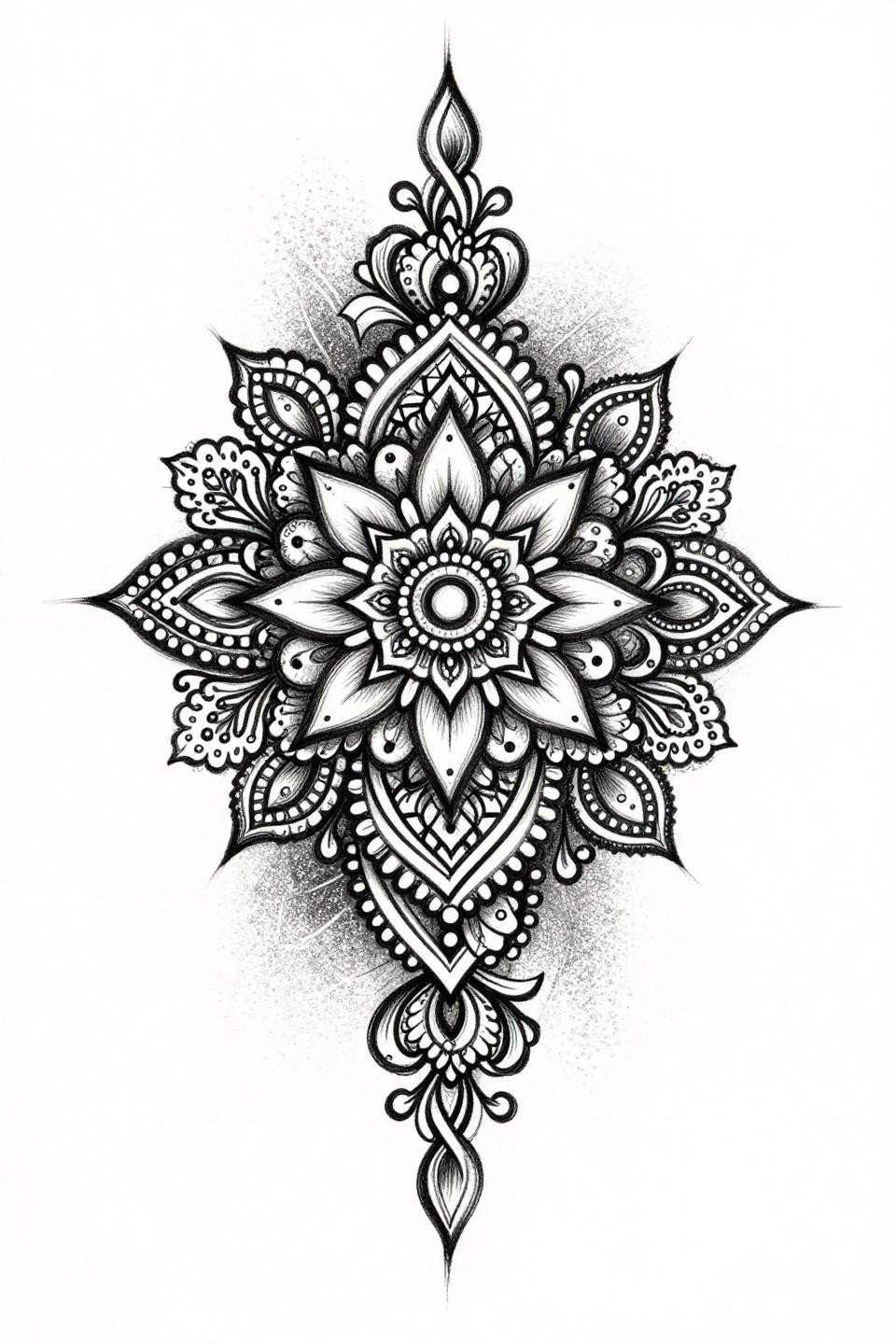
Raw sketch execution on an ornamental cuff uses a stipple gradient over lace lattice rather than beneath it, keeping the dotwork readable instead of colliding with the geometric linework underneath.
Protected placements like the upper forearm and inner wrist give this density its best shelf life. High-friction zones like the outer wrist compress the open negative space faster, and the lattice is the first element to blur.
Sketch Medallion: When Construction Lines Stay In
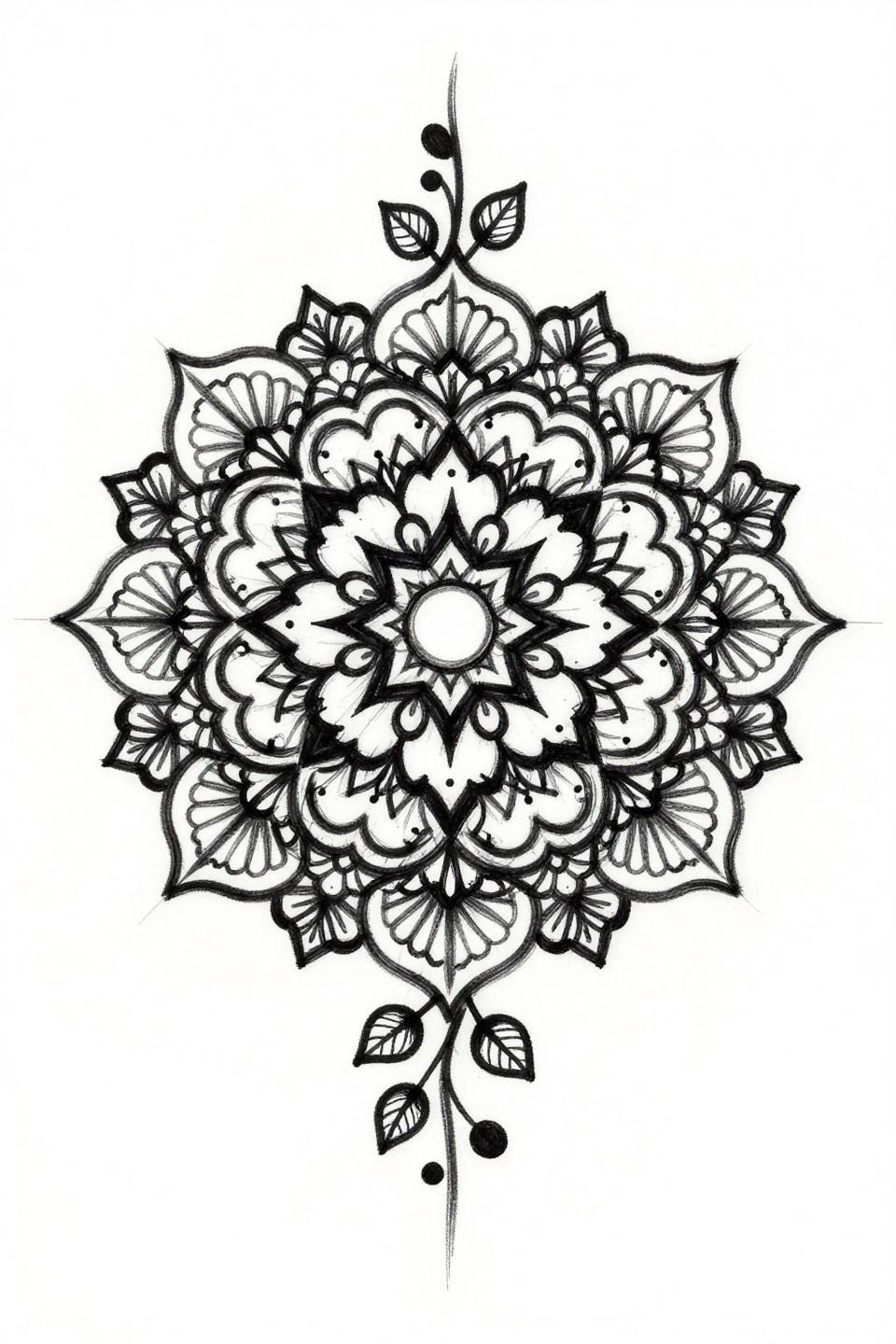
This sketch-raw medallion keeps the pencil construction lines visible beneath bold 2-3pt ink outlines, treating the under-drawing as a texture layer rather than preliminary marks to be hidden.
Flat black fills at this weight hold clean for 10 or more years in protected placements. The construction line texture fades first, leaving the outline and fill structure intact, which is exactly the aging behavior you want.
Crosshatch Paisleys: Etching Technique in a Mehndi Format
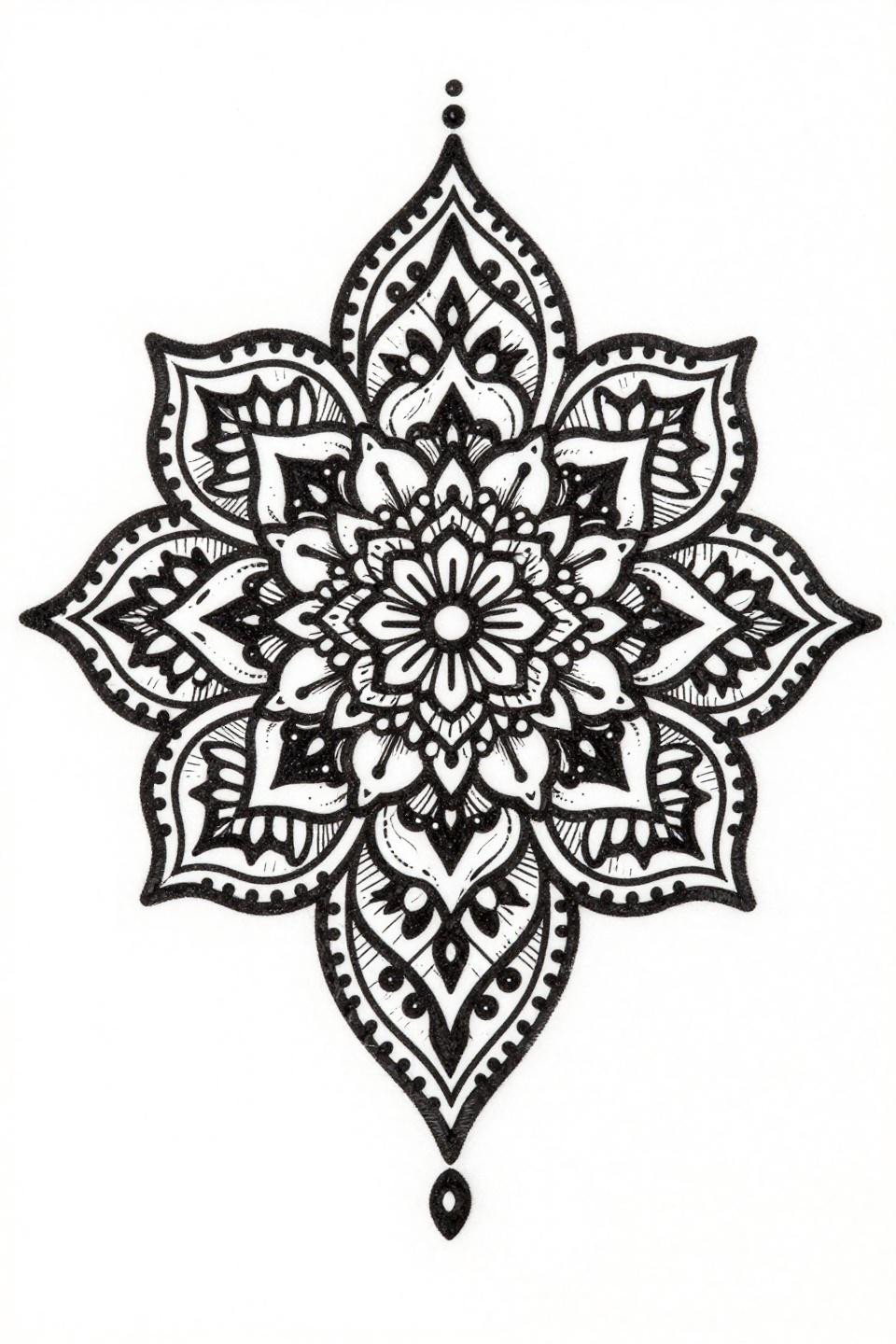
Woodcut crosshatch on a nested paisley mandala cuff replaces grey wash entirely with tight parallel line engraving, building depth through hatch density rather than ink dilution.
No grey wash means the aging behavior here is more predictable. Dense black crosshatch holds its separation longer than wash midtones, which is a real advantage for anyone planning a wrist or forearm placement with years of sun exposure.
Sak Yant Grid Meets Lotus Cuff: Radial Symmetry at Full Density
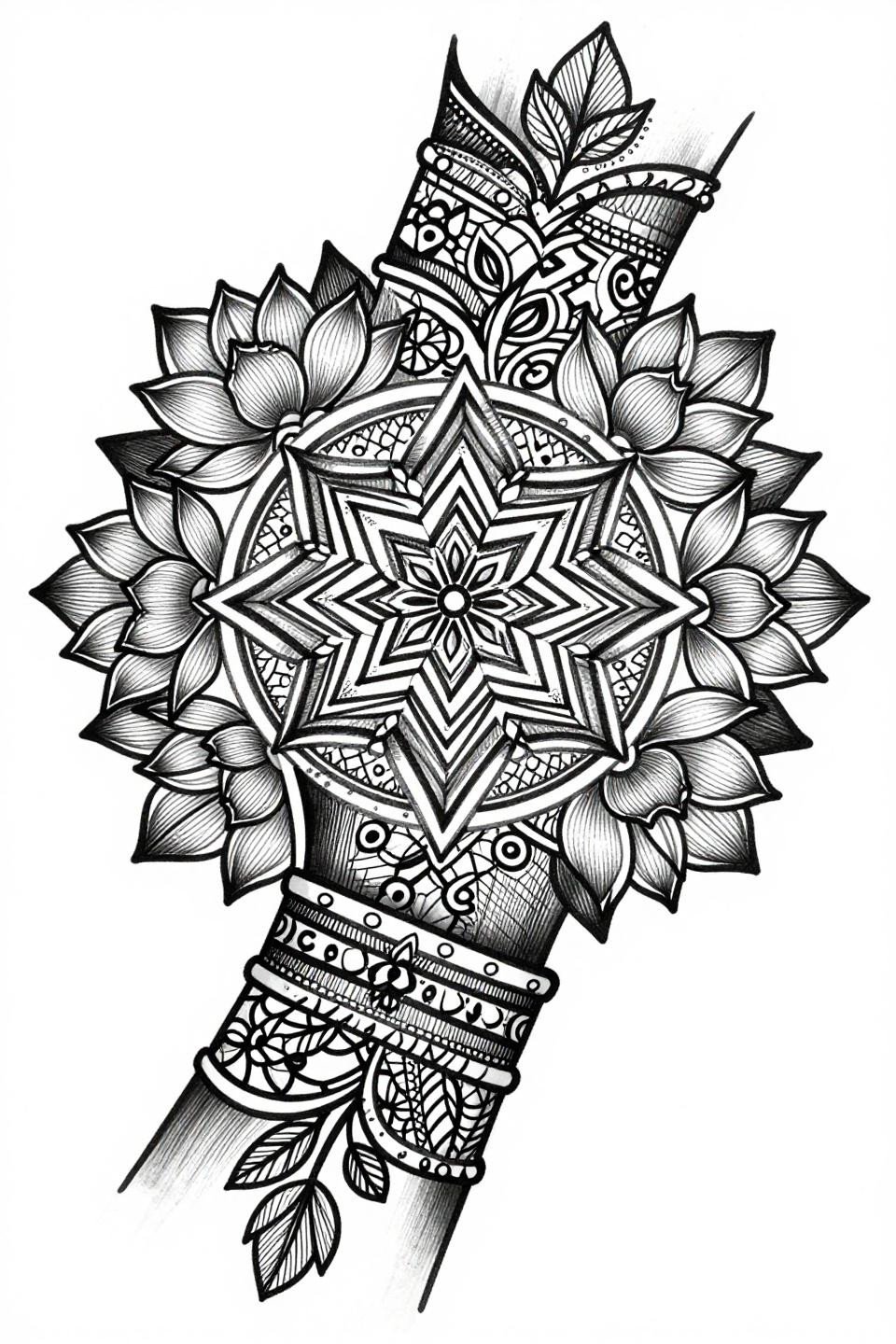
Sacred geometry structure applied to a lotus cuff uses evenly spaced parallel ruled strokes in crosshatch grid infill, borrowing Sak Yant’s architectural line discipline to organize what would otherwise be loose organic form.
The bilateral radial symmetry here is the hardest part to execute cleanly. Check the artist’s portfolio specifically for circular compositions, because radial wobble at the center point propagates outward across every ring.
Irezumi Framing Around Peacock Medallions: Bold Outline Logic
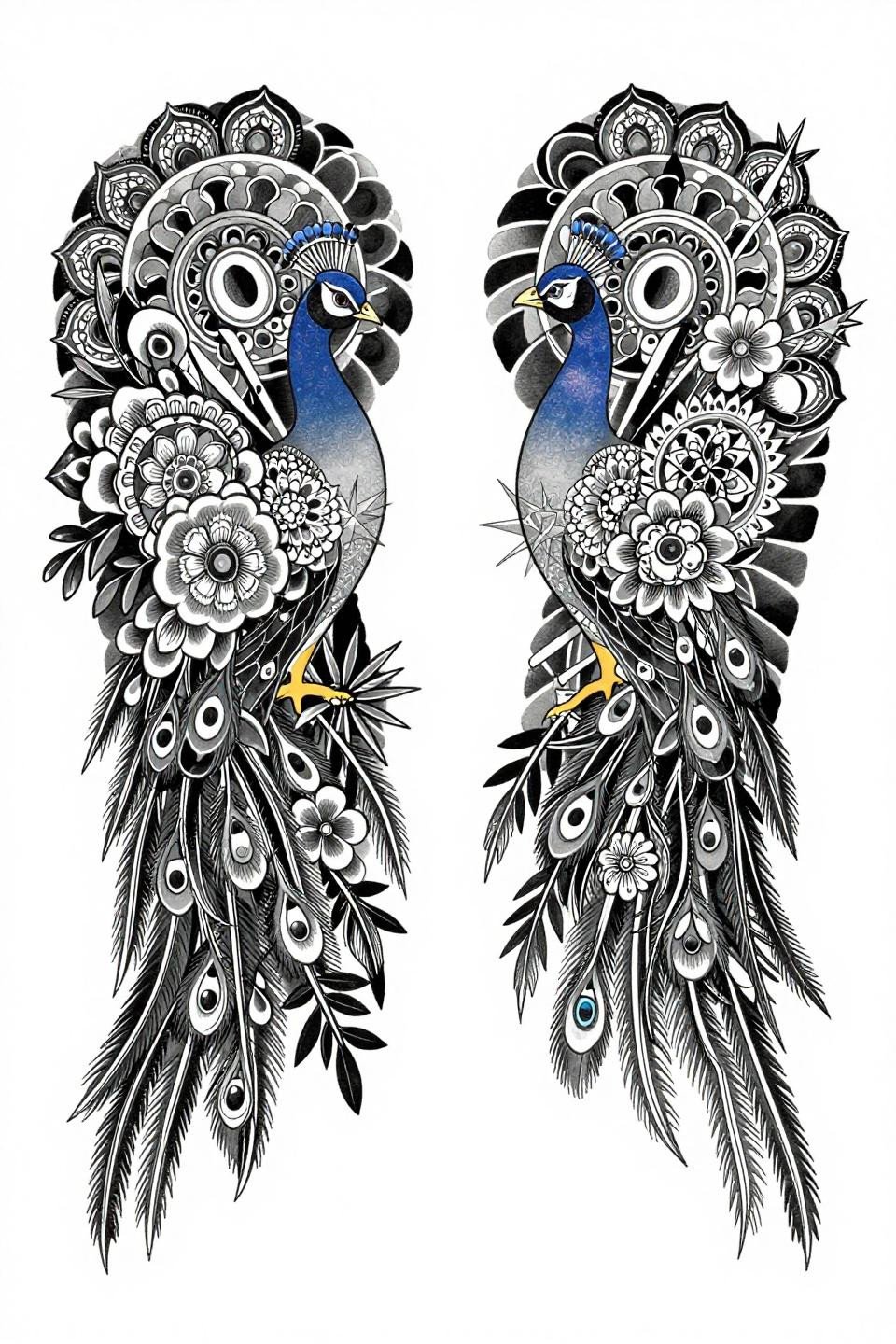
Japanese irezumi structure applied to mirrored peacocks gives the circular mandala border a containing weight that prevents the nested floral plumage detail from reading as visual noise at distance.
Bold 2-3pt outlines are the longevity signal in this format. The grey wash midtones will soften over years, but the outline structure keeps the composition readable. This is the reference to bring if you want something that holds its shape at year ten.
Fine Line Mandala: How Much Negative Space Is Too Much
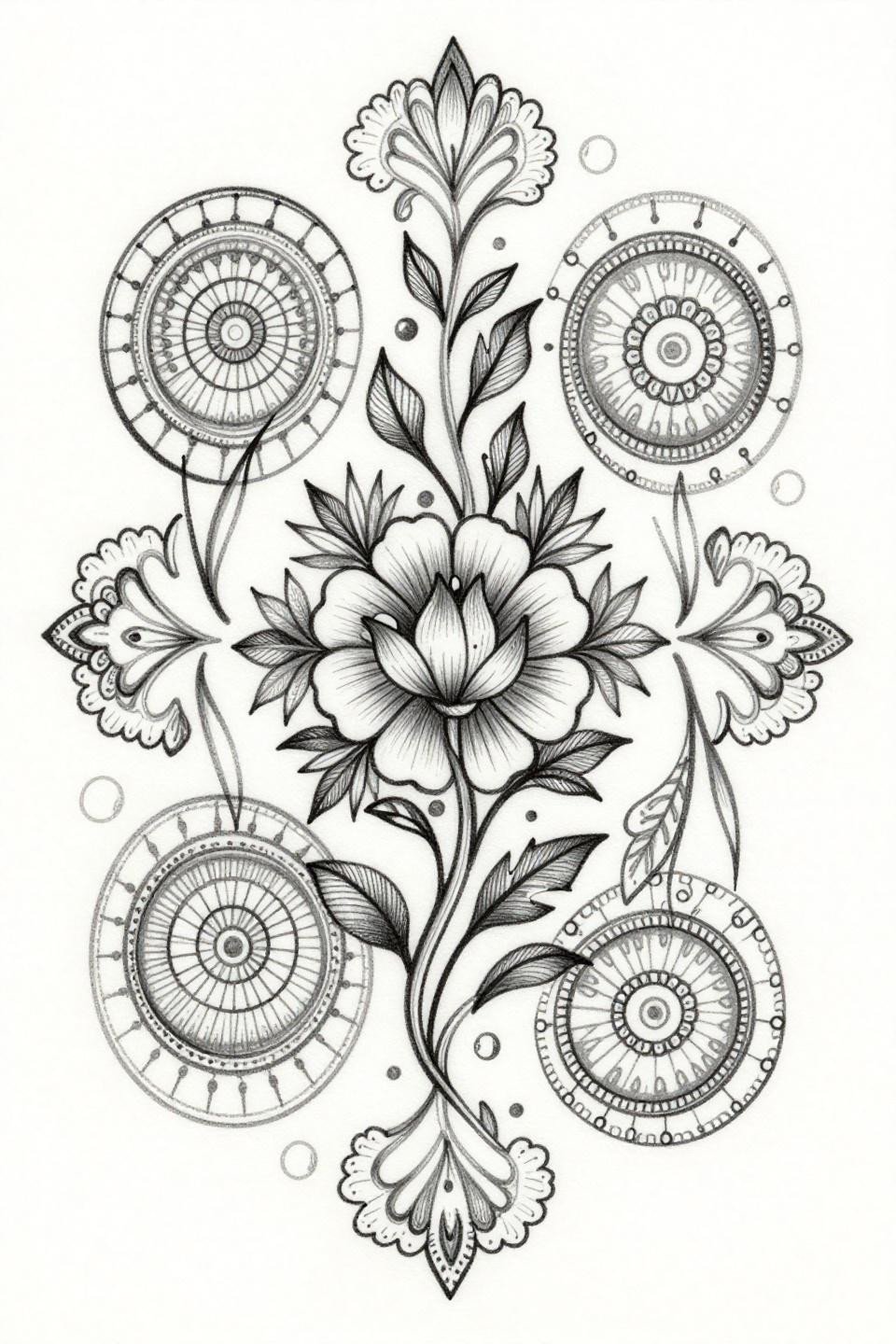
Hairline 0.5mm single-needle strokes on a spoke-line mandala keep negative space dominant, relying on the paisley border and vine network to provide enough visual anchor without adding fill weight.
Single-needle work at this openness needs an artist who controls speed precisely. On darker skin tones, this level of line weight can disappear at healing, and the reference requires scaling up to at least a 3RL to maintain contrast.
Tribal Chevron Bands With a Floral Center: Angular Logic
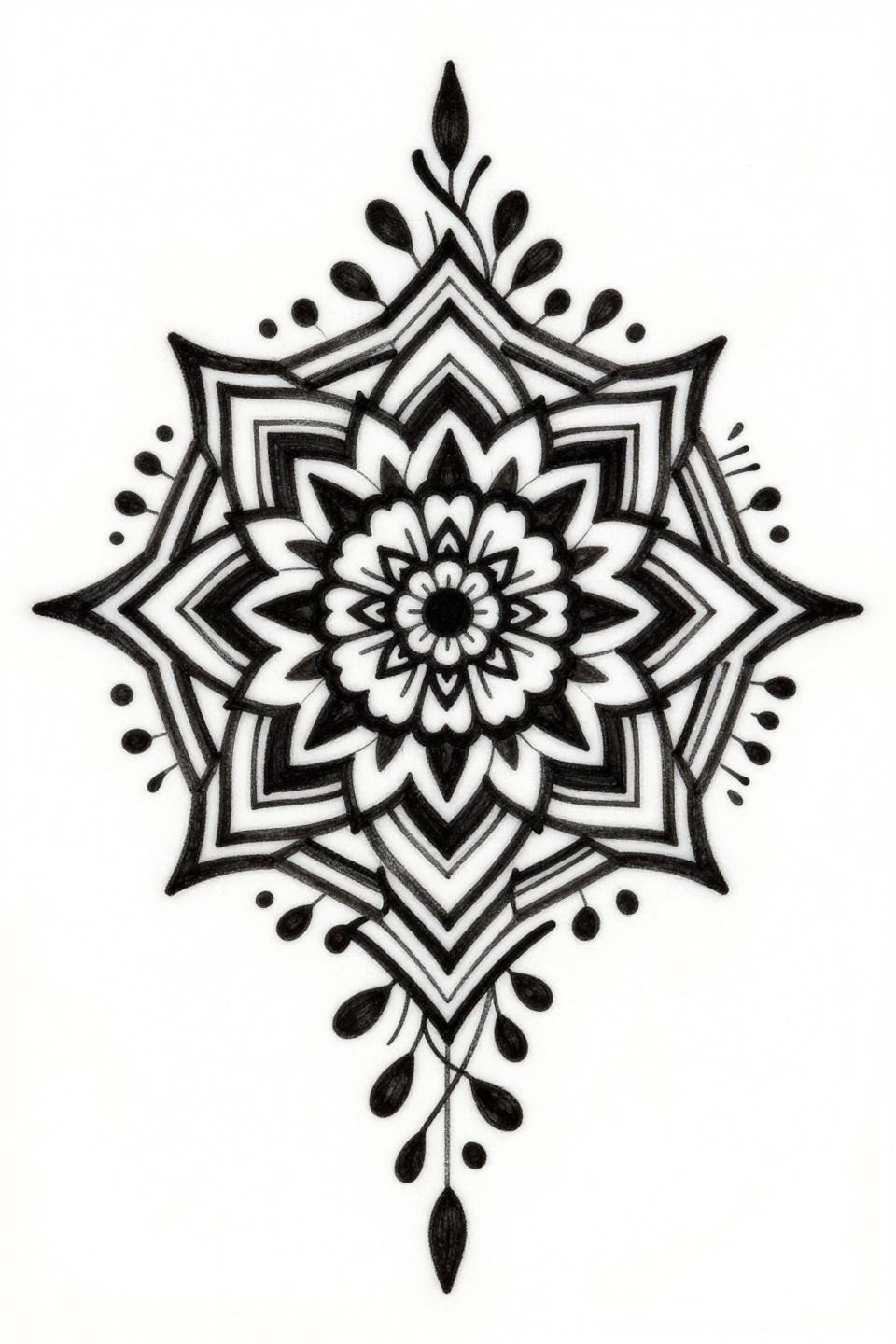
Tribal geometric execution here uses interlocking chevron bands to frame a floral center rosette, with sharp angular forms and flat black fills that read at distance without any wash support.
Zero grey wash in this composition is a deliberate aging choice. Solid black fills and bold outlines are the most stable ink combination for high-movement placements. This reference suits a forearm or ankle cuff better than it suits a back piece.
Art Nouveau Vine Flow: Organic Structure Over Geometric Grid
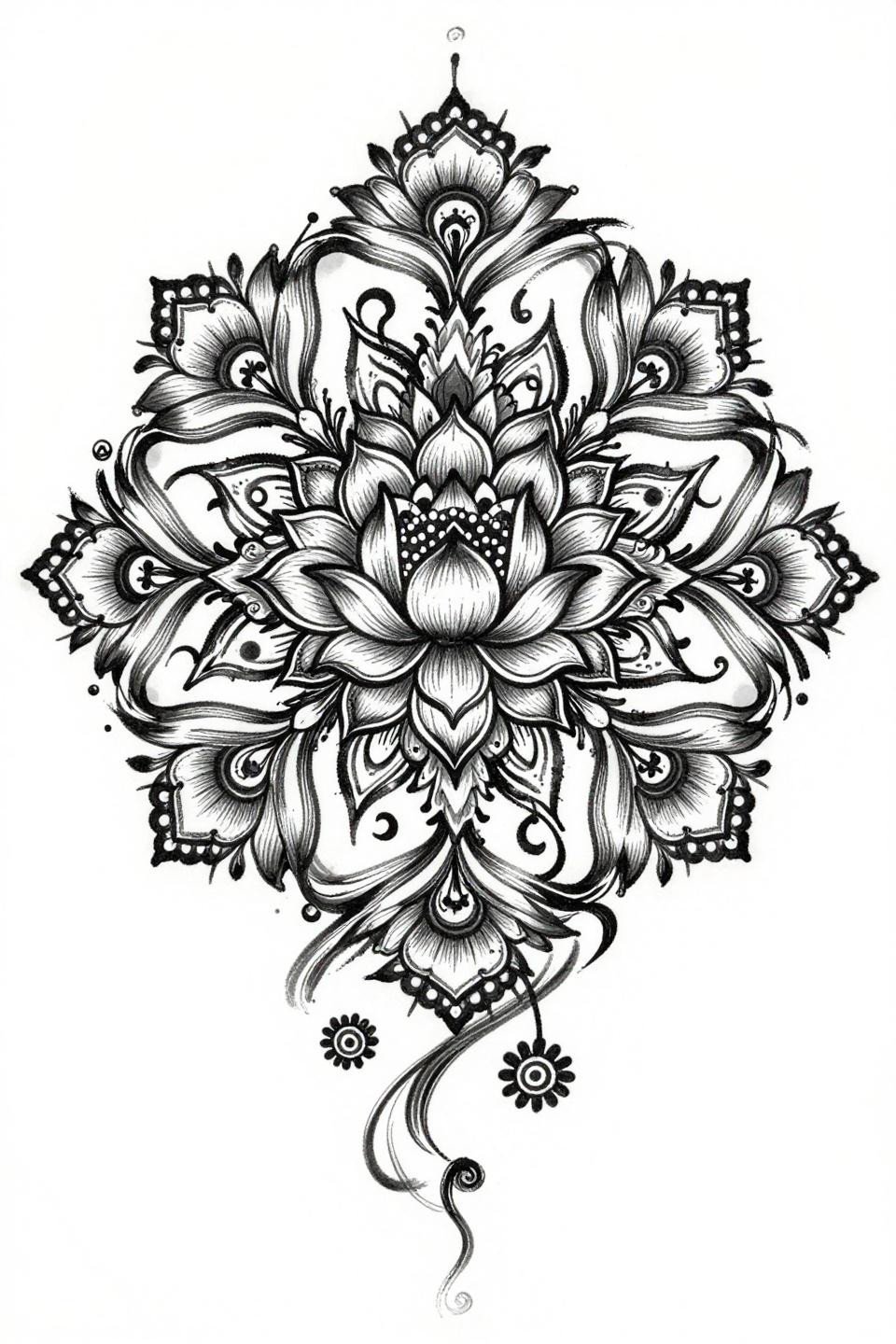
Art Nouveau structure prioritizes sweeping calligraphic curved strokes over geometric containment, letting the vine network and paisley cuff resolve the composition rather than a mandala grid.
This is the reference for collectors who want mehndi vocabulary without mandala rigidity. The flowing asymmetry is harder to execute cleanly than it appears, and the tell is whether the curve directions feel intentional or accidental at the vine intersections.
Art Deco Starburst: Zero Organic Elements Is a Statement
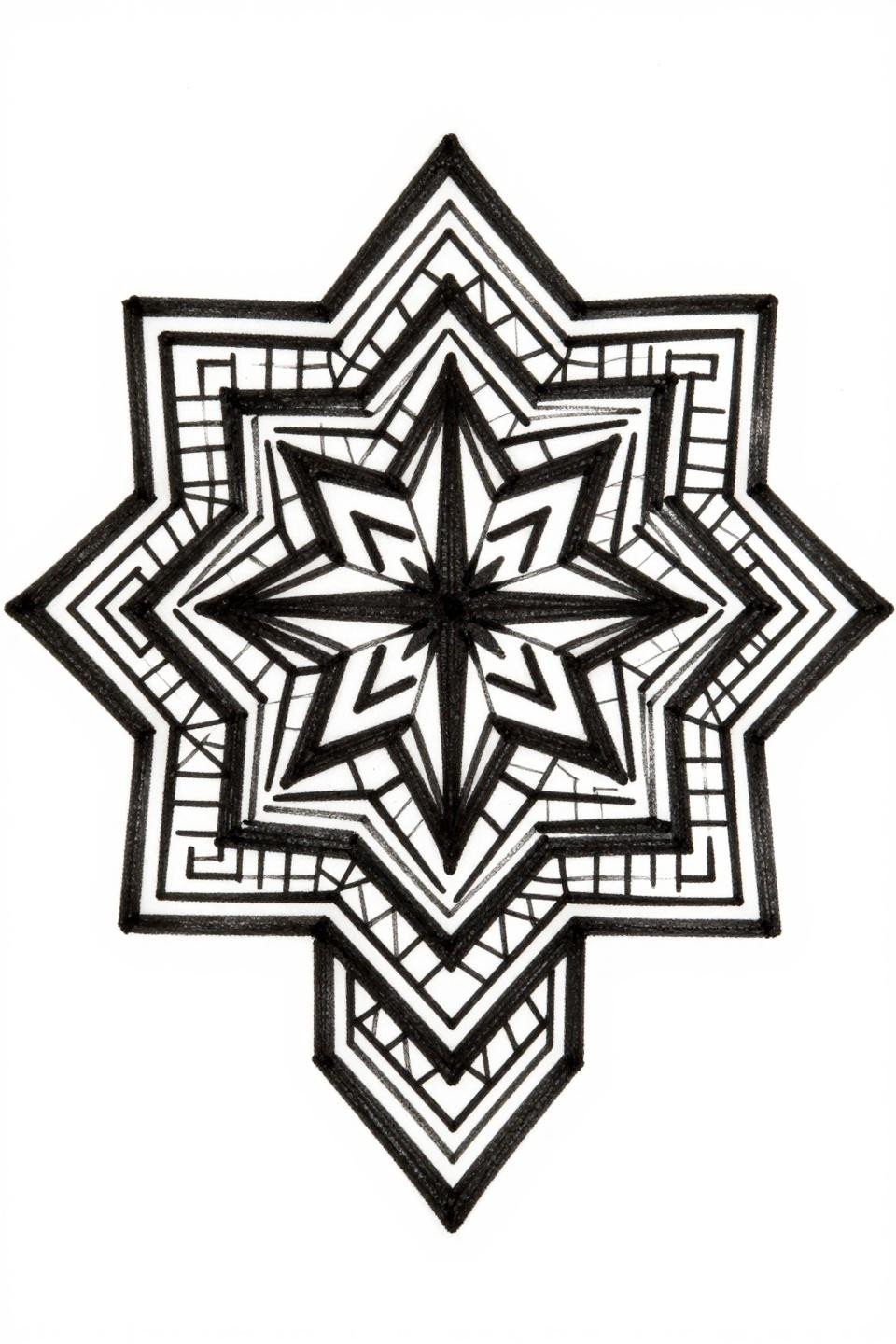
Art Deco mandala removes every organic element from the mehndi format, replacing vines and paisleys with a 12-pointed starburst angular ray system inside concentric hexagonal frames and triangular maze borders.
No curves anywhere in this composition means placement geometry matters more than usual. A rectangular forearm panel or sternum placement gives the angular bilateral symmetry a flat surface to read correctly. Curved limb placement distorts the geometric logic.
Botanical Stipple Peacock: Single-Needle on a Complex Subject
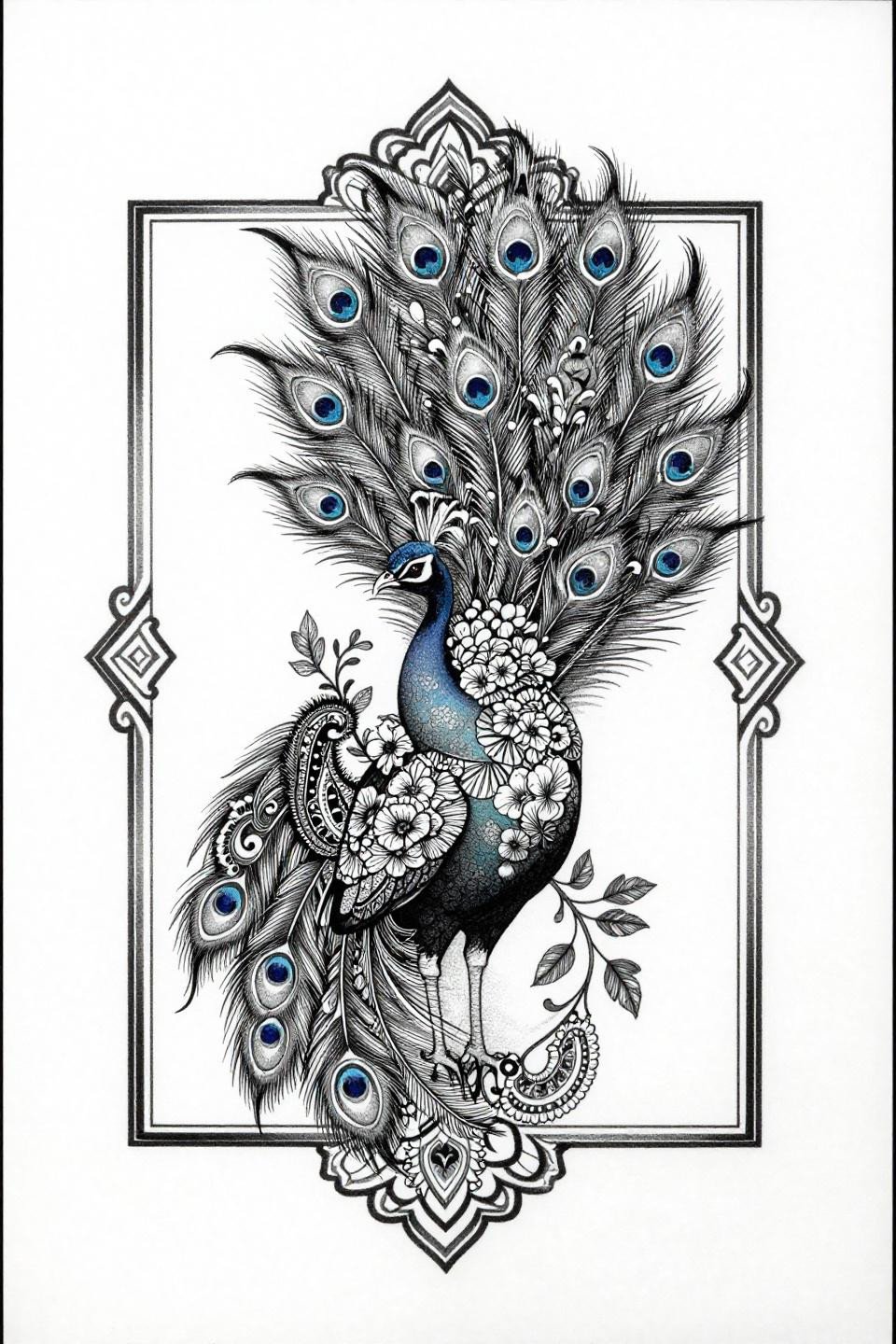
Botanical scientific style on a peacock uses hairline stipple dotwork at 0.5mm density to fill tail feather motifs, demanding an artist who can hold consistent dot size across a large horizontal field.
This is one of the henna designs beyond seasonal occasions that translate directly into permanent ink. The grey wash midtones compress over time on olive skin, so ask specifically about healed stipple work before committing.
Peacock Mandala Cuff: When Radial Tail Structure Replaces Petals
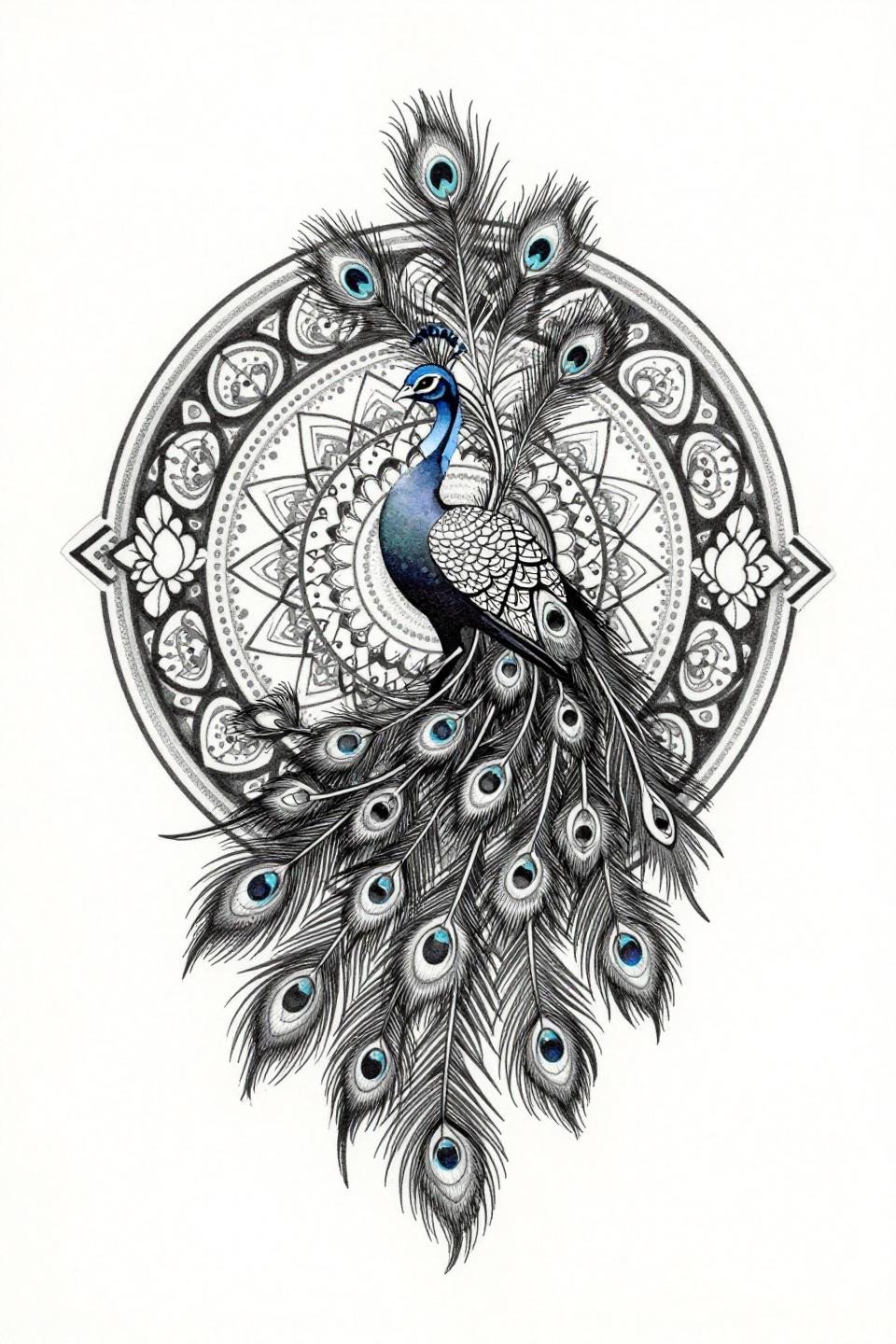
Using fanned peacock tail feathers as the radiating element of a circular mandala frame replaces conventional petal structure with organic plumage, anchored by an interlocking cuff of smaller mandalas at the border.
The stipple gradient here, dense at center and open at the cuff edge, is what keeps the composition from collapsing into flat black at larger scales. An artist quoting this reference needs to show healed dotwork, not just fresh shots.
Pick three of these references, not seventeen. One for overall composition structure, one for the fill technique, one for the border or cuff treatment. That combination gives your artist clear direction without locking them into a copy job.
Scale and placement should filter your choices before anything else. A fine-line single-needle reference on a large back canvas is a mismatch. Match the line weight to the available skin real estate and your artist will deliver exactly what you’re picturing.