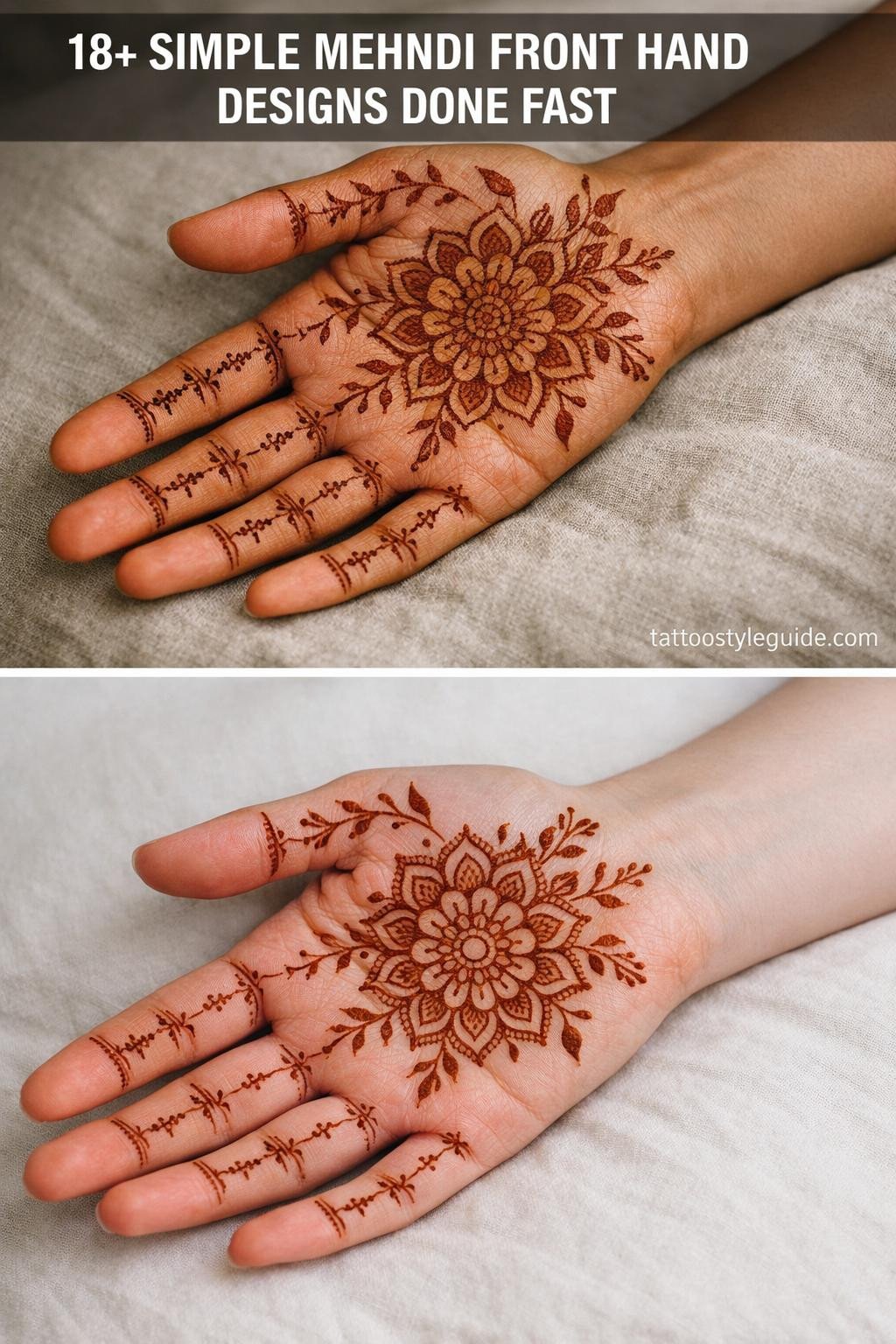
Simple mehndi designs for the front hand succeed or fail on one variable: the negative space ratio. Too much fill and the pattern loses definition against the palm’s natural creases; too little and the motif reads sparse by the second hour of wear. The designs that photograph and last longest keep fill zones tight and border lines deliberate.
Front hand placement is also the hardest canvas to execute cleanly. Finger joints, knuckle movement, and the metacarpal ridge all create uneven surfaces that break continuous lines. The references below account for that. Each one uses composition logic that works with the hand’s architecture, not against it.
Grey Wash Vine Work That Reads Across Every Skin Tone
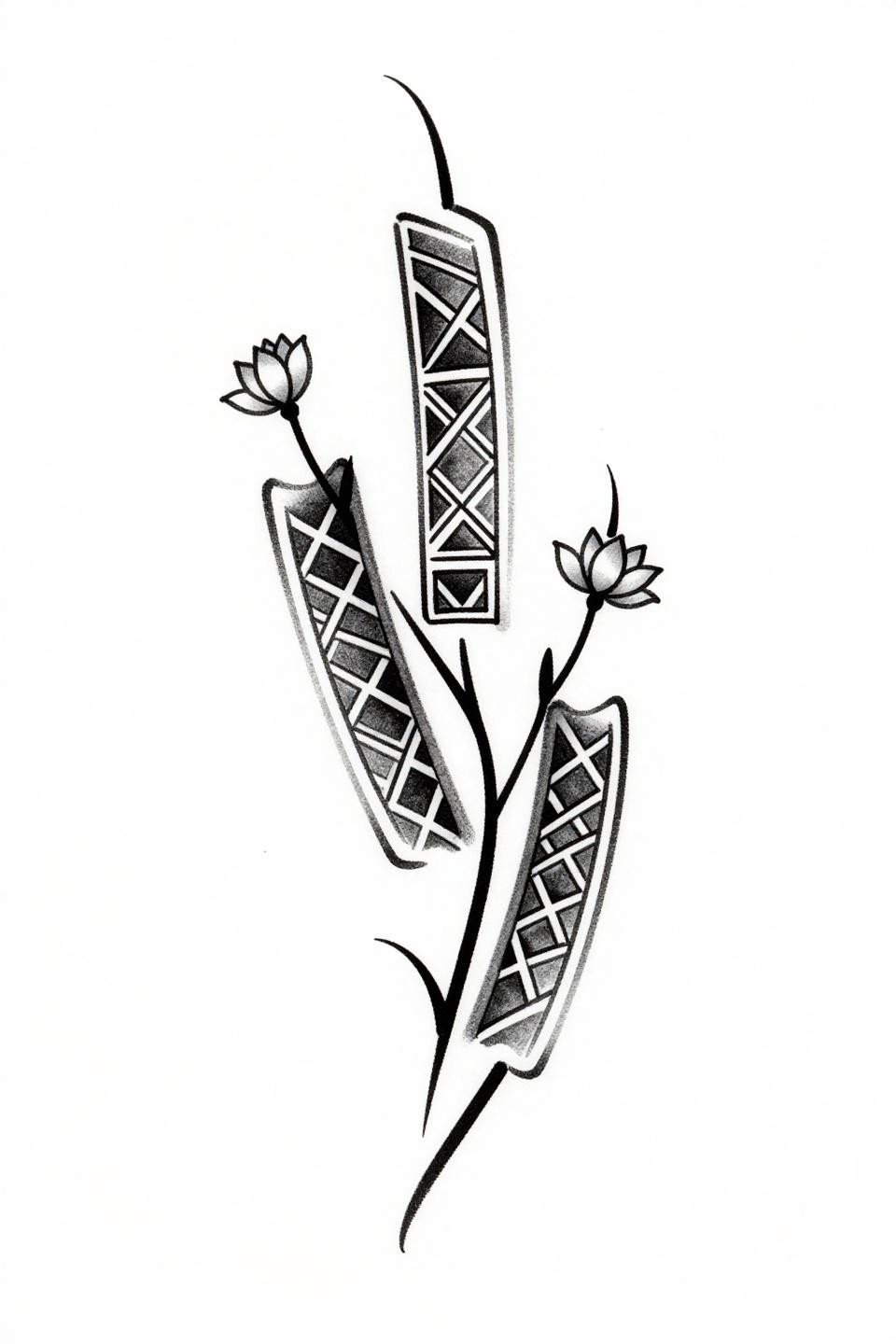
An asymmetric vine structure with three branching curves and lotus terminals, rendered in chicano grey wash with soft dilution gradients from dense black to open white, no solid fill fields.
Grey wash dilution from dense to open gives this reference strong cross-skin legibility. On olive and deeper tones, the open midtones hold separation better than flat black fills would.
Neo-Traditional Spiral: Where One Curve Carries the Whole Design
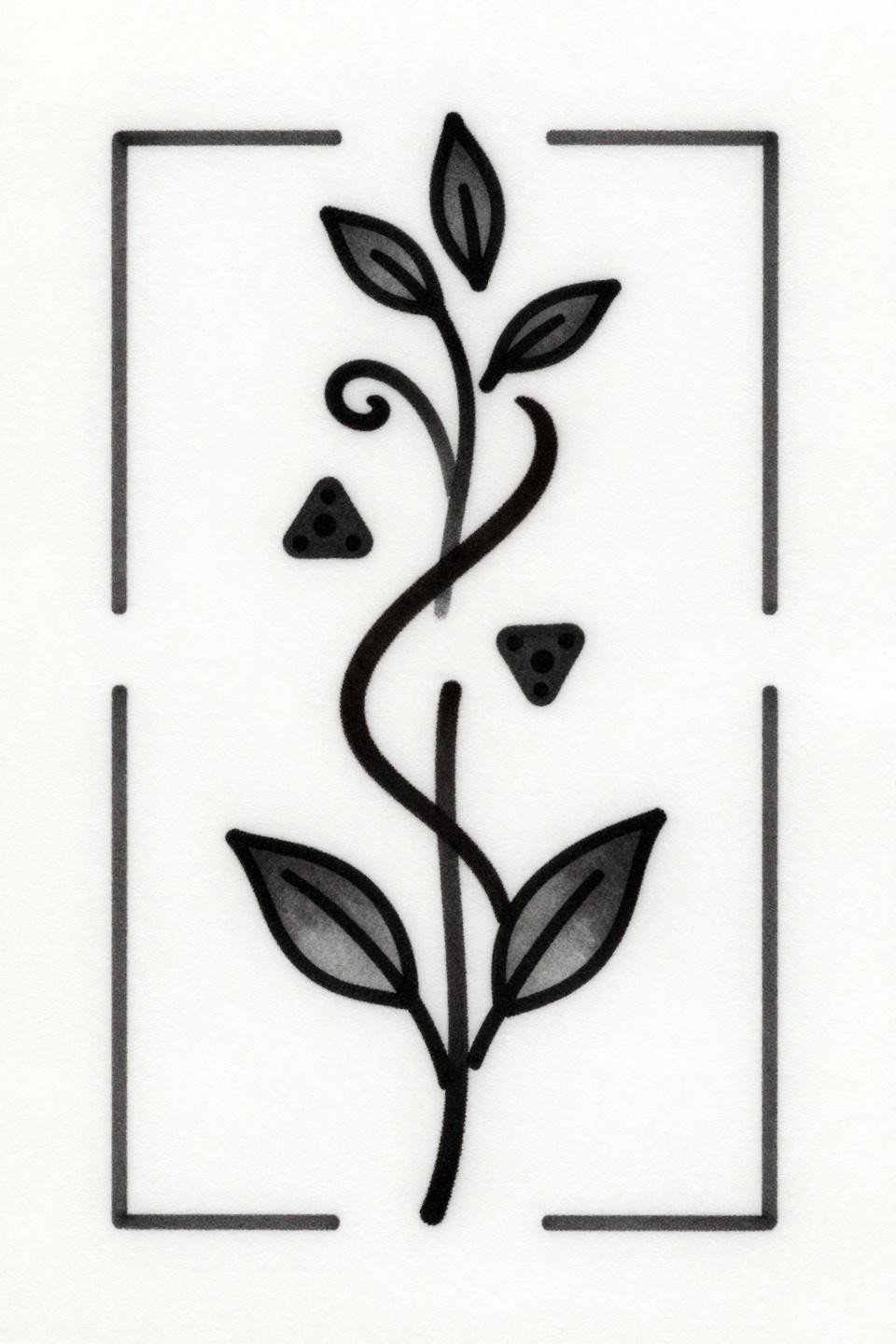
A single continuous spiral vine with opposing comma-leaf terminals and three micro-dot clusters, built on bold 2-3pt outlines with flat grey wash fills in a geometric rectangle frame.
Bold 2-3pt outlines at this weight hold clean for 10 or more years on protected skin placements. This is the longevity signal in neo-traditional flash, and it translates directly to henna line work.
Old School Line Weight Applied to Traditional Mehndi Geometry

Branching teardrop leaves with a central dot mandala ring and hexagon lattice fills, enclosed in an ornamental scallop border, using flat crimson red fills with clean color separation across a diamond layout.
The scallop border frame is a practical choice for front hand application. It creates a defined edge that stops the design from drifting across the wrist crease during wear. Check healed portfolio work for flat fill consistency before replicating this in any medium.
Deliberate Crude Marks: Why Ignorant Style Works for Mehndi Reference
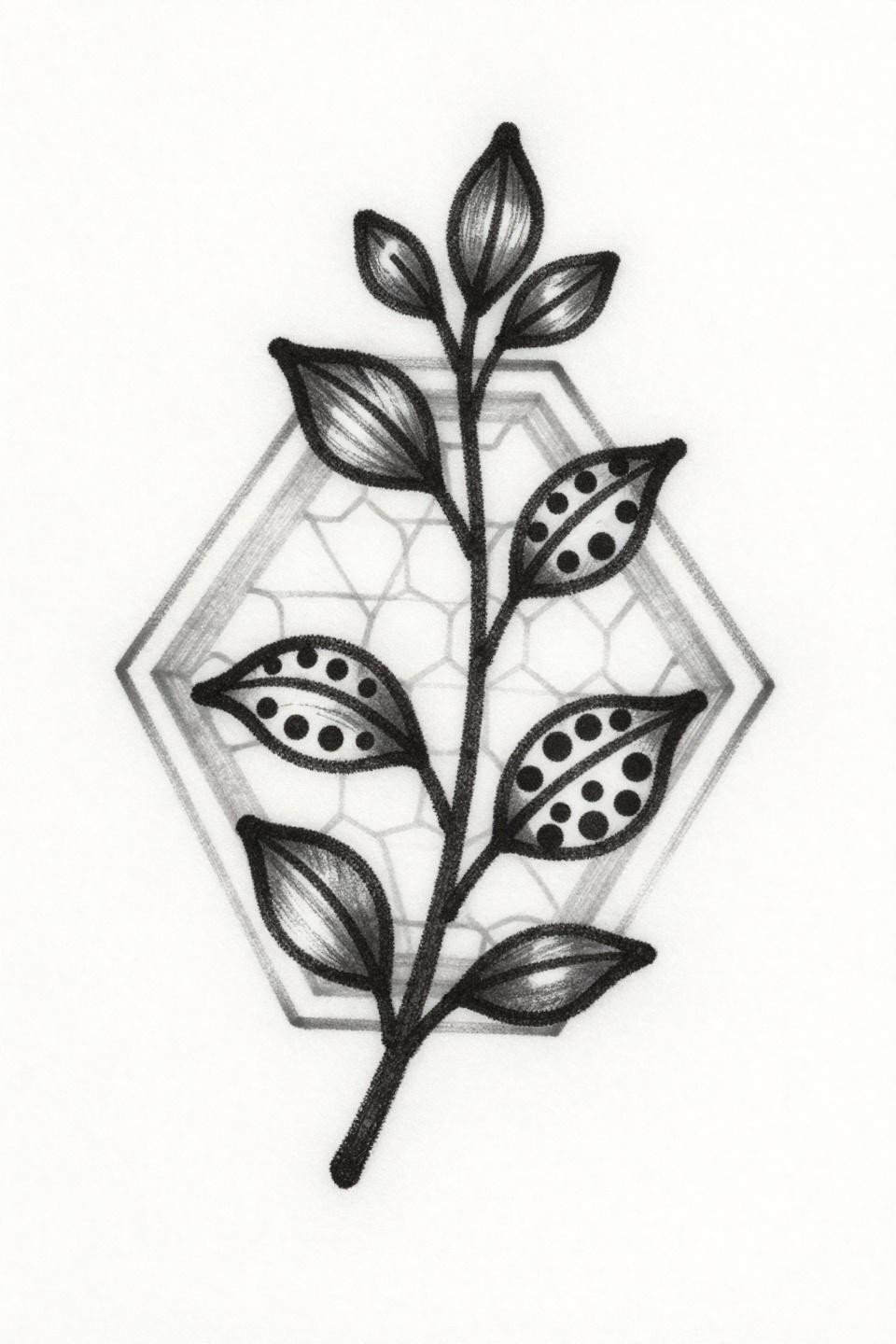
A single teardrop terminal vine with three dot clusters and a hexagon lattice center, rendered in deliberately irregular line weight, uneven 3-4pt outlines with gestural marks that read as intentional rawness.
The irregular outline approach here mirrors what happens naturally when henna is applied freehand at speed. For latest simple mehndi design inspiration, this style removes the pressure of technical precision and still produces a resolved composition.
Art Deco Bilateral Symmetry Applied to a Three-Mandala Chain
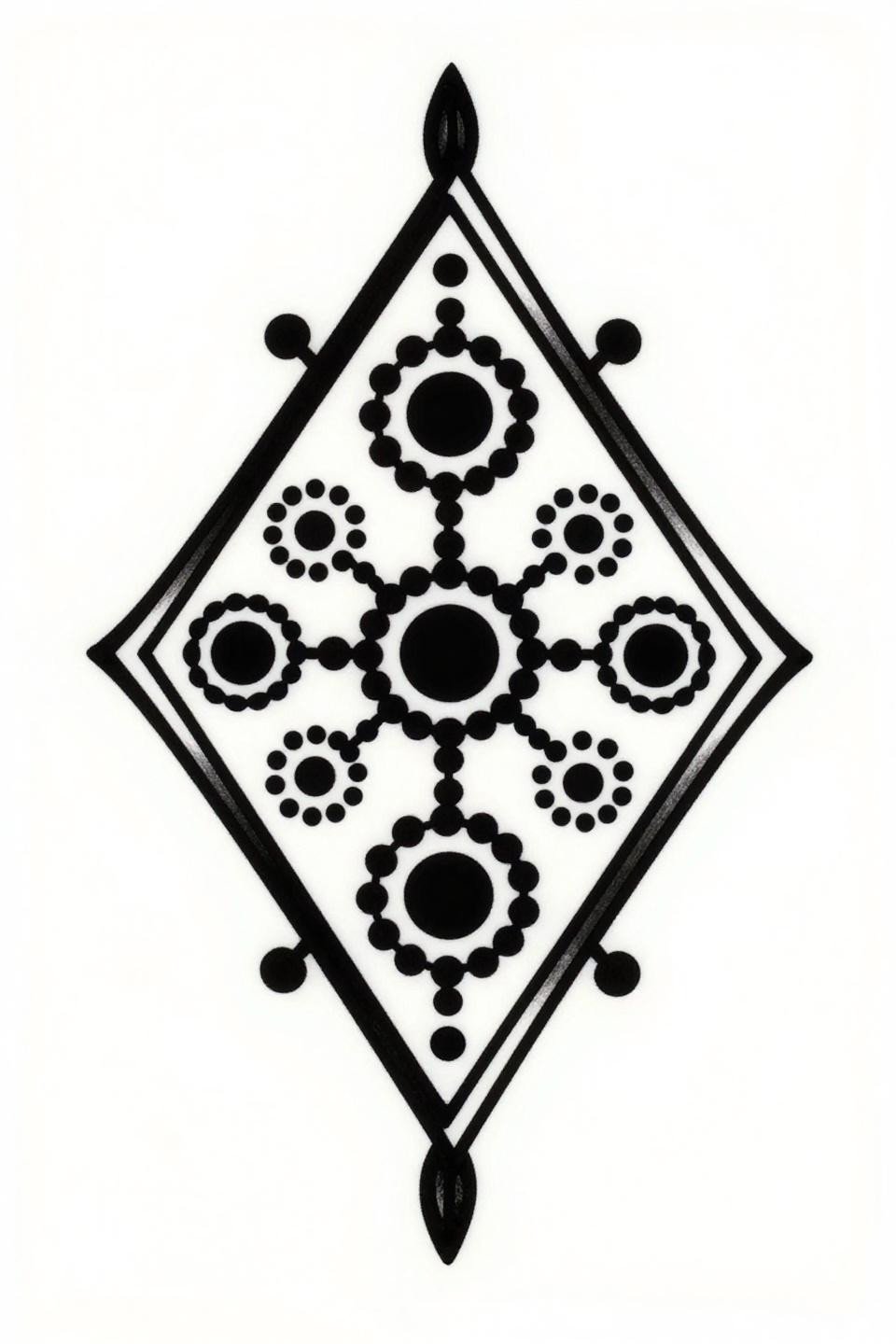
Three staggered dot mandalas connected by a geometric triangle chain lattice with opposing curved leaf terminals, rendered in flat black ink with zero grey wash, bilateral symmetry along the horizontal axis.
No midtones means this design depends entirely on clean line separation. Any wobble in the lattice geometry reads immediately. The tell is the curves at direction changes: no deviation, no fill patching.
Vertical Stacking Logic That Follows the Dorsal Hand Structure
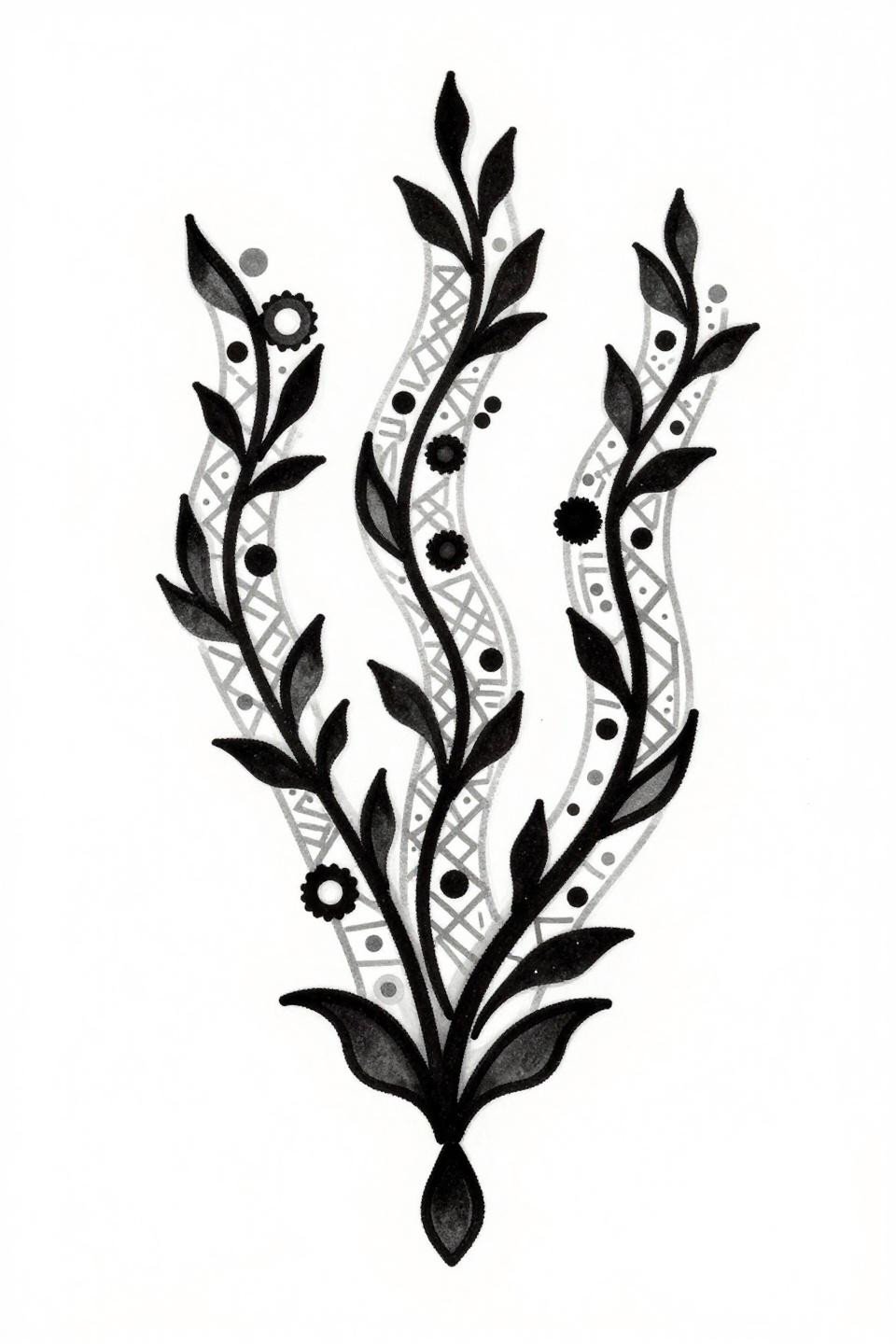
Three parallel vertical vine curves with dot mandalas and square lattice intervals, terminating in teardrop leaves at the base, framed within a thin ornamental border in an art deco stacked composition.
Vertical stacking follows the metacarpal bones of the front hand naturally. This layout avoids the tension points at finger knuckles and positions the primary motifs across the flattest surface area of the dorsal hand.
Celtic Knotwork Geometry Meets Radial Mehndi Structure
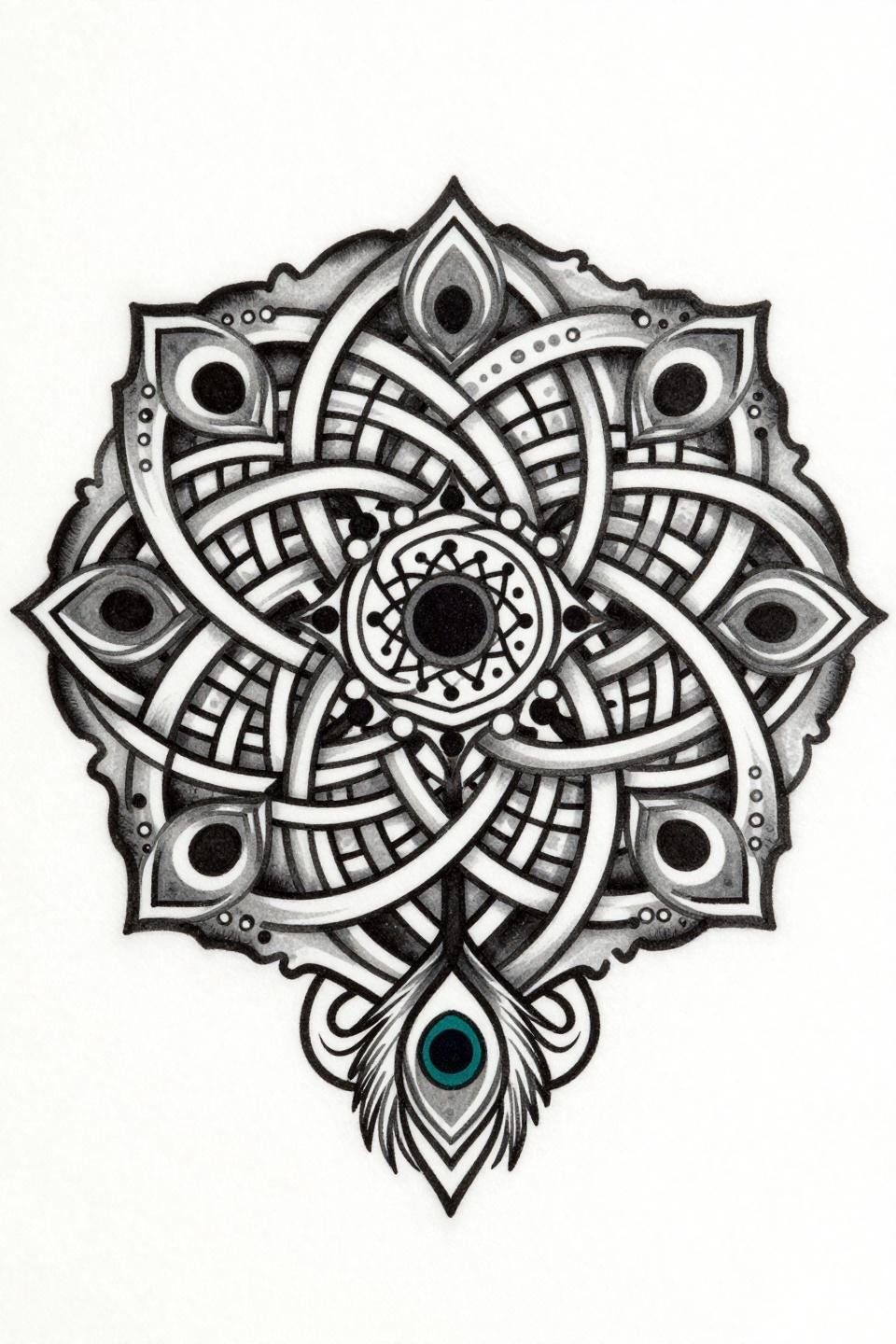
A central dot mandala with five asymmetrically radiating vines, alternating square and dot fills along each path, a peacock eye at the base, enclosed in a scallop border using interlocking knot geometry.
The radial layout positions the mandala core over the center of the palm, the most stable surface on the front hand. For henna designs for hands and palms, centering the primary motif here extends wear integrity across the entire composition.
Dotwork Peacock: How Stipple Density Replaces Outline Weight
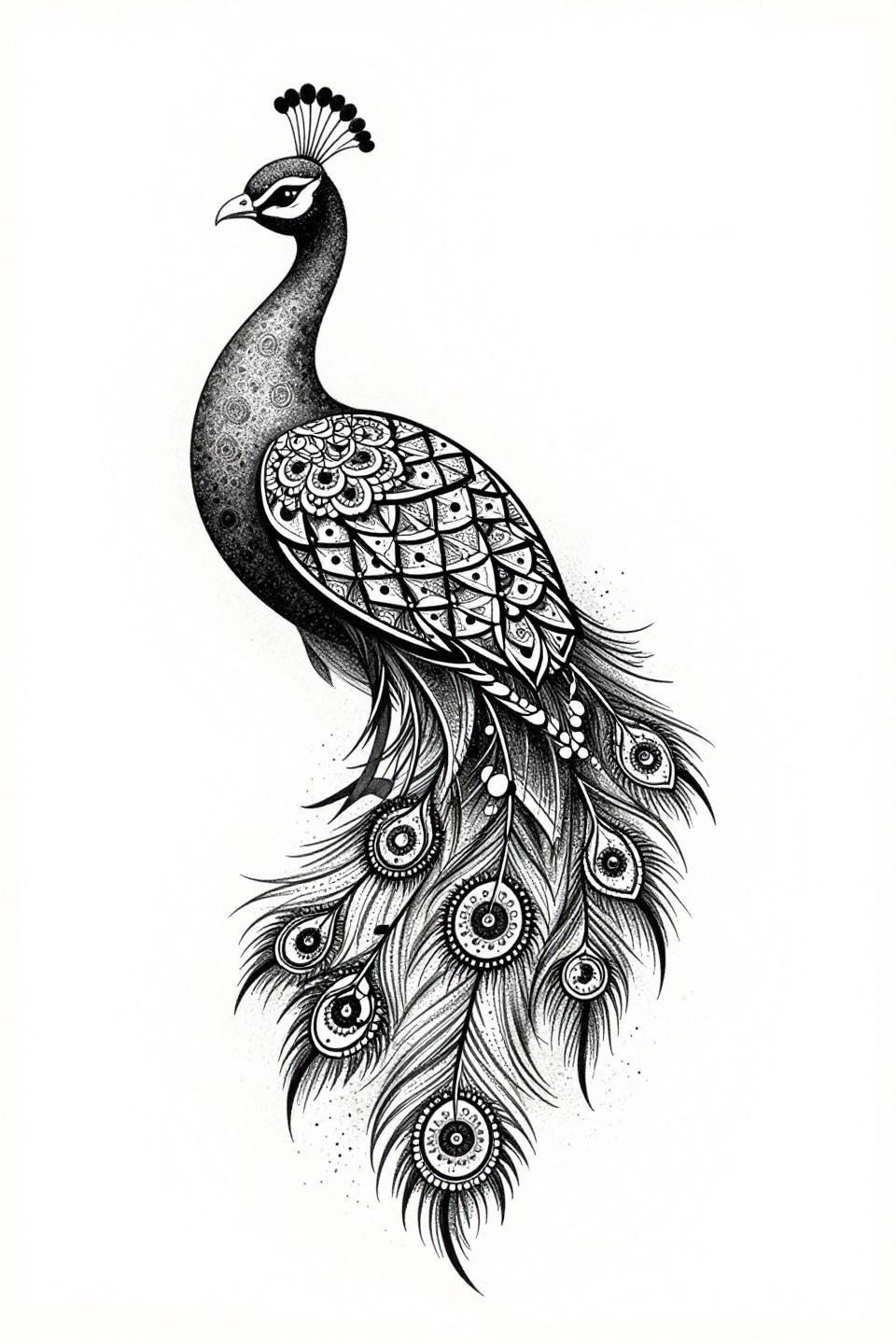
An ornamental peacock with a cascading V-shaped tail, built entirely from pure stipple dot clusters, no continuous outlines, with density graduating from a dense core to open edges through the feather sections.
Look for consistent dot size across the full gradient. Uneven dot sizing in dotwork reads as tool control failure, not stylistic choice. This is a strong artist skill signal in any portfolio.
Arabic Flow Structure Rendered in Watercolor Ink Calligraphy
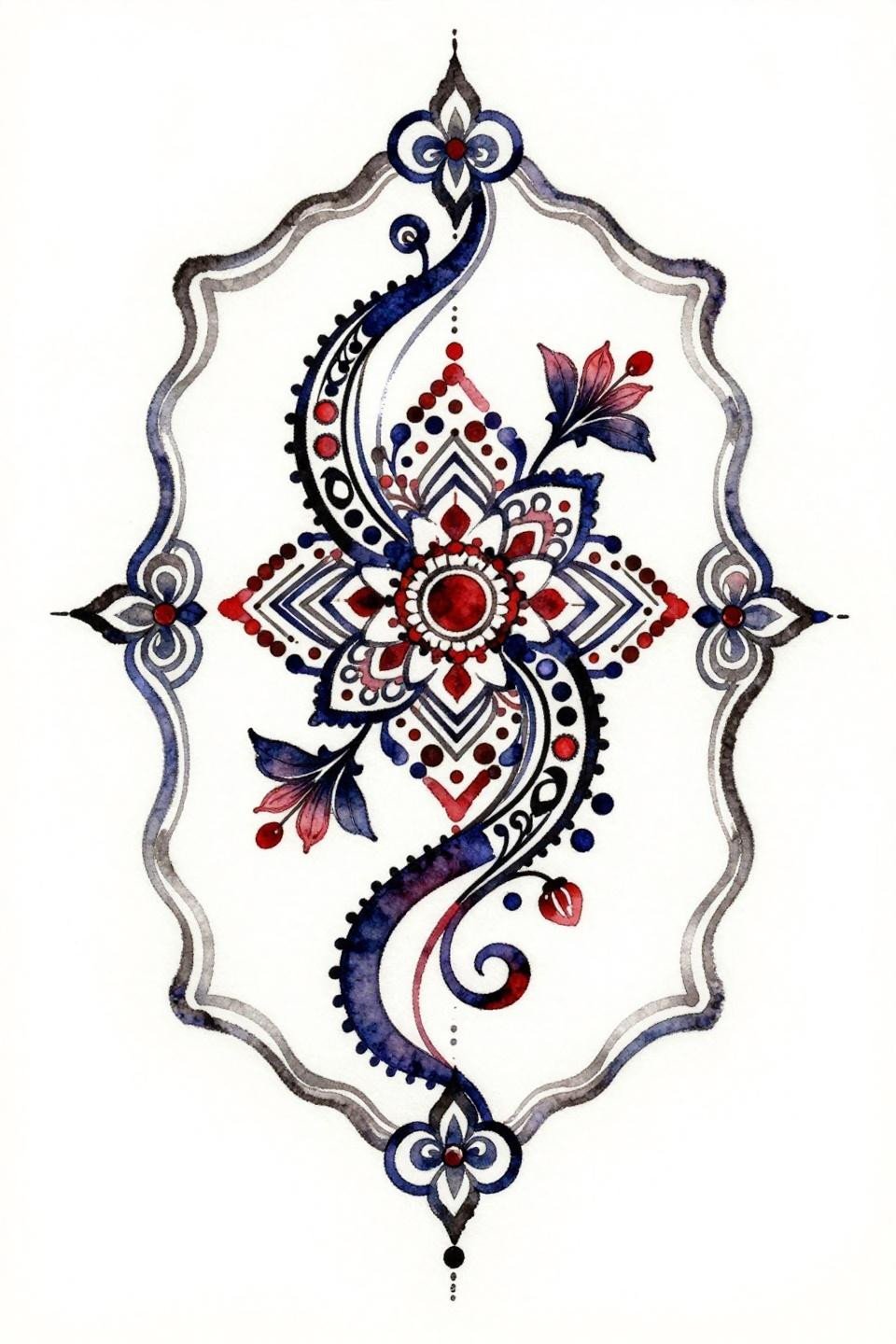
An asymmetric five-vine cascade with a central dot mandala and scallop border frame, executed in calligraphic brush and wet ink with deep indigo primary and crimson red accents as the only color palette.
Watercolor-style references without an anchoring outline structure tend to blur at the edges within a few years when translated to permanent work. As a henna reference, the wet ink quality here maps directly to cone application speed and pressure.
Japanese Irezumi Shading Logic Applied to Palm Mandala Scale
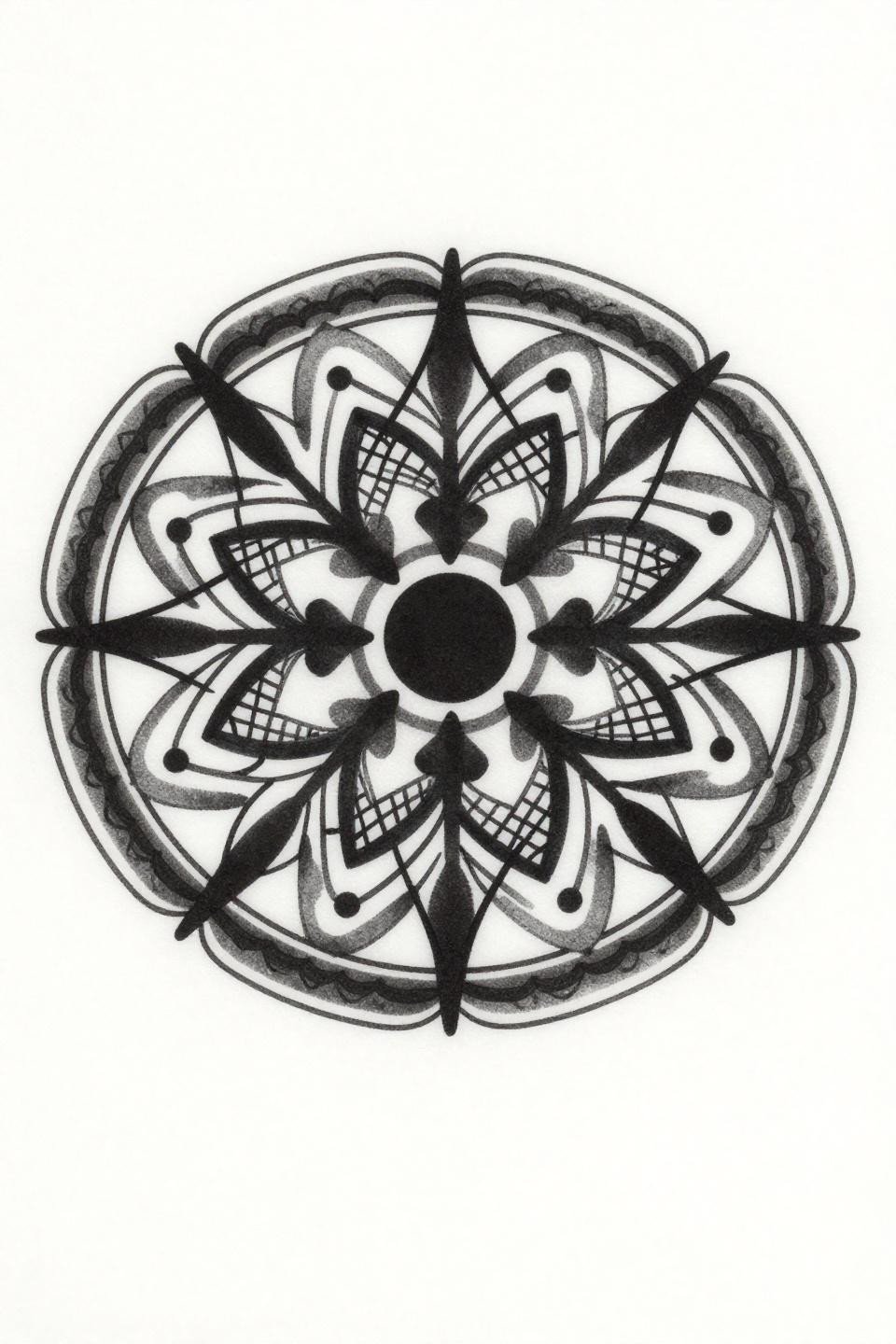
A circular mandala core with five bold radiating vine branches, alternating teardrop and triangular leaf terminals, crosshatch diamond lattice fills, and Japanese whip shading curves on solid black forms with 3pt outlines.
Japanese irezumi shading applied to this scale forces each fill zone to carry real tonal weight. The curved mag shading logic here is the same technique that makes bokashi gradients in large Japanese work hold definition on olive skin over time.
Fine Line Single Needle Work at the Limit of Mehndi Reduction
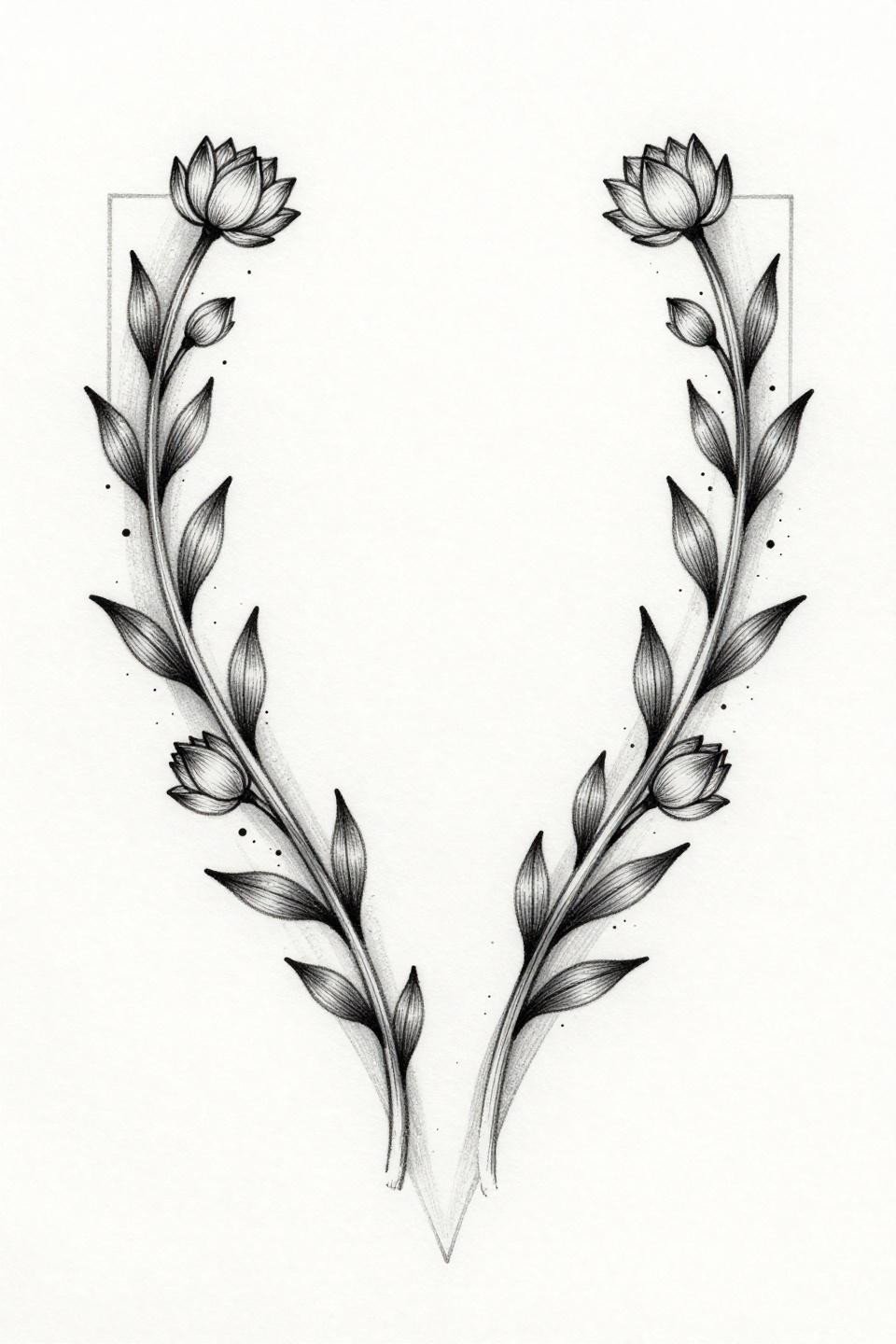
Two parallel curved vines in an asymmetric V-shape with lotus bud terminals and a micro-dot constellation, built on hairline 0.5mm single-needle strokes with maximum open negative space inside a thin rectangle frame.
Single needle 1RL work at this weight requires an artist who controls speed precisely. On lighter skin tones, this reads crisp. On olive and deeper tones, the fine lines need bolder weight to maintain contrast over time.
Sketch Raw Lines: The Case for Gestural Mehndi References
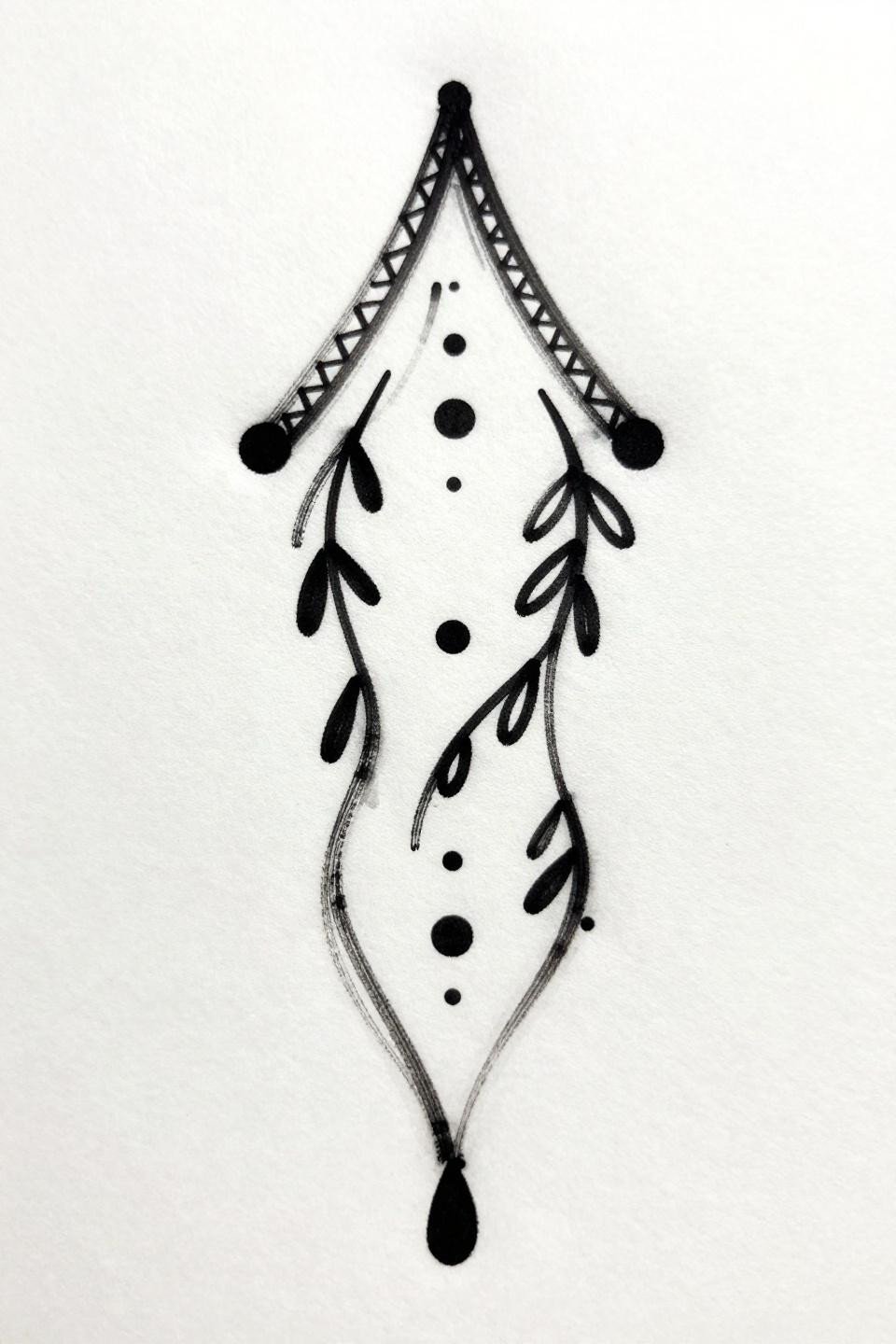
Three parallel descending vine lines with dot clusters at intervals and teardrop terminals at the base, rendered in loose calligraphic brush marks with raw gestural strokes and a triangle chain border frame.
Gestural references like this communicate direction and rhythm to the artist without locking in every detail. For modern mehndi designs for body art, sketch-style flash gives more execution flexibility than tight technical drawings.
One Unbroken Line: Continuous Curve as Structural Discipline
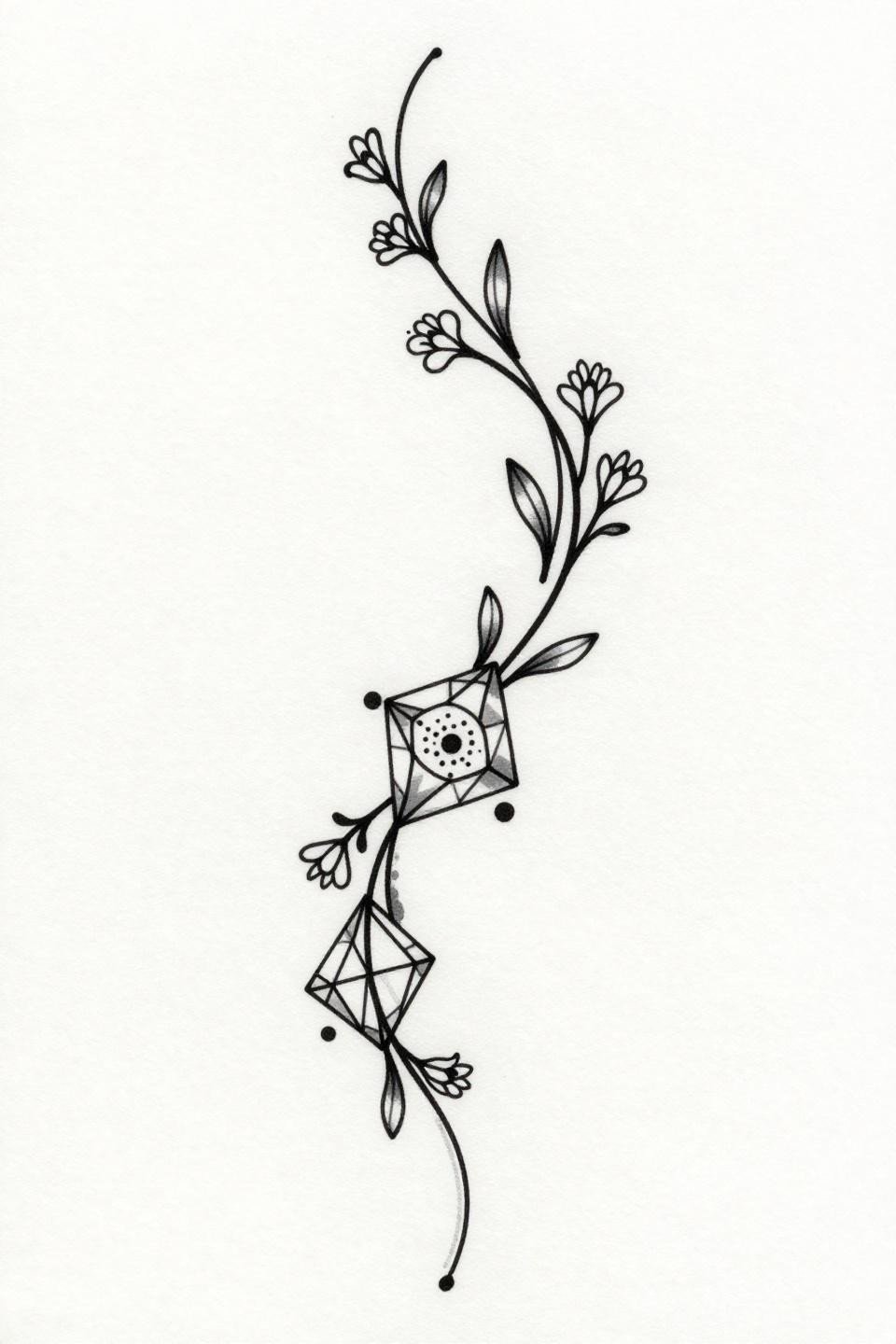
One unbroken vine with three evenly-spaced geometric diamond clusters, floral bud terminals, and a central dot mandala junction, rendered in clean 1pt outline linework with zero fill and open negative space throughout.
The continuous line constraint forces the composition to read as rhythm rather than decoration. Any hesitation in the stroke shows immediately. This is one of the cleaner artist skill tests in front hand reference work.
Stylish Mandala Symmetry Built on Woodcut Hatching Rules
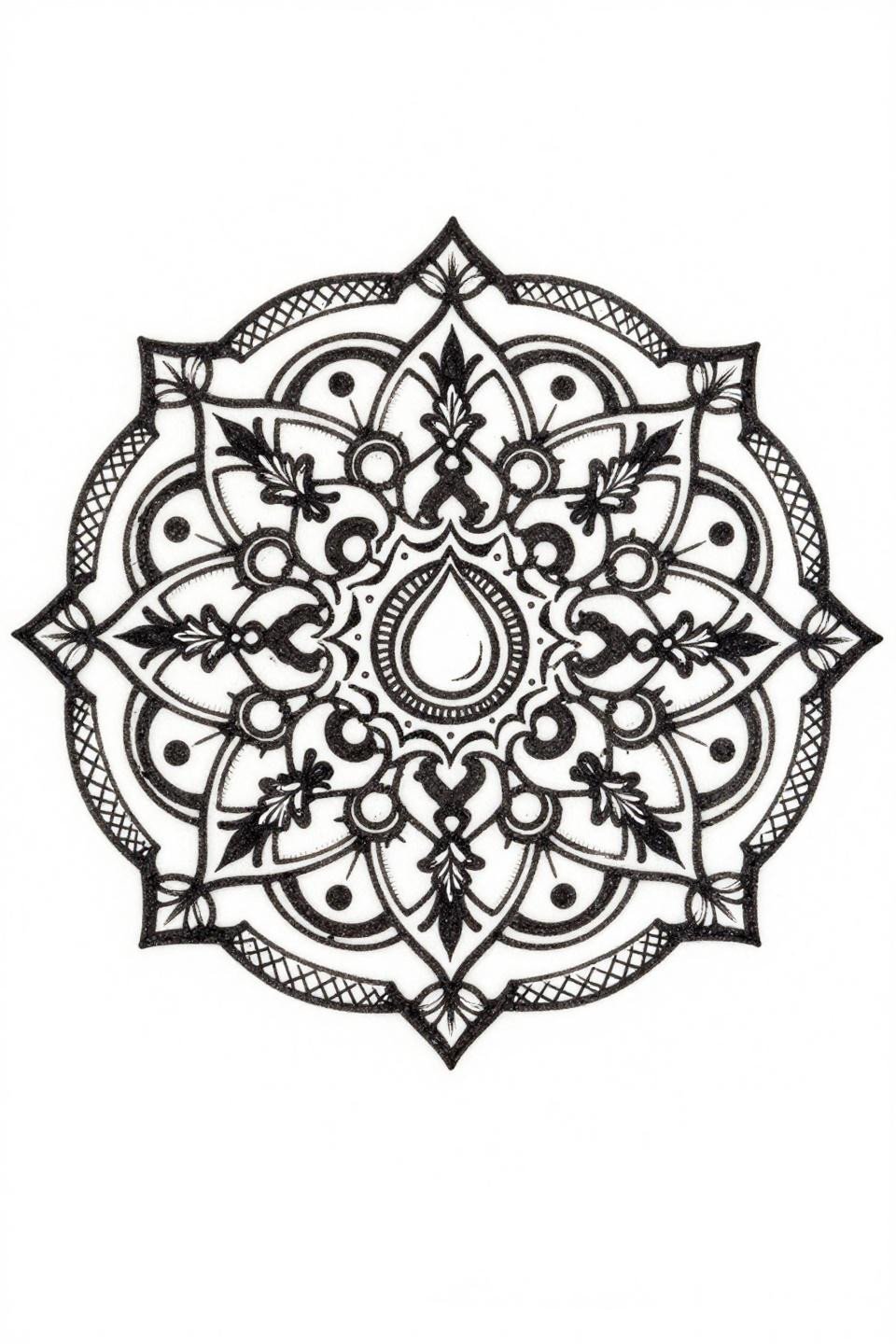
A symmetrical mandala with a teardrop core, radiating geometric vine lattice with alternating circles, floral buds at cardinal points, and crosshatch diamond bands, built on parallel-line engraving with zero grey wash.
Woodcut hatching as a fill strategy holds well at front hand scale because the ruled lines create visual density without requiring solid black fields. Protected placements like the dorsal hand give this style its best shelf life.
Tribal Bold Fill: When Black Mass Defines the Motif

A peacock feather with a bold central eye, radiating geometric scallop arcs, and asymmetric vine tendrils, using 3-4pt outlines with fully filled black sections in aggressive angular tribal forms.
Full black mass fills hold density indefinitely when the artist commits to layered passes. At front hand scale, this level of saturation reads as a graphic anchor that survives years of sun exposure better than any fine line alternative.
Art Nouveau Diamond Chain: Structured Flow on a Dorsal Canvas
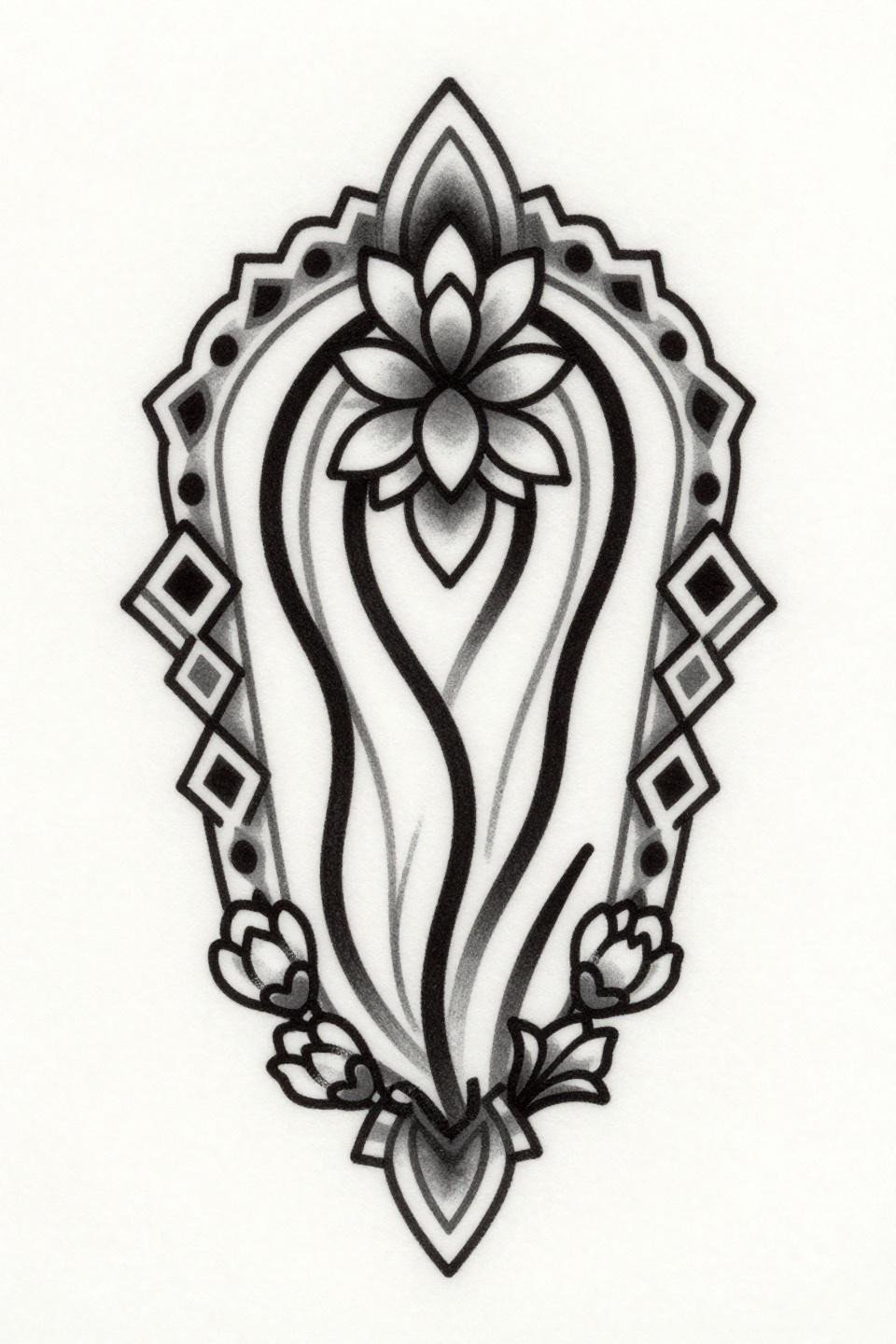
A central dot mandala with three parallel curved vines descending asymmetrically, a geometric diamond chain along the outer border, and two floral buds at the base, using flat black ink fills with open negative space.
The diamond chain border functions as a containment line that keeps the composition from spreading across the wrist joint. Flat fills with no patchiness separate veteran application from beginner work at this motif complexity level.
Sak Yant Dotwork Density: Peacock as a Mass-and-Space Exercise
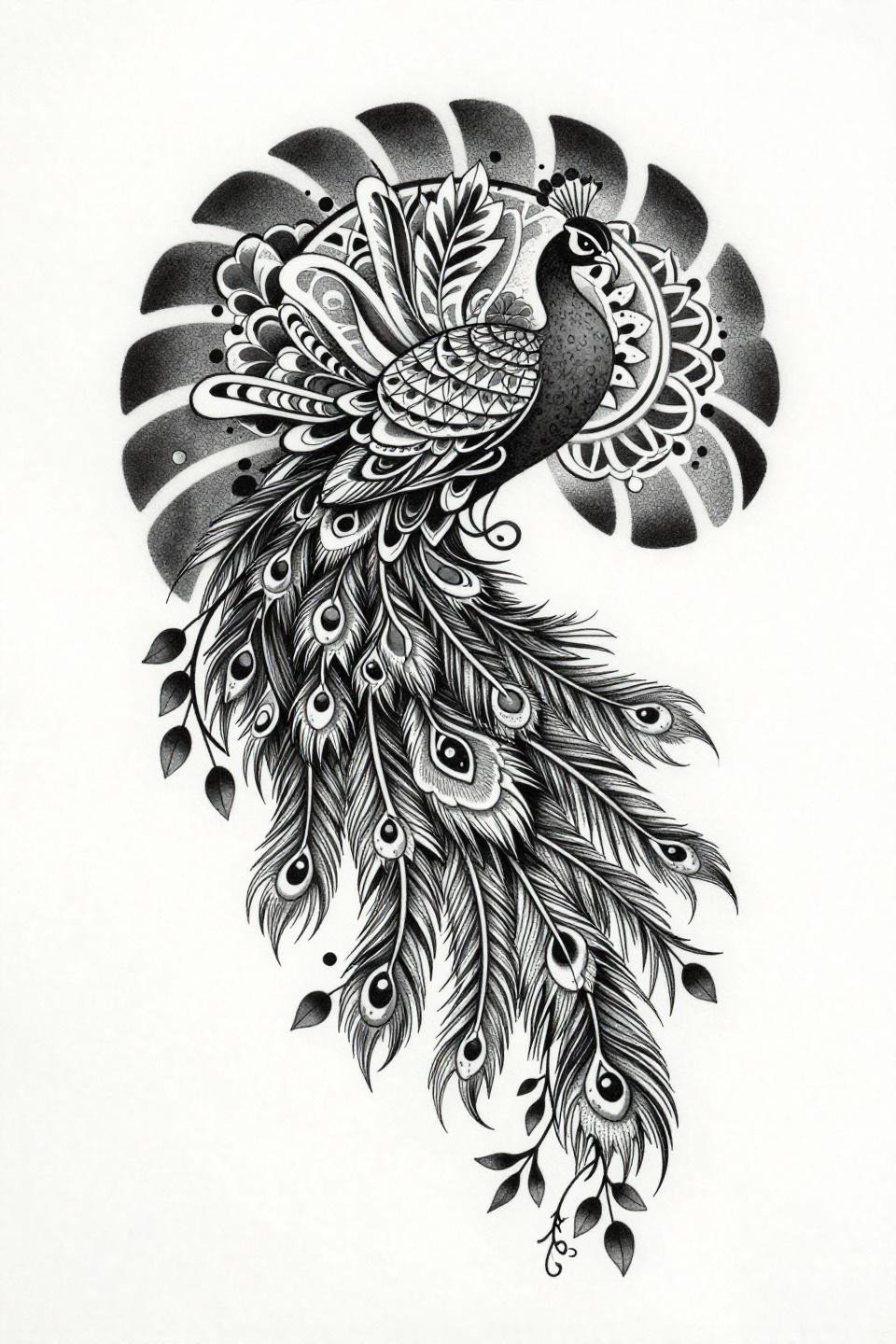
An interlocking peacock with cascading tail feathers and crosshatch fills, surrounded by floral vines and corner mandalas, built from dense dot cluster stipple shading with no continuous outlines in the composition.
Stipple density here goes from 90% at the central feather forms to open at the vine edges. Consistent dot size across that full gradient is what separates a resolved reference from a muddy one.
Botanical Single Needle Symmetry at Its Most Disciplined Scale
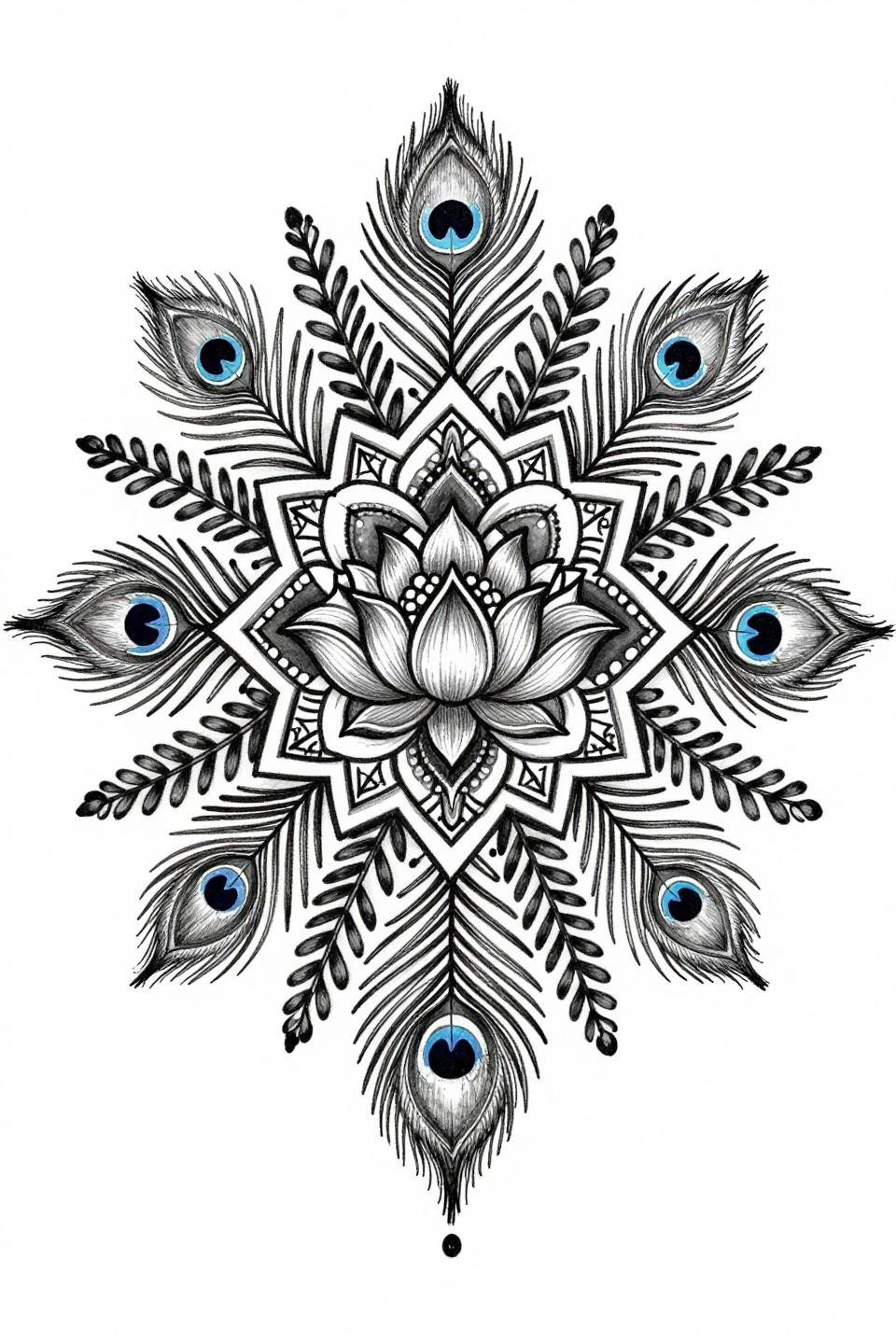
A lotus center with radiating vine tendrils, interconnected geometric diamond rows, and peacock feather silhouettes filling negative space, rendered in hairline 0.5mm single-needle strokes with bilateral vertical symmetry.
Bilateral symmetry at this line weight demands zero drift across the central axis. The peacock feather silhouettes as negative space fills are the compositional signal that this reference was built with placement logic, not just pattern repetition.
Take the three references that stopped you, narrow them by placement logic: vertical stack for dorsal hand, radial mandala for center palm, asymmetric cascade for wrist-to-finger flow. Send one clear reference per element, not the full collection. That is how you get accurate application from any artist or applicator.