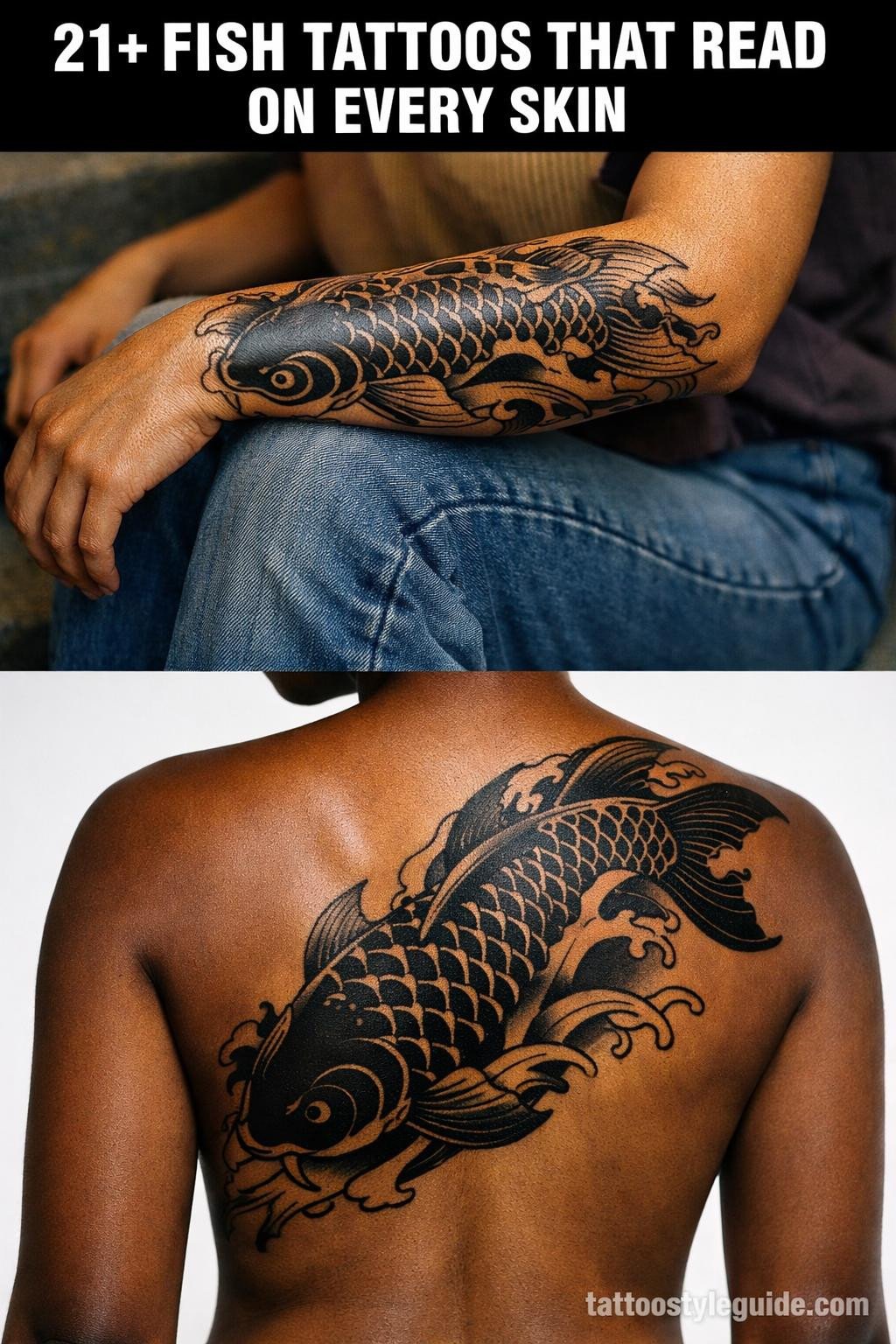
Fish tattoos punish lazy composition harder than almost any subject. The body shape forces a horizontal or diagonal read, which means placement has to be decided before the design, not after.
The style gap in this category is wide. Celtic knotwork dragonfish and ignorant-style gulper eels occupy opposite ends of the technical spectrum, and both can fail for the same reason: wrong scale for the placement.
What follows covers 21 references across ten distinct styles, from blackwork crosshatch to watercolor splash, with placement logic and aging notes for each.
Celtic Knotwork Dragonfish: Where Geometry Meets Aggression
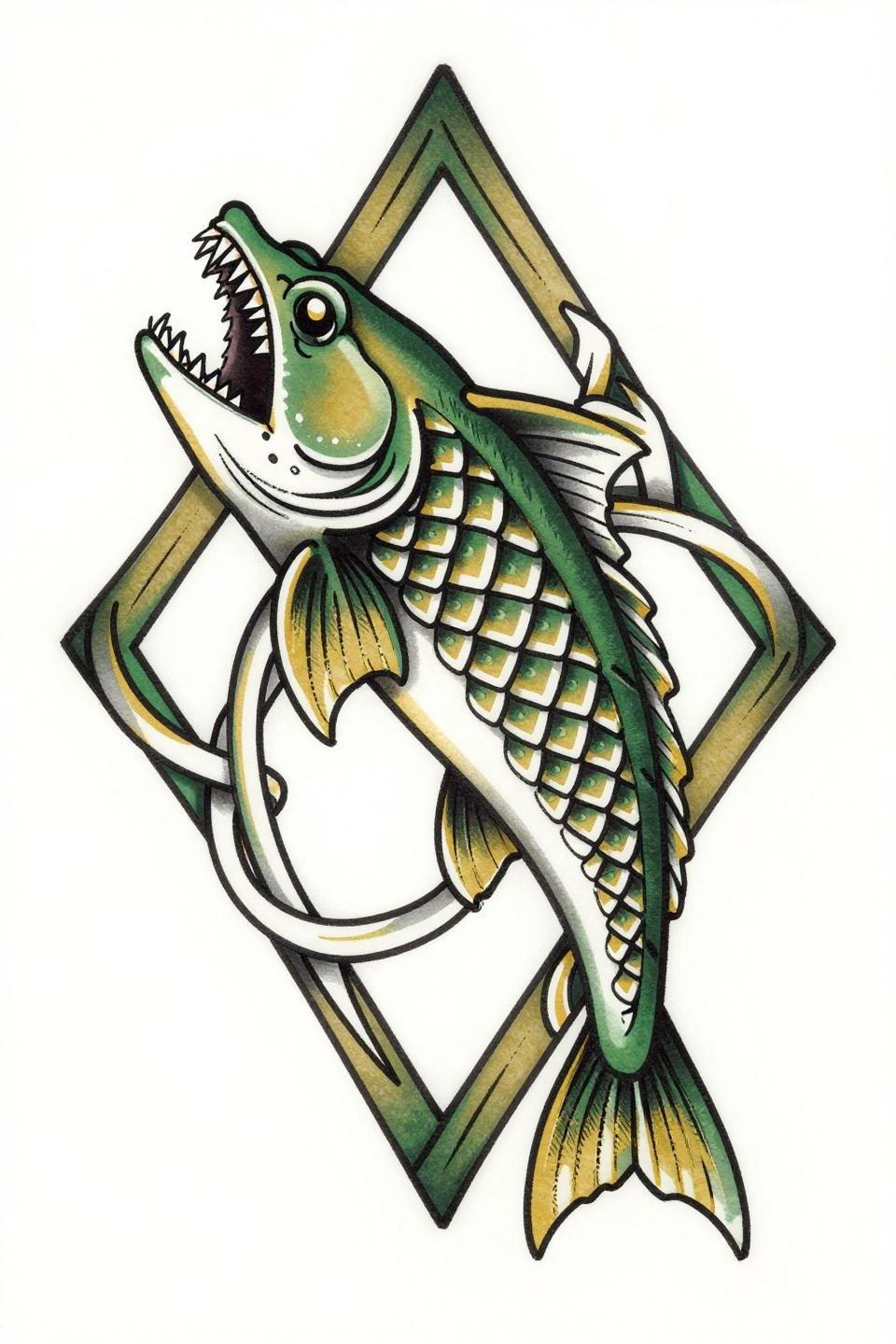
This dragonfish sits inside a diamond frame, aggressive jaw open, with interlocking Celtic knotwork threading through the body rather than just surrounding it.
The flat forest green and gold fills age well on medium skin tones because the bold 2-3pt black outline does the structural work. On darker skin, drop the gold and let the green carry the secondary value.
Ascending Spiral: Why Diagonal Compositions Work on Long Muscle Groups
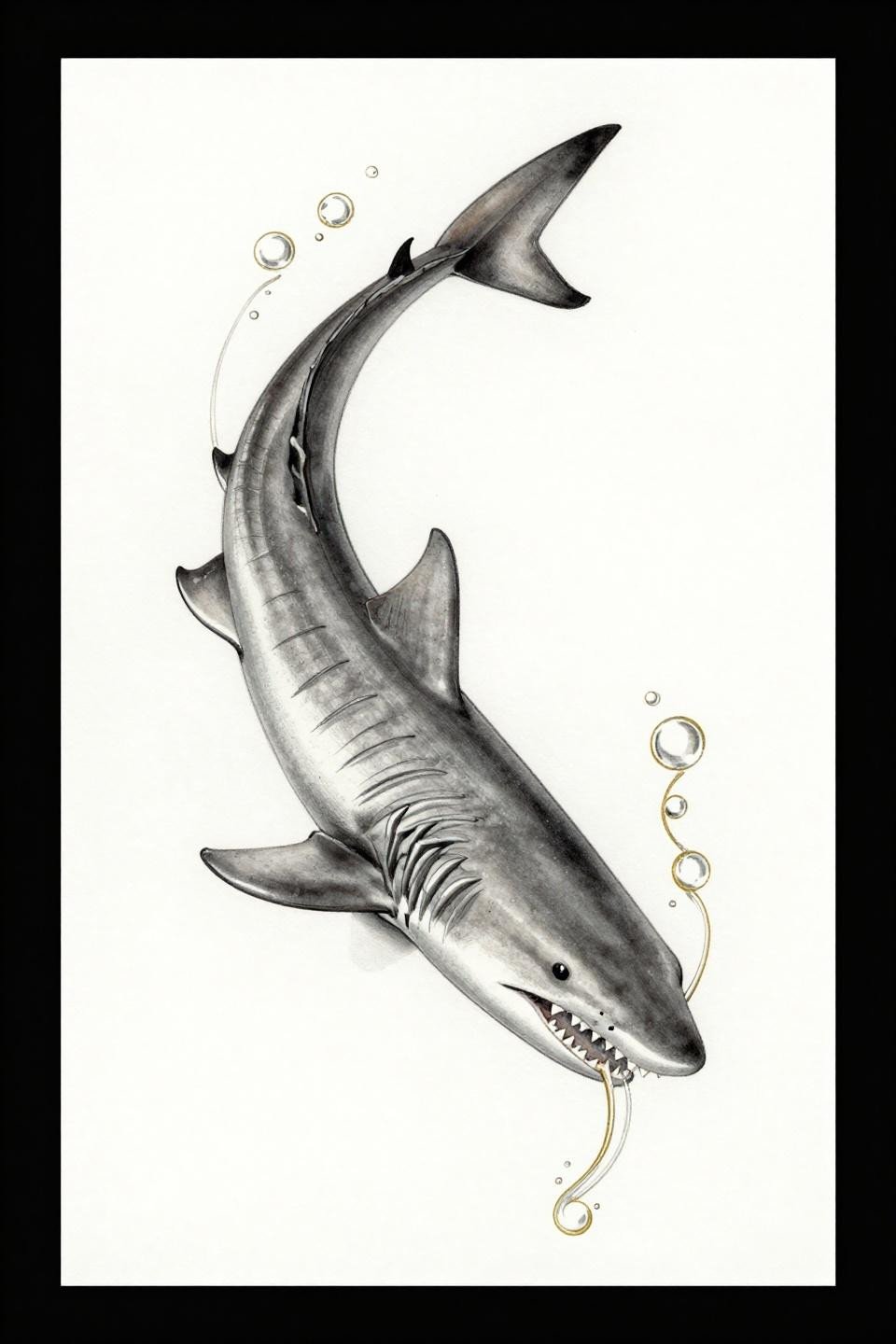
The gulper shark in ascending diagonal with a trailing bubble helix is built for forearms and calves, placements where the long axis of the limb reinforces the upward movement.
Grey wash dilution from dense to open like this needs an artist who controls dilution ratios precisely. Muddy midtones are the failure mode here, check healed work before booking.
Frontal Aggression: The Grouper Pose Most Artists Get Wrong
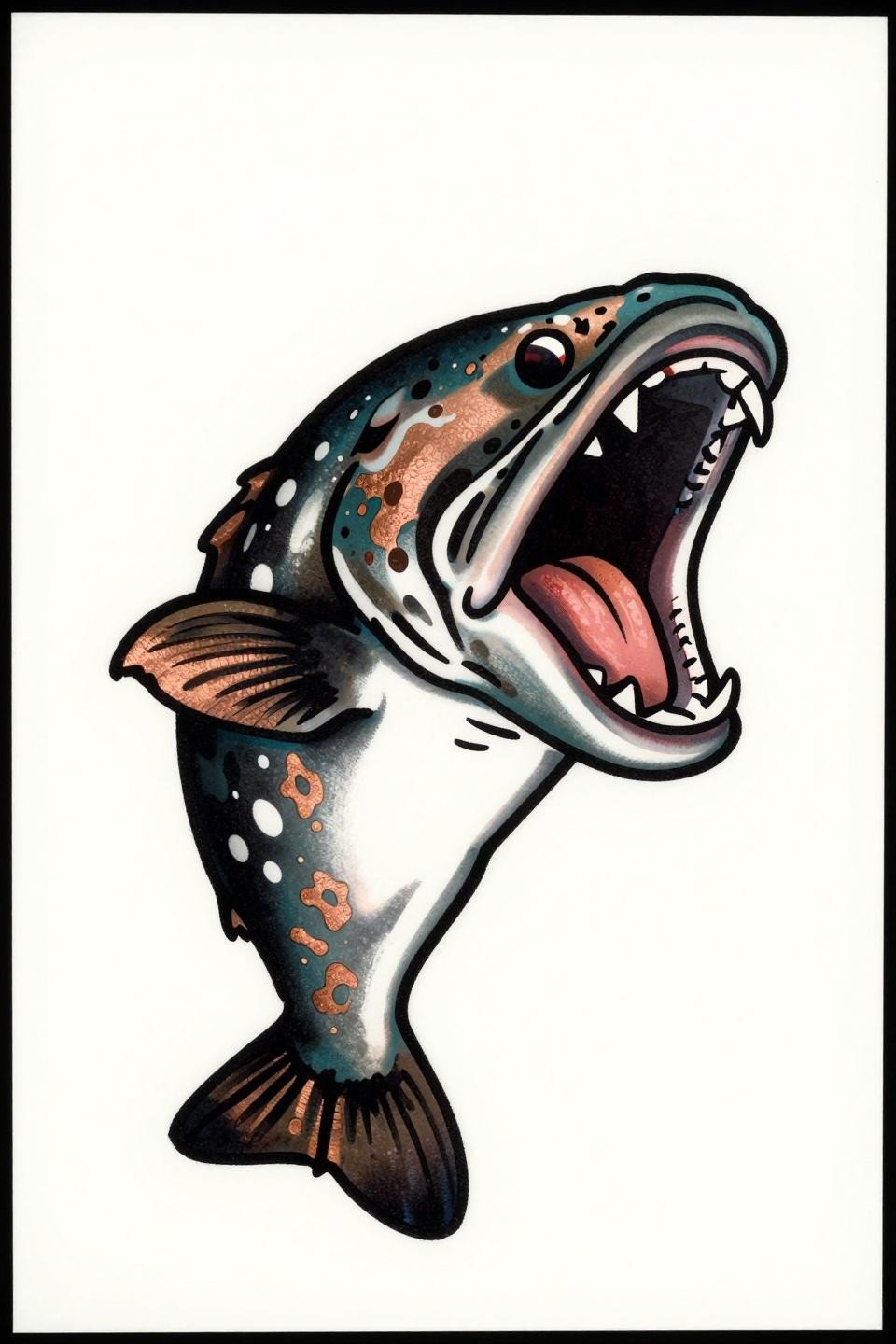
Neo-traditional frontal posture on this grouper uses the flared gill plates to push width into the design, making it read well on the chest or upper back where horizontal mass has room.
The deep teal and copper metallic pairing on black is harder to execute than it looks. Copper shifts warm on healed skin, so the contrast with teal tightens over time rather than flattening.
Piranha Stipple: Reading the Dot Density Before You Commit
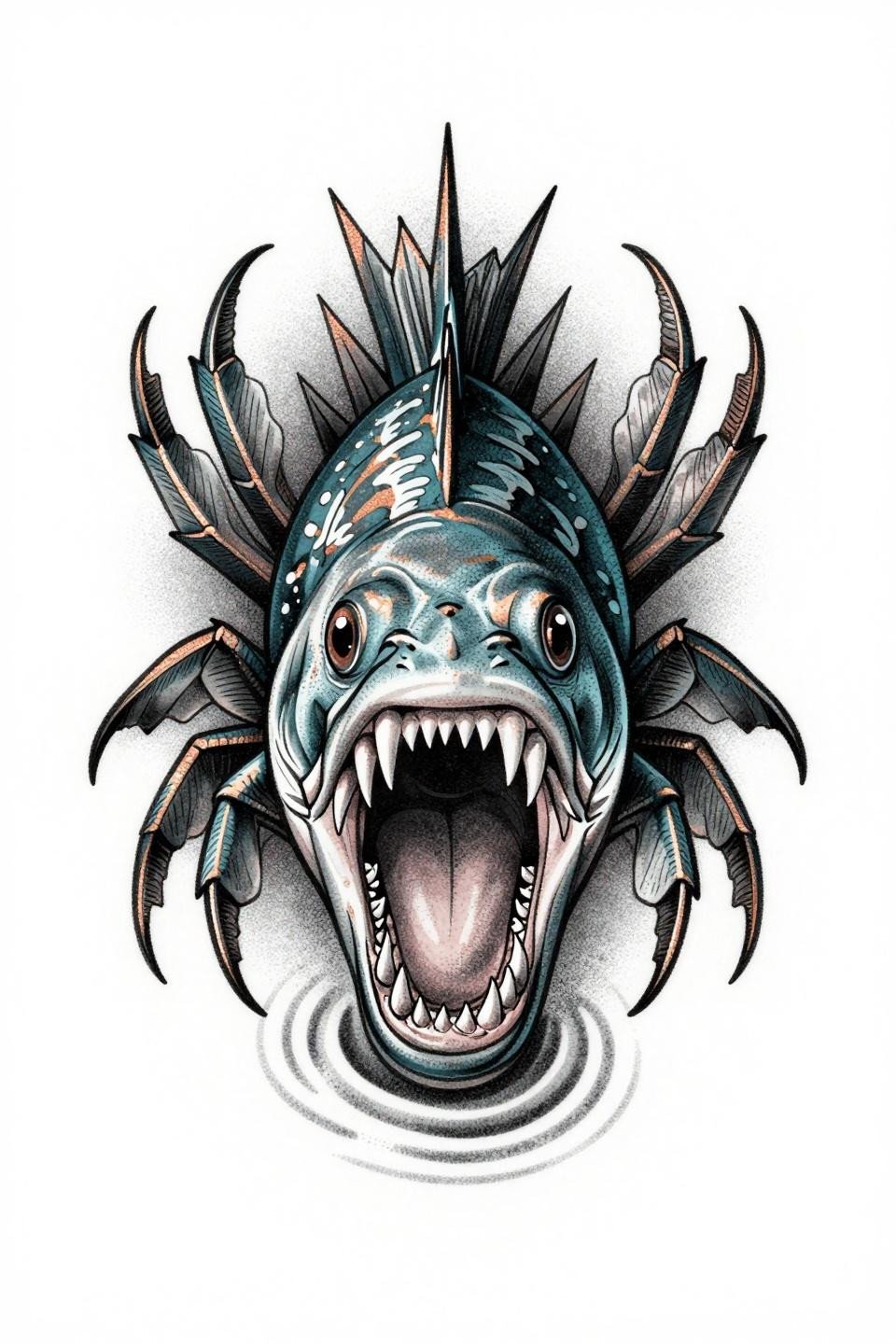
This piranha design uses stipple dot gradient running from dense black at the body core to open negative space at the water ripples, which creates a natural vignette without a border.
Consistent dot size across the full gradient is the artist skill signal here. Gaps in the mid-range density read as patchy at 5 years. Ask to see healed stipple work specifically, not fresh shots.
Clownfish Flash: When Sketch Energy Is a Deliberate Technical Choice
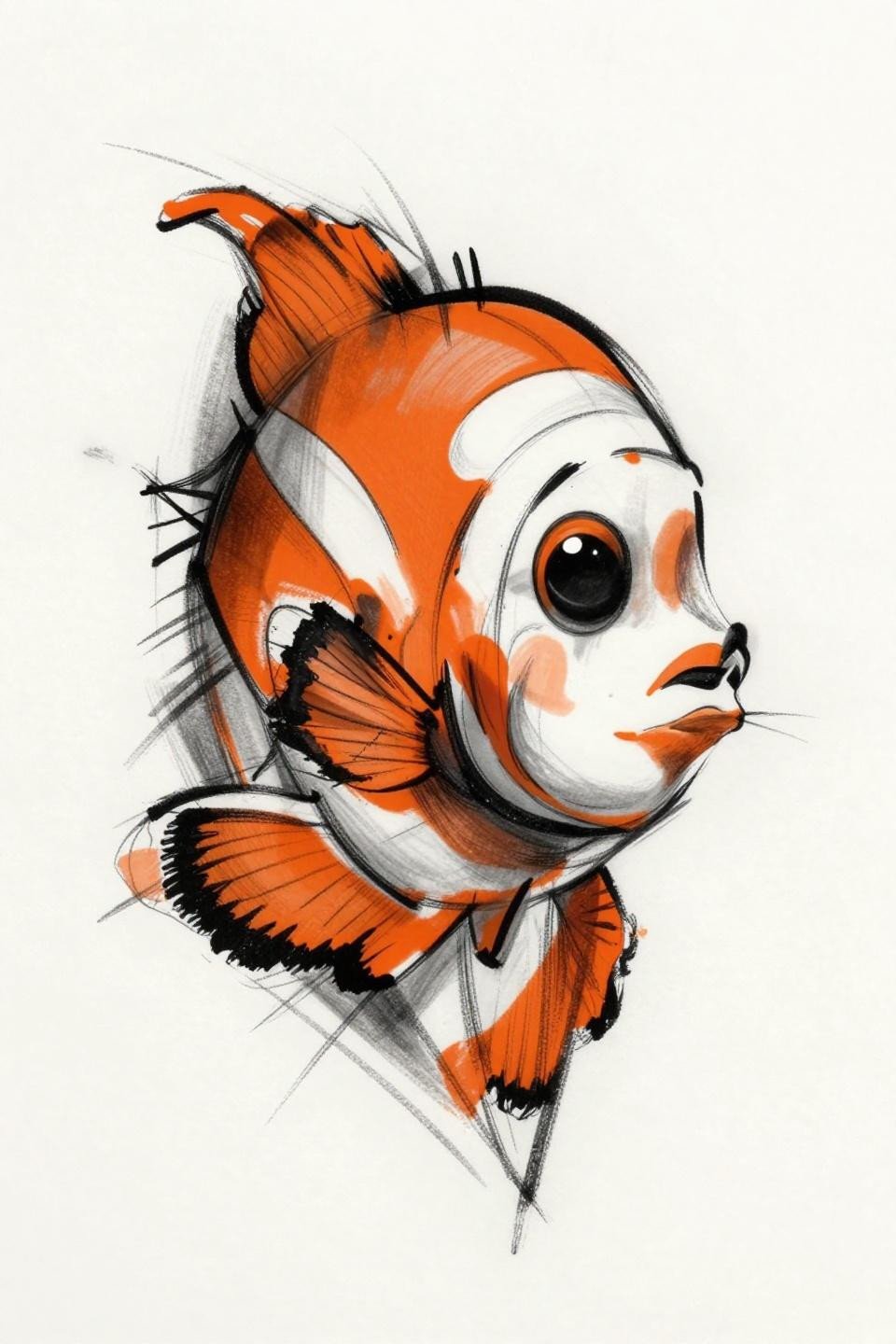
Sketch-style clownfish with rough 2pt outlines and visible gestural energy is an earthy tattoo approach where the imperfection is load-bearing. Clean it up and the design loses its character.
Burnt orange holds better on warm and olive skin tones than on very fair skin, where it can read salmon after healing. Flat ink fills with no shading keep this style honest as it ages.
Ignorant Style Gulper Eel: Intentional Crudeness Is Still a Skill Test
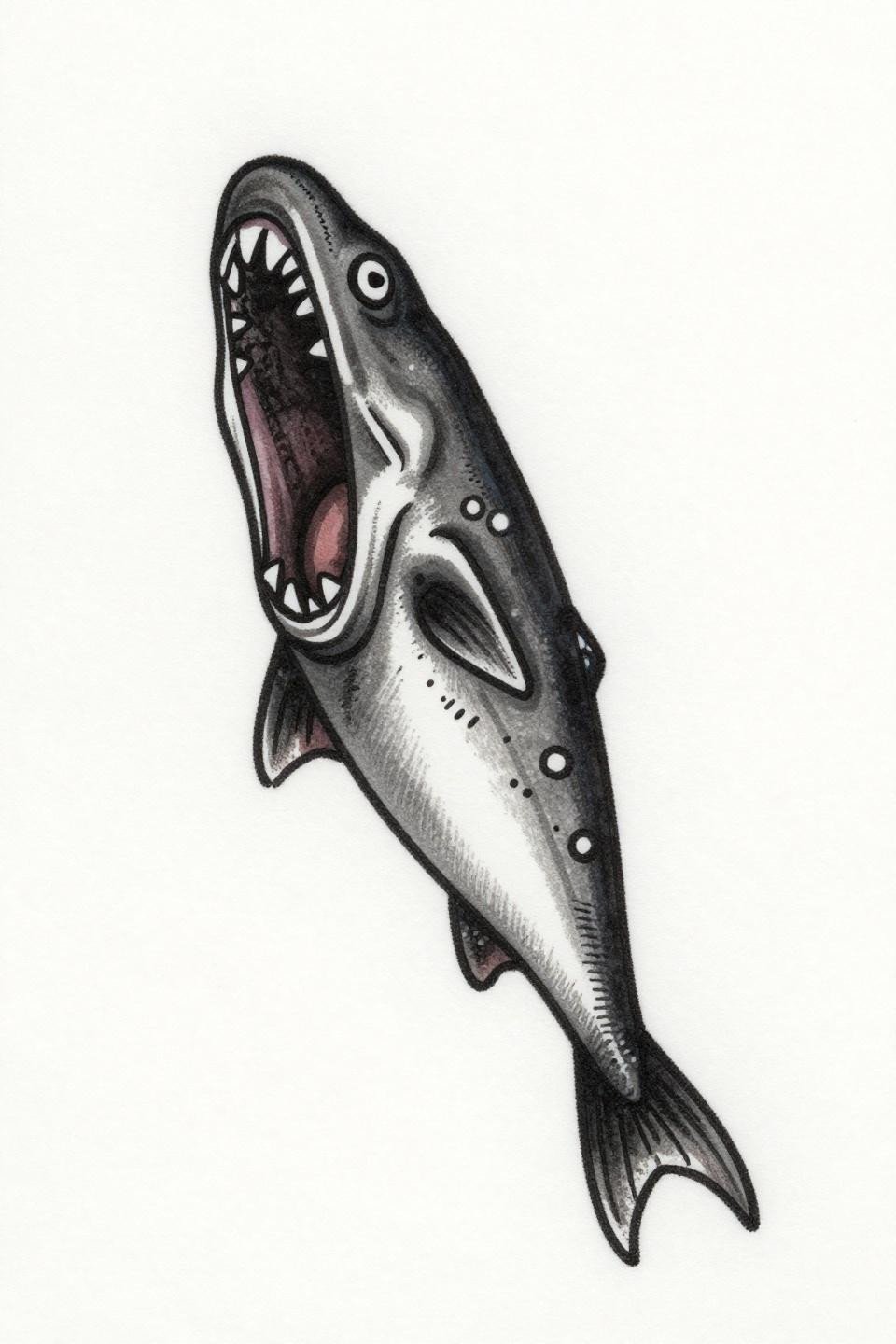
Jagged outlines, zero refinement, cavernous gaping jaw. This ignorant-style gulper eel works because the crude mark-making matches the creature’s biology, deep-sea and fundamentally weird.
The grey wash for minimal midtones on an otherwise flat black piece is the move that separates intentional ignorant style from just bad tattooing. That restraint is harder than it looks.
Trash Polka Pufferfish: Crimson and Black With Nowhere to Hide Mistakes
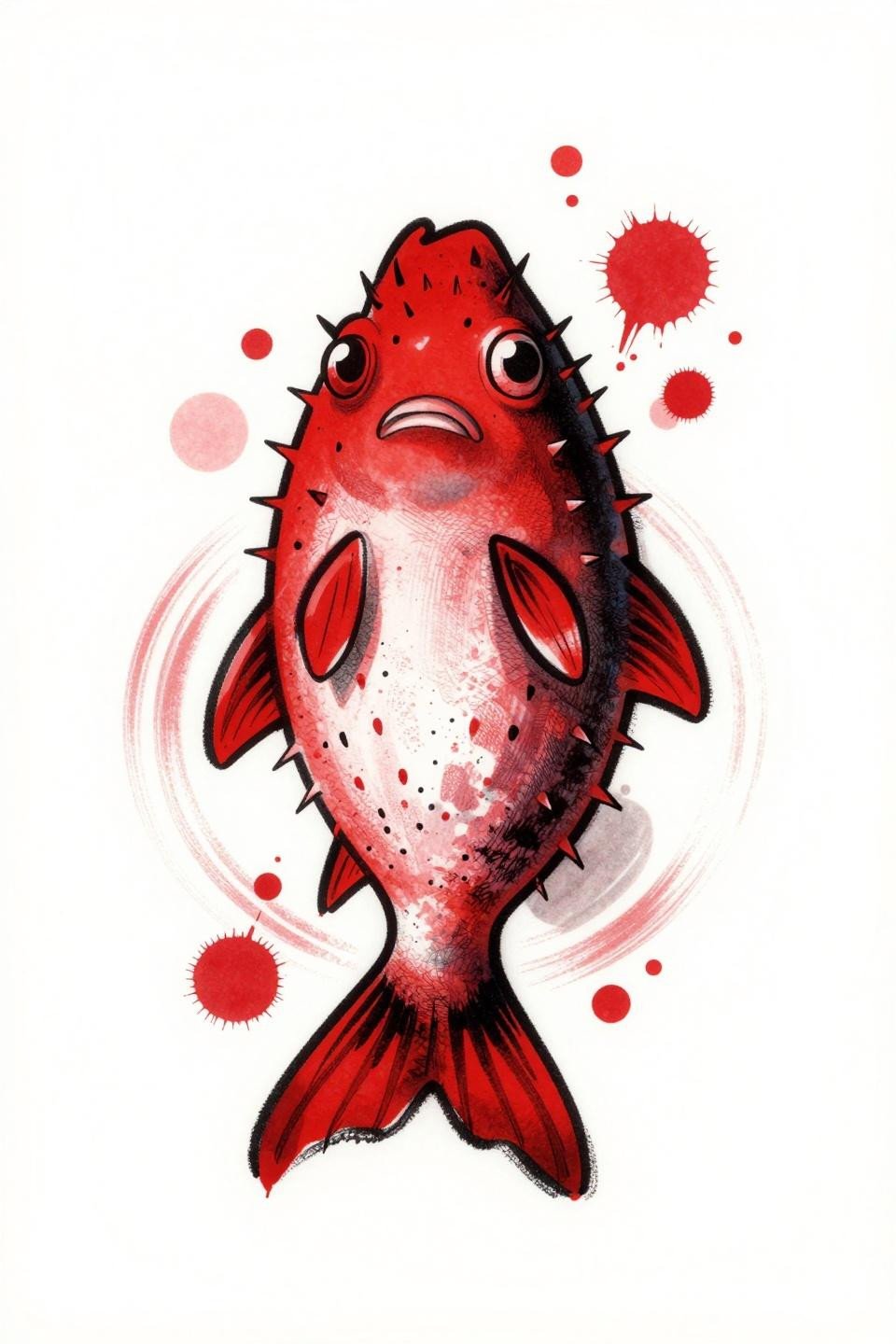
Fully inflated pufferfish in trash polka style uses whip shading strokes and ink splatter to build the defensive tension the subject demands. The concentric ripple lines read as both water and force.
Crimson ink in trash polka fades toward brick-red within 3-5 years on sun-exposed placements. Protected placements like the ribs or upper arm give this style its best long-term contrast against the black.
Heron Strike Pose: The Bird That Makes a Fish Tattoo Make Sense
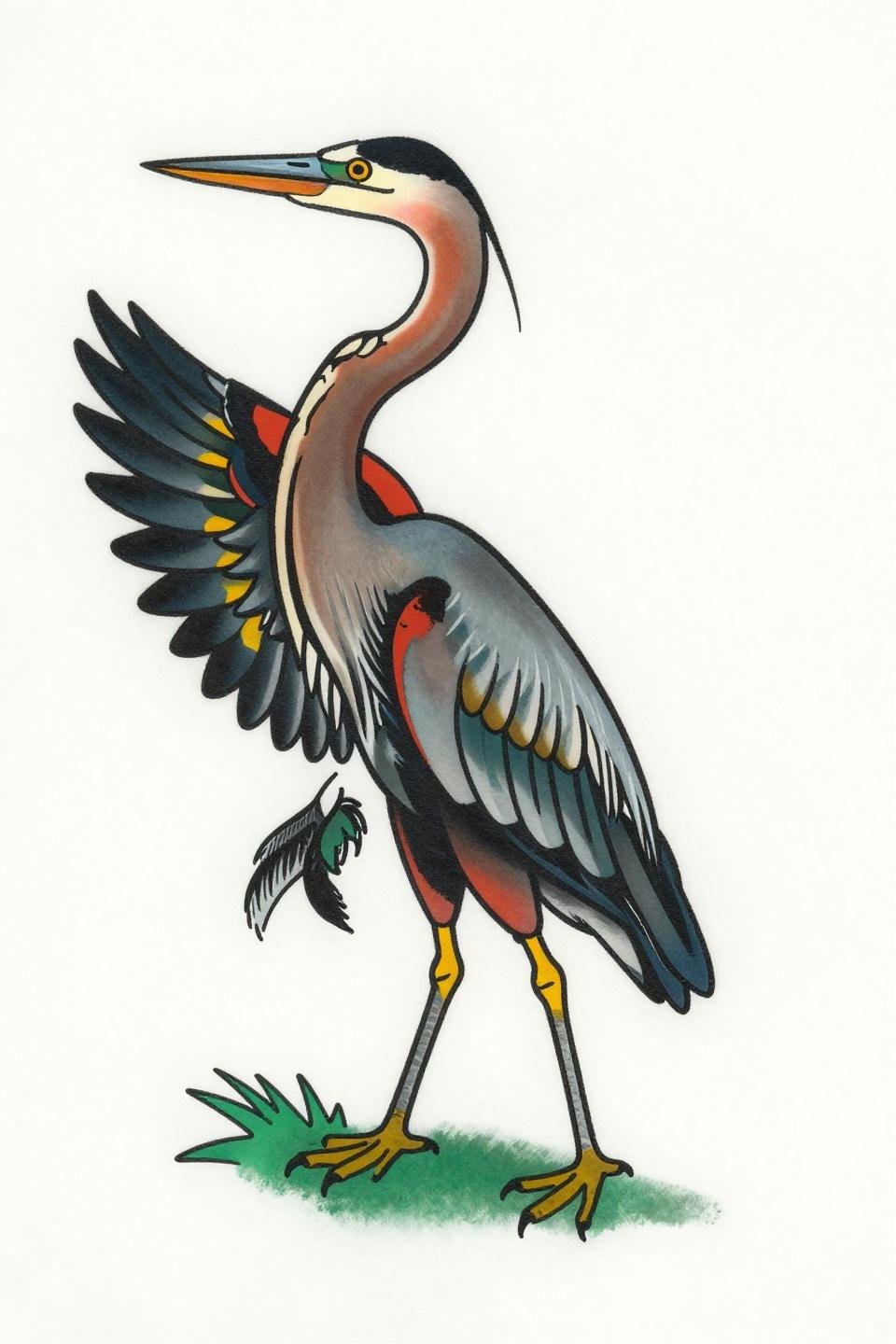
American traditional heron in mid-strike with S-curve neck and splayed flight feathers for balance. The hunting pose creates a clear narrative anchor that ties bird and fish subject matter together.
Bold 2-3pt outlines in American traditional at this weight hold clean for 10 or more years. Flat cadmium red, golden yellow, and forest green are the three fills that defined the style’s durability.
Manta Ray Sak Yant: Sacred Geometry That Earns Its Placement
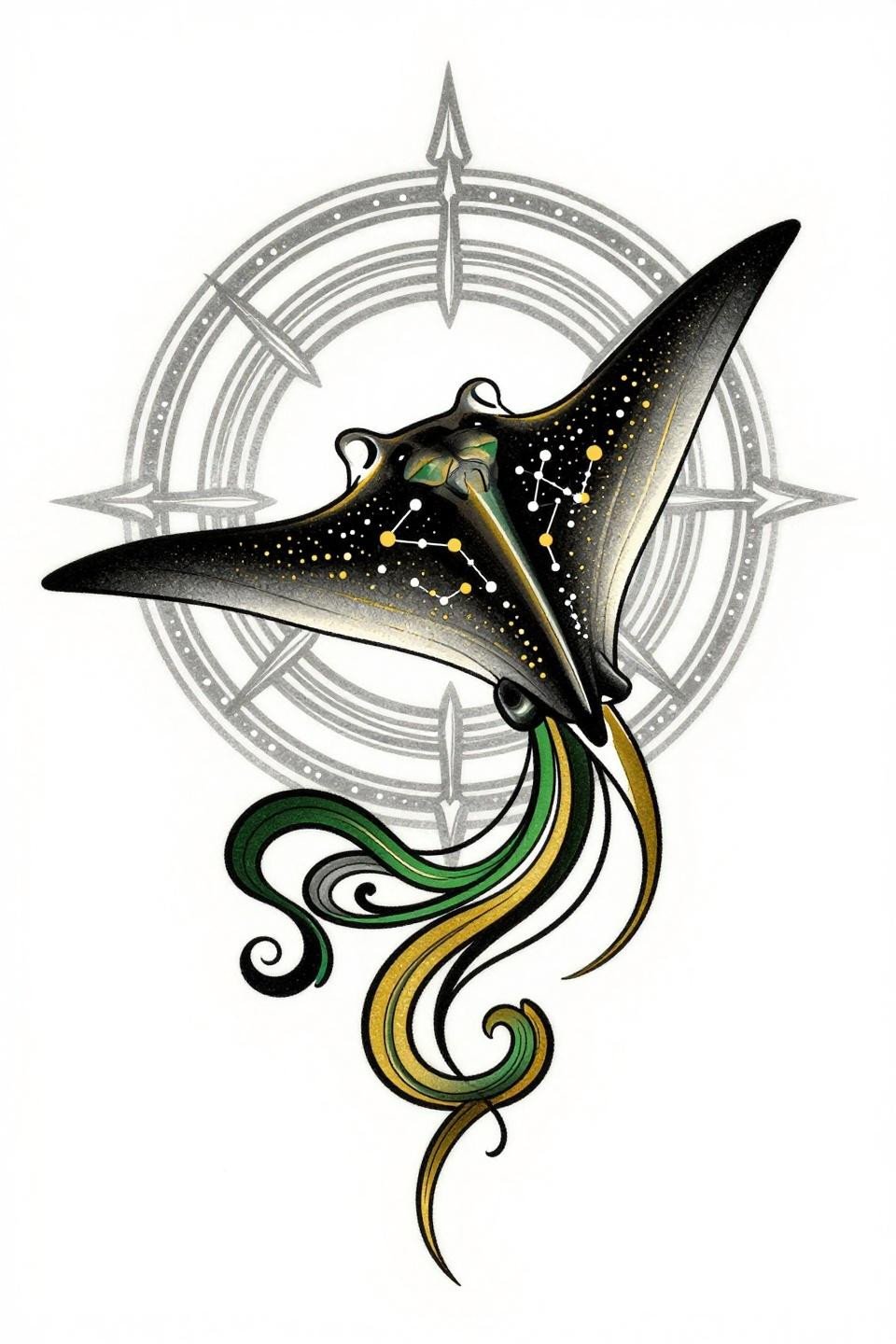
Manta ray in ascending diagonal with a Sak Yant sacred circle overlay and constellation dot pattern across the dorsal surface. The spiritual geometry amplifies the ray’s natural wing-spread silhouette.
Sak Yant-style work carries cultural weight that collectors should research before commissioning. An artist who understands the tradition will make different composition choices than one who is copying the aesthetic.
Art Deco Carp: When Geometric Scale Lattice Outperforms Realism
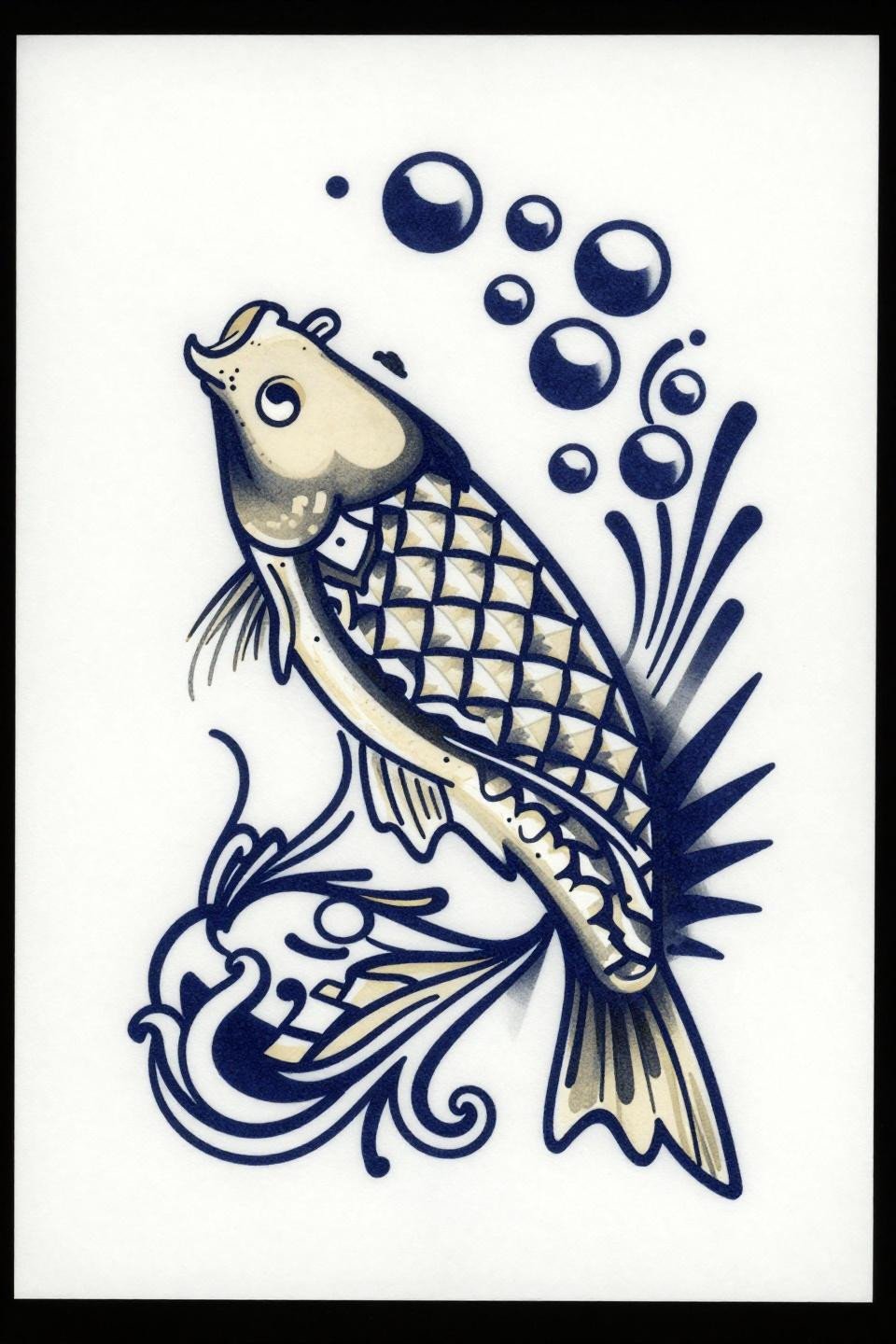
Art Deco carp with scales as a geometric diamond lattice and dorsal fin radiating sunburst rays. Navy and cream is a two-color palette that reads at scale without needing complex fills.
The navy holds its depth on lighter skin tones for a decade or more. On darker skin, confirm the cream reads as intended by asking your artist to do a patch test swatch at full opacity.
Anglerfish Woodcut: The Elbow Placement Case for Bilateral Symmetry
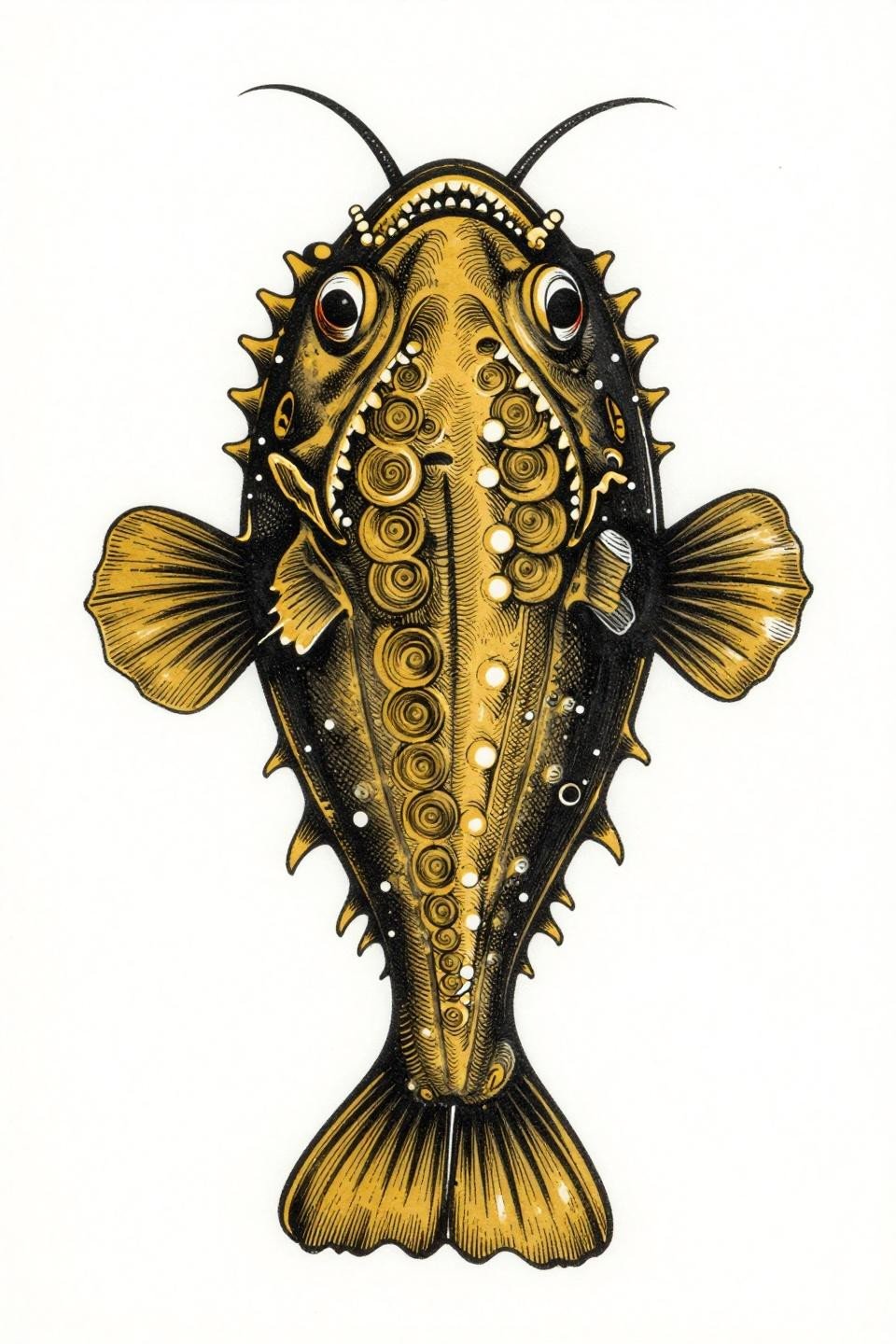
Anglerfish in bilateral symmetry with parallel line engraving and crosshatch shading is built for the elbow ditch, where centered radial compositions hold visual logic even when the arm is bent.
Gold ink on solid black fields fades faster than black on black or black on white. Plan for a refresh at 5-7 years on any elbow placement, friction and sun exposure accelerate ink breakdown at that site.
Seahorse Fine Line: What Single Needle Work Costs You at Year Five
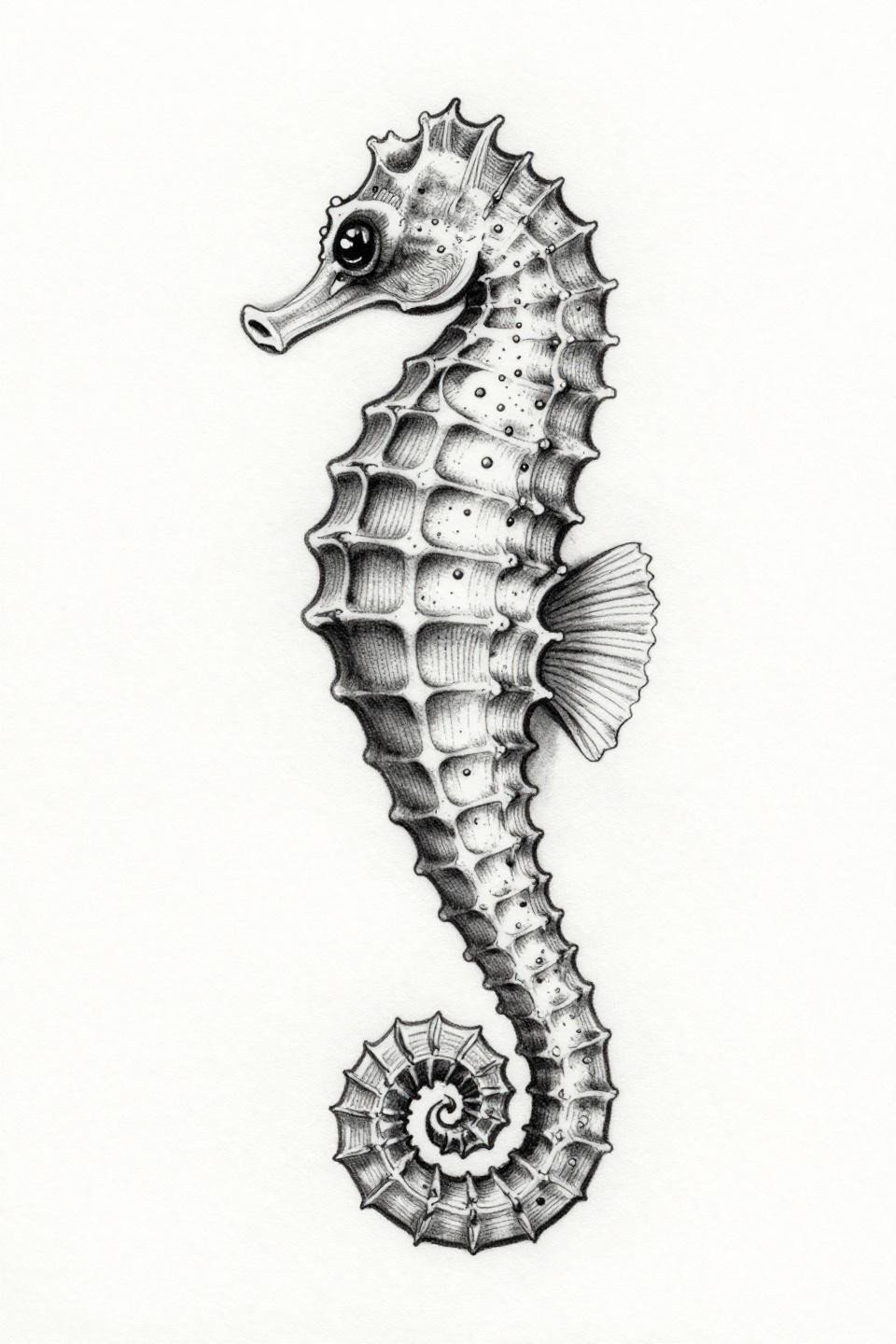
Upright seahorse with a tight spiral tail and segmented body rings in single-needle 0.5mm linework. The open negative space composition relies on clean skin to hold the contrast.
Fine line finger and hand placements fail within 2-3 years. This design lives on protected placements: inner arm, sternum, upper back. Anywhere with friction, sun, or flex will soften the hairlines into blur.
Octopus Celestial Dotwork: Mandala Logic Applied to Eight-Armed Subjects
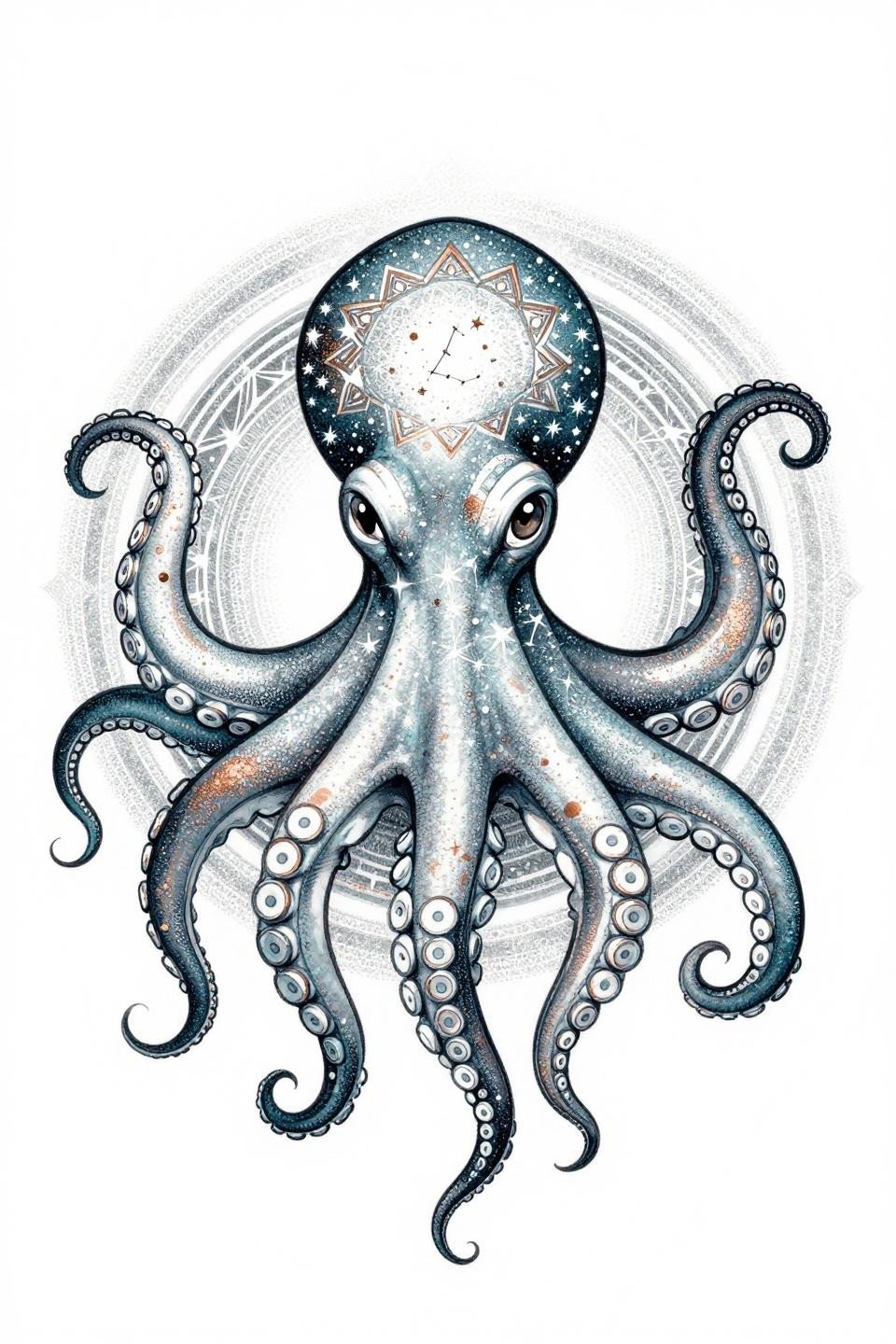
Eight tentacles in spiraling coils with constellation dot patterns woven across the mantle and a mandala radial structure radiating outward. The celestial overlay gives the organic form a geometric anchor.
Outline-free dotwork like this relies entirely on dot density gradients for shape definition. At year five, under-saturated outer dots lose separation and the edges soften. Commit to adequate density or add a light outline.
Tribal Geometric Pike: Negative Space as the Structural Element
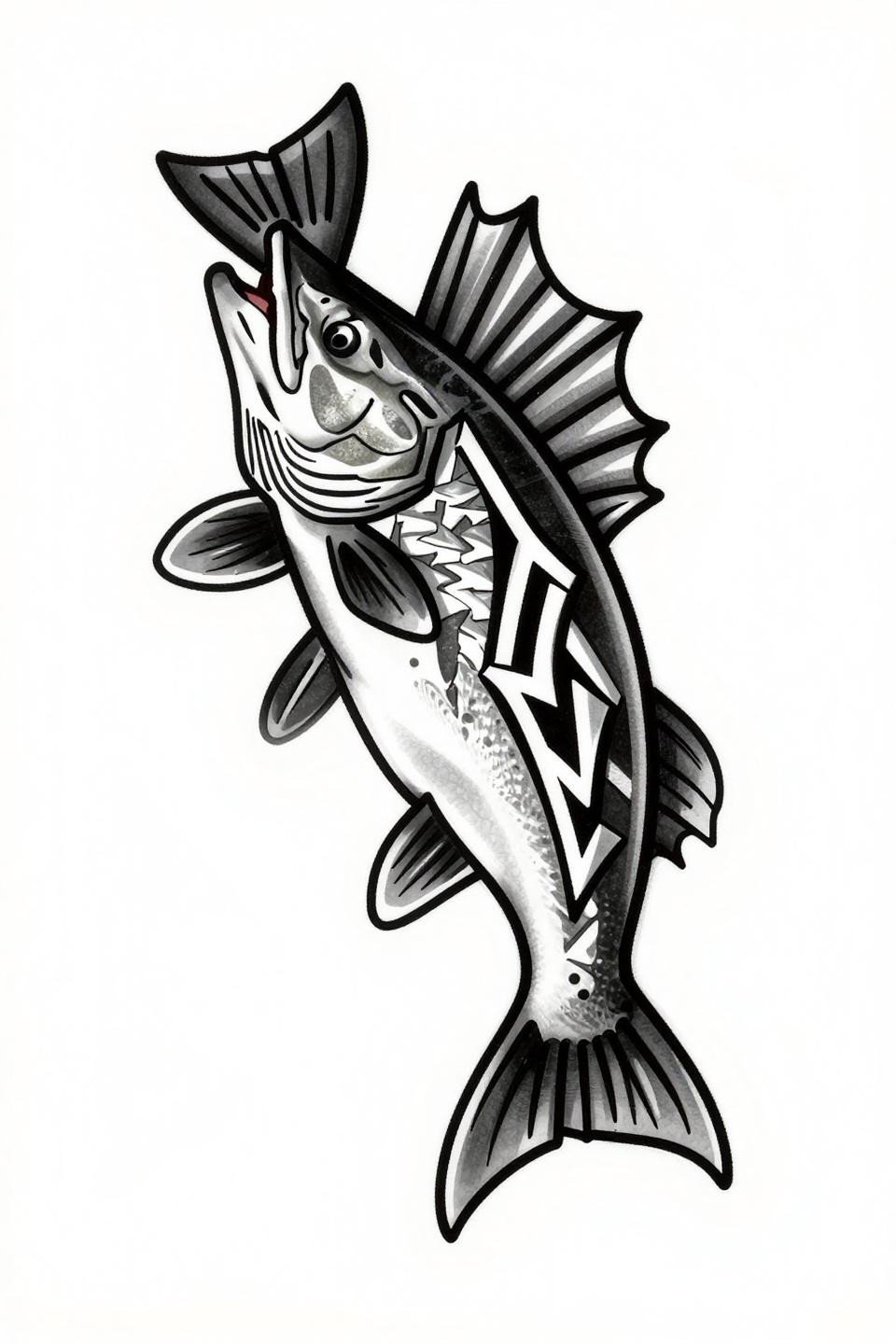
Northern pike in strike pose with angular tribal facets fracturing the body into bold wedge shapes. Zero grey wash means the entire design lives or dies on flat black saturation.
Blackwork at full saturation holds density indefinitely if the artist commits to layered passes. One-pass black fills look fine fresh, patchy at year three. This style demands an artist who works the ink, not the clock.
Continuous Line Betta: What Happens When the Outline Cannot Rest
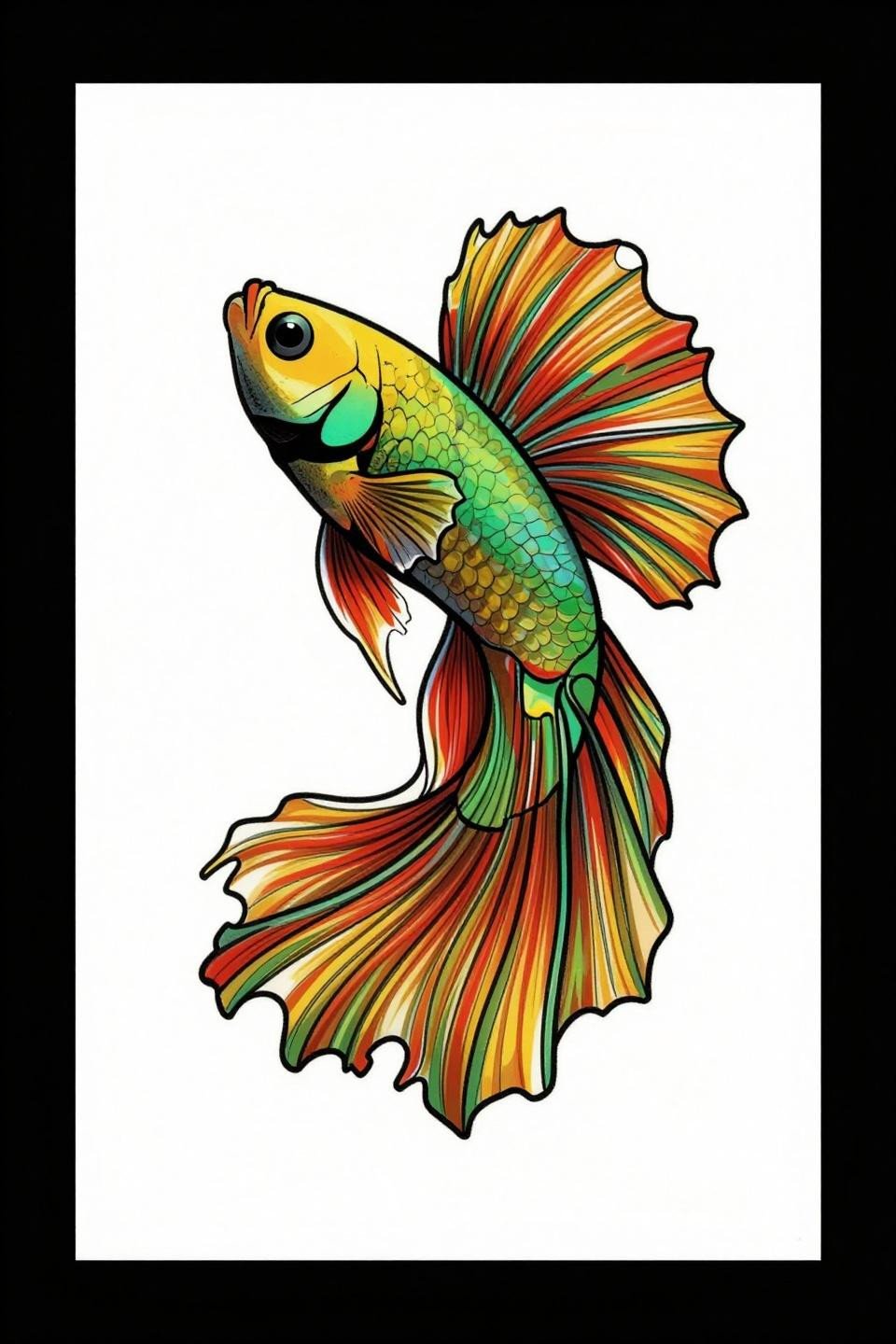
Betta in full gill flare with elaborate flowing fins rendered as a single unbroken continuous line. The flat cadmium red, forest green, and golden yellow fills keep the design grounded against the linework gimmick.
Speed control is the entire game in continuous line work. Any hesitation or direction-change wobble is permanent. The tell is the curves. Check those before committing to the artist.
Art Nouveau Jellyfish: Radial Symmetry That Actually Holds on Round Surfaces
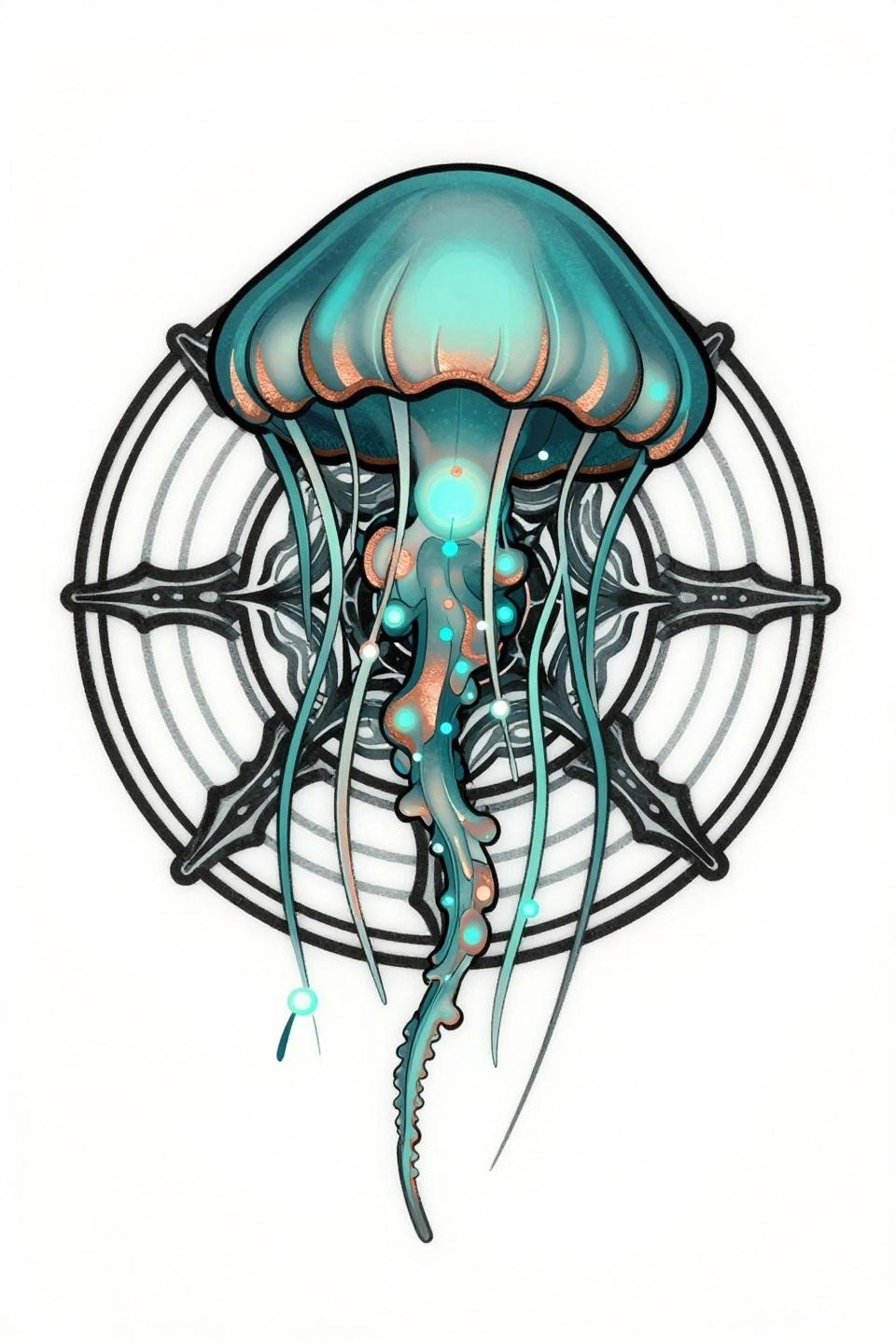
Art nouveau jellyfish with a radial mandala structure and deep teal with copper metallic accents. Bell-shaped anatomy maps onto circular compositions with less forced geometry than most subjects.
Teal-and-copper on black is a palette that photographs dramatically fresh and then settles into a moodier read at year two. That shift is not a flaw. It is the natural direction of this ink chemistry on healed skin.
Art Nouveau Lionfish: Bilateral Mirroring as a Venom Display
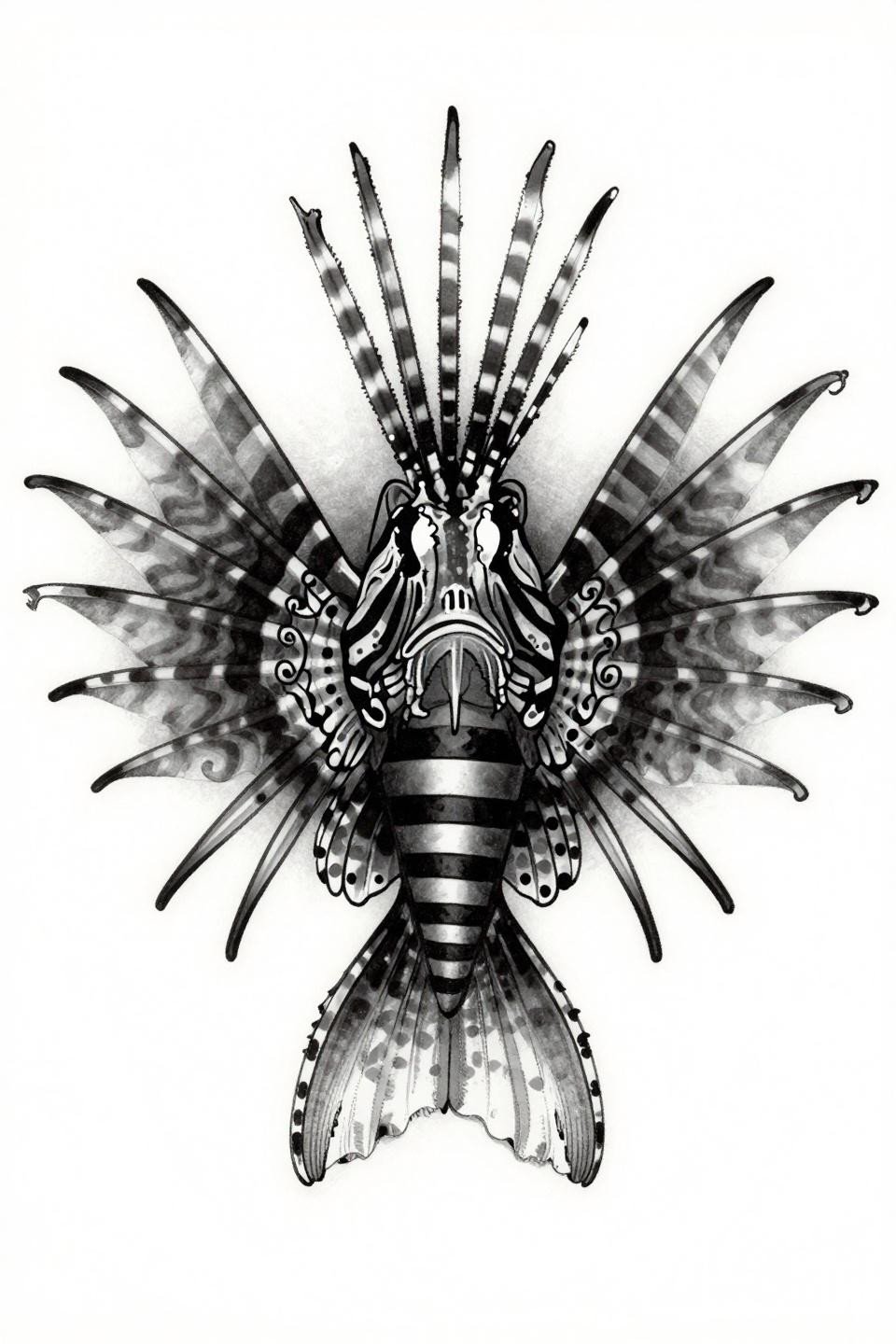
Frontal lionfish with fin rays in a full geometric fan and ornamental curvilinear scrollwork framing the pectoral fins. Bilateral symmetry along the vertical axis mirrors the subject’s actual defensive display.
Alternating black and white banding with grey wash midtones requires clean transitions. Muddy grey between the bands collapses the striped pattern by year four. This is a design that rewards a veteran grey wash artist.
Irezumi Swallow: The Dive Silhouette That Reads From Across the Room
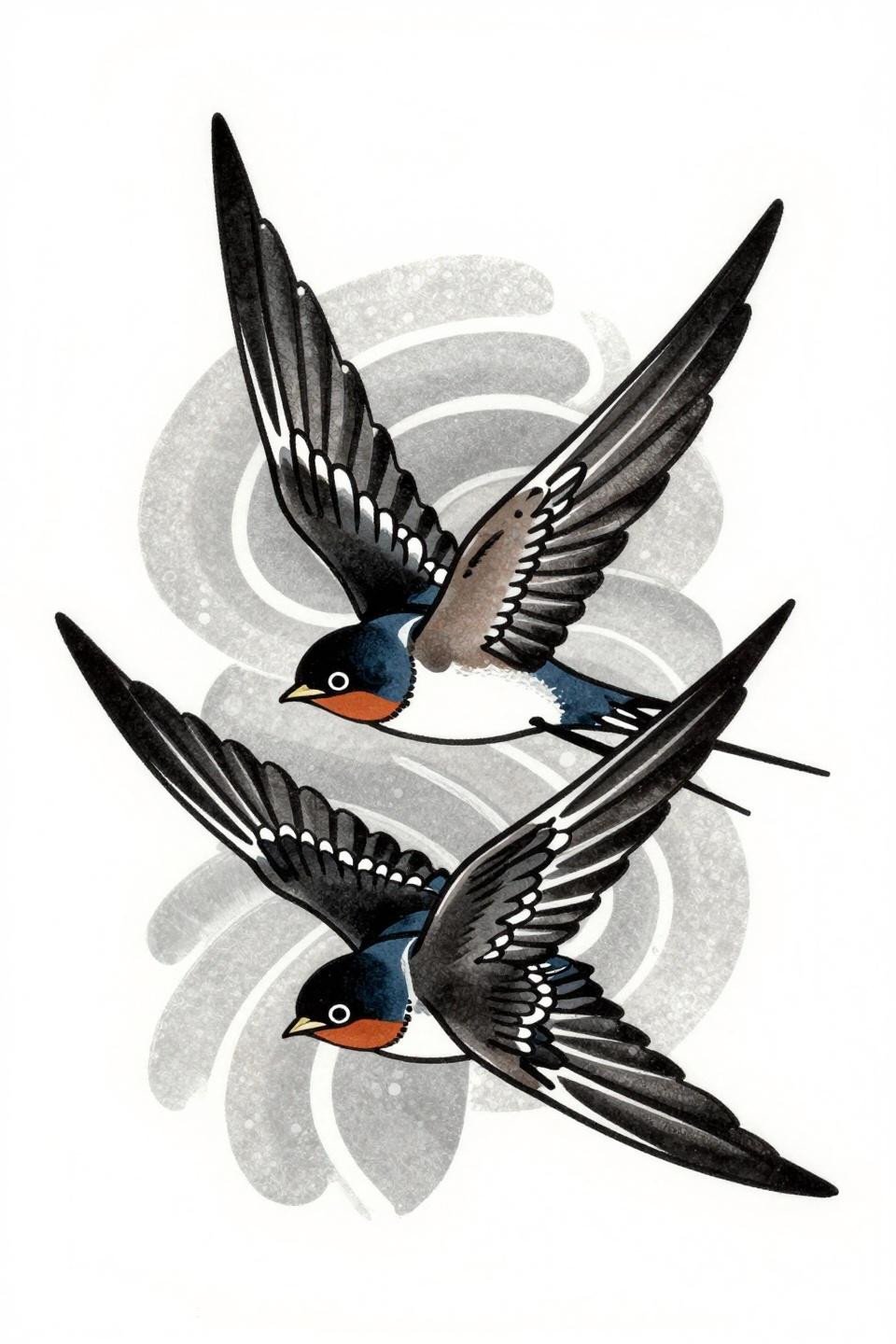
Barn swallow in steep plunge with swept-back wings and a woodblock print quality to the outline and grey wash. The delta silhouette reads at distance even at small scales.
Irezumi-influenced flash like this placed alongside a fish subject creates a predator-prey narrative without spelling it out. That contextual layering is the collector move that separates a tattoo from a sticker.
Anglerfish Watercolor: The Style That Needs an Anchor to Survive
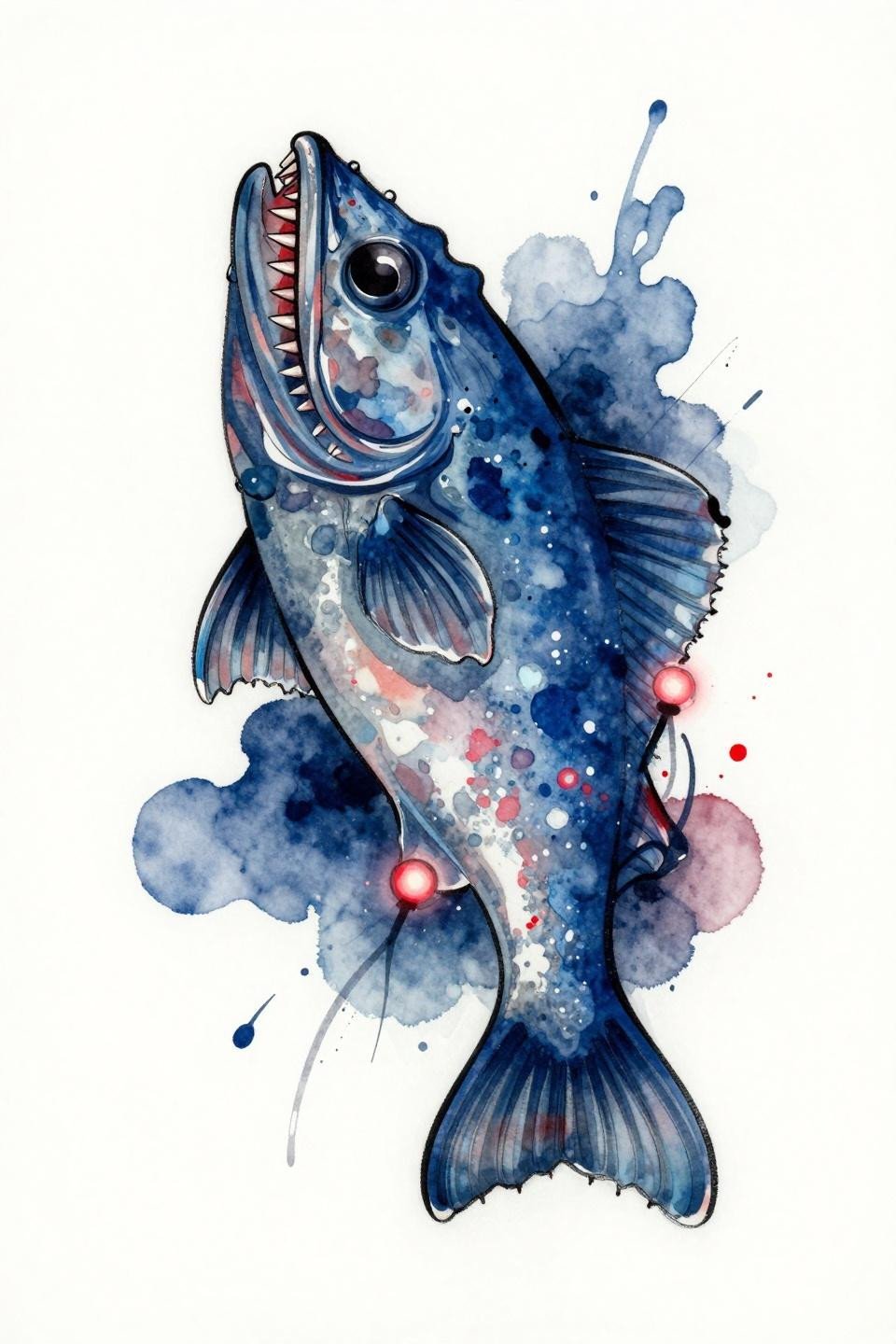
Anglerfish in profile with indigo watercolor blooms and crimson bioluminescent accents. The calligraphic brushwork gives the wet ink quality without the structural dissolution of pure watercolor.
Watercolor without a solid black anchor outline blurs by year 3-5 on most skin types. This design has enough ink mass in the body and jaw lines to hold the silhouette even as the color blooms soften.
Blackwork Sailfish: Crosshatch Density as a Longevity Strategy
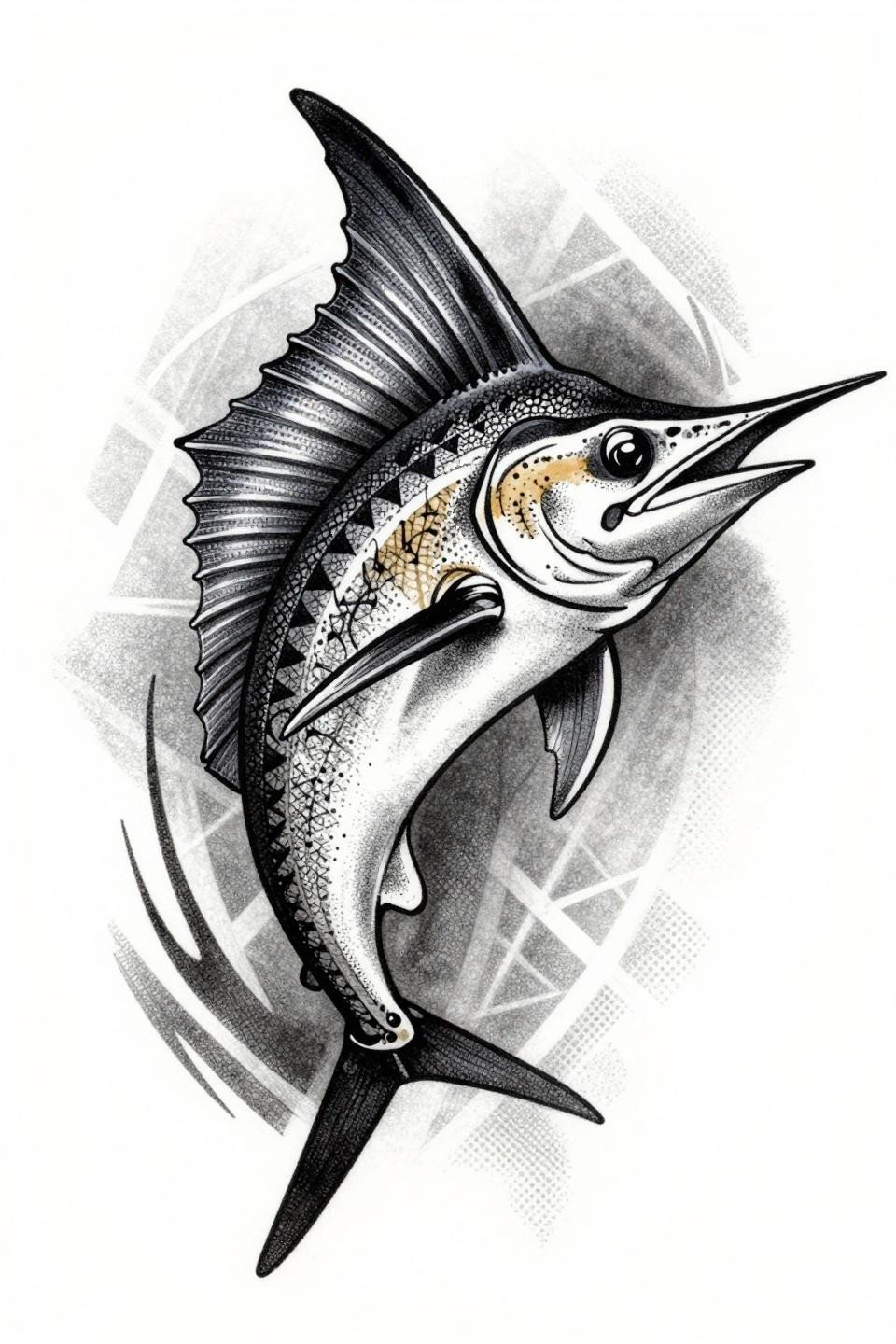
Sailfish in strict lateral profile with dorsal fin fully raised and dense crosshatch etching covering the body. The abstract geometric water lines surrounding the form suggest depth and momentum without literal rendering.
Blackwork crosshatch at this density holds its read for decades on protected placements. The eye as focal point draws the viewer in before they process the surrounding geometry. That hierarchy is the sign of a composed design.
Neo-Traditional Koi Leap: The Elbow Placement That Cannot Afford Symmetry Errors
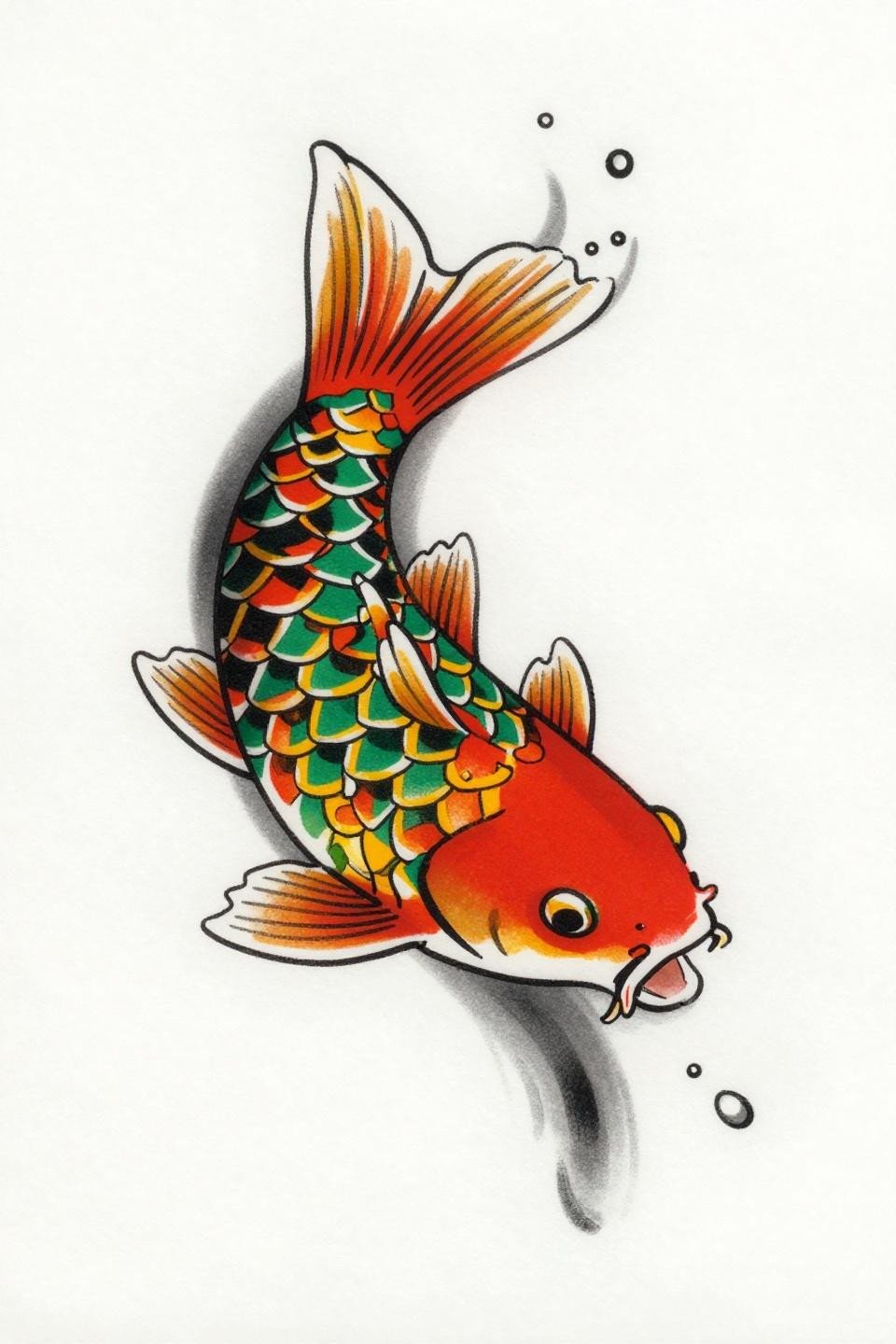
Neo-traditional koi mid-leap with geometric hexagon scales, tight spiral tail, and diagonal water droplets. The upward thrust makes this a natural fit for the elbow ditch, where the joint’s flex reinforces the movement.
Elbow ditch placements require touch-up at 3-5 years minimum due to constant flexion. The bold 2-3pt outlines here are what protect this design. Fine line koi on an elbow is a 3-year tattoo.
Narrow this collection to the style that matches your placement first, not your mood. A trash polka pufferfish belongs on a different site than a fine line seahorse. Pick the references where scale, placement, and technique already align, then send exactly those to your artist.