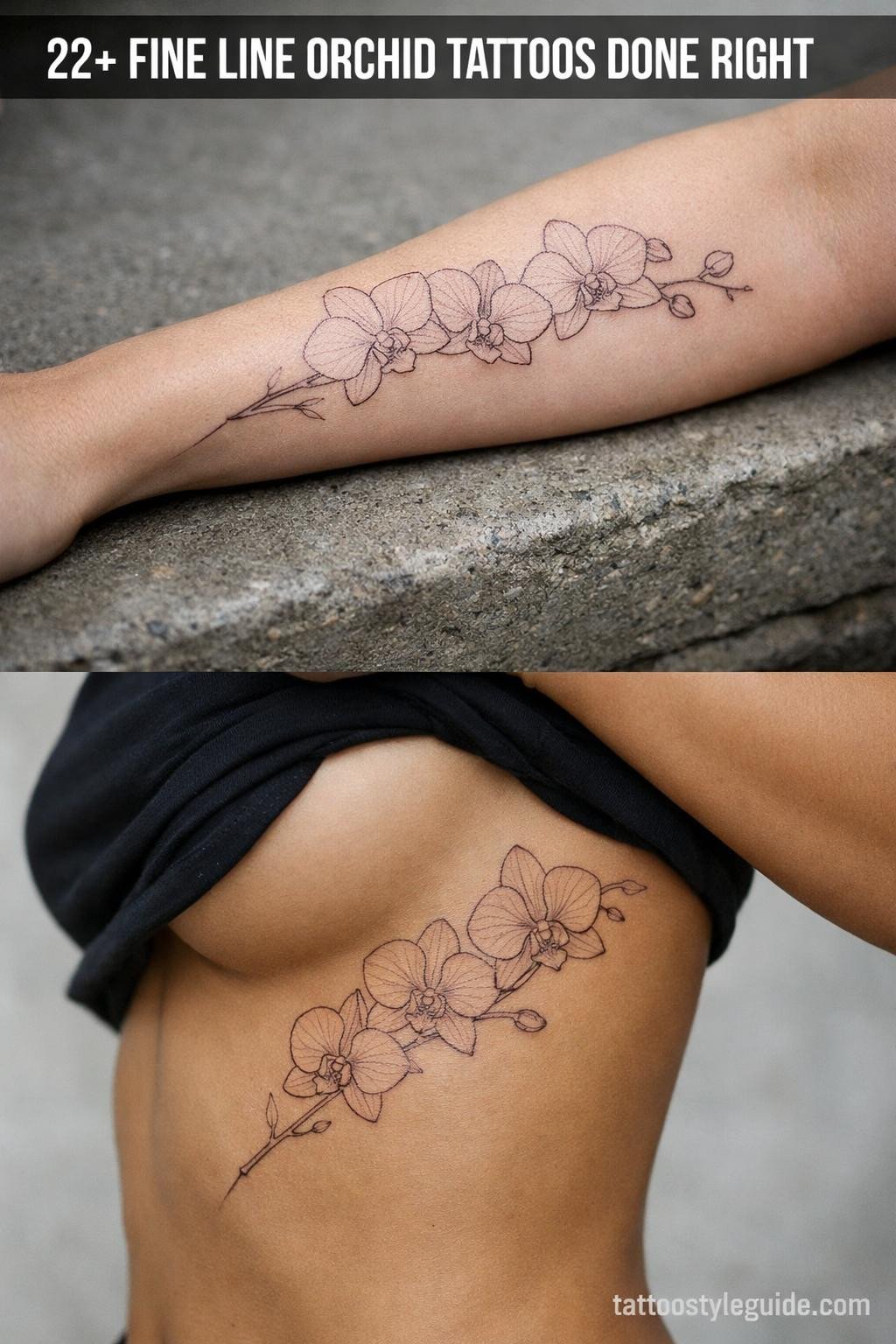
Orchid tattoos punish lazy linework faster than almost any floral subject. The labellum, the column, the lateral sepals: every structural element has a specific botanical relationship, and an artist who doesn’t understand the form produces something that reads as generic flower, not orchid. The species matters here more than in rose or peony work.
The 22 flash references below cover nine secondary subjects and eleven distinct techniques, from 1RL single-needle botanical to bold irezumi outlines. Each one is a working reference, not a mood board image.
Hydrangea Density as a Composition Problem, Not a Filling Exercise
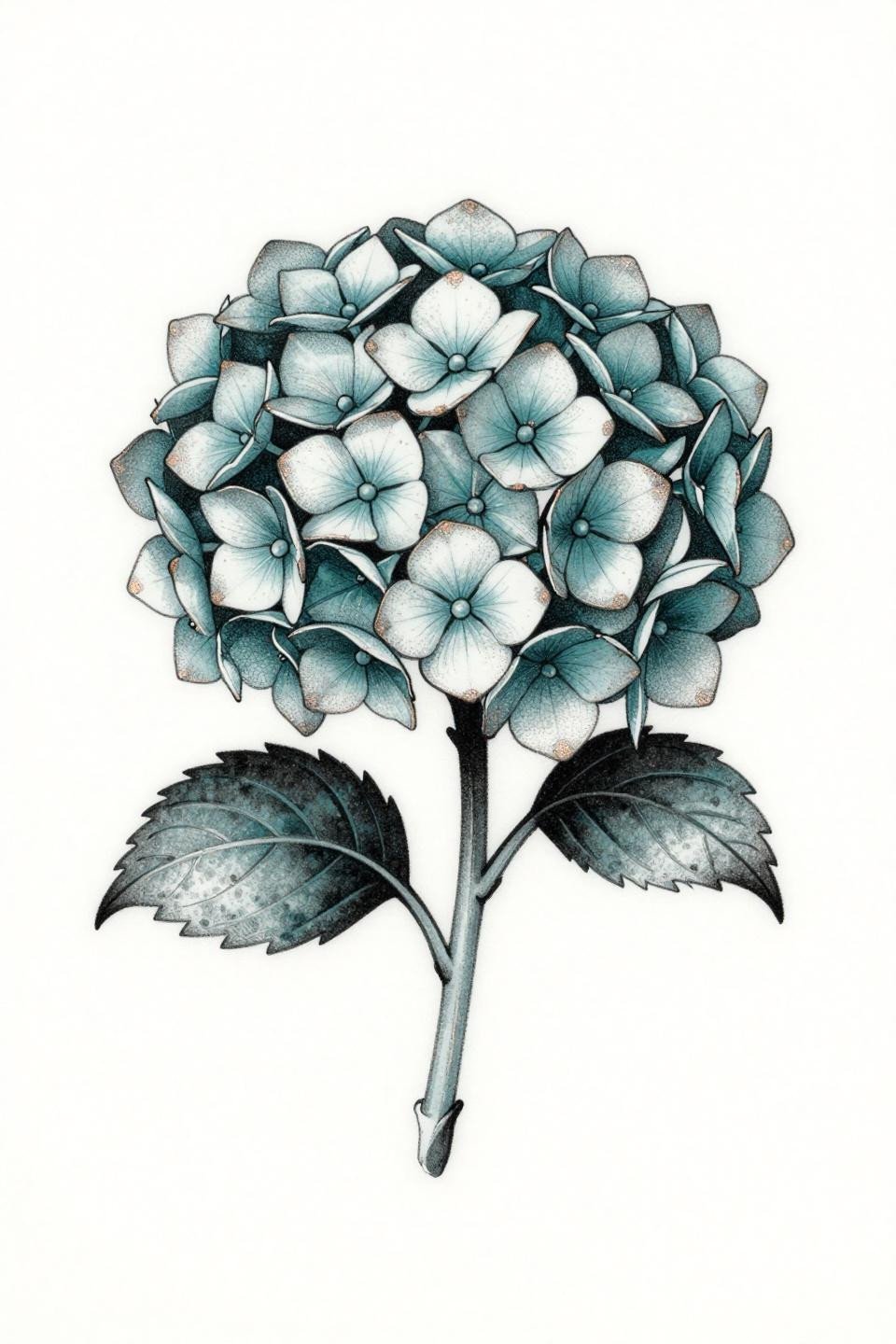
This hydrangea mophead flash uses a circular mandala frame to manage the species’ biggest technical challenge: a compound flower head with dozens of individual florets, each needing readable interior detail. Stipple dot density runs from 90% at the floret centers down to open negative space at the outer petal edges, keeping the composition from collapsing into a dark mass.
The deep teal and copper palette is an intentional aging hedge. Teal holds contrast on olive and medium skin tones better than soft pinks over time, and the copper metallic accent reads as a distinct value layer even as the teal softens.
Linocut Relief Lines Read Bold Where Fine Lines Fade
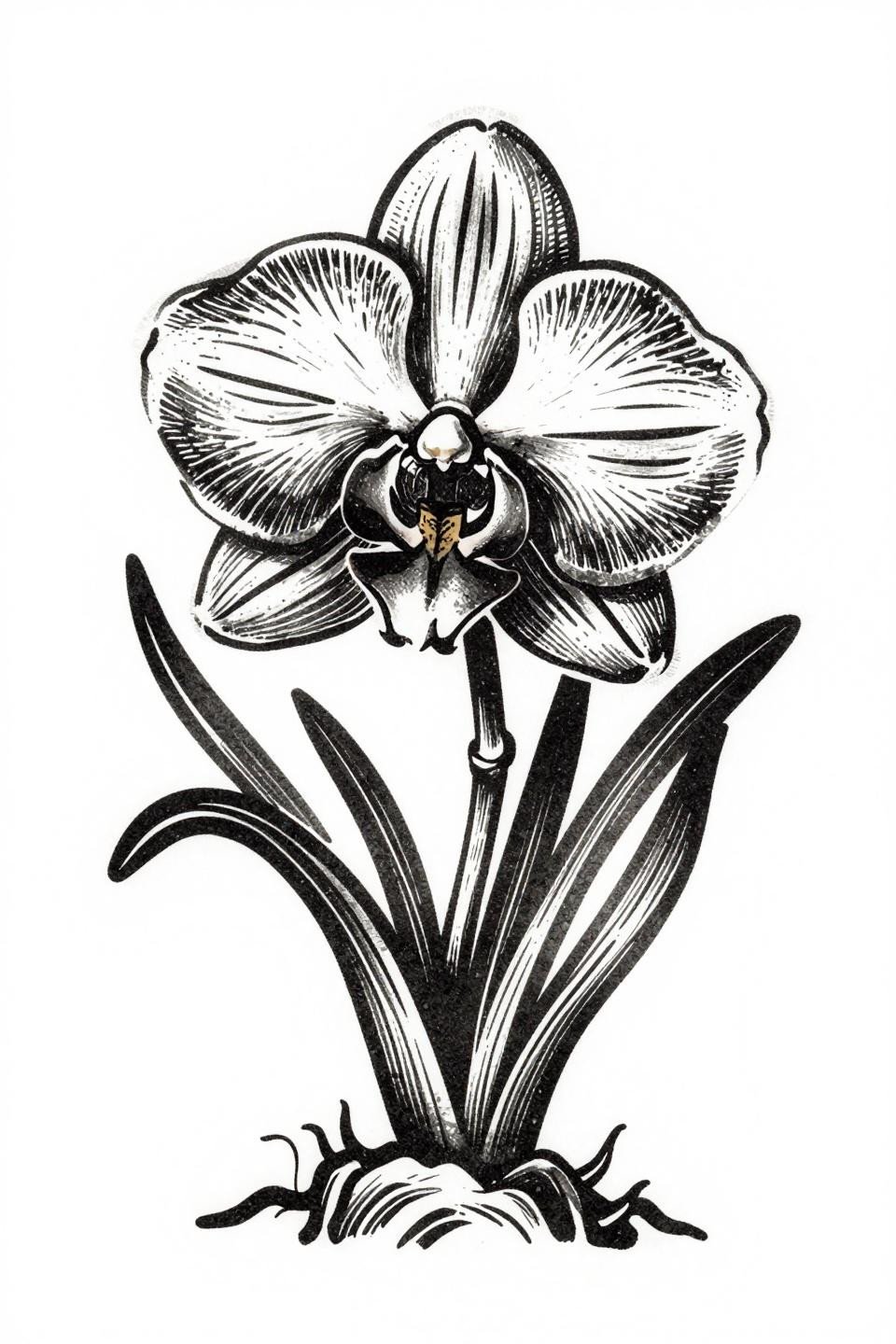
This Dendrobium nobile orchid flash is rendered in linocut print style, with aggressive parallel engraving lines and heavy shadow blocks replacing any gradient work. The three-quarter view captures the aerial root tendrils cascading below the bloom, giving the composition a vertical anchor that suits forearm or shin placement.
Bold relief carving strokes at this weight hold their separation on darker and olive skin tones where fine-line parallel hatching would merge into grey smear within five years. This is the practical reason to choose a graphic print style over botanical illustration for high-melanin placements.
Sacred Geometry Frames Force Orchid Structure Into Symmetry
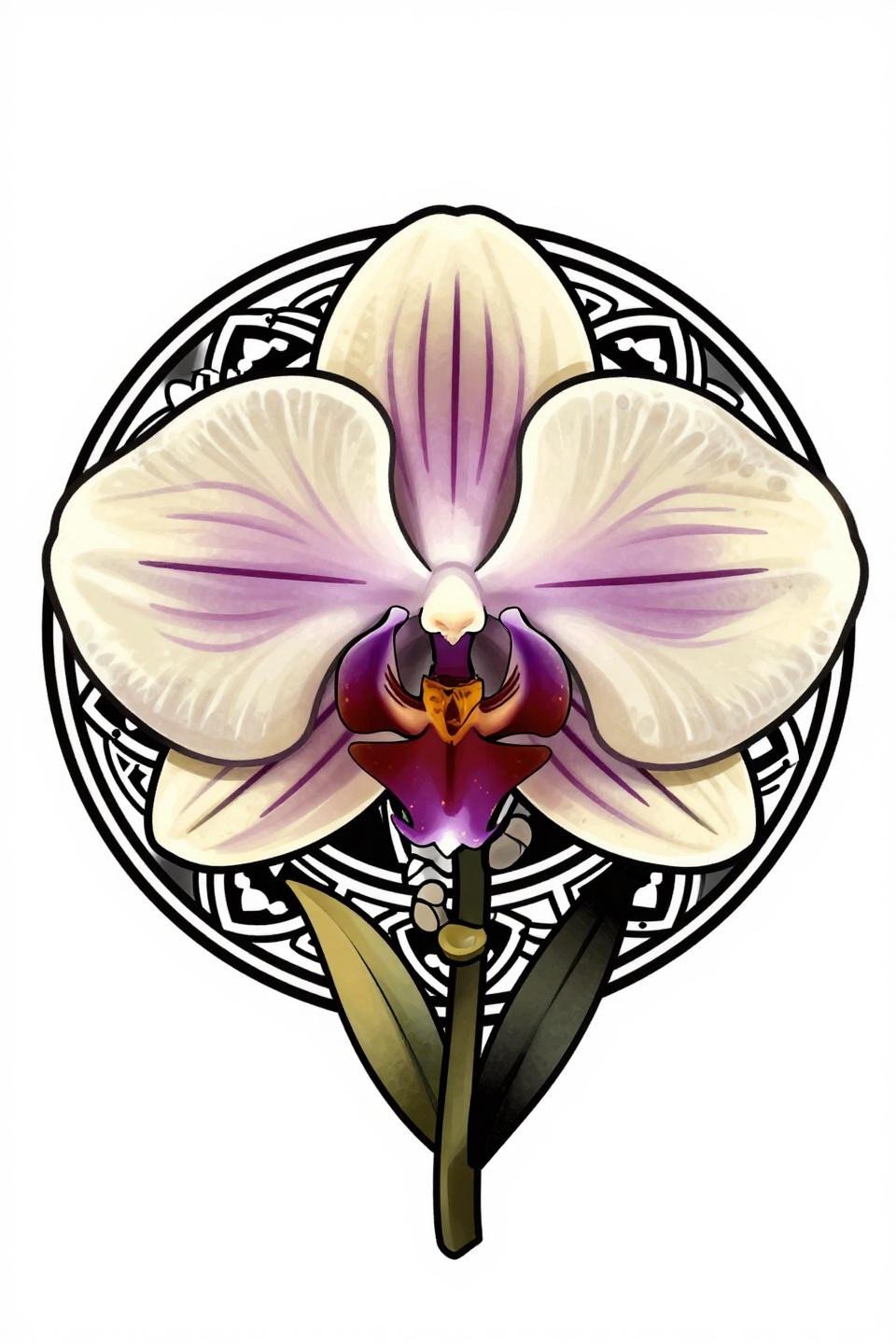
A Cymbidium orchid enclosed in a sak yant circular mandala frame, with flat gold and black fills replacing any naturalistic shading. The deep plum striations on the petals and burgundy labellum veining are rendered as flat graphic shapes, not washed gradients.
The 2-3pt black outline weight at the mandala border is the longevity signal here. Thin geometric frames contract and blur at edges after several years. This weight holds the sacred geometry readable for a decade or more on protected placements like the sternum or upper back.
Traditional American Flash Needs the Right Orchid Species to Work
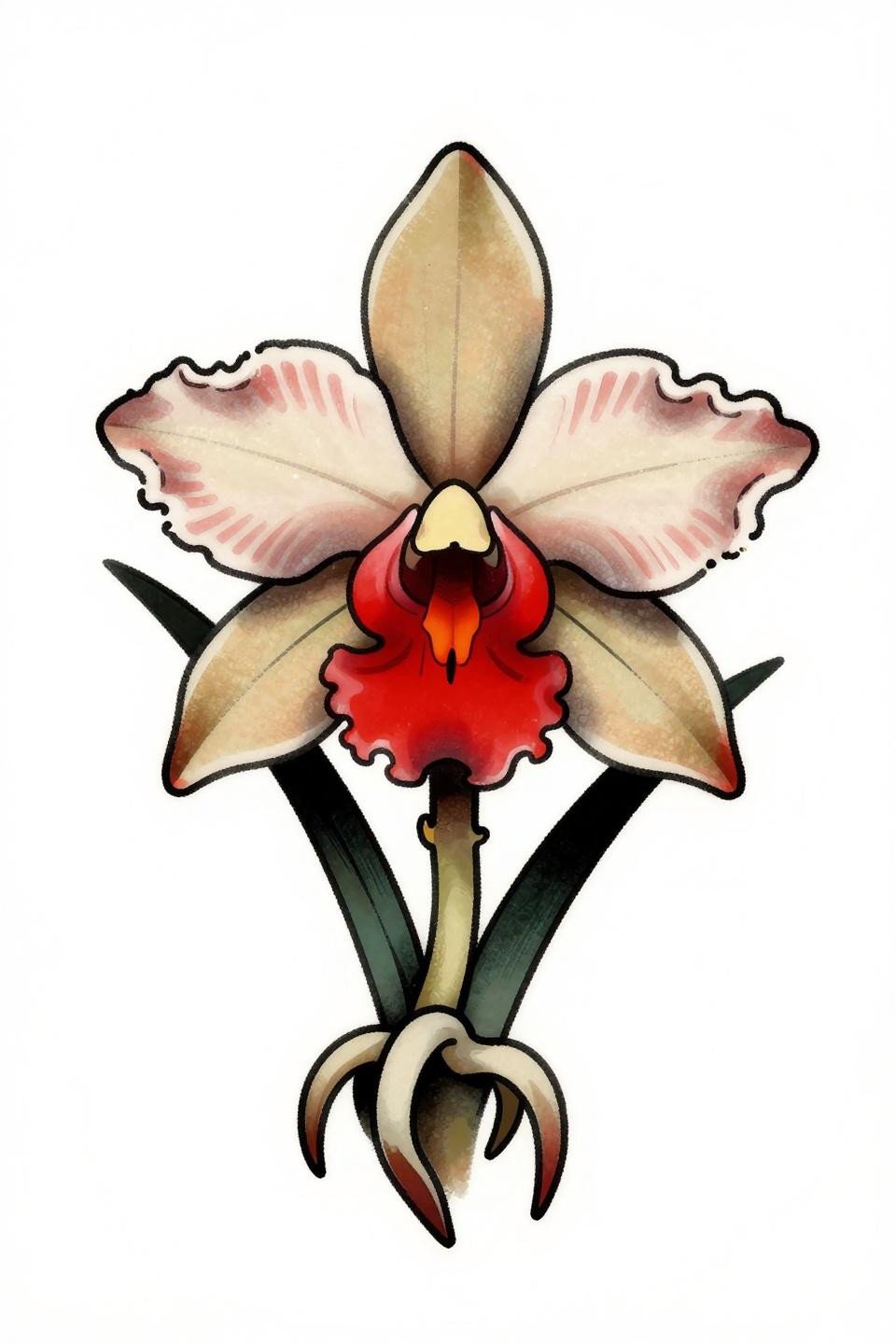
The Habenaria radiata fringed orchid is one of the few species that translates naturally into traditional American flash. Its feathery fringed labellum margins read as decorative fill in a way that most orchid species cannot manage, and the bold crimson center stripe gives the flat color system a focal point.
Flat fills with zero patchiness are the veteran signal in this style. Check any artist’s healed traditional work portfolio before booking: uneven color saturation in healed flat fills is harder to fix than a blown outline.
Ghost Orchid Dotwork Is the Longevity Test for Stipple Work
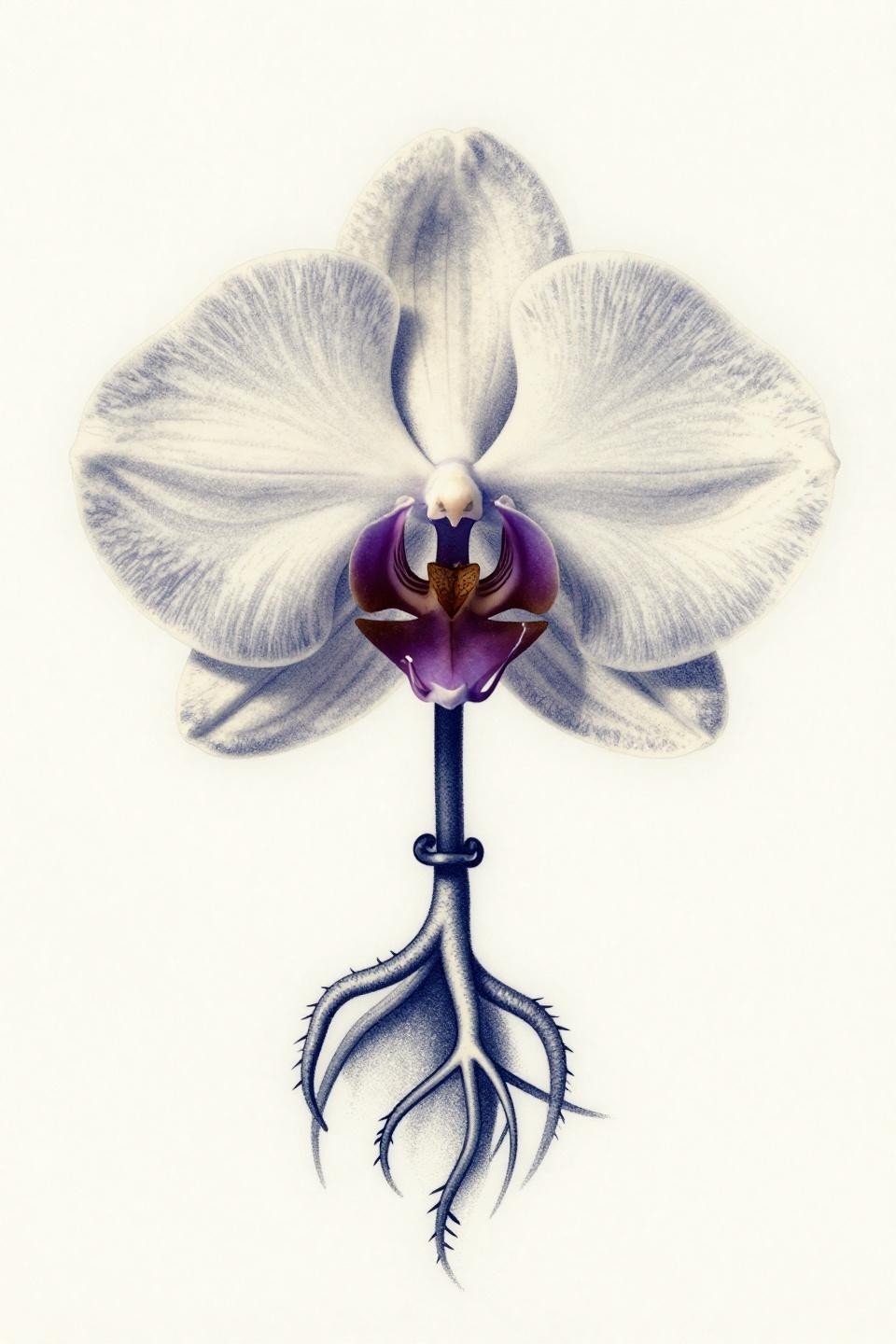
This ghost orchid renders the Limodorum abortivum’s translucent pale petals through stipple dotwork, with dense navy dot clusters at the labellum pouch graduating to open cream negative space at the petal edges. The sprawling fibrous root system adds compositional reach without requiring a framing device.
Consistent dot size across the full gradient is the artist skill signal to look for in reference photos. Dot migration in stipple work starts within two to three years on high-friction placements like the inner forearm, so the upper arm or scapular area gives this style its best shelf life.
Bee Orchid Grey Wash: The Species That Earns Chicano Style
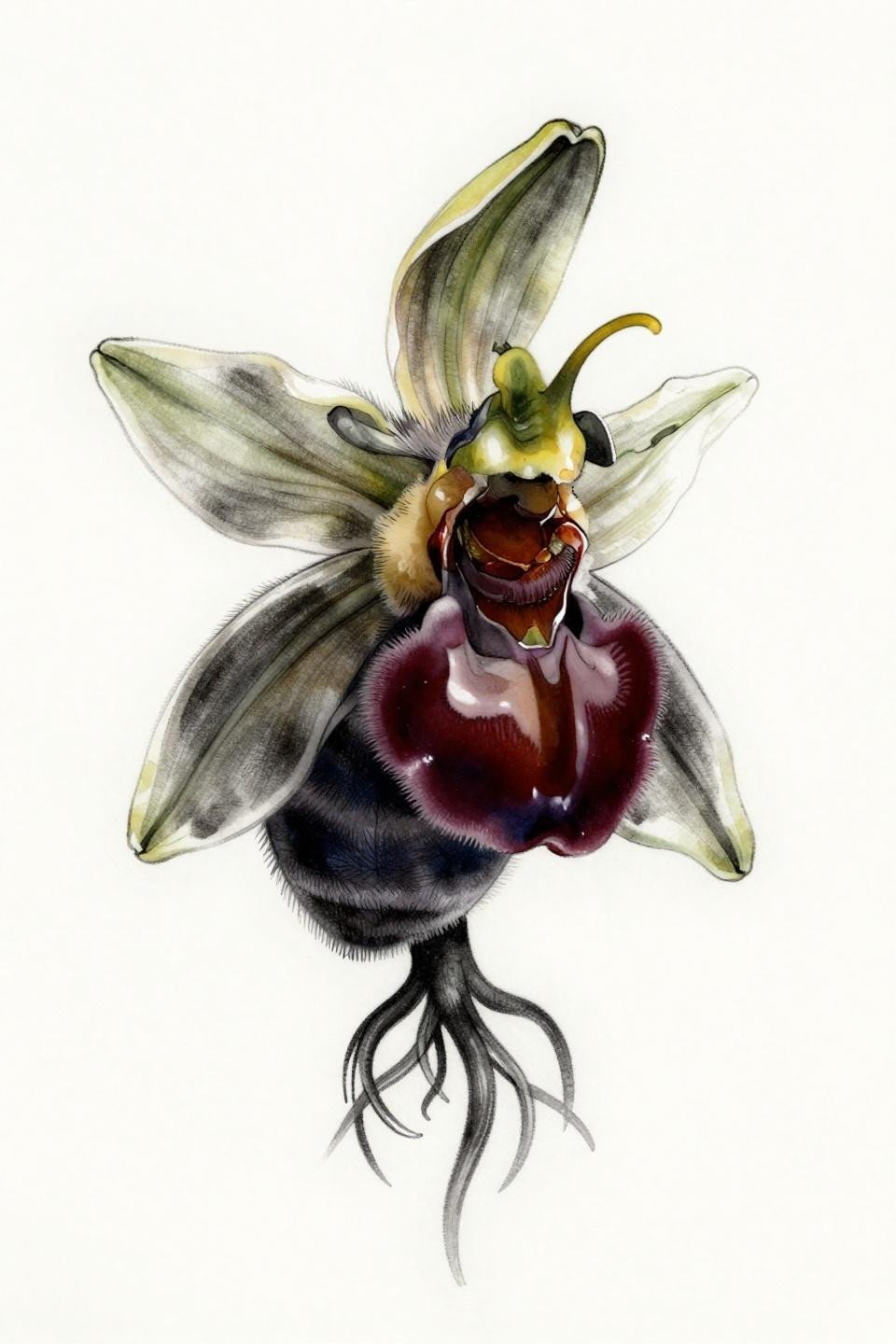
The Ophrys apifera bee orchid is a natural subject for chicano grey wash: its glossy burgundy labellum mimicking a female bee abdomen has exactly the kind of textural contrast that whip shading renders well. Dense shadow at the velvet fuzzy labellum, open highlight on the yellow-green arching sepals.
Grey wash dilution from dense to open with no muddy midtones is the technical requirement here. On lighter skin tones this reads crisp at year one. On olive skin, the indigo and crimson color accents maintain contrast as the grey wash softens over time.
Ignorant Style Orchid: Intentional Crude Strokes Are Not a Shortcut
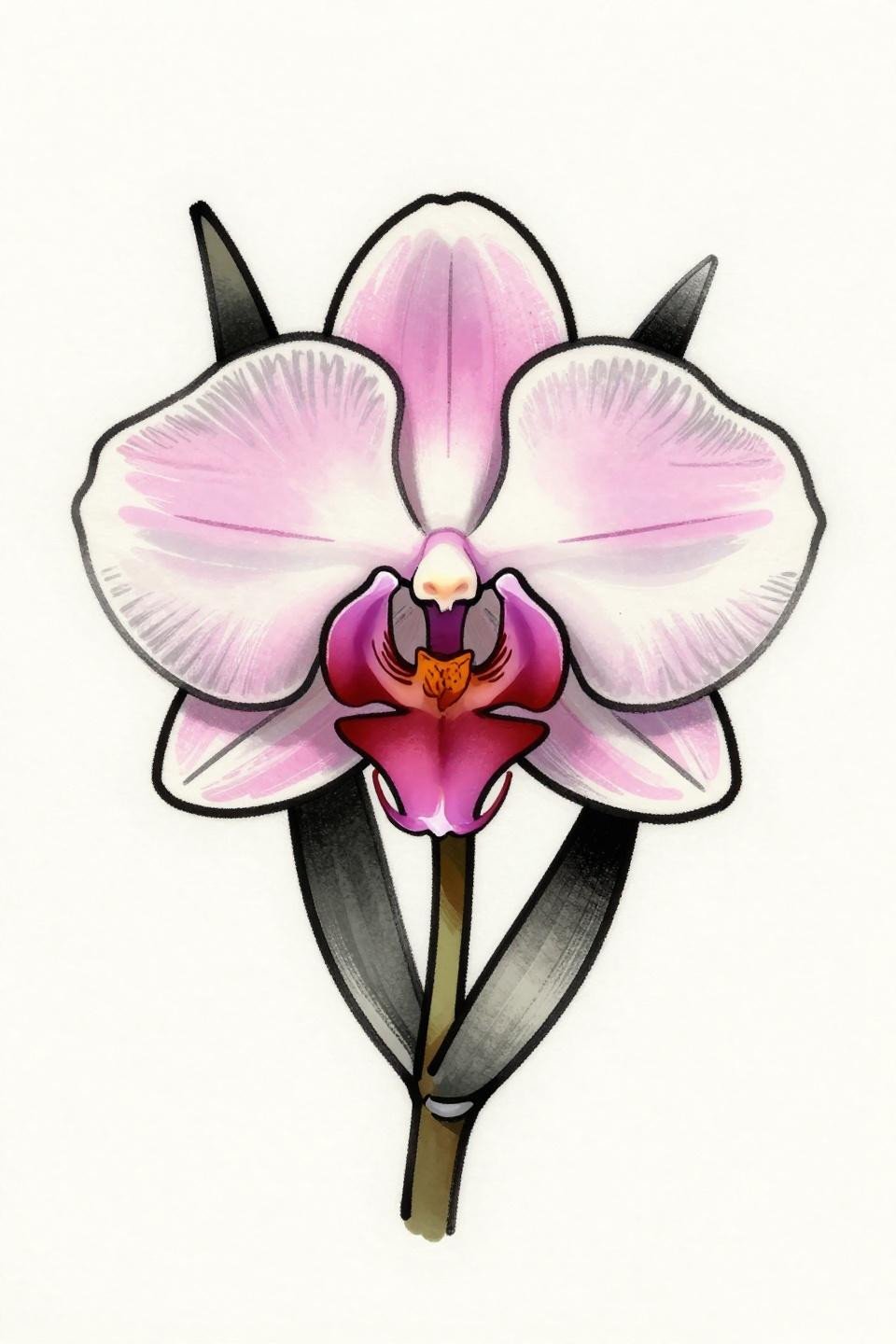
This Anguloa uniflora tulip orchid flash uses thick irregular wobble outlines and intentionally crude strokes. The centered composition with zero symmetry is a deliberate graphic choice, not a technical failure. Flat coral and charcoal fills keep the palette readable at small scales.
Ignorant style requires an artist who can execute controlled wobble linework, which is harder than it looks. Unintentional wobble and intentional wobble read completely differently on healed skin, and most collectors can’t tell the difference until they see the healed piece.
Ghost Orchid Surrealism: When Aerial Roots Become the Composition
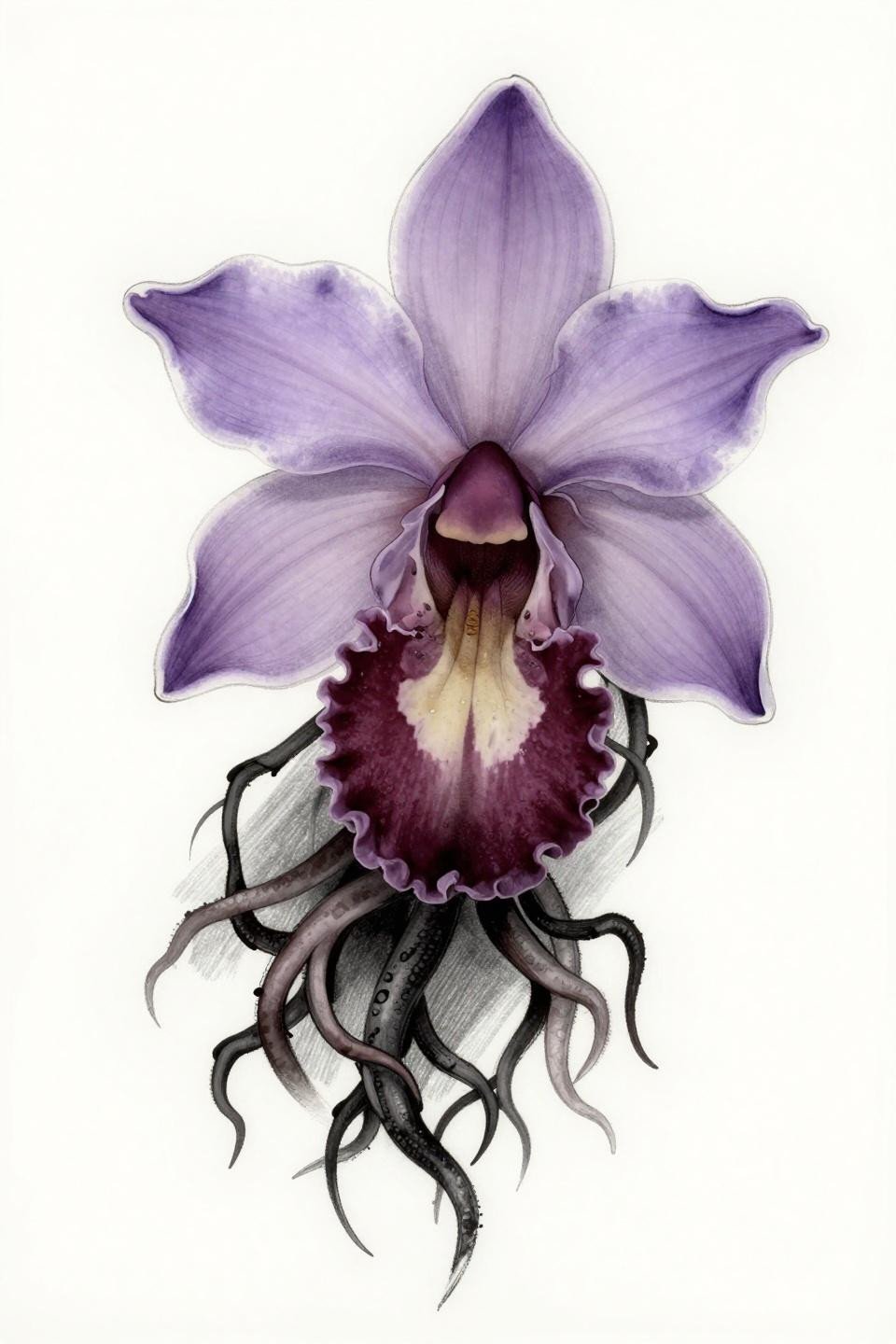
The second ghost orchid entry approaches the species through surrealist composition, with tangled thick aerial roots sprawling asymmetrically across the negative space. Lavender petals and burgundy labellum float above a root mass that fills the lower two-thirds of the frame.
This layout suits a thigh or rib cage placement where the vertical root sprawl can follow the body’s natural contour lines. Watercolor-adjacent open midtones like the lavender here blur by year three to five without an anchoring outline, so the bold charcoal whip shadow lines are doing critical structural work.
Art Deco Geometry Holds Orchid Structure Without Botanical Accuracy
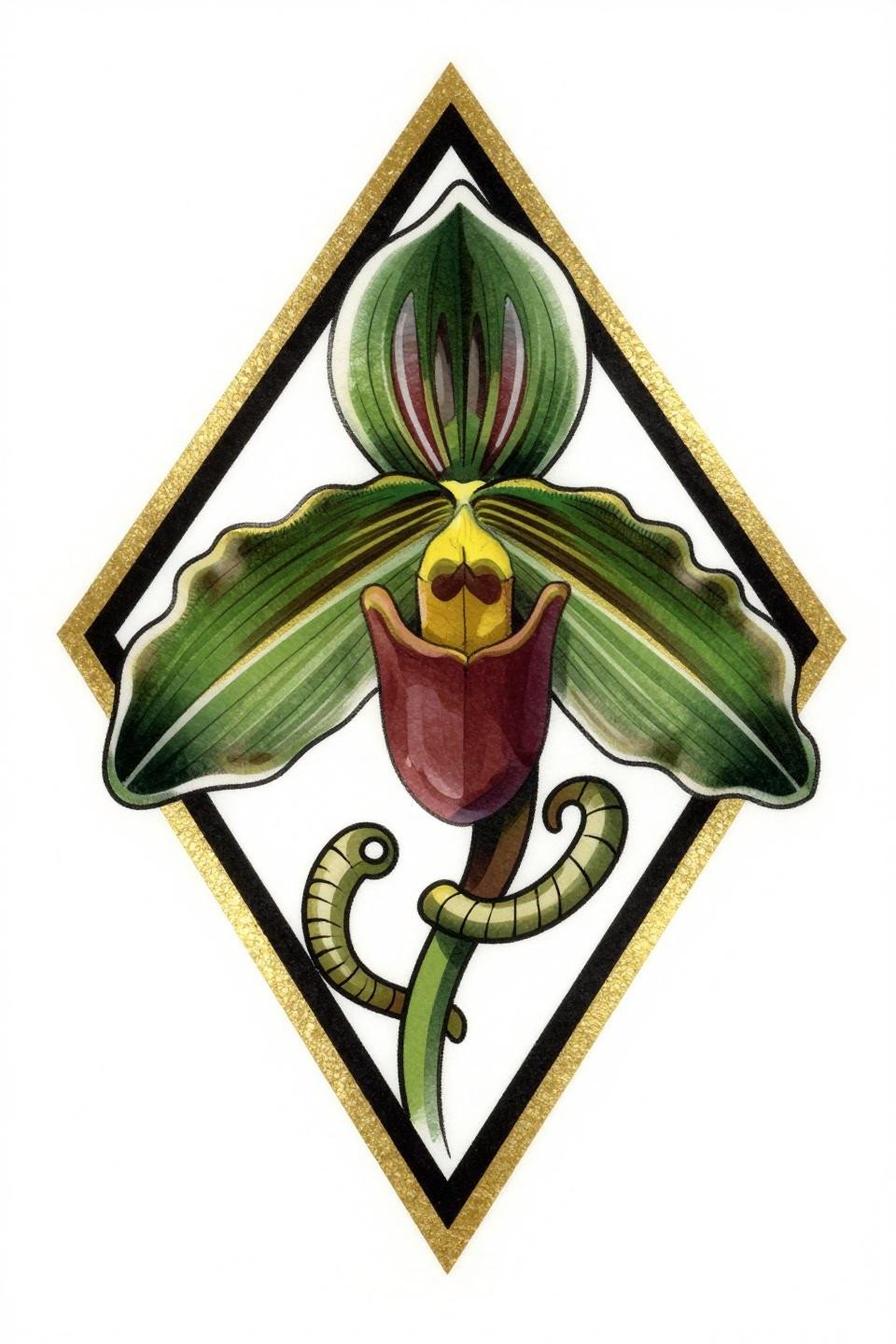
A Sarracenia purpurea orchid hybrid locked inside a diamond art deco frame, rendered in flat forest green and metallic gold with zero gradients. The bold 4pt black outlines at the geometric border give this flash a graphic weight that reads from distance, which is the primary test for any framed composition.
Flat fills at full saturation with no patchiness are the skill signal here. Art deco tattoos fail in the flat color zones, not the outline work, so the healed fill quality tells you more about the artist than the linework does.
Lady’s Slipper in Old School Flash: The Bold Diamond Frame Test
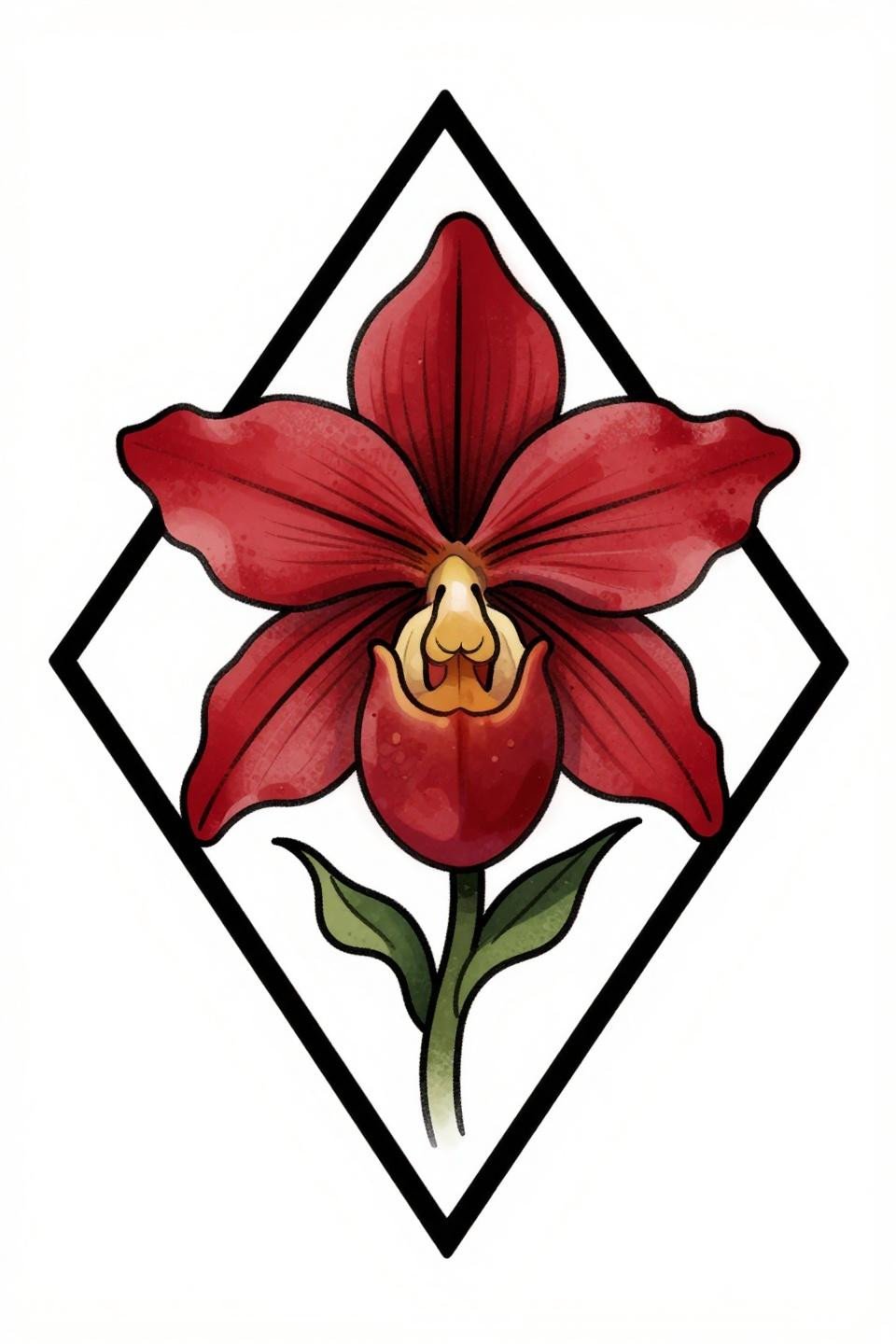
The Phragmipedium besseae lady’s slipper orchid sits inside a bold diamond frame, rendered in old school sailor style with flat crimson-scarlet fills and 2-3pt black outlines. The deep pouch labellum gives this species a three-dimensional read even in flat color, which is why it works in traditional flash where most orchids do not.
A bold 2-3pt outline weight at this scale holds clean for ten or more years on protected placements. The diamond frame concentrates the design, making it viable at sleeve filler size or as a standalone piece on the upper arm.
Celtic Knotwork Demands a Species With Strong Silhouette
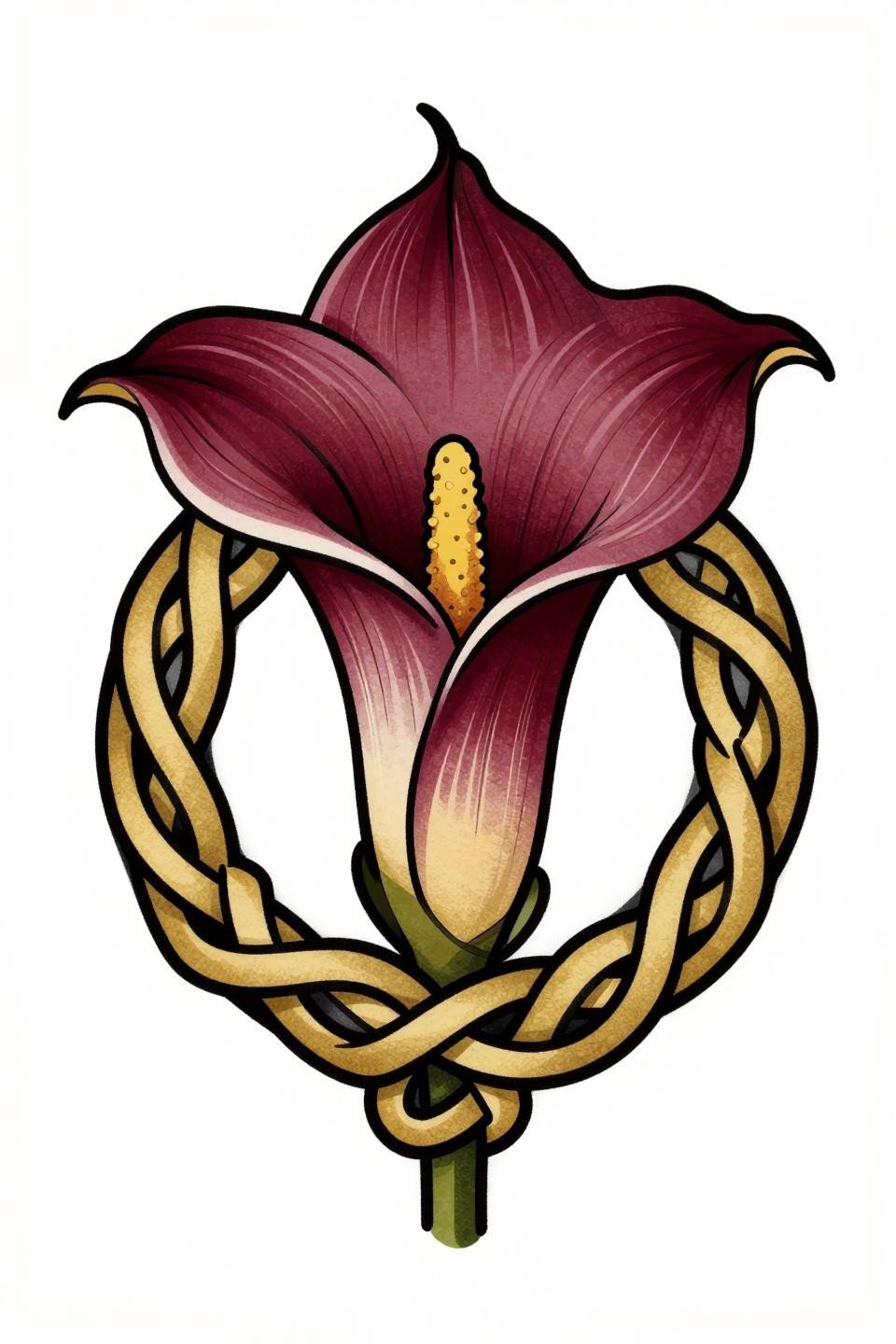
A calla lily orchid hybrid locked within an interlocking Celtic knot circular mandala, using only flat gold and solid black. The bilateral radial symmetry of the knotwork frame requires the botanical subject at its center to have a strong readable silhouette at the locking points.
The elongated spadix rising from the funnel spathe gives this species exactly the vertical axis clarity Celtic knotwork frames need. Species with complex lateral petal extension would fight the frame geometry rather than complement it.
Sketch Raw Style: Where Zero Grey Wash Is a Technical Decision
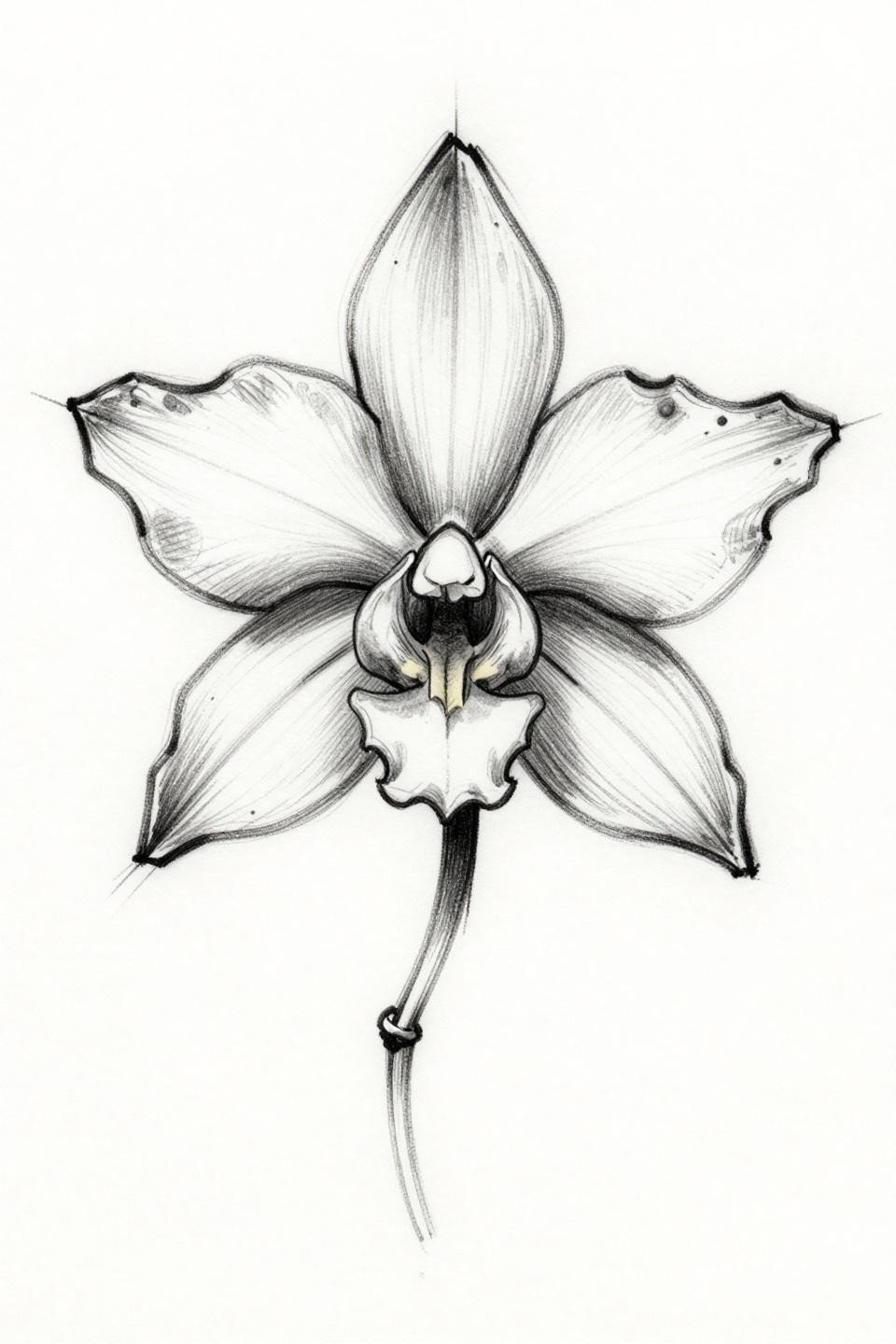
The Masdevallia triangularis orchid’s compact triangular bloom and wild filament tails make it a natural fit for sketch raw style. Aggressive unfinished linework with zero grey wash keeps the high contrast pure, and the irregular outlines work with the species’ asymmetric filament structure rather than against it.
Raw sketch style ages well on protected placements precisely because bold irregular line weight absorbs minor ink migration without losing the design’s identity. The deliberate unfinished quality masks what soft grey wash would eventually reveal.
Single Continuous Line Orchid: The Artist Speed Test
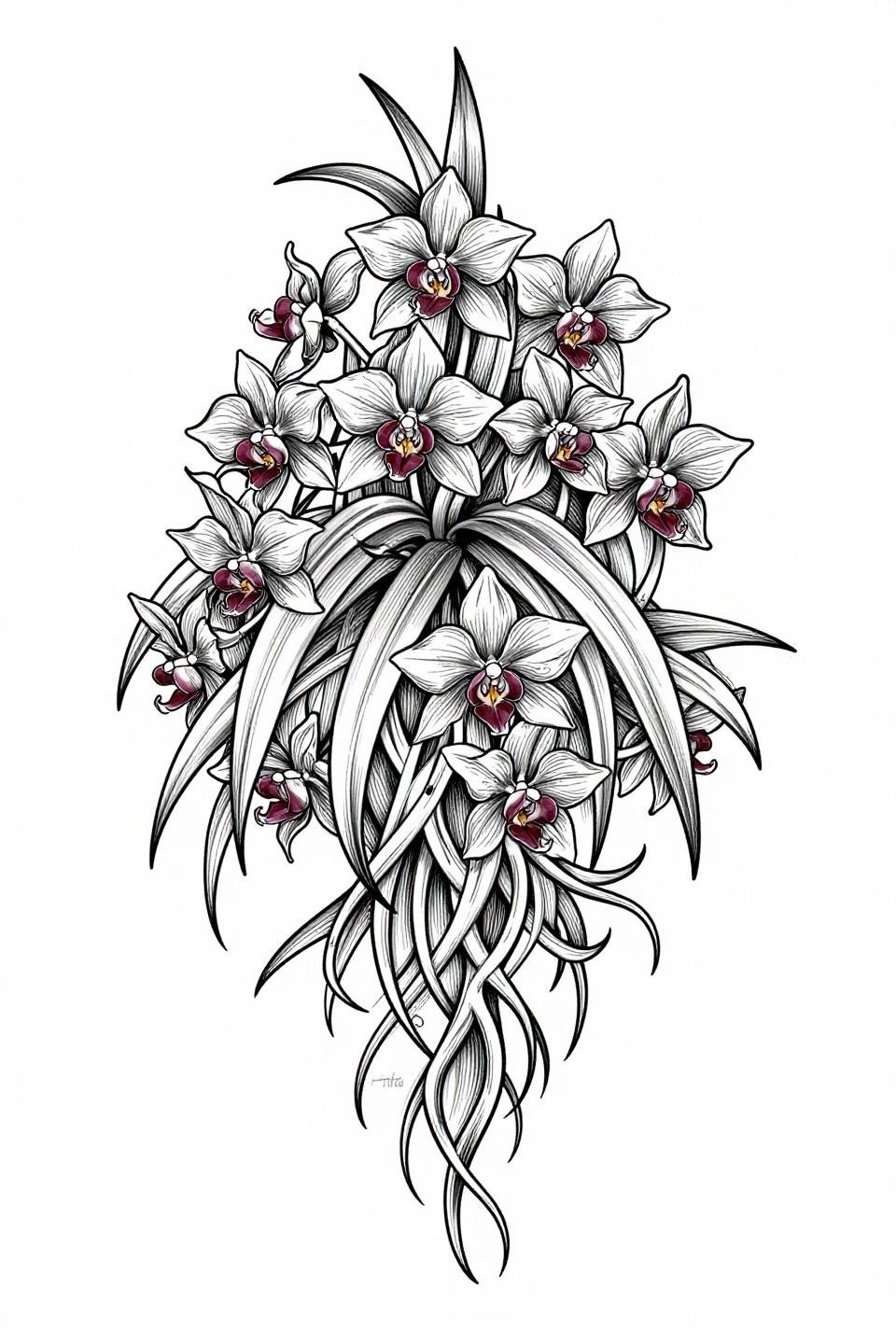
This Grammatophyllum scriptum orchid uses a single unbroken hairline contour with no fill and no shading. The branching inflorescence with dozens of small star-shaped blooms gives the continuous line something to navigate, but the aerial root tendrils interweaving throughout are where the composition either holds together or falls apart.
Single-needle 1RL work at this level requires an artist who controls machine speed through direction changes. The tell is the curves at root-to-stem junctions: no wobble or weight change at directional shifts means the artist has the hand speed dialed.
Etching Hatching on Lady’s Slipper: Shadow Fields Over Gradients
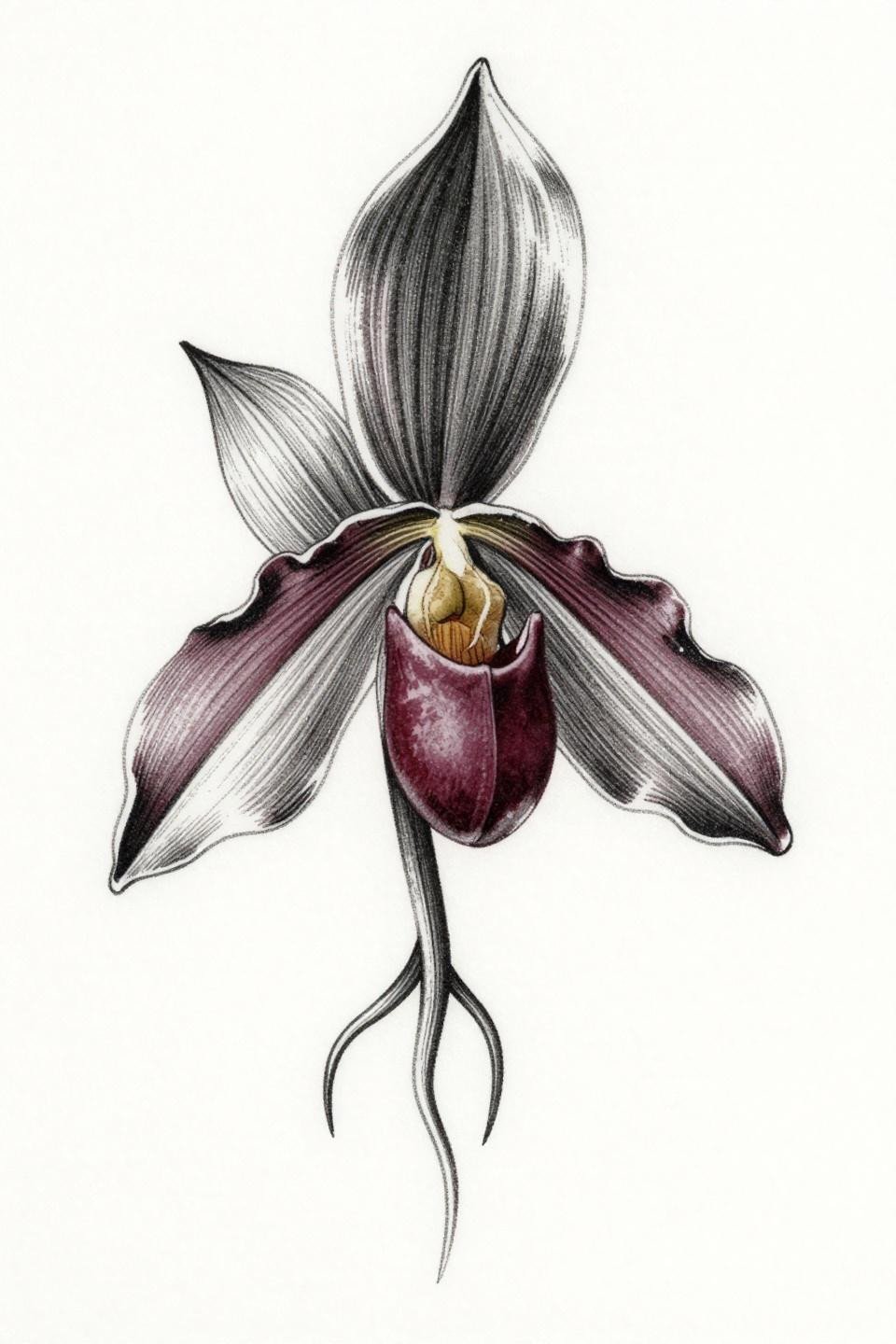
The Paphiopedilum rothschildianum’s elongated horizontal ribbon petals suit an etching woodcut approach: the lateral petal spread gives the crossed parallel hatching room to build shadow fields across a wide horizontal format. Dense incised line texture replaces any smooth gradient work.
Crossed hatching shadow fields at this density hold on the upper arm and thigh for years where stipple dotwork in the same tonal range would spread. The grey wash midtones here are structural, bridging the gap between engraved shadow and open highlight without needing a smooth wash technique.
Art Nouveau Cattleya: Whip Shading Along the Petal Ruffles
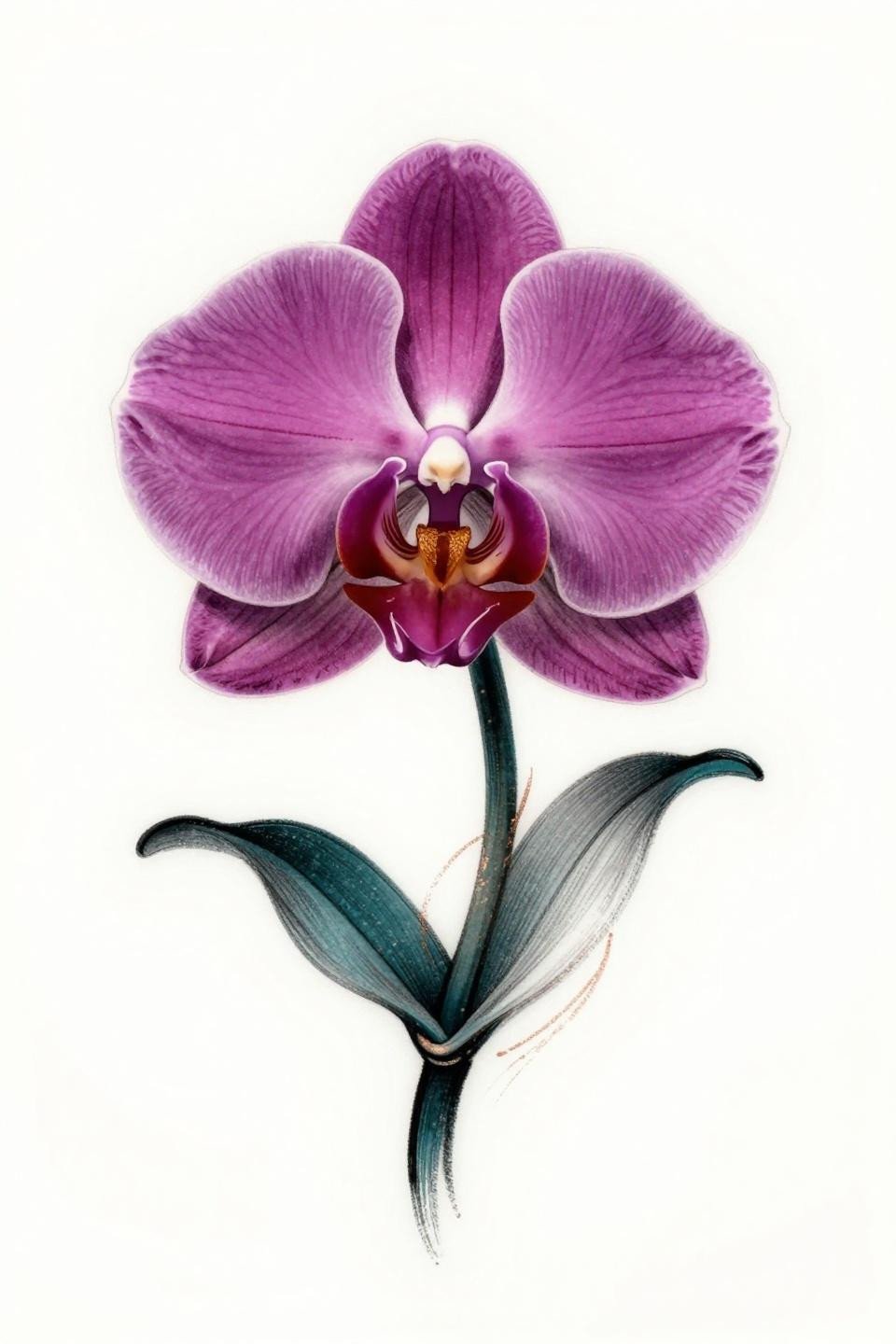
The Cattleya orchid’s ruffled magenta petals and prominent pouch labellum with golden throat veining are well-suited to art nouveau flowing linework. Whip shading curved strokes follow the petal ruffles rather than crossing them, building form through directional line movement.
Deep teal with copper metallic accent is a palette that rewards curved 14M mag shading in the bokashi transition zones. The flowing organic asymmetry means this flash works as a standalone shoulder cap or as an upper sleeve anchor piece.
Tribal Geometric Orchid: Botanical Form Abstracted Into Negative Space
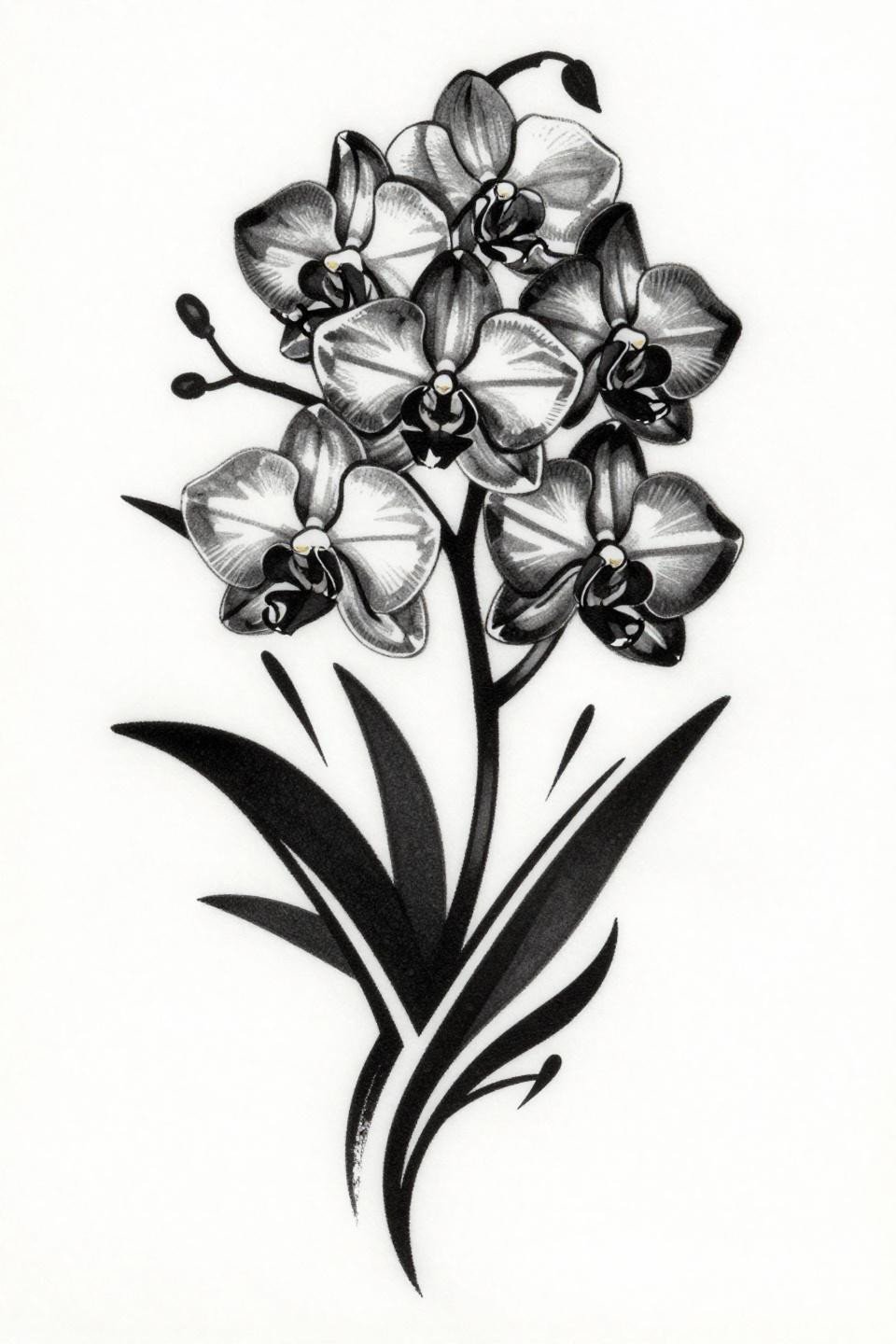
The Epidendrum crucifix orchid’s clustered star-shaped blooms and wiry stems are abstracted into bold interlocking angular tribal lines with aggressive negative space carving. The botanical reference is present in the stem branching and aerial rootlet forms, but the execution is pure graphic blackwork.
Blackwork at full saturation holds density indefinitely when the artist commits to layered passes. On darker skin tones, this high-contrast flat black approach outperforms any color or grey wash alternative by a significant margin in long-term readability.
Dotwork Diamond Frame: Consistent Dot Size Across the Full Gradient
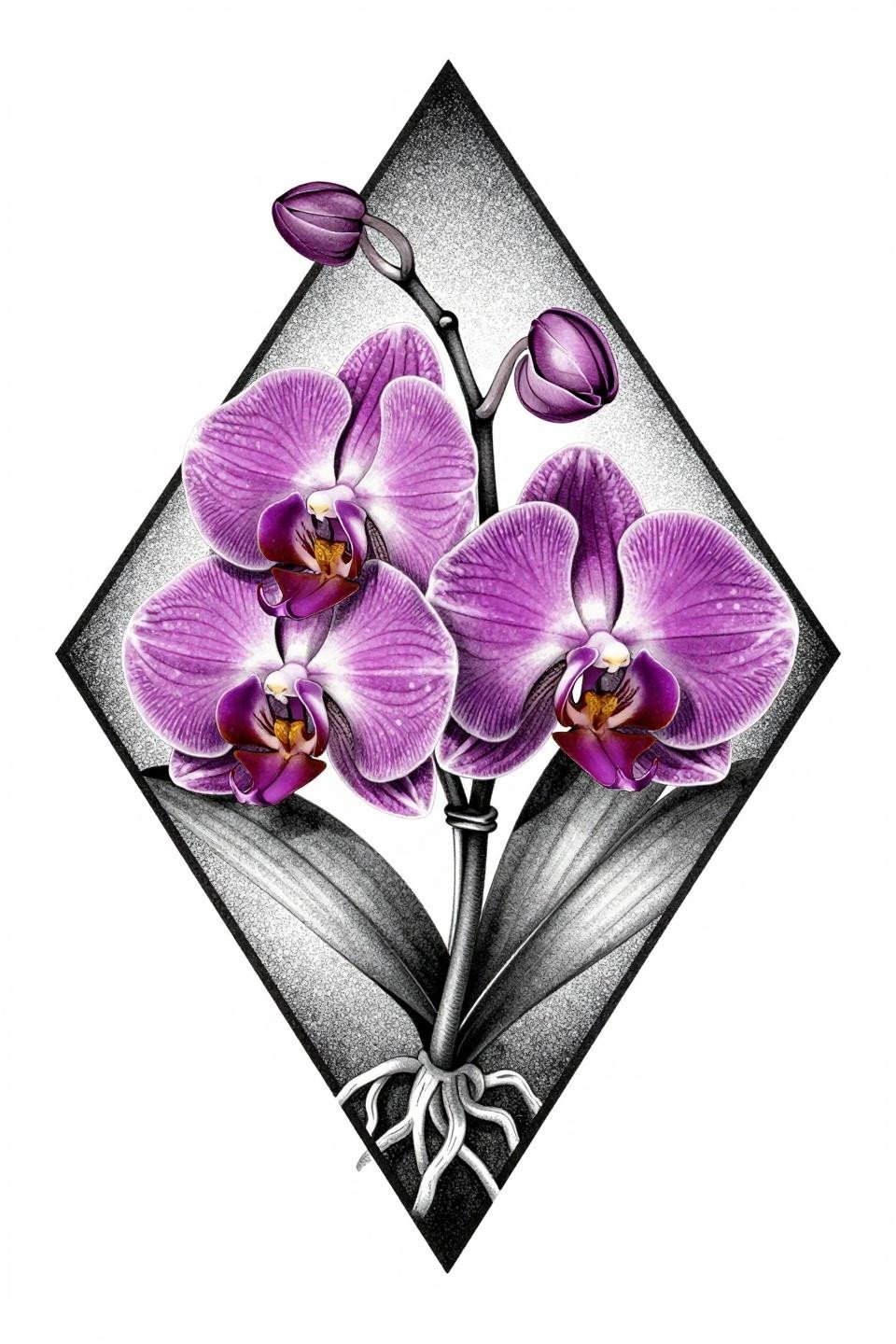
This Vanda orchid dotwork flash sits inside a sharp diamond geometric frame, with stipple dot density running from dense at the labellum center to open negative space at the outer petal zones. No solid fills anywhere in the composition.
Look for consistent dot size across the full gradient in any reference portfolio before booking dotwork. Dot size variation in the midtone range is the earliest indicator of uneven machine pressure, and it shows on healed work within the first year.
Irezumi Phalaenopsis: Flat Color and Outline Weight as Longevity Strategy
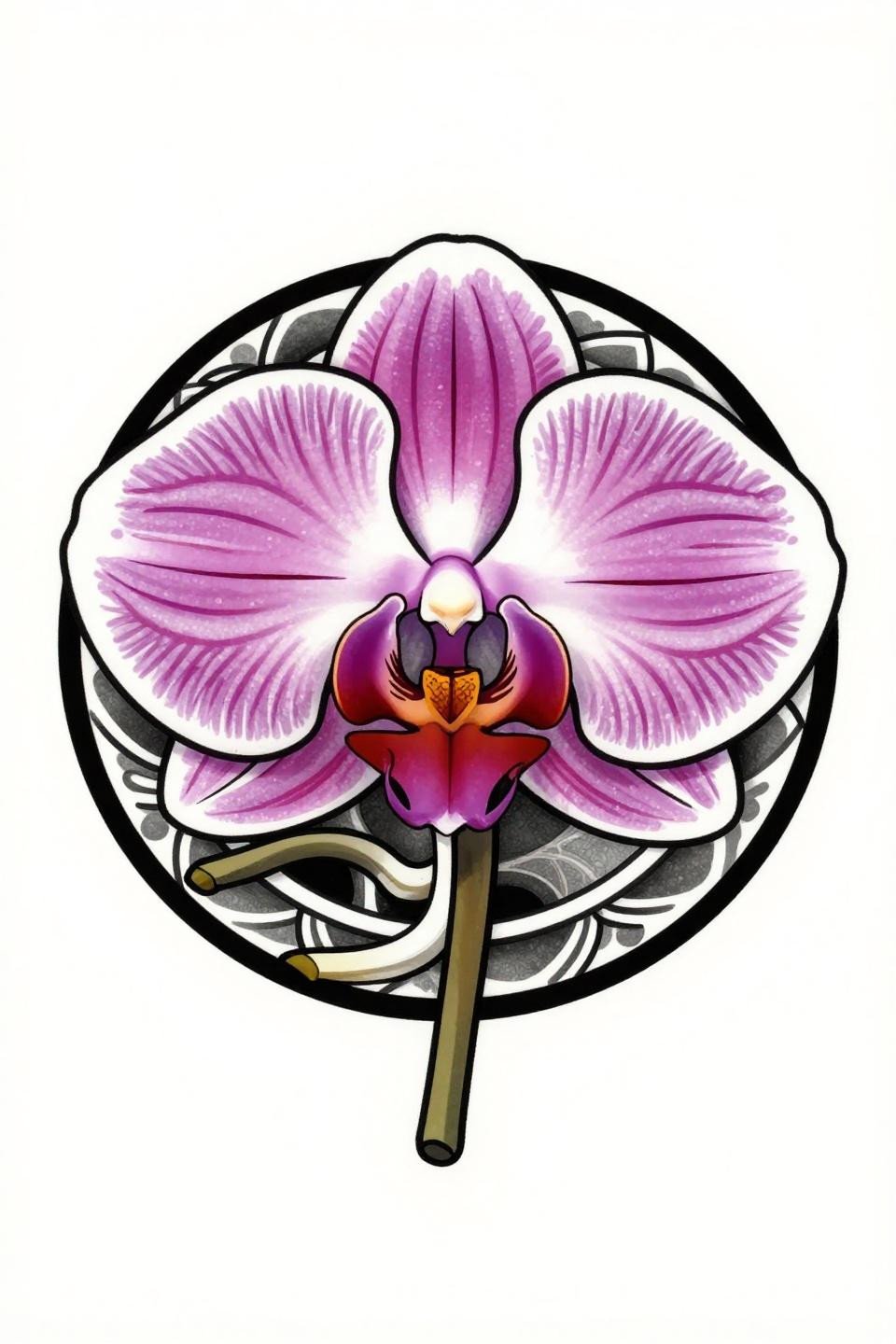
A Phalaenopsis moth orchid in Japanese irezumi style, enclosed in a circular mandala with bilateral symmetry and flat deep indigo and crimson magenta fills. The bold 2-3pt outlines at the petal boundaries hold the color zones separated as the fills soften over time.
Irezumi flat color fills rely on outline weight as the long-term structure. The magenta veining detail in the labellum is rendered as flat graphic shapes rather than shaded forms, which is correct for this style and extends the design’s decade-plus readability.
Neo-Traditional Dancing Lady: Diagonal Flow as Placement Logic
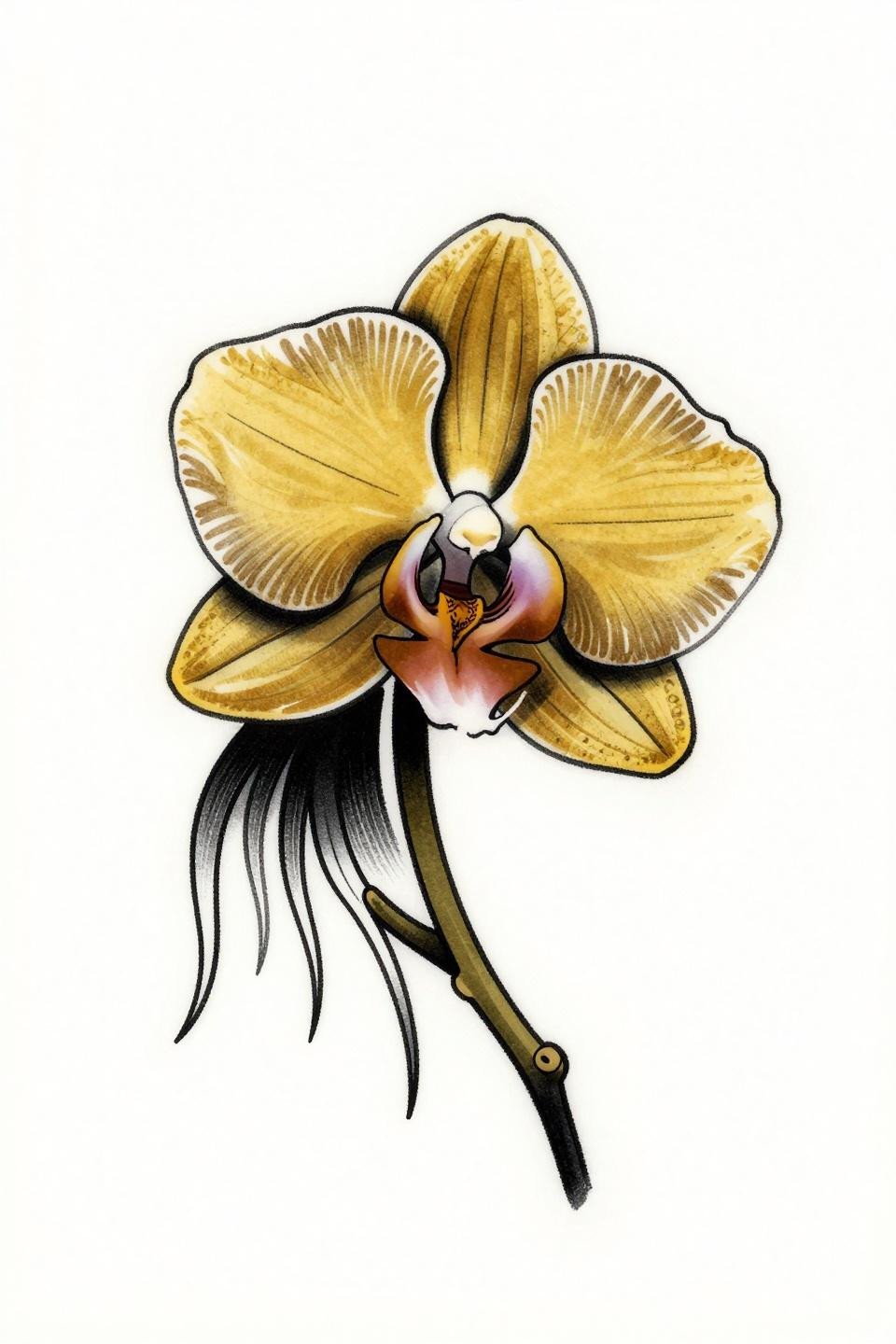
The Oncidium dancing lady orchid’s ruffled yellow-gold petals and brown striped sepals translate directly into neo-traditional flat color with bold outlines. The asymmetric diagonal flow composition makes this flash a natural fit for the outer forearm or upper arm, where the diagonal axis aligns with the limb’s movement direction.
The aerial root filaments trailing from the base add compositional reach below the bloom, giving this design more vertical coverage than the flower alone would provide at equivalent scale.
Fine Line Dendrobium: Linework Economy as the Design Principle
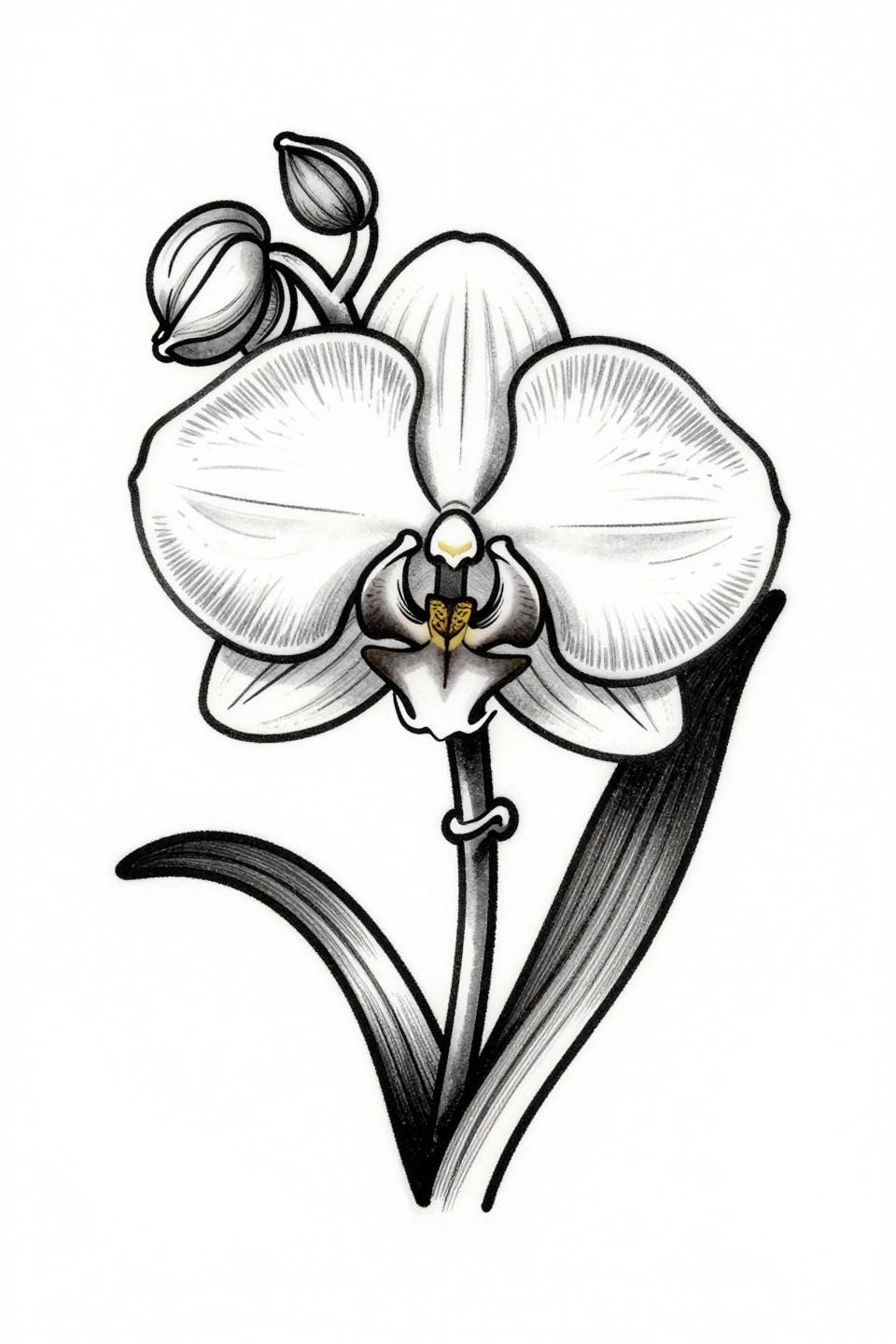
A Dendrobium orchid rendered in fine line minimal style, single centered vertical composition with even negative space on all sides. Bold 2-3pt outlines with flat color fills and zero grey wash. Linework economy is the design principle: every line describes either an edge or a structural form, nothing is decorative.
This is a finger-placement risk if scaled down too aggressively. At the scale shown, on the inner wrist or sternum, the outline weight is sufficient to hold the design’s definition through the first decade without a touch-up.
Watercolor Paphiopedilum: Why the Calligraphic Marks Matter
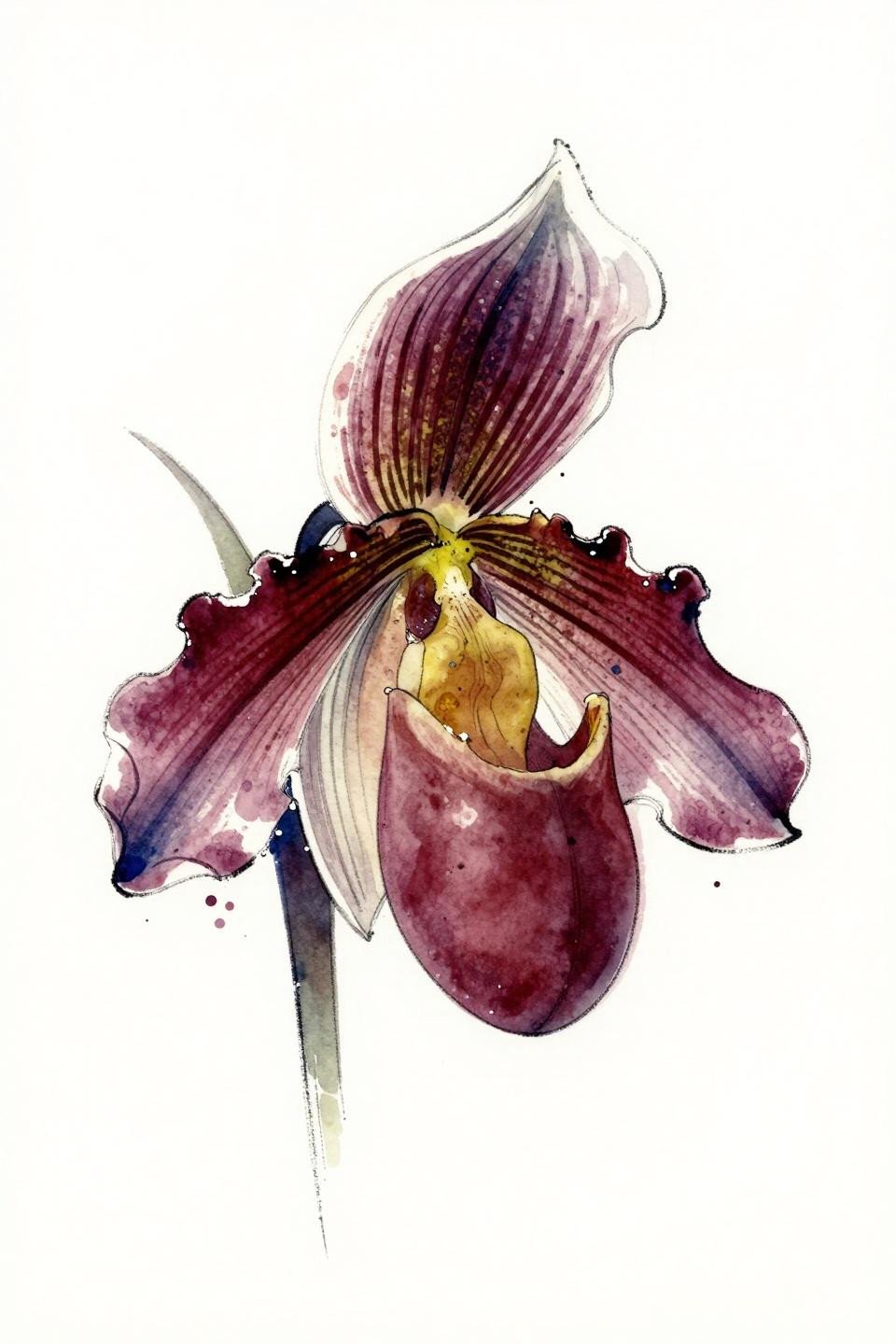
This Paphiopedilum lady’s slipper orchid uses brush and ink calligraphic marks as the structural layer beneath the deep indigo and crimson watercolor diffusion. The mottled burgundy and cream petal coloration suits watercolor’s bleeding edge behavior, making the technique choice match the subject rather than fight it.
Watercolor without an anchoring outline structure blurs by year three to five on most placements. The calligraphic ink marks here are not decorative additions. They are the longevity layer that keeps the composition readable as the color diffusion spreads.
Botanical Fine Line Cattleya: Single Needle as the Highest Risk Move

A Cattleya orchid in full botanical scientific style, straight-on view with hairline 0.5mm single-needle strokes and fine weight variation at the petal edges. The labellum striations and sepal framing are rendered with the same line density as a 19th-century botanical plate illustration.
Single needle 1RL work at this weight needs an artist who controls hand speed precisely. On lighter skin tones this reads crisp. On olive and darker skin, the fine lines need bolder weight to maintain contrast over time, making this style a placement and skin tone conversation before it is a design conversation.
Pull three to five references from this collection based on your placement and skin tone, not on which design looks most interesting in isolation. Send those three to five to your artist as a direction set. A tight reference brief produces a better consultation than a folder of thirty images that covers every style in the collection.