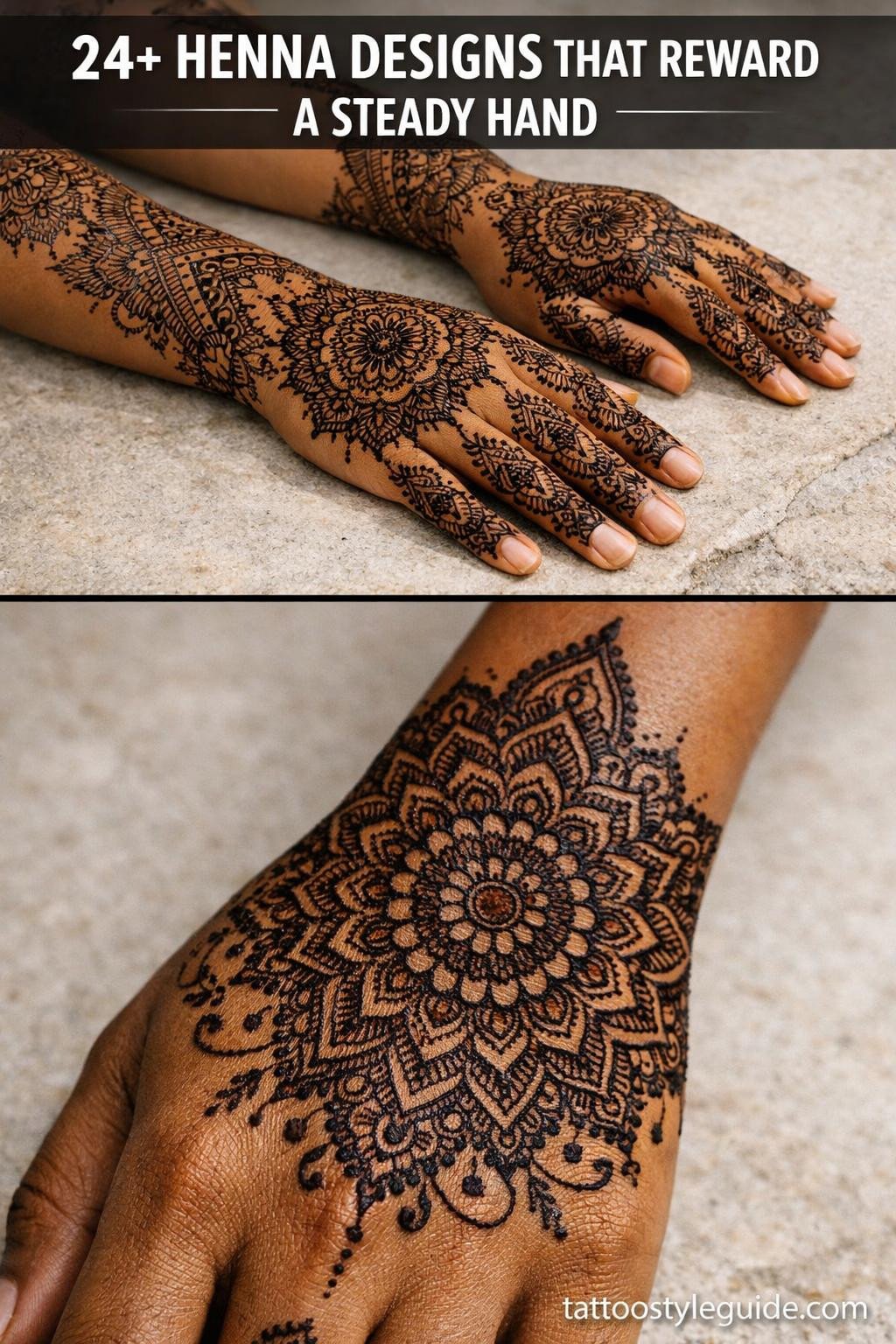
Henna main designs punish inconsistency more than almost any other reference style. The density shifts, the negative space ratios, the way a vine terminal curves: all of it reads immediately when the line wavers. Good references teach hand control before the cone ever touches skin.
Most collectors pick henna-inspired flash for the wrong reason. They see the finished piece and miss what makes it hold: tight linework hierarchy, deliberate fill density, and compositions built around the placement, not the paper.
Asymmetric Lotus Flow: Where Negative Space Does the Work
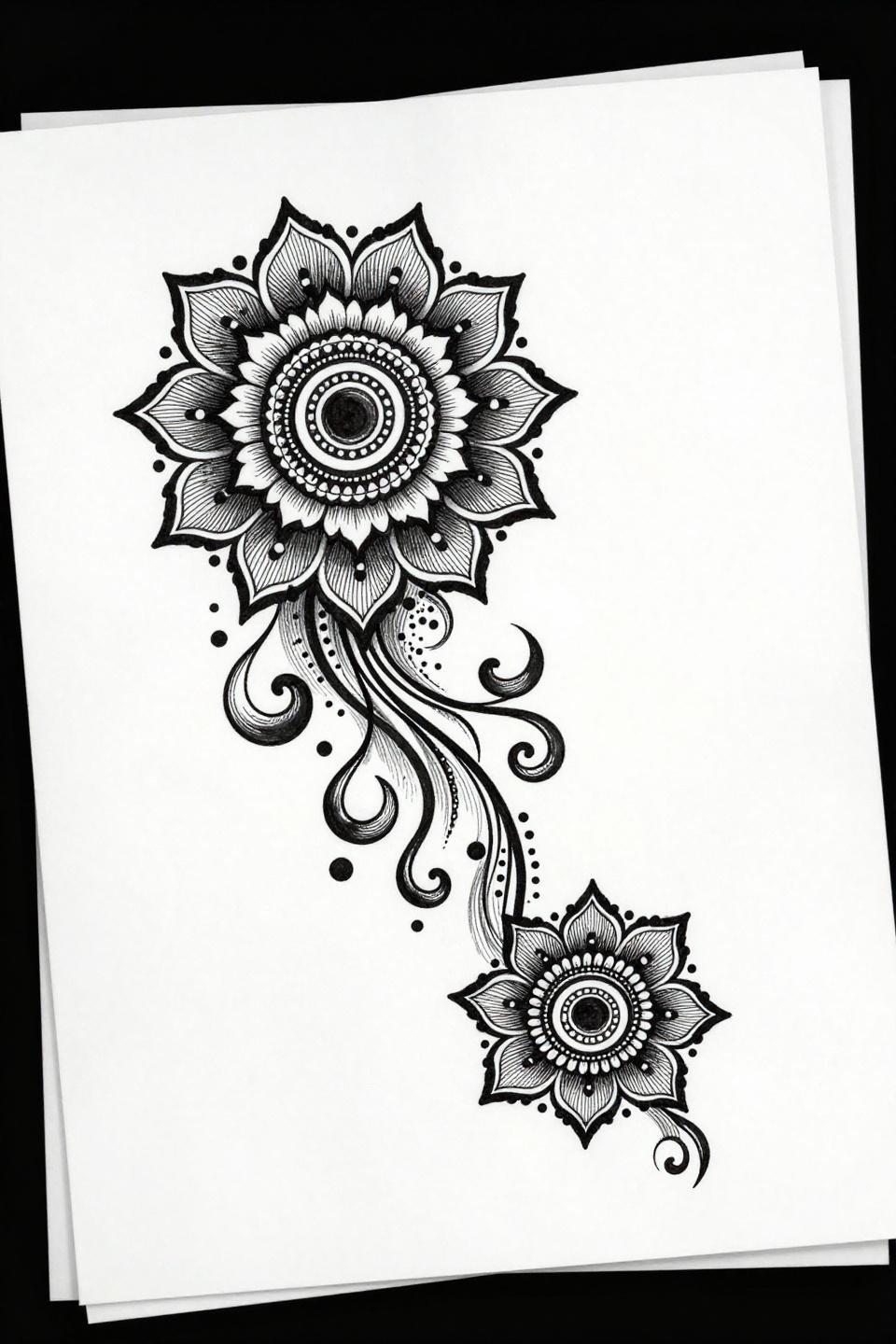
This crosshatch engraving approach to a twelve-petal lotus uses 0.3pt parallel strokes to build tonal depth without solid fills, keeping the right side intentionally open for placement flexibility along a forearm or sternum.
The asymmetric cascade of vine tendrils with crescent moon terminals is the structural tell here. An artist who can hold that organic curve without wobble at the direction changes is showing real line control.
Peacock Mandala: Circular Geometry That Ages by the Fill
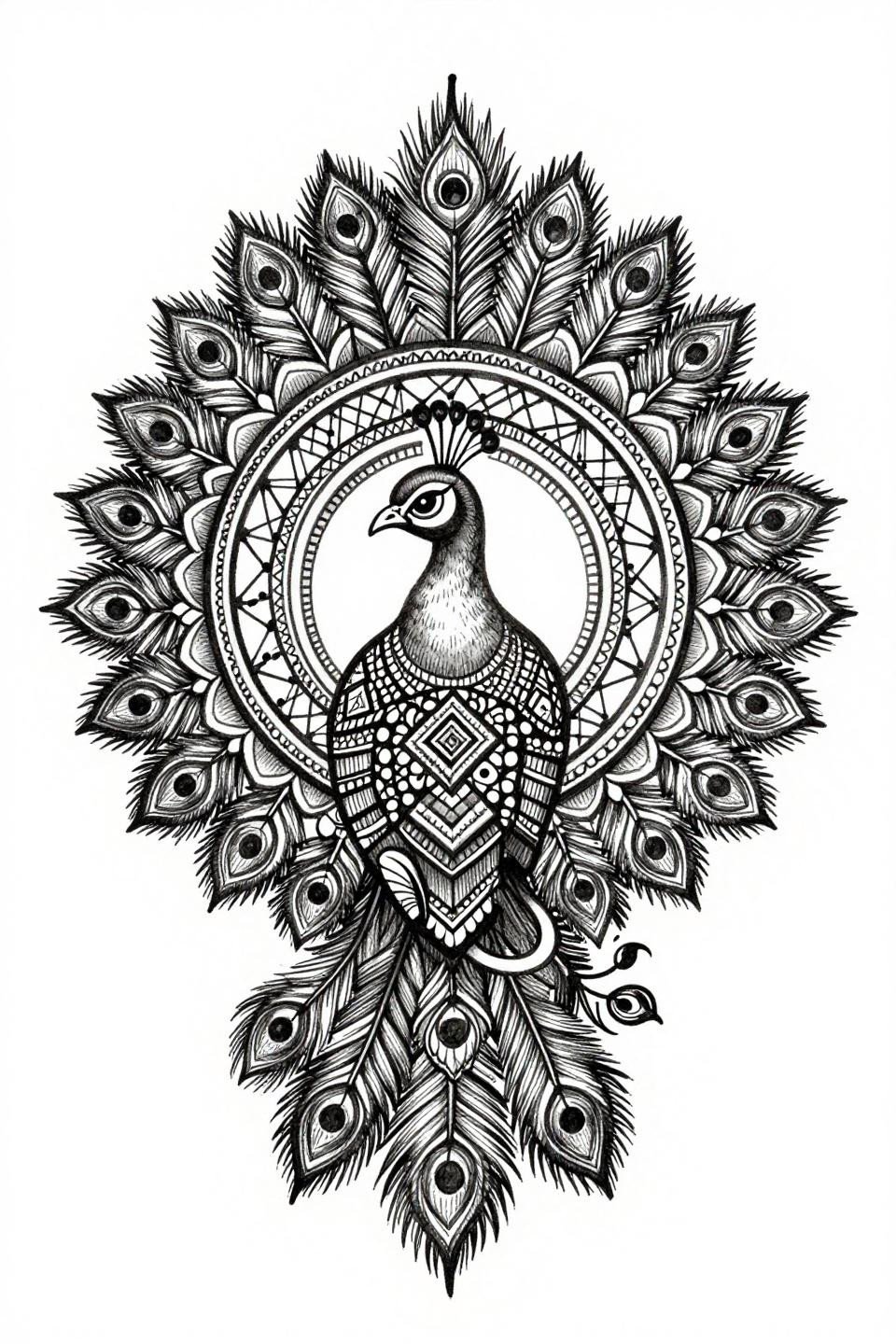
The frontal peacock here locks its tail feathers into a circular mandala composition, with each ring alternating between geometric lattice and floral motif fills, anchored by a nested diamond eye medallion at center.
Engraving-style flash like this is a direct reference for henna designs for permanent inspiration. The ruled stroke density translates directly to grey wash layering on skin.
Woodcut Mandala: Bold Relief Lines That Read at Distance
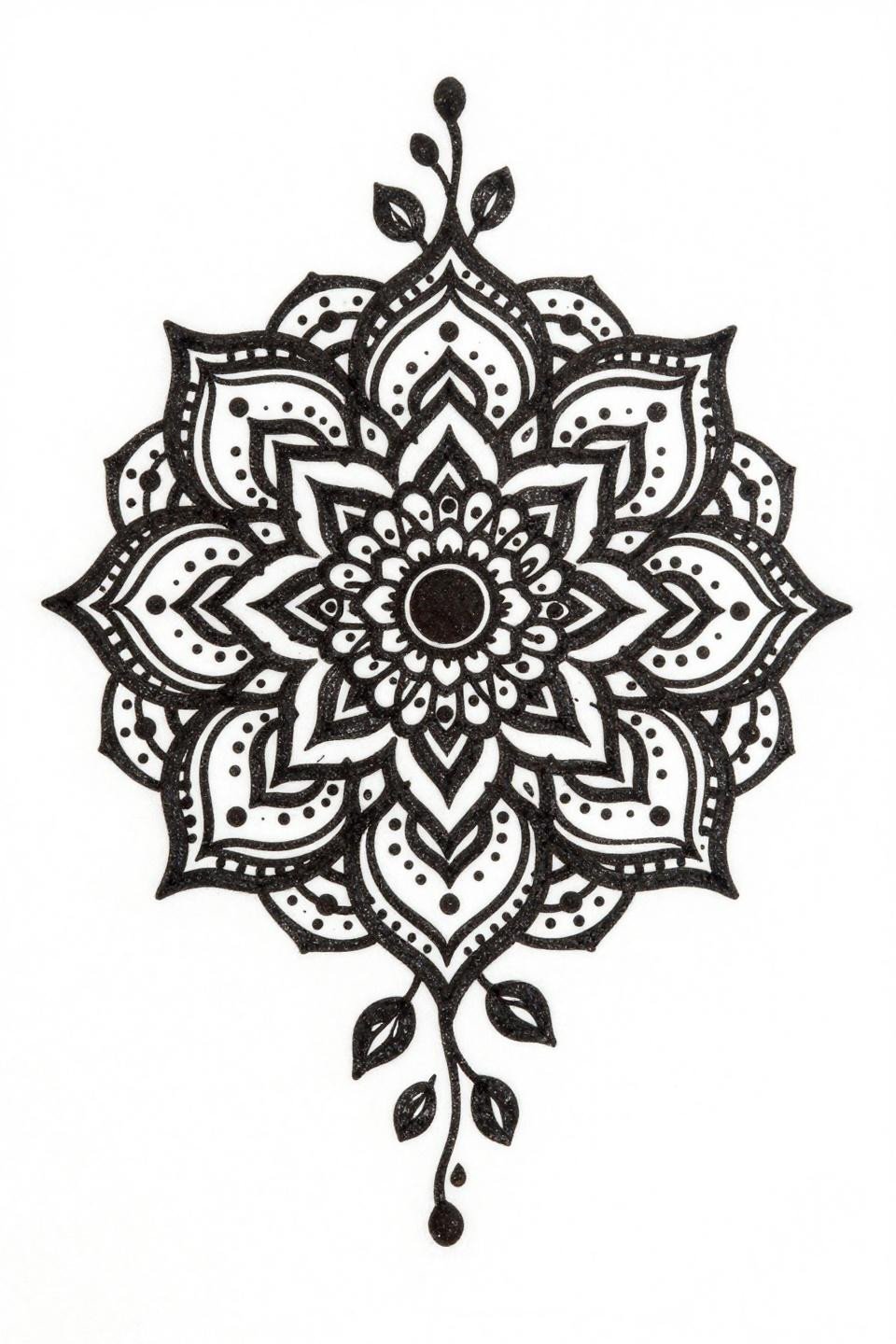
Linocut block print rendering strips the design to its weight essentials: thick carved lines, solid black relief, and zero grey wash, which makes this bilateral symmetry structure read clearly at any viewing distance.
The bold outline weight here directly signals longevity. On olive and darker skin tones, this fill density maintains contrast through the first decade where fine-line versions fade into the skin.
Trash Polka Peacock: Controlled Chaos With Traditional Bones
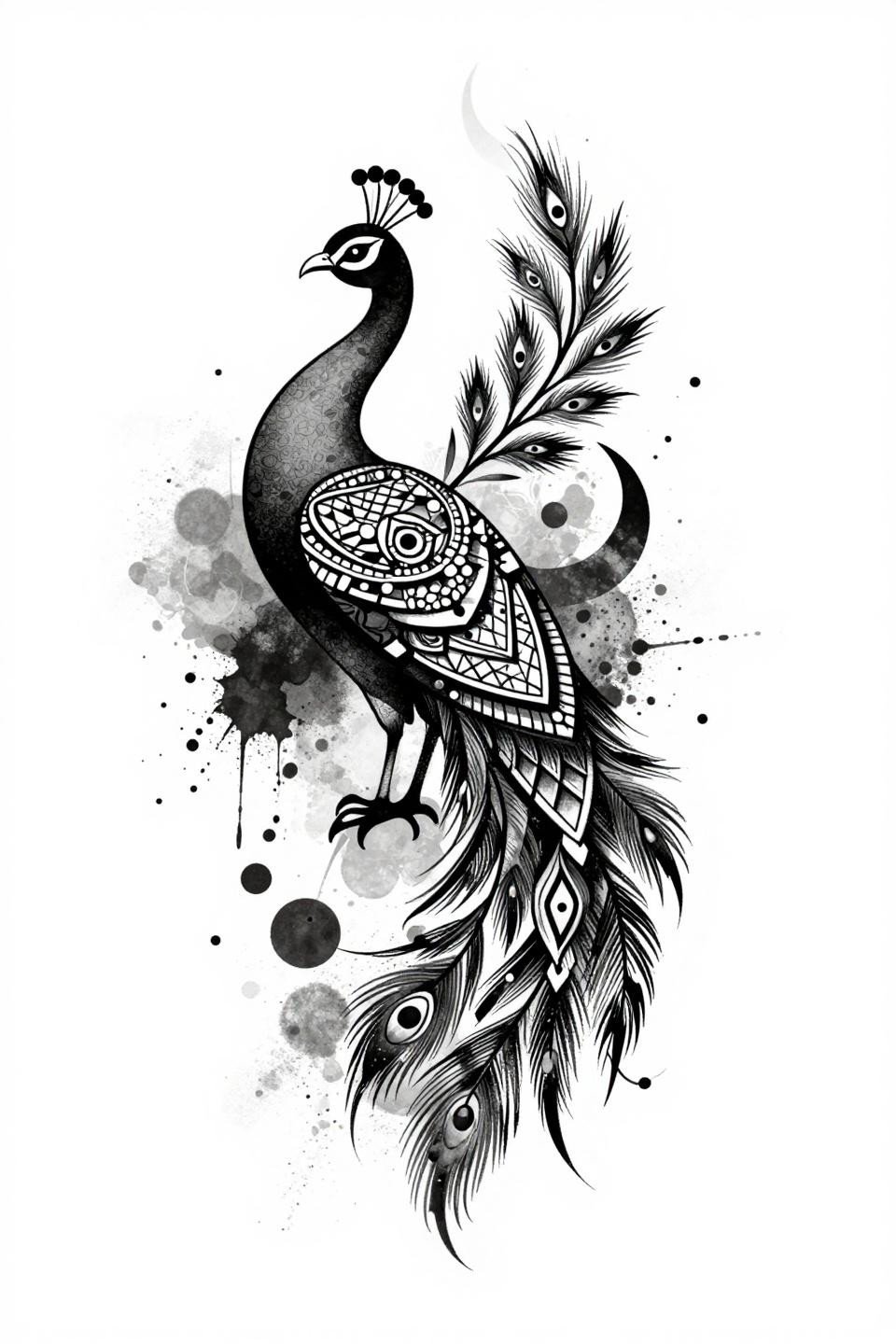
The stepped diamond lattice fracturing the peacock’s tail geometry is the design’s structural backbone, and the splatter ink burst accents are deliberate tension against the traditional crescent moon terminal vines below.
Whip shading with grey wash dilution in this style requires an artist who commits to layered passes. Check healed work specifically before booking this one.
Palmette Constellation: Stipple Density as Composition Logic
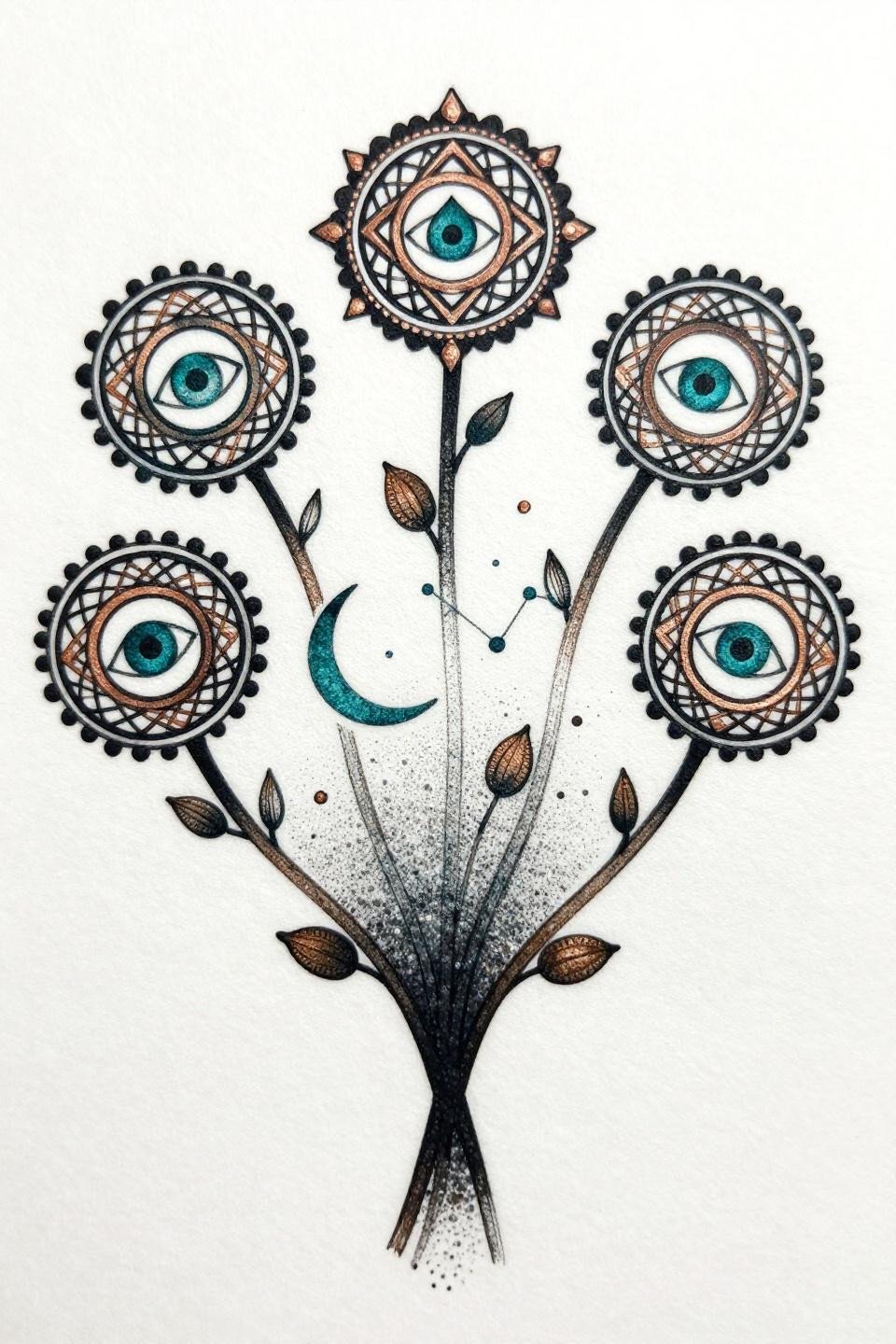
Five asymmetric vine stems radiate from a central teardrop eye, each terminating in nested circular motifs, with the stipple dot gradient running from 90% density at the core to an open constellation field at the edges.
The teal and copper palette is a collector-tier choice: both pigments hold saturation on lighter skin tones but copper metallic inks require a top-up at year three to five as they shift warmer.
Celtic Band Fusion: When Knotwork Disciplines Henna Flow
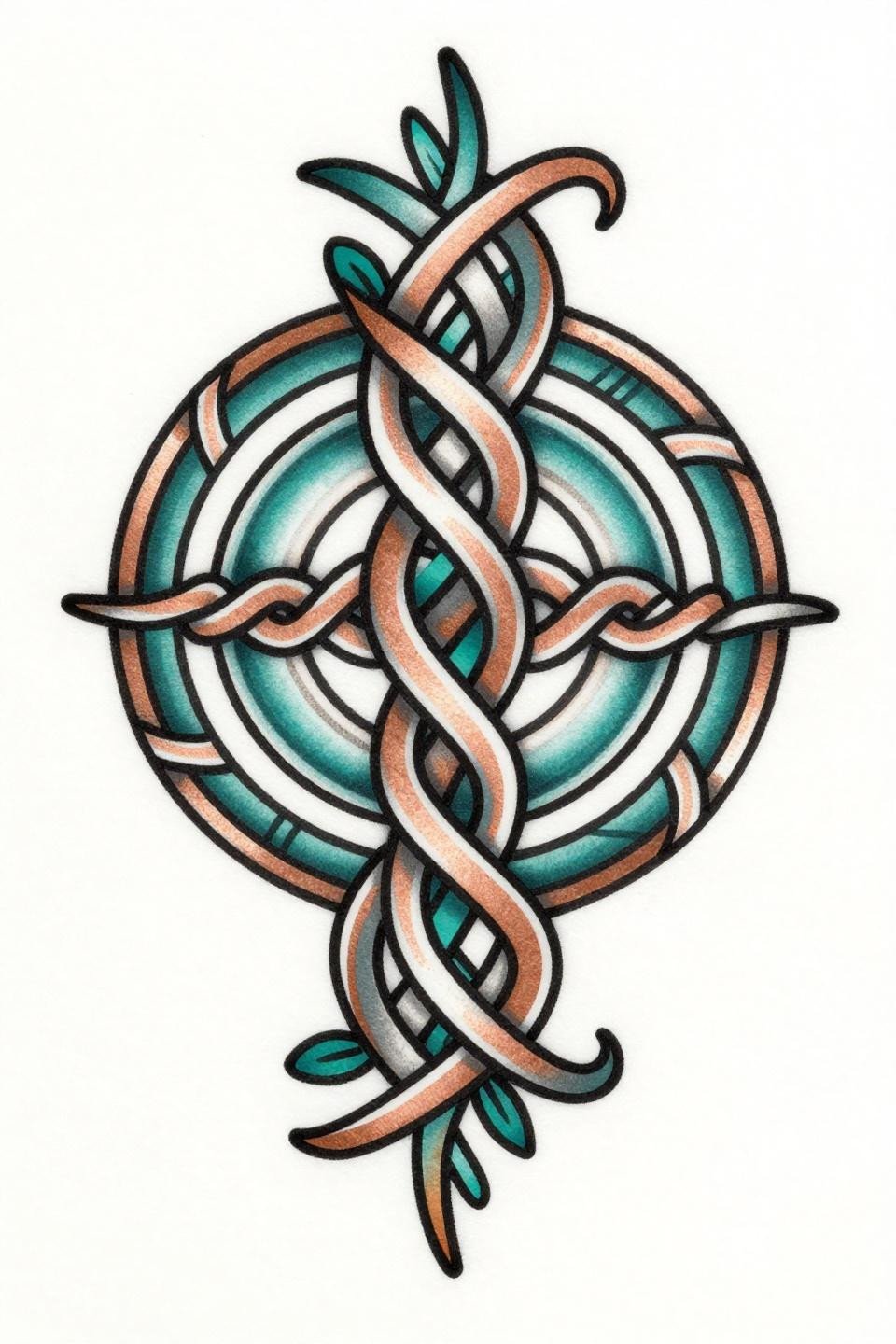
Stacked geometric bands with a central hexagonal rosette give this design its vertical bilateral symmetry, while interlocking Celtic ribbon weaves between each band add directional movement without breaking the henna vocabulary.
The simple mehndi patterns and techniques visible in the cuff structure here scale well for wrist placement, where the band composition follows the limb’s natural contour.
Old School Lotus Lattice: Red Accent That Holds Without Complexity
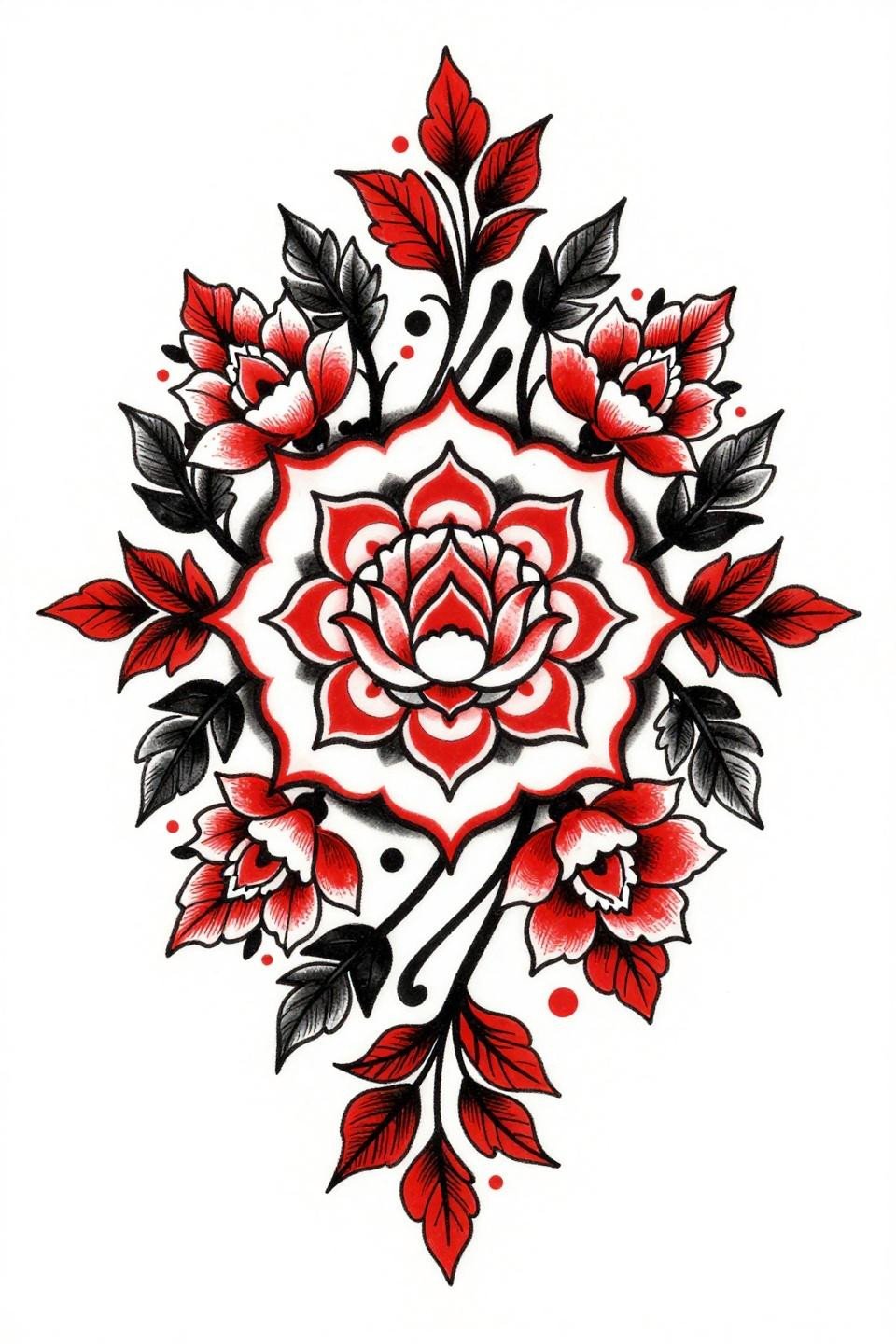
Flat crimson red used as a single accent against solid black in a traditional American outline weight gives this lotus lattice its visual hierarchy: the red marks the structural core, black carries the linework.
Bold 2-3pt outlines are the longevity signal in traditional flash, and this composition holds that standard throughout. Flat fills with no patchiness are the separator between veterans and beginners on a design this dense.
Art Deco Medallion: Islamic Geometry Through a Gold Lens
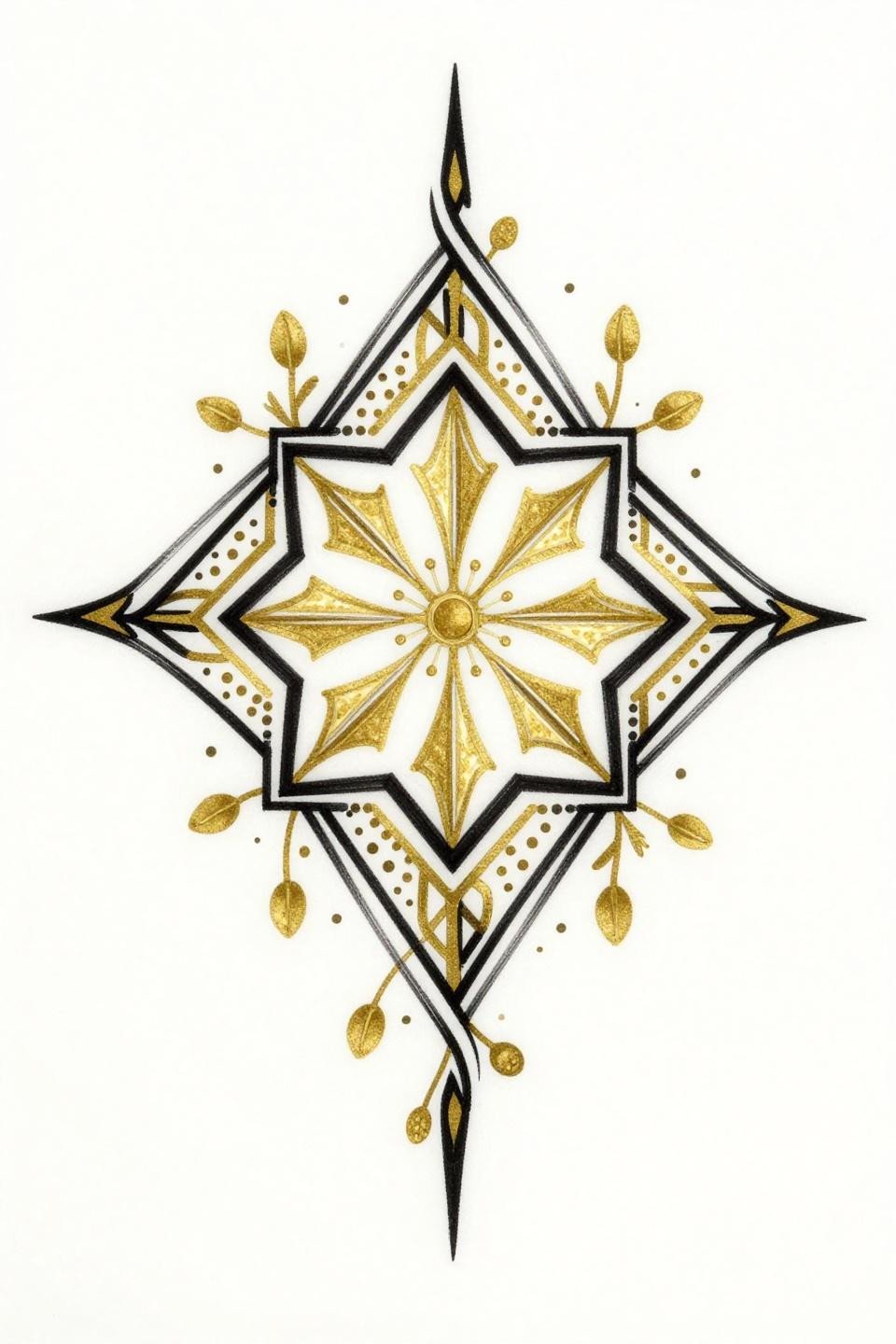
The Art Deco rendering of an Islamic lattice structure uses carved negative space between geometric bands to form the pattern, with flat gold fills reserved for the central medallion’s radiating petal sections.
Gold ink in permanent tattooing behaves differently from henna’s metallic staining. Request healed portfolio shots specifically for any artist proposing gold pigment work before committing to this reference.
Traditional American Paisley Mandala: Yellow Fill as Structure Signal
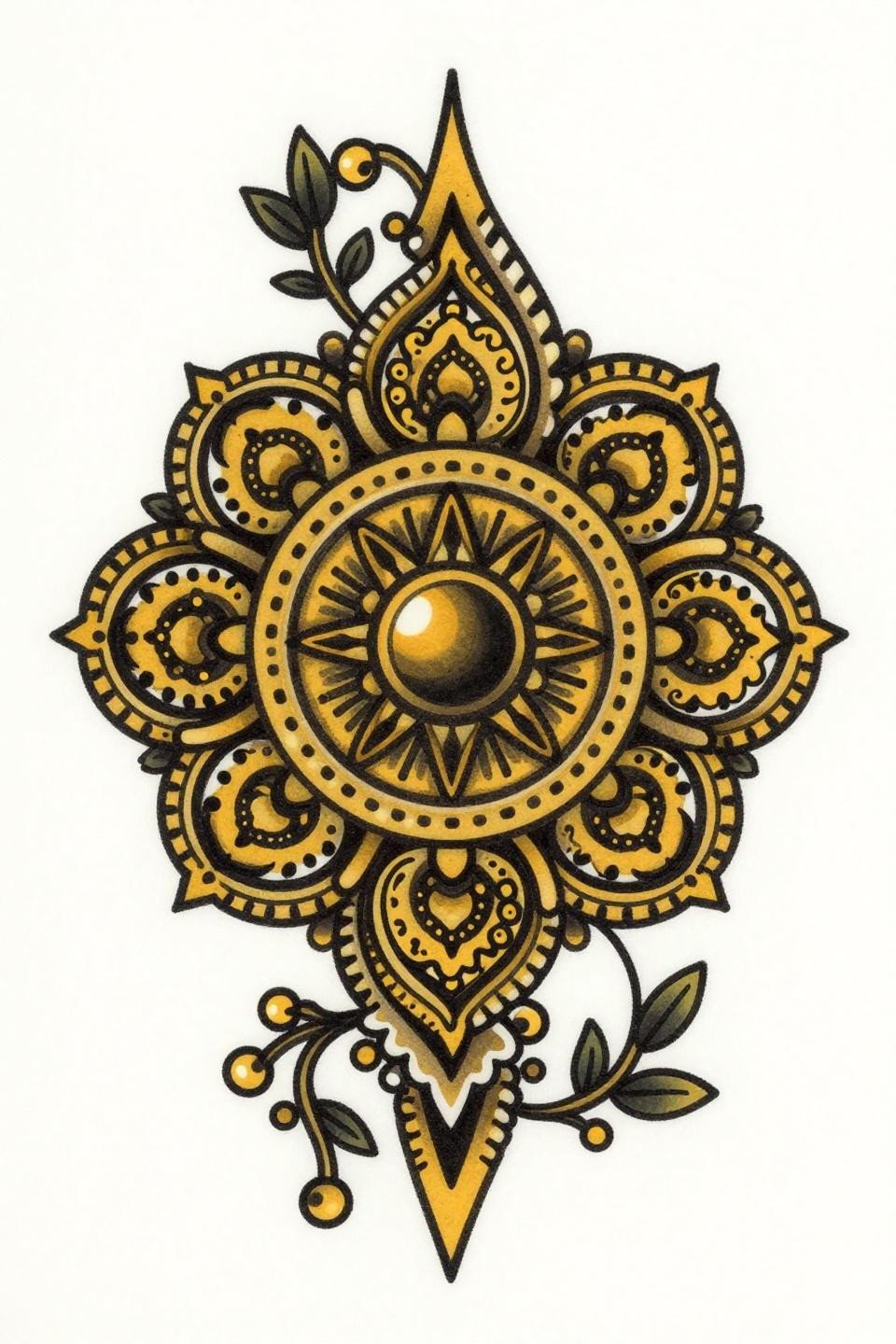
The central teardrop surrounded by dense paisley infill patterns is built on nested circular frames with radiating geometric spokes, and the flat golden yellow fill clarifies the design’s focal hierarchy instantly.
This composition is sized and structured for palm placement, where the radial symmetry aligns with the hand’s natural center point. Protected placement extends the life of the fine vine detail significantly.
Ignorant Style Star: Intentional Imperfection With Structural Precision
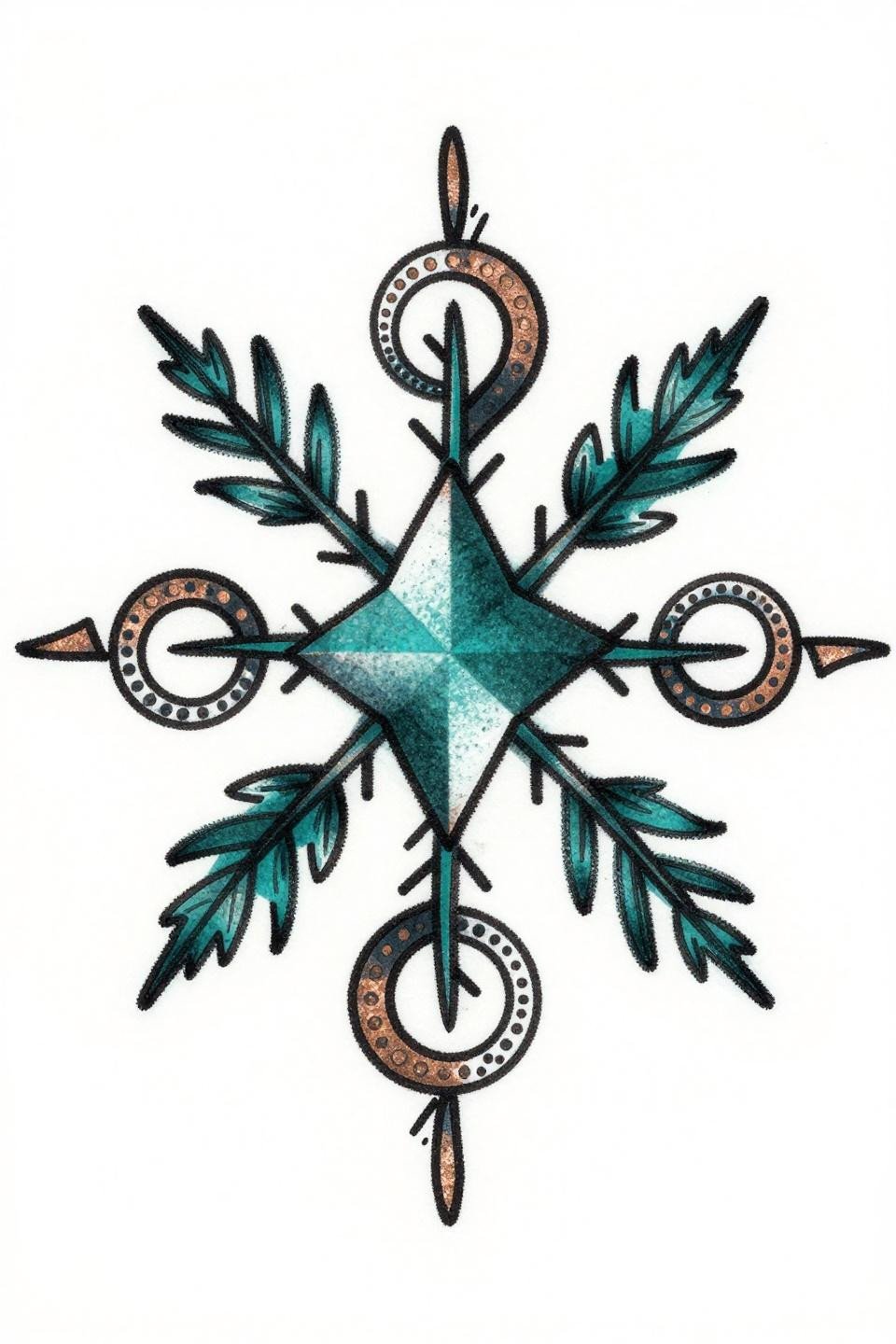
The eight-pointed star medallion in ignorant style uses intentionally imperfect outline weight to push against the precision of the surrounding henna geometry, with teal and copper accents marking the vine terminals and dot clusters.
Hand placement means friction, sun exposure, and constant flexing. Plan for touch-up at two to three years minimum regardless of how clean the initial application reads.
Chicano Grey Wash Peacock: Tonal Range Meets Henna Line Logic
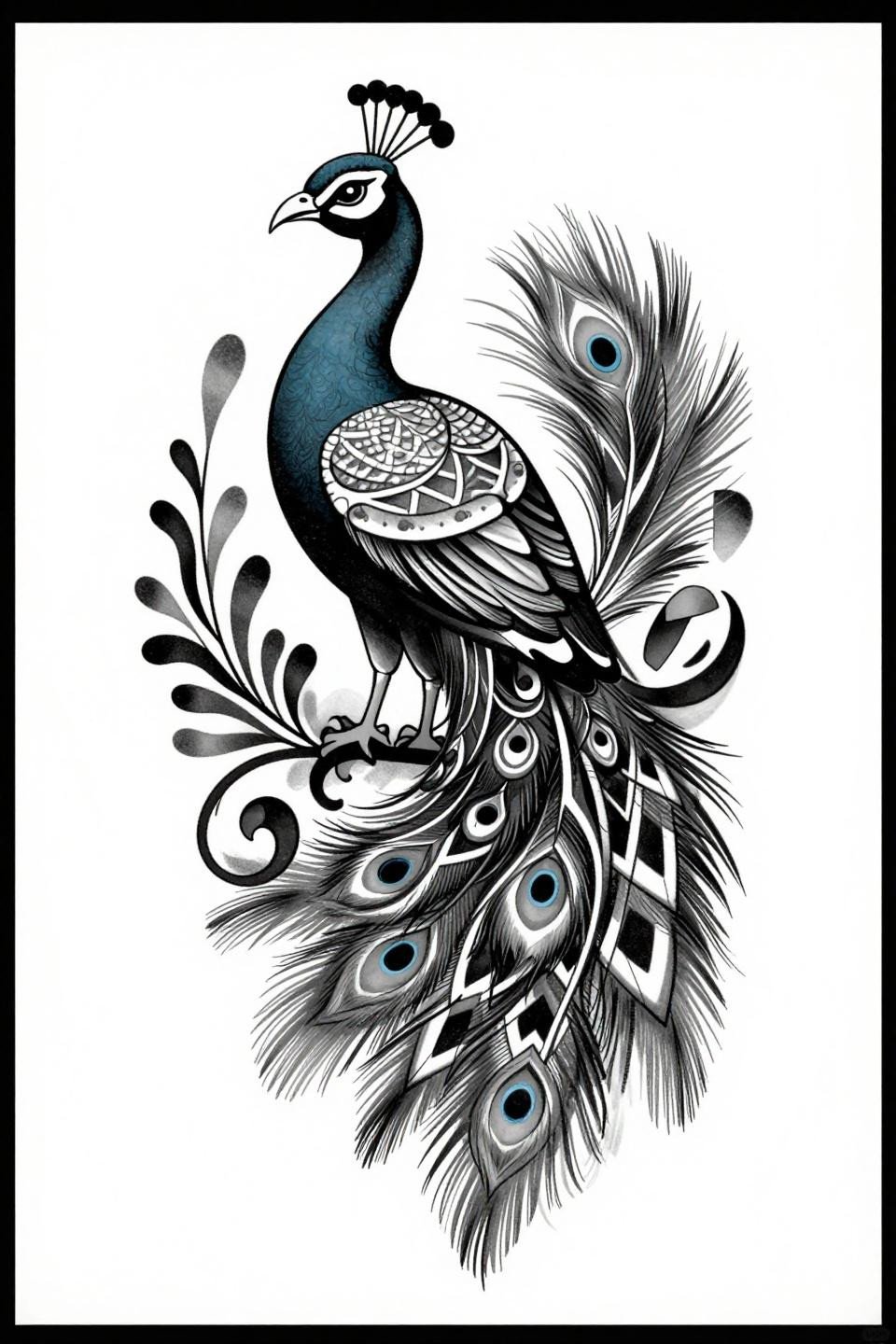
Smooth whip shading with layered grey wash builds the peacock tail’s geometric lattice grid from dense black at the feather cores to open white highlights at the edges, a tonal gradient range that requires genuine dilution control.
Grey wash dilution from dense to open with no muddy midtones is the artist skill signal on this one. On olive skin, this level of wash reads cleaner than solid black fields at the five-year mark.
Neo-Traditional Moroccan Star: Zero Grey, Maximum Geometric Clarity
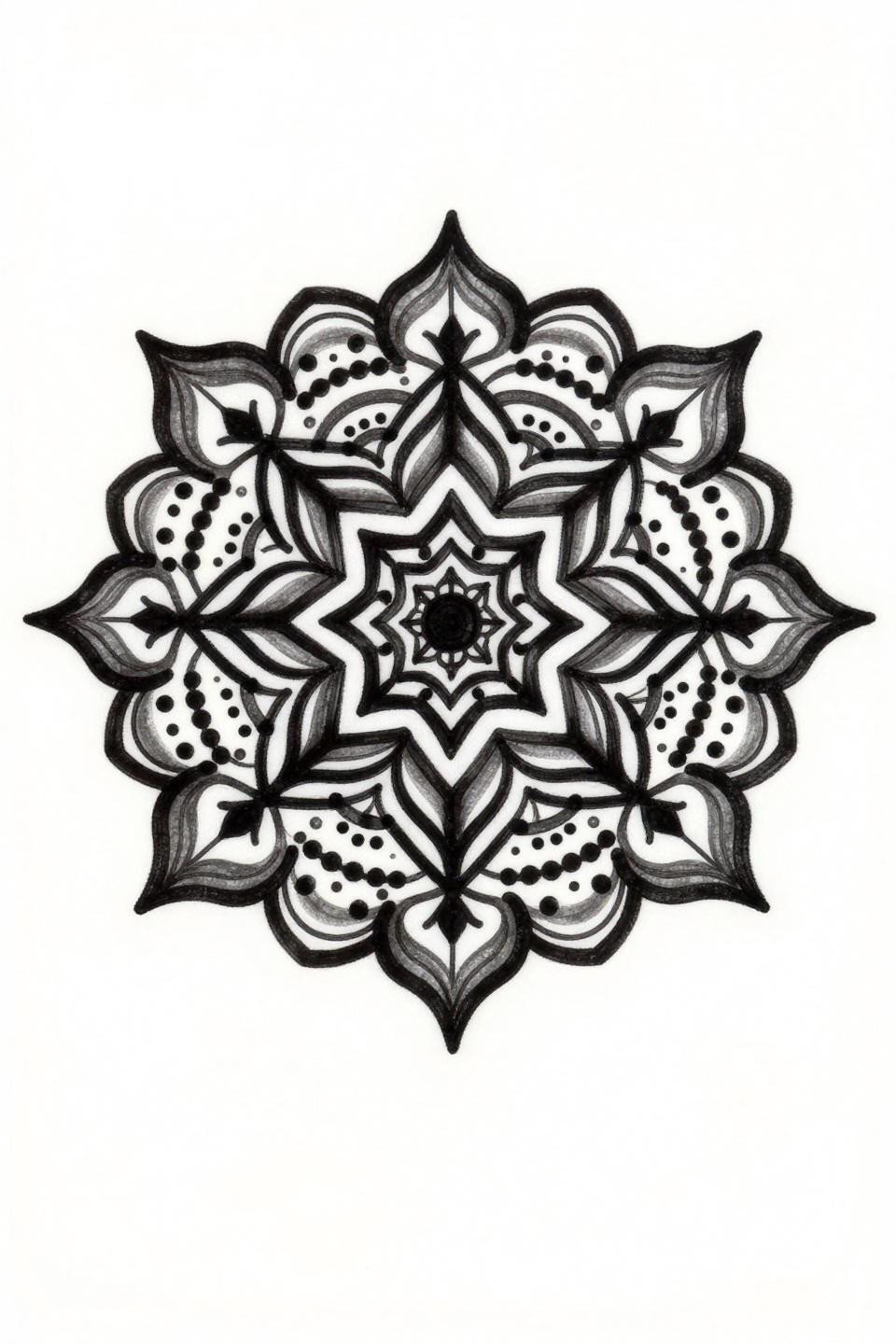
The eight-pointed star centerpiece locked inside nested circular petal rings uses flat dense black with zero grey wash, a choice that makes the geometric forms read with maximum contrast and no tonal ambiguity.
This is the reference to send when asking about scale: the composition holds from a small sternum piece to a full back panel without losing the geometric clarity between rings.
Watercolor Palmette: Where Calligraphic Bleed Needs an Anchoring Line
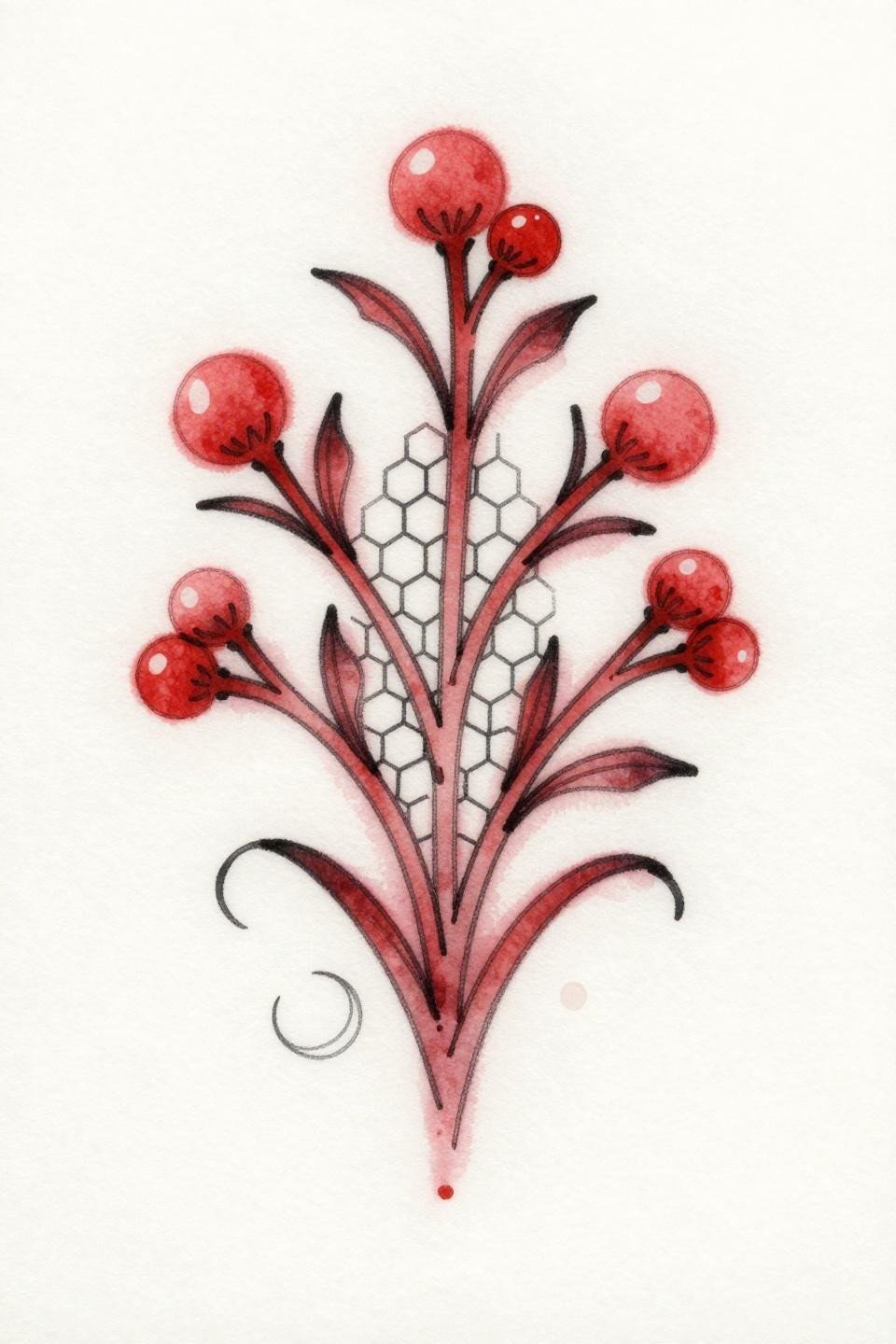
Crimson watercolor wash bleeds behind a clean black line skeleton here, and that anchoring outline structure is exactly why this design will hold longer than watercolor-only approaches, which blur by year three to five without it.
The five radiating vine stems with spherical bud terminals give the composition bilateral symmetry while the color bleed adds organic irregularity. The linework is doing the structural heavy lifting.
Japanese Hexagonal Stack: Irezumi Discipline on Henna Geometry
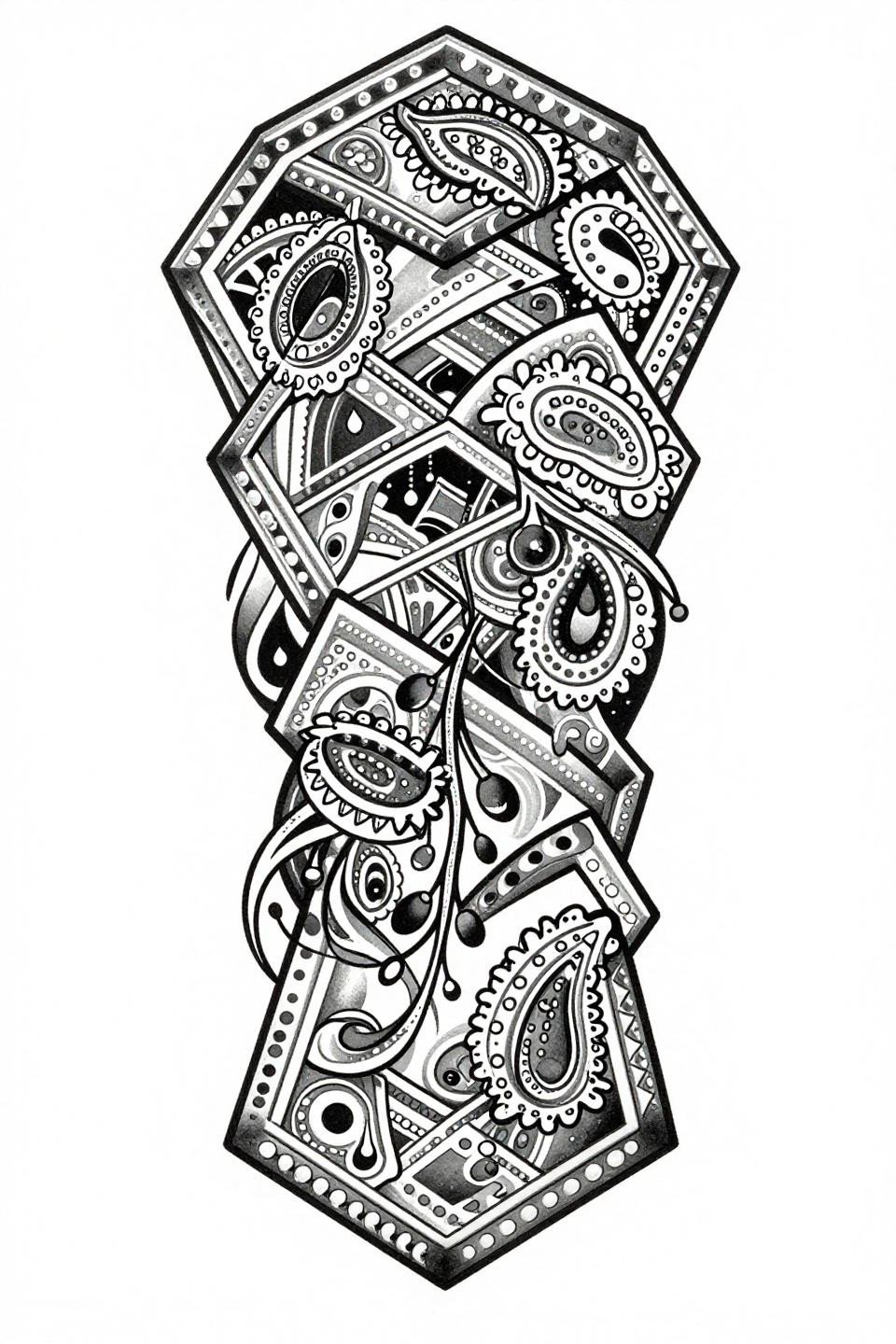
Interlocking hexagonal frames stacked vertically with alternating paisley teardrop fill sections borrow the irezumi compositional discipline of designing for body coverage across a long vertical plane rather than a single focal point.
The flowing vine tendril cascade below the geometric stack is the placement signal: this design is structured for a forearm or calf, where the stack aligns with the limb axis.
Sketch Cuff: Three Bands That Teach Line Economy
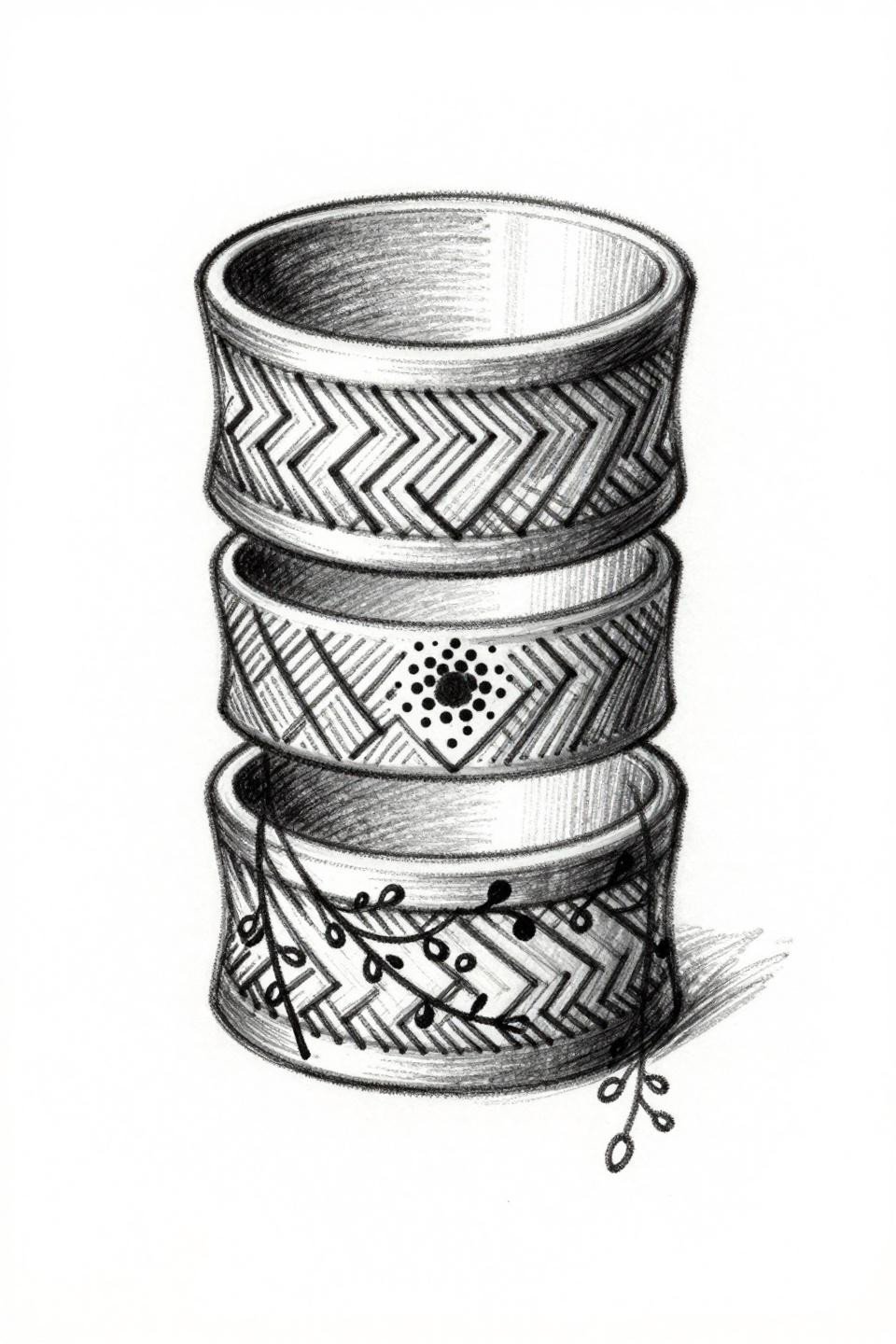
Three stacked geometric bands in chevron weave formation with a central dot cluster motif use loose raw pen strokes and open negative space to demonstrate that cuff patterns work through proportion and spacing, not fill density.
This is a direct reference for modern mehndi styles for tattoo adaptation, specifically for collectors who want a wrist piece that doesn’t compete with adjacent work.
Vector Persian Medallion: Geometric Precision at Any Scale
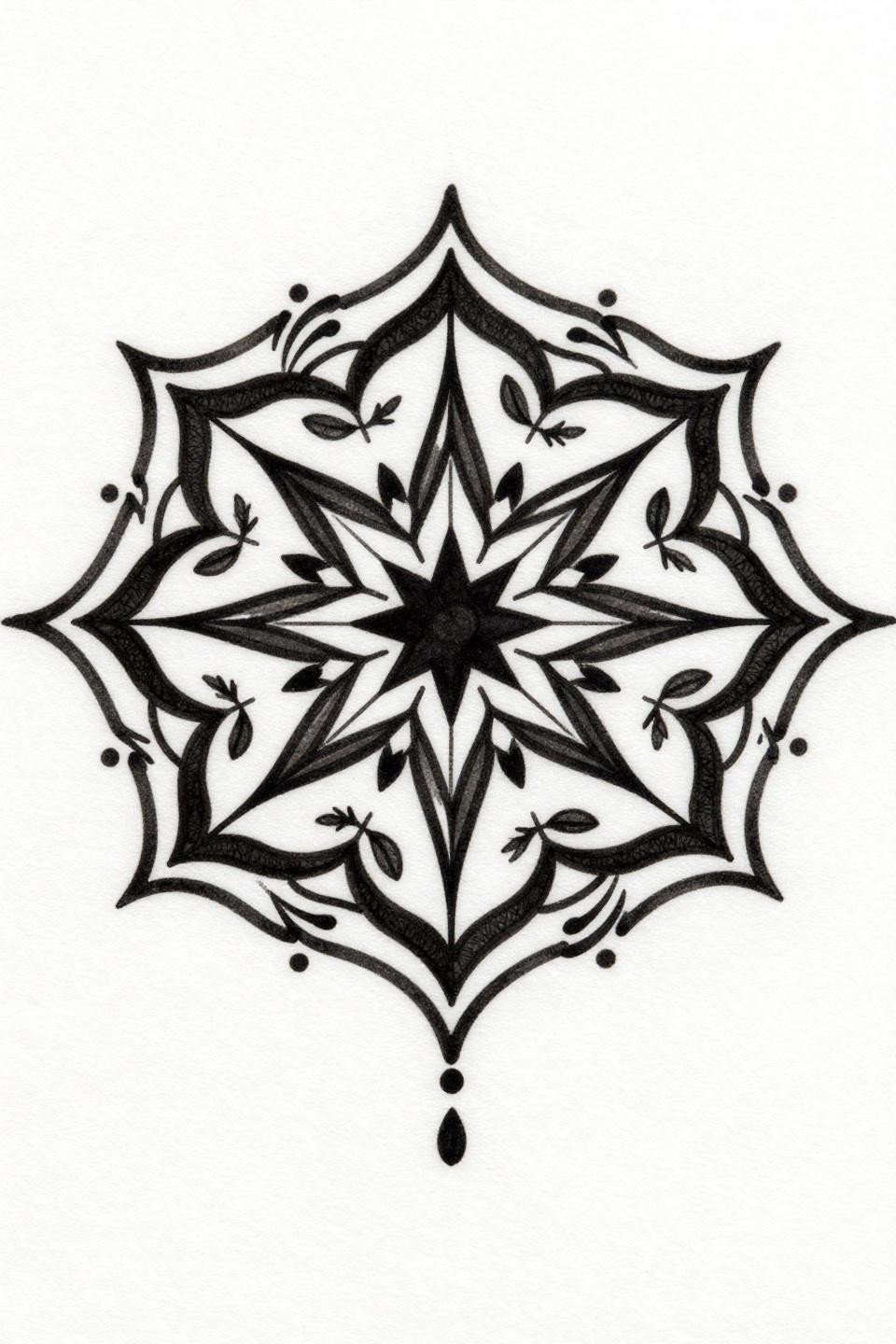
Vector-precision linework on a Persian eight-pointed star with nested concentric circles and triangular filler elements gives this design its scalability: the flat black fills and sharp outlines reproduce without tonal loss from wallet-card to full back.
No grey wash means no midtone falloff on darker skin tones. This is the version of the medallion composition that works across the widest range of placements and complexions.
Arabic Dotwork Lattice: Stipple Gradient as the Architecture
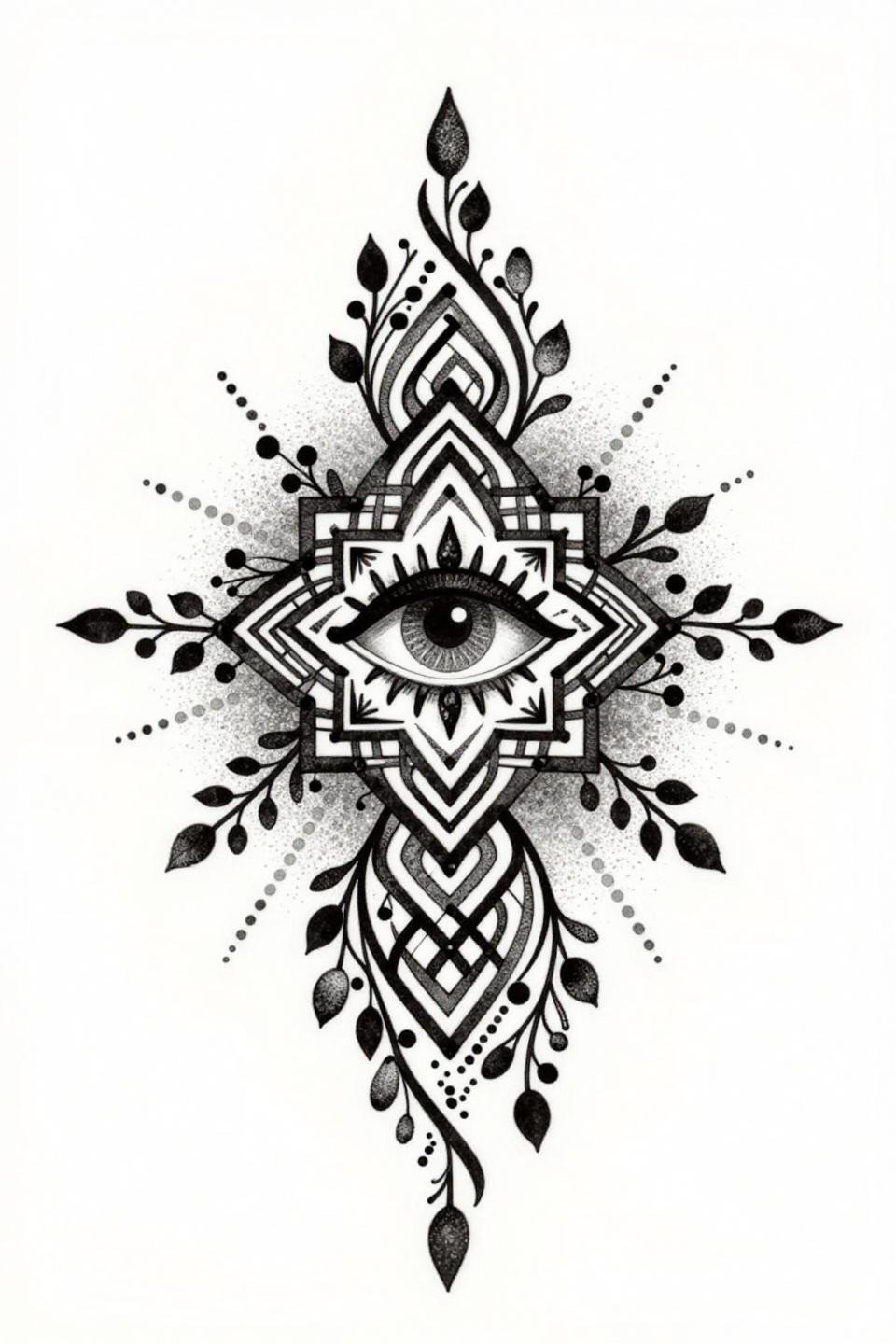
A central teardrop eye anchors a bilateral geometric grid where the stipple dot gradient runs from dense black at the core to open field at the outer vine trails, building tonal depth without a single hatch line.
Look for consistent dot size across the full gradient when vetting an artist for this style. Inconsistent dot sizing is the primary technical failure point in dotwork at this density.
Etching Lace Mandala: When Rose Motifs Enter the Henna Grammar
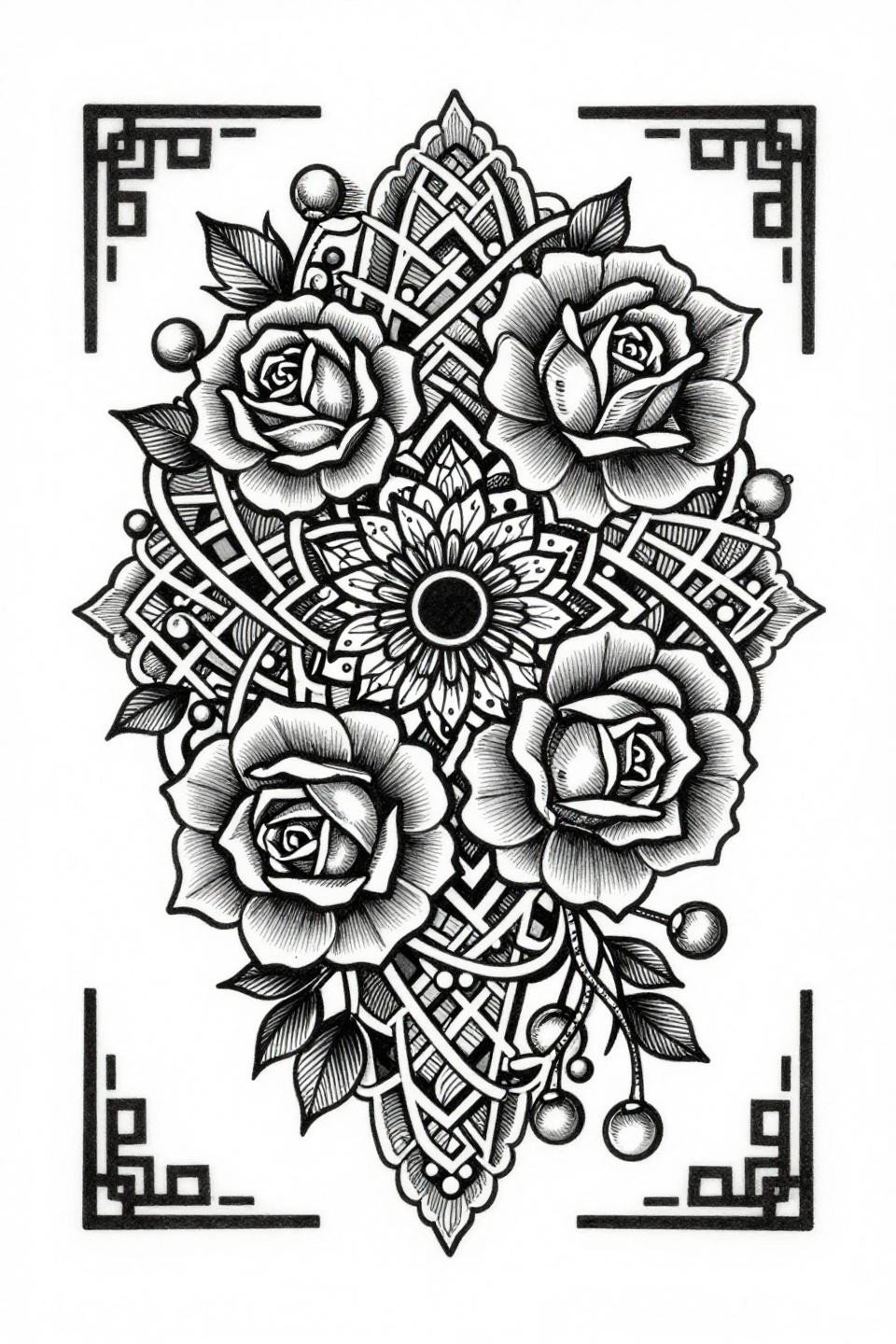
Lace-like lattice webbing arranged in a circular mandala with nested rose motifs in spiral radial pattern uses crosshatch parallel-line engraving to build shadow depth that reads as three-dimensional relief on flat paper.
The geometric corner brackets framing the composition are the placement tell: this design is sized for a thigh or upper back where the square frame can breathe without competing with surrounding anatomy.
Fine Line Palm Center: Hairline Strokes and Protected Placement
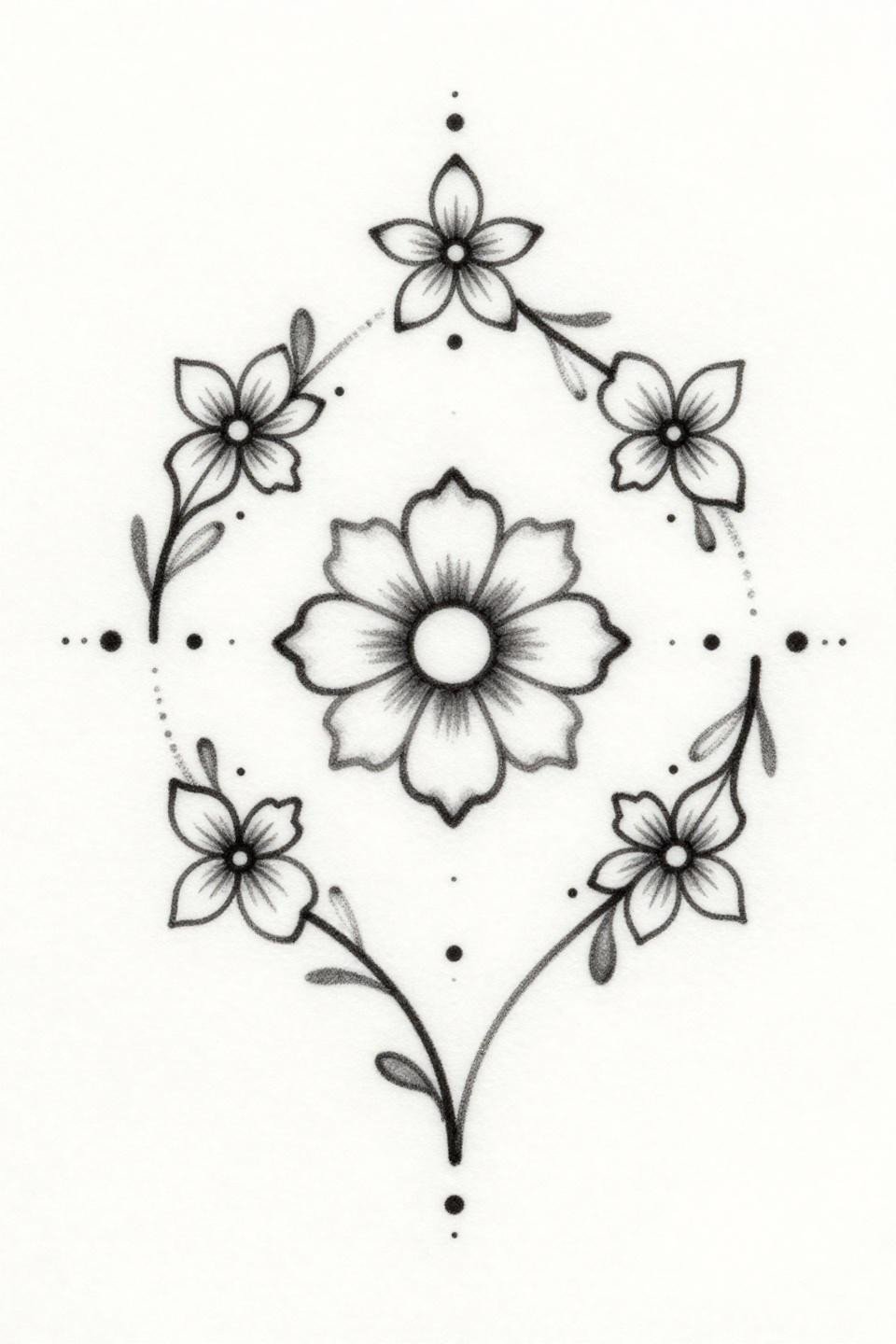
A central four-petal flower extending to a cuff border via delicate curved vines uses hairline 0.5mm single-needle strokes throughout, with dot-and-dash accents as the only fill elements.
Single needle 1RL work like this needs an artist who controls machine speed precisely. On lighter skin tones, this reads crisp; on olive and darker tones, the line weight needs to step up to maintain contrast over time.
Sak Yant Peacock: Sacred Geometry Meets Henna Tracery
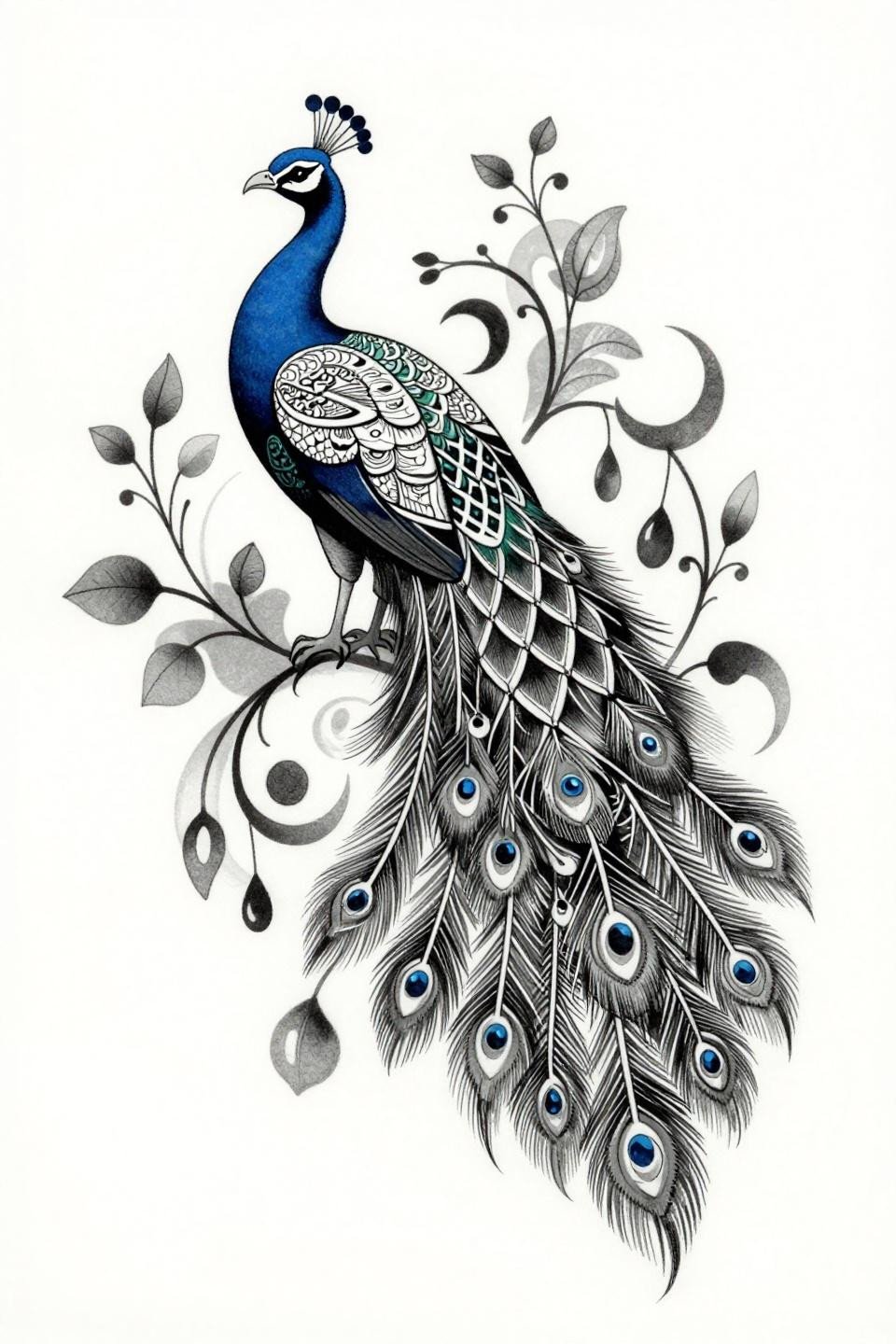
The profile peacock with tail feathers unfurling into geometric lattice references the Sak Yant compositional logic of sacred geometry surrounding a central figurative element, tied together by vine tracery with teardrop and crescent moon accents.
Whip shading with curved strokes dense at the feather cores and open at the lattice edges is a technique that separates production tattooers from specialists. Hand placement compounds the longevity challenge on detail at this scale.
Continuous Line Palmette: One Stroke, No Forgiveness
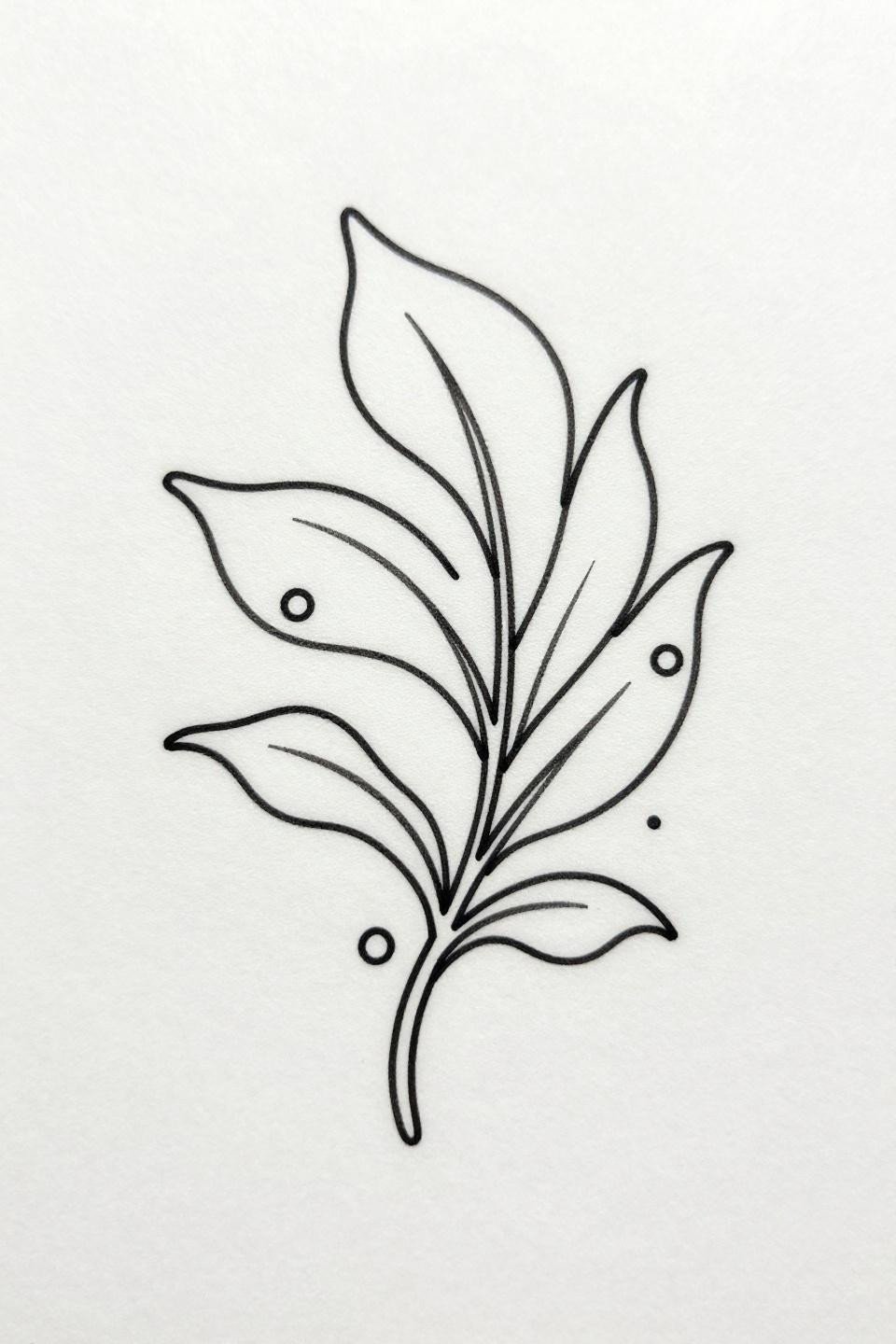
An asymmetric palmette leaf emerging from a single origin point in unbroken continuous line technique uses hairline 0.5mm strokes with circular dot accents as the only interruption, the composition held entirely by line tension and negative space.
This is the reference that tests whether a collector actually wants minimalism or wants the look of minimalism. No fills, no solid fields, and any hesitation in the stroke reads permanently.
Art Nouveau Moroccan Star: Diamond Frame as Placement Boundary
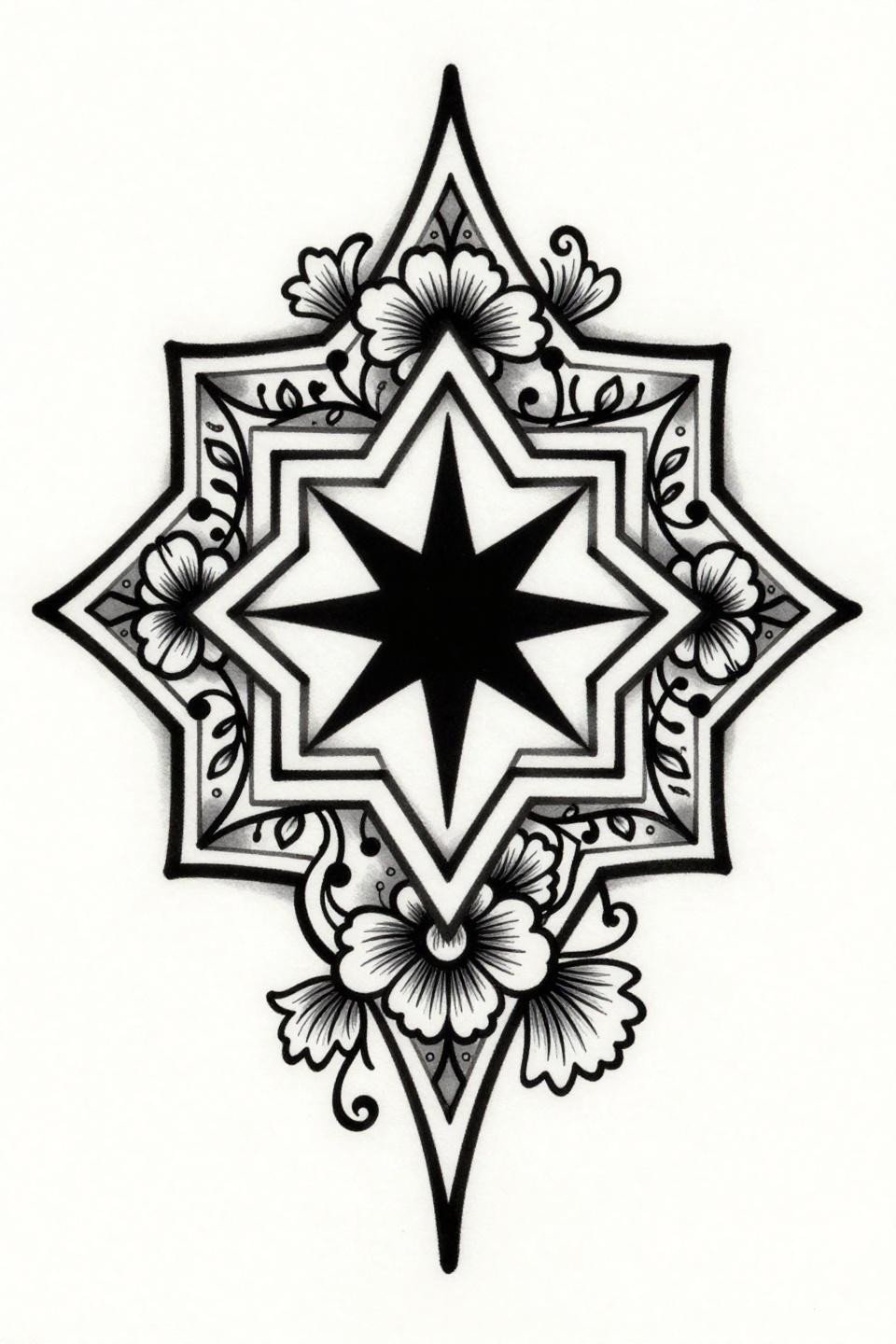
A five-pointed star centerpiece with radiating geometric vine lattice set within a diamond frame composition borrows Art Nouveau’s organic line movement while keeping the Moroccan geometric structure fully intact at the core.
The dense floral filler motifs in the diamond corners are the density signal: this design needs 10cm minimum across the shortest axis or the corner fill collapses into visual noise.
Tribal Moroccan Block: Kufic Script Geometry, No Tonal Relief
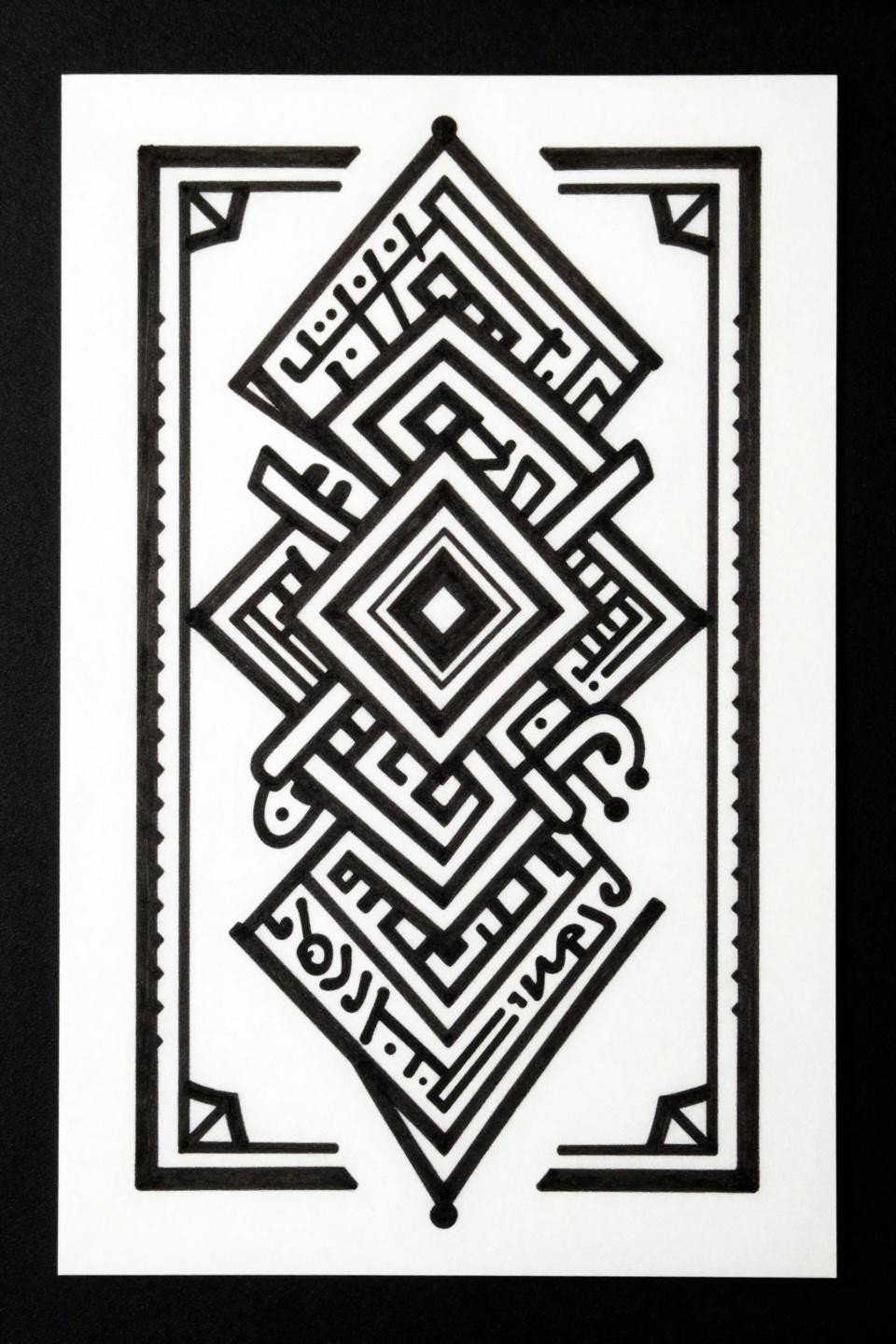
Stepped triangle borders, interlocking kufic script geometry, and dense solid black fills between angular lines make this design fully graphic: bilateral mirror symmetry along the vertical axis with zero tonal relief.
Blackwork at full saturation holds density indefinitely when the artist commits to multiple layered passes. This is the reference to bring when the goal is maximum contrast with minimum color vocabulary.
Botanical Arabic Medallion: Scientific Precision in a Sacred Structure
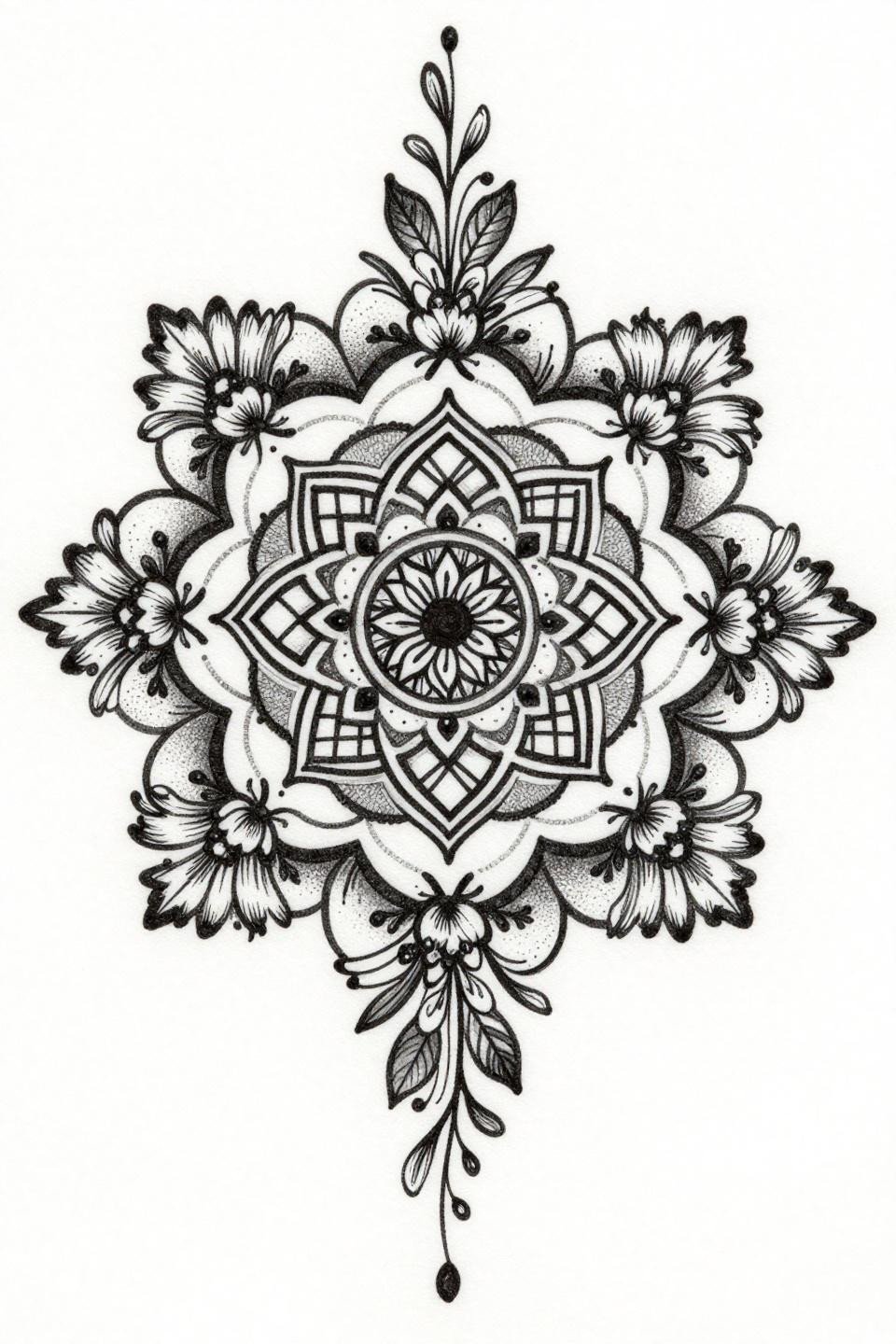
Concentric circular mandala structure with diamond lattice inlay and botanical floral sprays radiating outward treats the Arabic medallion form with the same tonal rigor as scientific illustration, using stipple dot gradient from dense center to open vine trails.
Grey wash dilution from dense to open with no muddy midtones is the technical ask here. This composition reads cleanest on protected placements like the upper back or sternum, where sun exposure doesn’t accelerate the stipple diffusion.
Narrow these 24 down to three references maximum before contacting an artist. Match the line weight to your skin tone, the composition size to the placement, and the style to the artist’s actual portfolio, not just their Instagram aesthetic.
The designs that hold here are the ones built on outline hierarchy, not surface detail. Start there.