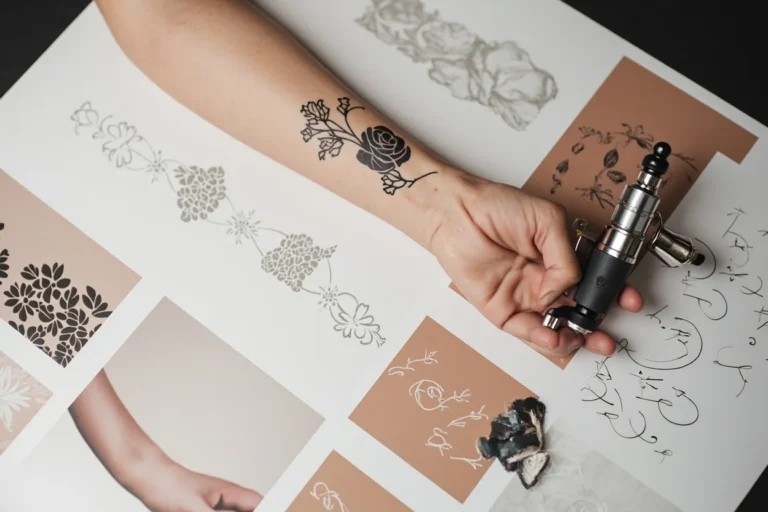

Behind ankle tattoos can stay crisp for years, but the symbol, line weight, placement, and aftercare have to agree. I learned that after seeing a tiny star cluster lose its clean spacing near a shoe seam. This guide walks through 11 choices before, during, and after your appointment. Start small, but plan sharply.
- Start With a Striking Behind Ankle Tattoo Symbol
- Why Delicate Linework Needs Open Skin
- Where Should Meaningful Ink Sit Above the Achilles Tendon?
- Simple or Overloaded? Keep the Ankle Tattoo Crisp
- The Dainty Proportion Check
- Let Flowing Designs Follow the Ankle
- Your Personal Style, Not a Trend
- Can You Read the Orientation From Every Angle?
- Select Intricate Details That Survive Healing
- Prepare Skin for Sharp Behind Ankle Ink
- Protect Your Finished Behind Ankle Tattoo Properly
1Start With a Striking Behind Ankle Tattoo Symbol

Begin with a symbol you can still explain years from now. A striking symbol feels intentional when its marks vary in size instead of forming a stiff row. A moon, initial, constellation, or tiny compass can carry meaningful emotion without becoming complicated.
I’d keep the cluster compact, but I wouldn’t squeeze every mark together. Ask your artist to leave visible spacing between each star so the design doesn’t blur into one dark fleck as time passes. My Three-Star Spacing Rule is simple: one dominant mark, two supporting marks, and clear skin around all three.
Before you book, save several references with similar visual weight. Your artist should see the difference between a hair-thin outline and darker black ink. If you’re drawn to celestial symbolism, compare it with this guide to stars behind ear tattoo meaning, then decide whether your ankle piece should feel sacred, playful, or quietly mysterious.
A shoe can change the whole composition. You’ll want to test the design while wearing the shoes you use most, especially if their edge lands over the shoe seam. I’d skip a low star that touches it, because repeated rubbing can make fresh skin irritated and the placement look accidental.
Ask whether the design still works when you’re standing, sitting, and walking. A personal symbol should remain readable without needing a long explanation. If the idea only works from one angle, simplify it before your appointment.
The tiny details matter more than the size suggests. A crisp outline can carry a small design, while crowded accents can turn it muddy. This is where a careful edit is worth it!
2Why Delicate Linework Needs Open Skin

Delicate linework can look elegant behind the ankle when the design has enough open skin around it. The area moves constantly, and closely packed marks may lose their distinction as the tattoo settles.
Ask your artist what needle grouping and line weight they’d use for your skin and chosen scale. You’re not looking for the thinnest possible line. You’re looking for a crisp line that has enough presence to remain readable.
I’d also ask to see healed work, not only fresh tattoos. A design can look intricate on appointment day and become less clear later if the artist has pushed too much detail into too little space.
If pain and placement are part of your planning, this ankle tattoo pain guide can help you compare the area with other placements. Your own anatomy and artist’s technique still matter more than a general ranking.
The most striking small tattoos usually have one dominant contour and only a few supporting marks. That restraint can make the finished piece feel polished, stylish, and easier to read.
3Where Should Meaningful Ink Sit Above the Achilles Tendon?

Place meaningful ink above the Achilles tendon when you want a clear, slightly tucked-away composition. The flatter area can keep a small design readable while your ankle moves.
The Anchor Point Method starts with one central mark above the tendon, then builds outward in a direction that follows your leg. I’d avoid placing the most important detail directly on the narrow ridge, where movement can make the design look distorted.
Ask your artist to apply the stencil temporarily, then check it with your natural posture. Look from behind, from each side, and with your foot resting on the floor. If you’re unsure about a lower placement, compare it with this back of ankle tattoo guide.
A meaningful design doesn’t need a paragraph of symbolism attached to it. A small date, botanical mark, or personal icon can feel powerful when the placement gives it room. A crowded quote is riskier because tiny lettering can lose clarity faster than a simple symbol.
Think about how much daily visibility you want. A behind-ankle tattoo can feel understated under trousers and more expressive with rolled hems or low shoes. That balance may be part of the design’s meaning.
An ethereal crescent may need a higher placement, while a fierce arrow or bold initial may work better where its direction follows the leg. The symbol and its position should support each other.

4Simple or Overloaded? Keep the Ankle Tattoo Crisp

Simple ankle tattoos need excellent spacing more than extra decoration. A minimal design can feel sleek when every mark earns its place and the composition isn’t overloaded.
Use the Negative-Space Check before you commit. Look at the stencil from several feet away, then close one eye and inspect the outline. Your design should still have a recognizable silhouette without relying on tiny interior marks.
A crescent, leaf, wave, or small animal can age more gracefully than a packed ornamental piece. You’ll want to discuss how the design may soften over time, because even crisp lines can spread slightly as skin changes. This ankle tattoo pain guide can help you prepare for the placement.
Don’t confuse minimal with careless. Your appointment may be short, but the stencil still deserves careful adjustment. I once saw a tiny symbol placed a few millimeters too close to the ankle bone, and the imbalance was obvious whenever the wearer turned sideways.
Minimal work leaves nowhere for sloppy alignment to hide. If the design feels empty after removing one detail, add only the mark that improves the shape. That restraint can make the result look polished!
An ornate idea can still work if its outer shape stays simple. I’d rather see one expressive flourish than six competing accents fighting for attention.
5The Dainty Proportion Check

Use a reference sheet before choosing the final proportion. A design that looks dainty on a phone screen may become too small to read once it sits behind the ankle.
Measure the actual stencil against your ankle while standing. Check the width, height, and distance from the shoe line. You’ll get a more honest sense of scale than you will from a small drawing.
I’d rather choose a slightly larger mark with clear spacing than an ultra-tiny design that depends on fragile interior detail. The right scale should feel personal without becoming visually timid.
Consider how the tattoo relates to your other pieces, if you have them. A solitary mark can remain understated, while a future collection may call for a more classic or timeless proportion.
You can compare nearby placement ideas with this ankle foot tattoo guide before deciding whether the design belongs higher or lower. The useful question isn’t “How tiny can it be?” It’s “What size keeps the idea legible?”
A feminine floral mark and a masculine geometric mark may need different proportions even when they occupy the same area. Let the design’s visual weight guide the measurement.
6Let Flowing Designs Follow the Ankle

Flowing designs can work around the ankle when their movement follows the body instead of fighting it. A vine, ribbon, wave, or symbolic path can turn gently without becoming a solid band.
Use the Curve-First Layout when planning a wraparound piece. Start with the direction of movement, then place the smallest details along the curve. I’d avoid forcing a symmetrical ring if your ankle has a natural variation from one side to the other.
Ask your artist to check the design while your foot is relaxed, pointed, flexed, and planted. A wraparound piece should look intentional from several angles, not only in one posed position.
If you’re considering extending the design toward the foot, compare it with this ankle foot tattoo guide before deciding how far the line should travel. The transition should feel graceful rather than abrupt.
A wrap can feel bold without becoming ornate. You’ll want enough open skin to keep the pattern from turning into a solid band. Protect the curve, because it’s the feature that gives the tattoo its movement.
A flowing design can be romantic, edgy, or vintage depending on the marks you choose. Keep the movement clear, and the piece won’t need excessive decoration to feel distinctive.
7Your Personal Style, Not a Trend

Match your ankle tattoo to the way you already dress, move, and choose symbols.
An empowering tattoo might be a small phrase, while an iconic mark can say more with fewer lines. A classic compass, playful star, or daring abstract shape should feel like something you chose, not something an algorithm handed you.
Think about whether your taste leans feminine, masculine, raw, or polished. Those labels are only starting points. Your artist can translate the feeling into line weight, spacing, and silhouette.
I’d rather see a personal symbol with a crisp outline than a trendy design you’ll need to explain away later. Choose the meaning first, then refine the visual language.
Ask yourself what you want the tattoo to communicate when nobody else knows the story. Quietly meaningful work often lasts emotionally because it belongs to you before it belongs to a trend.
If the idea feels generic, change one feature. A sharper point, a symbolic interruption, or a more delicate curve can make the design expressive and unmistakably personal.
8Can You Read the Orientation From Every Angle?

Test visibility before the stencil becomes permanent. The ankle changes position constantly, so a design that looks upright while seated may turn sideways when you walk.
The Three-Angle Check gives you a practical answer. Look at the tattoo with your leg straight, your knee bent, and your foot planted. Ask whether the symbol still reads in each position.
If you’re planning text, use extra caution. Reversed or rotated lettering can become frustrating fast, especially when the tattoo is meant to be read by you rather than by someone facing you.
Take a few standing and walking checks in ordinary lighting. You’ll see how the orientation behaves in daily movement instead of relying on a studio mirror.
I’d rather see a slightly smaller design with clear orientation than a large piece that twists awkwardly. This back of ankle tattoo reference can help you compare placement before you approve the final stencil.
An expressive symbol may look different when the ankle bends, but its main direction should still make sense. If the meaning disappears from two angles, adjust the stencil before the appointment begins.
9Select Intricate Details That Survive Healing

Intricate details need a hierarchy. Your artist should identify the main shape first, then decide which small accents deserve to stay. Not every detail needs the same darkness or line weight.
Use the Detail Survival Test by covering the secondary marks and looking at the main silhouette. If the design still works, you’ve got a strong foundation.
I’d keep delicate dots and tiny interior textures limited, because lines can soften or spread slightly as the tattoo settles. A meaningful detail is better than a crowded one.
Ask to see healed tattoos from your artist. Fresh ink often looks exceptionally crisp, while healed work shows how the lines sit after the surface calms. This side ankle tattoo inspiration can help you compare compositions.
Black ink with clear spacing generally gives small designs a stronger chance of staying readable. You’ll still need to protect the area from repeated UV exposure, especially if the design depends on fine contrast.
If the tattoo’s entire meaning depends on ultra-fine shading, rethink the plan. The outline should do the heavy lifting, while the smallest accents remain optional.
A haunting face, sacred mark, or symbolic eye can remain expressive without dense texture. Choose the detail that carries the emotion, then let the rest breathe.
10Prepare Skin for Sharp Behind Ankle Ink

Prepare your skin and schedule before the appointment. Good skin preparation won’t replace skilled work, but it can make the process easier and the stencil more reliable.
Arrive rested, fed, and hydrated. Avoid treating the appointment like a test of endurance. Your body will respond better when you’ve slept well and eaten a proper meal.
Don’t shave aggressively over the area right before you go. Irritated skin can make placement harder and may leave you uncomfortable before the session begins.
Confirm the shop’s hygiene practices and ask how the artist handles your skin tone. A thoughtful consultation is part of the value you’re paying for, not an unnecessary delay.
Check the budget before booking. Small tattoos can still carry a shop minimum, and the final cost may include design time, placement adjustments, and aftercare supplies.
If you’re comparing the physical experience with other placements, this ankle tattoo pain guide gives useful context. Your own pain response may be different, and that’s completely normal.
A sharp, polished result starts with practical preparation. Bring your references, wear comfortable clothing, and leave enough time for a real stencil discussion.
11Protect Your Finished Behind Ankle Tattoo Properly

Protect the finished tattoo during healing and after it settles. Your aftercare routine should follow your artist’s specific instructions, because products and coverings vary.
Surface healing often takes about 2 to 3 weeks, while complete settling can take about 2 to 3 months. You’ll want to judge the final appearance slowly, not during the first few days.
Avoid pools, baths, and other soaking while the tattoo is healing. Keep friction in mind when choosing socks and shoes, especially if the ankle is repeatedly rubbed.
Use a broad-spectrum sunscreen once the skin is fully healed. Consistent UV protection can help preserve contrast, particularly when the design relies on delicate linework.
If a line softens later, don’t panic or book an immediate touch-up. Let the skin settle first, then ask your artist for an honest assessment. A thoughtful repair can be worth the cost, but rushing usually isn’t.
Follow the written instructions you receive, even if a friend’s routine was different. Skin, ink density, placement, and healing speed all vary.
For another placement comparison, this back of ankle tattoo guide may help you think about friction and visibility before your next appointment.
Sun protection is one of the least dramatic parts of tattoo ownership, but it’s also one of the most useful. A vibrant design needs consistent care to keep its contrast.
What Makes a Behind Ankle Tattoo Worth the Cost?
The best long-term value usually comes from planning rather than size. A smaller design with strong placement, readable spacing, and an artist who shows healed work may be more worth it than a cheaper appointment with no clear process.
Ask what the quote includes. Some artists price by the hour, while others use a shop minimum or a flat design fee. Knowing the structure helps you compare cost without assuming the lowest number is the best deal.
A design edit can also protect your investment. Removing one fragile detail before the appointment may help the tattoo stay clear and reduce the chance of an early touch-up.
If you’re still deciding between the back and side, compare this side ankle tattoo guide with your usual footwear and clothing. The best value is the design you’ll continue to enjoy, not merely the one that costs less.
An elegant tattoo can be affordable, while an intricate one can become expensive through extra design time. Ask questions early so the final number doesn’t surprise you.
A Budget Check Before You Book
Set a realistic budget before choosing the symbol. In the United States, a small behind-ankle tattoo may cost about $100 to $300, while shop minimums can range from roughly $50 to $100.
Hourly rates often fall around $100 to $250, depending on the artist, region, demand, and complexity. Ask for a quote after showing your idea, because a tiny tattoo may still require careful stencil work.
The cheapest price isn’t automatically the best value. I’d prioritize healed linework, hygiene, communication, and placement skill over a dramatic discount.
Remember to include aftercare products and possible travel in your estimate. If the artist’s healed portfolio is strong and the consultation is thorough, the total investment may be worth it.
I’d also leave a small buffer instead of spending your exact limit. An extra $25 or $50 can cover a product, transport, or a design adjustment without turning the appointment stressful.
Which Symbols Stay Readable?
A moon can remain recognizable with a clean crescent and a few carefully spaced accents. An initial, compass, leaf, star, or small animal can work for the same reason.
Avoid choosing a symbol only because it appears impressive at an enormous scale. Behind the ankle, the design has to survive movement, socks, footwear, and gradual softening.
Ask whether the idea still works in outline form. If it needs dense shading to make sense, it may need a larger scale or a simpler concept.
This stars behind ear tattoo meaning guide can help if celestial marks appeal to you. You can borrow the symbolism while adjusting the composition for the ankle.
A classic compass can feel personal without looking overly ornate. A whimsical animal may suit a playful personality, while a powerful word may need more room than you first expect.
The symbol should remain recognizable after healing, not only during the first week. If the outer shape is strong, the tattoo has a better chance of staying meaningful.
How Should You Compare Artists?
Look for a healed portfolio with small tattoos, clean edges, and placements that resemble your own idea. Fresh work can look impressive, but healed examples reveal how the artist manages line weight and spacing.
Ask how the artist approaches your skin tone, anatomy, and the movement of the ankle. You should feel comfortable discussing what might soften and what can be simplified.
A good consultation includes honest limits. If an artist says a detail is too small or a shoe seam will cause friction, that advice may save you money later.
Compare the total value, not only the listed price. An artist who plans carefully may cost more upfront while reducing the chance of regret or premature correction.
This ankle foot tattoo guide can help you compare nearby compositions and decide whether an artist’s portfolio matches the placement you want.
I’d also pay attention to communication. A polished portfolio matters, but so does an artist who listens when you say a mark feels too busy, too feminine, too masculine, or simply not like you.
The Placement Test I Would Repeat
I’d repeat the placement test with your most-used footwear. Check where the shoe edge lands, how the ankle bends, and whether the design rotates when you walk.
Request a walking check before final approval. Stand naturally, take several steps, sit down, and look again. The best position should still feel intentional when your body is doing ordinary things.
Don’t approve the stencil only because it looks good while seated. A few extra minutes of checking can protect a tattoo you’ll wear for years.
If you’re deciding between the back and side, compare this side ankle tattoo guide with your daily habits. Visibility and friction may matter more than the original sketch.
Check the design from the front, back, and both sides. Four quick views can reveal a rotation problem that you might miss while looking down at your own ankle.
That test may feel fussy, but it’s worth doing. A graceful placement should hold up while you stand, walk, bend, and relax.
What Changes After Healing?
A settled tattoo may look softer than it did on appointment day. That doesn’t automatically mean something went wrong. Skin calms, pigment settles, and fine edges can lose a little sharpness.
The goal isn’t frozen perfection. It’s a tattoo whose main shape, spacing, and symbolism remain readable after normal healing.
Protect contrast with sunscreen once the skin is healed, and avoid judging the result too quickly. If you’re concerned after several months, ask for an assessment rather than assuming you need a touch-up.
A touch-up plan can be useful, but it shouldn’t be the starting point. Good design, appropriate scale, and patient aftercare give you the strongest chance of long-term clarity.
The final result may feel less intense than the fresh version and still look beautiful. A timeless tattoo is allowed to look lived-in while keeping its identity.
If you want to compare how different placements behave, this back of ankle tattoo reference can help you think through movement and visibility.
Why I Trust the Crisp-Line Rule
I’ve changed my mind about what makes a tattoo age well. It isn’t simply choosing the smallest line, the darkest black, or the most expensive artist. It’s the agreement between design, anatomy, movement, healing, and the way you protect your skin afterward.
My first mistake was treating the stencil like a formality. I liked the placement while seated and didn’t check how the design turned when I stood up. The tattoo itself was fine, but the orientation felt slightly off whenever I walked.
I’ve also learned that fine-line work needs honest restraint. An artist can draw an intricate design, but that doesn’t mean every tiny accent belongs on the ankle. If a symbol needs six explanations to remain readable, it probably needs editing.
The artists I trust show healed tattoos without making excuses for them. They can explain why one line softened, why one placement held better, and what they’d change next time. That conversation matters more than a perfect fresh result.
So, what should you prioritize? I’d choose placement first, line weight second, and symbolism third. A powerful idea can survive a simpler drawing, but a crowded design can’t always survive movement and time.
My favorite results are often the most understated. They feel personal at first glance, then reveal a sharper meaning when someone asks about them.
A Few Things Worth Answering
How much does a Behind Ankle Tattoo usually cost?
A Behind Ankle Tattoo usually costs about $100 to $300 in the US, depending on size, placement, artist, and region. Some shops set a minimum of about $50 to $100, while hourly rates often fall around $100 to $250.
Your best value is an artist with clean, healed linework and strong hygiene practices. Ask for a quote after showing your reference, because the final design may require more planning than its small size suggests.
Are Behind Ankle Tattoos a good idea for a first tattoo?
Yes, a Behind Ankle Tattoo can be a good first tattoo when you choose a manageable design and understand the area’s sensitivity. A clear symbol with crisp spacing can feel meaningful without requiring a large commitment.
Your experience will depend on anatomy, pain tolerance, and artist technique. Simple linework, realistic expectations, and careful aftercare can make the process more comfortable.
How do I choose a tattoo artist for a Behind Ankle Tattoo?
Choose an artist who shows clean linework, healed examples, and a style that matches your reference. Look for consistent edges, readable small designs, and careful placement rather than only dramatic fresh tattoos.
You’ll also want to confirm studio hygiene and ask how the artist approaches skin tone, movement, and fine details. A thoughtful consultation is a strong sign.
How much do Behind Ankle Tattoos hurt?
Behind Ankle Tattoo pain varies, but areas close to bone can feel sharper than fleshier placements. The foot, ribs, hands, and sternum are often more uncomfortable, while the forearm, thigh, and shoulder are usually more tolerable.
Your session may feel intense in short bursts, especially near the ankle bone. Tell your artist if you need a pause, and don’t compare your experience with someone else’s.
How long does a Behind Ankle Tattoo take to heal?
A Behind Ankle Tattoo usually takes about 2 to 3 weeks for surface healing and about 2 to 3 months to settle completely. Your artist may give different instructions based on your skin and the tattoo’s size.
Gentle washing, suitable moisturizer, and avoiding direct sun or swimming during healing are common aftercare basics. Don’t pick at peeling skin, even when the tattoo feels itchy.
What’s the best placement for a Behind Ankle Tattoo?
The best placement depends on visibility, anatomy, and the design’s direction. Above the Achilles tendon can give a small symbol a clear vertical area, while a side placement can make a flowing design easier to see.
You’ll want to test the stencil while standing and walking. A placement that looks graceful in one position may rotate or rub against footwear in another.
Where I’d Start First
If I had to pick one step, I’d start with stencil placement. A crisp symbol can’t rescue an awkward angle or shoe seam, but a well-placed simple design keeps working as you move.
Check it standing, walking, and relaxed. Then compare the final cost with the artist’s healed work, hygiene standards, and planning process. That’s the real value of a behind ankle tattoo.
Take your time. The most empowering choice may be the one that feels quiet, personal, and readable years later.
If you’re still weighing the design, revisit this ankle tattoo pain guide and your saved references before booking. A little more thought now can protect the meaning, clarity, and confidence you want from the finished piece.