Geometric & Blackwork
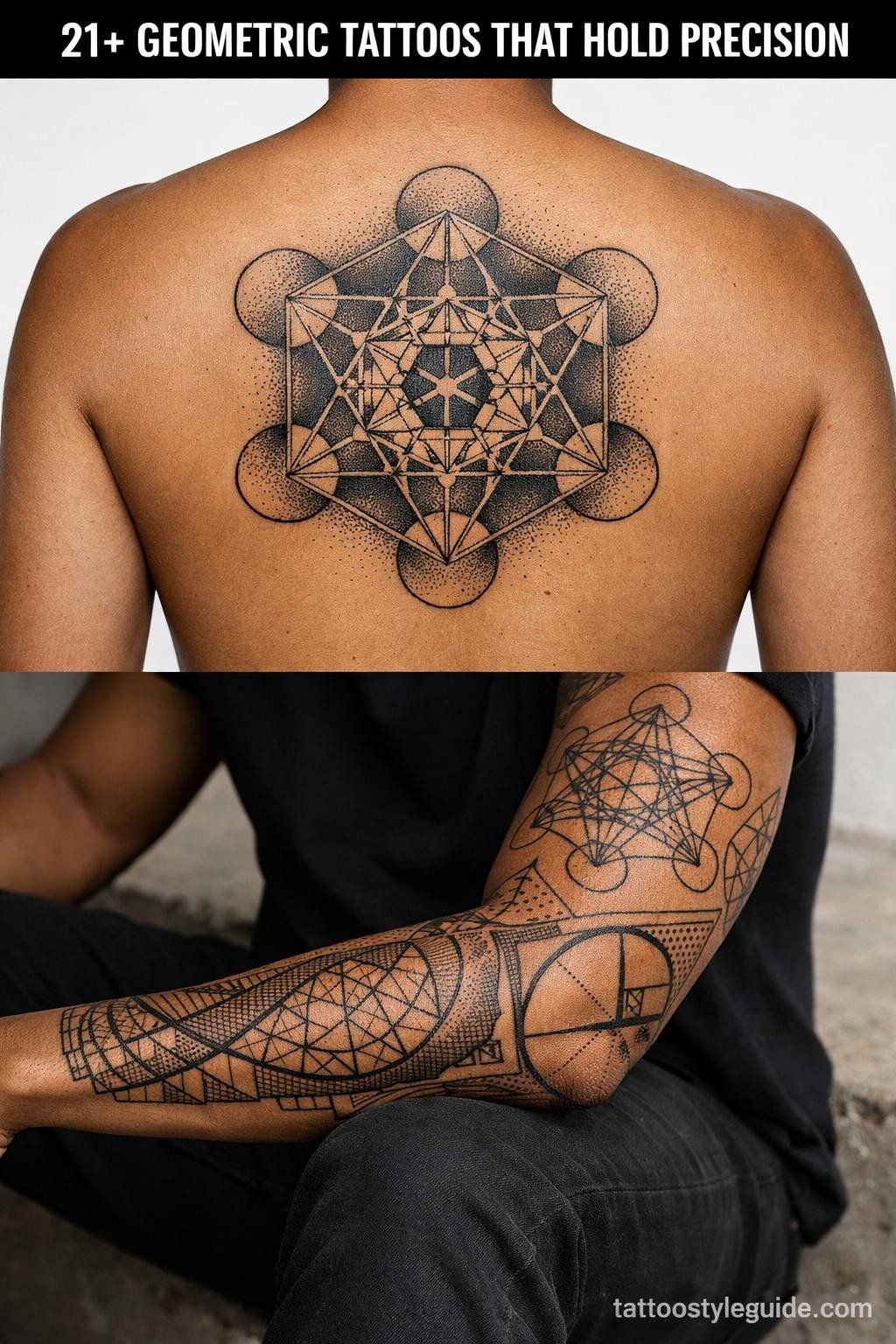
Geometric tattoos are unforgiving. One line slightly off and the whole thing looks broken. The pieces here rely on precision, clean edges, and negative space used on purpose — not by accident.
The Precision Problem
Geometric tattoos expose imperfections that other styles hide. In a traditional rose, a slightly wobbly line adds character. In a geometric mandala, a line that’s 1mm off is immediately visible because your eye expects mathematical perfection. This makes artist selection critical. You need someone who does geometric work daily, not occasionally.
Look at the artist’s portfolio for symmetry, consistent line weight, and clean intersections where lines meet. Zoom in on their photos. Do the circles look actually round? Do parallel lines stay parallel? Are the fills solid without patchy spots? These details separate a geometric specialist from someone who “also does geometric.”
Blackwork and Skin Tone
Solid blackwork is one of the few styles that looks equally striking across all skin tones. The heavy saturation means there’s no question about visibility. On darker skin, blackwork creates a subtle tonal shift that looks almost engraved. On lighter skin, the contrast is dramatic and bold. Either way, it works.
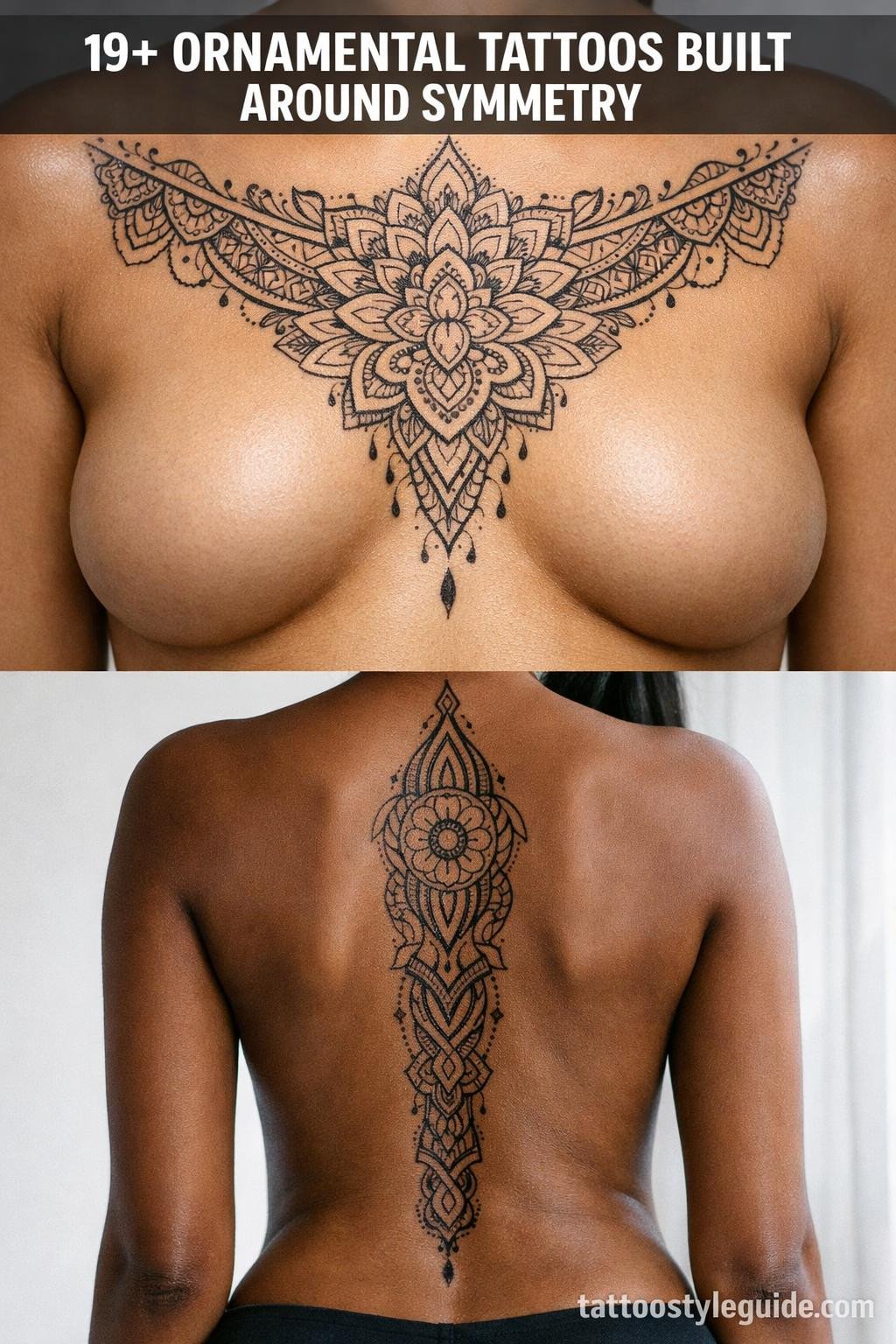
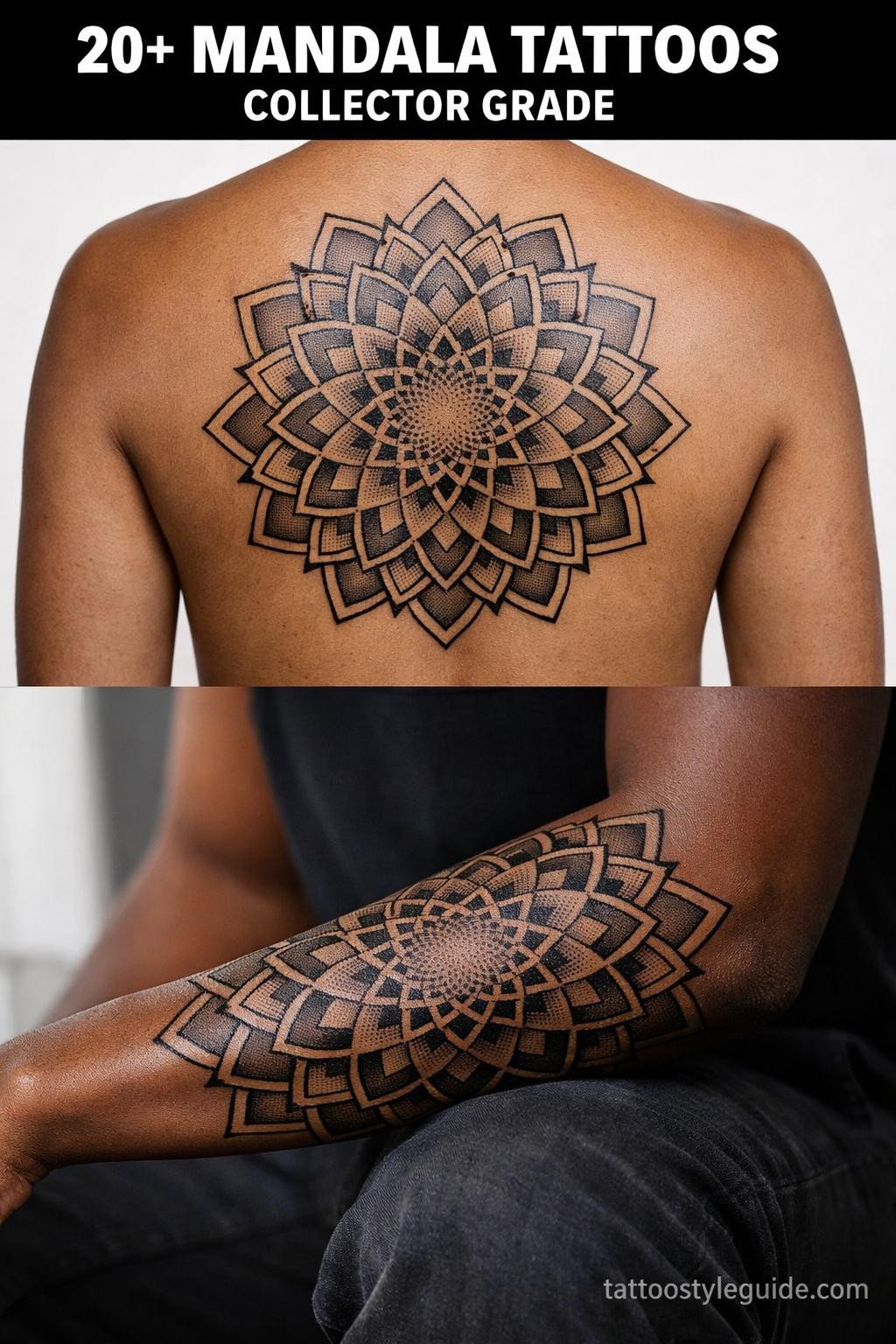
Dotwork, a subset of blackwork that builds images from individual dots, behaves differently at different sizes. Large dotwork pieces with adequate spacing between dots hold well. Small dotwork pieces can blur as dots merge over time. For anything under 3 inches, solid lines usually outperform dots for long-term clarity. Ornamental blackwork, which combines solid fills with fine linework and patterns, is a middle ground that gives you texture without relying entirely on tiny details.
Frequently Asked Questions
How long does a full blackwork sleeve take?
A full blackwork sleeve typically takes 40-60 hours spread across 8-15 sessions. Dense blackout sections go faster (covering area with solid black), but detailed geometric patterns or ornamental work is slower due to precision requirements. Budget 6-18 months for the complete project depending on session frequency and healing time between appointments.
Does geometric tattoo work fade differently than regular tattoos?
The ink itself fades the same way. But geometric work can look more faded because your eye is more sensitive to any loss of crispness in straight lines and perfect shapes. A traditional tattoo with slightly softened lines still looks fine. A geometric piece with slightly softened lines looks “off.” This is why bolder line weights and solid fills are recommended for geometric designs that need to last.
Can geometric and organic elements be combined?
Yes, and it’s become one of the most popular approaches. Geometric frames around realistic flowers, dotwork shading on animal subjects, mandala patterns integrated with natural forms. The contrast between mathematical precision and organic irregularity creates visual tension that works really well. Just make sure your artist has experience with both elements.
What's the difference between blackwork and blackout?
Blackwork is the broad category: any tattoo done primarily in solid black ink. This includes geometric, ornamental, tribal, dotwork, and illustrative black pieces. Blackout is specifically large areas of solid black coverage, sometimes entire limb sections. Blackout is often used as a cover-up method or as negative-space art where the design is created by the skin left uninked within the solid black.
Explore More
Not Sure Which Style Fits You?
Answer 5 quick questions and get a personalized tattoo style recommendation based on your taste, pain tolerance, and budget.
Take the Style Finder Quiz →How Much Will Your Tattoo Cost?
Get an instant estimate based on size, style, placement, and detail level. No email required.
Calculate Your Price →500,000+ Tattoo Ideas Curated Daily
Don’t Regret Your Tattoo
Most tattoo ideas look good online.
Not all of them look good on skin.
We help you choose designs that actually last.
No spam. Just real tattoo inspiration.