
Japanese & Traditional
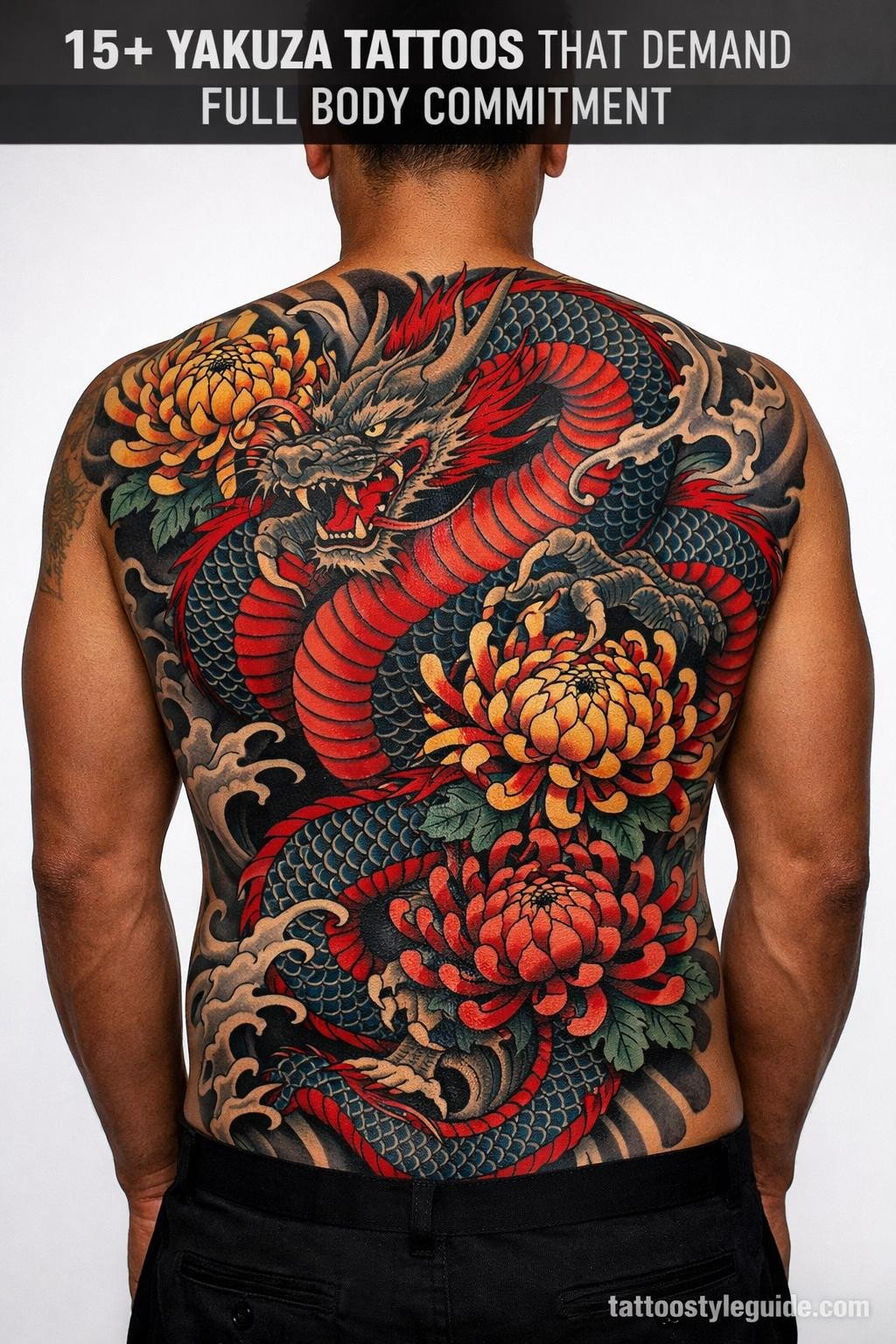
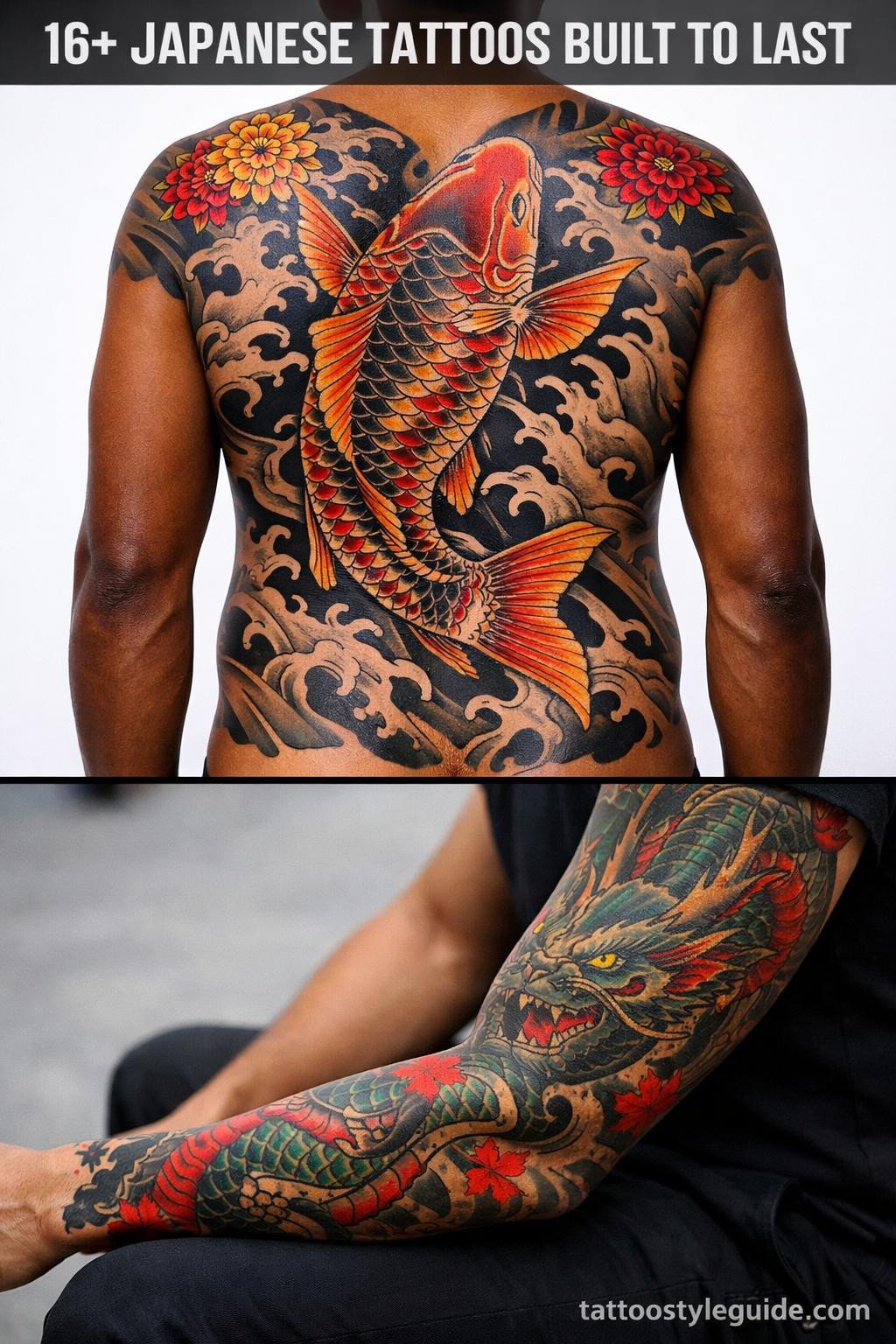
Japanese tattooing has rules — not suggestions. Backgrounds follow the body. Subjects face specific directions. Wind bars and clouds are structural, not decorative. These pieces work because they were designed for human anatomy, not a flat canvas.
Understanding Irezumi Rules
Traditional Japanese tattooing (irezumi) has a grammar. It’s not just “put a koi fish anywhere.” Specific subjects go on specific body parts. Water flows downward. Wind bars and clouds create background atmosphere. Peonies pair with lions. Cherry blossoms pair with skulls. These aren’t arbitrary rules. They’ve been refined over centuries to create compositions that flow with the body’s natural lines.
You don’t have to follow every traditional rule, but understanding them makes for better tattoos. A koi swimming upstream on a sleeve represents determination. The direction it faces matters. The water background fills negative space and creates visual continuity. Even if you’re getting a single Japanese-inspired piece rather than a full bodysuit, these compositional principles will improve the result.
Western Japanese vs. Traditional Irezumi
Neo-Japanese tattoos take the subject matter (dragons, koi, samurai, cherry blossoms) and render them with modern techniques: smoother gradients, more photorealistic details, sometimes mixed with non-Japanese elements. Traditional irezumi uses specific color palettes (muted reds, deep greens, black backgrounds), flat shading techniques, and strict compositional rules. Both are valid. They’re just different things.
If you want authentic traditional Japanese work, find an artist who trained in or studies that specific tradition. The tattoo world has a lot of artists who can draw Japanese subjects but don’t understand the compositional grammar. The result looks “Japanese-ish” but lacks the structural integrity that makes real irezumi so visually powerful. Look for tebori (hand-poke) artists if you want the most traditional approach, though machine-done traditional Japanese work can be equally excellent.
Frequently Asked Questions
Do I need to follow traditional placement rules for Japanese tattoos?
No, but it helps. Traditional rules exist because they produce compositions that flow with anatomy. A dragon wrapping around a full arm follows the muscle’s spiral. A back piece uses the spine as a central axis. You can place Japanese subjects anywhere, but understanding why the traditions developed gives you and your artist a framework for making better design decisions.
How long does a Japanese sleeve take to complete?
A full Japanese sleeve with proper background fill typically takes 30-50 hours over 6-15 sessions. More complex pieces with dense backgrounds and multiple subjects can run longer. Budget $3,000-8,000 depending on the artist’s rate. Many traditional Japanese tattoo artists charge per session ($400-800 for 3-4 hour sessions) rather than by the piece.
What's the difference between Japanese traditional and neo-Japanese?
Traditional Japanese uses specific color palettes (sumi black, muted red, yellow, green), flat shading with clear tonal steps, bold outlines, and prescribed background elements (wind bars, clouds, waves). Neo-Japanese keeps the subjects but uses modern techniques: photorealistic rendering, broader color ranges, gradient shading, and sometimes breaks traditional compositional rules. Both age well due to bold outlines.
Can I combine Japanese elements with other tattoo styles?
It’s common and can look great when done intentionally. Japanese backgrounds (waves, clouds) with realistic or illustrative subjects is a popular combination. The key is maintaining visual consistency in line weight and color approach. What doesn’t work is mixing Japanese with a completely different aesthetic in the same space without a unifying design strategy. Work with one artist on the unified vision.
Explore More
Not Sure Which Style Fits You?
Answer 5 quick questions and get a personalized tattoo style recommendation based on your taste, pain tolerance, and budget.
Take the Style Finder Quiz →How Much Will Your Tattoo Cost?
Get an instant estimate based on size, style, placement, and detail level. No email required.
Calculate Your Price →500,000+ Tattoo Ideas Curated Daily
Don’t Regret Your Tattoo
Most tattoo ideas look good online.
Not all of them look good on skin.
We help you choose designs that actually last.
No spam. Just real tattoo inspiration.