
Fine line butterfly tattoos can stay crisp for years, but only when the design has breathing space and the placement matches your real life. I almost made mine too tiny for the spot. Cute stencil, bad long-term call. These are the striking low-maintenance layouts I’d trust to heal softly, stay readable, and still feel intentional later.
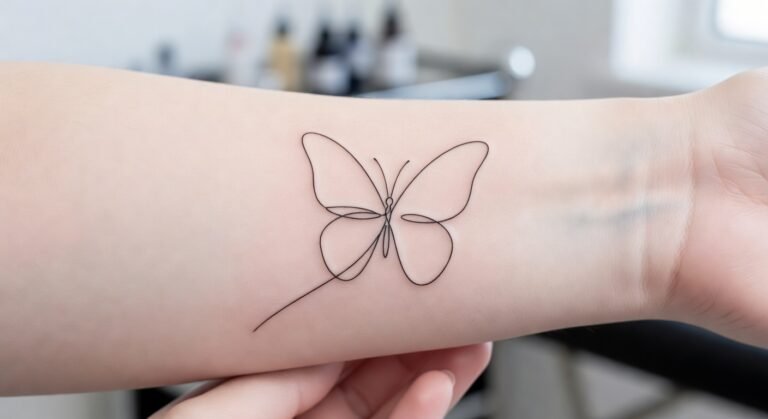
- Anchor a Single Fine Line Butterfly Wrist Tattoo
- Let Three Fine Line Butterflies Follow the Collarbone
- Use the Ear-Frame Method for an Elegant Butterfly Tattoo
- Skip the Knuckle Crease for a Minimal Butterfly Tattoo
- Build Birth Flowers Around Butterfly Tattoo Line Art
- Give the Shoulder Blade a Low-Wear Canvas
- Keep a Tiny Fine Line Butterfly Ankle Tattoo Above the Shoe Line
- Add Red Ink Accents Without Letting Them Take Over
- Frame a Crescent Moon Instead of Filling the Thigh
- Cover a Small Scar With Flow, Not Dense Blackwork
- Pair Personalized Lettering With a Butterfly, Not a Paragraph
1Anchor a Single Fine Line Butterfly Wrist Tattoo
A single fine line butterfly tattoo on the wrist works best when the wings stay open, the body remains simple, and the whole design is closer to 1.25 to 1.75 inches than microscopic. You want it to read as a butterfly from arm’s length, not as a faint ink smudge when your hand moves.
I’d place it just above the wrist crease, not directly in it. Your wrist bends, rubs against sleeves, watches, and bracelets, so a design jammed into the crease can fade unevenly.
Give the antennae space. Keep the wing veins selective.
Too many intricate interior lines can turn to soup.
A clean single-needle liner can make this feel delicate without making it weak. Black heals nicely here, and a restrained olive accent can echo a terracotta-and-olive color story without overwhelming the outline.
For another practical comparison, read this fine line placement and longevity guide before booking. It’ll help you ask better questions about line weight, spacing, and touch-ups.
If your budget is limited, put the money into an artist who shows healed wrist work. A cheaper appointment isn’t always better value when a touch-up costs more than the original tattoo.
2Let Three Fine Line Butterflies Follow the Collarbone
A 3 butterfly tattoo along the collarbone has movement built in. I’d vary the size slightly, with one bold butterfly leading and two smaller shapes following the bone’s natural line.
Keep the spacing generous. The composition should feel flowing, not crowded.
Three identical butterflies placed like stickers can look flat, while a subtle change in angle creates a more expressive rhythm. You’ll want the center butterfly to remain the visual anchor.
The collarbone is striking but bony, and the skin can be sensitive there. Your artist should stencil the entire sequence before starting.
Don’t approve each butterfly separately. You need to judge the whole path while your shoulder is relaxed and your arm is down.
A black outline with a clay-toned accent and restrained warm-gold detail can feel elegant without becoming overly ornate. If you’re comparing ideas, this fine line tattoo ideas collection may help you explain the mood you want.
3Use the Ear-Frame Method for an Elegant Butterfly Tattoo
Behind the ear is a strong spot for an elegant butterfly tattoo, but it needs restraint.
Keep the wings open and the details sparse. A graceful silhouette with a short body and clean antennae will hold up better than an intricate design packed into the hairline.
Place it slightly behind the ear rather than directly in the fold. That keeps the design visible when your hair moves and gives the artist enough skin to work with. The result can feel understated without disappearing.

4Skip the Knuckle Crease for a Minimal Butterfly Tattoo
A minimal butterfly tattoo on a finger can look sharp in a placement example, but fingers are high-wear zones. You wash your hands, grip things, bump knuckles, use sanitizer, and drag the skin across everything. That means fading, patchiness, and touch-ups are part of the deal.
Put the butterfly on the side of the middle or index finger, where the design can wrap slightly without crossing a deep bend. Keep it bold enough to survive.
Four simple wings. A solid little body.
No whisper-thin wing veins that need ten fuzzy passes to show.
Your artist should pull each line cleanly, not scratch at it until the skin gets angry. Deep navy pigment can give the design definition while staying softer than a dense black mark. If you want a forever-delicate look with zero maintenance, I’d move this idea up your forearm instead.
The side of the finger can still feel edgy and personal, but you need realistic expectations. Read these tattoo ideas by placement before choosing a high-wear spot.
Your finger can wear ink, sure. It just won’t baby it. That’s the honest tradeoff, and knowing it upfront protects your budget and your expectations.
5Build Birth Flowers Around Butterfly Tattoo Line Art
A butterfly with a birth flower can be personal without becoming a sentimental collage.
Keep the birth flower smaller than the butterfly and let its stem follow the wing curve. A meaningful symbol needs breathing room, especially when the petals have their own fine details.
A romantic design can stay clean when the flower uses only a few crisp leaves. Avoid filling every gap with dots or miniature text.
6Give the Shoulder Blade a Low-Wear Canvas
The shoulder blade is one of my favorite places for a minimalist butterfly tattoo because the skin gives you space, the area ages nicely, and you’re not constantly rubbing it against hard surfaces.
It’s a powerful placement for a larger, open design. You can use graceful wing curves, a few symbolic marks, or a small halo of dots without forcing every detail into a tiny shape. The result can be delicate and still visually confident.
A shoulder-blade butterfly also gives your artist room to adjust the stencil to your posture. Your back isn’t flat, so the placement should be checked while you stand naturally. Don’t hunch or twist to make the stencil look centered.
The cost may be higher than a tiny wrist tattoo, but the value is usually better. You’re paying for a design with enough scale to age well, rather than paying twice for an undersized tattoo and its inevitable refresh.
Compare the shoulder blade with other placements in this tattoo ideas by placement guide before you settle on your final stencil.
7Keep a Tiny Fine Line Butterfly Ankle Tattoo Above the Shoe Line
A mini butterfly tattoo on the ankle needs more size than people expect. Around 1.25 inches is usually the floor if you want wing separation to remain readable. Anything smaller can look dainty fresh, then blur as the lines settle into the skin over time.
Place it one or two finger-widths above the ankle bone, where socks and sneakers won’t grind against it every day. The ankle itself is bony and can be spicy, especially while your artist is pulling the outline. Tap out for five rather than pass out on me!
I’d use a charcoal foundation with one restrained dusty-rose accent rather than heavy shadow. You want a crisp outline with maybe two short inner marks per wing. Unscented soap, loose socks, and no pool time while it’s healing matter more than a fancy aftercare routine.
The first few days, it’s an open wound. Treat it like one. Don’t pick at flakes, don’t soak it, and don’t assume a little redness means the tattoo has failed.
For more aftercare and placement context, revisit this fine line tattoo longevity guide.
8Add Red Ink Accents Without Letting Them Take Over
A fine line butterfly with red accents is a vibrant idea, but this cleaner version uses warm-white negative space, camel details, and a black anchor. The contrast feels fierce without letting one color carry the entire design.
I’d use the black anchor for the body and main outline, then add a camel accent along one wing or a few tiny warm marks near the antennae. That keeps the shape readable if the lighter color softens.
Ask your artist about their healed color work, especially if your skin reacts easily or you spend a lot of time outdoors. A bright fresh result tells you almost nothing about long-term value.
If you’re drawn to more dimensional wings, this realistic butterfly tattoo guide can help you decide whether fine line, color, or realism fits your taste.
Warm accents are an expressive choice, not a maintenance-free choice. You’ll need to protect them from direct sun, and you may eventually prefer a small refresh to keep the color lively.
9Frame a Crescent Moon Instead of Filling the Thigh
A butterfly and crescent moon design on the thigh can get dramatic fast, so I’d keep the moon as a frame rather than a giant dark object.
A crescent moon tattoo can sit behind one wing, above the antennae, or slightly off-center to create movement. That asymmetry feels more personal than placing every element in a perfect stack.
A midnight-blue moon outline with a small copper accent can create a sacred, ethereal mood without competing with the butterfly. Keep the ivory or bare-skin space open around both shapes.
The thigh gives you useful scale, so don’t shrink the design just to make it seem dainty. A slightly larger butterfly can remain feminine, graceful, and meaningful for much longer.
This fine line tattoo collection has useful examples for comparing symbolic marks with clean linework.
10Cover a Small Scar With Flow, Not Dense Blackwork
A fine line butterfly can work over a small, fully healed scar, but your artist needs to see and feel the scar first. Don’t book from a description alone. Scar tissue can be raised, thin, shiny, or unpredictable.
I’d use the scar as part of the movement rather than trying to bury it. A wing can cross one edge, a curved body can redirect attention, or a few delicate dots can make the mark feel integrated into the composition.
This approach can be deeply personal without looking heavy. The butterfly becomes symbolic because it works with your history, not because someone added a generic quote underneath it.
A sage-green or warm-cream accent can soften the design, but the linework still needs enough contrast to remain readable. Wait until the scar is completely settled before choosing the final color.
For a second opinion on placement, compare the idea with this strength butterfly tattoo meaning guide.
11Pair Personalized Lettering With a Butterfly, Not a Paragraph
A butterfly with personalized lettering works when the lettering stays secondary. One name, date, initial, or short word can feel meaningful. A full sentence usually competes with the wings.
Choose a lettering style that has enough stroke separation to survive. Tiny handwritten scripts can look romantic fresh and become difficult to read after healing.
I’d put the lettering beneath one wing or along the curve of the body rather than squeezing it between the wings. The composition should still read as a butterfly if the words soften over time.
Ask your artist to show healed examples of both lettering and butterflies. This tattoo ideas by placement guide can also help you think through visibility, scale, and future additions.
A short phrase can make the tattoo empowering, but restraint keeps it polished. Personal doesn’t have to mean crowded.
A Scale Check Before You Book
The most common mistake is choosing the size from a phone screen. A design that looks intricate and delicate at full brightness may be too small once it’s transferred to skin.
Print your reference at the intended size. Hold it against the placement while you move, bend, and turn.
If the wing veins disappear from normal viewing distance, simplify them. If the body looks like a thread, enlarge it.
This isn’t about making every tattoo bold or masculine. A larger design can still be feminine, dainty, graceful, and understated. Scale gives those qualities space to survive.
You’ll also get a clearer estimate this way. Artists can quote more accurately when they know the actual size, complexity, and placement. That makes your budget conversation less vague.
Use this fine line tattoo guide when you’re deciding whether your reference has enough negative space.
The Wrist Versus the Forearm
The wrist feels personal because you see it constantly. The forearm gives a butterfly more space, more stability, and better long-term readability. Neither choice is automatically right.
Choose the wrist if you want a small, visible symbol and you’re willing to accept more wear. Choose the outer forearm if your priority is a sleek shape that stays legible with less daily friction.
A butterfly on the forearm can feel classic without becoming severe. It also gives you space for a second symbolic element later, such as a birth flower or a tiny moon.
If you’re unsure, stencil both placements. Don’t decide from a mood board alone. Your own proportions will tell you which option feels natural.
This tattoo placement collection is useful if you’re weighing visibility against longevity.
Black Ink or Color?
Black ink is usually the most reliable foundation for a fine line butterfly. It gives the wings definition, keeps the silhouette readable, and makes future touch-up decisions simpler.
Color can be more playful or daring. Red accents feel passionate.
Purple can feel ethereal. Blue can make the design look crisp and unusual. The strongest color tattoos still need clear structure underneath.
Think about value, not just the initial price. A slightly more expensive artist with strong color technique may be worth it if you want saturated accents. A bargain appointment that heals muddy isn’t a bargain.
You’ll also need to consider sun exposure. Color can soften faster, especially when you skip sunscreen. That doesn’t make it a bad choice, but it does make it a more active choice.
For a realistic comparison of styles, read this realistic butterfly tattoo guide.
Instagram Healed-Work Test
Fresh tattoo work is polished, bright, and often taken before swelling settles. Healed examples show you what the artist’s line control actually delivers.
Look for wings that remain separated, curves that still look intentional, and lettering that hasn’t collapsed. Search for consistency across different skin tones and placements. One lucky tattoo isn’t enough evidence.
Ask whether the example was shared after at least several weeks. You don’t need to interrogate the artist, but you do need honest information before spending your money.
A skilled artist should be comfortable explaining how they adapt a design. If they promise that every micro-detail will stay exactly as fresh, I’d be cautious. Skin is living tissue, and good tattooing respects that.
Use this fine line longevity resource to prepare questions about healing, line weight, and touch-ups.
Fresh Versus Healed: What Changes?
A fresh tattoo can look sharp, glossy, and unusually dark. Healing removes that surface drama. The skin may peel, the lines may soften, and the final contrast may become gentler.
That softer finish can be beautiful. Fine line doesn’t need to look harsh to remain readable. The goal is a graceful tattoo with enough structure, not a permanently fresh-looking wound.
Don’t judge the result during the first week. Follow the artist’s aftercare, keep your hands off the flakes, and give the skin time to settle.
If the healed tattoo has a genuine gap or uneven patch, ask about a touch-up after full settling. Don’t rush back because the surface looks different at day five.
This tattoo placement guide explains why some locations soften faster than others.
What Fine Line Butterfly Tattoos Cost and How They Heal
Your total depends on the artist, city, complexity, and whether the shop has a minimum. A clean fine line butterfly may be a short appointment, but a skilled artist’s minimum isn’t something to bargain down. You’re paying for safe setup, design time, line control, and a tattoo that has a real shot at healing well.
Wash with gentle, fragrance-free soap. Use a thin layer of ointment or lotion as directed by your artist.
Don’t suffocate it. It’ll peel like a sunburn, and you shouldn’t pick the flakes or you can pull color out.
Avoid pools, hot tubs, direct sun, and gym friction while it’s fresh. You can be careful without being dramatic. That’s the whole job!
If you’re comparing quotes, ask what’s included. Design time, stencil adjustments, aftercare guidance, and a follow-up policy all affect the real value. The lowest cost isn’t always the smartest budget.
For more placement and maintenance context, compare these tattoo ideas by placement before you book.
My Fine Line Rule: Design for the Healed Version
I’ve watched people fall in love with the fresh tattoo and ignore the one question that matters: what will this look like after the swelling drops, the shine is gone, and you’ve lived in it for five years?
Fine line isn’t fragile by default. Bad planning makes it fragile.
The problem isn’t that lines expand. All tattoo lines soften some. Skin moves, cells replace themselves, sun happens, and your body isn’t a sheet of paper.
The good tattoo accounts for that. Your artist leaves open skin between details, uses a line weight that suits your placement, and pushes contrast where your eye needs it. That’s why a shoulder-blade butterfly can stay soft and clear while a super-detailed finger butterfly might need a touch-up.
I made the mistake early on of thinking smaller always meant more elegant. It doesn’t.
Sometimes it means invisible. That size on a wrist is gonna mush out, so I’d rather bump it up the forearm and let it breathe.
Same idea. Better tattoo.
You should also be honest about visibility. A behind-the-ear butterfly isn’t low-maintenance if you wear sunscreen twice a summer and rub it with hair products every morning.
A finger tattoo isn’t a bad tattoo because it fades. It’s a high-wear tattoo, and your expectations need to match the placement.
Black is your best friend for longevity. Color is spice.
If you love red, purple, or soft grey, use it with a black anchor so your design doesn’t heal flat. Fine line can age beautifully on you.
Don’t ask it to perform magic!
Read these fine line longevity rules before approving a design that depends on microscopic detail.
What Healed Examples Reveal
Healed work tells you whether the tattoo artist understands restraint. You’ll see if the antennae remain visible, whether tiny spaces stayed open, and if the wing shape still reads without fresh gloss.
Look for examples in ordinary light. Dramatic presentation can make every tattoo seem more polished than it is. A sharp, honest healed example is more useful than a staged one.
Pay attention to the artist’s range. If every butterfly has the same body, wing angle, and shading pattern, you may want a more custom experience. Your tattoo should feel personal, not mass-produced.
Bring two or three references, then explain what you like about them. Maybe it’s the bold silhouette, the delicate spacing, or the symbolic mood. Clear direction helps your artist create something original.
Browse this butterfly tattoo ideas collection when you’re comparing silhouettes, symbolism, and line density.
The Questions Worth Answering First
How much does a Fine Line Butterfly Tattoo usually cost?
Most fine line butterfly tattoos cost about $100 to $300, depending on size, placement, and your artist’s rate. A custom butterfly tattoo is worth the shop minimum. Larger thigh pieces, custom flowers, color, and lettering can push the cost higher.
Are Fine Line Butterfly Tattoos a good idea for a first tattoo?
Yes, especially on your outer arm, thigh, calf, or shoulder. An outer-arm placement gives you clearer lines and more manageable pain than fingers, ribs, or feet. Keep your first design simple, and let your artist make the stencil large enough to heal clean.
How do I choose a tattoo artist for a Fine Line Butterfly Tattoo?
Look for healed work, not just fresh tattoos. Crispy healed linework tells you more than a perfect stencil.
You want a licensed studio, consistent fine line work, and artists who show butterflies or botanicals on real skin. This fine line tattoo guide can help you prepare better questions.
How much do Fine Line Butterfly Tattoos hurt?
Pain depends on your placement. Outer arm placement is usually more tolerable than ribs, feet, hands, sternum, or bony collarbones.
Lines feel sharp. Shading feels like a dull burn. Color packing can be the most intense part.
How long does a Fine Line Butterfly Tattoo take to heal?
Surface healing usually takes about 2 to 3 weeks, while full settling can take 2 to 3 months. Gentle tattoo aftercare protects your lines while they settle. Wash gently, moisturize lightly, and keep your fresh tattoo out of pools and direct sun.
What’s the best placement for a Fine Line Butterfly Tattoo?
For low maintenance, pick your outer upper arm, shoulder blade, thigh, or calf. A low-wear placement gives the design more space and less daily friction.
If you want a symbolic placement, your wrist or collarbone can work too, but size the butterfly up so it doesn’t crowd itself. Compare options in this tattoo placement guide.
Where I’d Start First
If I had to pick one, I’d start with the shoulder-blade butterfly. Your skin gives the wings space to breathe, so the lines don’t need to fight each other.
If you want something more visible, I’d choose the outer forearm over the wrist. If you want something private and refined, the behind-the-ear option can be beautiful when it’s sized honestly.
Trust that reaction! The best design is the one that still feels meaningful after the fresh excitement fades. Review these fine line tattoo placement ideas before you book.