
I almost talked myself out of my first Japanese back tattoo because I thought every back piece had to be a full bodysuit. It doesn’t. A clean Japanese back tattoo can start at the shoulders, hold its contrast for years, and grow with you. The rule is simple: give the design enough skin, enough black, and room to breathe.
Editor’s note: the best back tattoos aren’t always the biggest or most elaborate. They’re the ones with a striking silhouette, a meaningful subject, and enough negative space to stay crisp. If you’re comparing ideas by cost, value, and long-term wear, these are the choices I’d actually discuss with a client.
- Build a Japanese Dragon Back Tattoo With Wind Bars
- Let Koi Fish Move Across Your Japanese Back Piece
- Frame a Samurai Back Tattoo Like a Real Portrait
- Extend Traditional Japanese Tattoos Into a Back Bodysuit
- Pair Peony and Snake Flash Before You Commit
- Push Contrast in a Hannya Mask With Flames
- Choose Blackwork Japanese Back Tattoo Over Tiny Scale Detail
- Use the Tebori Texture Rule for Soft Shading
- Can Geometric Sacred Symbols Sit Inside Asian Back Tattoo Flow?
- Anchor an Upper Back Japanese Tattoo With Mount Fuji
- Layer Ocean Waves for a Full Back Japanese Tattoo
1Build a Japanese Dragon Back Tattoo With Wind Bars
A dragon needs movement, or it looks pasted onto your back. I’d run the body diagonally across the upper back, then use kaze wind bars to pull your eye from one shoulder blade toward the other. You get a Japanese back piece that reads clearly from several steps away instead of turning into a tangled dark blob.
Keep the dragon’s scales controlled. Terracotta, stone, and olive ink tones, open negative space, and smooth grey wash shading give you depth without overworking the skin. You’ll want the head large enough to stay readable, usually at least 4 to 5 inches across if it’s the main focal point.
Smaller than that, and the face starts getting chewed up.
The dragon can feel fierce without becoming visually noisy. A flowing body, sharp claws, and one expressive eye usually carry more impact than a dozen tiny symbols. That’s where the design becomes personal rather than merely ornate.
But don’t cram every gap with clouds. The losing move is a dragon, waves, flowers, clouds, lightning, and three kanji all fighting for attention.
Your artist should let the wind bars do some of that background work. For symbolism and flow, read this traditional Japanese cloud tattoo meaning guide.
A dragon is also a strong value choice if you want one subject to anchor future work. You can extend the composition later with peonies, waves, or a sleeve connection without making the original tattoo look unfinished. That kind of flexibility is worth paying for.
2Let Koi Fish Move Across Your Japanese Back Piece
Koi work because their bodies already have a natural S-curve. I’d let one fish rise toward the shoulder while another turns through the lower back, creating a flowing conversation instead of two isolated animals.
Use clay, linen, and aged-brass ink tones as a restrained color family. The warm clay can sit on the scales, while pale linen breaks up the darker body and aged brass adds small highlights around the fins. It feels expressive without becoming overly loud.
Keep the koi large enough for the scales and fins to remain readable. A dainty fish can look delicate at first, but tight detail tends to lose its crispness as the tattoo settles. Bold body shapes and clear fin movement will age with more confidence.
The direction matters, too. A koi swimming upward often suggests persistence, ambition, or a difficult change. A downward-moving fish can feel reflective or grounded.
Neither choice is automatically better. Pick the one that matches your story.
You can add peonies, maple leaves, or wind bars later, but don’t add them just because the back feels empty. The strongest koi pieces leave deliberate skin around the fish. That restraint makes the design feel sleek and timeless!
3Frame a Samurai Back Tattoo Like a Real Portrait
A samurai back tattoo needs a face you can read. I’ve seen artists bury a beautiful helmet inside too much smoke, then wonder why the whole piece heals flat. Put the portrait high and centered between your shoulder blades, with the samurai portrait breaking the top silhouette.
That gives you a powerful read even in a T-shirt collar.
Use plum, grey, and rose-gold ink tones for the armor and surrounding details, but keep the composition Japanese with deliberate flat fields and controlled background clouds. You don’t need photorealistic everything.
In fact, I’d skip micro-realistic facial detail here. It’s impressive fresh, but that tiny detail can turn to soup on moving skin.
A samurai can look fierce, elegant, or haunting depending on the expression. A lowered gaze feels reflective.
A forward stare feels daring. A mask creates mystery, while visible facial features make the piece more intimate and human.
Your shoulder area is fairly manageable compared with ribs or sternum, so you can sit through a solid first session. Lines feel sharper. Shading is a dull burn.
If you need a break, take it. Tap out for five rather than pass out on me.
The cost rises quickly when a portrait requires extensive color packing, armor texture, and background work. That doesn’t mean you should choose the cheapest quote. Ask which version gives you the strongest long-term value, then compare healed examples in this Japanese warrior tattoo guide.

4Extend Traditional Japanese Tattoos Into a Back Bodysuit
Traditional Japanese tattoos aren’t random sticker collections. A real irezumi composition uses the back as one field, then lets clouds, rocks, water, and flowers connect the main subject. You’ll get a more polished result when the background has a job instead of filling open skin because someone got nervous.
Think in sessions, not one giant appointment. A full back may take many visits, while a focused upper-back panel can be built in shorter 3 to 5 hour sessions.
Your artist should map the composition with a purple stencil transfer and marker lines before the machine ever touches you. That planning matters more than chasing Pinterest-exact references.
And your back gives you generous low-wear skin. The outer upper back doesn’t fade like fingers, feet, or elbows, so bold linework tends to heal nicely there. You can start with a central panel and leave intentional edges for future side panels.
The most timeless bodysuits usually have a clear hierarchy. One subject leads.
The wind, waves, rocks, and flowers support it. That restraint is what makes the finished tattoo feel classic instead of crowded.
For artist research, I’d begin with a traditional Japanese tattoo artists guide. Look for healed work, consistent backgrounds, and compositions that follow a real body rather than a flat reference sheet.
5Pair Peony and Snake Flash Before You Commit
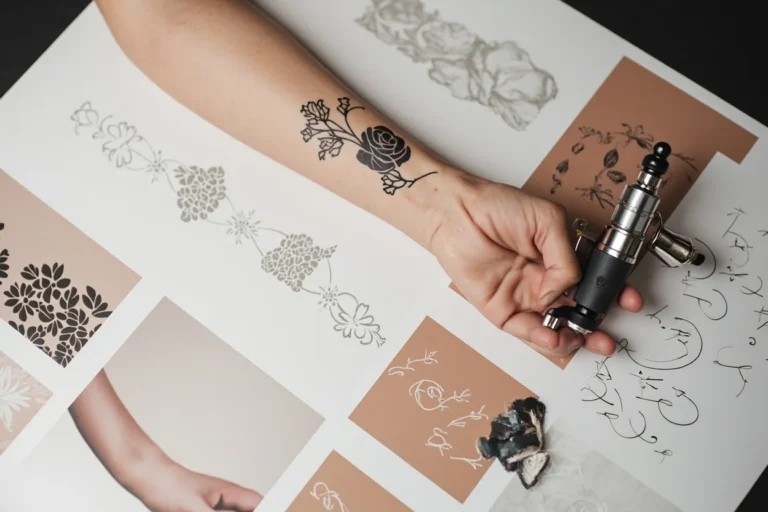
This one starts as a flash-sheet idea, and that’s exactly why you should slow down. A peony and snake Japanese tattoo can look incredible, but the relationship between them matters.
Let the snake coil behind the flower heads, with one visible section of belly scales and a clear head. You want tension, not a botanical pileup.
The flash version should show emerald, gold, and cream ink tones, with peony petals kept readable and the snake separated from the flowers by clean line breaks. If you’re taking flash to an artist, ask them to redraw it for your body.
Flash is a starting point. Your upper back has angles, muscle movement, and shoulder blades that flat paper doesn’t.
I’d choose three large peony blooms over eight tiny ones. Bold will hold. The small petal clusters might look delicate on day one, but you’re paying for something that has to live on your skin, not on aged paper.
The snake adds an edgy counterpoint to the flower’s romantic shape. That contrast is why the pairing remains so personal. If snakes are your main draw, a neo-trad Japanese tattoo guide can help you sort traditional, neo-traditional, and illustrative boundaries.
6Push Contrast in a Hannya Mask With Flames
A Hannya mask needs contrast or it loses its expression. Put the horns up near the traps, let the eyes sit across the broadest part of the upper back, and trail the flames downward.
You’ll get a face that hits hard from several steps away. That’s the whole point!
Use forest green, rust, and natural brown ink tones in the mask, then reserve the darkest black for the brows, nostrils, teeth, and flame outlines. I’d rather see black structure first and color second. It stays crisp longer.
The mask can feel fierce, haunting, or even strangely vulnerable. That emotional tension is part of its appeal. A narrowed eye, exposed teeth, and carefully shaped horns can communicate more than a paragraph of symbolism.
But don’t make the mask too small. A 3-inch Hannya on a broad back is a bad bargain because the teeth, eyes, and forehead lines all compete in a tiny space. Give it 6 inches or more if you want the full expression.
Your artist can soften the background with pepper shading so it heals velvety rather than patchy. If you’re comparing price quotes, ask whether the estimate includes the mask, flames, background, and color saturation. A low upfront cost can become poor value if major elements get simplified halfway through.
7Choose Blackwork Japanese Back Tattoo Over Tiny Scale Detail
Want the strongest aging plan? Choose blackwork Japanese back tattoo structure over tiny scale detail. A dragon or serpent built from solid black scale blocks, wide negative-space breaks, and controlled grey wash will keep reading long after fine little scale loops have widened.
This is where I get blunt with clients: the ultra-detailed version on a small upper back is rarely the smart version. It photographs great fresh. Ten years later, the high-contrast blackwork version wins because you can still see the body, head, and movement.
You don’t need every scale to prove the tattoo is Japanese. The silhouette, wind bars, clouds, and controlled line weight already establish the language. Removing weak detail can make the final tattoo more expressive, sharp, and iconic.
And blackwork is not the same as a black blob. Your artist needs one clean pull, not ten fuzzy ones, around every major curve. Ask to see healed work on different skin tones, especially healed black saturation.
A blackwork plan can also be more budget-conscious than a heavily colored realism piece, although large areas of solid packing still take time. You can use the Riley Reid back tattoo meaning article to think through visibility and personal symbolism before you commit.
8Use the Tebori Texture Rule for Soft Shading
Tebori-style shading has a particular softness. Whether your artist uses traditional hand-poke methods or machine work inspired by that look, you want the shading to sit behind the linework, not bury it. The upper back is a good canvas because you’ve got broad planes where soft fades can settle.
A healed piece should show warm white, camel, and black ink accents around waves, clouds, or scales, with black outlines staying confident on top. That’s the Tebori Texture Rule: build your darkest marks first, then feather the lighter tones around them.
The result can feel graceful and ethereal without becoming weak. Soft shading should support the subject’s movement. It shouldn’t flatten the design or make every edge equally faint.
Your skin needs recovery time between longer sessions, too. Don’t stack appointments so tight that it’s still angry when you return. A patient schedule is part of the final quality, not an optional extra.
First few days, it’s an open wound, so treat it like that. Wash with gentle unscented soap, use a thin layer of ointment, and don’t suffocate it under heavy lotion. It’ll peel like a sunburn.
Don’t pick the flakes or you can pull color out.
A lower back tattoo pain guide is useful if your future plan extends below the waistline. The lower back can change the composition, session length, and overall cost, especially when the design crosses toward the hips.
9Can Geometric Sacred Symbols Sit Inside Asian Back Tattoo Flow?
Yes, but only if you stop treating geometry as a separate sticker. Midnight blue, copper, and ivory ink can give sacred symbols a crisp, symbolic presence without overpowering the Japanese movement around them.
Place the geometry where it supports the main subject. A circular symbol can sit behind a mask, while angular marks can echo the direction of wind bars or wave crests. The lines should feel intentional, not pasted over the anatomy.
Keep the symbols large enough to remain legible. Tiny internal marks are the first details to soften, especially when they sit near dense shading. A strong outer shape will carry more meaning than a crowded cluster of miniature signs.
This approach can feel minimal, sacred, or quietly empowering. It works especially well when the symbols relate to your history rather than serving as random decoration.
Ask your artist to explain the cultural source and meaning before you commit. A powerful tattoo should also be respectful. That combination makes the final piece more personal and more enduring.
10Anchor an Upper Back Japanese Tattoo With Mount Fuji
Mount Fuji is a cleaner choice than people give it credit for. An upper back Japanese tattoo with Fuji can sit wide across both shoulder blades, with a simple snowcap and wave or cloud framing underneath. You’ll get a calm, graphic composition that leaves room for future work around it.
The stencil-to-healed comparison matters with this subject. A clean thermal stencil can look almost too bare, then healed black-and-grey shading gives the mountain its weight. Don’t panic when you see open skin in the stencil.
That breathing room is what keeps the peak from becoming a dark triangle later.
Fuji can feel timeless, symbolic, or quietly powerful. It works for someone who wants a recognizable Japanese reference without committing to a face, creature, or battle scene.
I’d choose Fuji over a miniature temple if this is your first large back piece. A temple needs lots of architectural lines, which can feel crowded fast. Fuji gives you a bolder silhouette and ages more predictably.
If temple imagery is still calling you, read the Japanese temple tattoo meaning guide before you book. Compare the symbolism, expected session time, and level of detail you’re actually willing to maintain.
11Layer Ocean Waves for a Full Back Japanese Tattoo
A full back Japanese tattoo with ocean waves doesn’t need a giant central character to feel complete. Strong terracotta, stone, and olive ink tones can give the waves a grounded, vintage character while the foam keeps the movement sharp.
Let the wave crests travel across the shoulders and curl toward the lower back. The repeating rhythm can connect separate sections without forcing every inch of skin into dense detail.
I’d keep the darkest black under the foam breaks and along the deepest curls. That contrast makes the water feel powerful, raw, and expressive. Too much grey everywhere can flatten the movement.
Waves also give you a flexible foundation. You can add a koi, dragon, Fuji, or peony later without making the original idea feel incomplete. Just decide early where the future subject might sit.
If you want a more aggressive design, increase the crest size and use sharper claws of foam. If you want something more understated, reduce the contrast and let the open skin carry more of the composition.
Japanese Back Tattoo Cost, Session Time, and Healing Reality
Your final cost depends on your artist, region, design density, and how many sessions you need. A shop minimum is often around $50 to $100 in the US, while established artists commonly charge about $100 to $250 per hour.
You’re not buying a logo. You’re paying for drawing, placement, sterile setup, technical control, and healed results.
I’ve watched people try to save money by choosing a cheaper artist for a complicated Japanese back piece. It’s usually the expensive choice in disguise. Cover-up work is harder, darker, and more painful.
Pick the artist whose healed lines look clean, whose blacks are solid, and whose composition makes sense on a body. That’s where the real value is. A striking tattoo that ages well is worth more than a bargain tattoo you immediately regret.
For a realistic budget, compare the artist’s process and healed portfolio in this Japanese tattoo artists guide.
How Many Sessions Will a Japanese Back Tattoo Take?
A focused upper-back panel may take one long session or two shorter appointments. A full back with color, background, and dense shading can take many visits. Don’t let anyone promise a precise number without seeing the design and your skin.
Session planning should account for your pain tolerance, work schedule, travel, and healing time. You’ll need breaks, food, water, and enough recovery between appointments. A daring design still needs a realistic schedule.
Long sessions can make lines less consistent once the skin becomes swollen and sensitive. Your artist may stop before the tattoo feels visually complete, then finish the remaining areas later. That’s often a sign of care, not a failure to finish.
Ask whether the quoted cost covers drawing time, deposits, touch-ups, and future color work. Those details affect your total budget more than the first hourly estimate.
How to Choose a Japanese Tattoo Artist for Your Back
Start with healed examples. Fresh tattoos can look saturated, sharp, and polished even when the underlying linework is uneven. Healed Japanese work shows you how the artist handles spacing, black saturation, color, and softened edges.
Look for a portfolio with different body types and skin tones. You want to see how the artist adapts dragons, koi, masks, and waves instead of repeating one fashionable template.
Ask how the artist approaches the stencil. A good consultation should cover subject, scale, direction, background, session length, and how the tattoo could expand later. You shouldn’t feel rushed into a permanent decision.
A traditional Japanese tattoo artists guide can help you build a shortlist. You can also compare broader artist criteria in this Japanese tattoo artists guide.
Trust your reaction to the healed work. If the portfolio feels inconsistent, keep looking.
How to Plan Symbolism Before You Book
Start with one sentence. “I want a dragon because I survived a difficult change” is more useful than sending twenty unrelated screenshots. Your artist can translate that emotional core into a symbolic, expressive design.
Decide whether you want the tattoo to feel understated, ornamental, aggressive, sacred, or meaningful. Those choices affect the subject, pose, color, and amount of background.
You should also decide how visible the tattoo needs to be. An upper-back piece can stay private under clothing, while a design extending toward the neck or shoulders becomes more visible in daily life. That choice affects both confidence and future work options.
Don’t choose symbolism only because it’s trending. Trends move quickly.
Your back tattoo will remain with you through ordinary years, changing jobs, relationships, and priorities. A timeless subject usually gives better emotional value.
For more symbolism prompts, revisit this tattoo meaning guide.
Back Tattoo Aftercare That Protects Crisp Lines
Follow your artist’s instructions first because bandage types and skin responses vary. In general, keep the area clean, avoid soaking it, and wear loose clothing that won’t rub against fresh ink.
Sun protection matters after healing, too. Ultraviolet exposure can dull color and soften contrast over time. A high-SPF sunscreen helps preserve the tattoo’s sharpness once the skin has fully closed.
Don’t scratch peeling skin. Don’t pick scabs. Don’t return to pools, hot tubs, or open water while the tattoo is healing unless your artist gives you different guidance.
If something looks unusually hot, swollen, painful, or infected, contact a medical professional. A tattoo can be delicate and dramatic, but aftercare should stay practical. This lower back tattoo pain guide also helps if your design extends into a more sensitive area.
What I Tell Clients Before They Start a Back Piece
I’m Marco, and I’ll say this plainly: a Japanese back tattoo is not the place to bring me twelve unrelated screenshots and ask for all of them. I get why people do it. Pinterest gives you one great dragon, one killer mask, one wave panel, one peony, then suddenly you’re trying to build a whole identity from thumbnails.
Your job is to bring references for mood, subject, and color. My job is to make those ideas fit your body. That means I’ll tell you when a tiny dragon head needs to get bigger.
I’ll tell you when a background is too busy. And I’ll tell you if the placement you want is going to blur into your shoulder blade movement or get crushed by a shirt collar.
The best Japanese work has a little restraint. It knows what to leave out.
A big dragon with wind bars can carry more presence than a crowded full back filled with every symbol you liked at 1 a.m. Same with color. Red can make a mask feel alive, but if every subject gets red, your eye has nowhere to rest.
You should also be honest about commitment. Are you okay returning for multiple sessions?
Can you protect the tattoo from sun and pool water while it heals? Will you still like the subject when it isn’t trending?
Those aren’t boring questions. They’re the questions that separate a solid lifetime tattoo from something you’re trying to laser in three years.
If you’re still comparing ideas, save three references that share a mood rather than three references that share nothing. That makes the consultation more productive and helps your artist build something original.
The Questions Worth Answering First
How much does a Japanese back tattoo usually cost?
Expect a typical US shop minimum of about $50 to $100, with many artists charging around $100 to $250 hourly. A back piece often needs multiple sessions, so you should budget for the full plan, not one appointment. Healed quality costs less than a cover-up.
Are Japanese back tattoos a good idea for a first tattoo?
Yes, if you’re ready for the scale and session time. Your upper back is generally more tolerable than ribs, feet, or sternum, and bold linework ages well there. You should start with a focused upper-back panel if a full back feels like too much.
How do I choose a tattoo artist for Japanese back tattoos?
Look for a portfolio with healed Japanese work, clean linework, solid black packing, and compositions that follow bodies. You should ask about studio hygiene and drawing process. Healed photos matter more than fresh ones.
Start with this traditional Japanese tattoo artists guide.
How much do Japanese back tattoos hurt?
Upper back and shoulder areas are usually more manageable than ribs, hands, feet, or sternum. Lines feel sharper, while shading feels like a dull burn. Pain tolerance changes the experience, so you should tell your artist if you’ve got a low pain tolerance.
How long does a Japanese back tattoo take to heal?
The surface usually heals in about 2 to 3 weeks, while deeper settling takes roughly 2 to 3 months. You should wash gently, moisturize lightly, avoid sun and pools, and don’t pick flakes. Surface healing takes patience if you want to protect your color and lines.
What’s the best placement for a Japanese back tattoo?
The upper back is a strong starting placement because it’s broad, visible when you want it to be, and generally low-wear. Your shoulder blades give subjects movement. Outer upper-back skin tends to age nicely when you protect it from UV.
Where I’d Start First
If I had to pick one, I’d start with the dragon and wind bars. A dragon gives your artist a strong spine of movement, while the wind keeps the open skin from looking unfinished. Pin that idea for later and compare it with this Japanese warrior tattoo guide.
If you want something more symbolic, choose Fuji with waves. If you want something bold and daring, choose the Hannya. If you want a romantic contrast, choose peony and snake.
Your best choice is the one you’ll still understand when the trend has passed. Make the silhouette strong, give the linework space, and pay for the artist whose healed work makes you want the same tattoo on your own back.
That’s the kind of decision that stays meaningful. That’s the move!