

Star tattoos fail when the shape does all the work and the execution does nothing. A five-pointed outline with no compositional logic reads as filler, not flash. The designs worth collecting treat the star form as a structural anchor, not a starting point.
What separates a star tattoo that ages well from one that muddies by year three: line weight and negative space management. Both are decisions made before needle hits skin.
Botanical Fills That Justify a Star’s Geometry
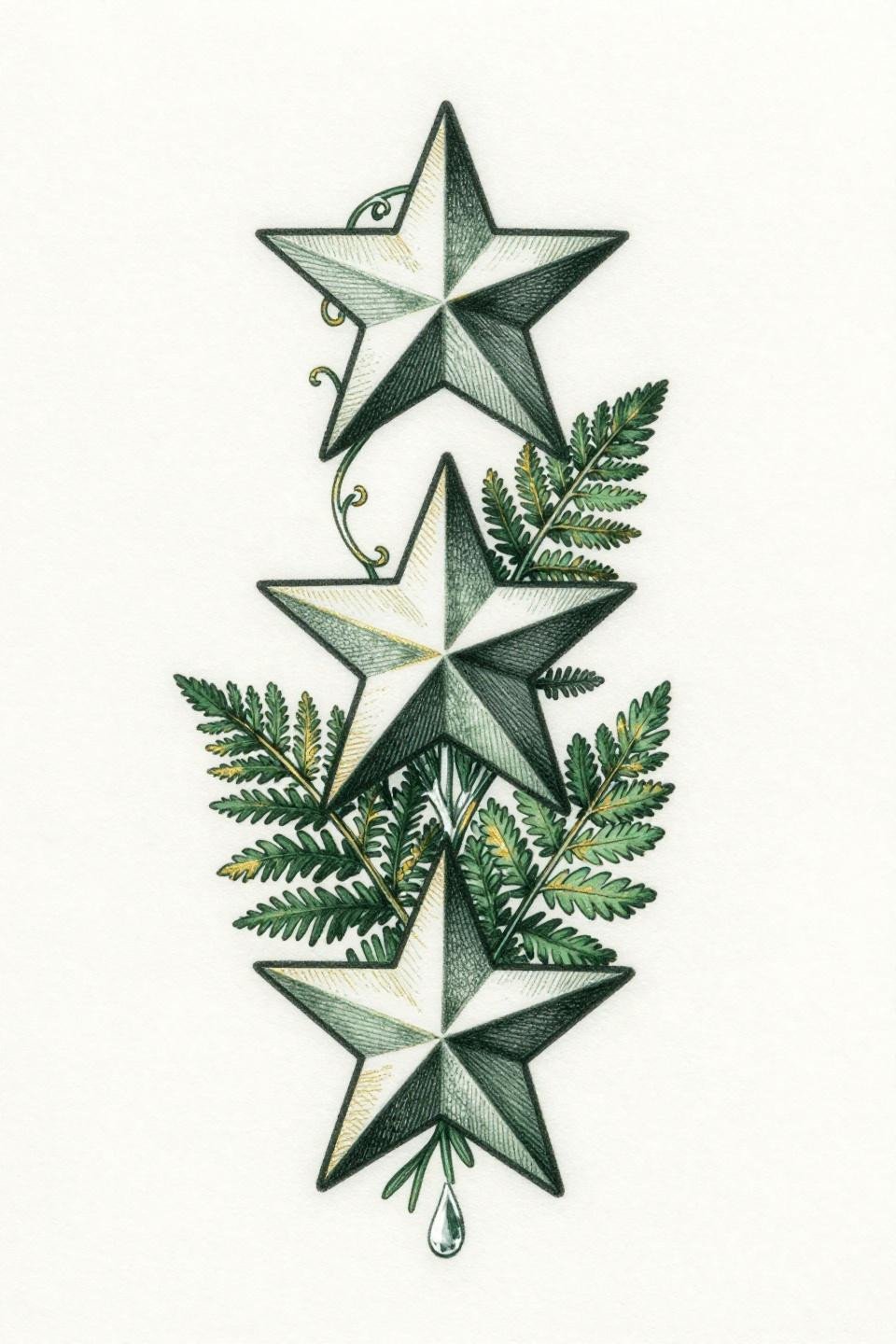
Three stacked stars in descending size, the lowest filled with radiating fern fronds and vine tendrils, with a dewdrop crystal hanging from the bottom point. The crosshatch etching technique gives this piece a printmaking density that flat fills could never achieve at this scale.
Forest green ink reads differently by skin tone. On lighter skin it holds the botanical detail cleanly for years. On olive and deeper tones, the fine parallel shadow strokes need heavier spacing to maintain contrast as the ink settles.
Constellation Geometry as Symbolic Architecture
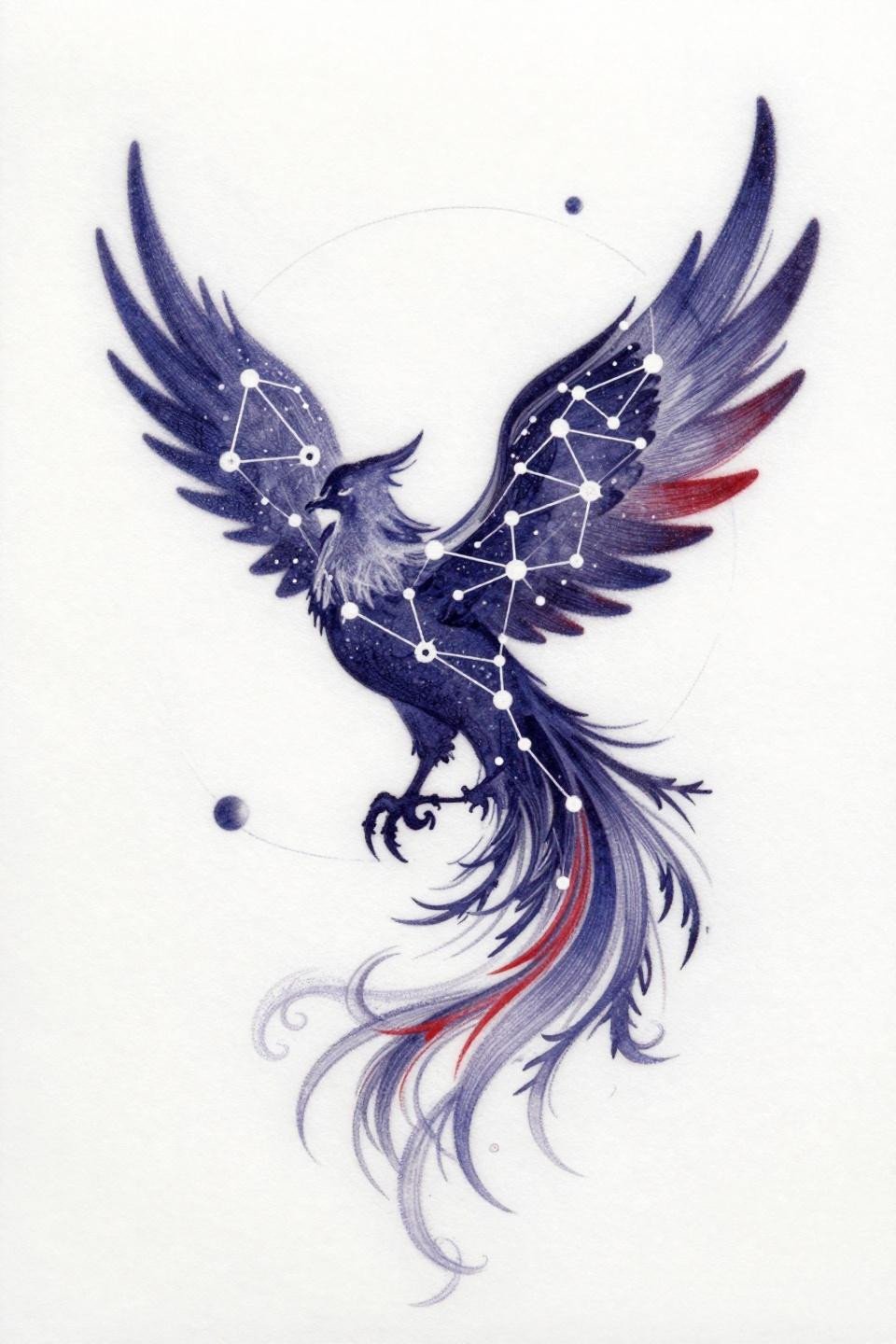
A phoenix silhouette built entirely from interconnected constellation lines, with hollow geometric star points at each node and small planetary bodies orbiting the perimeter. The whip shading technique creates sweeping depth without muddy midtones, which is the hardest thing to execute in deep indigo ink.
This is a placement-specific design. The asymmetric flow reads best on a shoulder blade or outer thigh, where the body’s natural contour gives the sweeping lines room to move without distortion.
Open Negative Space Is Doing the Heavy Lifting Here
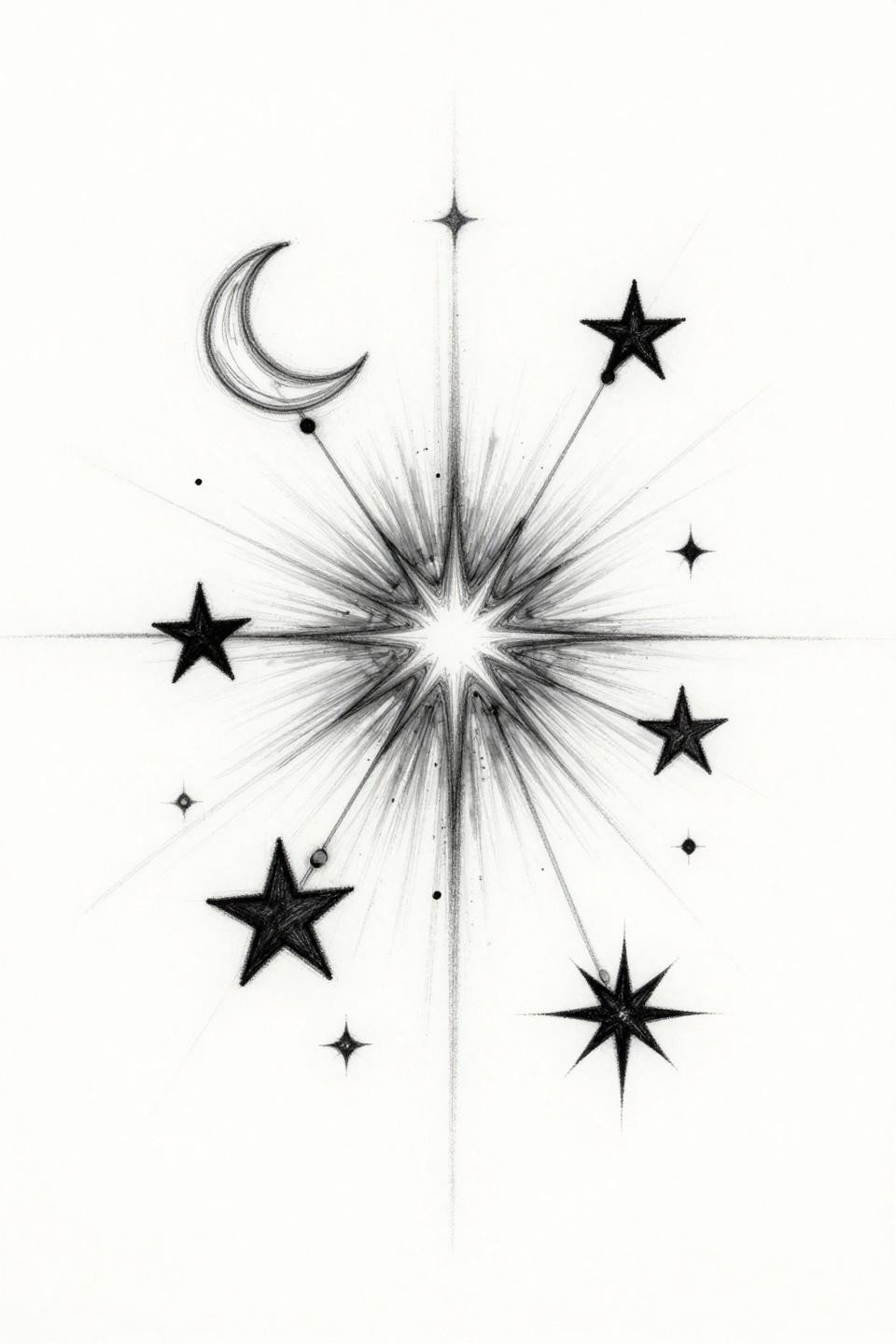
Eight stars in a loose constellation scatter, connected by thread-like lines with a crescent moon nestled between the two largest, and fine sparkle burst marks radiating from the cluster core. The gestural calligraphic linework makes this read as a deliberate artistic choice rather than an unfinished design, but only if the artist controls line variation tightly.
Grey wash dilution from dense to open needs clean water ratios. Muddy midtones here collapse the whole piece, so check the artist’s healed grey wash work before committing.
One Continuous Line That Earns Its Moon
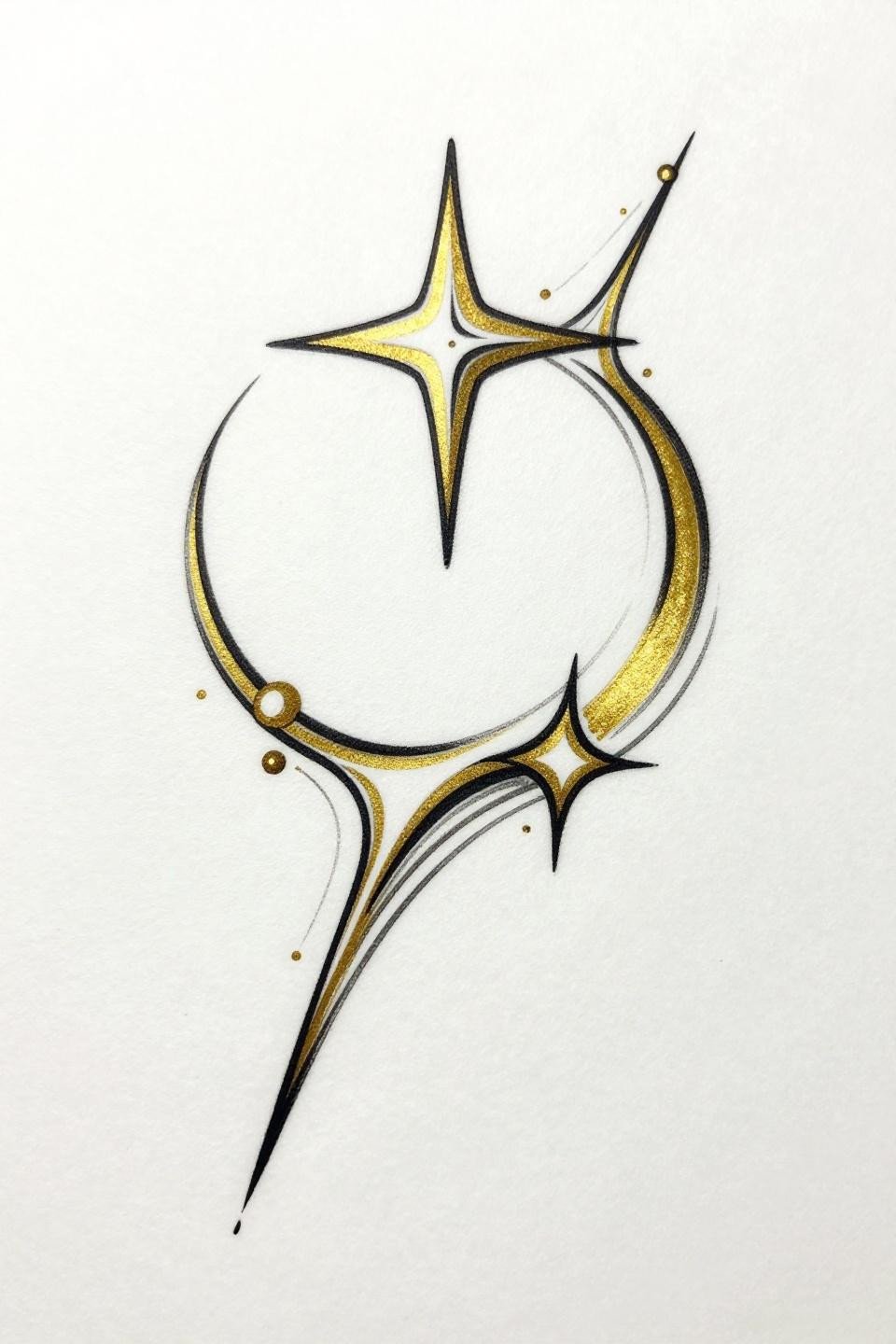
A five-pointed star drawn as one unbroken loop, with one point elongating into a crescent moon form and small planetary orbs along the perimeter suggesting orbital drift. The varying line weight in the brush and ink application is what makes continuous line work feel alive rather than mechanical.
Gold metallic ink on black line is a two-session commitment for proper saturation. Artists who try to complete this in one pass end up with patchy gold fills that dull within a year.
Celtic Knotwork Tightens What Mandala Compositions Blur
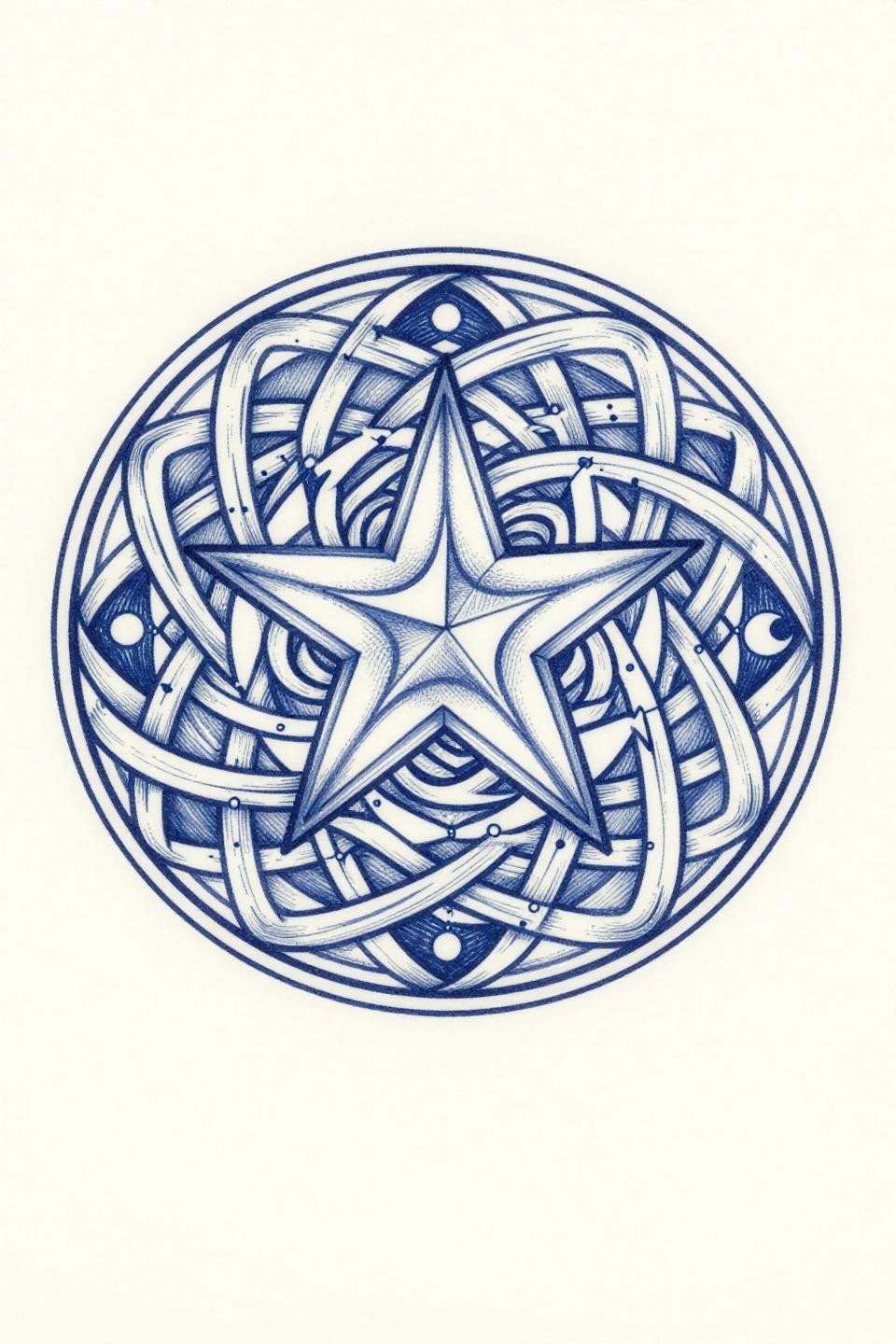
A single elongated star with a hollow geometric center, wrapped in concentric rings of interlaced knotwork, with crescent moons sitting in the negative spaces between bands. The parallel line engraving technique with precise ruled hatching is the technical signal that separates this from generic mandala flash.
Navy blue ink on cream grounds ages into a blue-grey patina over five to seven years. Collectors who want the navy to hold need an artist who layers passes rather than flooding the skin in one hit.
Old School Outlines Keep Y2K References Honest
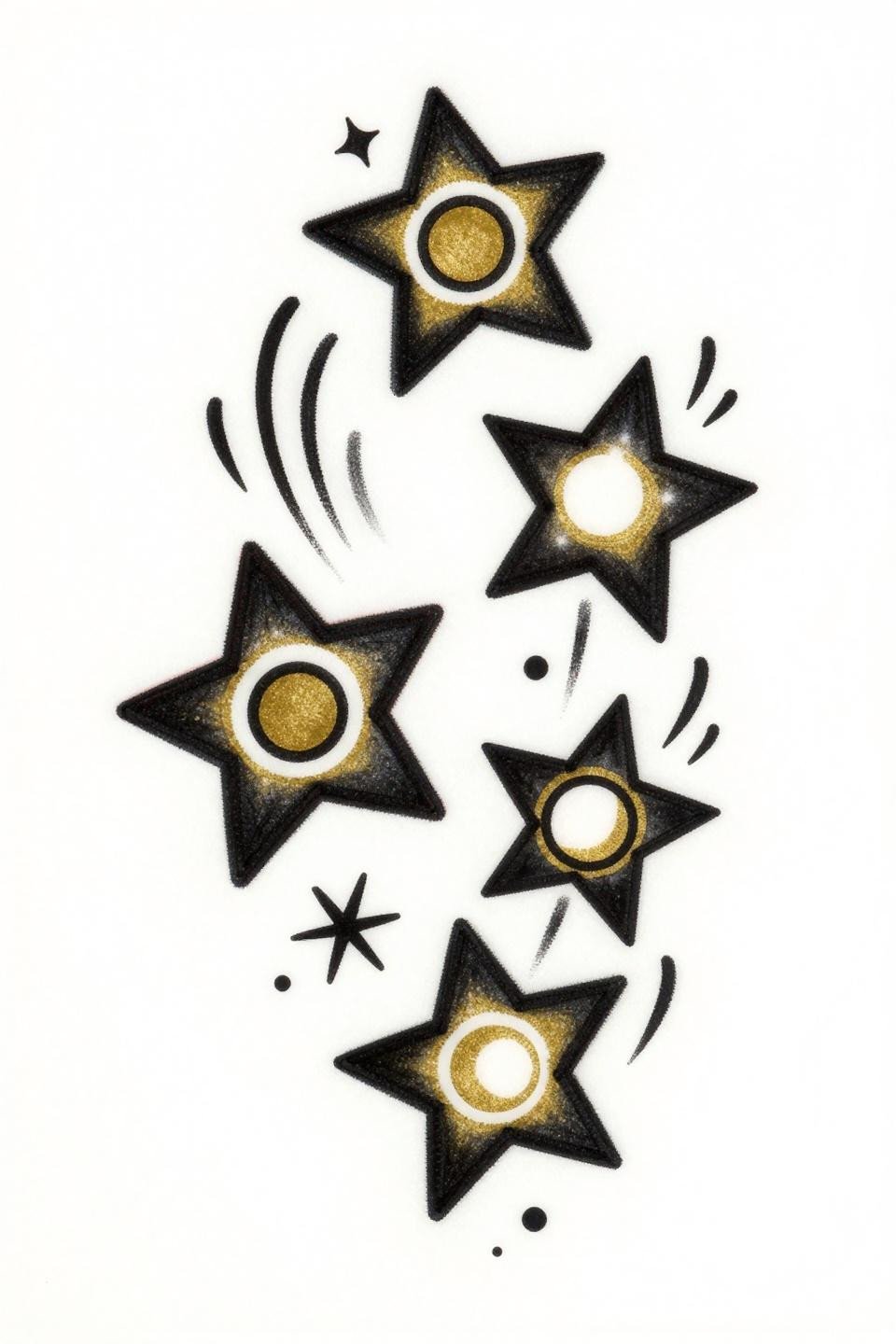
Five stars in a descending cascade, each with concentric inner rings, surrounded by sparkle burst marks and curved motion lines suggesting spin. The bold 2-3pt black outlines are the longevity anchor here. Without that outline weight, the Y2K aesthetic devolves into something that looks dated rather than intentionally retro.
Flat gold fills with consistent saturation and zero patchiness separate veteran traditional artists from beginners. Request healed portfolio shots before booking this specific piece.
The Dreamcatcher Star That Actually Has Structure
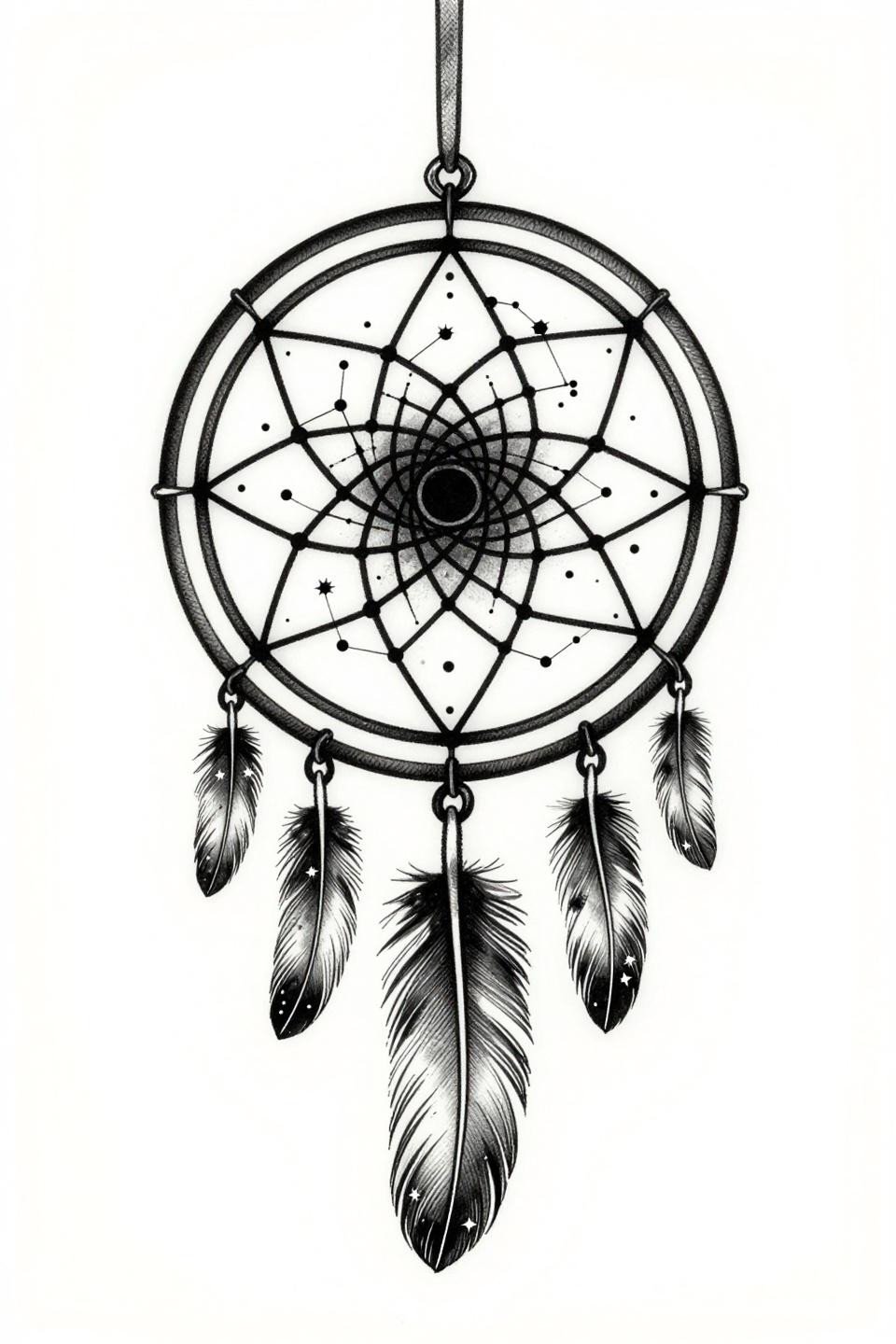
A dreamcatcher with a five-pointed star replacing the traditional circular web, with geometric webbing lines, constellation dot scatter, and five hanging feathers each containing micro star motifs. Irezumi-influenced dense hatched shadow work gives the feathers genuine depth at a scale where most artists just lay down flat grey.
This is a forearm or upper arm design. The diamond frame composition needs straight placement to read correctly. Any rotation on a curved limb distorts the symmetry immediately.
Tribal Geometry Without the Ambiguity
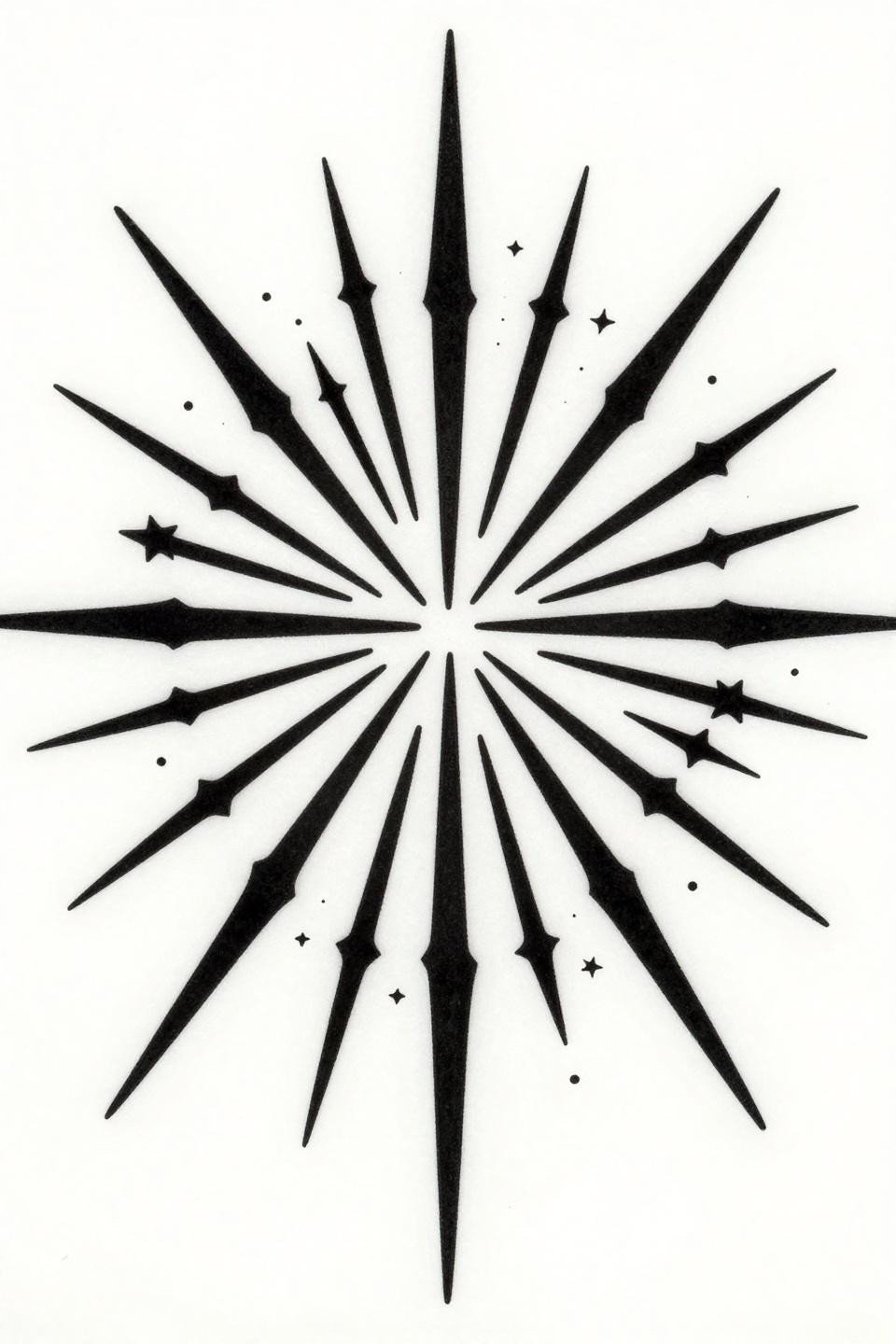
A starburst with eight thick alternating-length rays from a central point, with small secondary stars filling the negative spaces between rays. The high contrast solid geometry using flat black fills with bold 2-3pt outlines is the only approach that keeps tribal-adjacent work from looking soft at scale.
Fully saturated blackwork at this density holds indefinitely if the artist commits to layered passes. Single-pass black fields thin out within two years and require touch-up to recover the visual weight.
Dotwork Scatter That Maps Like Actual Sky Charts
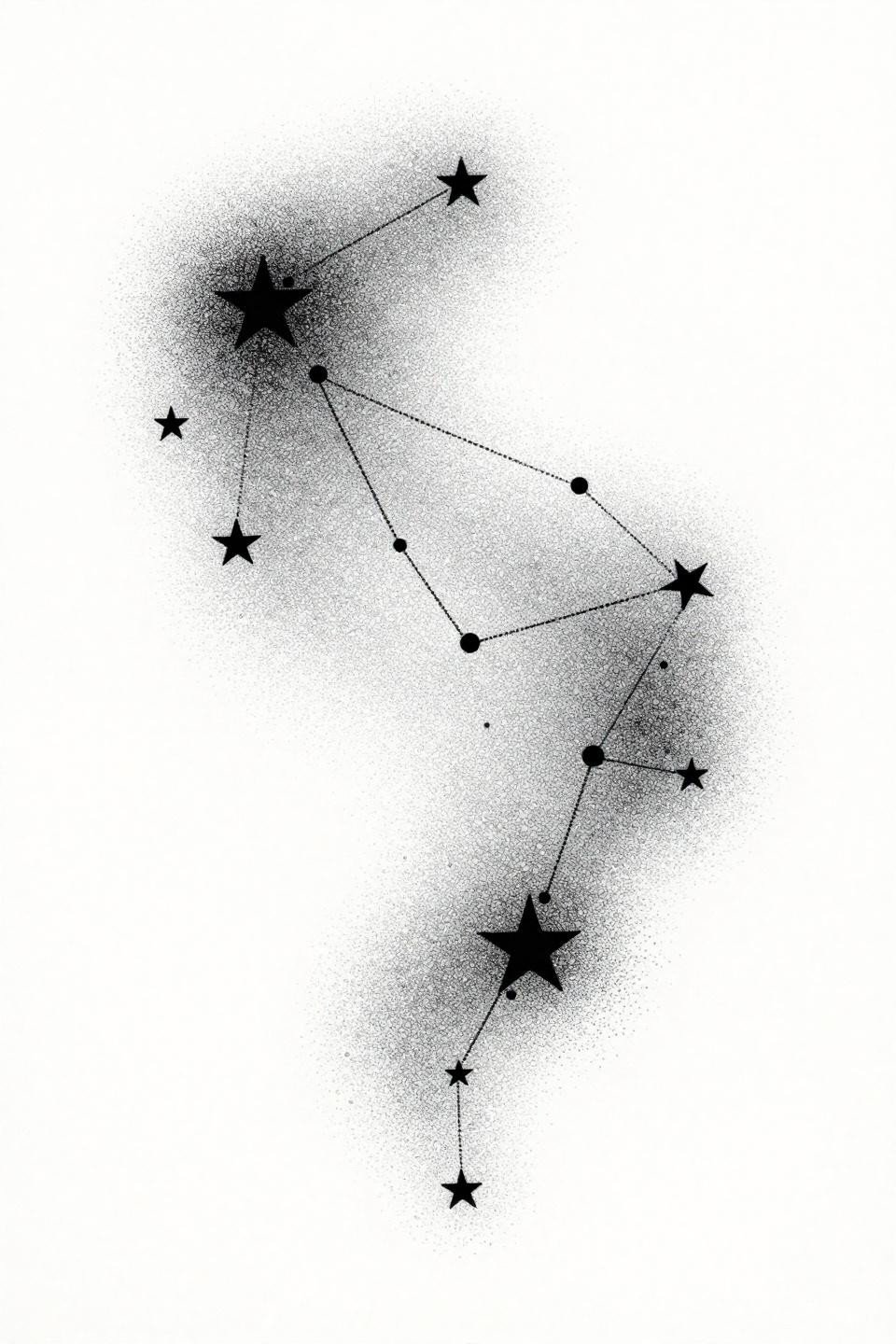
An irregular constellation scatter with stars ranging from large to pinpoint, connected by fine stipple paths, with each star body filled by a dense-to-open stipple dot gradient that fades outward from the core. This technique demands consistent dot size across the full piece. Inconsistent dot work is immediately visible on healed skin.
Protected placements like the sternum or upper back give this style its best shelf life. High-friction areas accelerate the dot migration that blurs the gradient within three to five years.
Fine Line Star Forms That Know Their Shelf Life
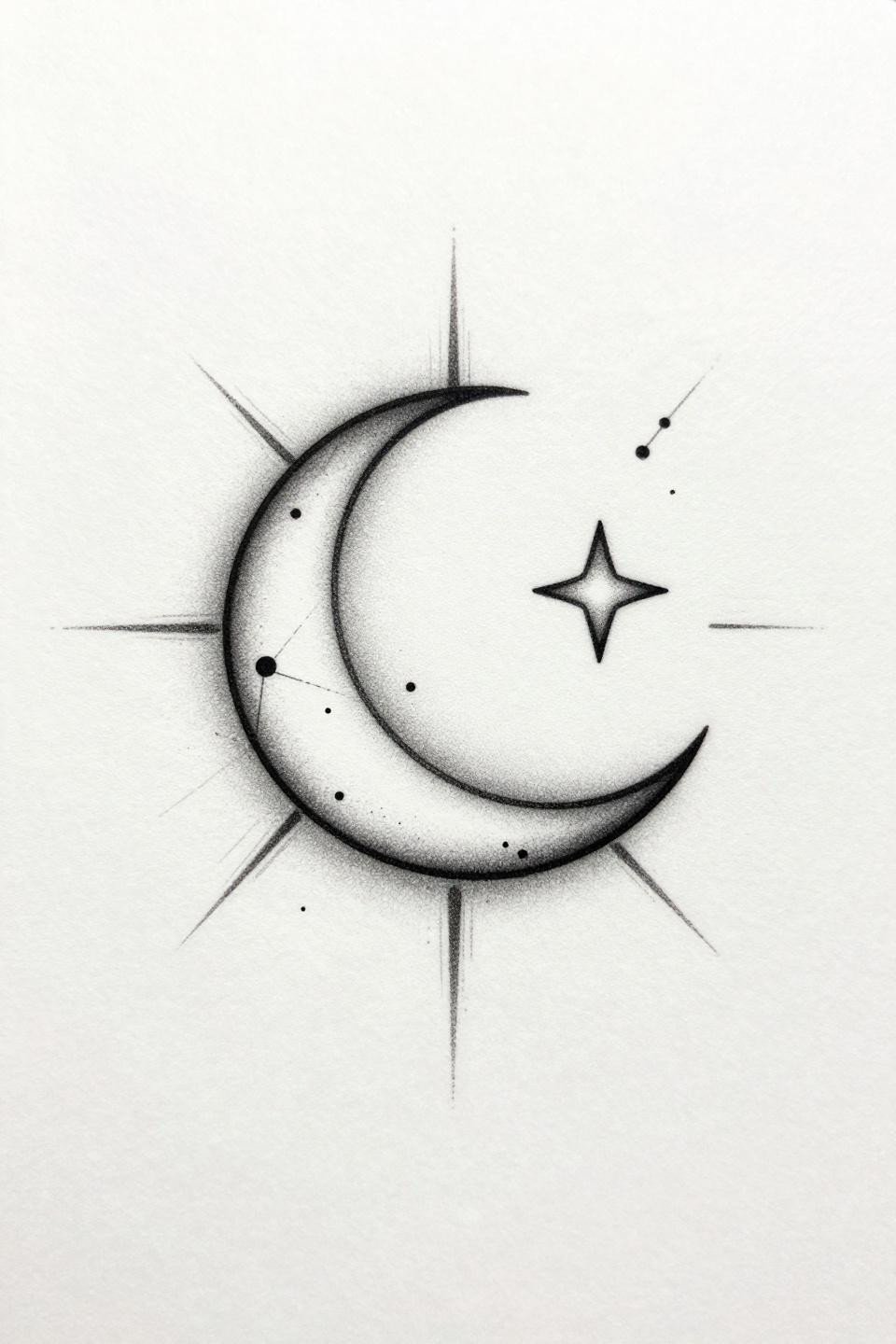
A five-pointed star with one point curving into an integrated crescent moon, surrounded by dotwork constellation scatter and fine radiating 0.5mm hairline strokes suggesting a glow effect. Single needle 1RL work at this weight needs an artist who controls hand speed precisely. Inconsistent speed reads as uneven line weight within the first year of healing.
On olive skin, this level of fine line needs placement in a protected zone. Sun-exposed areas fade these hairline strokes within two summers without SPF discipline.
Watercolor Without an Outline Is a Shorter Conversation
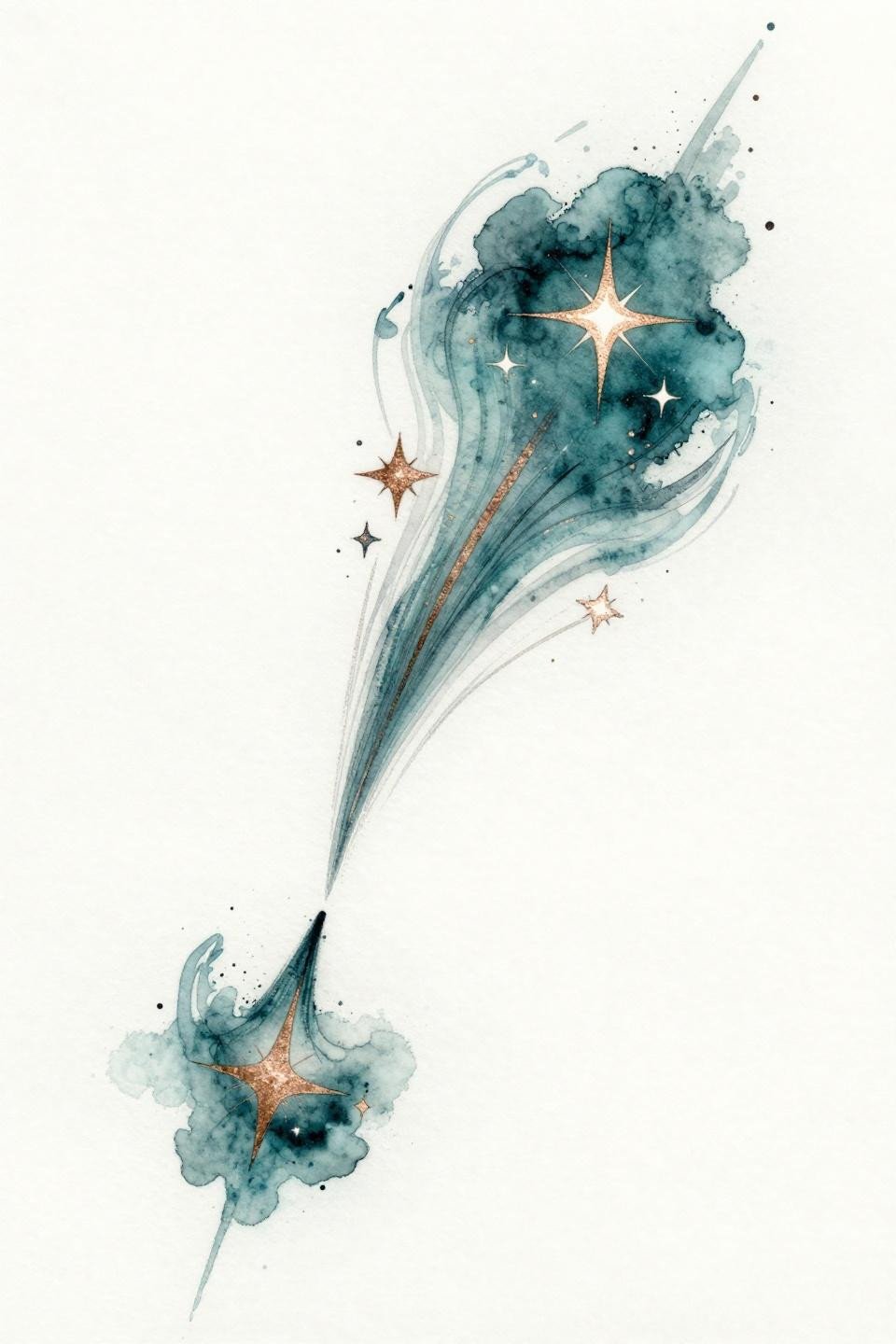
A shooting star with a tapering comet tail, trailing stardust particles, and three small secondary stars in loose orbital scatter, rendered in teal with copper metallic washes bleeding outward from the line skeleton. The watercolor bleed technique requires an anchoring line structure underneath, which this piece has. Without it, the wash migrates into surrounding skin within three to five years.
Copper metallic ink is the variable here. It photographs bright and fades faster than standard pigments. Collectors who want this piece long-term need a touch-up plan built into the booking conversation.
Art Deco Geometry Earns Every Degree of Precision

A five-pointed star with nested crystalline geometry, sharp radiating light rays, and precise mathematical symmetry throughout, executed with compass-drafted linework and flat fills. The nested star-within-star pattern is the composition’s load-bearing element. Any deviation from true symmetry in the outer rings reads immediately at this scale.
This piece belongs on a flat surface: sternum, back panel, or upper arm flat face. Curved placements distort the concentric geometry and undermine the entire design logic.
Pull three to five of these references that match your placement zone and skin tone, not just the style you like on screen. Send those specific ones to your artist with placement noted. A tight reference set gets you a better consultation and a faster booking decision.