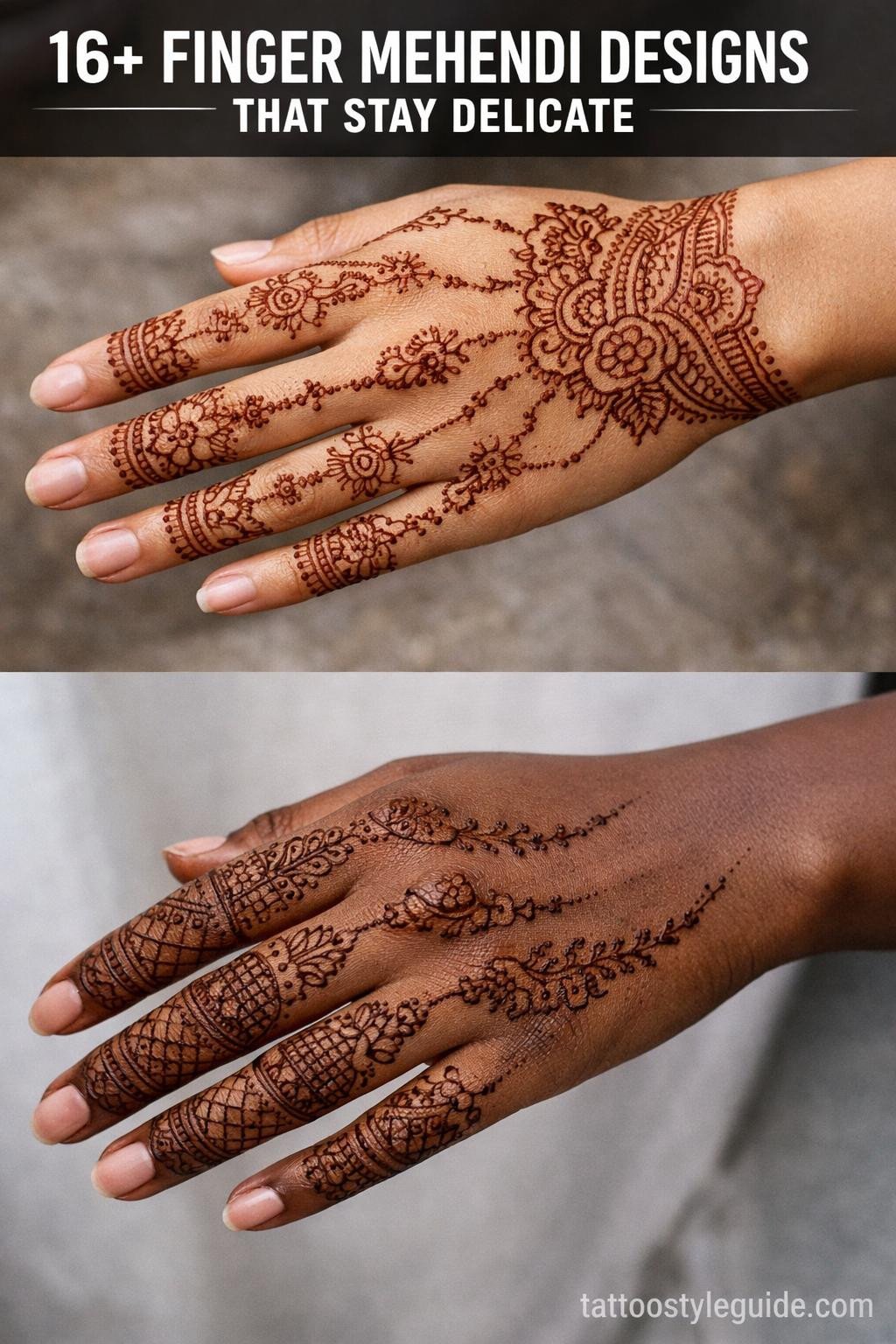
Finger mehendi designs fail more often than people expect. The canvas is narrow, the skin folds constantly, and anything with excessive fill density reads muddy within days on most skin tones. The designs that hold their read are the ones built on open negative space and controlled motif spacing.
What separates workable references from wishful thinking is scale discipline. A motif that scans well on a palm becomes a blur at finger width. These 16 references are selected specifically for that constraint.
When Asymmetric Teardrops Outperform Symmetry on Narrow Canvases
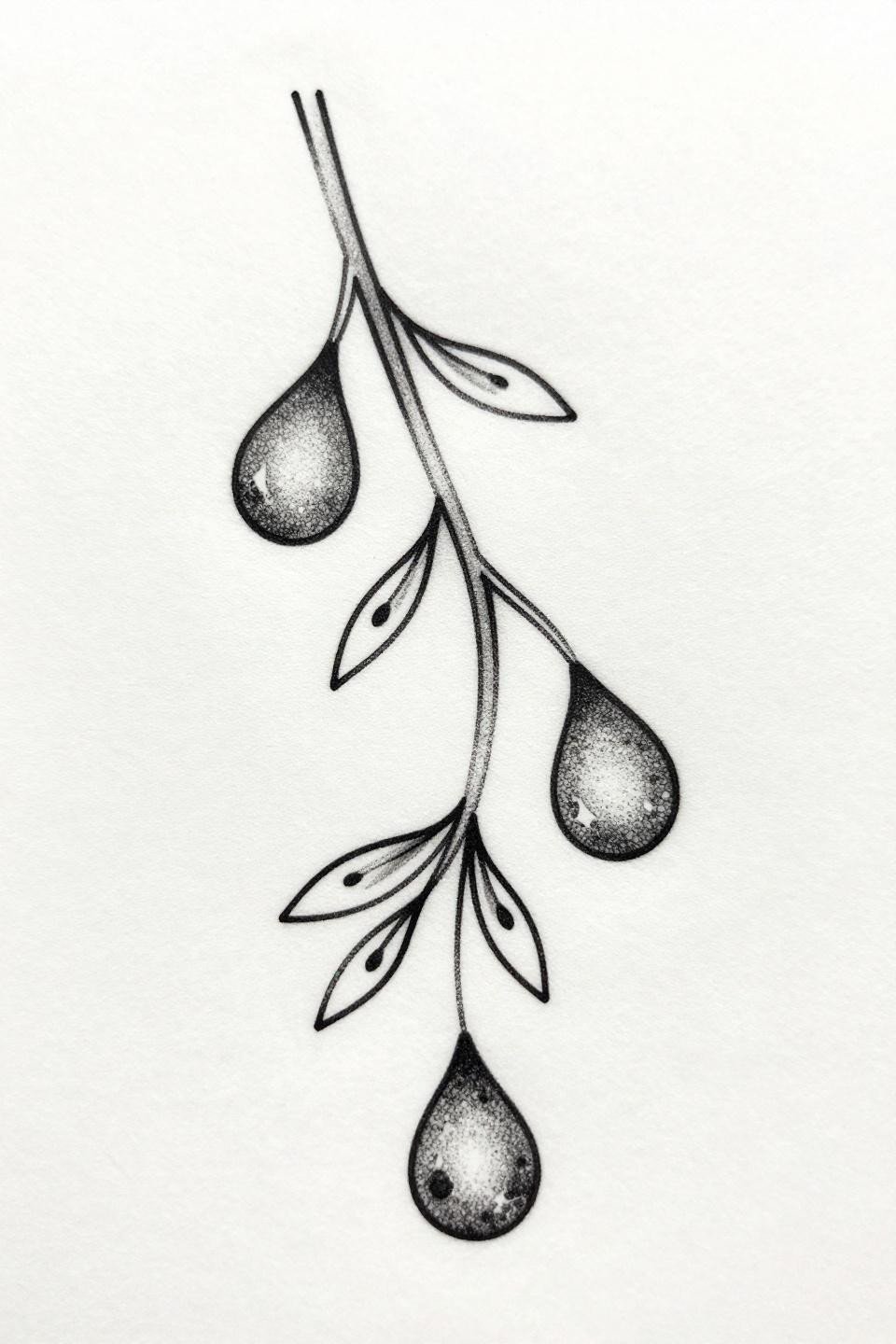
A dotwork vine chain with three asymmetrically placed teardrops, connected by fine parallel geometric bridges and curved bridge tendrils. Stipple density gradients from 90% at the teardrop cores to nearly open at the connecting lines, keeping the composition airy without losing structure.
On lighter skin tones this reads crisp at application. On olive and deeper skin, the open stipple work at the tendril sections needs bolder dot clusters to maintain contrast once the henna oxidizes.
Two Mandala Centers Connected by a Single Bridging Line
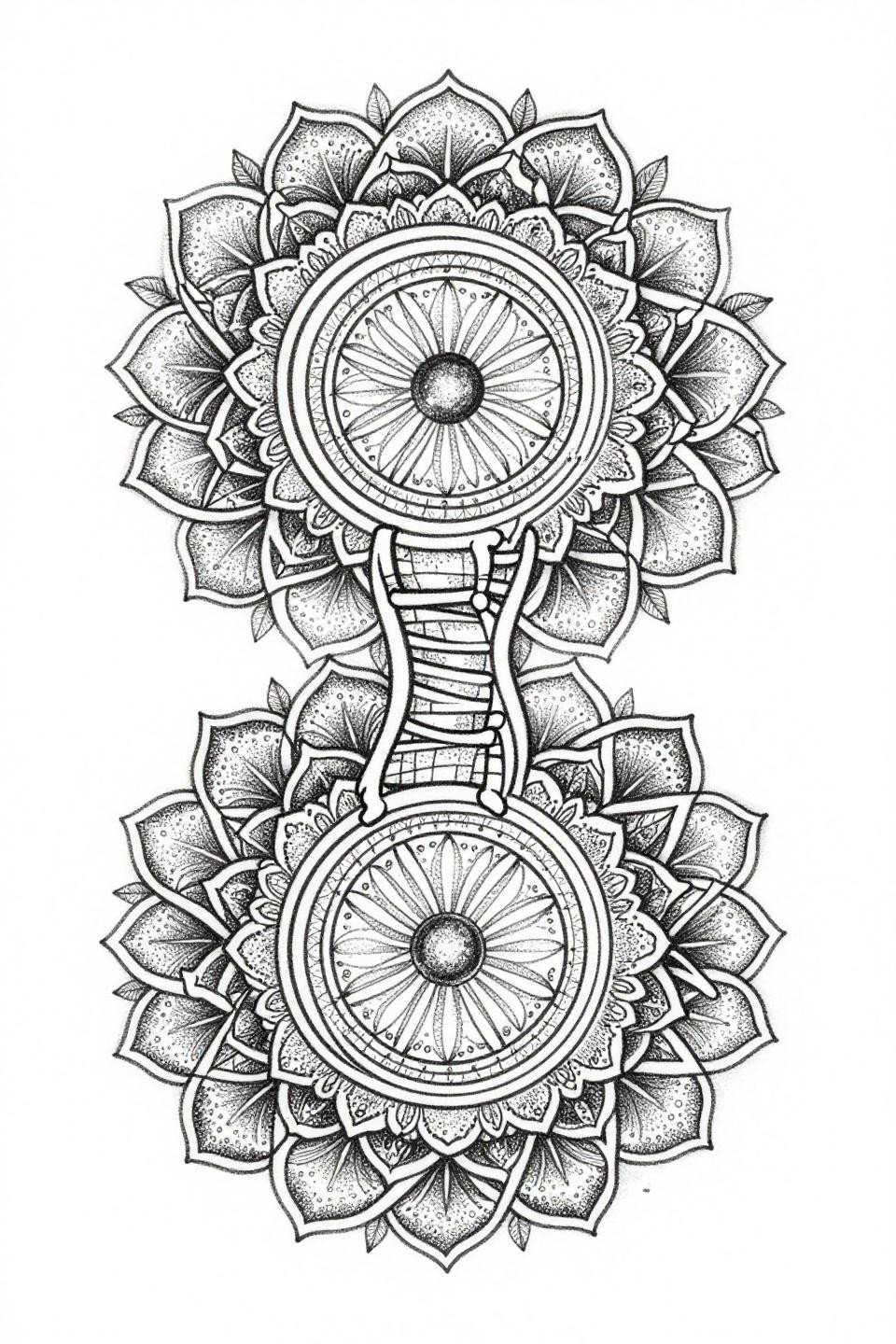
Dual interlocking circular mandalas with radiating petal dotwork, a fine curved bridge at the centers, and geometric lattice infill inside each circle. The bilateral composition is deceptively simple to execute but demands consistent dot sizing across the full gradient or the two halves read as mismatched.
For latest simple mehndi design ideas that translate to finger placement, this dual-mandala format is one of the most reliable because the circular frame contains the detail without crowding the edges.
Imperfect Crescent Moons That Read Better Than Clean Ones
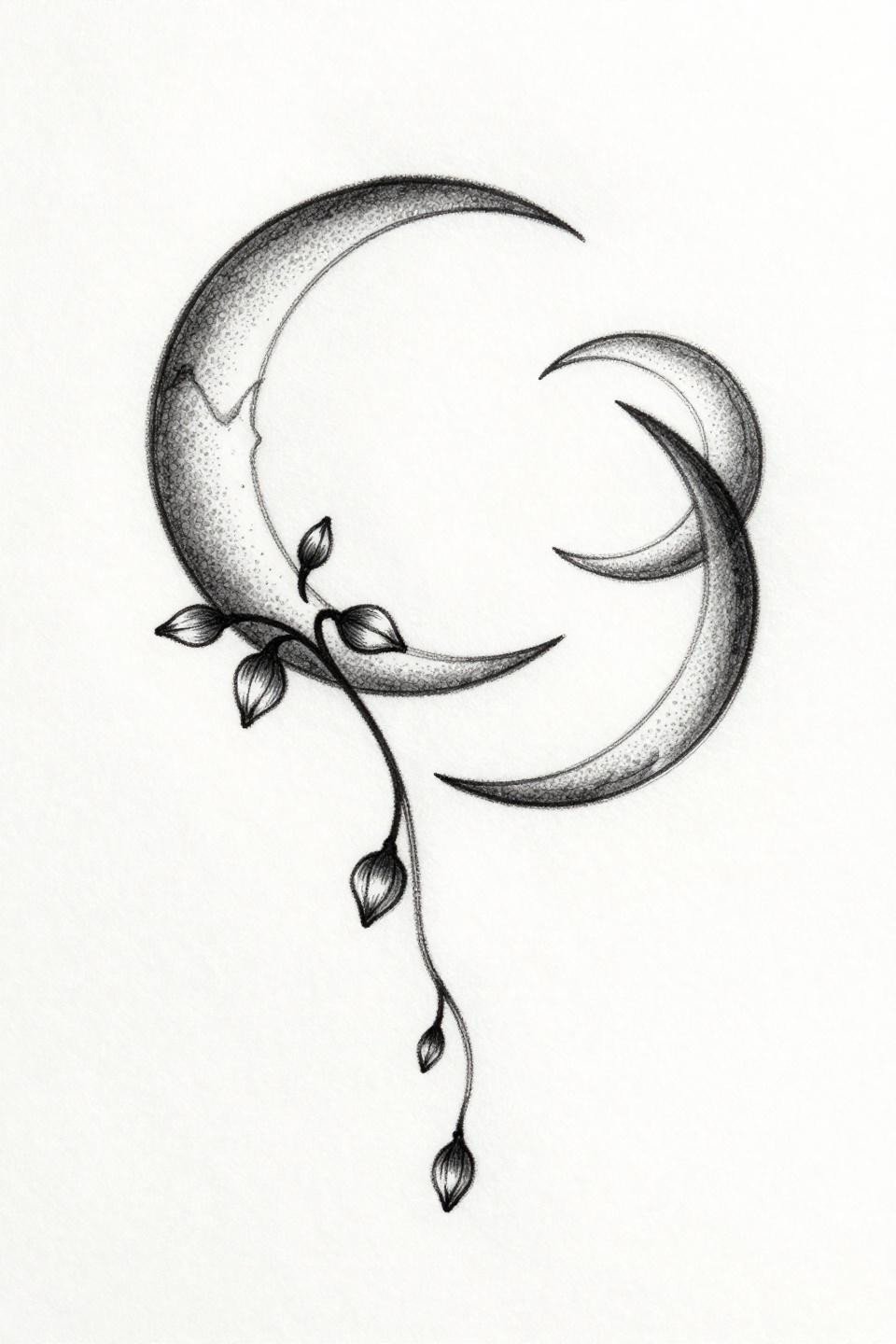
Two opposing crescent moons in ignorant style, rendered with intentional hand-drawn wobble and connected by a delicate curved vine with three trailing closed buds. The single-weight gestural linework skips tonal graduation entirely, which is precisely what makes it scale correctly on narrow finger-width applications.
Ignorant style holds its read longer on high-friction placements than fine line work does. The raw, uneven stroke weight is a feature, not a flaw, and artists who try to clean it up destroy the point of the style.
Art Deco Lattice Where the Angles Do All the Work
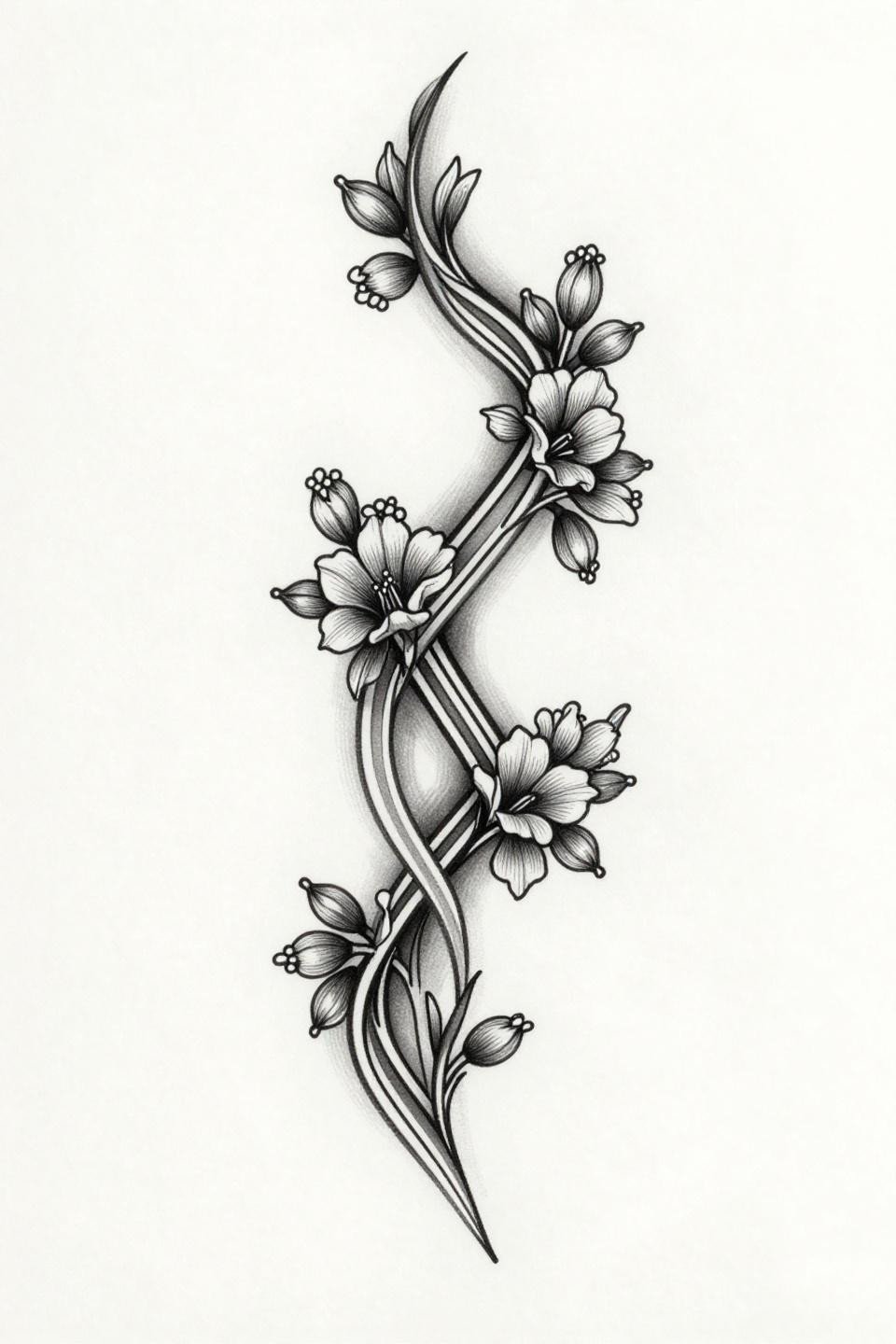
A geometric henna lattice in art deco style, with compass-drafted parallel line framework, small closed flower buds clustered at intersections, and curved tendrils weaving through the negative space. Vector-precision linework at this weight requires an artist who drafts clean angles without freehand drift at direction changes.
The tell on this style is the intersection corners. Any rounding or wobble collapses the deco geometry into something generic. Check the artist’s healed geometric work, not just fresh shots, before committing to this reference.
Japanese Irezumi Structure Applied to a Henna Vine Framework
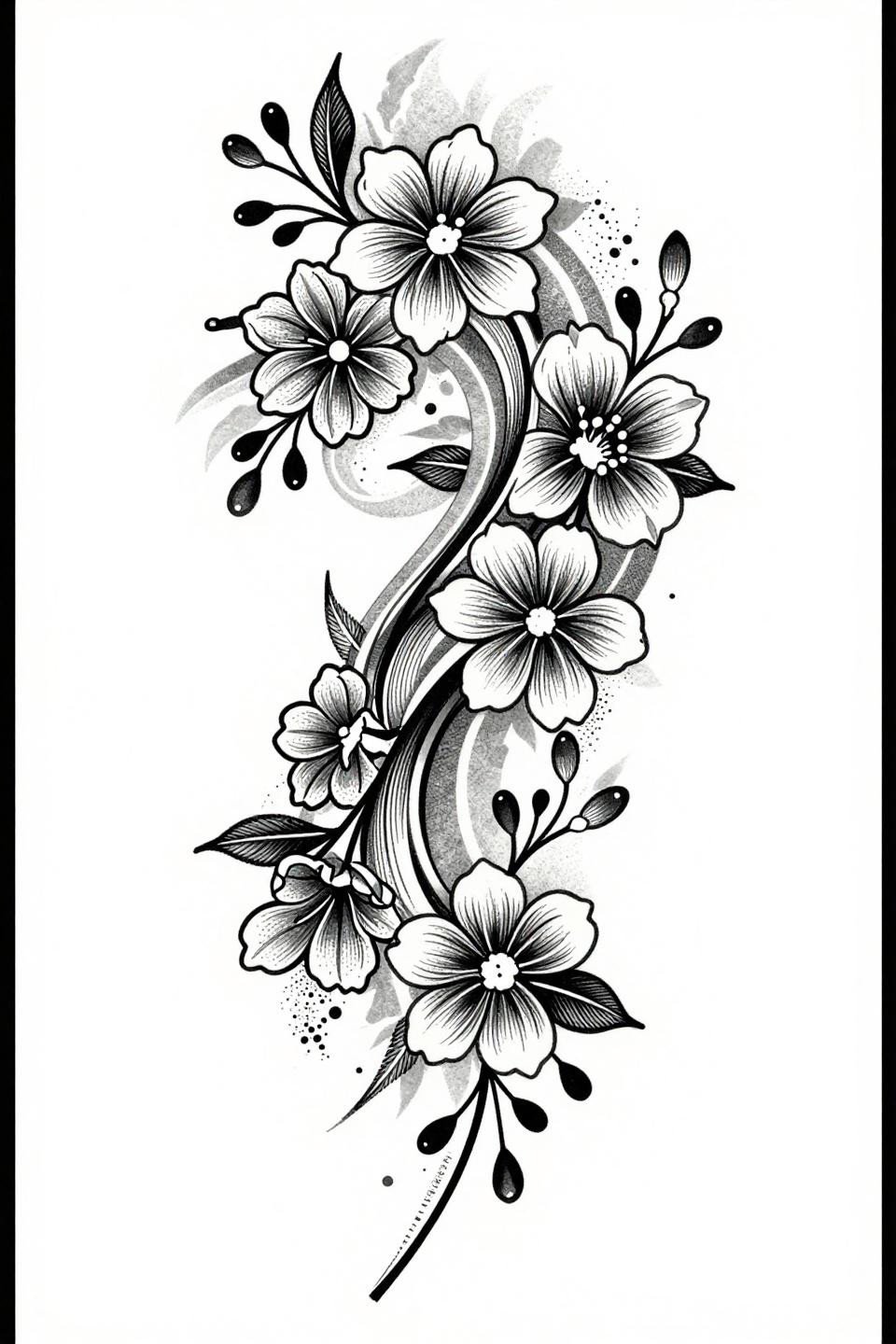
Interconnected floral vines with teardrop buds and fine dotwork clusters in a diagonal asymmetric flow, executed with irezumi structural logic: 2pt bold outlines anchoring whip-shaded curved stroke fills for tonal depth. The diagonal movement is the key compositional choice here, it follows the natural wrap direction of a finger.
Bold outlines at this weight age significantly better than single-needle henna interpretations. Protected placements like inner fingers give this style its best shelf life, but the outlines will hold their read even with regular sun exposure.
Neo-Traditional Paisley Mandala Built for Circular Containment
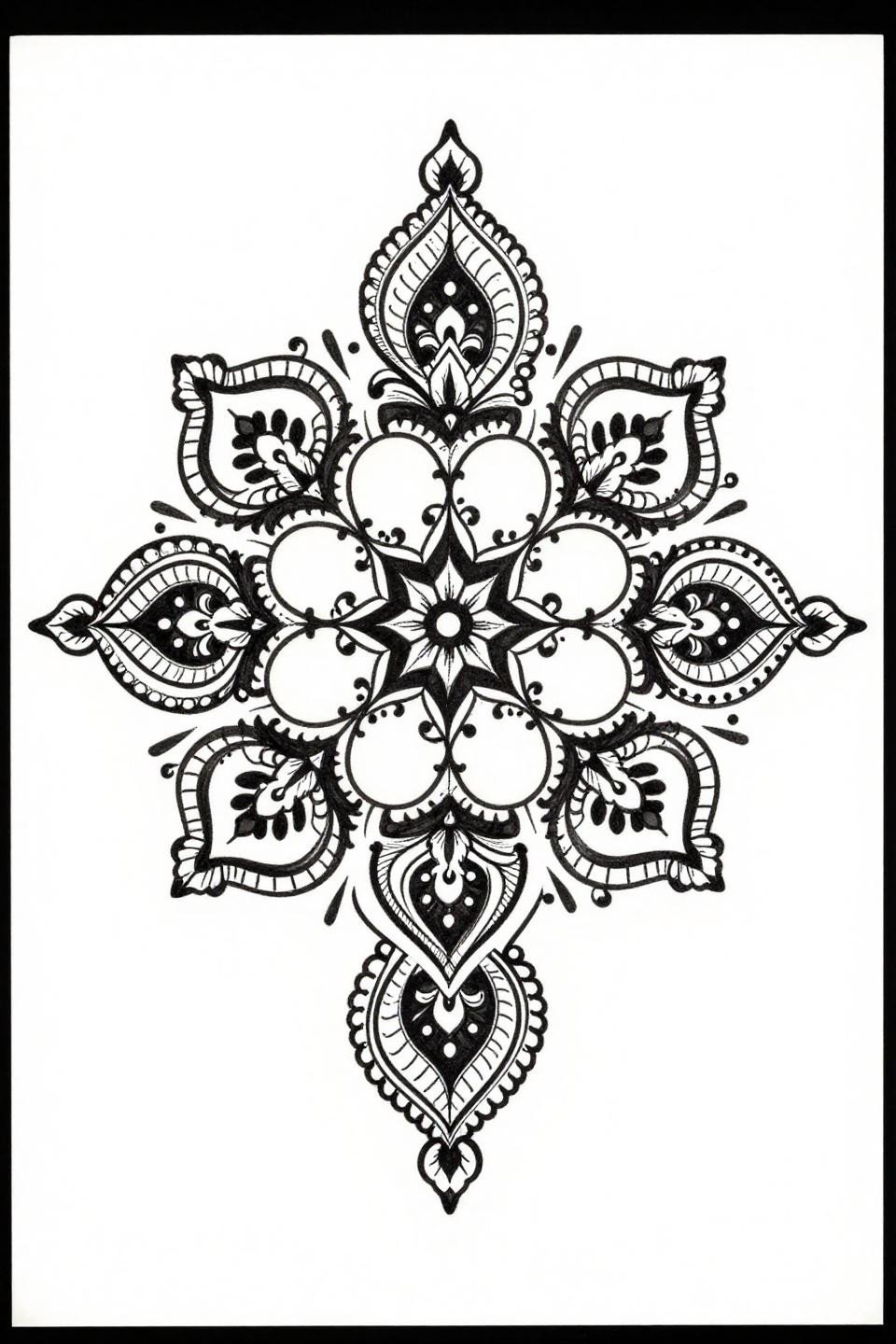
An ornate paisley mandala with interconnected teardrops, fine internal vein lines, spiral flourishes, and clustered floral buds at each cardinal point, all contained in a bilateral circular frame. Bold 2-3pt outlines with flat fills, no grey wash, which is the correct approach for a motif this dense at finger scale.
For collectors exploring modern mehndi designs for contemporary looks, this neo-traditional mandala format bridges classical henna geometry with tattoo flash structure cleanly.
Sketch-Style Triangles Where the Construction Lines Are the Point
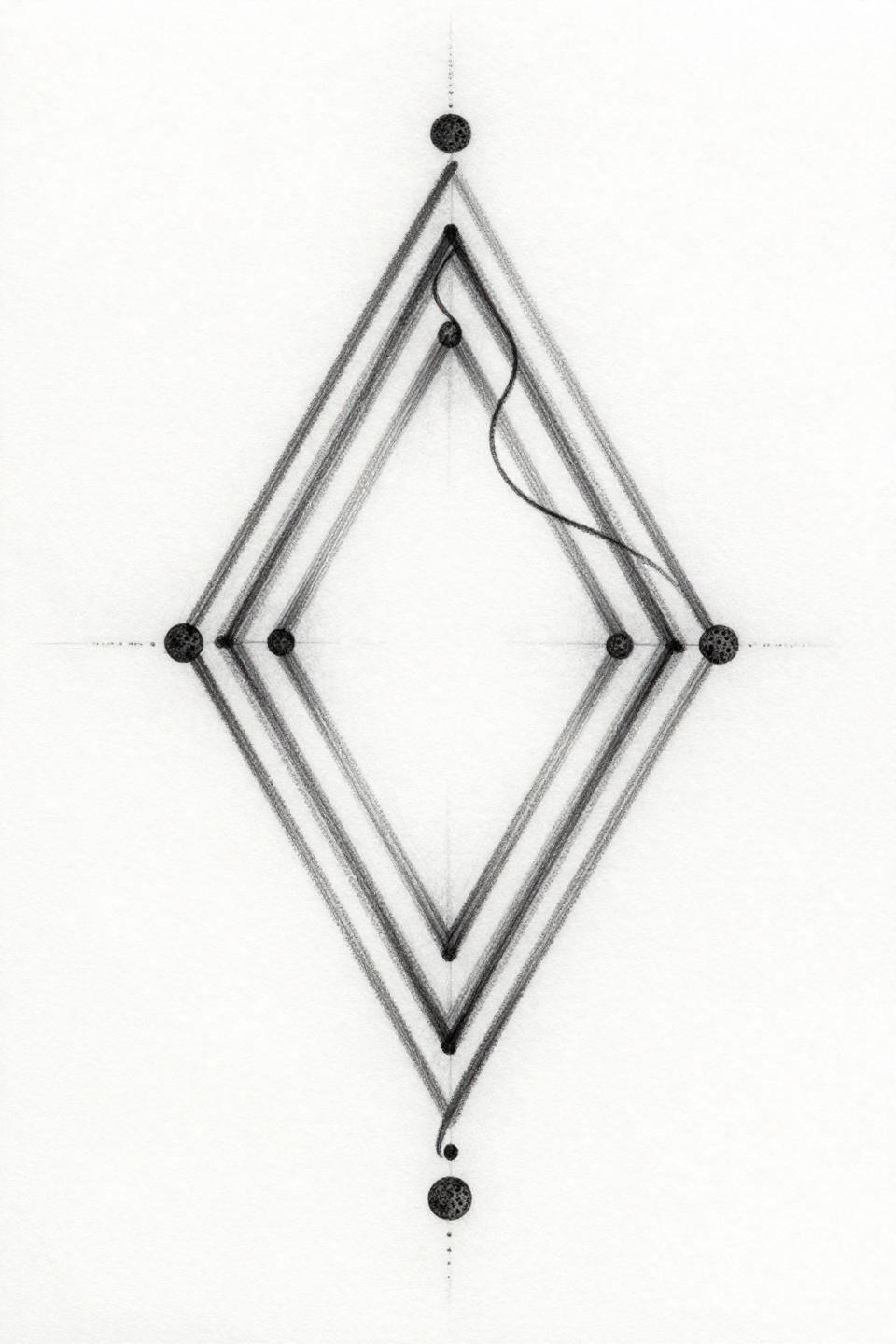
Nested triangular frames built from fine parallel lines with stipple dot accents at each apex, connected by delicate curved organic bridges in a raw sketch style. The loose construction marks are intentional, pulling from sketch tattoo aesthetics rather than clean geometric drafting.
This motif works precisely because the imperfection is controlled. The parallel line density inside each triangle reads as fill without requiring solid black, which keeps the overall weight light enough for narrow placements.
Three Interlocking Vine Loops and Why Even Spacing Kills This Design
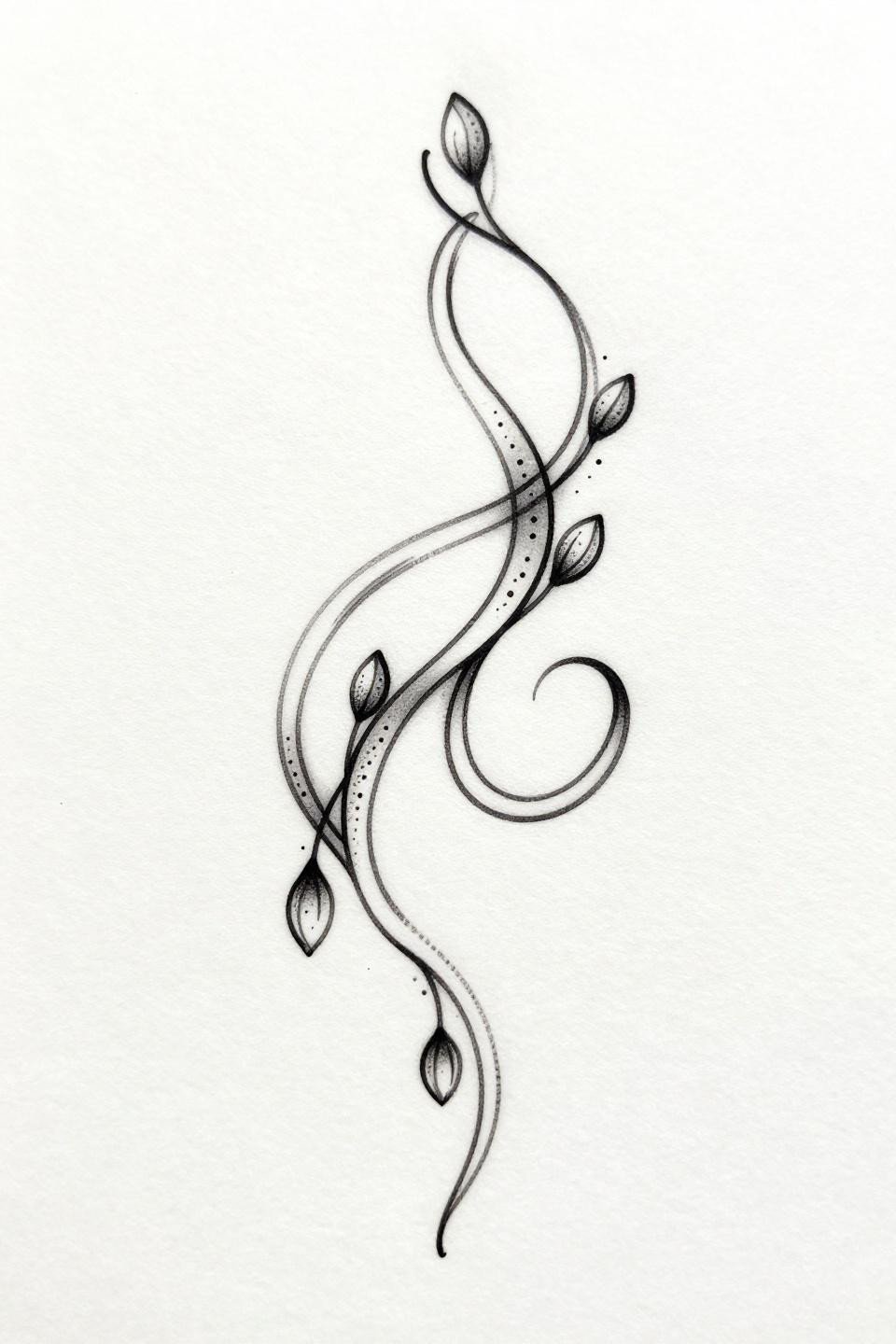
Three delicate curved henna vines forming interlocking asymmetric loops with tiny closed teardrop buds and stipple dot accents at every intersection, executed in hairline 0.5mm single-needle strokes. The asymmetric spacing of the loops is the design’s core logic. Even spacing collapses this into a repeating pattern that reads as wallpaper.
Single-needle work at this fineness needs an artist who controls machine speed precisely. Slow passes on tight curves, any speed inconsistency shows immediately in line weight variation on work this delicate.
Stacked Peacock Motifs Built for Vertical Finger Wrapping
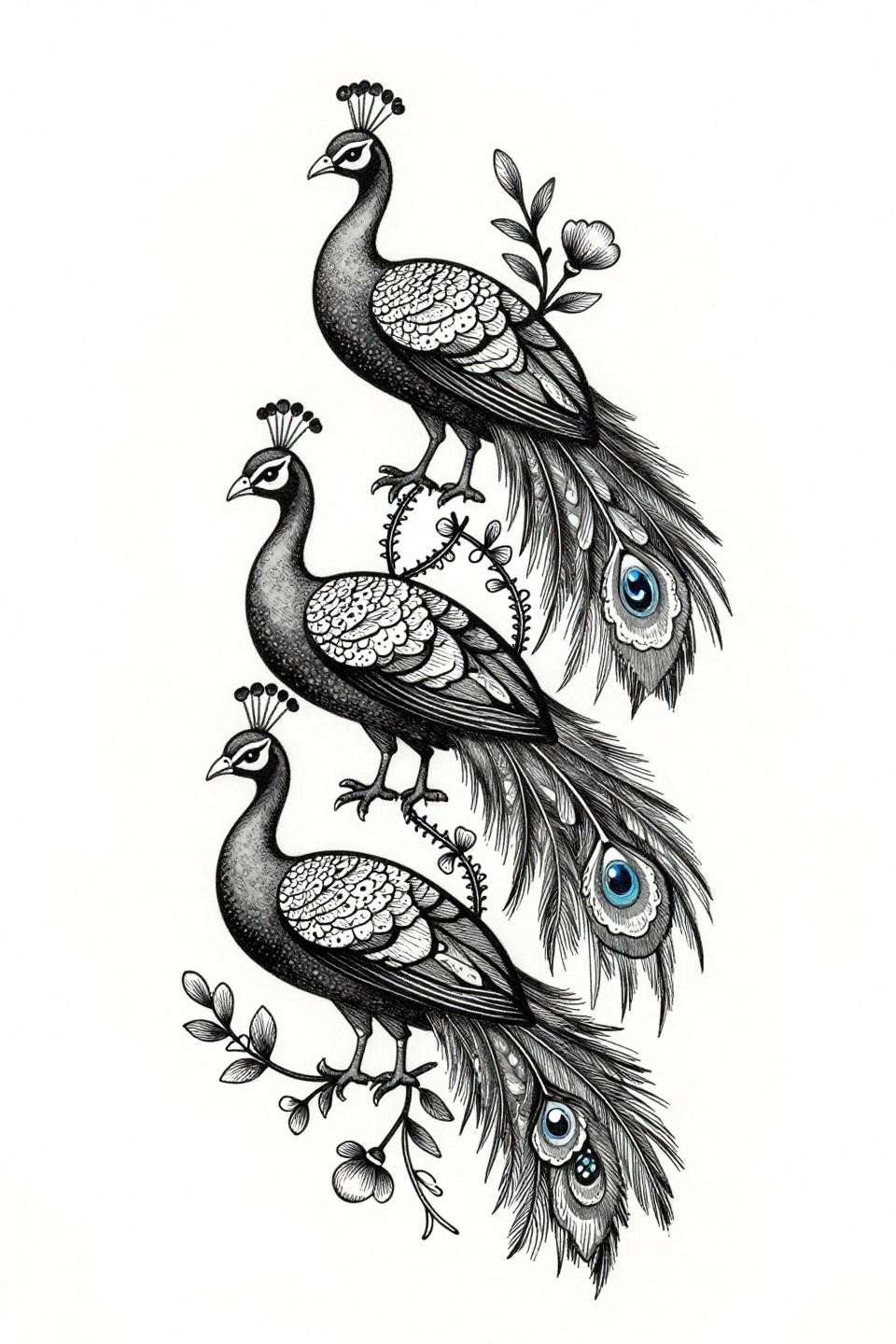
Three interconnected peacock motifs stacked vertically with dotwork eye centers on each feather, asymmetrically flowing tail plumes, and lace-like connecting vines in an etching crosshatch shading technique. The vertical stacking format maps directly to finger length, making this one of the few references in this collection designed specifically for that axis.
Crosshatch shading at this scale demands consistent parallel line spacing. Uneven hatching reads as patchy fill rather than intentional tonal graduation. Request healed work samples with parallel line work before booking.
Sacred Geometry at Finger Scale: What the Nested Squares Demand
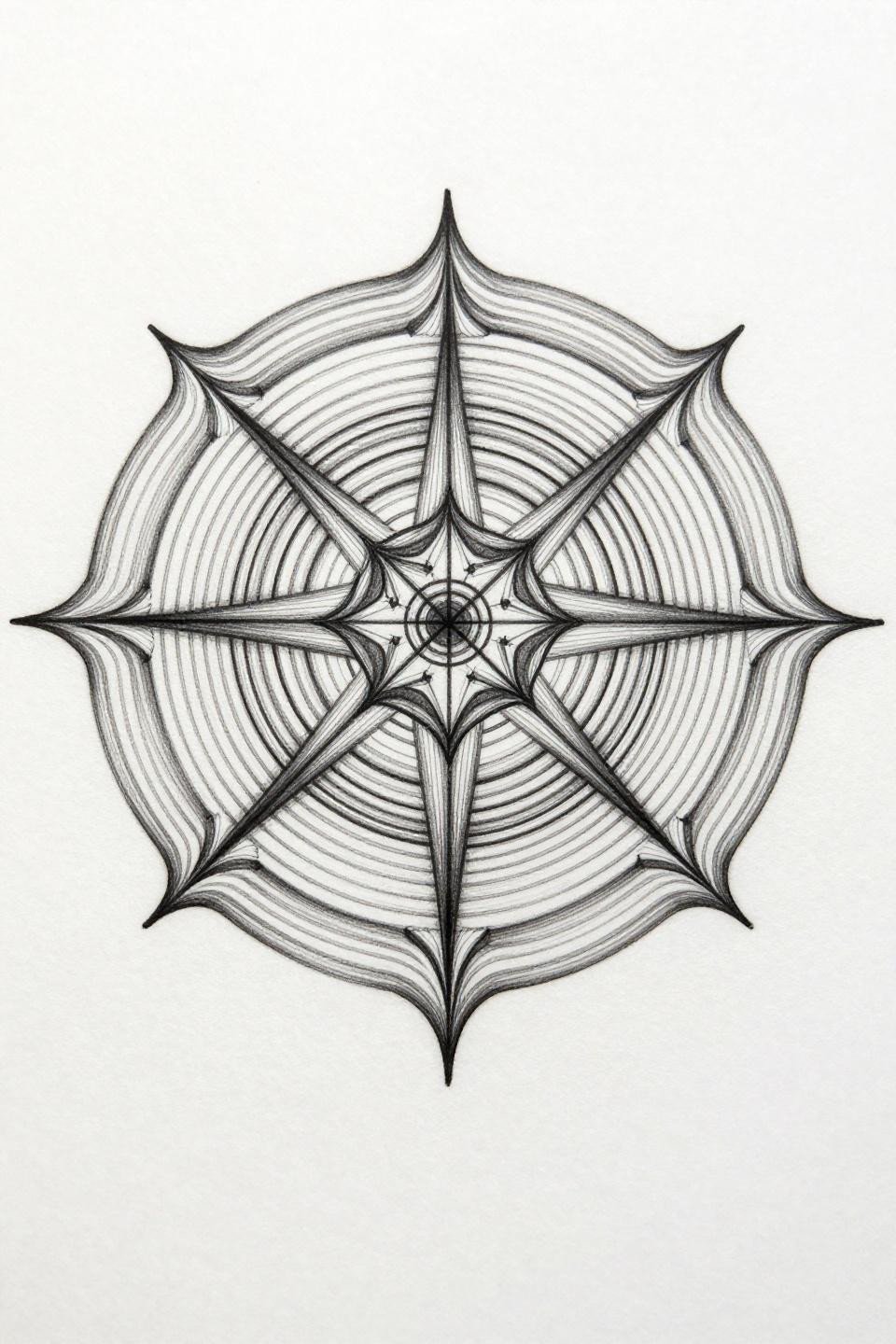
A sak yant-influenced sacred geometry pattern of nested concentric squares with fine parallel ruled lines radiating between layers, a central dotwork mandala core, and minimal curved flourishes at cardinal points. Compass-drafted precision at 0.5pt ruled strokes is the technical requirement here. Any freehand substitution shows in the corner angles.
The radial line density between the concentric squares is what creates the visual weight in this design. On deeper skin tones, the 0.5pt stroke weight may need to step up to 1pt to maintain the contrast the geometry depends on.
Continuous Line Geometry Where the Unbroken Path Is the Whole Point
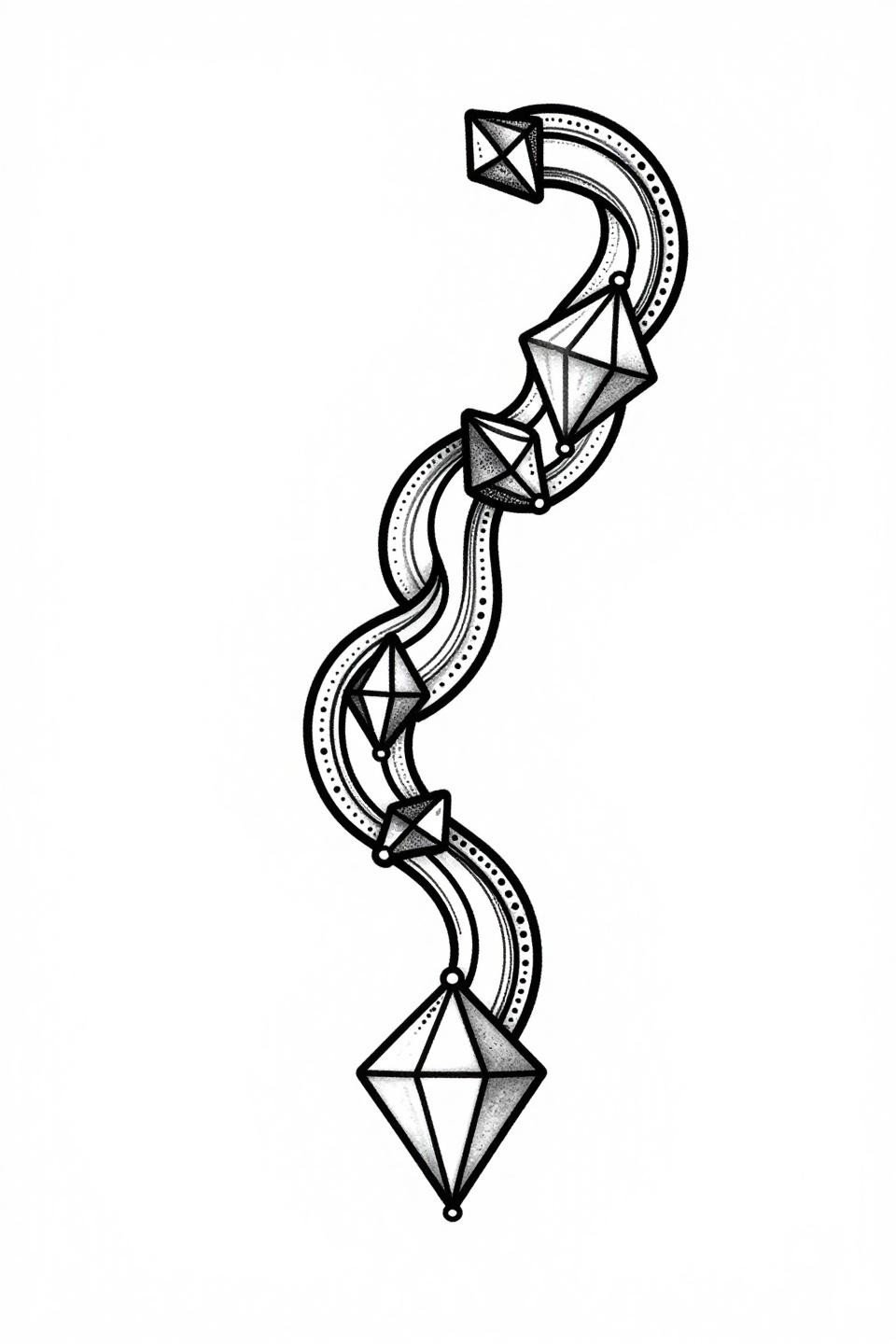
An interlocking geometric diamond chain formed by a single unbroken line with dotwork accents at each vertex and delicate curved connectors between sections, rendered in bold 2pt continuous line with flat fills and zero grey wash. The unbroken line concept only reads if the artist can execute clean directional changes without lifting or adjusting pressure.
For those cross-referencing with henna designs beyond festival occasions, this continuous line geometric format translates directly from henna application technique to tattoo needle work with minimal conceptual adjustment.
Fine Line Vine Loops That Depend on Negative Space, Not Fill
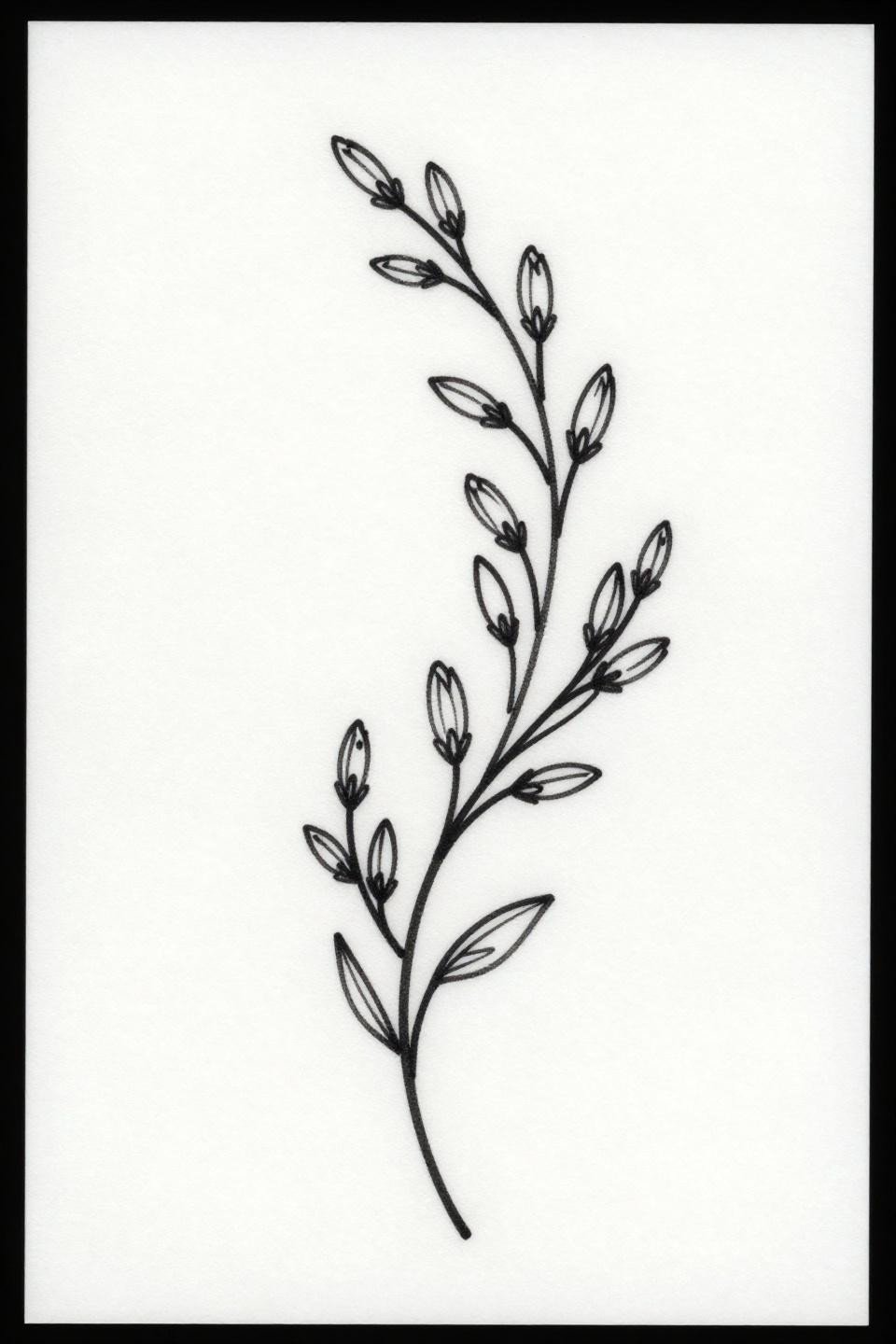
Delicate curved vine tendrils forming interconnected loops with tiny closed flower buds and minimal leaf accents in an asymmetric diagonal flow, using hairline 0.5mm strokes with 1pt bold outlines defining each motif. The design earns its read entirely from negative space. Every motif is surrounded by open ground.
This is a reference where the artist’s restraint matters as much as their technical skill. Any tendency to add fill density or extra leaf accents breaks the compositional logic immediately.
Tribal Geometric Lattice Where the Grid Is the Motif
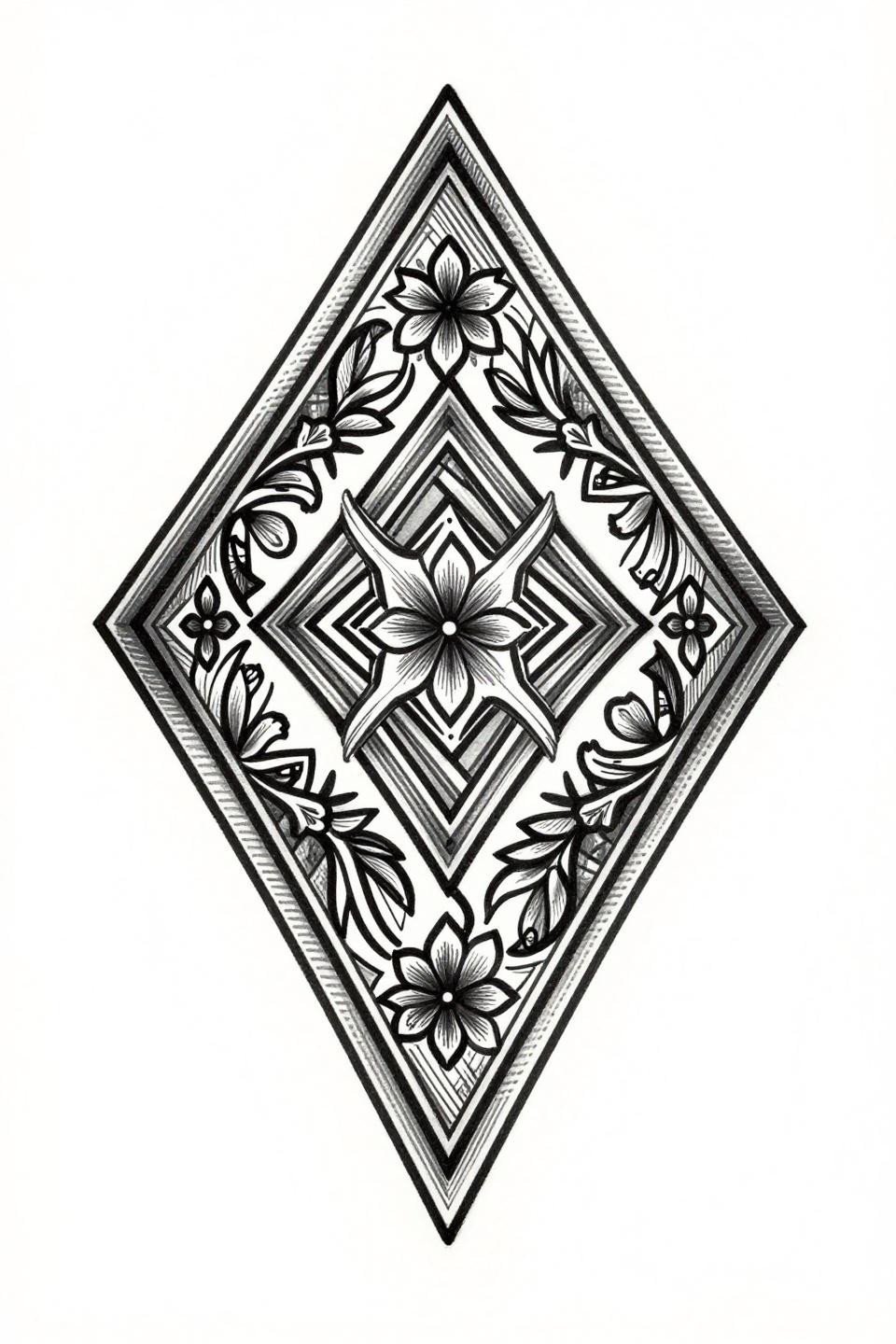
A tribal geometric lattice with a fine parallel line diamond grid, small floral motifs at intersection points, and curved tendrils weaving between grid sections, anchored by bold 2pt outlines and flat ruled parallel hatching. The diamond frame composition reads as complete at almost any scale, which is the practical advantage of this format.
Parallel hatching inside a geometric grid needs uniform stroke spacing to read as intentional fill. Inconsistent spacing in the hatched sections collapses the grid’s visual logic from a cohesive structure into noise.
Art Nouveau Peacock Feather: When One Motif Is Enough
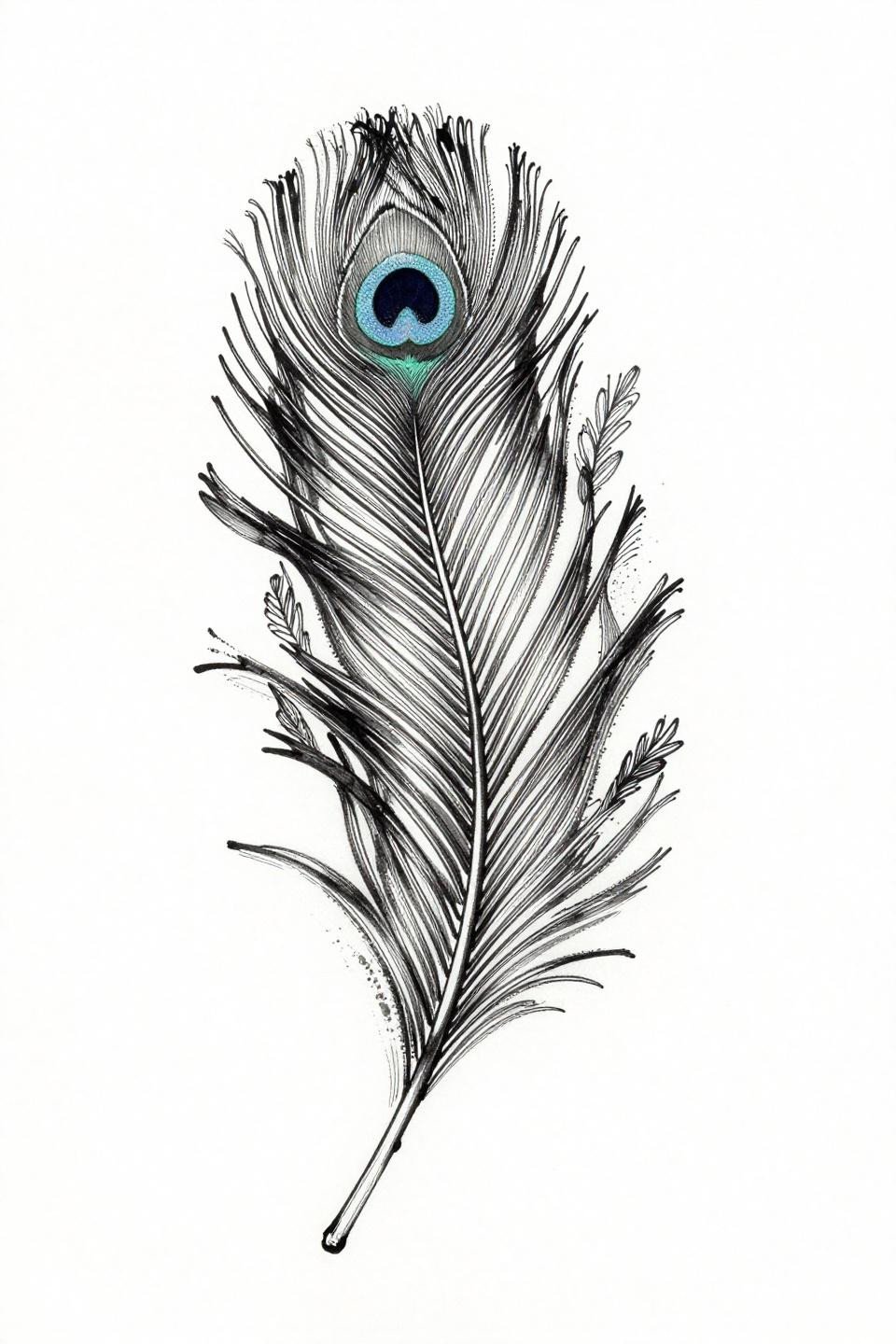
A single peacock feather in art nouveau style with a dotwork iris eye center, fine barb lines radiating from the central shaft, and minimal leafy tendrils in asymmetric botanical flow, executed in calligraphic brush ink marks with wet ink stroke quality. One motif, centered, with no supporting elements pulling focus.
Single-motif compositions at finger scale succeed when the focal element has enough internal detail to carry the design alone. The dotwork eye center is the anchor here. Without sufficient dot density at that point, the entire feather reads as a flat outline.
Three Lotus Blooms on a Continuous Vine: The Horizontal Format Problem
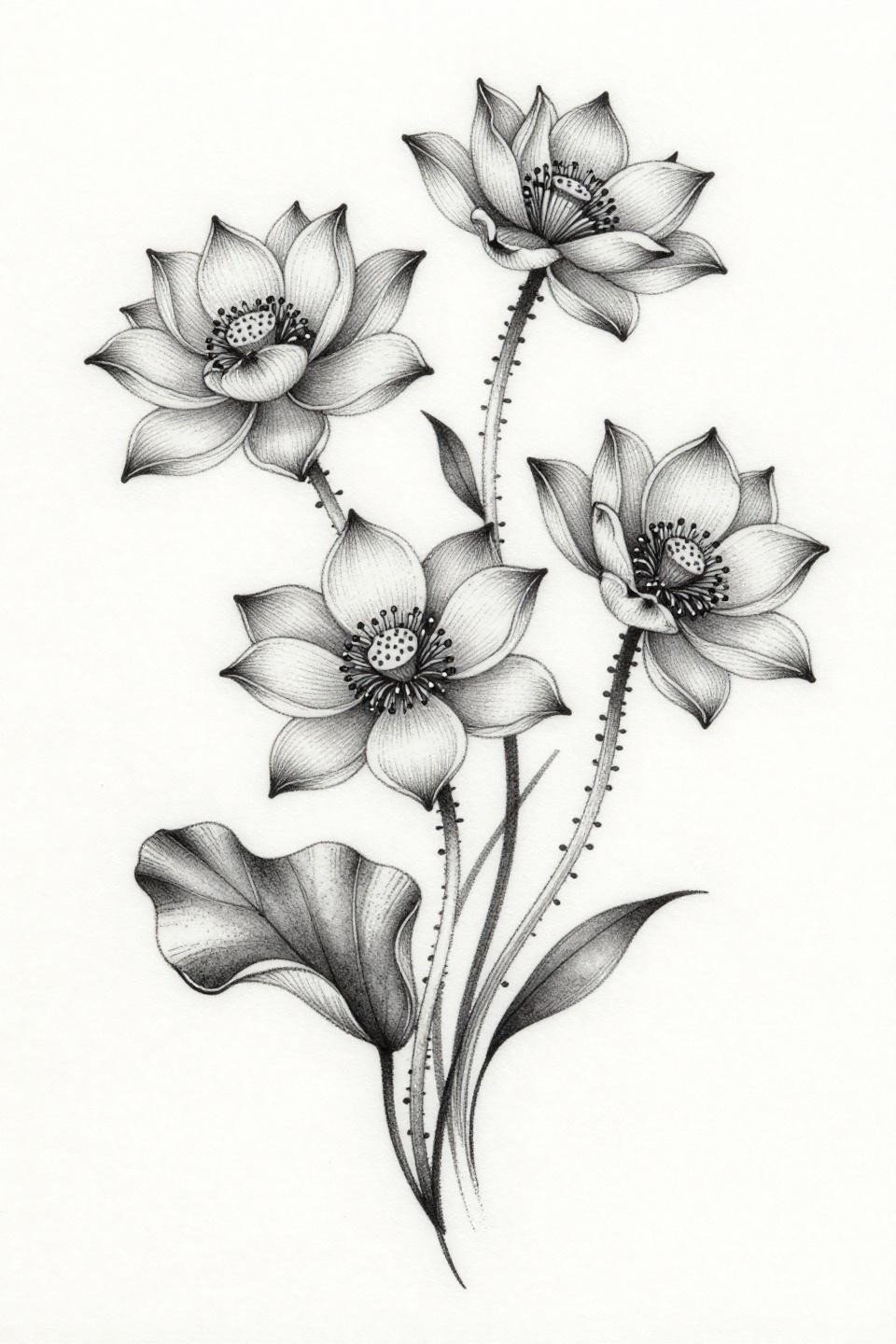
Three delicate lotus blooms connected by continuous flowing vine tendrils with fine dotwork stamens and minimalist leaf accents in an asymmetric horizontal flow, drawn in botanical scientific illustration style at hairline 0.5mm strokes. The horizontal format is the reference’s main tension: it maps to a multi-finger or palm edge placement, not a single finger.
On olive skin, the grey wash dilution in the midtone areas needs careful density calibration. Too light and the tonal graduation disappears. Too heavy and the open negative space that gives this composition its delicacy closes up.
Botanical Mandala With Stipple Center: The Concentric Circle That Holds
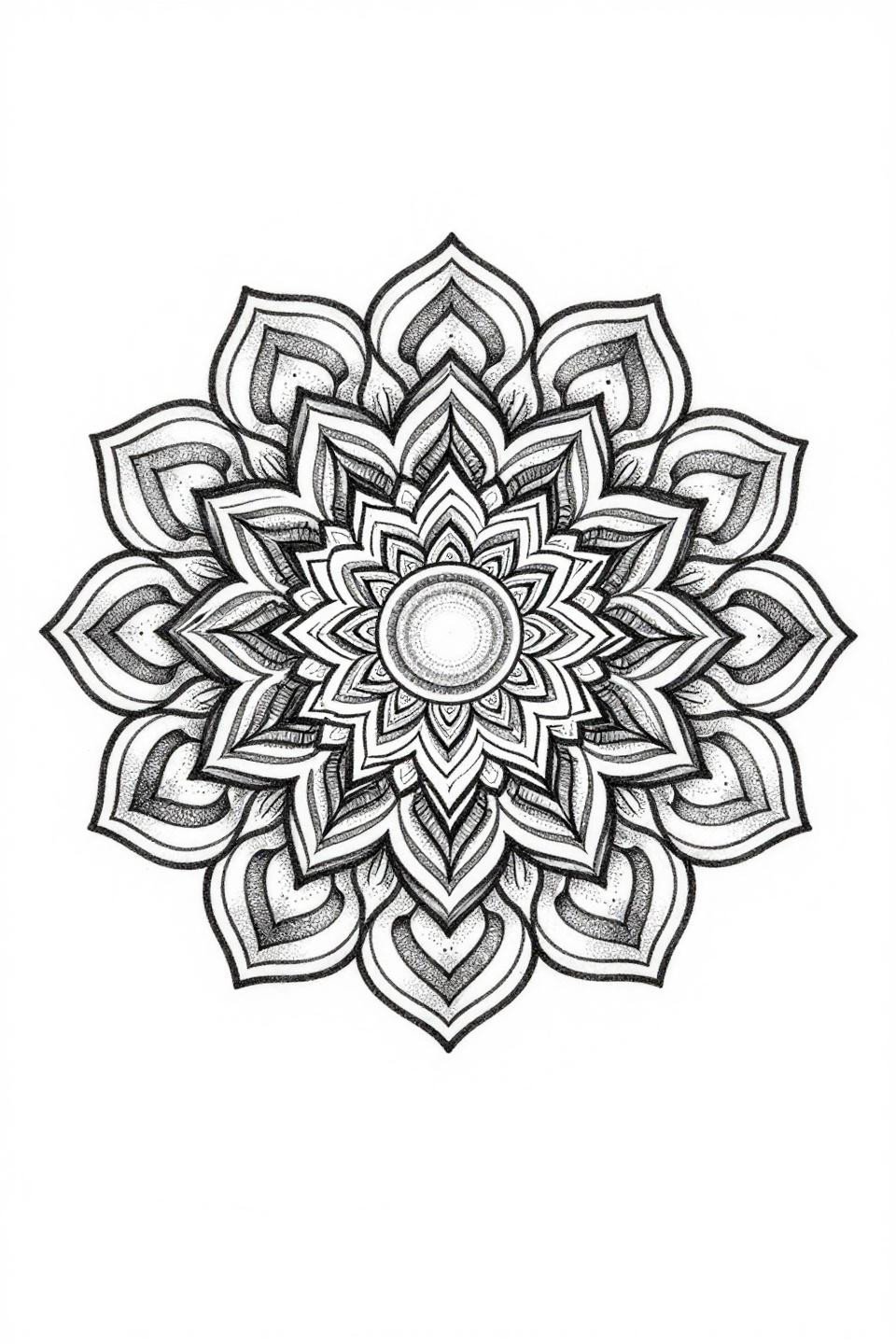
A botanical mandala with concentric circles, geometric petal layers radiating outward, and a dense stipple dot gradient running from maximum density at center to open at the outer edges. This is the most technically demanding application in the set: consistent dot sizing across the full radial gradient is the single criterion that separates a clean result from a muddy one.
Finger placement means touch-up every 2-3 years minimum on this level of fine detail. The stipple gradient at the outer edges will soften first. Knowing that upfront changes which placement and scale makes sense for a long-term commitment.
Pick 3-5 references from this set that match your placement, skin tone, and how much detail you actually want to maintain over time. Send those to your artist as directional references, not as exact execution briefs. The best results come from giving a skilled artist a clear direction, not a traced template.