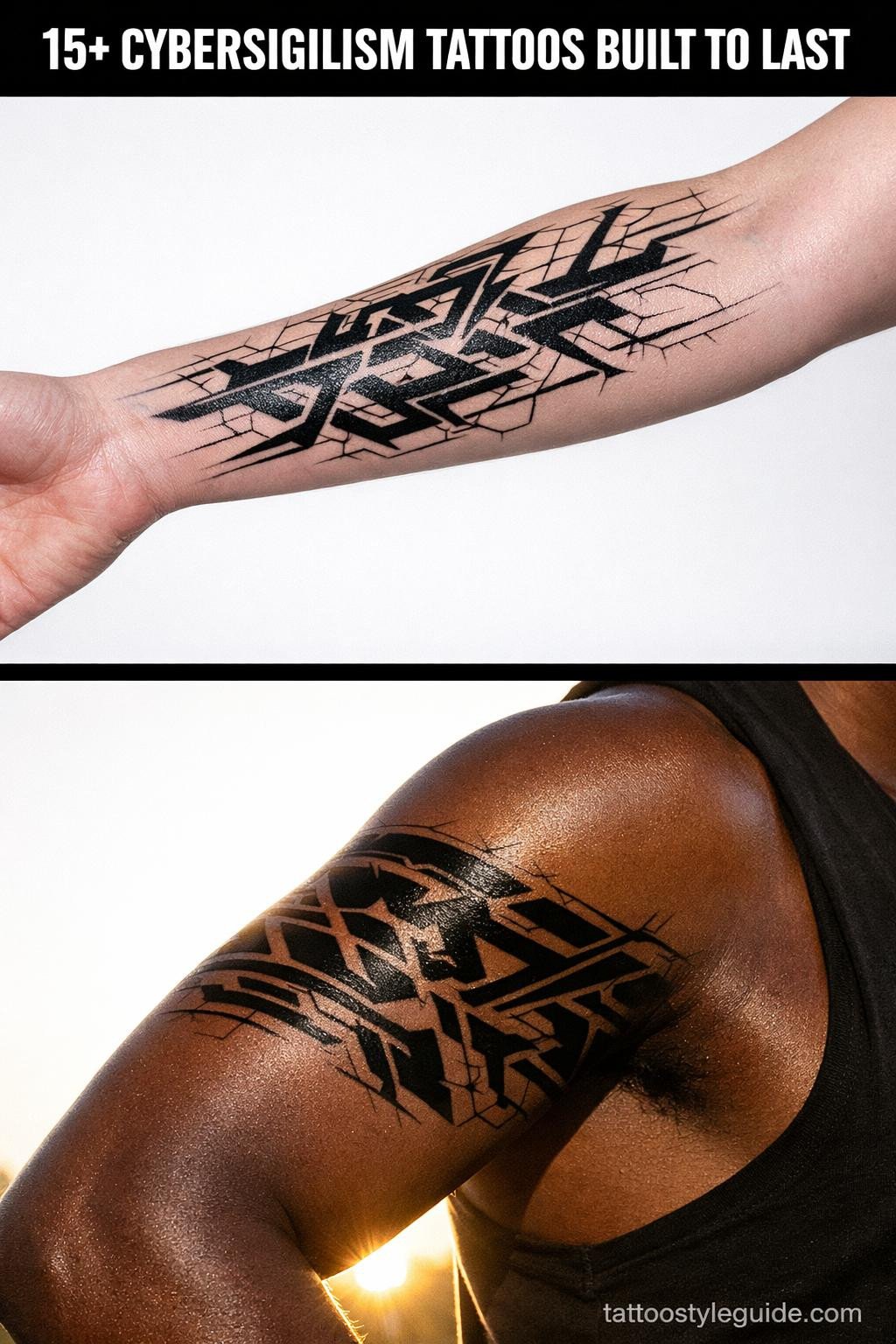
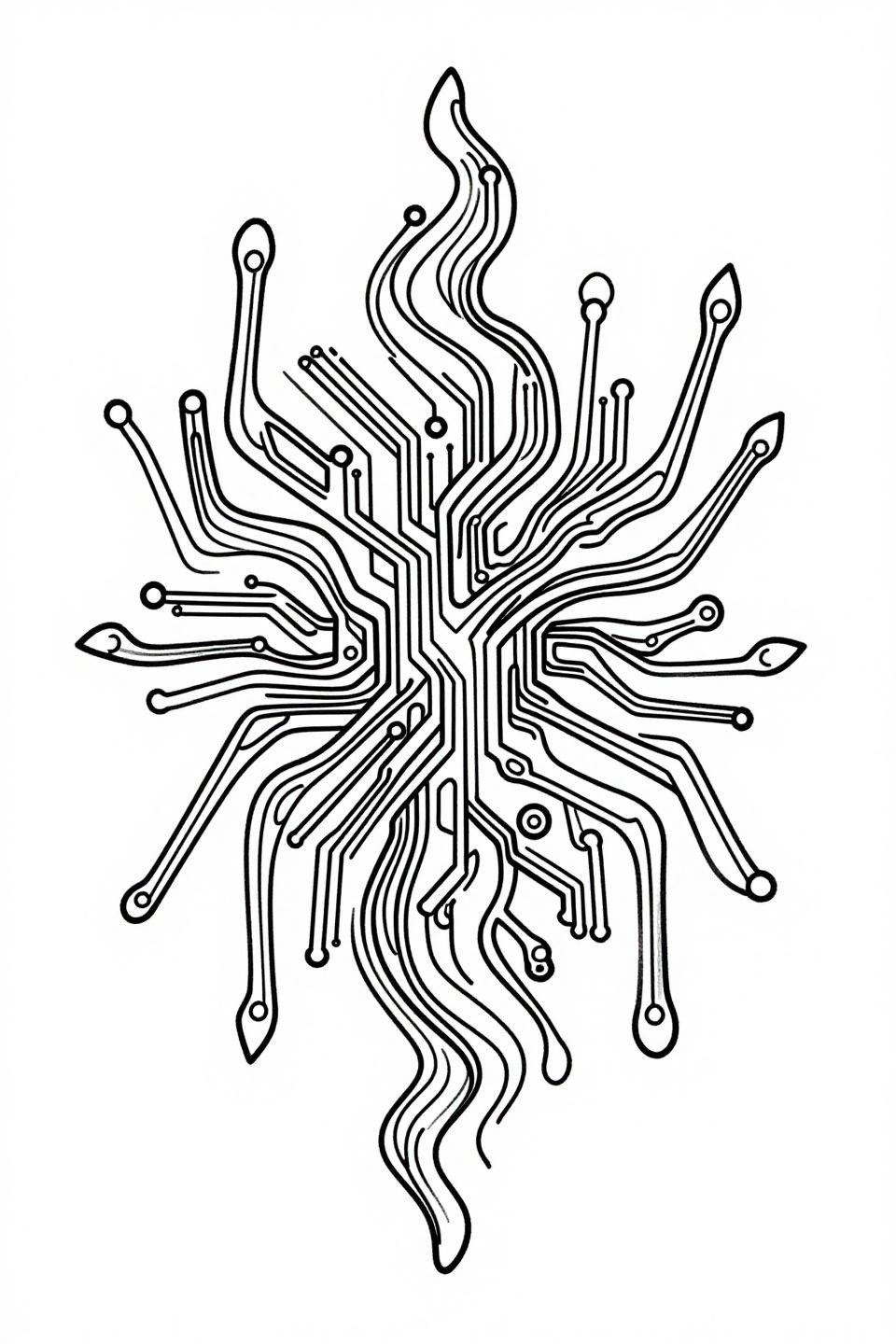
For this kind of piece, I’d keep the line weight from going too hair-thin unless it’s living on a low-wear spot like the outer forearm, upper arm, or calf. Cybersigilism gets muddy fast when every bend is micro-detail. If it has to snake around the wrist or ankle, give the turns more air so it still reads clean once the skin settles.
This is also where artist discipline matters. You want one clean pull, not ten fuzzy ones stacked on top of each other. Reworked corners can heal rough and start looking chewed up, especially on thinner skin. I’d rather simplify one loop than force in extra spikes that turn to soup in two years.
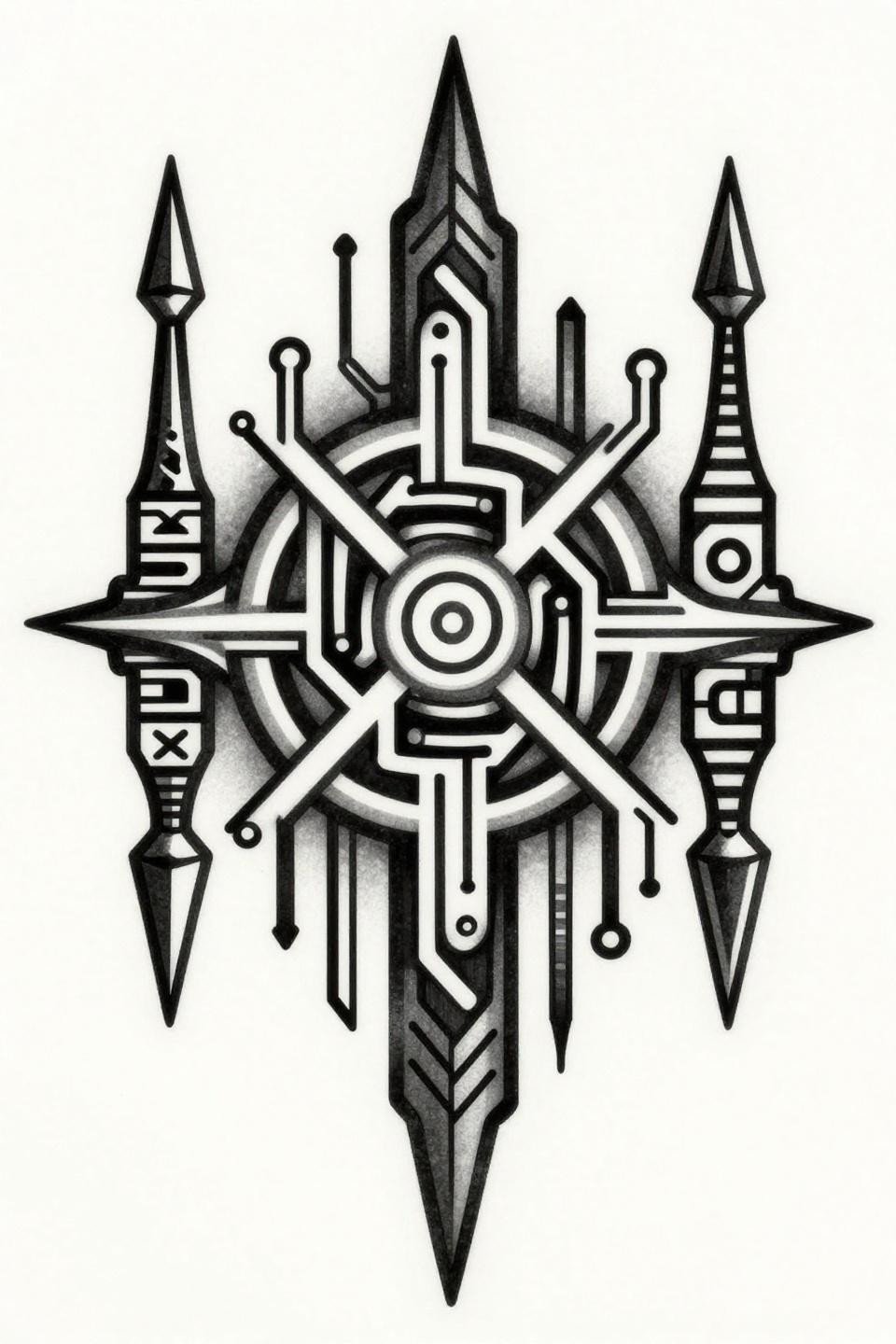
When I build a blackwork piece for long-term wear, I’m watching negative space as hard as the black itself. If every gap is tiny, the whole thing heals into one dark patch. Bigger windows between shapes keep the geometry crisp, let the skin breathe, and make the contrast hold. Bold will hold is still true, but only if the design has room to stay legible.
Placement changes everything here. A sacred geometry layout on the upper arm, thigh, or upper back usually heals nice and stays solid with less maintenance. Put that same density on ribs, sternum, or hands and it gets way spicier to sit for, plus you’re dealing with more movement and wear. That can mean touch-ups sooner, especially if the black packing wasn’t fully saturated the first time.
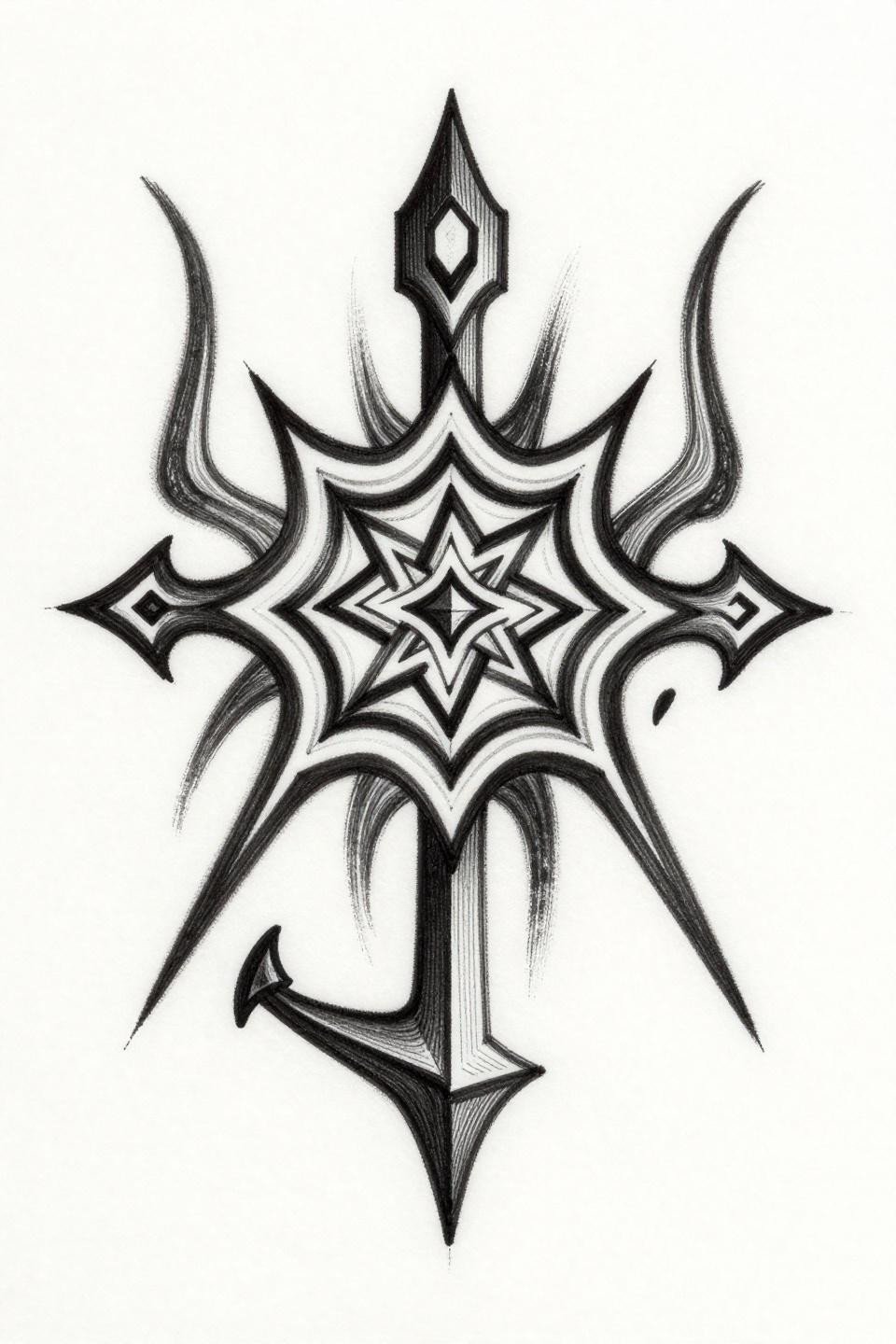
Scale matters more than people think on this combo. Tiny add-ons dropped between older tribal bands usually get lost, and the line contrast can feel accidental. I’d either commit to a solid bridge section or keep the new work clearly separate with breathing room. Mixing healed blackwork with fresh linework can look killer, but only if the old tattoo still has clean edges and no obvious blowout.