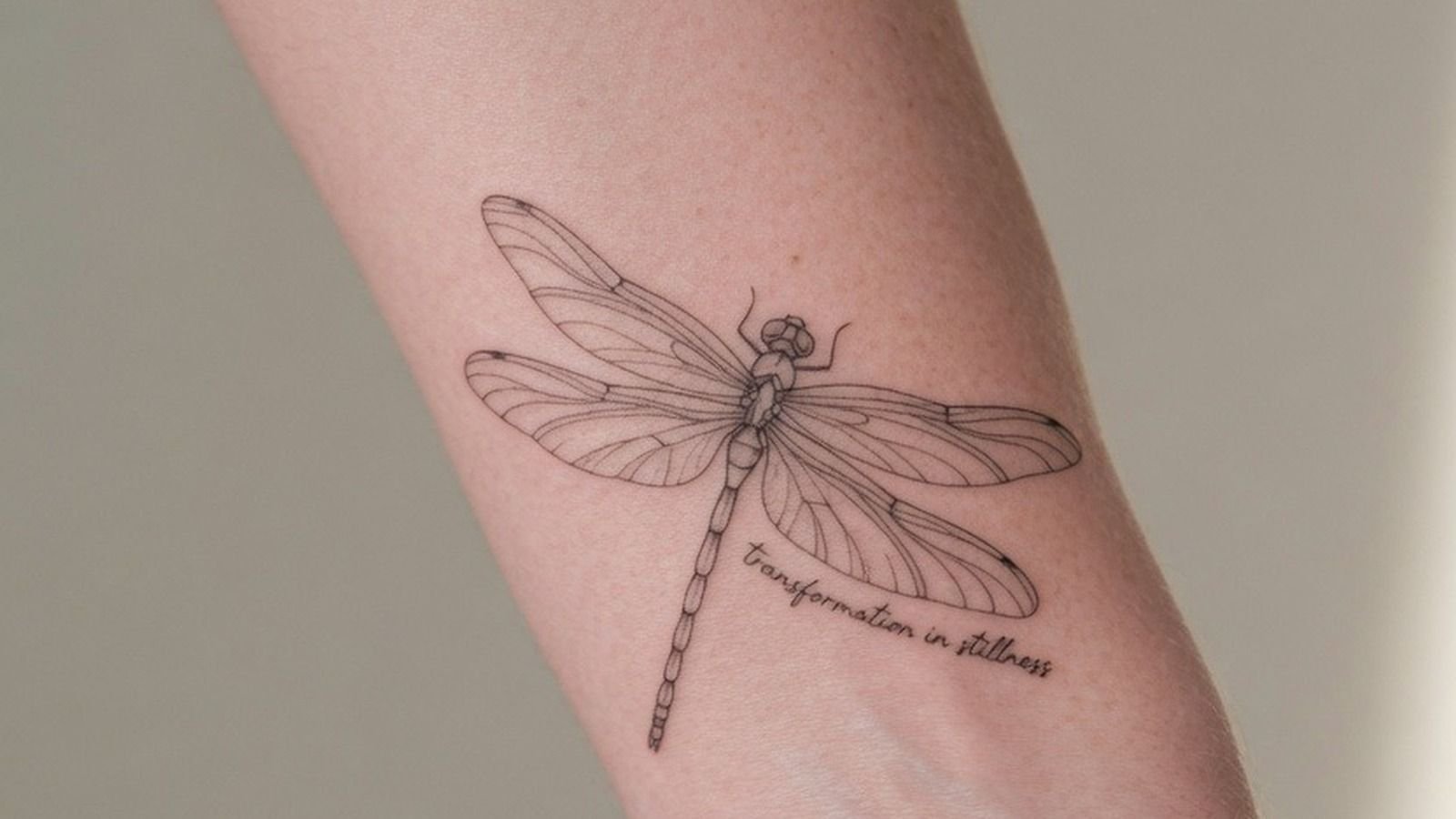
A dragonfly tattoo design can heal crispy or turn into soup, and the difference is decided before the needle ever touches you. I’m Hazel, and I’ve watched tiny wings blow out because somebody chased Pinterest-exact detail on a wrist. You want clean lines, open skin between shapes, and a plan your artist can tattoo in one confident pull. Start here.
- Start With The Meaning Behind Your Dragonfly Tattoo
- Pick A Dragonfly Style That Matches Your Aesthetic
- Choose Fine Line For A Delicate Dragonfly Design
- Sketch Your Dragonfly Drawing Before Booking An Artist
- Pair Your Dragonfly With Butterfly Or Floral Elements
- Place Your Dragonfly Tattoo Where It Flows Naturally
- Size Your Dragonfly Design For Clean Aging Lines
- Decide Between Blackwork Or Color Dragonfly Ink
- Start With The Meaning Behind Your Dragonfly Tattoo
- Pick A Dragonfly Style That Matches Your Aesthetic
- Choose Fine Line For A Delicate Dragonfly Design
- Sketch Your Dragonfly Drawing Before Booking An Artist
- Pair Your Dragonfly With Butterfly Or Floral Elements
- Place Your Dragonfly Tattoo Where It Flows Naturally
- Size Your Dragonfly Design For Clean Aging Lines
- Decide Between Blackwork Or Color Dragonfly Ink
- Add Wings Detail With Dotwork And Geometric Shading
- Keep A Minimalist Dragonfly Tattoo Sharp And Simple
- Plan Your Budget Around Dragonfly Tattoo Size And Detail
- Vet Your Artist For Dragonfly Linework And Symmetry
- Heal Your Dragonfly Tattoo With Proper Aftercare Steps
1Start With The Meaning Behind Your Dragonfly Tattoo
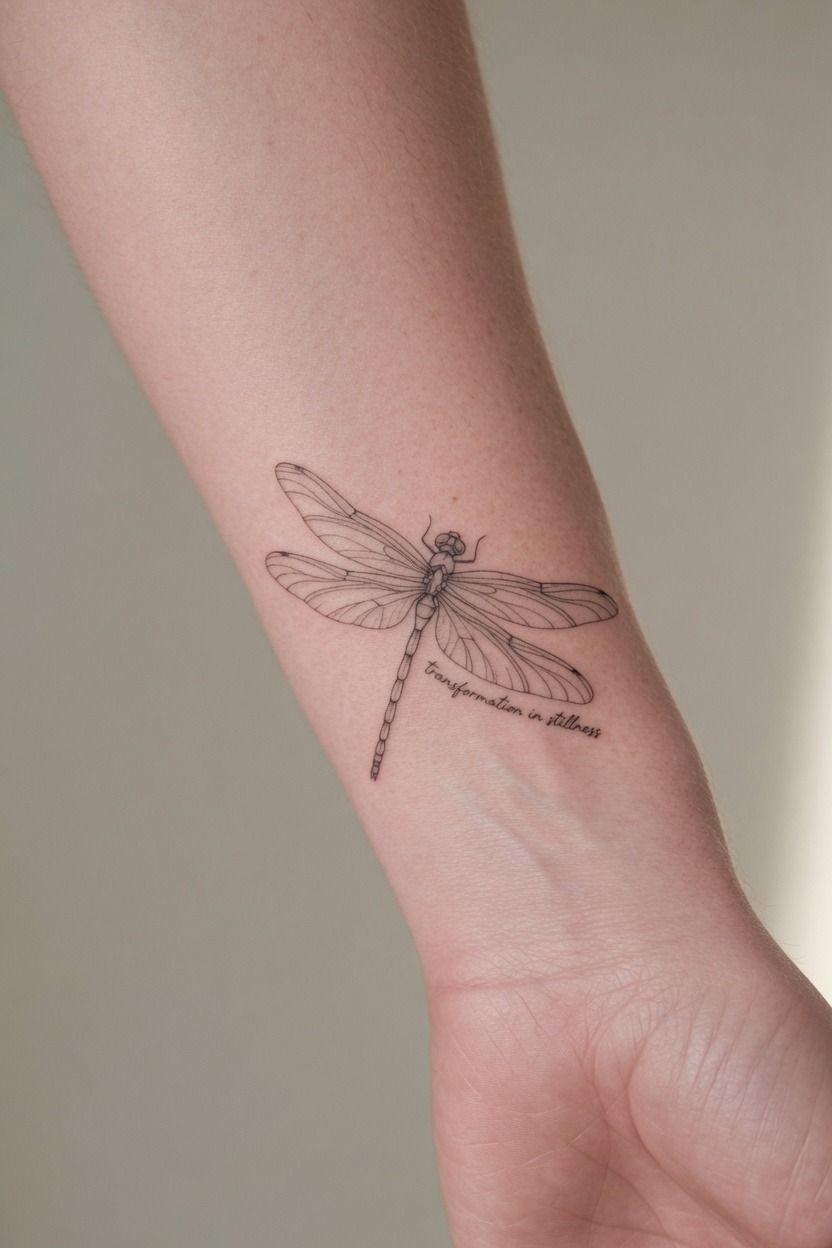
Pick the meaning first, because meaning controls size, placement, and how much detail you can keep. A dragonfly tattoo meaning usually circles change, speed, lightness, and not staying stuck in one version of yourself. If you want the deeper symbol notes, read my dragonfly tattoo meaning page before you sketch anything.
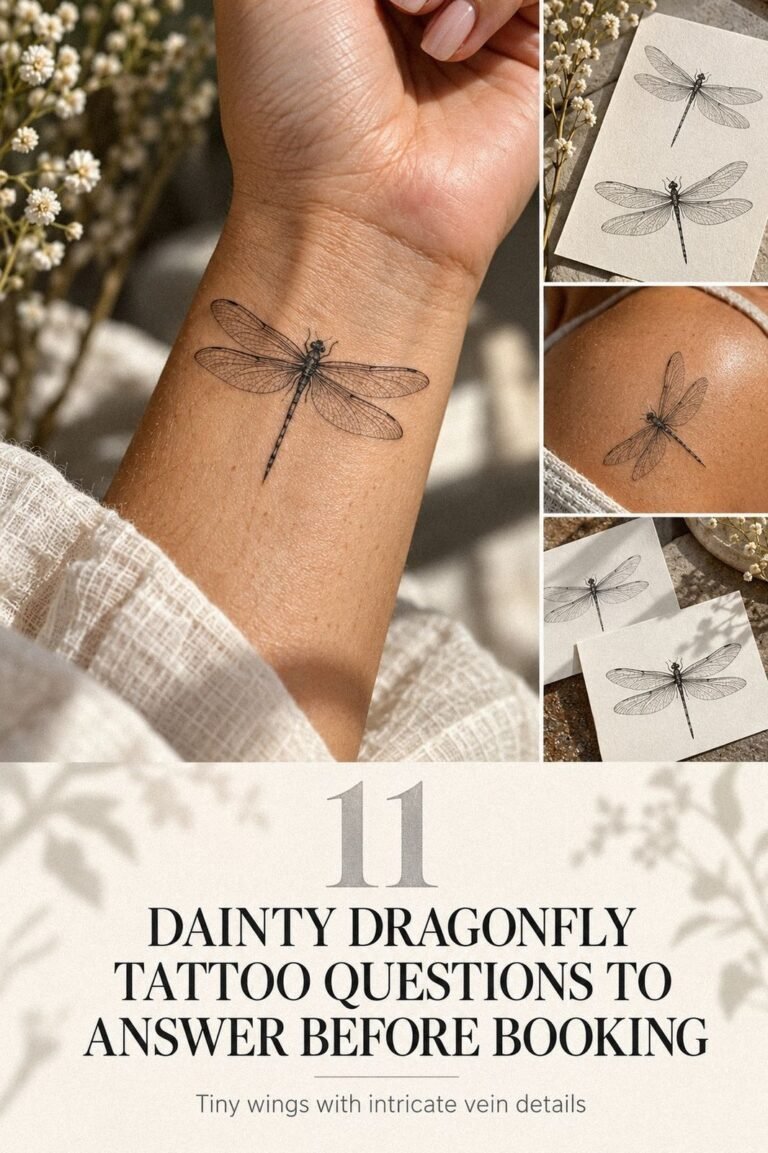
On fair cool-pink skin like the wrist photo, a fine line dragonfly reads soft and quick. Keep the body slim, the wings long, and the antennae short enough they won’t mush. I’d skip a super symbolic quote wrapped around it.
Lettering plus wings on a wrist is how you get clutter.
Here’s my rule: one meaning, one main shape, one placement. If you’re memorializing someone, add a date later, not inside the wing. You’ll thank me when it heals.
2Pick A Dragonfly Style That Matches Your Aesthetic
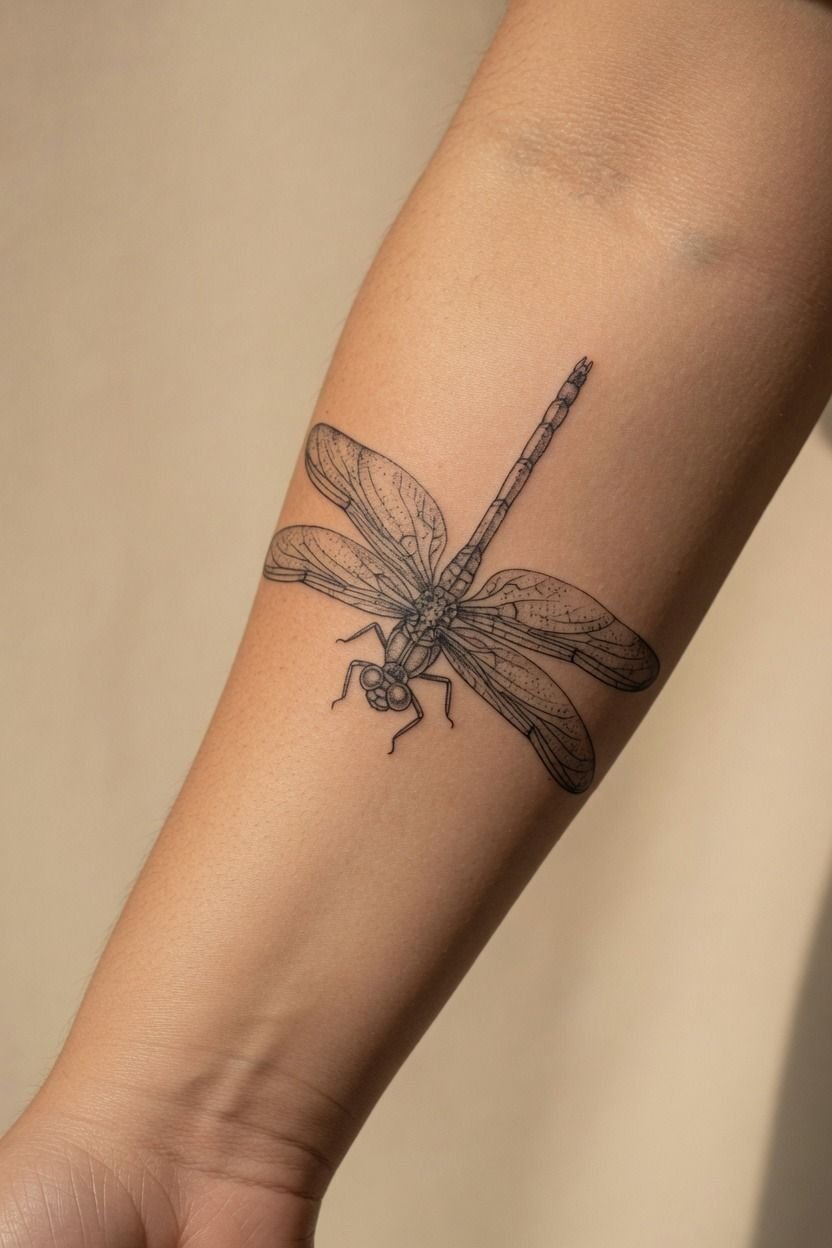
Your style choice decides the needle group, the session time, and how loud the tattoo reads from across the shop.
3Choose Fine Line For A Delicate Dragonfly Design
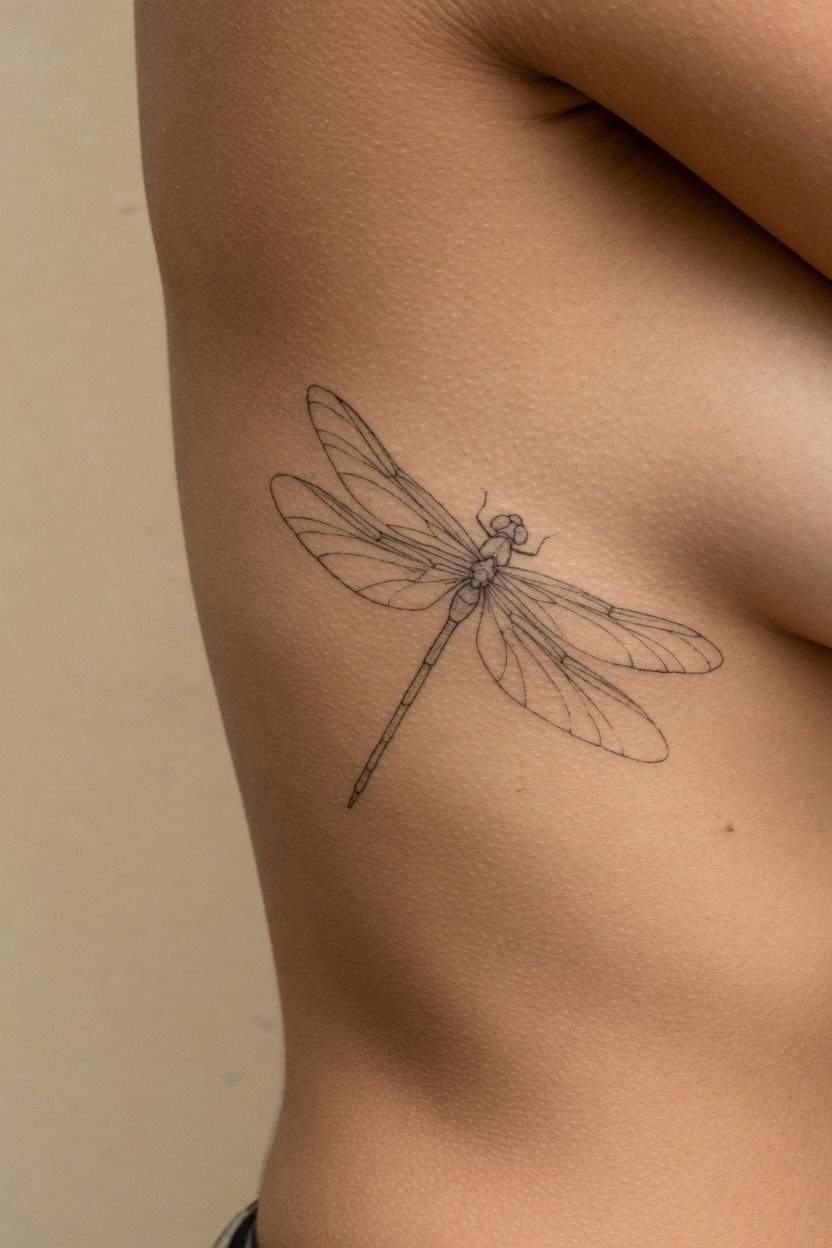
Fine line works when the drawing is simple and the artist respects spacing. I use a tight 3RL liner for most small dragonflies, sometimes a single needle for the hairline wing veins. The rib photo on medium olive skin is exactly right: side placement, daylight, lived-in, no crunchy overworked spots.
Ribs are spicy, so keep the design efficient. Long body, four wings, light dots if you want sparkle.
Don’t ask for lace inside every wing at three inches. That’s how fine lines blur into grey fuzz.
My Two-Line Wing Rule: if a wing needs more than two interior lines, the tattoo is too small. Make it bigger or simplify. Bold will hold, but clean fine line can hold too when you give it room to heal.
4Sketch Your Dragonfly Drawing Before Booking An Artist
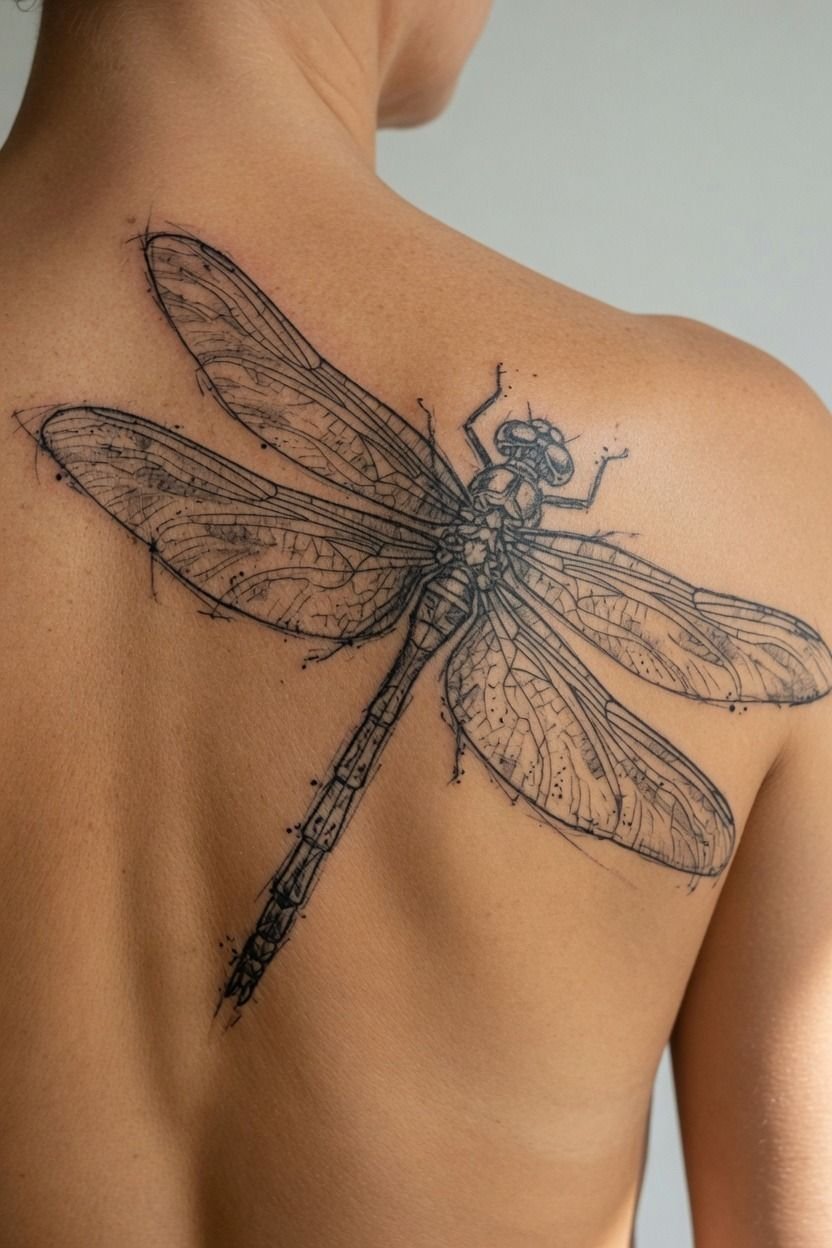
Bring references for vibe, not a demand to copy. If you want help shaping your idea, my how to design your own tattoo guide walks you through references, notes, and what to leave flexible. A dragonfly drawing tattoo should show direction: is it flying up, side profile, folded, or hovering?
On golden tan skin across the upper back, symmetry matters. Draw the spine line first, then the body, then wings.
If your sketch only looks good at phone size, it’s not ready. Print it at the real size and stand back.
And please don’t trace another artist’s healed tattoo. Use three references: one insect anatomy, one style reference, one placement photo.
Then let your artist rebuild it for skin. That’s custom, not copying.
5Pair Your Dragonfly With Butterfly Or Floral Elements
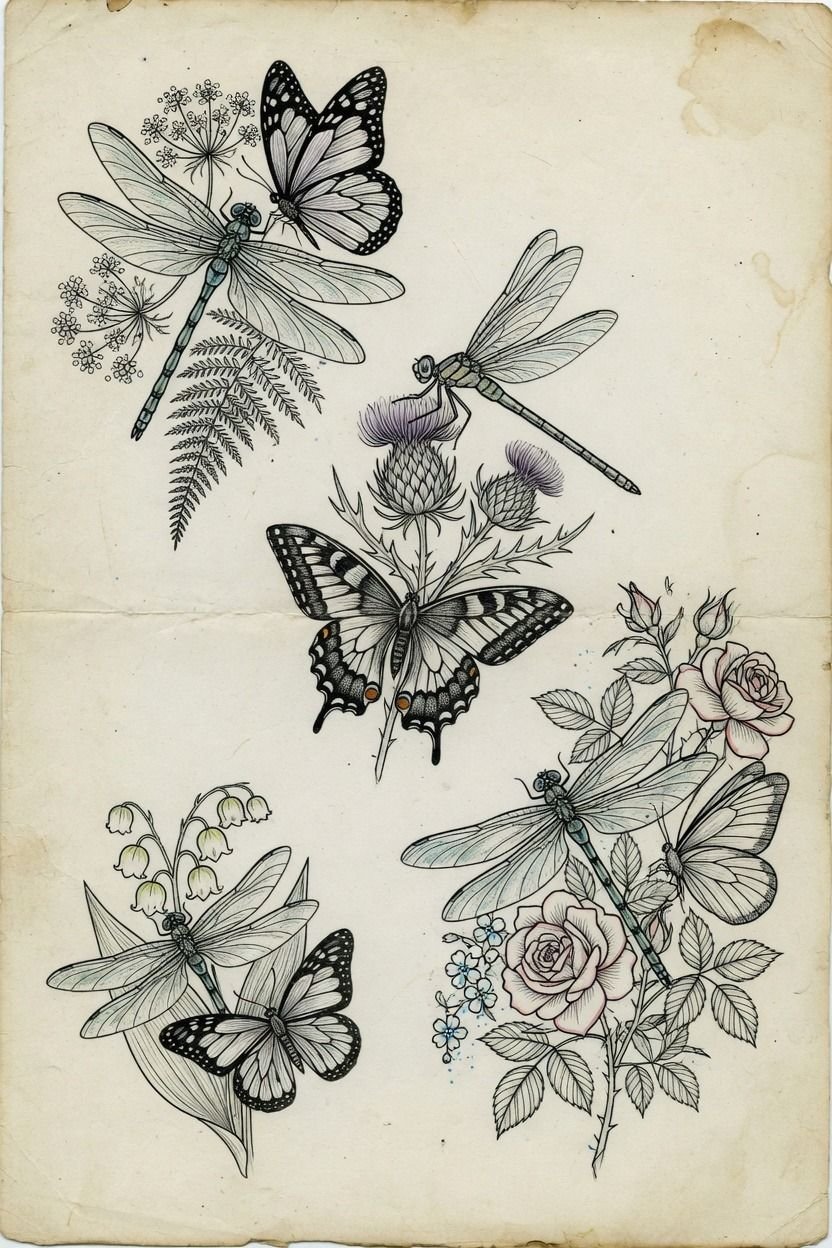
A butterfly and dragonfly tattoo can work if one insect leads and the other supports. Same with botanicals. The flash sheet photo on aged off-white paper is the right brain: several hand-drawn botanical fine line designs, light stems, tiny leaves, nothing crowded.
If you want flowers, choose one stem that points the eye toward the dragonfly body. Lavender, wild carrot flower, or a thin fern works.
I’d skip a full bouquet behind the wings. It fights the silhouette and makes the whole piece read busy.
For matching energy with a friend, keep each tattoo independent. One gets dragonfly, one gets butterfly, both share the same line weight. That’s cuter than splitting one insect in half.
Trust me, halves get weird when one person tans more.
6Place Your Dragonfly Tattoo Where It Flows Naturally
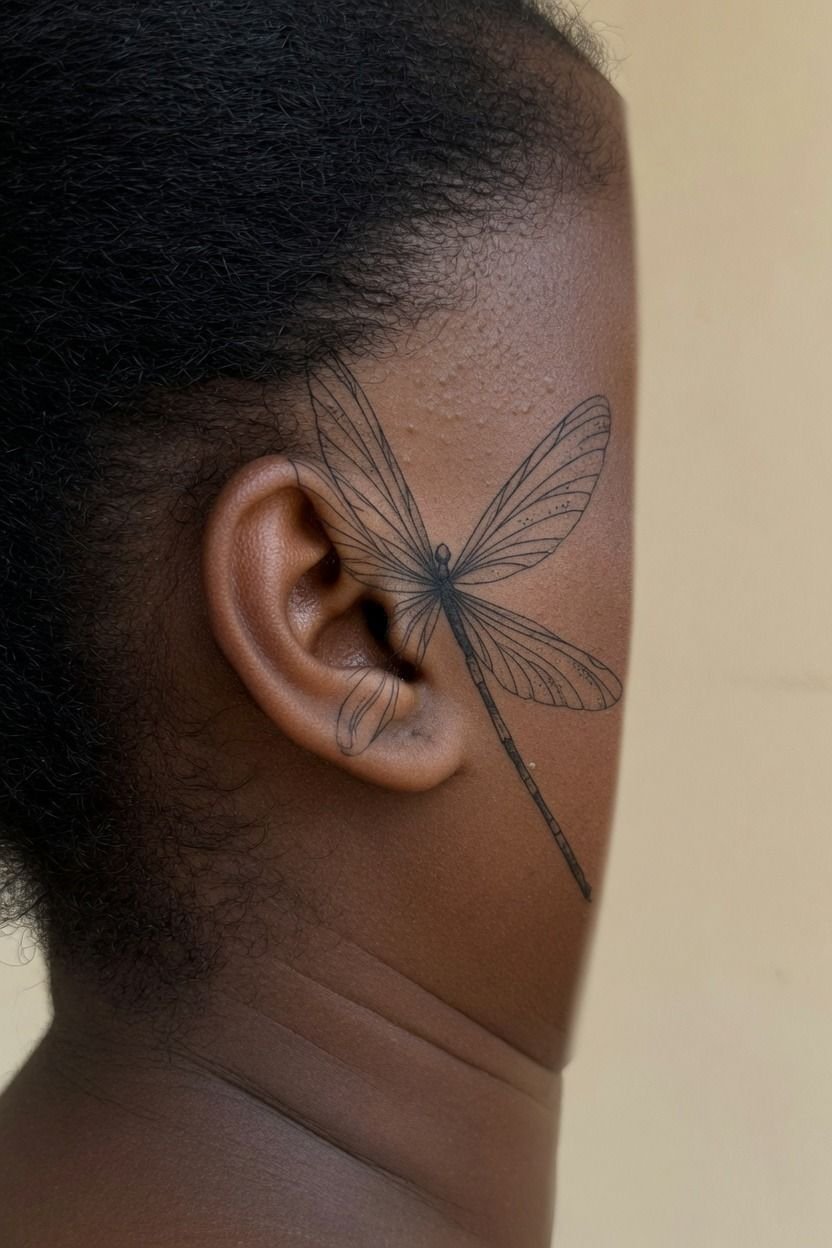
Placement is flow plus wear. Behind the ear on deep ebony skin looks sharp when the design is tiny, bold enough, and angled with the neck. That spot is high visibility and high friction from hair, glasses, and headphones, so expect a touch-up conversation.
Low-wear zones for dragonflies: outer upper arm, thigh, calf, upper back. Higher-wear zones: fingers, hands, feet, elbows, inner bicep. Wrist is doable, but keep it bigger than you think.
That tiny wrist dragonfly from Pinterest? Half of those are filtered to death.
I use the Wrist Read Test: if I can’t tell it’s a dragonfly at arm’s length, bump it up the forearm so it breathes. You’ll lose a little dainty and gain ten years of clarity. Worth it!
7Size Your Dragonfly Design For Clean Aging Lines
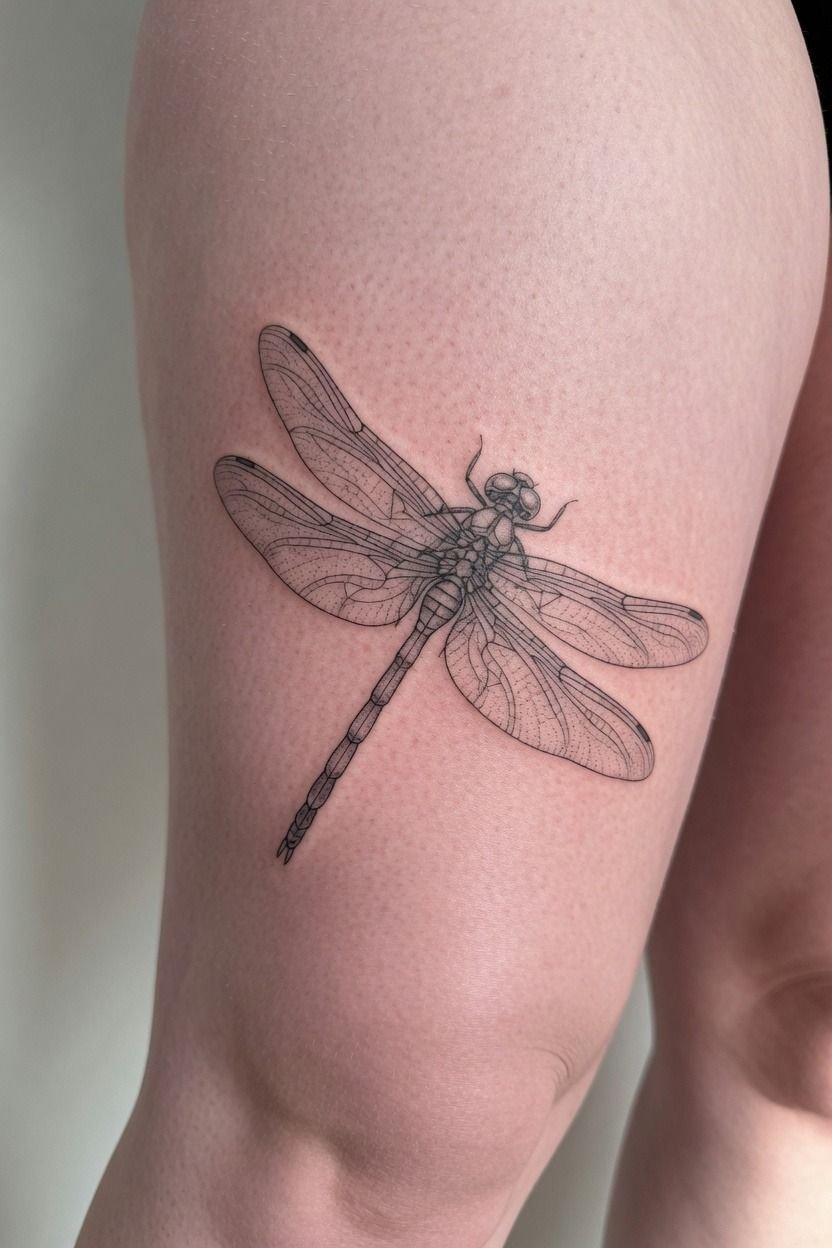
Size is where good taste meets physics. Lines spread a little as skin ages, sun hits, and your body changes. On a thigh with fair cool-pink skin, like the macro photo, you can go more detailed because the canvas is smoother and usually less sun-blasted than hands.
For a small fine line dragonfly, I like 3 to 5 inches with open wing centers. A micro version under 2 inches needs fewer veins and a thicker body line. If your artist wants every little cell in the wing at that size, ask to see healed work, not just fresh glamour shots.
Ink choice matters too. A solid Dynamic Black body with softer grey wash wings ages better than five hairline blacks fighting each other. Keep contrast high enough that it still reads after peeling.
8Decide Between Blackwork Or Color Dragonfly Ink
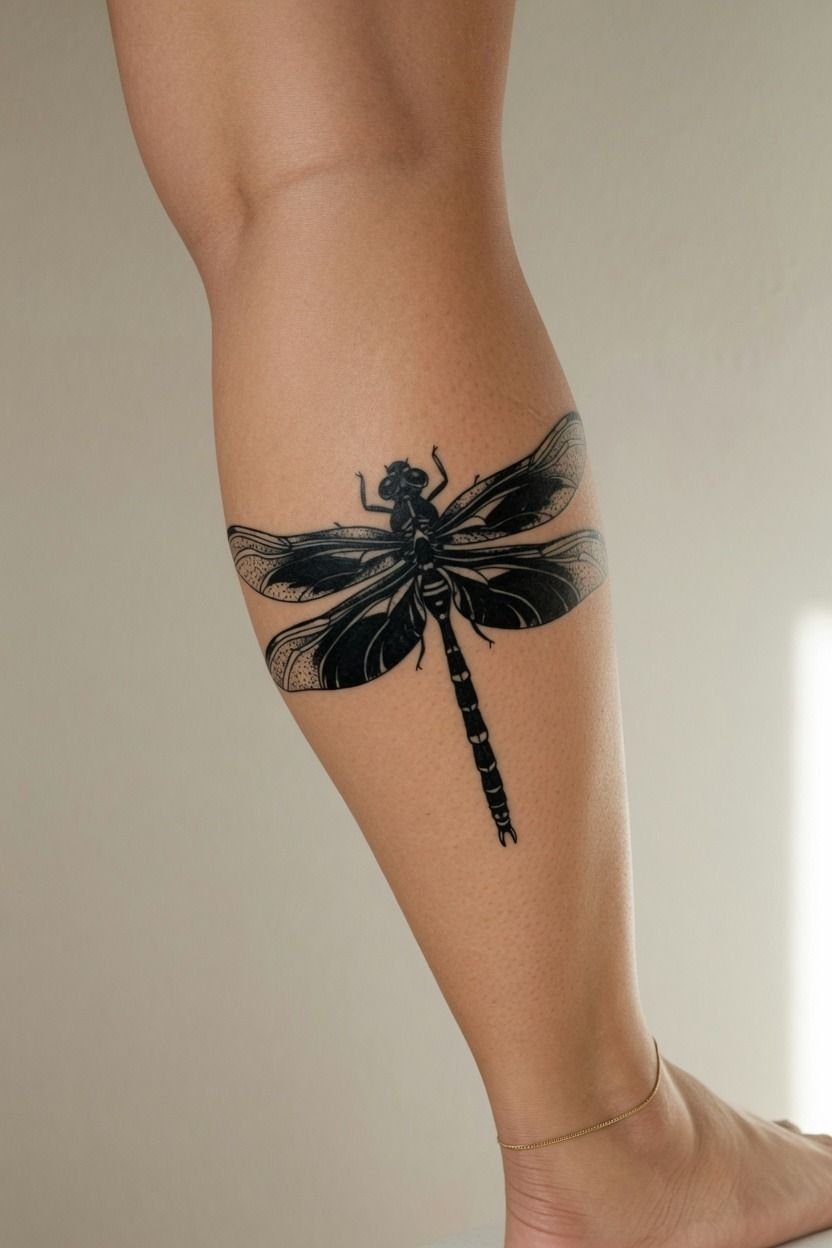
Blackwork dragonfly ink is the safer long game. The healed calf tattoo on medium warm ivory skin proves it: strong silhouette, natural daylight, no dependence on trendy color. Black and grey can still feel soft if your artist uses grey wash and doesn’t grind the skin.
Color is spice. Teal wings, rust orange body, little violet tips, all fun, but color needs saturation and aftercare discipline. If you won’t wear SPF, don’t build a pastel dragonfly on your ankle and then act shocked when it fades.
My honest split: black body forever, color only where it can be packed solid. I’d skip watercolor unless it’s anchored with line. Without a line structure, that soft wash can heal patchy and read like a bruise in five years.
9Add Wings Detail With Dotwork And Geometric Shading
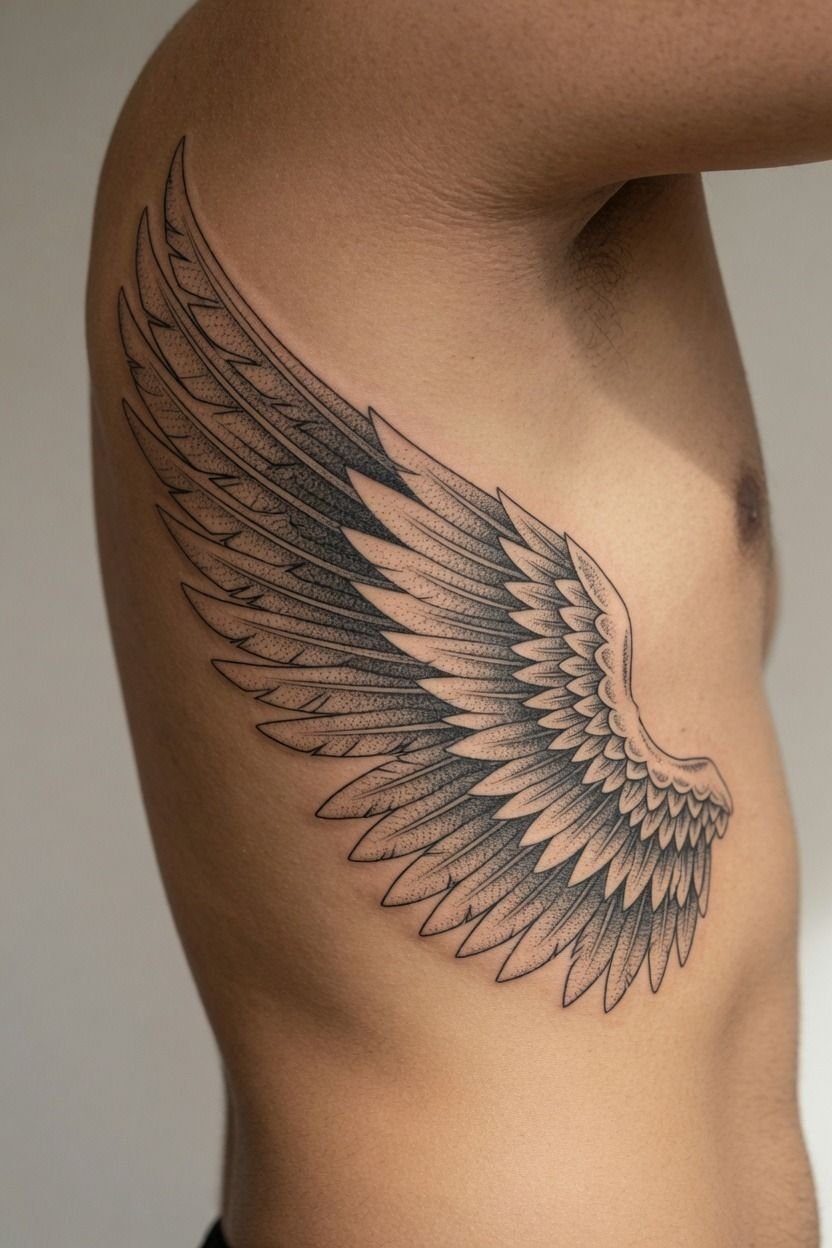
Dotwork can make dragonfly wings glow if the dots have intention. On ribs with medium olive skin, the wrapping dotwork photo shows how stipple can follow anatomy without turning into noise. Use dots to fade wing tips, not to fill every inch.
Ask for pepper shading near the body and lighter dots toward the edges. Keep geometry minimal: one clean arc, a small triangle, maybe a dotted orbit. Too many sacred shapes around an insect starts looking like a screensaver.
Pain note: ribs plus dotwork is a dull burn that gets annoying fast. Tap out for five rather than pass out on me. Bring water, eat real food, and don’t plan leg day after.
Your skin is not a sketchbook that week.
10Keep A Minimalist Dragonfly Tattoo Sharp And Simple
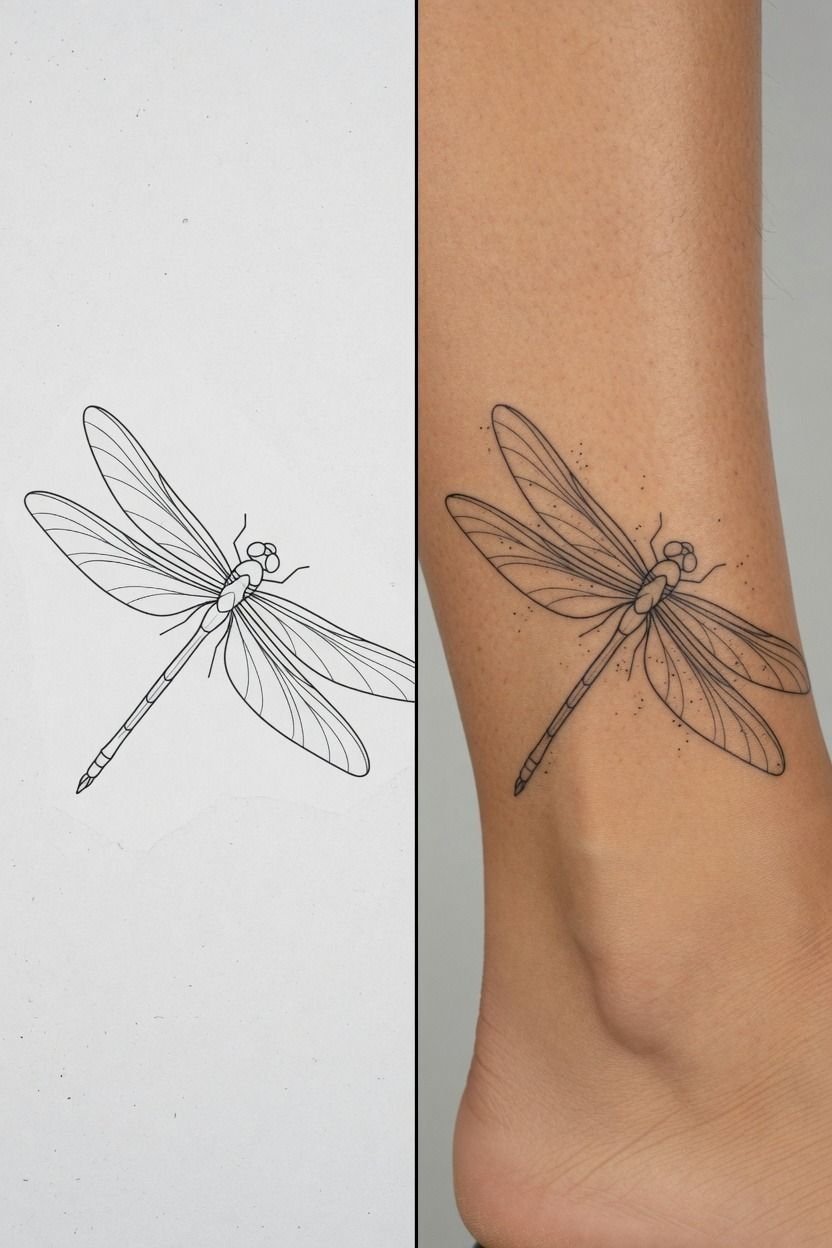
A minimalist dragonfly tattoo lives or dies on silhouette. The split image idea is perfect: stencil on white paper on the left, healed skin on the right. If the stencil looks elegant but the healed version looks fuzzy, your design had too much tiny information.
Keep the body one confident line. Wings get clean outlines and maybe one inner vein each.
Use a dragonfly tattoo stencil to test mirror symmetry before committing. I like Spirit transfer paper for crisp stencil lines because a sloppy stencil makes shaky tattooing.
If you’re tempted to add stars, sparkle dots, a date, a moon, and a name, stop. Choose one supporting element.
Minimal doesn’t mean easy. It means every line has to be crispy because there’s nowhere to hide.
11Plan Your Budget Around Dragonfly Tattoo Size And Detail
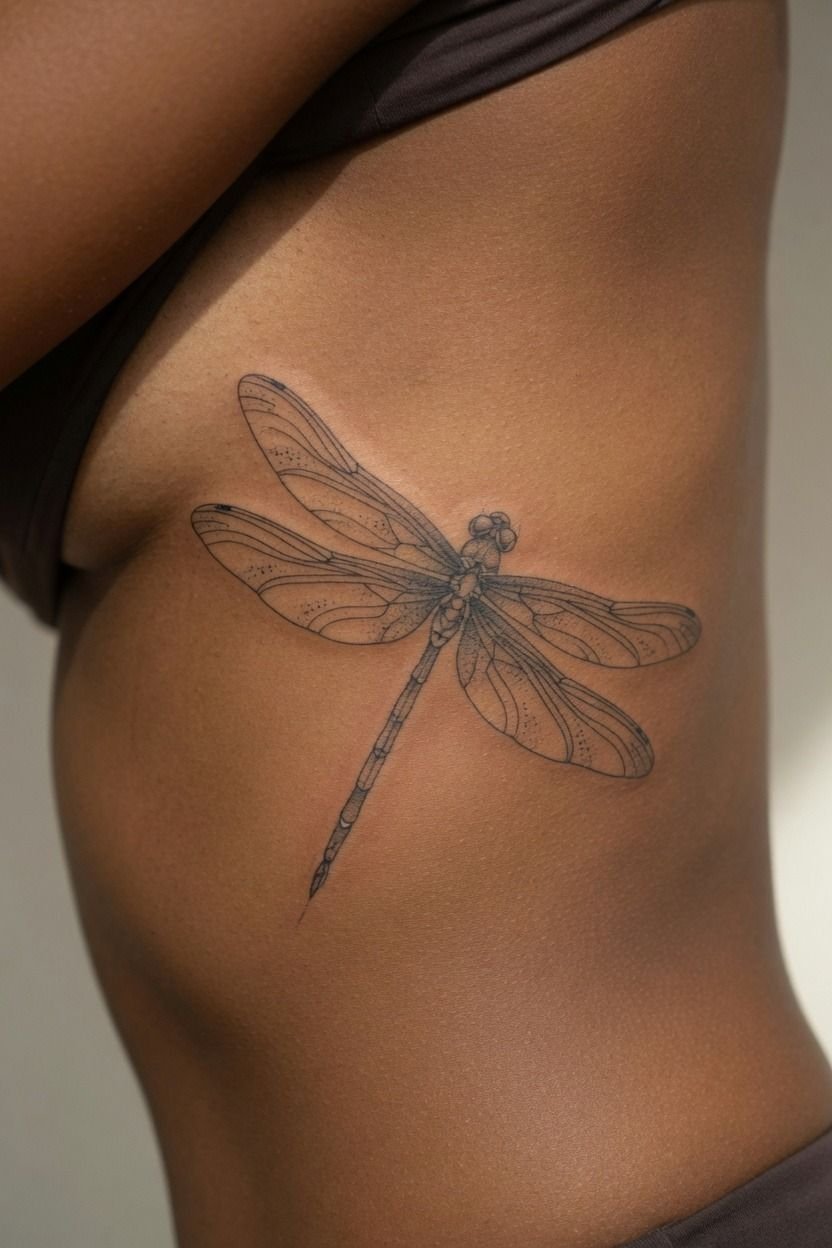
Money talk, no weirdness. In the US, a small fine line dragonfly often lands near shop minimum, around $80 to $150 depending on city. More detailed custom work usually bills hourly around $120 to $250.
Bigger ribs or back pieces can run 2 to 6 hours, split if needed.
The ribs photo on deep brown skin with warm undertone is a good budget example: enough size to hold detail, but not a full side panel. If you’re pricing design time, this how much charge tattoo design page helps you understand why custom drawing isn’t free labor.
Don’t bargain-shop symmetry. Cheap and fast is how wings come out uneven.
12Vet Your Artist For Dragonfly Linework And Symmetry
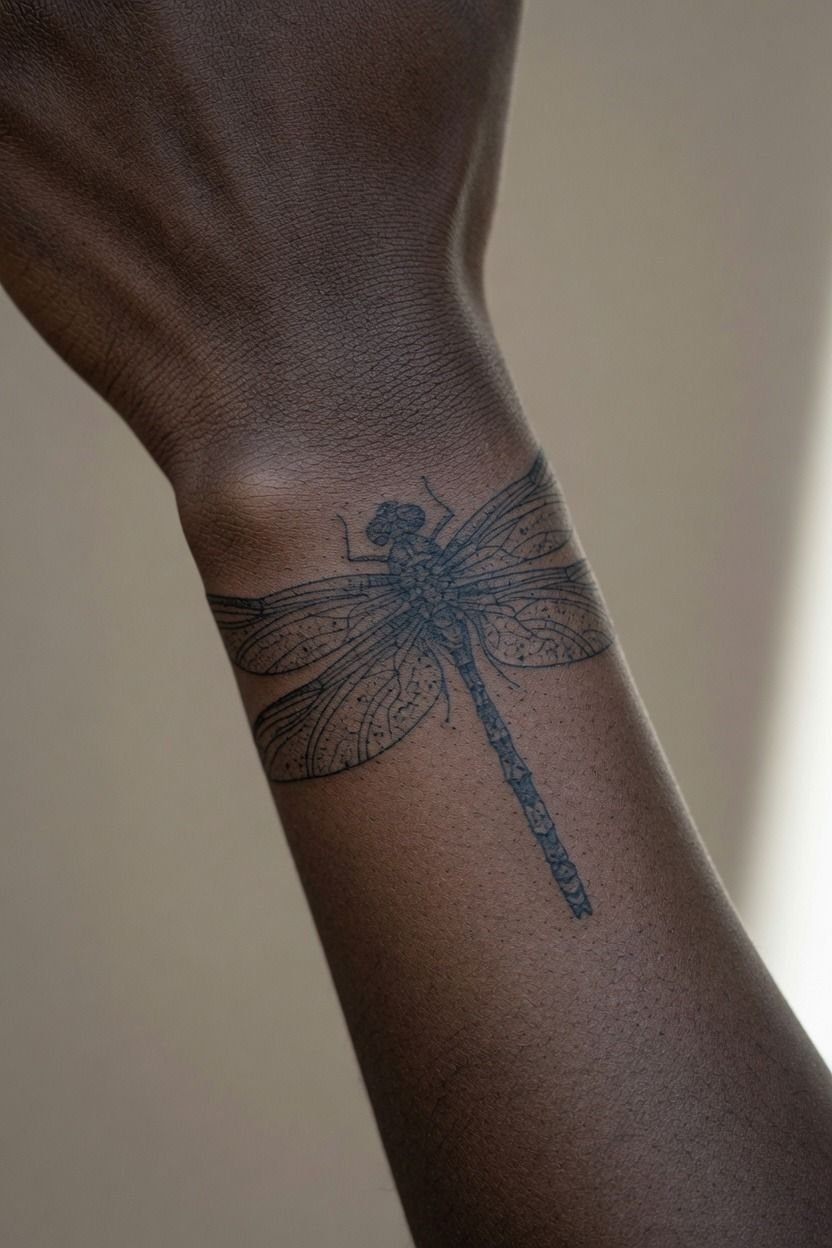
Your artist matters more than your reference folder.
13Heal Your Dragonfly Tattoo With Proper Aftercare Steps
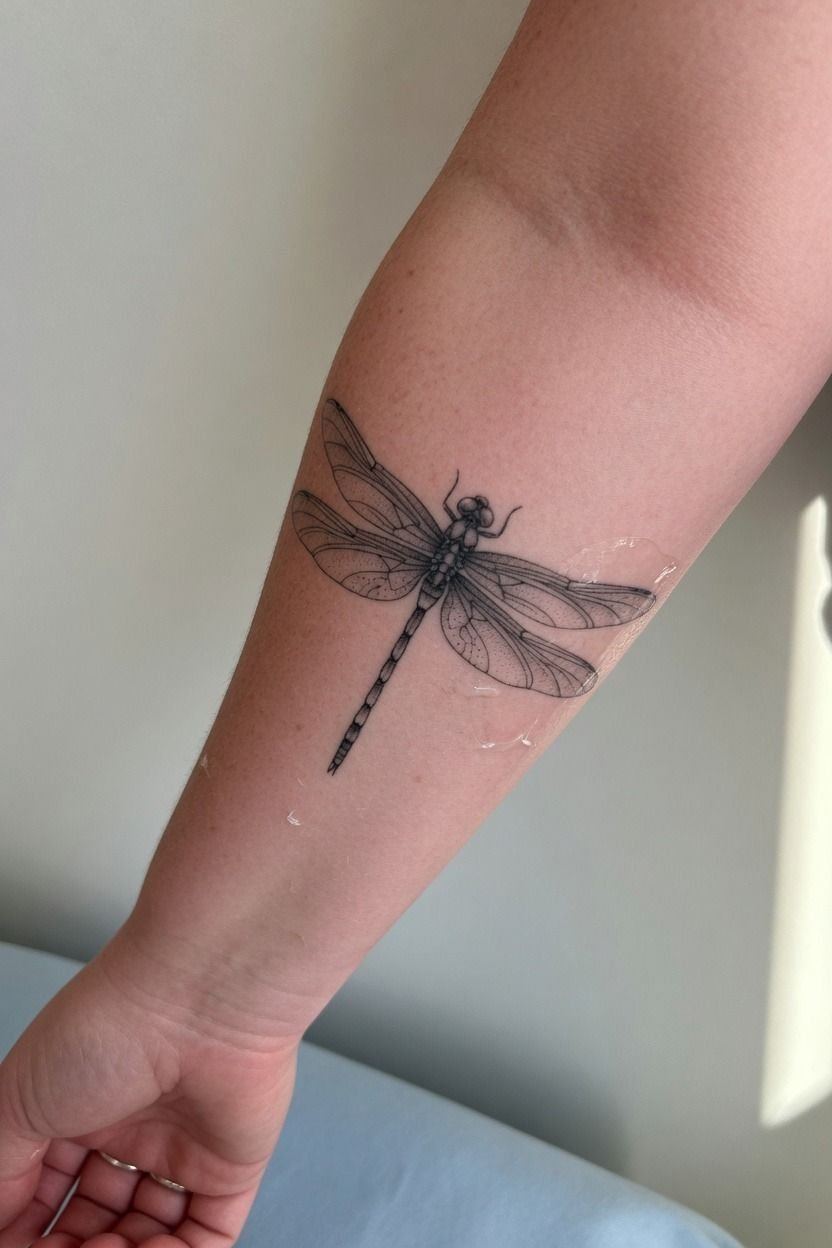
First few days, it’s an open wound. Treat it like that. Wash with gentle unscented soap, pat dry, then a thin layer of ointment.
Don’t suffocate it under a greasy glob. I like Aquaphor for the first days, then a light fragrance-free lotion once peeling starts.
It’ll peel like a sunburn. Don’t pick the flakes or you’ll pull color out.
Keep it out of pools, hot tubs, direct sun, and gym friction. Surface healing is usually 2 to 3 weeks; full settling can take 2 to 3 months.
Silver skin means it’s closing up, not that it’s invincible.
The healed inner forearm photo on fair cool-pink skin is the goal: calm, soft, readable. If you want the full routine, bookmark this and compare it with your artist’s instructions. When advice conflicts, your artist wins.
The Part Most People Skip Before They Book
I’ve tattooed a lot of dragonflies, and the pattern is always the same. The ones that age cute aren’t the most detailed.
They’re the ones where the client made three boring decisions early: meaning, size, and placement. Everybody wants to talk wing veins.
Nobody wants to hear that a four-inch forearm piece will outlive a two-inch wrist piece with double the detail. But that’s the job.
Skin moves, sun hits, and lines spread a little. Good design respects that before it tries to be clever.
My mistake years ago was letting a client shrink a botanical dragonfly because she was scared it would feel “too visible.” We kept the same amount of detail and just made it smaller. Fresh photo?
Adorable. Healed photo eight months later?
The inner wing lines softened together, and the body lost its little waist. Not a disaster, but not crispy.
We bumped the body line thicker at touch-up and removed two interior veins. Lesson stuck: detail has a minimum size, and you can’t bully skin into behaving like paper.
If you’re torn between dainty and durable, choose durable with a dainty attitude. Keep the silhouette slim, keep contrast strong, and leave open skin inside the wings.
Use references for mood, then let your artist rebuild the insect for your body. If you need a starting point, browse tattoo design website ideas for how people collect references, then compare with design tattoo online free tools to organize your thoughts.
Don’t marry a template. Marry the read.
One more thing: symmetry is a technique, not a wish. Dragonflies punish wobbly center lines. Your artist should stencil, check you standing and sitting, and adjust for how your shoulder, ribs, or wrist twists.
If they rush that part, speak up. A calm ten minutes of stencil placement beats a lifetime of a crooked thorax.
Seriously!
What People Always Want to Know
How much does a dragonfly tattoo design usually cost?
Typical US range is about $80 to $500 for small to medium fine line work, with larger rib or back pieces running higher. Shop minimum often starts around $80-150, hourly around $120-250. Size, detail, artist demand, and city all move the number.
Are dragonfly tattoos a good idea for a first tattoo?
Yes, if you keep the silhouette clean and choose a calmer placement like outer forearm, thigh, or calf. The shape is graceful, easy to personalize, and doesn’t need heavy color to read well. Avoid fingers for a first one unless you accept touch-ups.
How do I choose a tattoo artist for dragonfly linework?
Look for healed photos with even lines, smooth taper, and no scratchy fuzz. Check that they do your style weekly, not once a year. Clean studio, clear consent, honest size advice.
If their portfolio is all fresh redness, keep scrolling.
How much do dragonfly tattoos hurt?
Outer forearm and calf are usually chill; ribs, sternum, feet, and hands are spicier. Lines feel sharper, shading is a dull burn, and color packing is the hottest part. Eat first, hydrate, and tell your artist if you need a break.
How long does a dragonfly tattoo take to heal?
Surface healing is usually 2 to 3 weeks, with full settling around 2 to 3 months. Gentle wash, thin moisture layer, no picking, no sun, no pool. Fine line can look healed fast and still be fragile underneath, so don’t rush friction.
What’s the best placement for a dragonfly tattoo?
For most people, outer forearm wins: visible, moderate pain, and enough flat skin for clean wings. Thigh and upper back also age well. Wrist and behind-ear placements are cute but need simpler designs and stricter aftercare.
Where I’d Start First
If I had to pick one step, I’d start with size. Size decides whether your lines stay crispy or melt into soup. Pin your favorite, then bring references for vibe only to your consult.