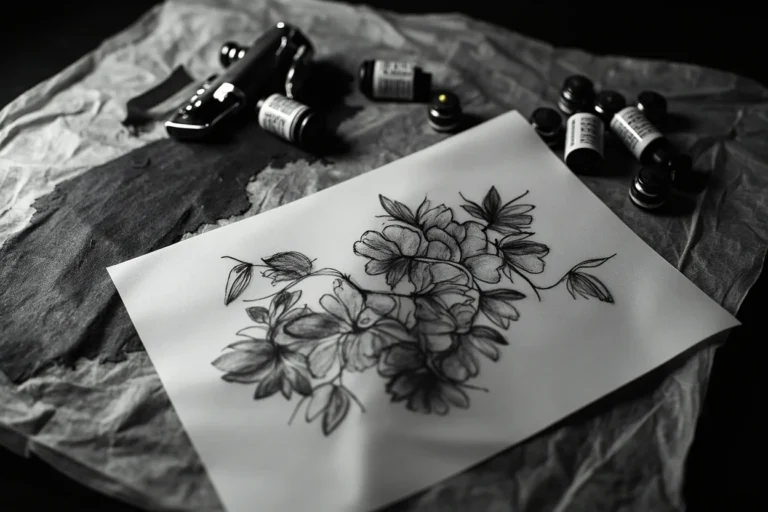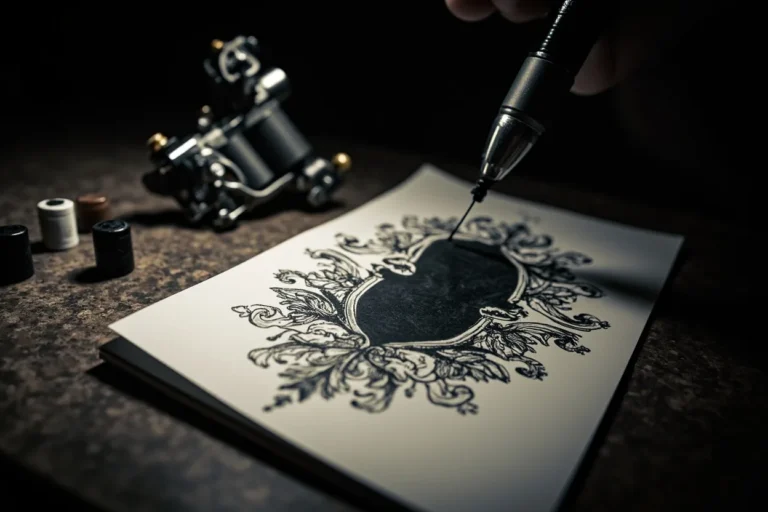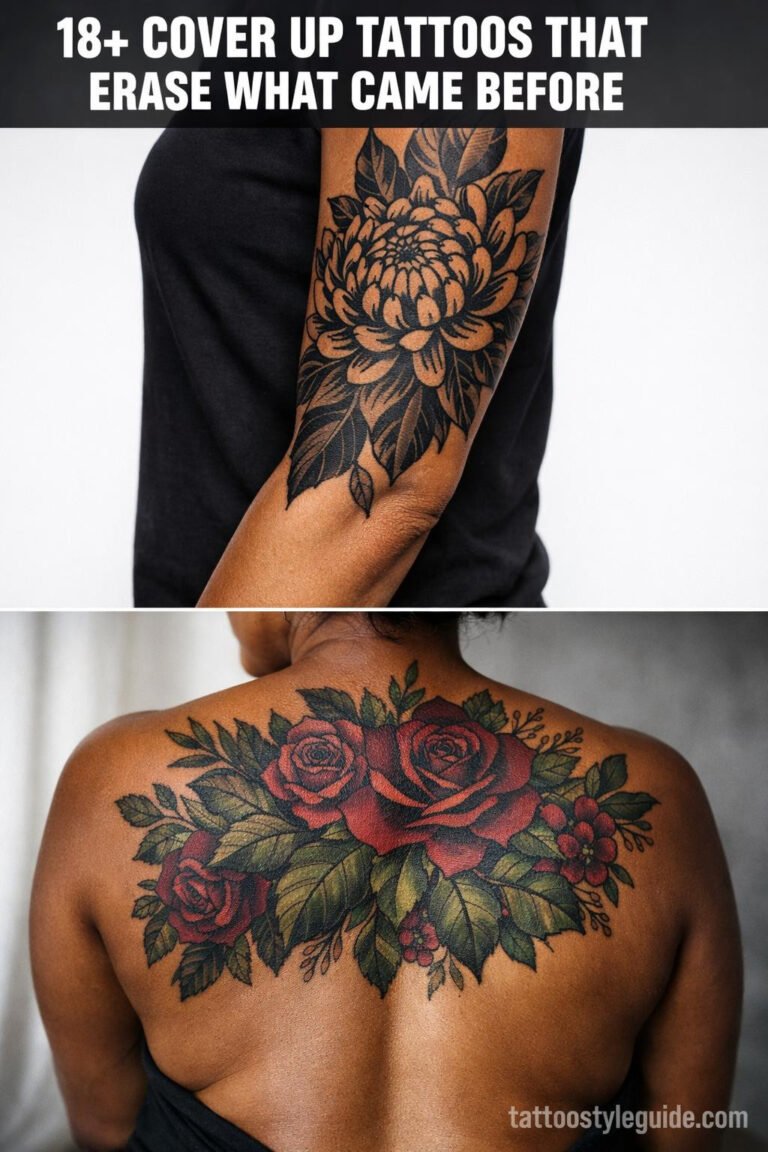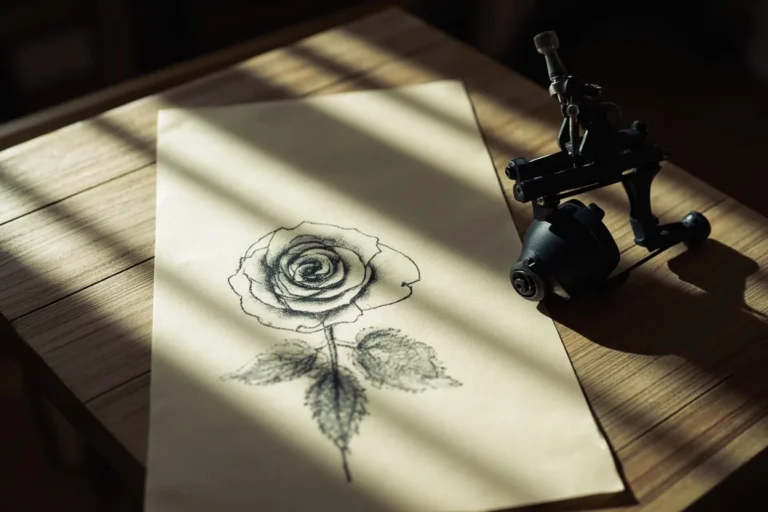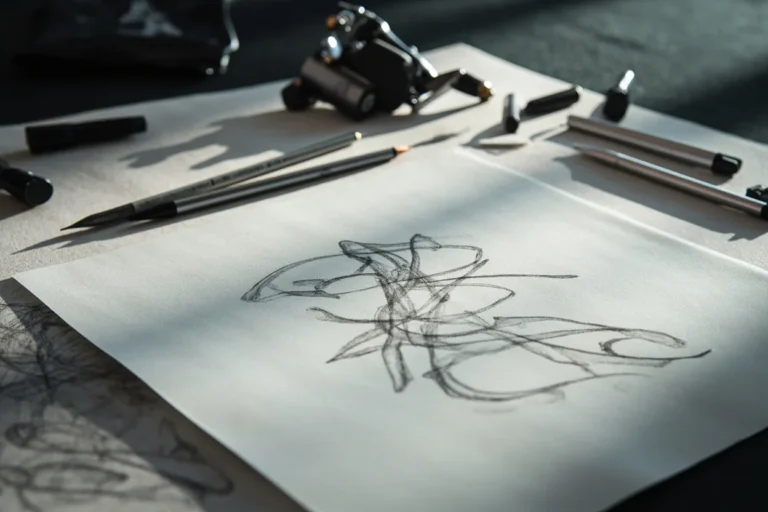
Designing your own tattoo starts with an idea and ends with a collaboration. You bring the story, the reference, the gut feeling. I bring the technical knowledge of how ink sits in skin, how lines spread over time, how a design flows around a knee or ribs. The best tattoos I’ve done came from clients who showed up with something personal, bad sketches, phone photos, scribbled notes, and let me help them shape it into something that actually works as a tattoo. Here’s how to get there without wasting your time or your artist’s.
Start With What Actually Matters to You
I’ve tattooed hundreds of custom pieces, and the ones that hold up best are the ones where the client cared about the subject, not just the aesthetic. A rose because your grandmother grew them. A dog portrait because you raised that mutt from a pup. A geometric pattern because you spent three years drawing them in notebooks. That emotional anchor keeps you happy when the tattoo fades to a softer version of itself in ten years.
Collect Visual References, Not Finished Designs
Bring photos, paintings, textures, colors, even fabric swatches. Don’t bring another person’s tattoo and say “I want this.” That’s not designing your own, that’s copying. I tell clients to make a folder of 15-20 images that capture a feeling: the light in a Vermeer painting, the worn edge of a vintage sign, the way a particular bird holds its wings. I can work with that. I can’t work with “make me this exact thing I saw on Pinterest.”
Write Down the Story in Three Sentences
Seriously. Open your notes app and write why you want this. Not a paragraph, three sentences max. I’ve had clients read me their three sentences in the chair, and suddenly the whole design clicks. The guy who wanted a ship but couldn’t explain why got a generic clipper. The guy who said “my dad built model ships in the basement, I could hear the glue smell from upstairs” got a specific hull, specific rigging, a specific angle that meant something.
Understand What Works on Skin (Not Paper)
Skin is alive, stretchy, and imperfect. What looks crisp on an iPad screen spreads and softens over time. I’ve watched beautiful digital designs fall apart because the artist never tattooed before and didn’t know how ink behaves.
- Line weight matters. Super thin lines look delicate fresh, but they can blow out or fade to nothing. I usually won’t go below a 3rl for anything that needs to last.
- Negative space is your friend. Dense black everywhere ages to a blob. Open skin, breathing room, contrast, that’s what keeps a tattoo readable at ten years.
- Color shifts. Bright reds and oranges fade fastest. Blues and blacks hold. Yellows can disappear on lighter skin tones. I always warn clients: the tattoo you leave with is the brightest version it’ll ever be.
- Detail has limits. A face the size of a quarter won’t read as a face in five years. I did a pocket watch with Roman numerals once; the client insisted on 3mm height for the numbers. I warned him. Two years later he came back and we covered the blurry mess with solid black.
Placement Changes Everything
Inner bicep? Soft skin, easy to tattoo, but it moves a lot and can blur. Ribs? Painful, and the skin stretches with every breath, designs need to flow with that movement. Fingers? High turnover, lots of shedding, most fine detail falls out. I’ve had to redo finger tattoos three times for the same client. Knees and elbows? The skin’s basically a different material there, thick, rubbery, unpredictable. A good artist will steer you toward placement that suits your design, not just where you initially thought.
Find the Right Artist for Your Vision
Not every artist does everything. I specialize in black and gray realism and traditional Americana. My friend down the street does delicate single-needle fineline. Another guy does bold Japanese. If you bring me a watercolor-style butterfly, I’ll be honest: that’s not my thing, and you’ll get a better tattoo from someone else.
- Look at healed photos, not just fresh work. Instagram is full of day-of shots with perfect lighting. Ask the artist for healed pics from a year out. That’s the real test.
- Read reviews for bedside manner, not just technical skill. A brilliant artist who’s a jerk will make the experience miserable. You’re sitting in their chair for hours.
- Check if they actually do custom work. Some shops are walk-in factories with flash sheets on the wall. Others require booking months out because they draw everything from scratch. Know what you’re getting into.
How to Email an Artist
I get dozens of emails a week. The ones I respond to fast are clear: placement, approximate size, style reference, and a sentence about meaning. “Hi, I’m hoping to get a 4-inch black and gray portrait of my dog on my outer forearm. I love the texture in your recent pit bull piece. My dog was a rescue and I had her 14 years. Available for a consult?” That email gets a yes. The one that says “I want a tattoo, how much” with no other info goes to the bottom of the pile.
The Design Process: Collaboration, Not Dictation
You designed the concept. Now let the artist design the tattoo. I draw stencils that account for how your specific arm bends, how your muscle sits, how the design will look when you’re walking and the viewer sees it from an angle. I’ve had clients try to micromanage every line in the sketch phase, and the tattoo suffers. I’ve had others trust the process, and we both love the result.
- Expect a sketch or stencil at your appointment, not weeks before. Most artists don’t send final designs early; too many clients take the drawing to another shop for a cheaper price.
- Speak up about changes, but respect the medium. “Can the eyes be slightly larger” is reasonable. “Can you add seventeen more elements and also change the style completely” is not, once we’re at the appointment.
- Trust the stencil placement. I place it, have you look in the mirror, move around, sit and stand. A design that looks centered when you’re relaxed might twist when you raise your arm.
What to Expect: Pain, Time, and Money
Let’s talk real numbers because nobody does, and then clients get shocked in the shop.
- Pain: It hurts. Some spots worse than others. Ribs, spine, kneecap, ditch of the arm, those make tough people sweat. Outer arm, thigh, calf, more manageable. I’ve had clients meditate through rib pieces and others tap out on a forearm script. Your pain tolerance is your own; don’t let anyone shame you for it.
- Time: A palm-sized simple design might be 1-2 hours. A full sleeve is 20-40 hours over months. I always pad my estimates; finishing early feels like a gift, running late feels like a ripoff.
- Cost: In most US cities, good artists run $150-300 per hour, minimums around $100-200 for tiny pieces. Some charge flat rates for full-day sessions ($800-1500). Cheap tattoos aren’t good and good tattoos aren’t cheap. I’ve fixed enough $50 kitchen scratcher disasters to know.
Aftercare Is Part of the Design
How you heal affects how the tattoo looks forever. I give clients a printed sheet: wash gently with unscented soap, thin layer of fragrance-free moisturizer, no sun, no soaking, no picking scabs. The first two weeks determine whether your careful design stays crisp or gets compromised. I’ve seen beautiful work ruined by a beach vacation on day five. Respect the healing; it’s the final step of the design process.
Key Takeaways
- Start with personal meaning, not Pinterest aesthetics.
- Bring references, not finished tattoos to copy.
- Learn how skin and ink interact, detail, placement, and color all have limits.
- Find an artist whose healed work matches your style, then trust their technical expertise.
- Communicate clearly in your first email: placement, size, style, and story.
- Collaborate during the design process; don’t dictate or disappear.
- Budget for quality, respect the time commitment, and follow aftercare religiously.
Designing your own tattoo is one of the most personal creative acts you can do. Do it with intention, find the right partner in your artist, and you’ll wear something that actually means something for decades. I’ve got twenty years of ink on my own skin, and the pieces I designed with care still feel like me. The ones I rushed? I cover them with better work. Take your time. The skin is patient.
Frequently Asked Questions
Should I draw my own tattoo design before meeting the artist?
Bring rough sketches or references if you have them, but don’t worry about polished artwork. Artists expect to redraw everything into a workable tattoo stencil anyway. Your scribbles help us understand your vision faster.
How much input will I have once the artist starts drawing?
You’ll review the stencil before any needle touches skin. Most artists allow reasonable tweaks at this stage, but major changes to style or composition should happen earlier in the conversation.
Can I get a tattoo designed over a scar or existing ink?
Yes, but it depends on the scar’s age and texture, or the existing tattoo’s density. I usually need to see it in person to know what’s possible. Cover-ups and scar work require specialized design approaches.
What if I change my mind about part of the design during the session?
Speak up immediately. It’s easier to adjust stencil placement than to fix ink in skin. That said, constant second-guessing makes the process stressful for both of us. Trust your preparation and your artist’s expertise.
Related Tattoo Guides
- How to Draw a Rose Tattoo: A Realistic Guide
- How to Get Tattoo Ink Out of Carpet: A Working Artist s Guide
- Why You Shouldn t Build a Homemade Tattoo Gun
- Explore more