Refreshing an old tattoo is different from touching up a new one. The artist has to respect old ink, softened lines, sun damage, and whatever the tattoo has become.
Quick answer: An old tattoo can be refreshed with line reinforcement, color boost, blackwork rework, background additions, a cover-up, or laser lightening before redesign. The right choice depends on age, fading, ink density, and whether you still like the original design.
Old tattoo refresh options
Start by deciding whether you want to preserve the tattoo or replace it.
| Option | Best use | Keep in mind |
|---|---|---|
| Line refresh | Design still works | Cannot fix bad composition |
| Color boost | Faded color tattoos | Old pigment affects result |
| Rework | Same idea, stronger design | Needs artist interpretation |
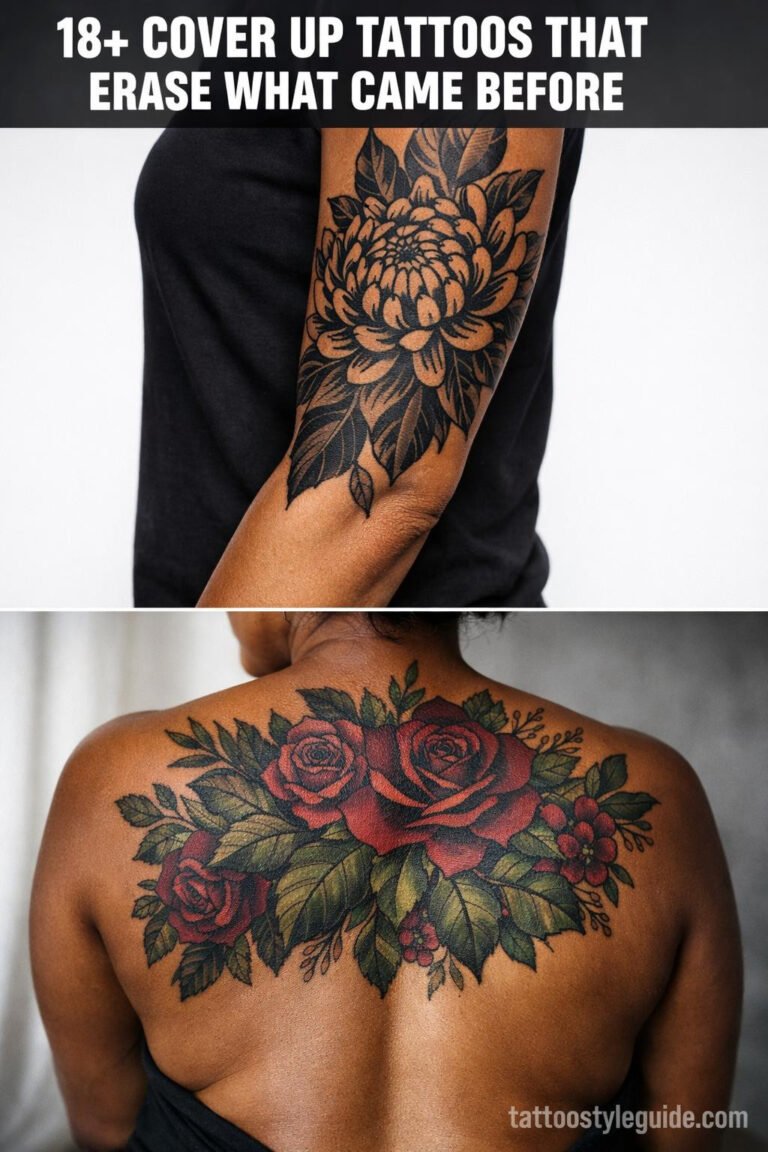
| Cover-up | You want a new tattoo | Usually larger and darker |
| Laser lightening | Dark old tattoo | Adds time and cost |
You’ve got three real paths: a touch-up, a rework, or a cover-up. Touch-ups just re-pack faded color or crisp up blown-out lines. Reworks go deeper, redesigning the whole piece while keeping placement. Cover-ups swap the old design entirely with something dark enough and dense enough to swallow what’s underneath.
Laser fading before a cover-up is underrated. Even two or three sessions can lighten a dark piece enough that your artist has way more design options. Without it, a lot of cover-ups end up as oversized black blobs because that’s the only thing solid enough to work. Talk to your artist first before booking a laser clinic.
What makes this work on real skin
A bad tattoo is rarely the end, it's usually just the rough draft.
Old tattoos often need restraint. Sometimes the best refresh is strengthening the important lines and leaving some age in the piece.
If the tattoo is already crowded, adding more detail may make it worse. A consultation should include honest limits.
Older skin holds ink differently than fresh skin. Scar tissue from the original tattoo changes how needles track, and ink can spread unpredictably in already-worked dermis. That’s why reworks on heavily shaded areas sometimes look patchy for the first few weeks before they settle. Your artist isn’t doing it wrong, the skin just needs time.
Placement matters too. High-wear zones like fingers, elbows, and feet chew through ink fast regardless of technique. A crisp rework on a forearm reads clean for years. That same rework on a hand might need another touch-up in eighteen months. Bold, saturated black and grey in low-wear zones like the upper arm or thigh holds the longest.
Before you book or apply it
Bring clear photos in natural light and explain whether the old tattoo still matters to you.
- Ask if the tattoo can be preserved or needs redesign.
- Ask what old lines will remain visible.
- Ask if laser would improve the result.
- Ask to see healed rework examples.
Wait until the old tattoo is fully healed before talking rework, at least three months minimum, longer if there’s raised scarring. Bring clear photos of what you have now in good lighting, not filtered phone shots. Your artist needs to see the actual linework, how bad the blowout is, and where the ink has migrated.
Skin prep matters. Moisturize the area daily for two to four weeks before your appointment. Hydrated skin takes ink more evenly and the session is less spicy. If the piece is in a sun-exposed spot like the shoulder or forearm, keep it out of direct sun and use SPF 50. UV damage thins and muddies the dermis, which makes clean linework harder to deliver.
Mistakes to avoid
Do not expect a refresh to make a decades-old tattoo look brand new. Skin and ink have history.
Do not keep adding small details to a tattoo that already lost clarity.
Safety source note: This guide keeps safety advice conservative and points readers to primary public-health or dermatology sources.
Don’t try to lighten a dark tattoo with a pale design. It won’t work. Blue-black ink sitting in the skin will ghost through light watercolor or pastel shading every time. If your artist is telling you the cover-up needs to be bigger or darker than you wanted, listen. They’re reading the actual skin in front of them.
Skipping aftercare on a rework is a bigger deal than on a fresh piece. Already-worked skin is slower to recover. Peeling off dry skin, soaking in a pool, or skipping moisturizer during the first two weeks can pull ink right back out. Stick to unscented lotion, keep it out of the sun, and plan for four to six weeks before you can really judge how it healed.