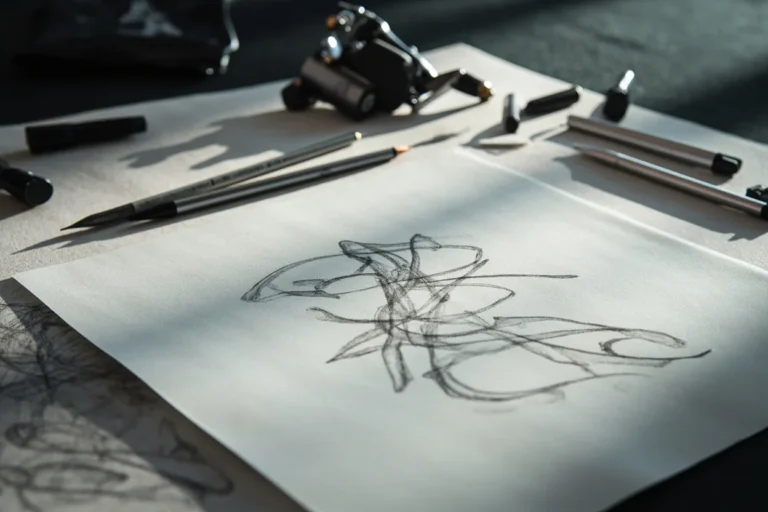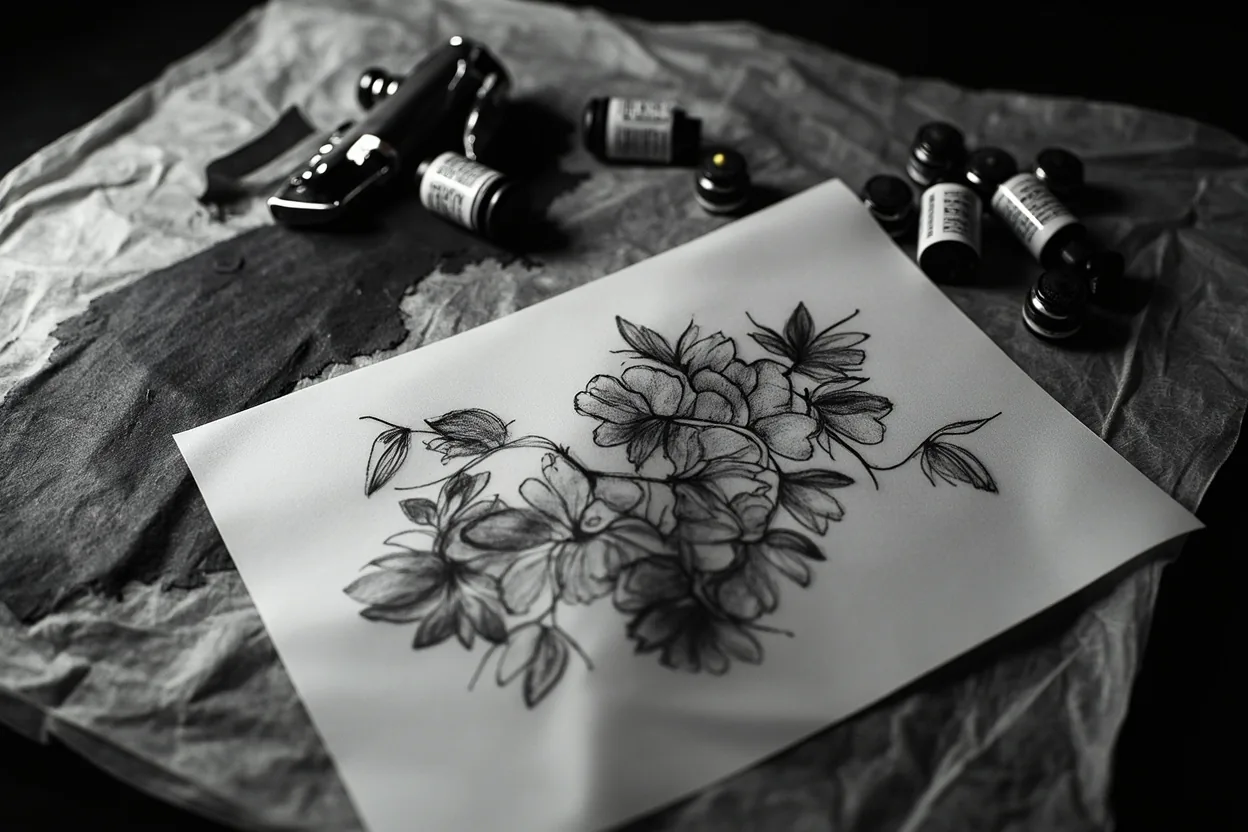
A cover-up tattoo is not a normal tattoo placed over a mistake. The old ink is part of the new design whether you like it or not.
Quick answer: A good cover-up tattoo usually needs to be larger and darker than the old tattoo. Blackwork, florals, animals, traditional motifs, and textured designs can work, but some tattoos need laser lightening before a clean cover-up is realistic.
Cover-up directions
The right cover-up depends on old ink color, density, size, age, and placement.
| Direction | Best fit | What to watch |
|---|---|---|
| Blackwork | Dense old ink | Can limit future options |
| Floral cover-up | Soft organic shapes | Needs enough darkness |
| Animal design | Large focal replacement | Must be bigger than old tattoo |
| Traditional motif | Bold lines and color | Works for many small old pieces |
| Laser then cover | Dark or crowded old tattoo | Adds time and cost |
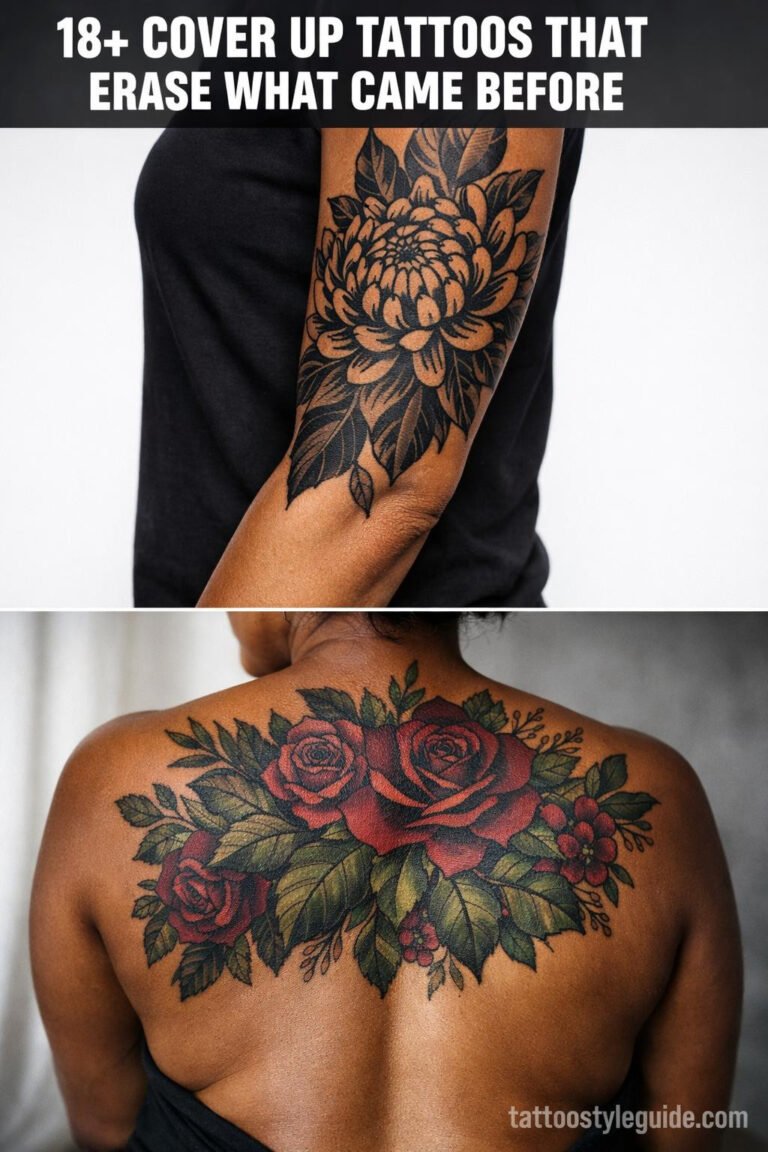
Direction matters more than you think. A solid cover-up doesn’t just dump dark ink over old work. It redirects the eye. Your artist will look at what’s underneath and find angles where the new design’s darkest elements land directly on top of the old lines. Flowing shapes, dense botanicals, geometric fills, and blackwork sleeves are go-to directions because they give your artist room to hide stuff without the piece looking forced or muddy.
Black and grey washes work well for blending old shading into something intentional. Saturated color, especially deep blues, forest greens, and burgundy, can knock out faded black lines better than you’d expect. Fine line portraits or delicate script over existing work? Almost never a clean result. The old piece will ghost through inside a year.
Bigger is usually necessary
A cover-up is not a patch job, it is a full redesign that demands a better artist, not just a bigger design.
People often want the new tattoo to be the same size as the old one. That rarely works. The artist needs room to hide, redirect, and overpower existing lines.
If the old tattoo is very dark, laser lightening may create better options. It does not have to erase the tattoo completely to help.
Whatever size you’re picturing, go bigger. That’s not a sales pitch, that’s geometry. The new design needs enough real estate to surround and absorb the old one. A 2-inch piece usually needs a cover that’s at least 3 to 4 inches in every direction. Tight placements on wrists, inner forearms, or ankles get complicated fast because there’s limited skin to expand into without wrapping awkwardly around a joint.
High-wear zones like hands, fingers, and feet also fade faster post-heal, which means a cover-up there is fighting two battles at once. Spots with more flat, open skin, like the outer upper arm, thigh, or shoulder blade, give your artist the canvas they actually need. More space means better saturation, cleaner transitions, and a piece that still reads solid five years out.
Artist questions
Cover-ups are specialty work. Ask direct questions.
- Ask to see healed cover-up examples.
- Ask whether laser would improve the result.
- Ask how much larger the new tattoo needs to be.
- Ask what old lines may still show.
Before you sit down, ask your artist to show you cover-up work specifically, not just their portfolio highlights. Cover-ups are a different skill set. You want to see healed photos, not fresh shots. Fresh ink always looks crispy. What you need to know is how it holds after the skin settles, whether the old lines ghosted through, and whether the design still reads clearly from across the room.
Ask them straight up: how big does this need to be, and what colors or styles are actually going to work over what I have? A good artist will tell you the truth even if it’s not what you want to hear. If they say they can do a small fine-line cover over a blown-out old tribal, walk out. That’s not confidence, that’s a second problem you’ll be paying to fix.
Cover-up mistakes
Do not force a pale fine line design over a dark old tattoo. The old ink will win.
Do not choose a cover-up artist only by price. A bad cover-up creates a bigger, darker problem.
The biggest mistake people make is going too light too soon. Rushing into a cover-up while the original tattoo is still fully saturated is hard on your skin and limits what your artist can do. If you can, do a few laser sessions first. You don’t need full removal. Even fading the old piece by 40 to 50 percent opens up a lot more design options and lets your artist work with lighter ink, which means the final piece looks intentional instead of heavy and overworked.
The second mistake is picking the wrong style for the job. A watercolor piece or a minimalist single-needle design won’t have enough density to cover solid old linework. You need something with mass, bold fills, heavy shading, or layered blackwork. Blowout on the old tattoo makes things spicier because that spread ink creates a shadow that bleeds through light applications. Your artist needs to account for it in the design, not just throw ink at it and hope.