Knowing what to ask a tattoo artist before booking can prevent the most common tattoo regrets: wrong artist, wrong size, wrong placement, weak healing plan, and surprise pricing.
Quick answer: Ask a tattoo artist about healed examples, experience with your style, minimum size, placement risks, pricing, deposit policy, session length, design revisions, aftercare instructions, touch-ups, and what they would change about your idea.
Questions worth asking
Good questions are specific. They should make the artist explain how your tattoo will work on skin.
| Direction | Best fit | What to watch |
|---|---|---|
| Healed examples | Proof beyond fresh photos | No healed work is a warning |
| Minimum size | Protects detail | Artist should explain why |
| Placement risk | Avoids fading surprises | Hands and feet need honesty |
| Pricing and deposit | Prevents confusion | Know what is refundable |
| Touch-up policy | Plans for healing | Especially for fine line |
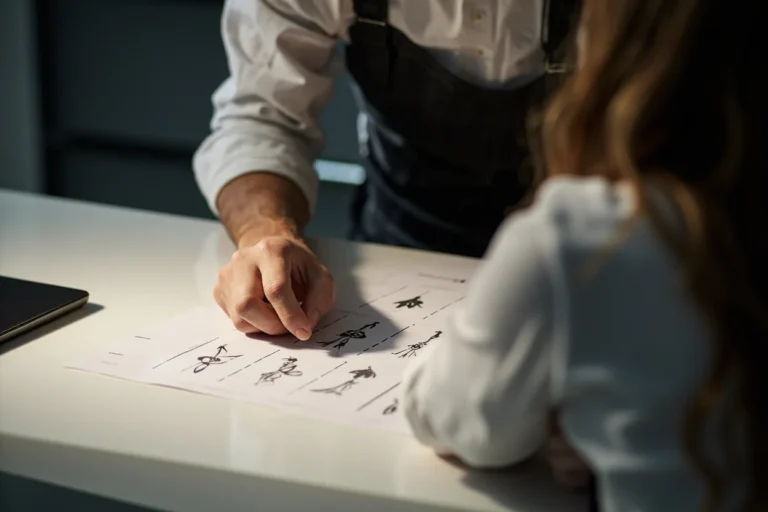
Ask specifically how they handle style. A portfolio full of bold traditional doesn’t mean they can nail a fine-line botanical. Ask if they’ve done your exact style recently and request healed photos, not just fresh shots. Fresh ink always looks great. Healed work tells you if the lines stayed crispy or faded into a blur, whether the black stayed saturated or went grey-green, and if the shading healed smooth or got patchy.
Ask about placement too. Tell them exactly where you’re putting it and ask how that spot takes ink. Ribs are spicy and the skin moves a ton. Fingers and hands are high-wear zones where fine line work blows out fast. A straight-up answer, not a sales pitch, means they actually care how your piece reads from across the room in five years.
Ask what they would change
The right artist will welcome your questions. The wrong one will rush you.
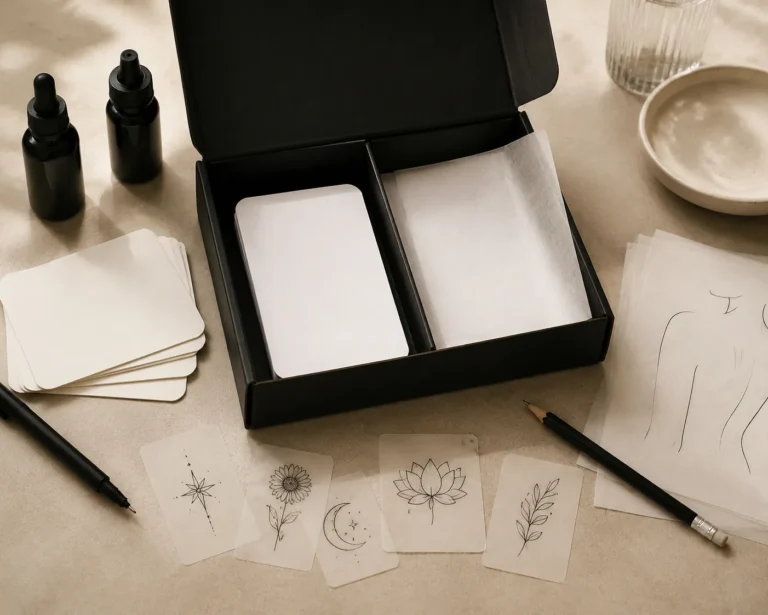
One of the best questions is simple: what would you change so this tattoo heals better? A good artist will talk about scale, line weight, placement, contrast, and simplification.
If the artist only says yes to everything, that can feel easy in the moment and expensive later.
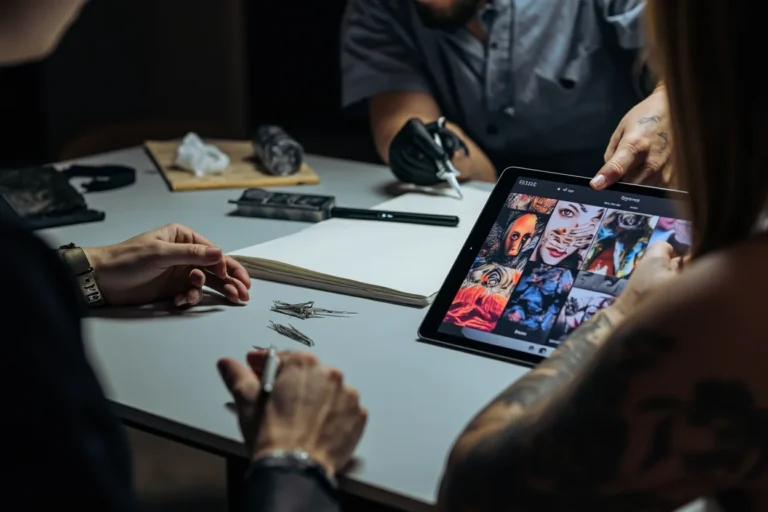
This question cuts through a lot of noise fast. Ask your artist what they’d tweak about the reference you brought in. A good artist will flag that fine line lettering on an inner bicep won’t hold, or that the detail in the reference is too tight for the size you want and will turn to mud in two years. They’re not talking you out of it, they’re saving the piece.
If they say nothing and just tell you it looks great, that’s a soft red flag. Artists who work in black and grey will often push you to scale up or simplify because bold will hold. Fine line artists should be honest about placement and sun exposure. You want someone who treats your skin like a long-term canvas, not a one-time transaction.
Booking checks
Use these before sending a deposit.
- Confirm the exact style and subject.
- Confirm the expected size and placement range.
- Confirm how design previews and revisions work.
- Confirm total estimate, deposit, and tip expectations.
Before you put any deposit down, confirm the shop’s deposit policy in writing. Most shops take a non-refundable deposit that locks in your date and goes toward your final cost. Standard deposits run $50 to $200 depending on the piece size. Ask if it transfers if you need to reschedule. Life happens, but most shops give you one reschedule with notice, usually 48 to 72 hours minimum.
Get clarity on the touch-up policy too. Reputable artists offer one free touch-up within the first two to three months of healing. Ask if that’s included. Also confirm the session length. A half-sleeve isn’t a two-hour job. If they’re quoting you a four-hour session for a dense black and grey piece, make sure you know whether that’s one sitting or multiple. Surprises on billing day are no fun.
Red flag answers
Be careful with artists who refuse healed-photo questions, dismiss placement risk, pressure you into booking immediately, or cannot explain why a design needs more size.
The conversation should make you more informed, not just more committed.
Watch out for an artist who agrees with everything you say without pushback. If you ask about a 1-inch portrait on a wrist and they say no problem, walk out. That level of detail at that size won’t survive two years of sun and friction. Same goes for anyone who can’t explain why your chosen placement is high-wear or how a design will age. Vague answers about ‘it depends’ without specifics mean they haven’t actually thought it through.
Price red flags cut both ways. Unusually cheap rates for complex work usually mean rushed sessions, light saturation, or skipped passes on shading. On the other end, an artist who can’t break down why a piece costs what it does is also a problem. You should be able to get a rough hourly rate or flat quote. Transparency on cost, session time, and aftercare tells you a lot about how they run their whole operation.