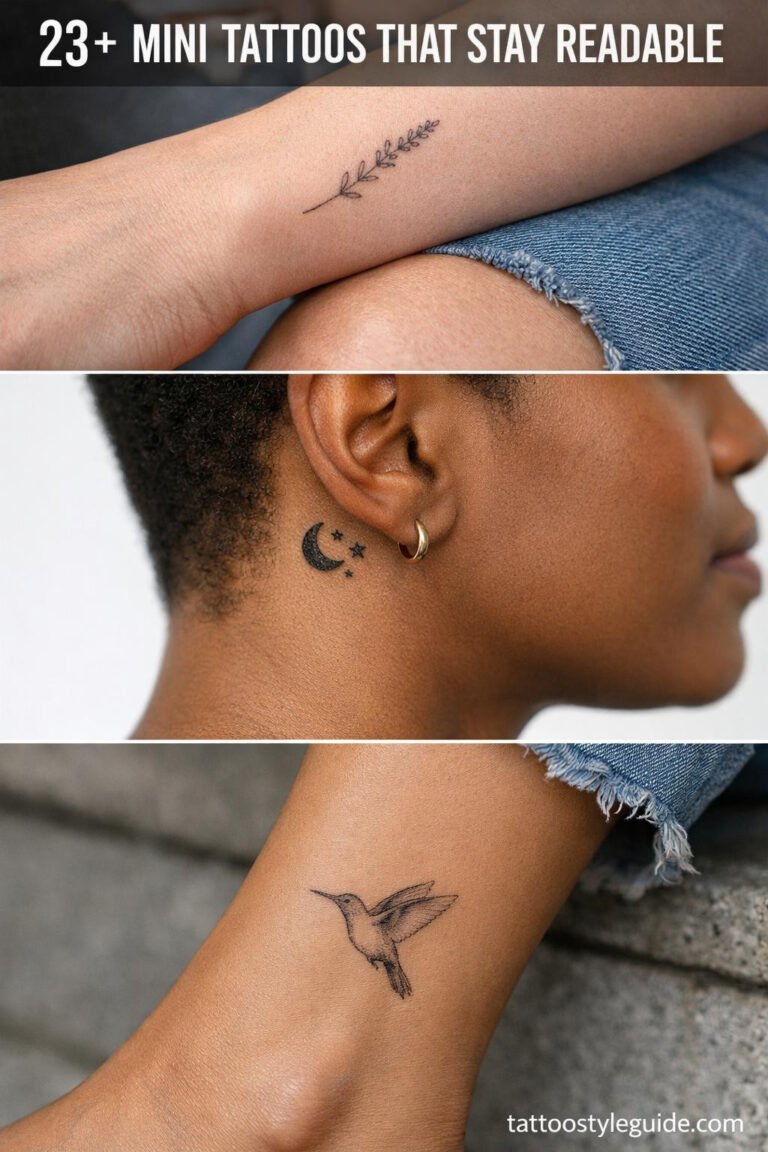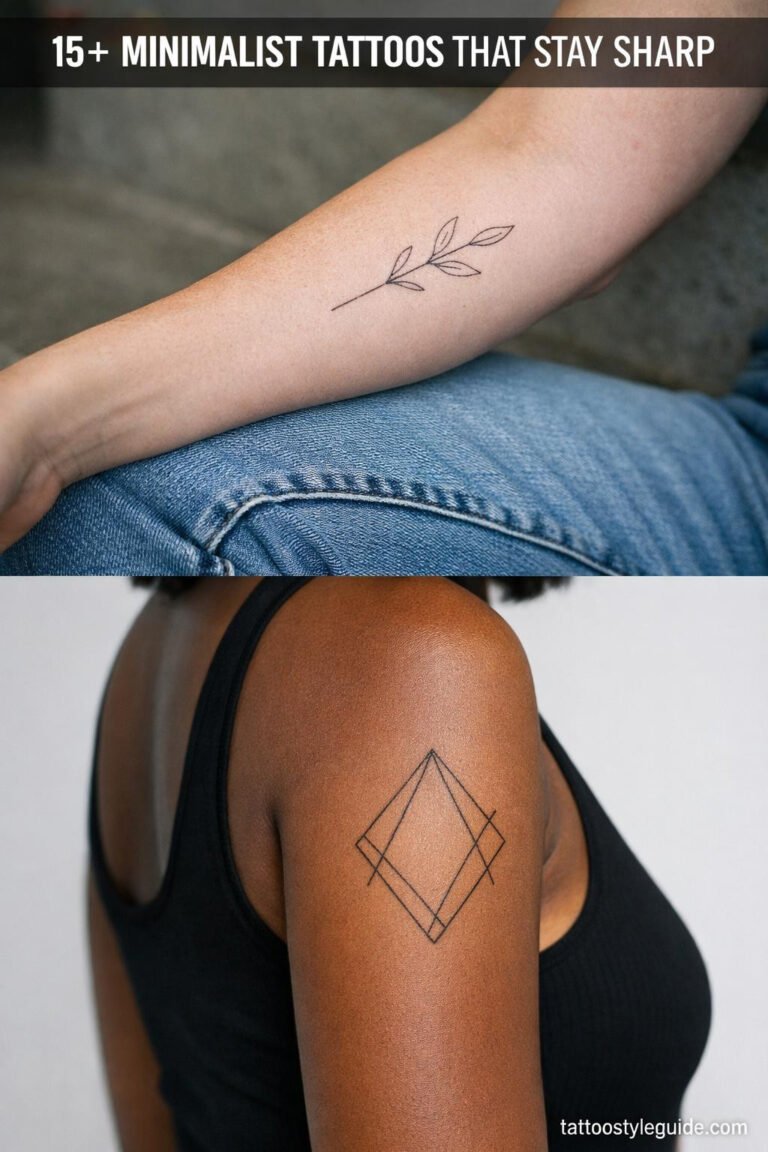
Your first tattoo does not need to be tiny. It needs to be survivable: readable after healing, placed where you can handle the pain, and personal without trying to explain your whole life in one inch of skin.
Quick answer: The best first tattoo ideas are simple, readable, and easy to place: small florals, clean symbols, short script, birth flowers, butterflies, stars, initials, fine line animals, or small traditional motifs on the forearm, upper arm, shoulder, calf, or thigh.
Best First Tattoo Placements
Start Where the Skin Cooperates
Start with a placement that gives both you and the artist room to work well. Outer forearm, upper arm, shoulder, calf, and thigh are usually more forgiving. Ribs, fingers, feet, sternum, and spine can be beautiful, but they ask more from a first-timer than you might want to give.
Outer forearm, outer bicep, and calf are the go-to spots for good reason. The skin tends to be flatter there, the artist has room to move, and the sensation stays manageable for most people. Thigh and upper back shoulder blade area also heal relatively fast and stay out of direct sun naturally. These zones generally have lower nerve density, so the pain stays in a range most newcomers can sit through without panic.
If you are choosing placement before design, read the tattoo placement chart.
What to Save for Later
Avoid inner wrist, ribs, and foot for your first piece. Inner wrist heals slower because of hand movement and constant friction from sleeves and desks. Ribs are genuinely difficult for many experienced collectors; for a newcomer, they can be overwhelming. Feet are high-wear zones, the ink breaks down fast, and touch-ups are common within the first couple of years. Start somewhere your artist can do clean, solid work while you learn what your own tolerance feels like.
First Tattoo Ideas That Age Better
What Actually Lasts
Bold black and grey outlasts fine line in most cases. A crispy bold outline with solid fill will still read from across the room in a decade or more. Fine line micro work looks stunning fresh but fades and spreads faster, especially on softer skin. If you want fine line, choose a firmer placement like the outer forearm, not the inner arm where the skin is looser and blowout risk is higher.
Simple shapes, single motifs, and clean blackwork age the best. A solid black geometric form, a small animal in black and grey, a minimal botanical. These do not rely on color saturation holding up over time. Color tattoos, especially pastels and white highlights, often need touch-ups to look intentional long-term. Start with something that will look deliberate when you are older than it does today.
Specific Ideas That Work
| Idea | Why it works | Best placement |
|---|---|---|
| Birth flower | Personal, visual, easy to scale | Forearm, shoulder, upper back |
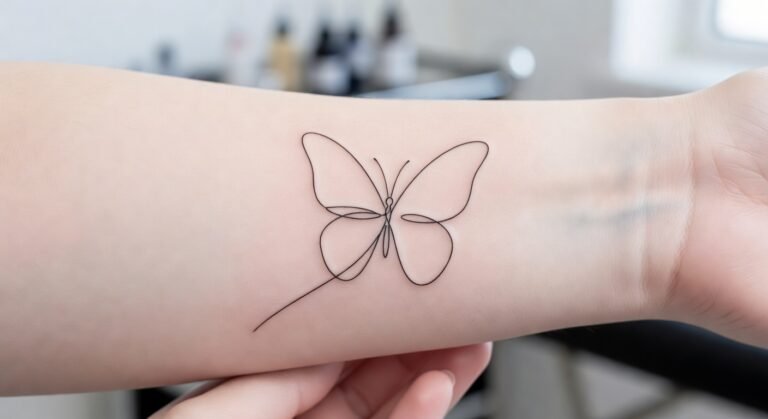
| Small butterfly | Symbolic without needing much text | Arm, ankle, upper back |
| Short script | Clean if sized correctly | Forearm, collarbone, ribs only if experienced |
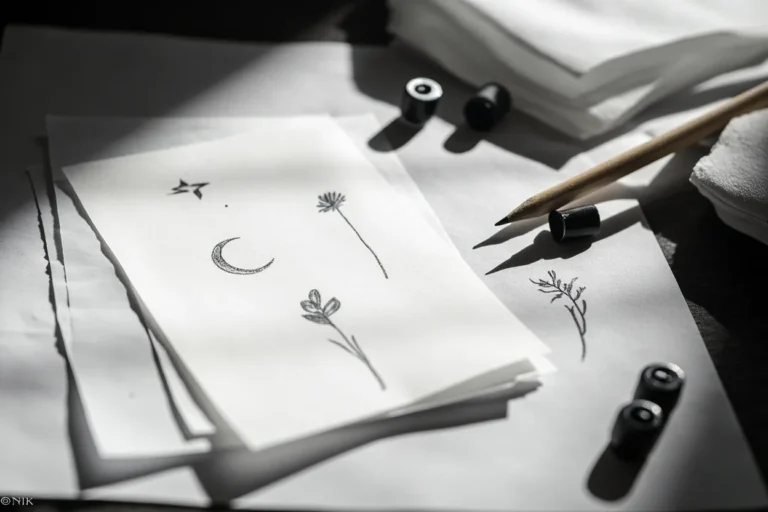
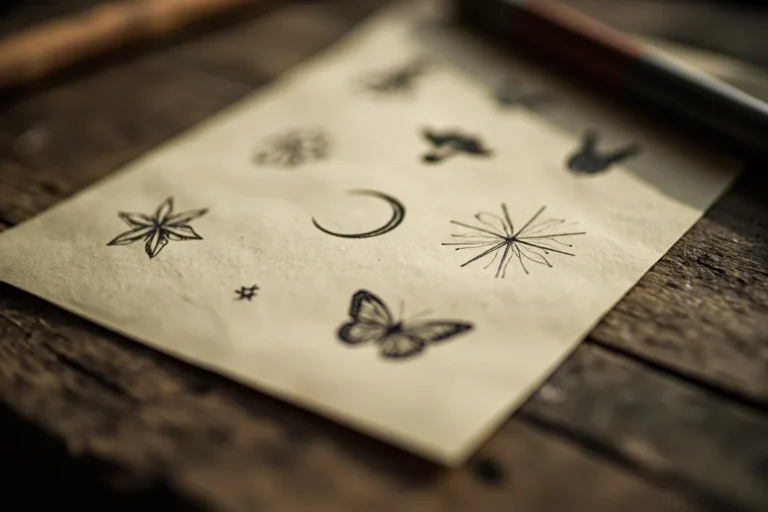
| Simple star | Readable at small sizes | Wrist, ankle, shoulder |
| Minimal animal | Works when the silhouette is clear | Forearm, calf, upper arm |
| Tiny traditional rose | Classic shape, strong outline | Arm, thigh, shoulder |
Do Not Make the First Tattoo Too Small
The Shrinking Trap
The classic first-tattoo mistake is shrinking the design until it feels emotionally safer. Then the lines sit too close together and the tattoo ages badly. Small is fine. Microscopic is the problem.
Letters need room. Petals need room. Animal faces need more room than people usually expect. If the artist says it needs to be larger, ask why. A good answer will mention line spread, skin movement, and readability over time.
Minimum Practical Sizes
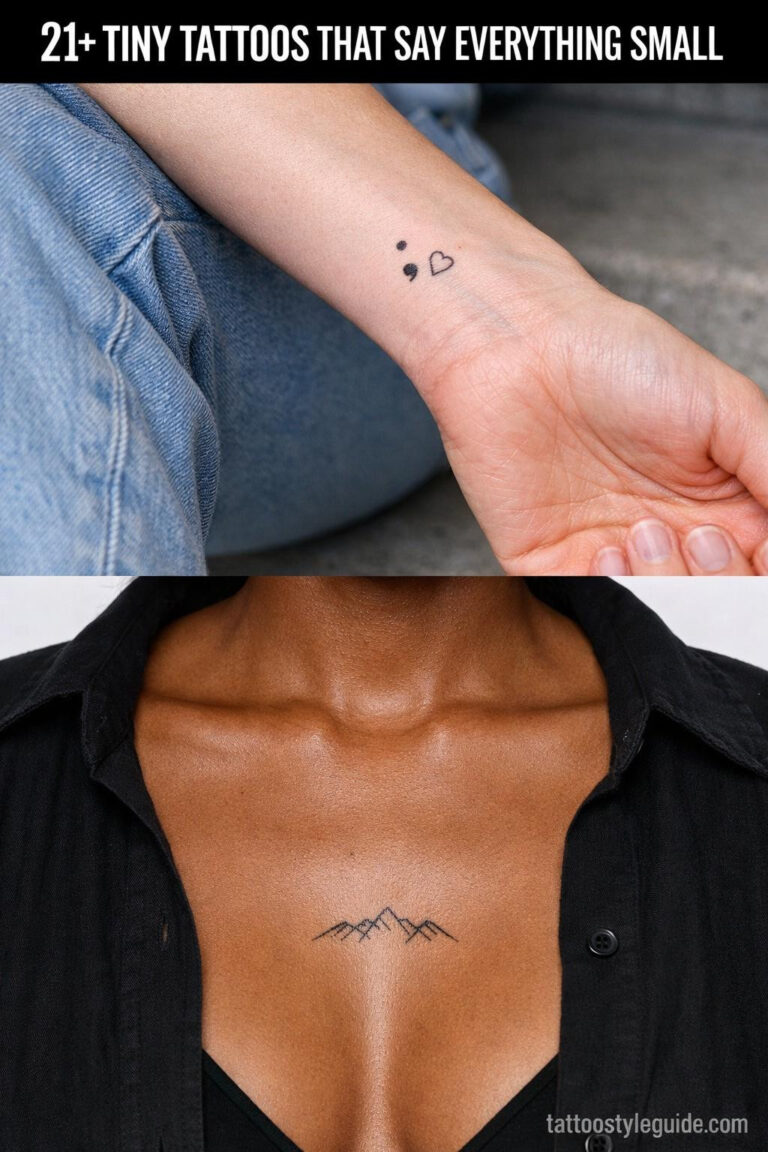
Anything under an inch is often a gamble on most body parts. That is not absolute, but it is worth treating as a strong guideline. Tiny designs look tight on paper and can blow out on skin. The lines need space between them or they migrate together as the skin heals and ages. A piece that is 1.5 to 2.5 inches gives your artist enough room to keep lines clean and details readable without cramming everything together.
The other issue is placement logic. A too-small tattoo on a large surface like the thigh or shoulder can look unfinished, like an afterthought. It reads as timid. Scale your design to the body part. A very small piece belongs on a finger or behind the ear, not on your forearm. If the design you love is tiny, your artist can often scale it up slightly without losing what makes it meaningful to you.
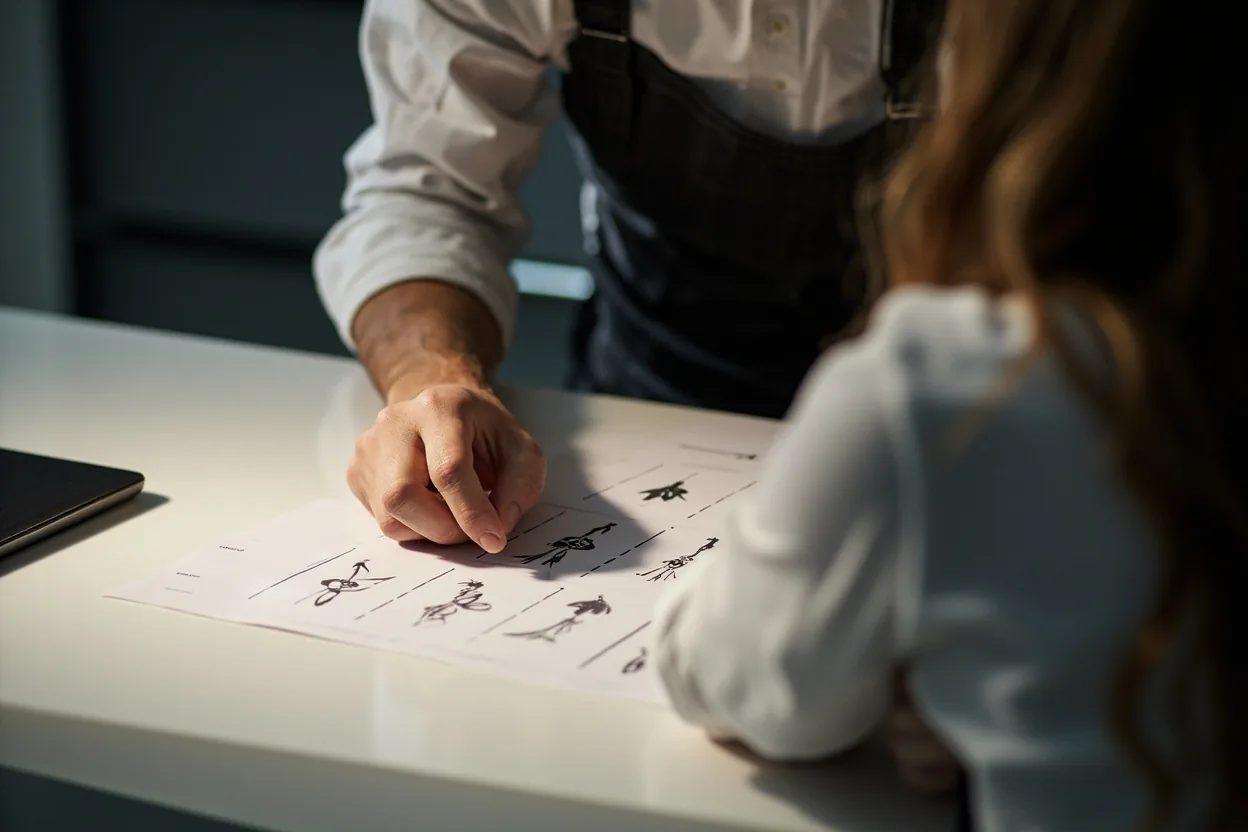
Book a consultation before committing. A good artist will resize and reposition your reference image on your actual skin so proportions work for your body, not just on paper.
Meaningful Without Overloading It
One Symbol, Done Well
A first tattoo can mean something without becoming a puzzle. One flower can carry a person. One date can carry a season. One small object can carry a memory. The more symbols you pack into a tiny design, the less readable it becomes.
For symbolic ideas, use the symbols and meaningful tattoos collection.
One strong symbol beats a collage of five weaker ones. Pick the single image that carries the most weight for you and let it breathe. A clean bird silhouette, a birth flower, a coordinate, a short word in a font that actually suits the meaning. You do not need to explain your whole life story in one tattoo. The best first tattoos are specific, not complicated.
If You Want Text
If you want text, keep it under six words and vet the font carefully. Script fonts blur in two to three years if the artist is not experienced with them. Block letters or simple serif type hold longer and stay legible. If it is a name or date, double-check the spelling and the numbers before the needle touches skin. Your artist will have you sign off on a stencil; read it twice.
First Tattoo Styles to Consider
Fine Line
Fine line works well for quiet pieces on stable skin, but choose the artist carefully. This style demands precision and a light hand. Not every artist who offers it does it well. Look for healed photos in their portfolio, not just fresh work.
Traditional
Traditional is a strong choice if you want a small tattoo that still reads years later. The bold outlines and limited color palette were developed specifically for longevity. A small traditional rose, dagger, or heart will outlast most trendy alternatives.
Blackwork and Black and Grey
Blackwork and black and grey rely on contrast and shading rather than color, which makes them naturally durable. A small geometric piece, a silhouette, or a simple mandala in solid black will hold its shape with minimal maintenance.
Single Needle and Micro Realism
Single needle and micro realism are popular now, but they are risky for a first tattoo. The detail is impressive fresh and disappointing faded. If you are drawn to this style, place it on outer forearm or calf where the skin is firmer, and accept that you may need refreshing work sooner than with bolder styles.
What to Remember
Your First Tattoo Is a Practice Run for Your Body
You are not just choosing a design. You are learning how your skin heals, how your pain response works, how you feel about permanence when it is no longer theoretical. Pick something you will not mind living with even if your tastes shift, because they will. The goal is not your perfect final tattoo. The goal is a good first tattoo that teaches you what you want next.
Start simple. Start where it heals. Start with an artist who shows you healed work without you asking. The rest you can build from there.
Frequently Asked Questions
How small is too small for a first tattoo?
Under one inch is risky for most body parts. Lines need space to stay distinct as skin ages and heals. Aim for 1.5 to 2.5 inches to give your artist room for clean work that lasts.
What is the least painful spot for a first tattoo?
Outer forearm, upper arm, and calf are usually the easiest for newcomers. They have flatter skin and lower nerve density. Ribs, feet, and inner wrist are significantly more intense.
Do fine line tattoos last?
Fine line fades faster than bold work. It can last with good placement on firmer skin and proper aftercare, but expect it to need refreshing sooner than traditional or blackwork styles.
How much should a small first tattoo cost in the US?
Most reputable shops charge $100 to $250 for small first pieces. Prices below this range often mean the artist is less experienced or cutting corners on setup and materials.
Should my first tattoo have deep meaning?
It should matter to you, but it does not need to carry your entire life story. One clear symbol or word you genuinely connect with is better than a crowded design trying to say everything at once.