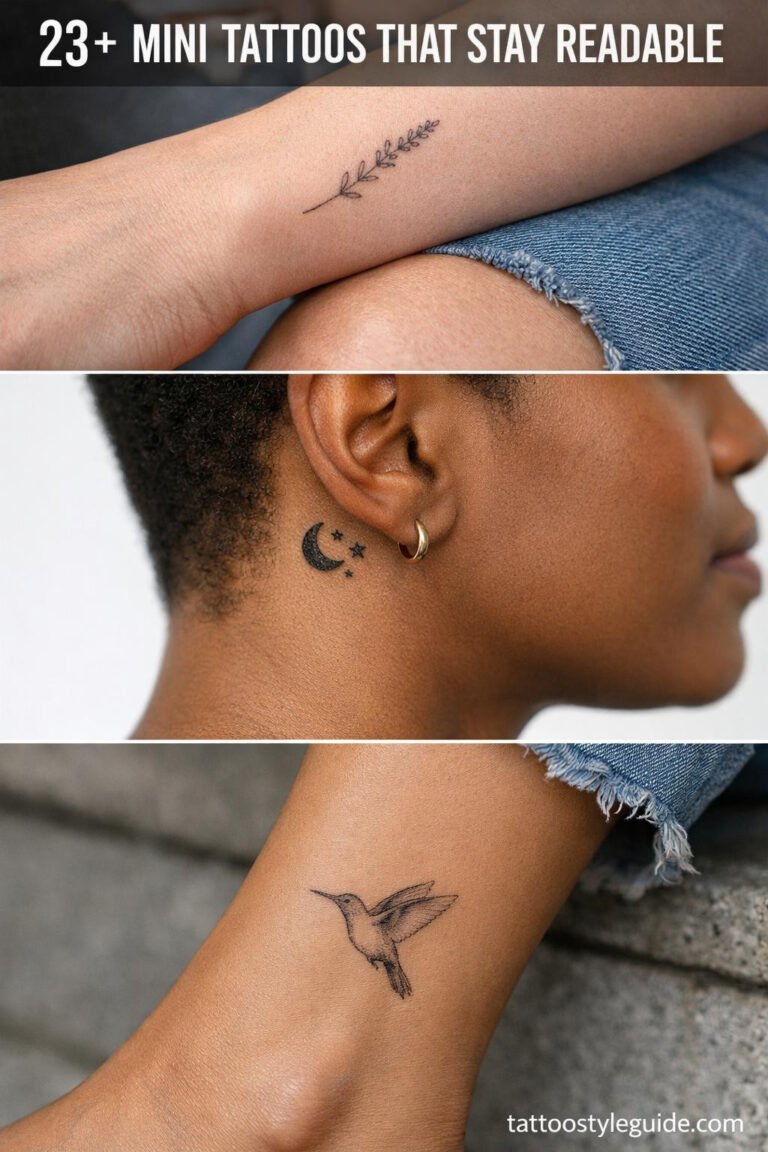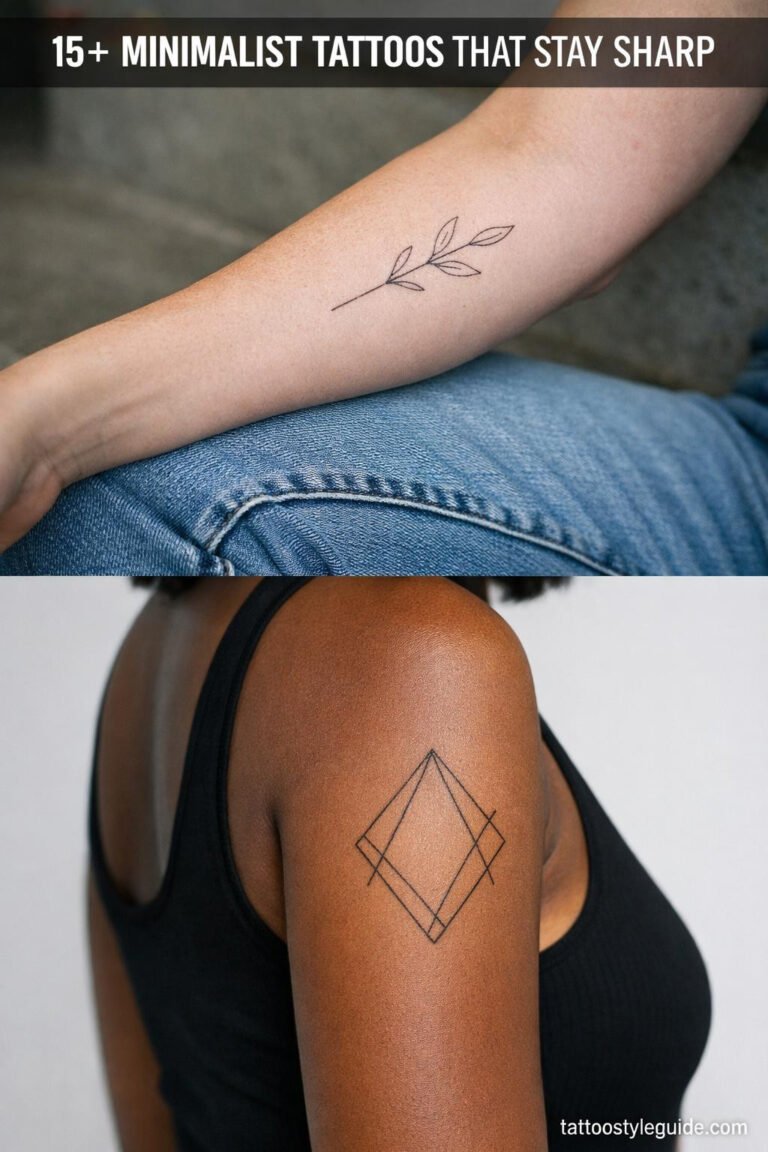
Small tattoo ideas for women need more planning than people think. The size feels low-risk, but the design has less room to age. Tiny can be beautiful. Tiny can also become a soft blur if the artist has to squeeze too much meaning into too little skin.
Quick answer: The best small tattoo ideas for women are clean symbols with enough spacing: birth flowers, butterflies, tiny stars, short script, dates, fine line animals, moons, initials, small traditional roses, or minimalist shapes placed on the wrist, arm, ankle, rib, shoulder, or behind the ear.
Understanding Small Tattoo Scale
There is a floor to how small any tattoo can go and still hold up. Thin lines packed too close together will blur into a grey smudge within three to five years, sometimes faster on soft skin. A solid minimum for most designs is about the size of a quarter. At that scale, a skilled artist can still get clean, crisp lines that read clearly and age without turning into a blob.
Fine-line work at half-inch scale is a technical nightmare for healing too. Skin moves, swells slightly during the tattoo, and settles differently after. What looks perfect on the day can spread just enough to muddy the detail. Ask your artist what their personal minimum size is for the style you want. Any honest artist will tell you straight rather than take your money for something that will not survive two years.
Small tattoos should pass the two-foot test: if someone standing near you cannot understand the main shape, it may be too small. This is not about other people’s opinions. It is about whether the design has enough clarity to communicate its own form without you explaining it every time.
Best Placements and What Each Demands
Wrist and Inner Forearm
The wrist is visible, which is either the point or the problem depending on your work and life. Inner wrist skin is thin and sits over tendon and bone, so the tattoo will sting more than fleshy areas, though the session is usually brief. Sun exposure here is constant, and sunscreen becomes non-negotiable once healed. The wrist also flexes and twists all day, which means the ink settles under more mechanical stress than a static placement like the upper back.
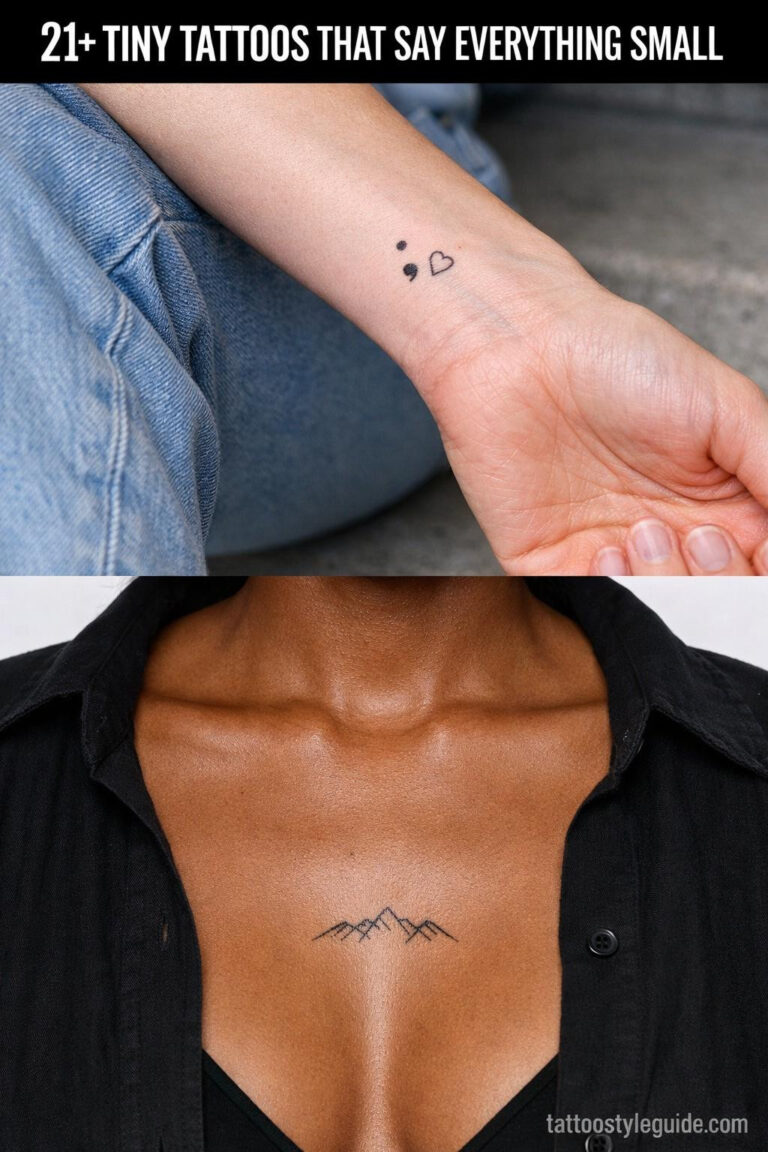
Words, single symbols, and tiny flowers work here if they are bold enough. Script on the wrist tends to age poorly if the letters are too thin; the skin’s natural creases cross the text and break it up over time. A symbol with solid fill or a small flower with clear petal shapes holds better than a line drawing.
Rib Cage
Ribs hurt. The skin is thin, the bone is right underneath, and every breath moves the canvas. Artists who work ribs regularly know how to stretch the skin properly and time their strokes with your breathing, but there is no way around the discomfort. The tradeoff is that rib skin holds fine detail remarkably well once healed, and the area stays mostly hidden from sun, which preserves color and line integrity longer than exposed placements.
Script runs vertically along the rib curve can look elegant, but the line must follow the body’s natural flow or it reads as awkward. Butterflies and stem-style florals are common here because their vertical or diagonal shapes complement the rib line rather than fighting it.
Ankle and Lower Leg
The ankle is a deceptive placement. It looks delicate and feminine in photos, but socks and shoes rub against it constantly. An ankle tattoo needs a full four to six weeks before you return to tight boots or high-tops, and even then, the friction never fully stops. The ankle bone itself is painful to tattoo over, and the skin there is tight with little padding.
Stars, small ornamental marks, and simple flowers placed above the sock line or on the outer ankle tend to survive better than anything on the inner ankle or directly over the bone. If you live in sneakers, reconsider this spot or accept that touch-ups will be part of the long-term plan.
Behind the Ear
This placement is almost entirely about the gesture of having it rather than the detail of the design itself. The area is small, curved, and difficult to stretch properly. Most artists will steer you toward a simple symbol rather than anything with interior detail because the space is too limited and the angle too awkward for precision work.
Healing behind the ear is complicated by hair, glasses, and headphones. The skin is thin and prone to irritation. If you are drawn to this spot, choose something that reads as a clean shape from a few feet away, not a miniature masterpiece meant to be examined up close.
Design Ideas That Actually Work Small
Single-needle botanical pieces, small geometric shapes, Roman numerals, single words in clean script, tiny animals with simple silhouettes, and minimalist symbols all translate beautifully at small scale. The key is designs with strong negative space and clear contrast. A filled black crescent moon reads from across the room. A hyper-detailed mandala crammed into two inches turns into mud by year three.
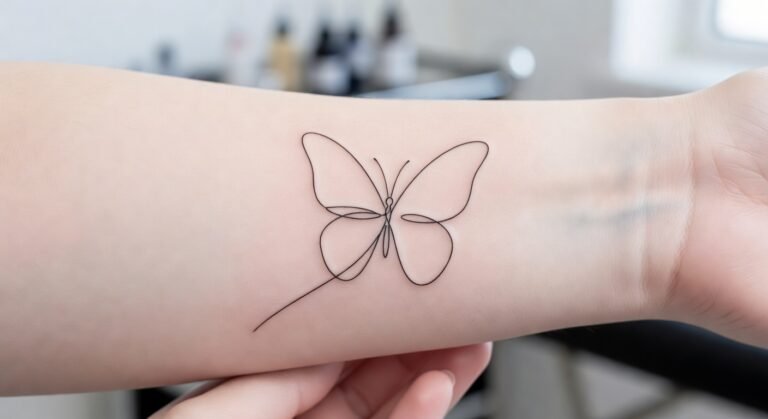
Birth flowers are personal without needing text. A small lily of the valley or marigold rendered simply carries meaning for the wearer while remaining legible to others as a flower. Butterflies work if the wing detail is restrained; too many interior lines and the wings collapse into each other within a few years. One-word script is better than a full quote every time. The word has room to breathe, and the artist can use a font weight that survives aging.
Tiny traditional roses are stronger than many fragile floral sketches. Traditional tattooing developed its bold outlines and limited color palette partly because those designs were meant to last on sailors and soldiers without touch-ups for decades. That visual DNA still works. A small traditional rose with a black outline and simple red or yellow fill will outlast a photorealistic rose drawn with three-needle greywash every time.
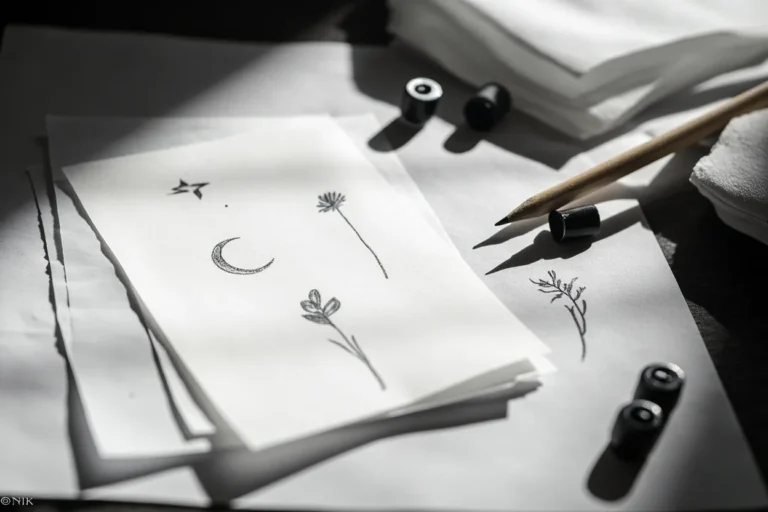
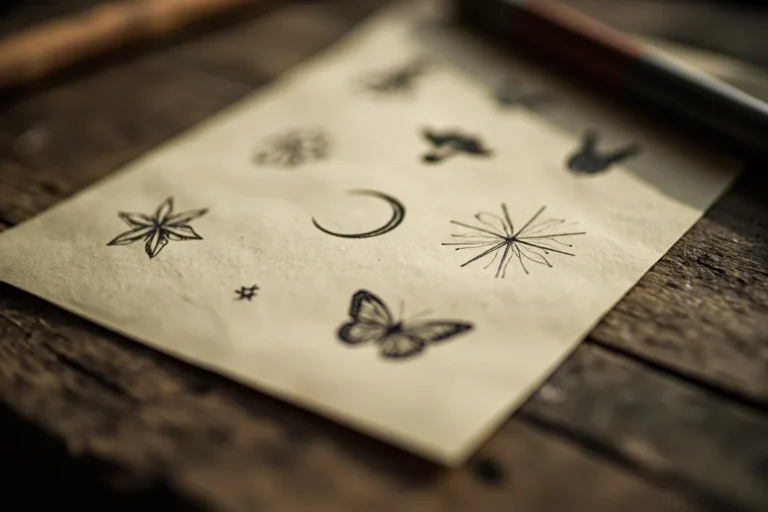
Initials and dates are clean if the spacing is generous. Moons and stars are simple, flexible, and easy to place on almost any body curve. Minimalist shapes, triangles, circles, and small arrows have the advantage of being readable even if the lines soften slightly with age.
What to Avoid at Tiny Scale
Realistic portraits, detailed mandalas, intricate lace patterns, fine-line galaxy scenes, and anything with gradual color fades all fall apart at tiny scale. Realism needs surface area to build value and depth. Compress that into a postage-stamp size and you lose the contrast that makes it read as realistic at all. It just looks smudged and unfinished two years in.
Watercolor-style pieces without a solid black outline are another one to skip at small sizes. The color bleeding that gives watercolor its dreamy look turns into actual blowout when the ink has nowhere to contain it. Without a bold line to anchor the edges, those washes spread into surrounding skin and the piece loses its shape fast. If you love the watercolor look, go bigger or ask your artist to add a subtle black outline to keep the edges honest.
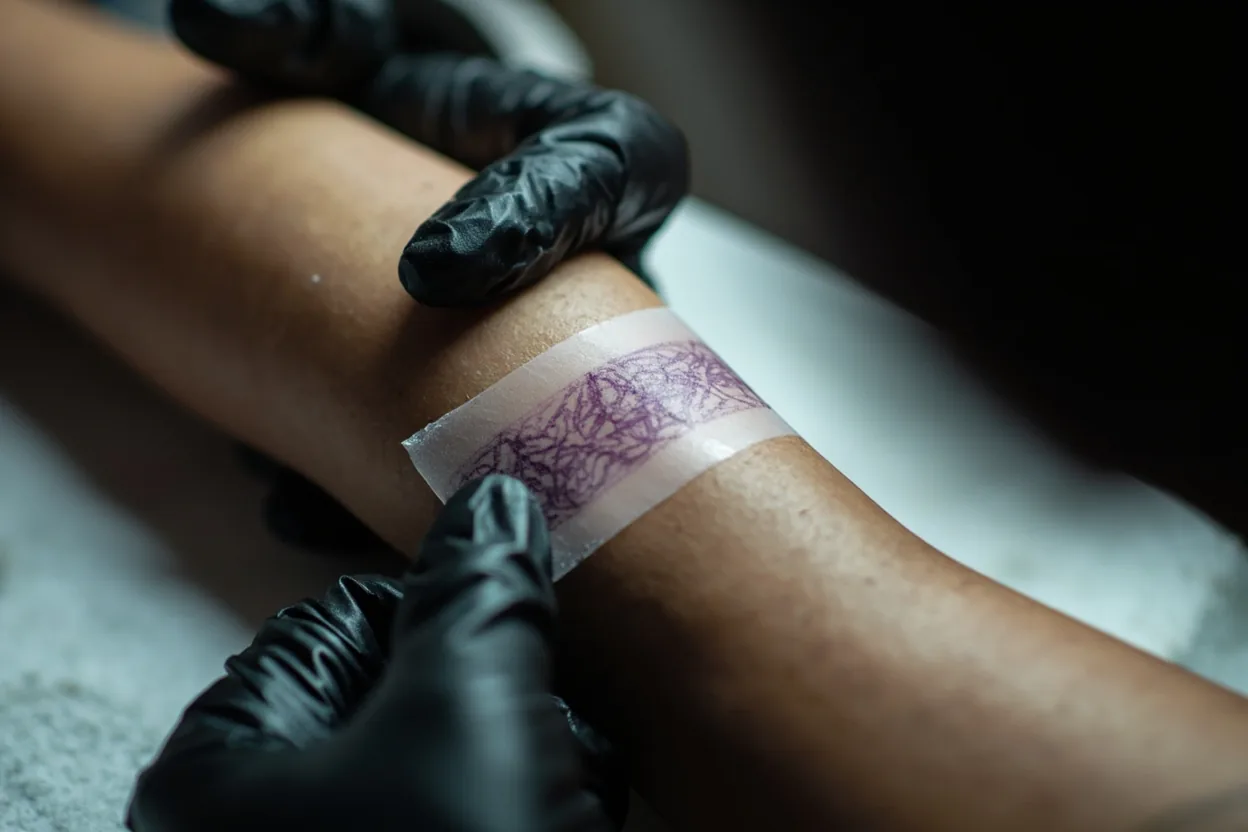
Micro portraits, crowded bouquets, long quotes, tiny pet faces, and detailed mandalas should be avoided unless the artist can show you healed examples at that exact scale on similar skin. The tattoo may look perfect fresh and then soften into a mark that only makes sense when you explain it. Bring your artist a photo of the exact body part in natural light so they can wrap the design around your bone structure before ever touching a stencil. This small step prevents the awkward stencil surprise that happens when a flat design is applied to a curved surface without adjustment.
Before You Decide
Small tattoos carry a paradox: they feel less serious because of their size, but they are harder to execute well and more prone to aging poorly than larger work. The artist you choose matters enormously. Look for healed photos of small pieces in their portfolio, not just fresh work. Ask about their minimum size for the style you want, and believe them if they say something needs to be bigger.
Consider placement in terms of your actual daily life, not just the mirror. A wrist tattoo is there in every job interview, every family photo, every formal occasion. A rib tattoo is hidden but will hurt more and cost more in session time because of the difficulty. An ankle tattoo looks cute with summer sandals but lives under wool socks for half the year in colder climates.
Think about the long arc. A small tattoo that ages gracefully into a soft but still readable shape is a success. A small tattoo that becomes a grey smudge you need to explain is a lesson in why scale matters. The best small tattoos are not the ones with the most meaning packed into the least space. They are the ones with enough clarity and breathing room to stay honest over time.
Frequently Asked Questions
What is a good small tattoo for a woman?
A good small tattoo is a clean symbol with strong contrast and enough spacing to age well: birth flowers, butterflies with restrained detail, one-word script, small traditional roses, moons, stars, or initials. The design should pass the two-foot test and suit the specific placement you have chosen.
How small is too small for a tattoo?
Most designs need to be at least the size of a quarter to hold crisp lines over time. Anything under half an inch risks blurring into a grey smudge within a few years, especially for fine-line work. Ask your artist for their personal minimum based on the style you want.
Do small tattoos hurt less?
Small tattoos hurt less in total duration because the session is shorter, but the pain level depends on placement, not size. Ribs and behind the ear hurt regardless of how small the design is. Wrist and ankle are moderate. The needle sensation is the same; you simply endure it for fewer minutes.
How much does a small tattoo cost?
In the US, small tattoos typically range from $80 to $250 depending on the artist’s hourly rate, the detail involved, and the shop’s minimum charge. Highly experienced artists may charge more even for small work because of their technical precision and demand.
How do I keep a small tattoo from fading?
Keep it out of sun while healing, then use SPF 30 or higher on exposed placements like wrist and ankle for life. Avoid friction from tight clothing and shoes during healing. Follow your artist’s aftercare exactly, and do not pick at scabs. Moisturize regularly once healed.