A phoenix tattoo is a rebirth symbol, but the best versions make that transformation visible. Wing shape, flame direction, body curve and placement decide whether the tattoo feels like survival, revenge, renewal or a clean second life.
Quick answer: A phoenix tattoo usually means rebirth, survival, transformation, renewal and rising after loss. Large back, rib, thigh, chest and sleeve placements give the wings and flames enough room to carry the story without cramping the design.
What the Phoenix Actually Means
The phoenix carries weight because the story is simple and severe. A bird burns, dies, and returns from its own ashes. That cycle of destruction and return is why people choose it after grief, burnout, illness, divorce, sobriety, career collapse, or any moment where the old life stopped working.
The symbol appears across several traditions, most often linked to Greek and Egyptian sources, though Persian and Chinese mythology contain similar fire-bird figures. Tattoo artists rarely reference a specific myth. They reference the feeling: something ended, something began again.
This matters because a phoenix is never a neutral decoration. It is a before-and-after tattoo. The question is which part of the story you want to emphasize: the burning, the rising, the surviving, or the flying away.
Rebirth and Renewal
Most people choose the phoenix for rebirth. The bird rises, and so do you. This reading works best with upward wing angles, bright color at the wing tips, and the body positioned as if pushing through something rather than resting above it.
The renewal angle is quieter. It suggests not a dramatic rescue but a slow return to function. A phoenix for renewal might use softer curves, less aggressive flame shapes, and placement somewhere you see privately rather than announce publicly.
Survival and Resilience
Survival phoenix tattoos often read darker. The bird is intact but visibly marked. Blackwork, heavy shadow, and charred feather details suggest the fire cost something. This version suits people who do not want to look triumphant. They want to look like they are still here.
Resilience is the middle ground. The phoenix does not rise in glory. It rises because it has no other choice. That tone comes through in body posture: wings spread but not fully open, head turned back toward the flames rather than forward into sky.
Fire and Destruction
Some designs emphasize the burning itself. This is the riskiest meaning because it can read as self-destruction rather than transformation. If you want the fire to matter, the bird must be visible within it, not swallowed by it. The flames should frame the body, not replace it.
How Composition Changes the Story
The phoenix is dramatic by nature. Good composition keeps the drama readable instead of turning it into a fire-shaped tangle.
| Composition | Meaning angle | Best placement | Risk to avoid |
|---|---|---|---|
| Rising phoenix | Rebirth, comeback, survival | Back, rib, thigh, sternum | Wings too cramped to read |
| Phoenix in flames | Transformation, ending and beginning | Upper arm, chest, calf | Flames swallowing the bird |
| Blackwork phoenix | Survival, discipline, darker renewal | Forearm, shoulder, back | Feathers merging into one mass |
| Color phoenix | Fire, life, visibility, power | Thigh, back, sleeve, chest | Red/orange with no dark structure |
| Small phoenix | Private reset, compact symbol | Inner arm, ankle, shoulder | Too much detail for the size |
A phoenix tattoo earns its meaning when the fire looks like it costs something. Flat flames read as decoration. Asymmetrical flames, dark body core, and feathers that seem to be coming apart and re-forming suggest actual transformation.
Why Scale Matters More Than Most Tattoos
Phoenix tattoos need room because wings, tail feathers and flames all compete for attention. If the tattoo is too small, every part becomes a decorative curve and the bird disappears.
For a large phoenix, back, thigh, ribs, chest and full upper arm are strong choices. The wings can open fully. The tail can trail. The flames can wrap without crowding.
For a medium phoenix, use fewer feathers and a cleaner flame shape. Simplify the tail. One wing raised and one folded can suggest motion without demanding the full span.
For a small phoenix, consider a silhouette or single winged form. A detailed feathered phoenix on a wrist or ankle will blur within a few years. The design should read from a normal distance. If someone needs to stand six inches away to see the bird, the tattoo is probably too detailed for its size.
Artist tip: Build your color palette from charred blacks and deep reds at the body core, graduating outward to amber, gold, and white-hot tips. Without that gradient, the fire reads flat and the rebirth symbolism collapses visually.
Color, Black and Grey, and Aging
Red, orange and gold make sense for a phoenix, but warm colors soften over time. Dark linework, shadow or black feathers help the fire stay sharp. A watercolor phoenix can look beautiful fresh and weak healed if the design has no skeleton. If you want painterly color, ask how the artist keeps the bird readable after the glow fades.
Black and grey phoenix tattoos can age very well because the shape carries the meaning. You lose the fire color, but you gain seriousness and contrast. A blackwork phoenix with careful negative space for feather texture often looks sharper at ten years than a color piece with no dark structure.
Warning: People size the phoenix too small for the detail it demands, then wonder why the feathers and flames blur into a muddy blob within five years.
Placement and Privacy
The back is the classic large phoenix placement because the wings can open fully. Ribs and sternum work for a vertical rising bird. Thigh and calf give room for flame and tail movement.
Forearm phoenix tattoos are possible, but the design must be narrow and disciplined. A full winged phoenix on a small forearm often feels squeezed. Consider a partial wing, a head and flame burst, or a stylized silhouette instead.
If the tattoo is about a private survival story, rib, upper thigh or back shoulder can carry that without making the tattoo a public announcement every day. These placements also hurt more, which some people treat as part of the meaning. The pain is not the point, but it is not irrelevant either.
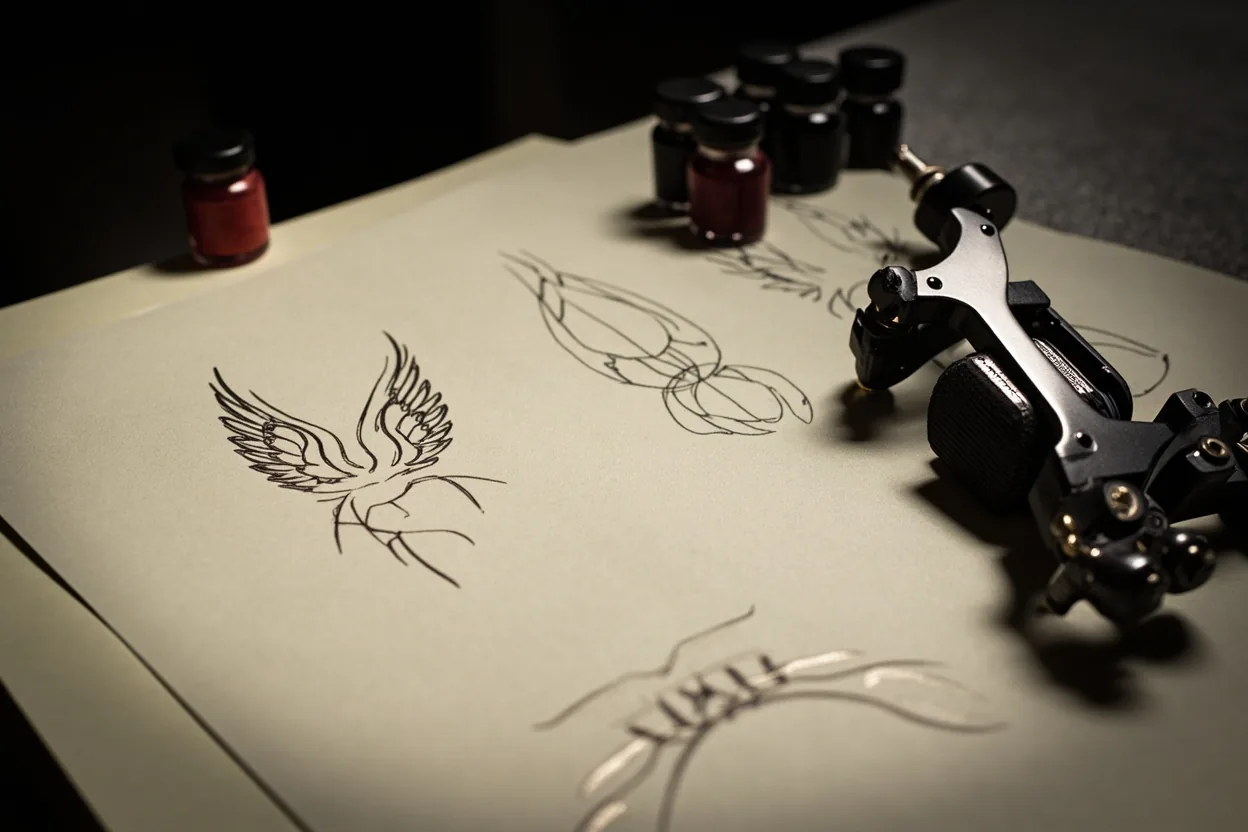
Artist brief: Ask the artist to block the phoenix as one readable silhouette first. Wings, tail and flames should support the rise, not compete for the same space.
How to Choose Your Artist
Not every artist who does good color work can handle a phoenix. The subject requires understanding of bird anatomy, flame flow, and how to make both read as one creature rather than a bird with fire pasted on top.
Look for healed photos, not just fresh work. Red and orange look electric on day one. The question is whether you can still see feather separation and body structure after the skin settles. Ask specifically about their approach to dark structure beneath bright color. If they do not have a clear answer, keep looking.
For black and grey, examine their contrast range. A phoenix needs true blacks, clean greys, and bright skin breaks for highlights. If their portfolio reads as mid-tone mush, the feathers will merge and the fire will disappear.
Before You Decide
The phoenix is one of the most loaded symbols in tattoo culture. It means nothing if your artist does not nail the flame transition from dark base tones to bright tips, because flat fire reads as decoration, not transformation.
Before you book, decide which part of your story the tattoo carries. Burning, rising, surviving, or starting clean. Pick the composition that matches. Size it honestly for the detail you want. Choose an artist with healed phoenix work in their portfolio, not just fresh photos. And give the bird enough room to breathe. A cramped phoenix is a pretty bird. A spacious phoenix with proper structure is a story you will still recognize in twenty years.
Frequently Asked Questions
What does a phoenix tattoo symbolize?
It usually symbolizes rebirth, survival, transformation, renewal, fire and rising after loss or a hard season. The specific meaning depends on composition: upward wings suggest rebirth, blackwork suggests darker survival, and flames framing the bird suggest transformation through destruction.
Where does a phoenix tattoo look best?
Back, ribs, chest, thigh, calf, sleeve and upper arm are strong because the wings and flames need space. Forearm and ankle are possible only with simplified silhouettes, not detailed feathered designs.
Should a phoenix tattoo be color or black and grey?
Color gives the fire story more force, while black and grey often ages cleaner and feels more serious. Both work if the silhouette is strong and has dark structure beneath any bright color.
How big should a phoenix tattoo be?
Large enough that wings, tail and flames read as separate elements from a normal viewing distance. Most detailed phoenix designs need at least palm-sized area or larger. Small placements require severe simplification to avoid blurring.
How do I find an artist for a phoenix tattoo?
Look for healed photos in their portfolio, not just fresh work. Ask how they handle dark structure beneath bright color, and whether they block the design as one readable silhouette before adding detail.