
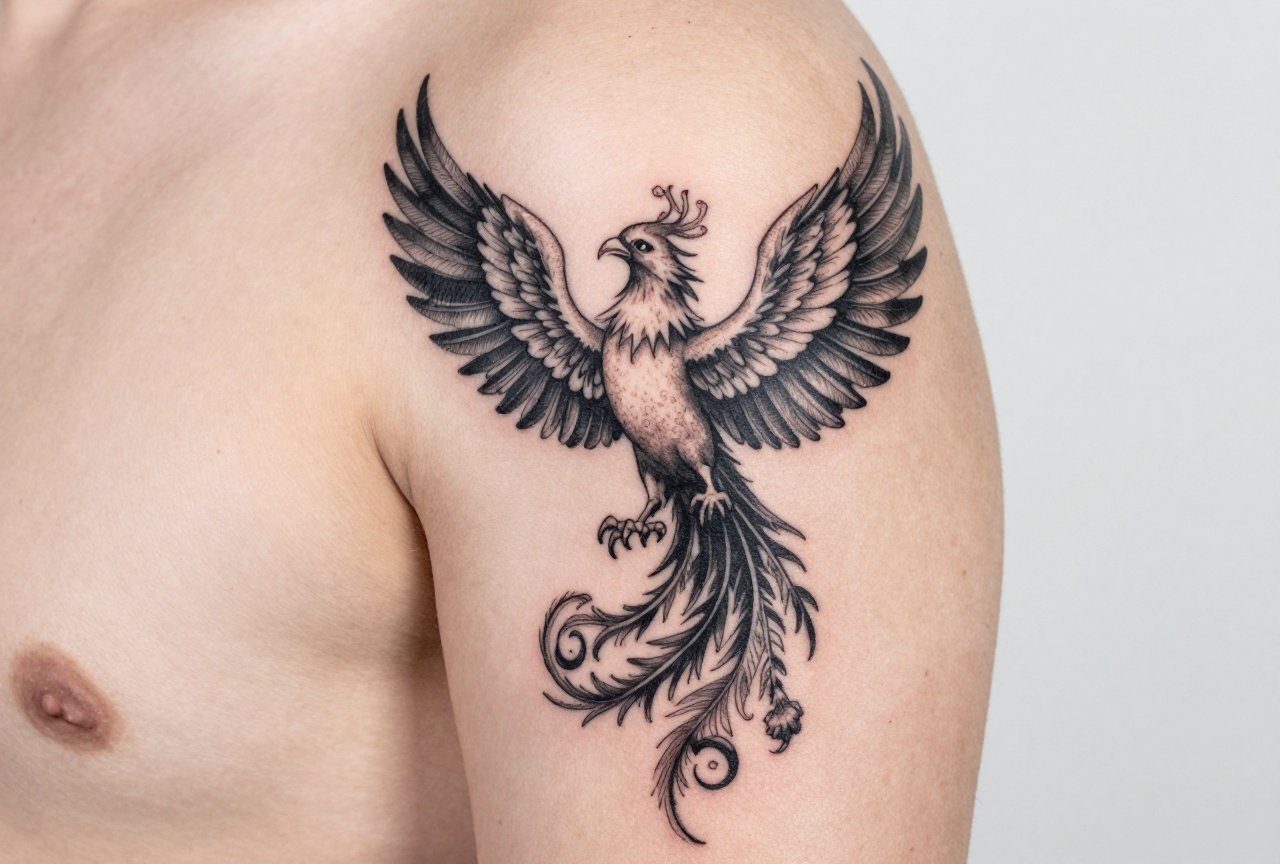
A phoenix tattoo represents rebirth, resilience, and the power to rise from life’s ashes stronger than before. This legendary firebird symbolizes transformation after destruction, making it one of the most emotionally charged designs in tattoo culture. People choose this image to mark survival, personal growth, or the courage to begin again after hardship.
Symbolism & History
The phoenix carries ancient roots across multiple civilizations. Greek mythology described a single bird that lived for centuries, then burned itself in flames and emerged renewed from its own ashes. Egyptian tradition linked it to the sun god Ra and the cycle of death and rebirth. Chinese culture honored the fenghuang as a symbol of virtue and grace, while Native American legends featured thunderbirds with regenerative powers.
These cross-cultural connections give the phoenix universal appeal. The core symbolism remains consistent: destruction is not final, and endings create space for new beginnings. Tattoo collectors often connect this meaning to specific life events such as overcoming addiction, surviving illness, ending toxic relationships, or rebuilding after financial ruin. The bird does not simply survive; it transforms into something more magnificent through its trials.
Color adds layers of meaning. Traditional red and orange flames emphasize passion and intensity. Gold accents suggest triumph and divine blessing. Black and grey versions focus on the somber reality of what was lost before the rebirth. Some designs incorporate clocks, hourglasses, or calendars to mark specific moments of transformation.
Common Variations & Styles
Artists interpret the phoenix through diverse visual approaches:
- Traditional American: Bold outlines, limited color palette, simplified flames with strong graphic impact
- Japanese Irezumi: Flowing composition with cherry blossoms, wind bars, or waves integrated into the design
- Realistic/Photographic: Detailed feather rendering with dramatic lighting effects on flames
- Geometric/Abstract: Angular shapes forming the bird silhouette, often with sacred geometry elements
- Watercolor: Splashed pigments suggesting flames without hard outlines, softer and more ethereal
- Neo-traditional: Modern color saturation with classic tattoo structure and ornamental details
Some collectors choose the phoenix paired with complementary imagery. A phoenix and dragon combination represents balance of masculine and feminine energies. Paired with a lotus, it emphasizes spiritual awakening rising from muddy waters. The ouroboros serpent eating its tail alongside a phoenix creates a powerful cycle-of-life statement.
Best Placements
The phoenix demands space for proper visual impact. Its wingspan and flame trails require room to breathe. Popular placements include:
- Full back: Maximum canvas for wingspread and trailing fire; allows narrative composition
- Chest to shoulder: Asymmetrical flight path across the torso, heart-centered symbolism
- Thigh: Vertical rising composition, easily concealed for professional settings
- Forearm sleeve: Wraparound flames with the bird emerging upward
- Ribcage: Intimate placement for personal transformation stories
Smaller designs work on wrists or ankles but sacrifice the dramatic wing expansion that makes this subject iconic. Discuss scale with your artist; a phoenix compressed too small loses its essential grandeur.
Who Chooses This Tattoo / Personal Meanings
Phoenix collectors span demographics but share common psychological threads. Survivors of trauma often select this design to reclaim agency over their narrative. The tattoo becomes a permanent declaration that suffering did not define them. People navigating major career pivots or relocations use it to mark intentional reinvention. Others commemorate the memory of loved ones, interpreting the rebirth as spiritual continuation.
Gender expression varies by design approach. Women frequently choose flowing, graceful poses with extended tail feathers suggesting movement. Men often prefer aggressive stances with talons extended and wings beating upward against resistance. These are trends, not rules; the symbolism transcends gender boundaries entirely.
Timing matters for this tattoo. Many collectors wait until they have genuine distance from their hardship, ensuring the design celebrates completed transformation rather than ongoing struggle. Others get tattooed during the darkest moments as a commitment to eventual emergence. Both approaches carry validity.
Similar Symbols
Collectors considering phoenix imagery sometimes explore related symbols:
- Butterfly: Lighter transformation metaphor, less emphasis on destruction prerequisite
- Koi fish: Perseverance against currents, particularly in Japanese tradition
- Snake shedding skin: Direct renewal without the fire element of total destruction
- Scarab beetle: Ancient Egyptian rebirth, solar connections
- Tree of life: Cyclical growth, roots and branches suggesting interconnected resilience
The phoenix distinguishes itself through its explicit embrace of catastrophic loss as necessary prelude to renewal. No other symbol so dramatically insists that burning everything down can be the path forward.
Final Thoughts
The phoenix endures in tattoo culture because it addresses universal human experience. Everyone faces moments when previous versions of themselves become unsustainable. This design honors the courage required to let those versions burn. It acknowledges that rebirth hurts, that rising from ashes is not gentle, and that the new self emerging may be unrecognizable to those who knew the old one.
Choose this tattoo with honest self-reflection. The phoenix carries weight; it should not decorate skin lightly. Work with an artist who understands the emotional gravity and can translate your specific story into visual language. The best phoenix tattoos do not merely depict a mythical bird. They capture the precise moment of emergence, when fire has done its work and something unbroken rises anyway.
Related Tattoo Meanings
- Semi Colon Tattoo Meaning: Mental Health Awareness Symbol
- Burn the Boats Tattoo Meaning: Commitment No Turning Back
- Animals with Meaning Tattoo: Symbolism Personal Significance
- Explore more









