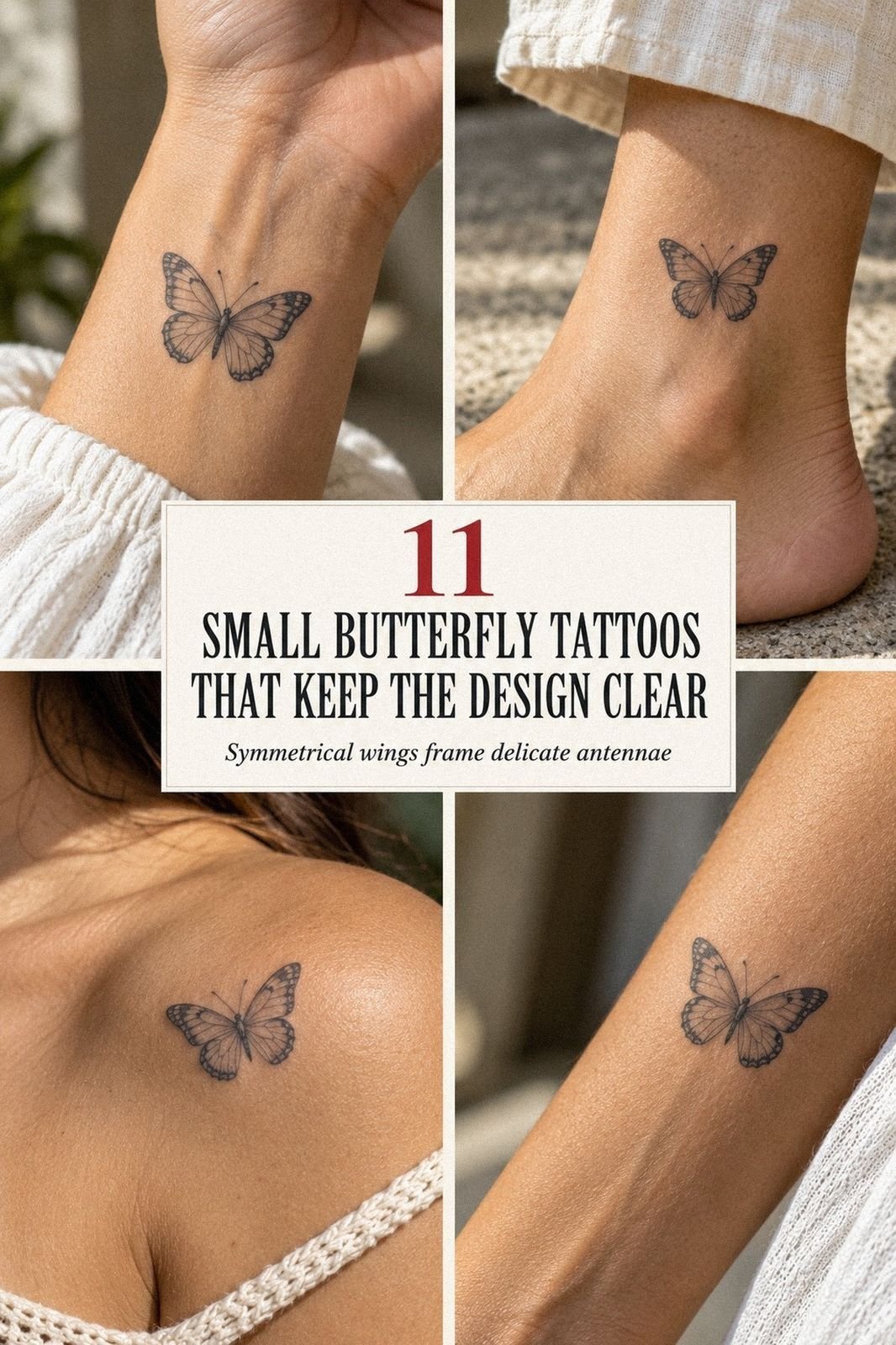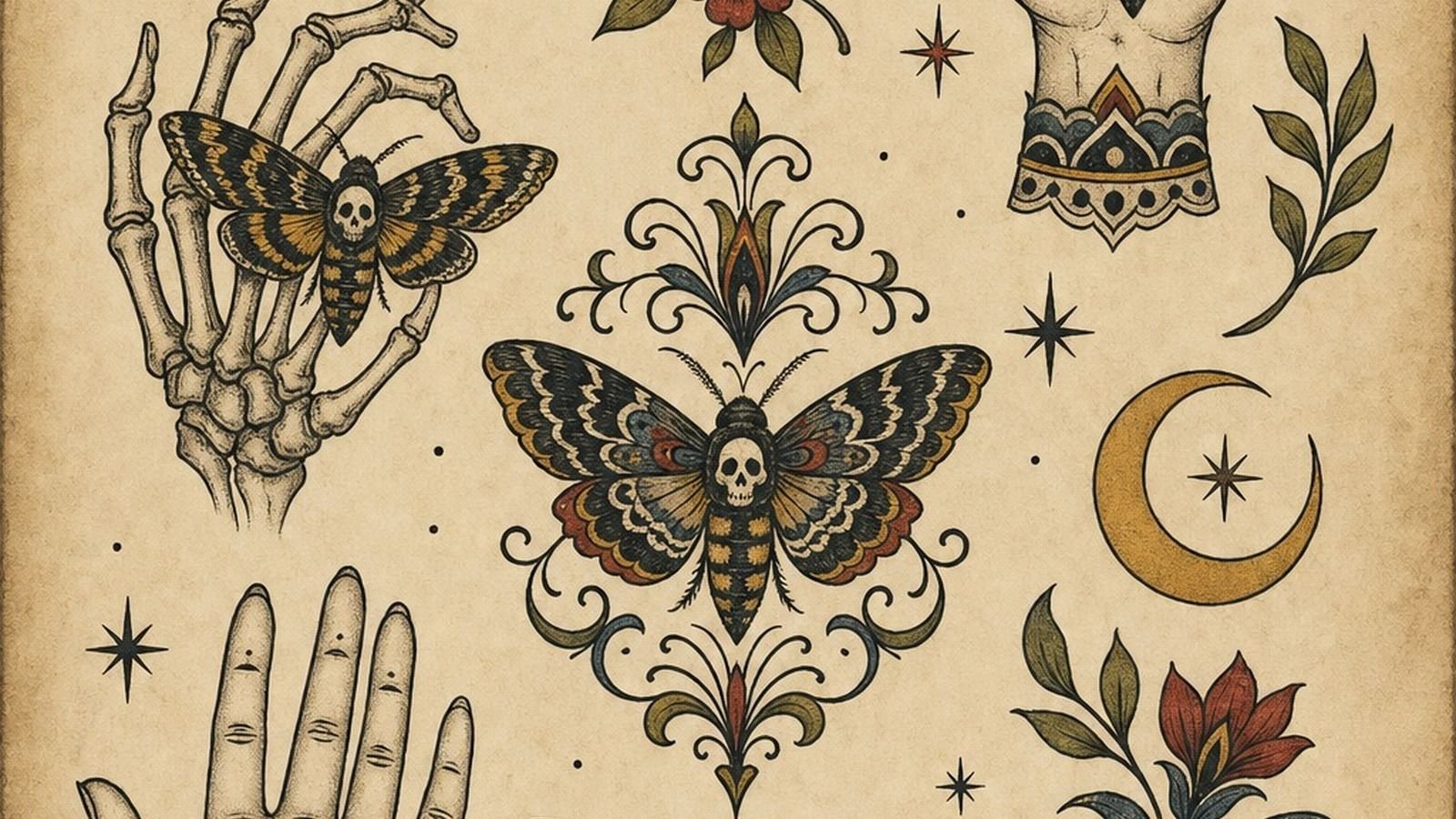
Deathhead moth tattoo planning gets messy fast. You love the eerie shape, then you realize one bad choice can turn the skull muddy, the wings fuzzy, and the placement way spicier than you expected. I’ve seen that hesitation a lot. If you want a piece that still reads clean in a few years, this is the order I would use.
- Start With A Clean Deathhead Moth Tattoo Silhouette
- Pick Blackwork For A Deathhead Moth Tattoo
- Why Does A Deathhead Moth Tattoo Skull Turn Muddy?
- Place A Deathhead Moth Tattoo On Sternum
- Choose Gothic Linework For Deathhead Moth Tattoo
- Plan A Forearm Deathhead Moth Tattoo Layout
- Death’s-Head Geometry Keeps The Wings Symmetrical
- Add Dotwork Shading To Deathhead Moth Tattoo
- Frame Deathhead Moth Tattoo With Moon Phases
- Tiny Detail Versus Lasting Clarity: What Size Works?
- Place Deathhead Moth Tattoo Between Shoulder Blades
- Pick Fine Lines For Deathhead Moth Tattoo
- Dynamic Triple Black Against Open Skin Builds Contrast
- Choose Neo Traditional Deathhead Moth Tattoo Color
- What Should You Know Before A Hand Deathhead Moth Tattoo?
- Keep Deathhead Moth Tattoo Skull Readable
- Add Botanical Elements Around Deathhead Moth Tattoo
- Match Deathhead Moth Tattoo Style To Pain
- Book An Artist For Deathhead Moth Tattoo
1Start With A Clean Deathhead Moth Tattoo Silhouette
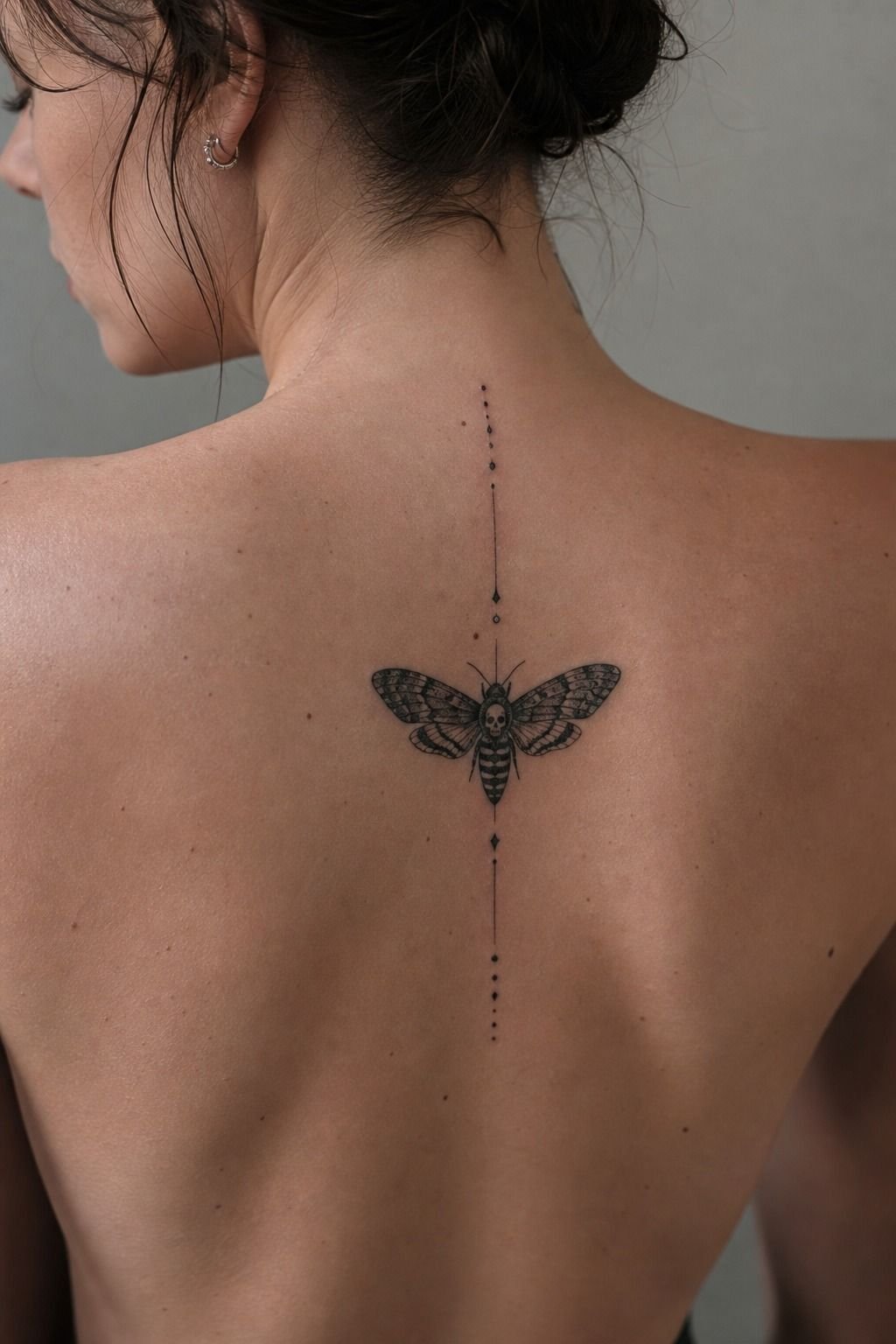
Start with the outer silhouette before you obsess over the skull. On a spine piece like this, you need a shape that stays crisp from the nape to mid-back, not a moth that frays into little fussy points. I would ask your artist to stencil the body first, then the top wings, then the lower wings, so you can see the whole read before anybody commits.
You also want the silhouette to match your body line. On fair cool-pink skin, a fine line moth down the spine can look airy and sharp if the wing tips don’t drift too far off center.
A 3RL liner is common for that clean pull, but only if the artist has a steady hand. Too many tiny teeth on the wings and it’ll heal busy.
Keep the outside shape simple, then let the inside details do the talking. Compare that restraint with this moth tattoo meaning reference before adding more symbols. That dramatic, powerful read is worth protecting!
2Pick Blackwork For A Deathhead Moth Tattoo
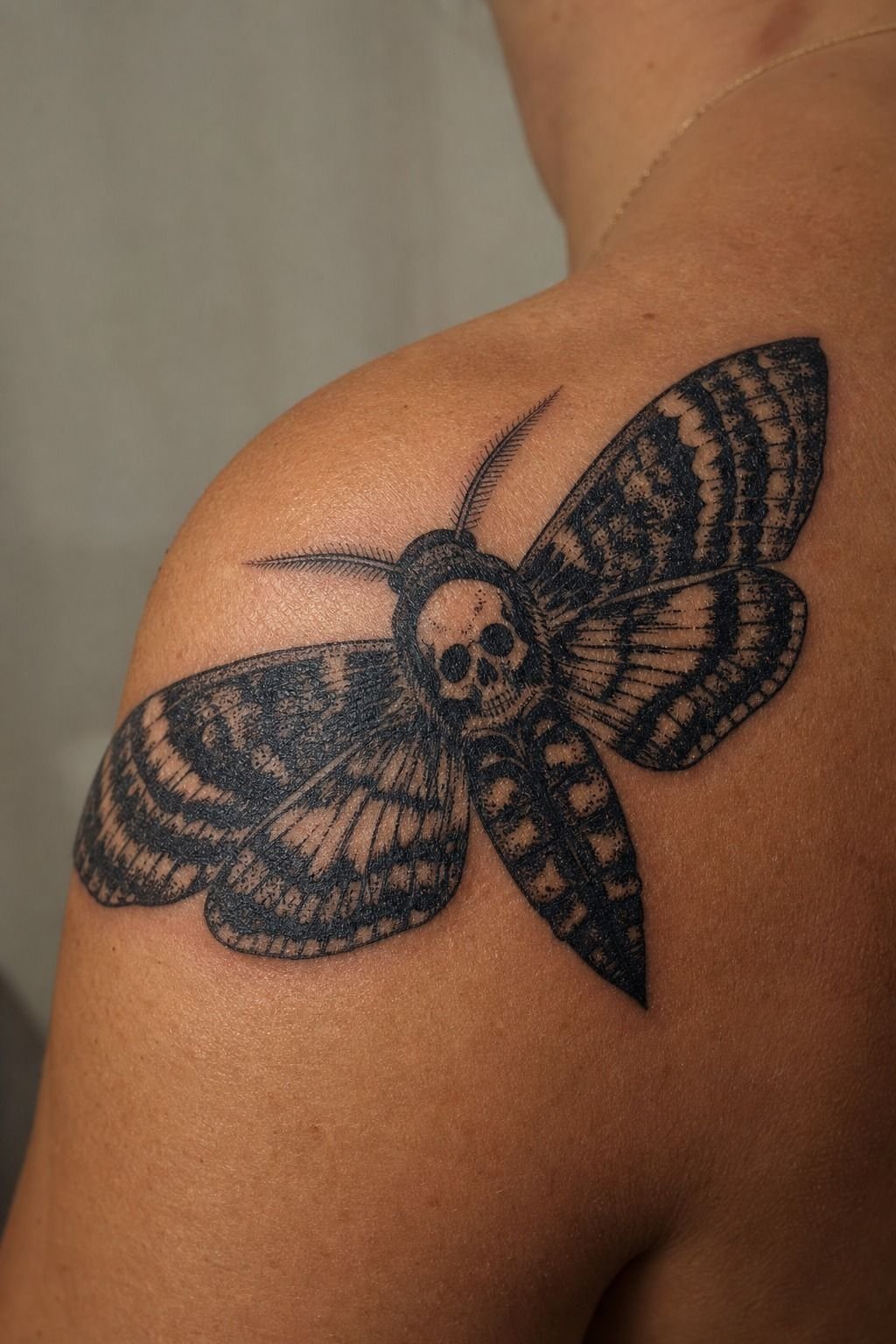
Blackwork is the right call if you want a dark moth tattoo that still holds from a few feet away. Solid black in the thorax or lower wings gives you structure fast, especially on a shoulder where movement can make delicate marks look shaky. If you’re drawn to drama, this is where I would lean harder into it.
But blackwork has to be packed clean. You want solid fill, not skin chewed up from ten passes over the same patch.
A lot of artists use Dynamic Triple Black or Panthera Liner for this kind of saturation because the healed read stays bold. Shoulder skin usually handles that better than ribs or sternum, and you’ll notice the value quickly when the moth still looks intentional after the shine wears off.
If you like the symbolism side too, skim this death moth tattoo meaning guide before you lock the mood.
3Why Does A Deathhead Moth Tattoo Skull Turn Muddy?
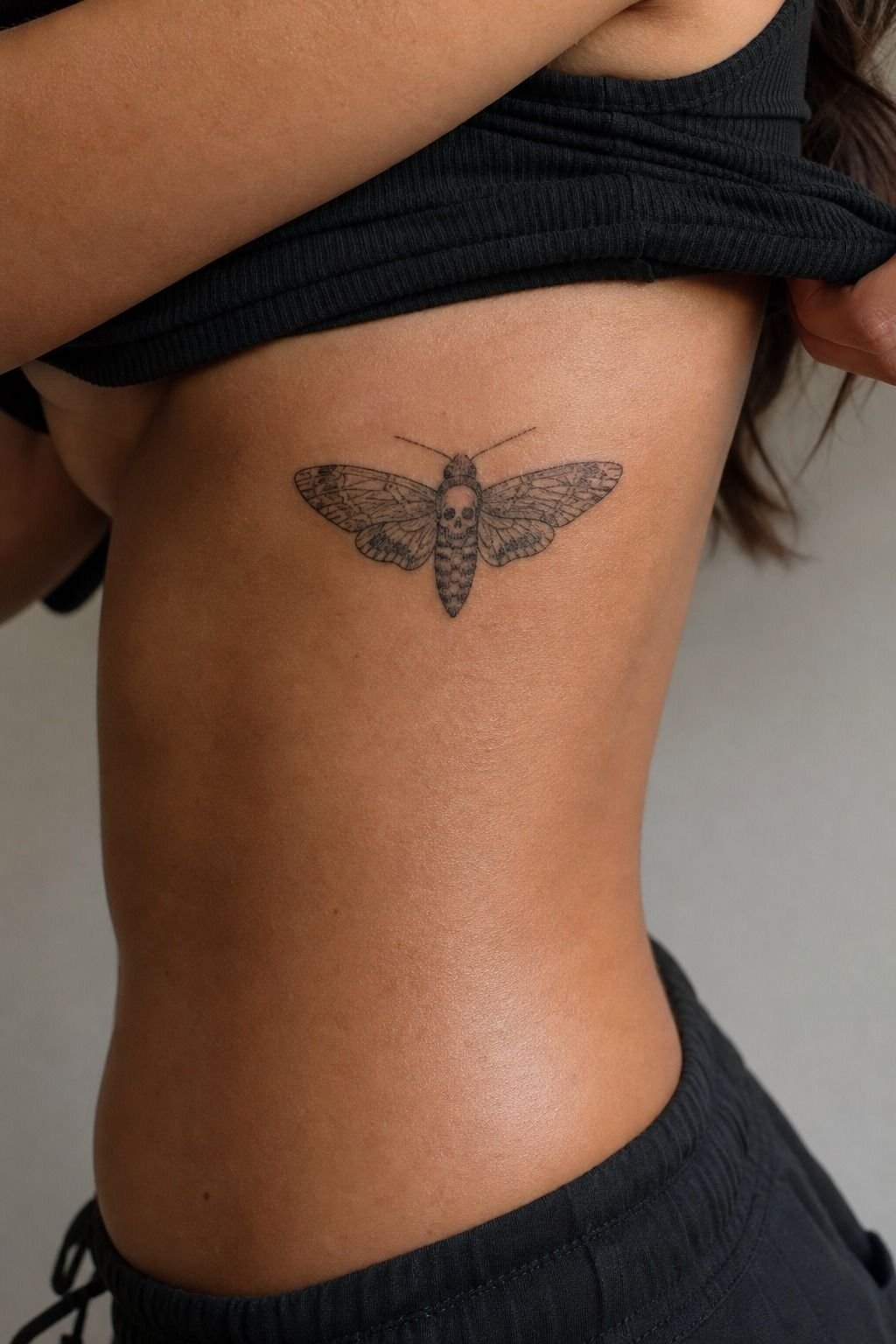
The skull is where most deathmoth design tattoo concepts go sideways. A haunting little face looks sharp on paper, but skin softens every fierce crack, tooth, and shadow.
If the sockets do not read before shading, they will not get clearer after healing. I would keep two dark eye shapes, one clean nose cavity, and a blunt jaw edge.
Ask for a stencil check from a few feet away. The skull center should feel eerie and immediate, not clever only in a close phone shot.
Grey wash can make it dramatic, but too many mid-tones leave a flat, muddy center. Push the contrast.
That’s what keeps the face striking instead of nervous and scratchy. If the sinister center still doesn’t land, use this death moth symbolism guide to decide which details carry real weight.
4Place A Deathhead Moth Tattoo On Sternum
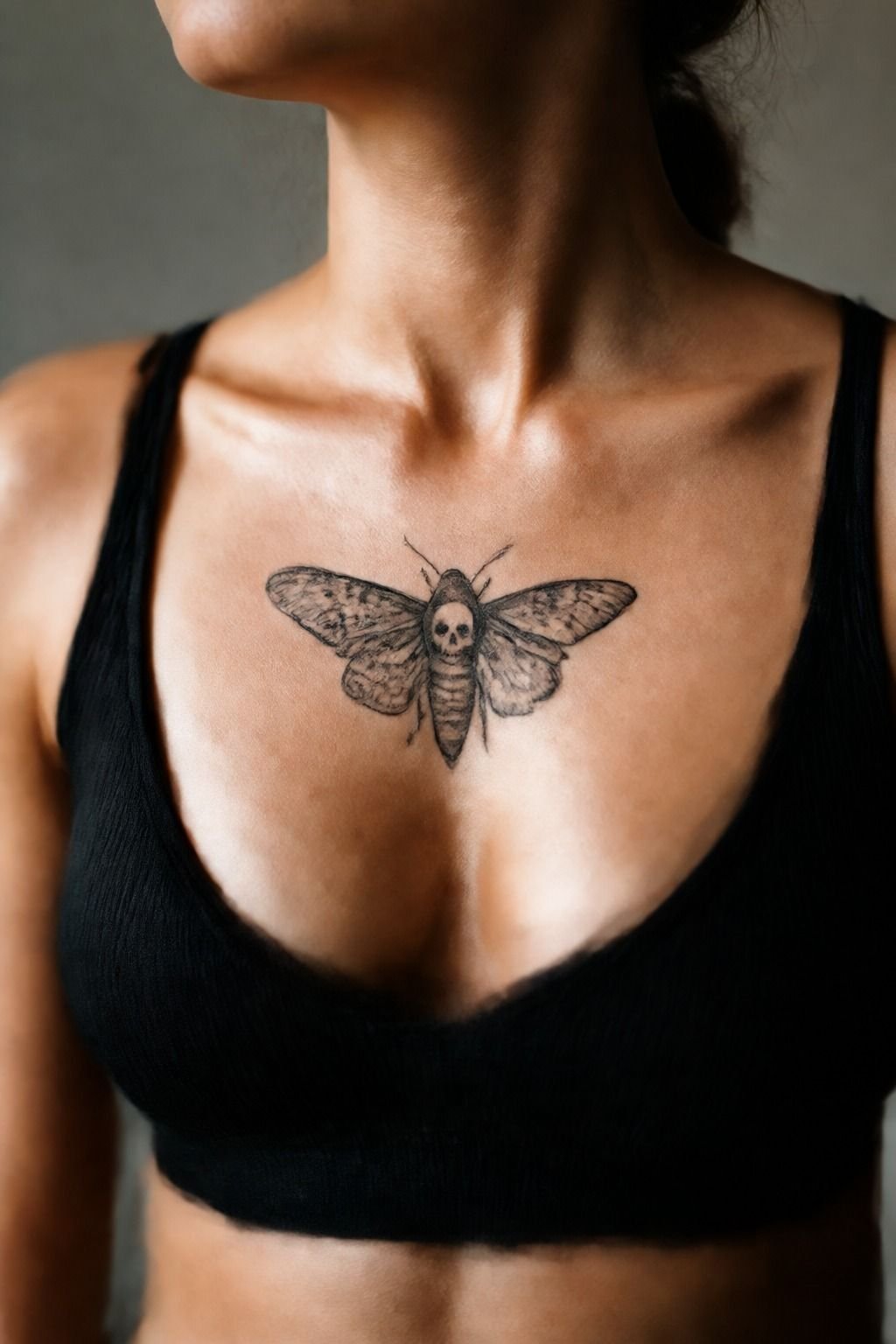
A sternum placement looks killer for this subject because the moth already wants symmetry.
5Choose Gothic Linework For Deathhead Moth Tattoo
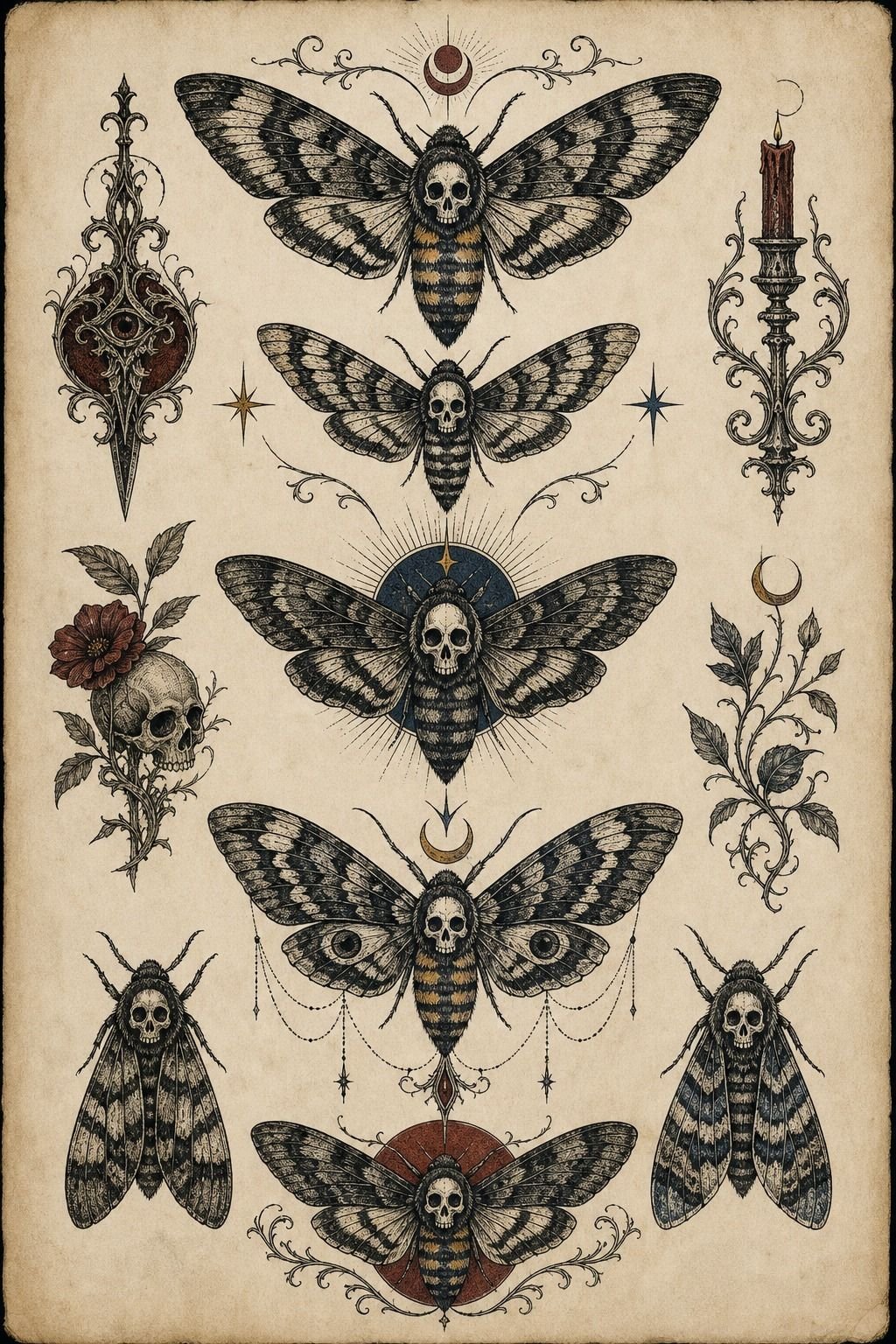
Gothic linework works best when you borrow attitude, not chaos. On a flash sheet, you’ll usually see pointed wing tips, little cathedral-like arches, thorn shapes, and darker body sections that push the whole moth into a moodier lane. That is the part worth stealing.
What I wouldn’t steal is every tiny flourish. A flash page on aged paper can look rich because you’re seeing twenty drawings at once, but your skin only gets one.
Ask your artist to pull from black India ink style references, fine 5RL contours, and maybe a little whip shade, then strip out the filler lines that don’t help the silhouette. And if you want Pinterest-exact, I’m not your artist.
References are for vibe, not photocopying.
You can compare the darker symbolism here with death moth tattoo meaning and the softer version in luna moth tattoo meaning.
6Plan A Forearm Deathhead Moth Tattoo Layout
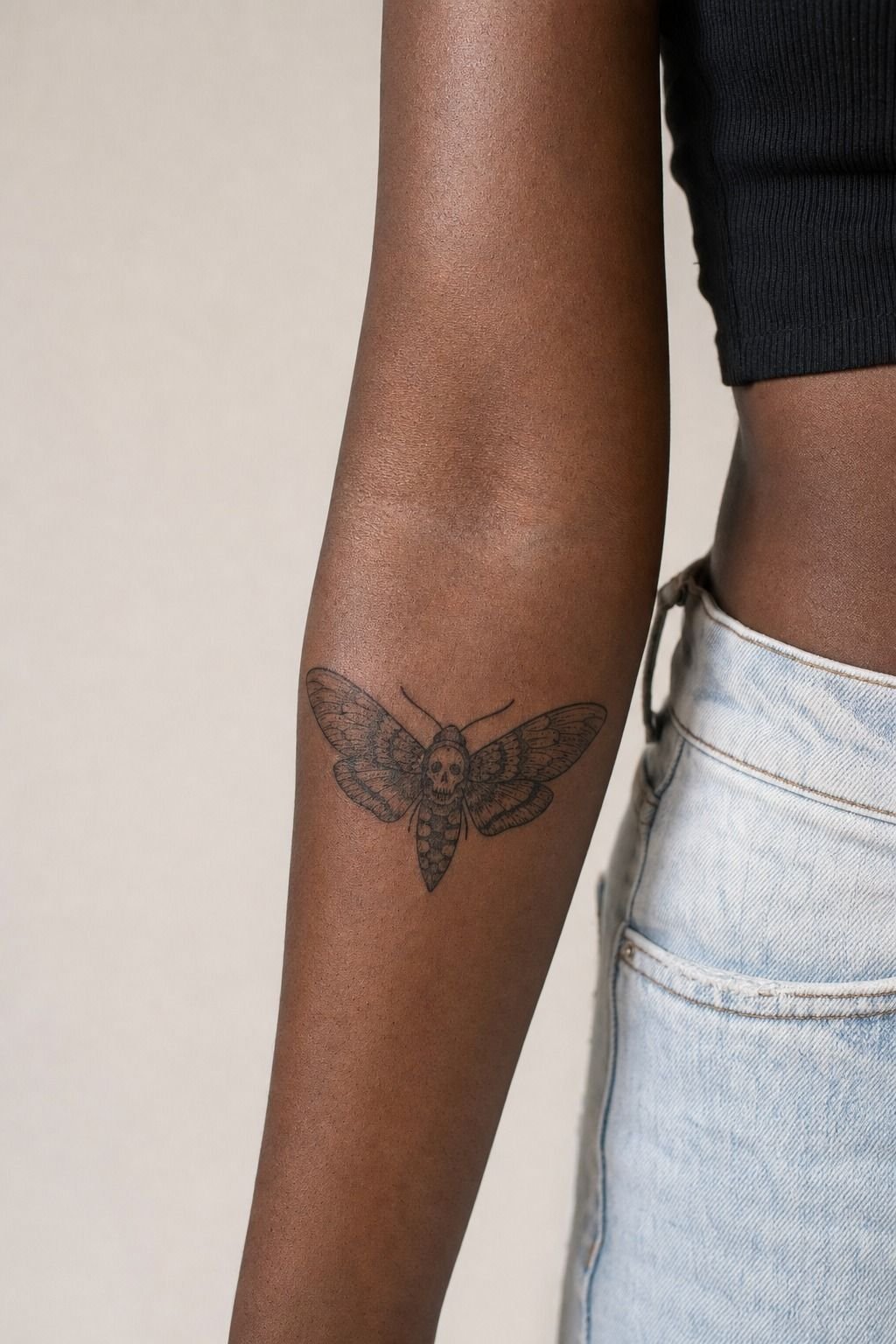
Forearm is one of my favorite placements for first-timers because you get visibility without the pain spike of ribs, sternum, or hand.
7Death’s-Head Geometry Keeps The Wings Symmetrical
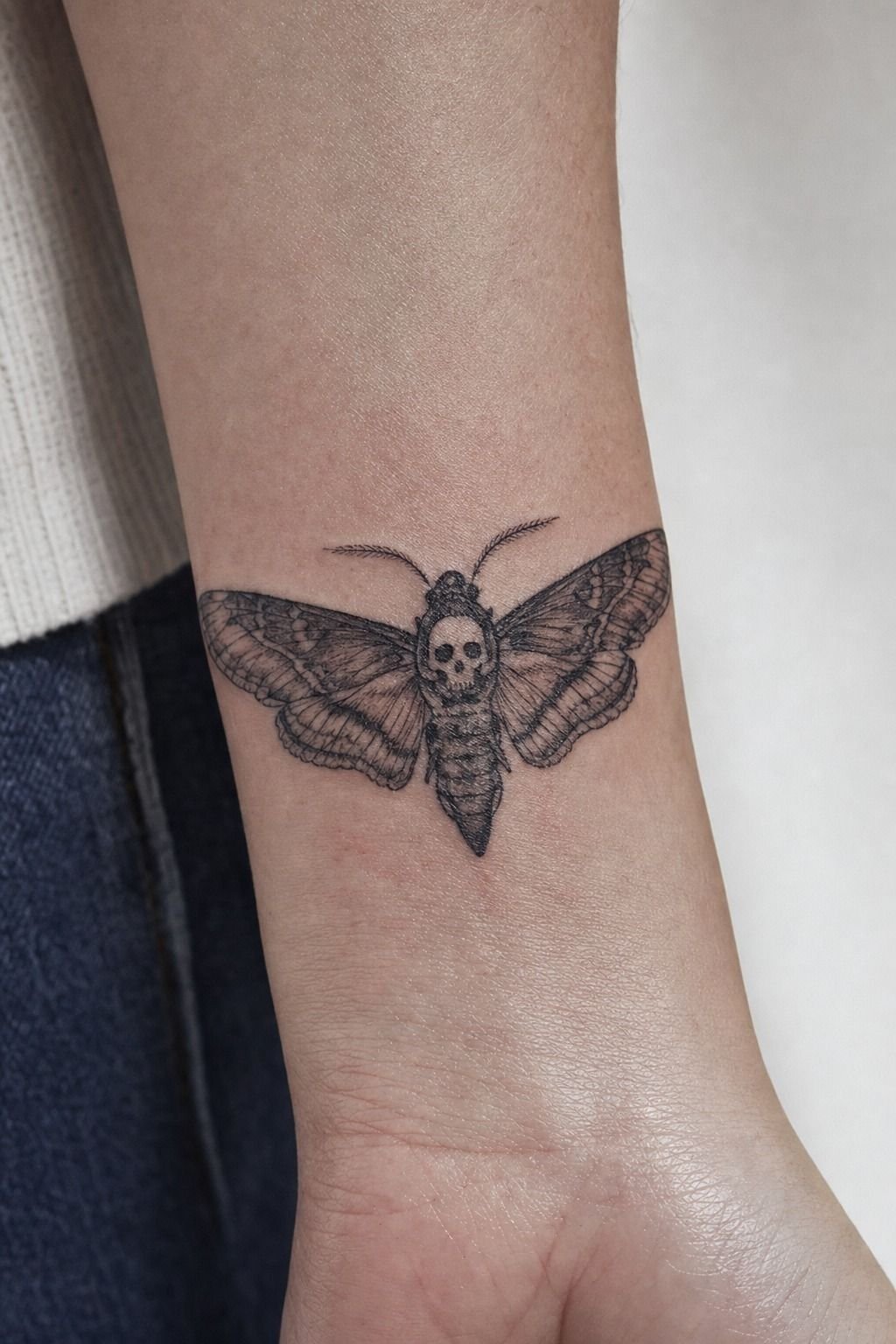
Symmetry sounds obvious, but this is where wrist pieces betray people. Wrists rotate, tendons rise, and a perfectly balanced stencil can look crooked once your hand turns. Your artist should mark the center line while your arm is relaxed, then check it palm-up and palm-down.
I would not chase mathematical perfection on moving skin. I would chase a clean visual balance: matching outer points, equal dark weight, and enough open skin around the body.
That gives the wings a bold, controlled read without making the moth feel stiff. It is a small setup step with a serious payoff later.
8Add Dotwork Shading To Deathhead Moth Tattoo
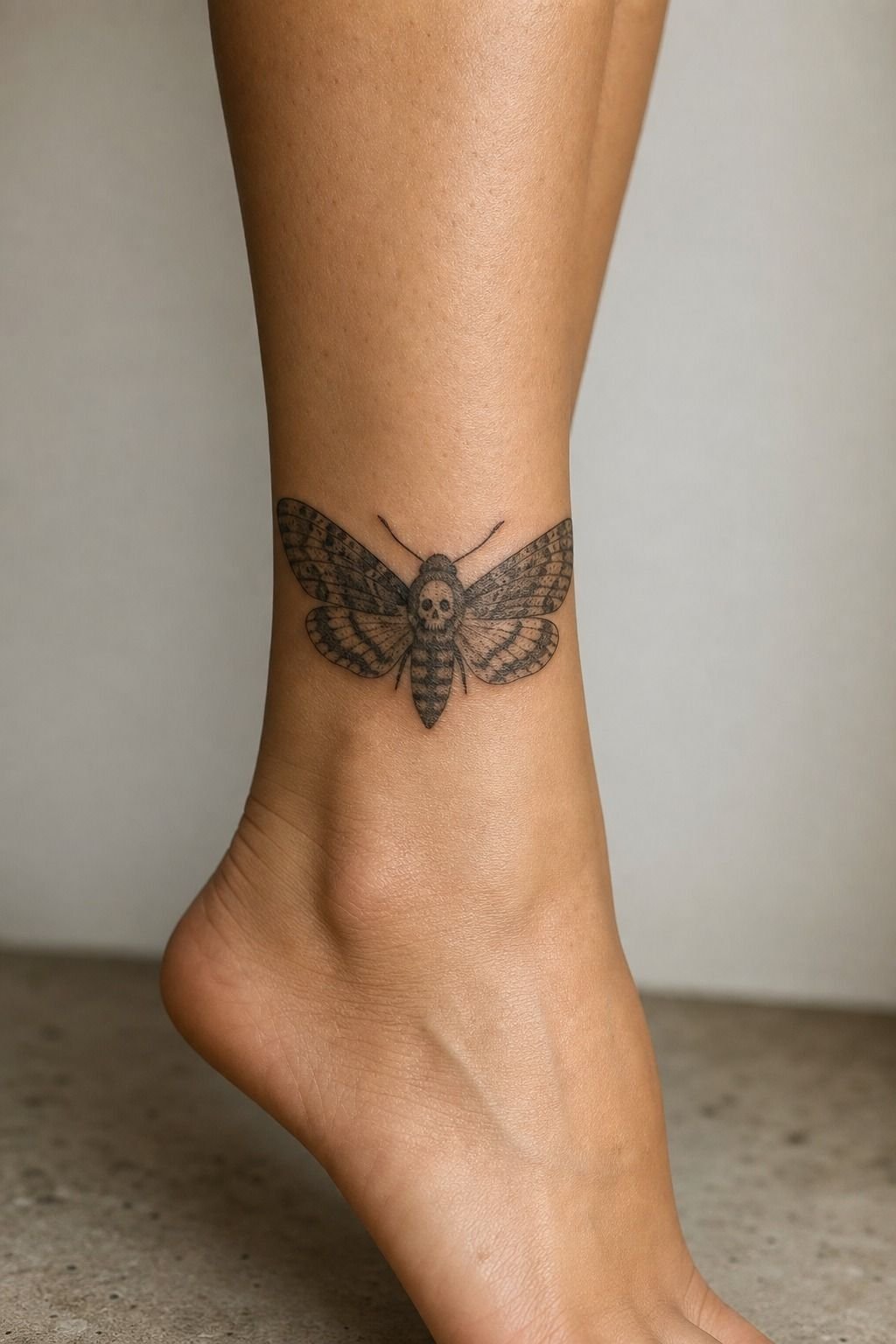
I would use pepper shading to feather the lower wings, deepen the skull cavity a little, and separate the body from the wing edges.
9Frame Deathhead Moth Tattoo With Moon Phases
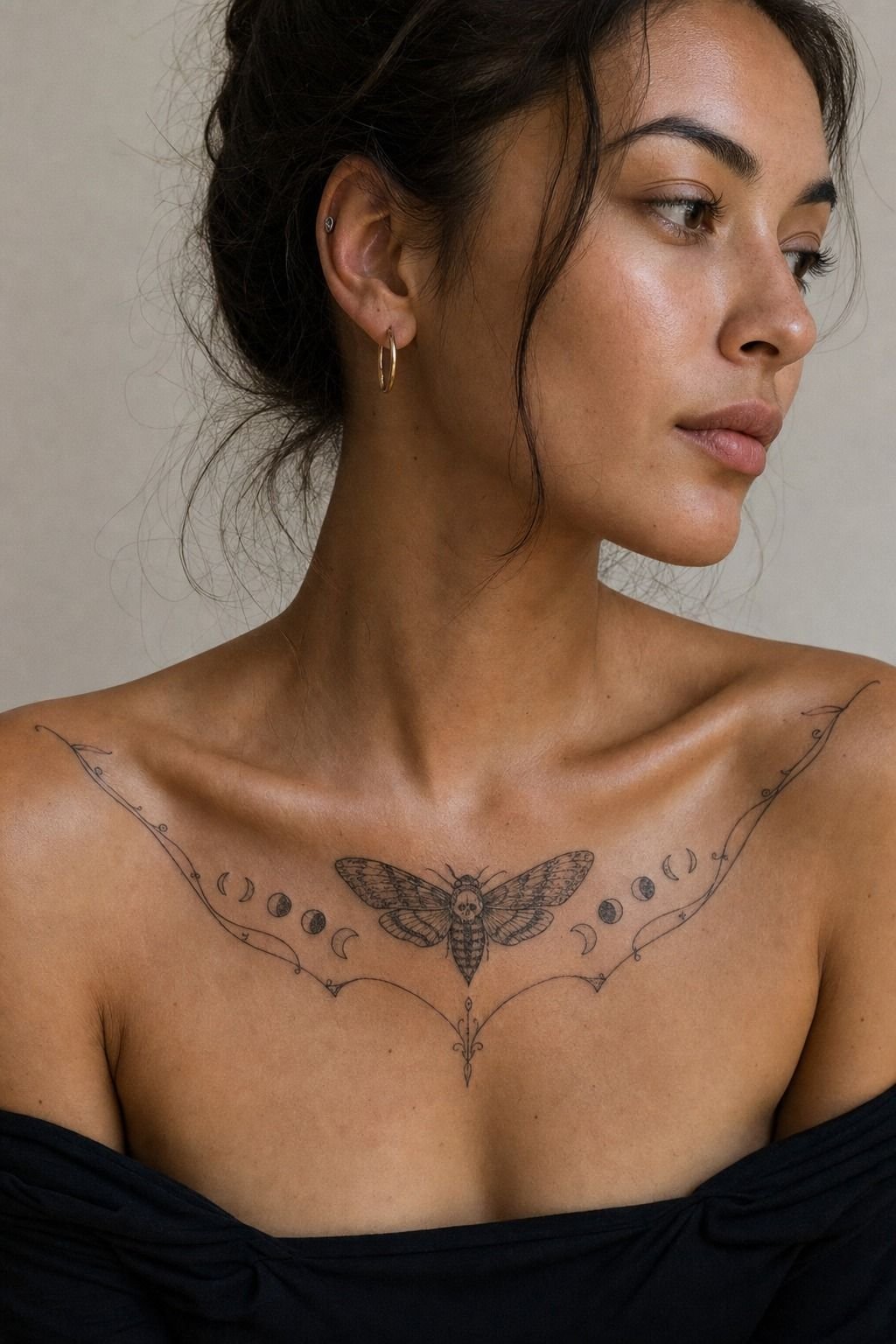
Moon phases can work around a deathhead moth tattoo if they help the flow instead of stealing the whole show. On a collarbone wrap, little crescents and full moons can echo the curve nicely, especially if the moth body sits just off center and the moons trail outward. You want a frame, not a second tattoo fighting for attention.
Keep those moons tiny and graphic. Clean black circles, slim crescents, open spacing. No mushy texture.
Medium olive skin wears that kind of collarbone linework beautifully when the artist leaves enough breathing clearance between the moth and the phase marks. I would also keep the moon set to 4 to 6 phases, not eight.
More than that and the collarbone starts looking crowded. If your vibe pulls mystical, this yin yang tattoo meaning piece can help you think through balance without forcing symbolism.
10Tiny Detail Versus Lasting Clarity: What Size Works?
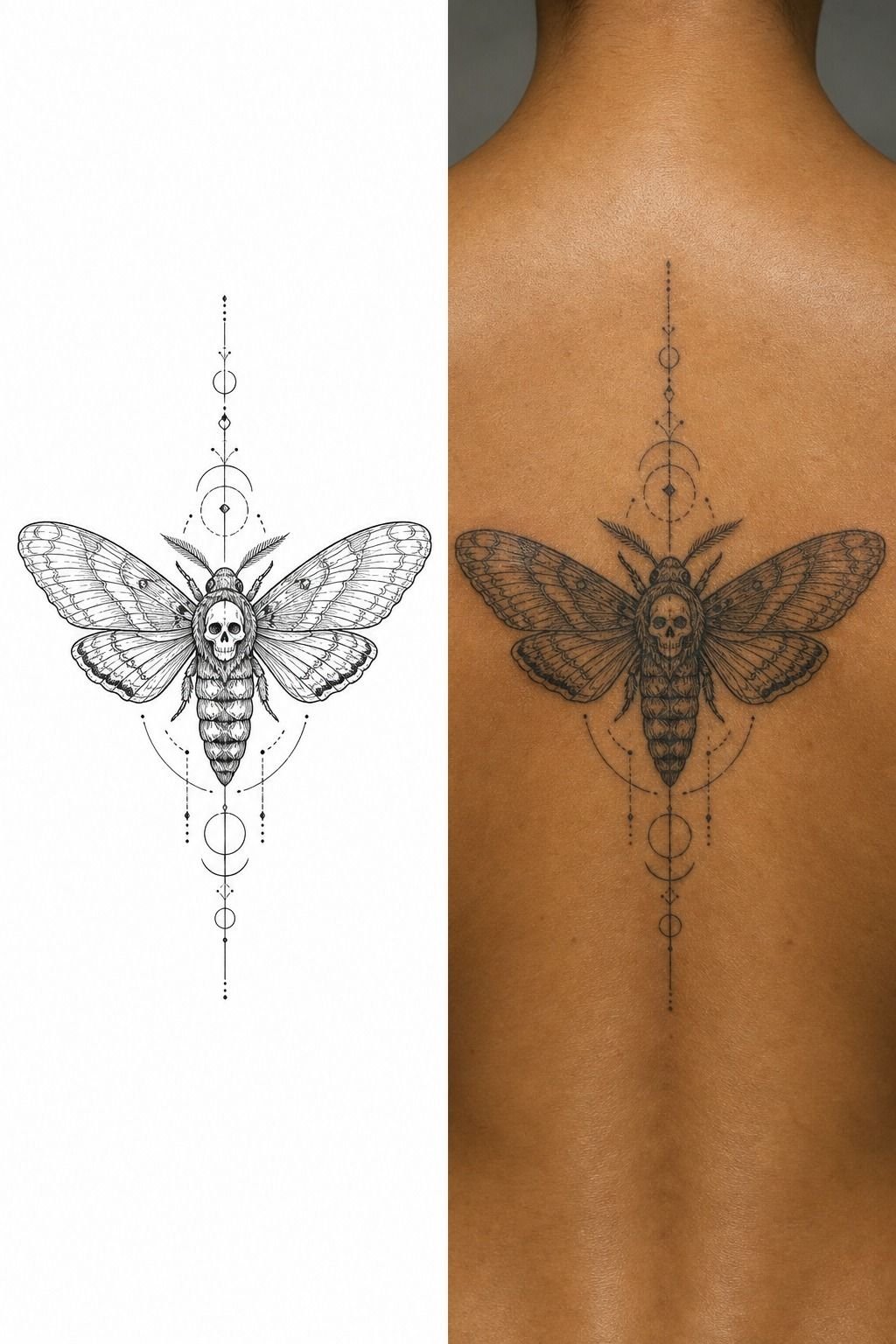
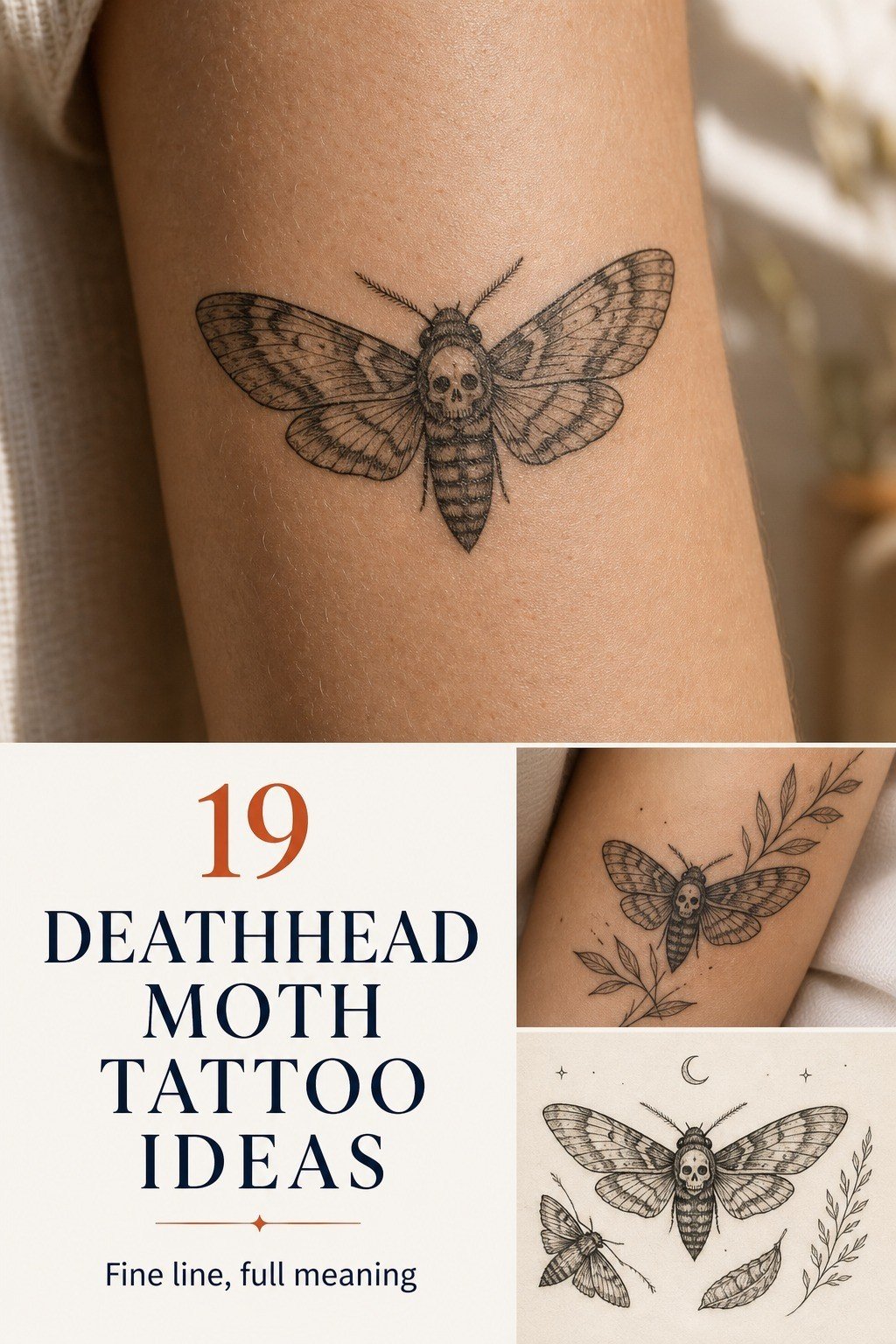
Size is the argument I have most with clients, because everybody wants tiny detail and long-term clarity at the same time. For a skull, layered wings, and soft shading, three inches is a practical floor, not a dare to go smaller. At two inches, the fragile cracks and miniature wing cells can merge into soup.
If money is tight, simplify before you shrink. A larger, cleaner moth with fewer internal marks usually ages better than a cramped micro piece that needs early repair. You’ll pay for the artist’s judgment as much as needle time, and that edit pays off when the tattoo still looks powerful years later.
On a strict tattoo budget, fewer confident marks offer better longevity than fragile micro-detail. Compare the lighter approach in this luna moth symbolism guide before deciding what the extra cost should buy.
11Place Deathhead Moth Tattoo Between Shoulder Blades
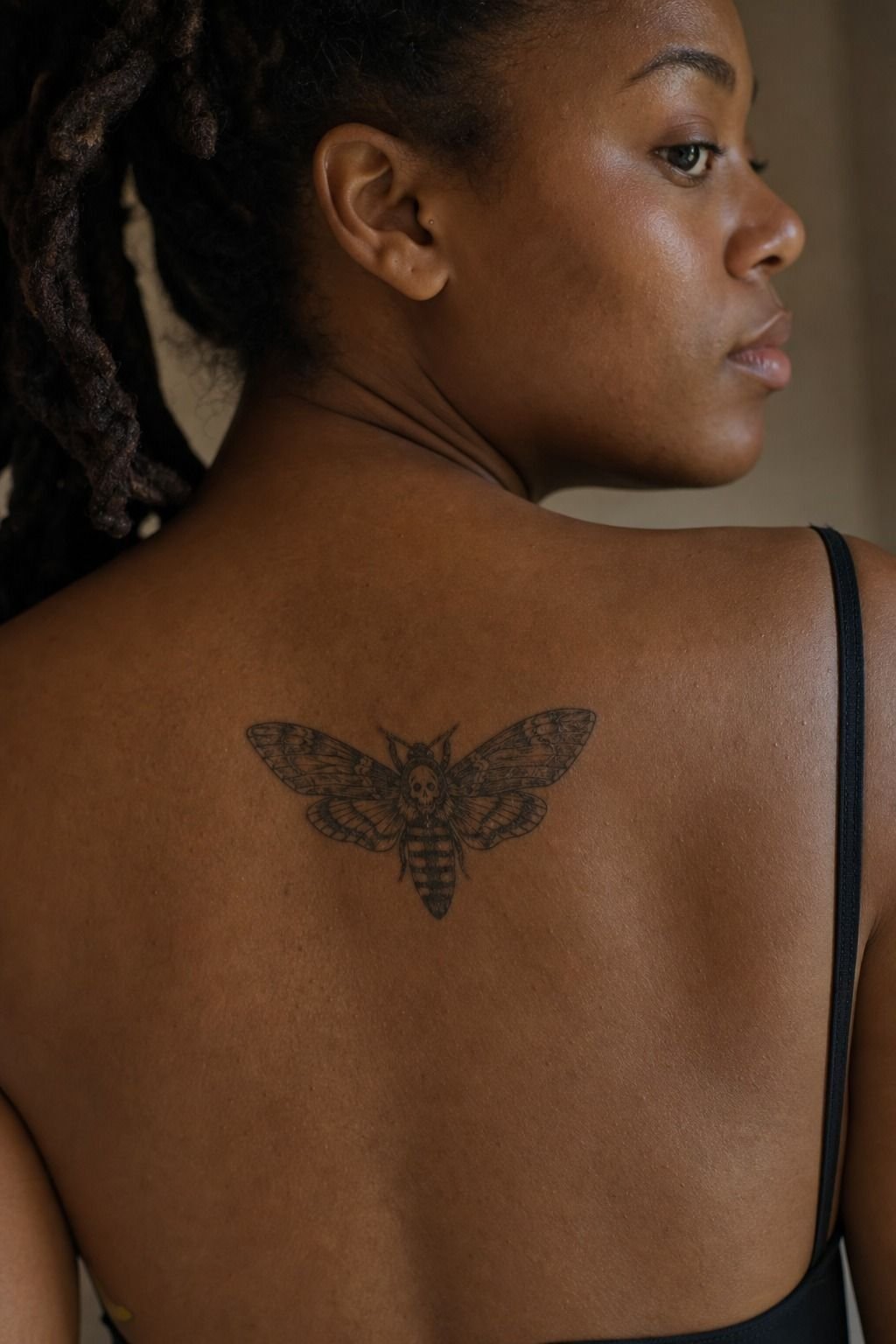
Between the shoulder blades is a sleeper-good placement for moth tattoo men and women alike. You get a broad, flatter patch of skin, decent symmetry, and lower wear than hands or feet. That means the linework has a better shot at aging cute on you without constant touch-up drama.
The main thing is placement height. Too high and the upper wings disappear under shirt collars.
Too low and the whole moth loses tension. On deep brown skin with a warm undertone, I would center the body between the blades and keep the top wings just under the shoulder line so the design still shows in lower necklines.
And if you ever want to build bigger later, this placement leaves you enough clearance for botanicals, daggers, or a second insect without making the back feel crowded.
12Pick Fine Lines For Deathhead Moth Tattoo
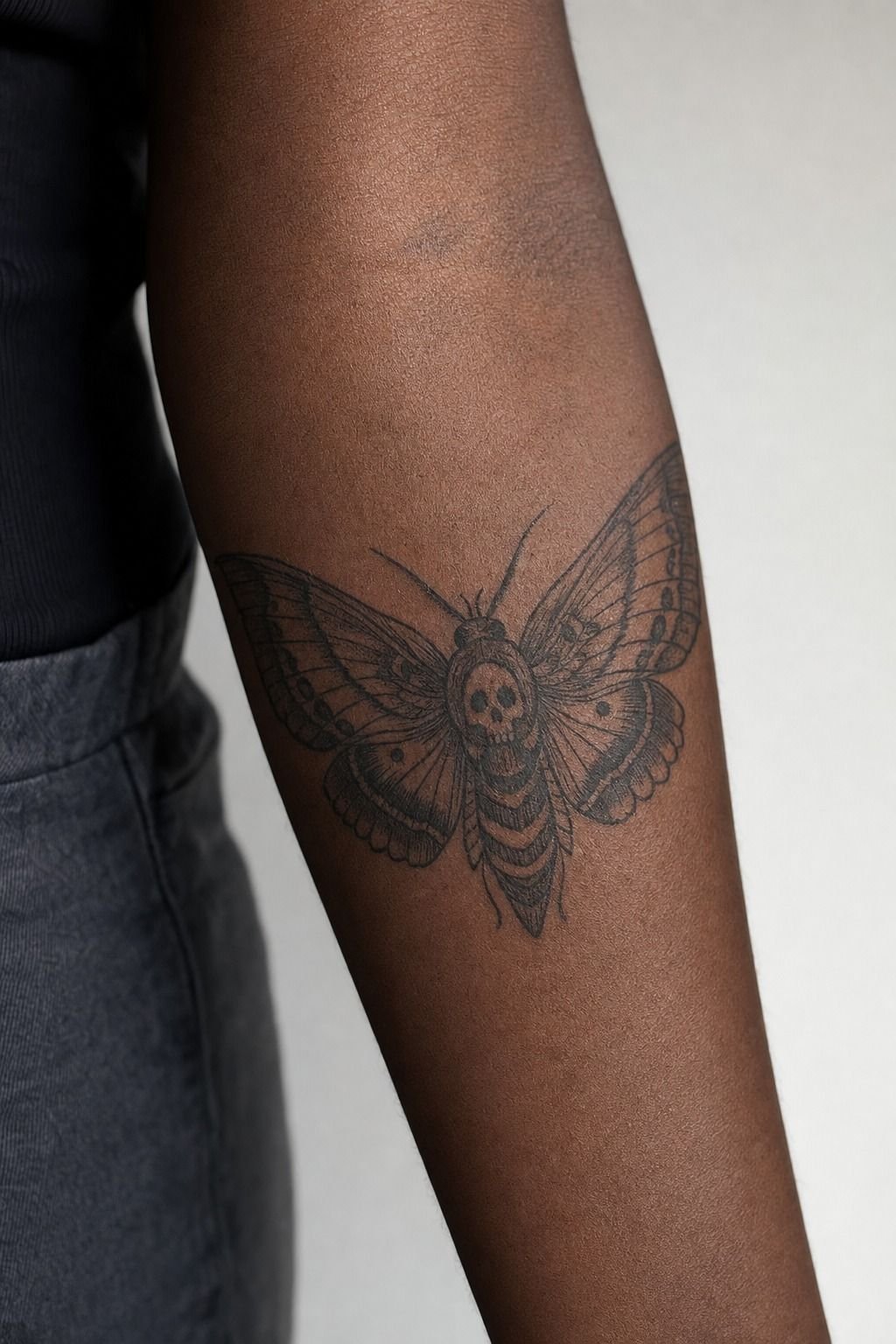
Fine line is a good fit for a deathhead moth tattoo when you respect its limits. You’re chasing elegance, not fragility. On an inner forearm, especially on deep ebony skin, crispy and confident lines can look insanely refined if the artist keeps the pattern bold enough to survive healing.
I would look for a portfolio with healed examples, not just fresh ones slicked up with ointment. Fresh fine line can flatter everybody. Healed fine line tells the truth.
Ask whether the artist prefers a single needle or a 3RL for the outer contour, and check if their healed work keeps the same edge six months later. But don’t ask for ten hairline textures inside each wing. One clean pull beats ten fuzzy ones every time.
If you’re still deciding on a fine line direction, luna moth tattoo meaning gives you a softer comparison point.
13Dynamic Triple Black Against Open Skin Builds Contrast
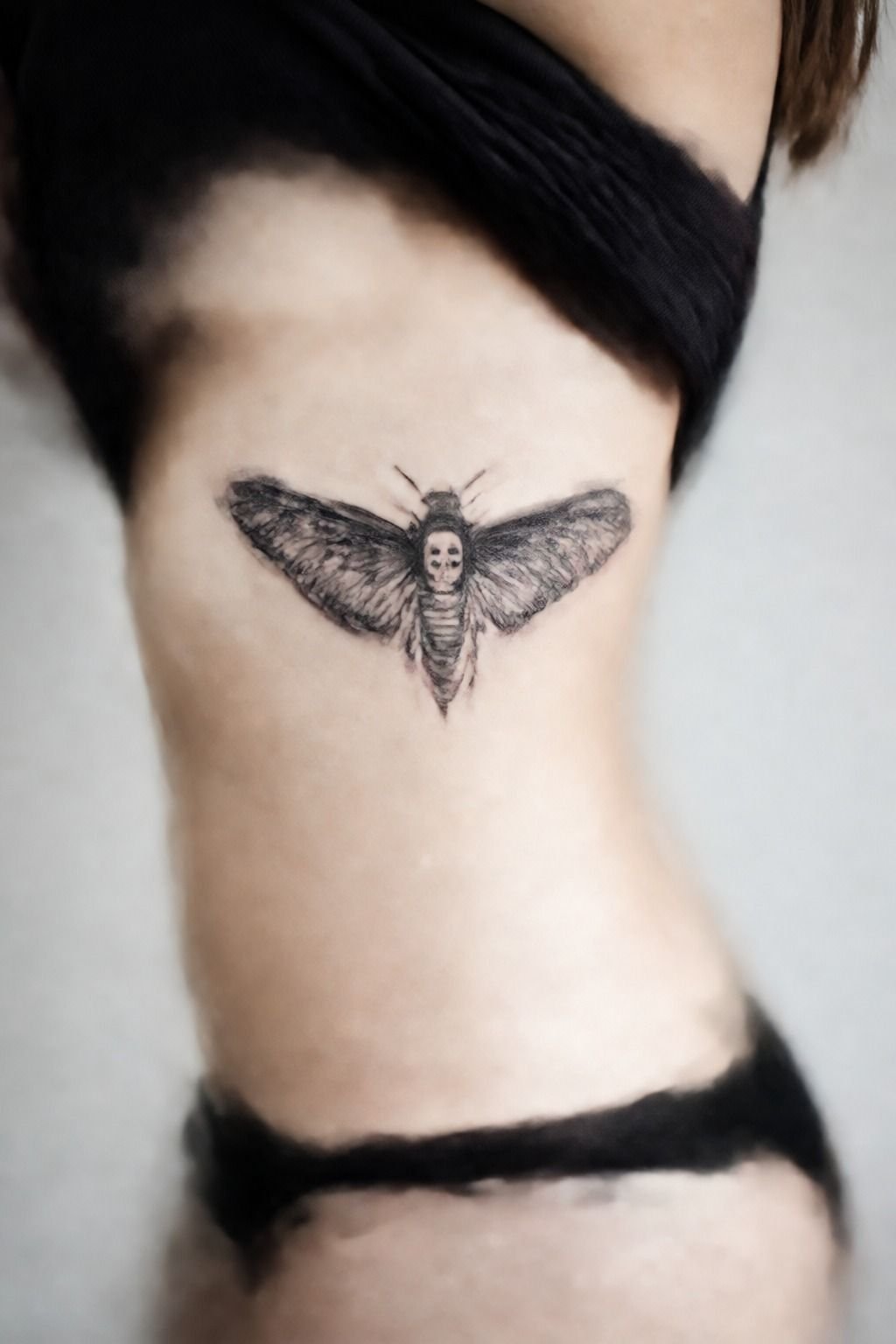
Contrast is what keeps the deathhead moth wings from turning flat.
14Choose Neo Traditional Deathhead Moth Tattoo Color
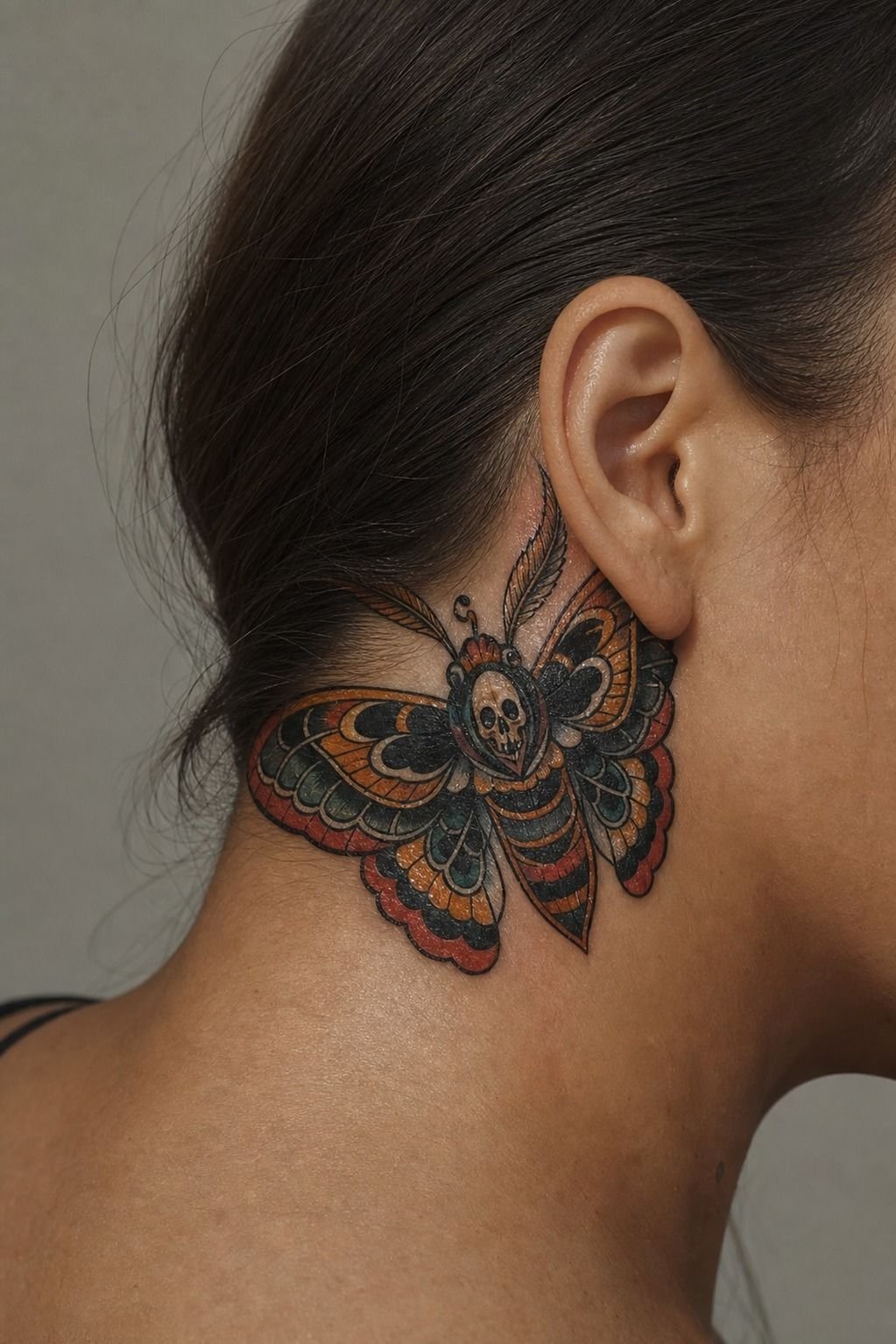
Neo traditional color can work beautifully on this subject if you keep the palette disciplined. Behind the ear, where the placement is small and curved, I wouldn’t throw six colors at it. I would keep the black outline solid, then maybe bring in muted burgundy, dusty ochre, or a little deep olive so the moth stays legible.
This is also where line anchoring matters. Watercolor-style haze with no structure?
Bad bet. A tiny placement behind the ear needs black framework first, then color as spice.
Medium warm ivory skin usually carries that contrast nicely, but you should expect more maintenance than a black-only version if the piece lives in sun and hair-product friction. And yes, behind-the-ear tattoos can feel sharper than people think. Check this luna moth meaning reference if you want the color story to feel mysterious rather than grim.
Saturated color is exciting, but black still earns its keep!
15What Should You Know Before A Hand Deathhead Moth Tattoo?
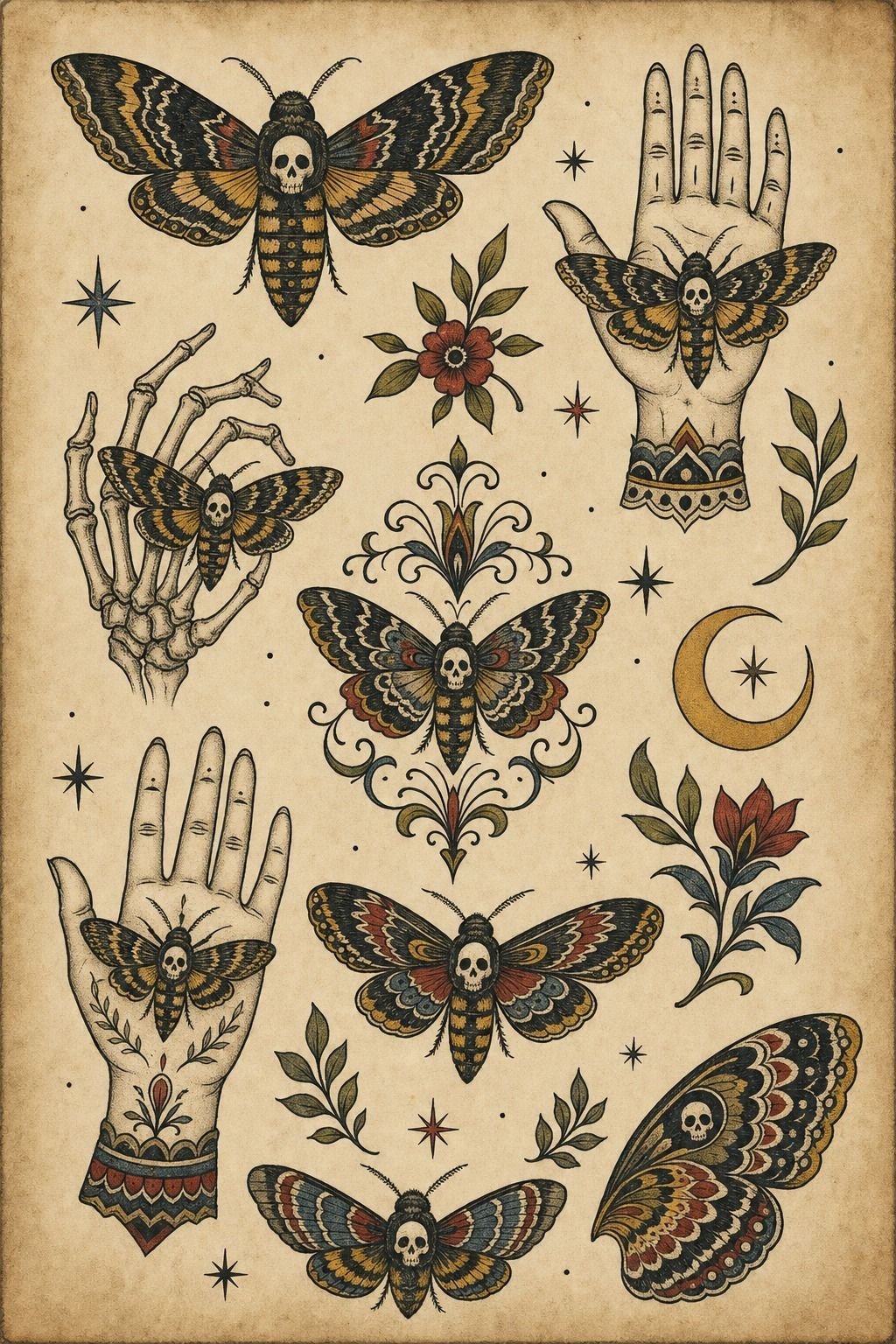
Hand tattoos are for people who accept touch-ups. The skin flexes, washes, rubs, and sees UV constantly, so even a gorgeous fresh moth can fade unevenly.
Fine wing veins may drop out. Packed black may soften.
That doesn’t mean the placement is bad, but maintenance belongs in the planning conversation.
Keep the silhouette solid and the skull simple. I would avoid delicate lower-wing fringe across knuckles because repeated motion can leave it looking chewed up. Ask whether the touch-up is included, what later work may charge, and whether that ongoing upkeep still feels fair.
Hands are striking, but they’re never the low-maintenance choice.
16Keep Deathhead Moth Tattoo Skull Readable
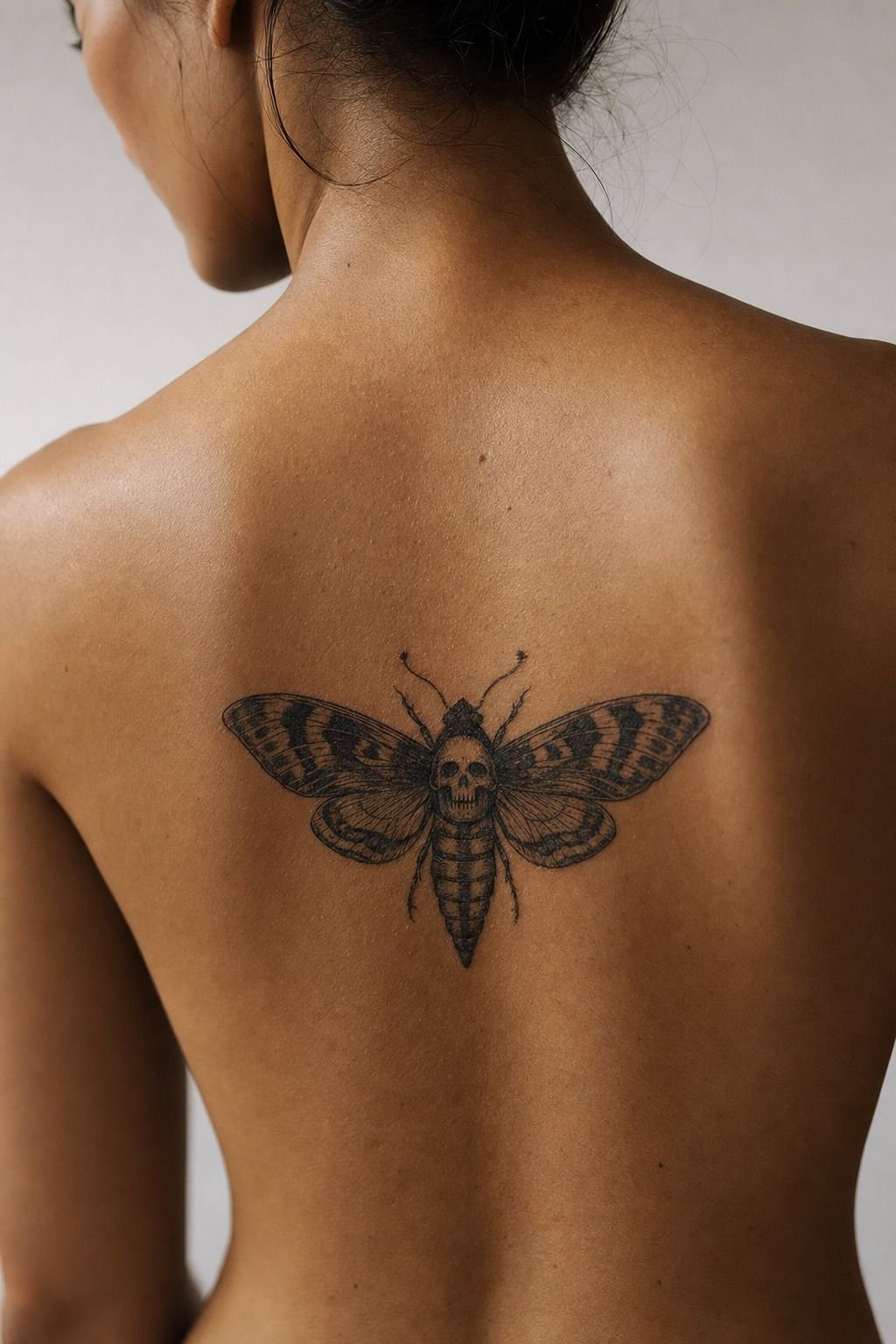
Readable is not the same thing as detailed. On a spine tattoo running from neck to mid-back, the skull has to lock in fast when you glance at it. If the viewer has to hunt for the face, the design is overworked.
I use what I call the Two-Distance Test. First, you should read the skull from mirror distance.
Second, you should still catch it in a quick phone photo. Golden tan skin can make black fine line look beautifully sharp, but only if the central skull has strong sockets, a clean nose cavity, and a couple of bone edges doing the heavy lifting. But if the jawline is all tiny fangs and scratchy hatch marks, it won’t stay that crisp forever.
You can compare how much symbolism you want in the face by looking at moth tattoo meaning and death moth tattoo meaning.
17Add Botanical Elements Around Deathhead Moth Tattoo
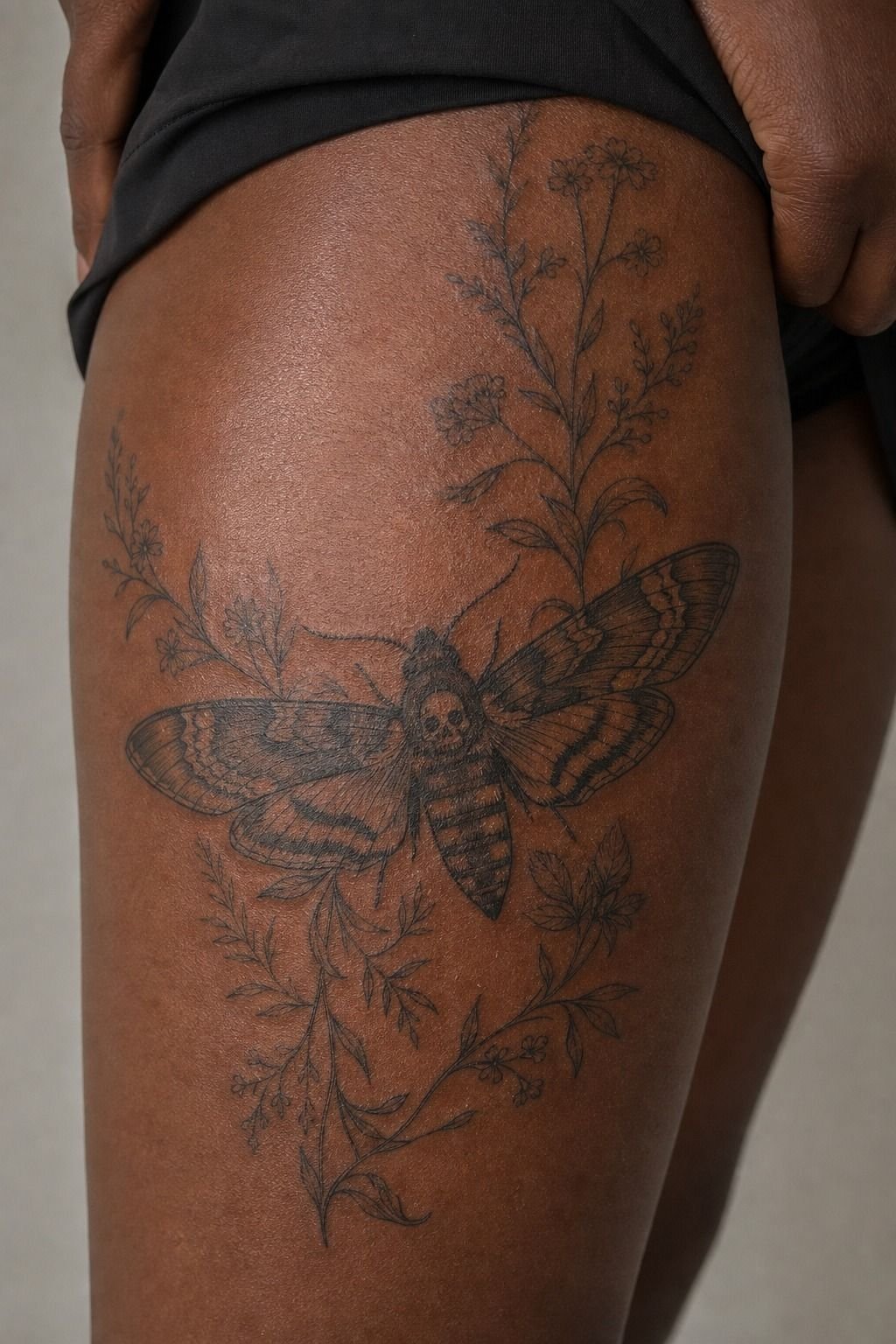
Botanicals can soften the deathhead moth without making it sweet. On a thigh piece, little stems, thorn branches, dried leaves, or a rose with open petals can widen the composition and give the moth something to push against. That is especially useful on deep brown skin with warm undertones, where open skin and clean framing make the whole piece feel more deliberate.
I would keep the botanicals secondary and draw them with lighter line weight than the moth itself. Think fine line eucalyptus, a rose stem, or dried belladonna-style leaves, not a whole floral wall swallowing the insect.
And watch the tangles. If stems cross the skull or chop through the body, the design gets muddy fast. For floral symbolism pairings, yellow rose tattoo meaning is useful if you want a sharper emotional angle.
18Match Deathhead Moth Tattoo Style To Pain
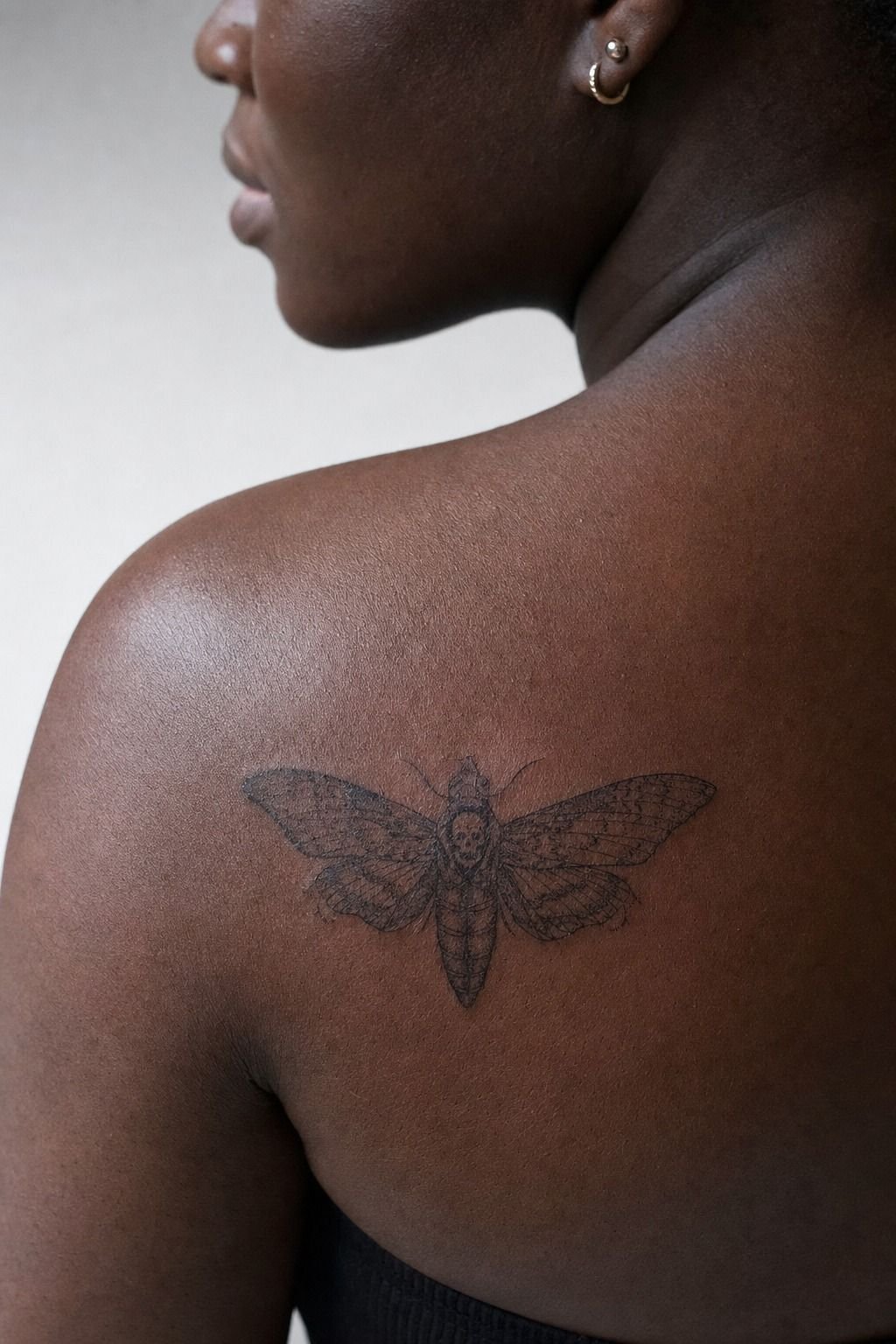
Pain should shape your style choices more than people admit. If you know you tap out fast, do not book ribs, sternum, or ankle for your first dark moth tattoo and then request heavy black packing plus dot shading.
That is a rough combo. Shoulder, outer forearm, and thigh are usually much more chill.
Lines feel sharper. Shading is a dull burn.
Color packing or dense blackwork is usually the spiciest part. So if your pain tolerance is average, I would steer you toward a fine line or light blackwork moth on shoulder skin first, then save sternum or hand for later. Deep ebony skin can hold a healed shoulder moth really nicely when the artist pushes contrast and doesn’t overwork the skin.
Tap out for five rather than pass out on me. If balance matters to your symbolism, this yin yang meaning guide is a clean reference before you add another painful element.
19Book An Artist For Deathhead Moth Tattoo
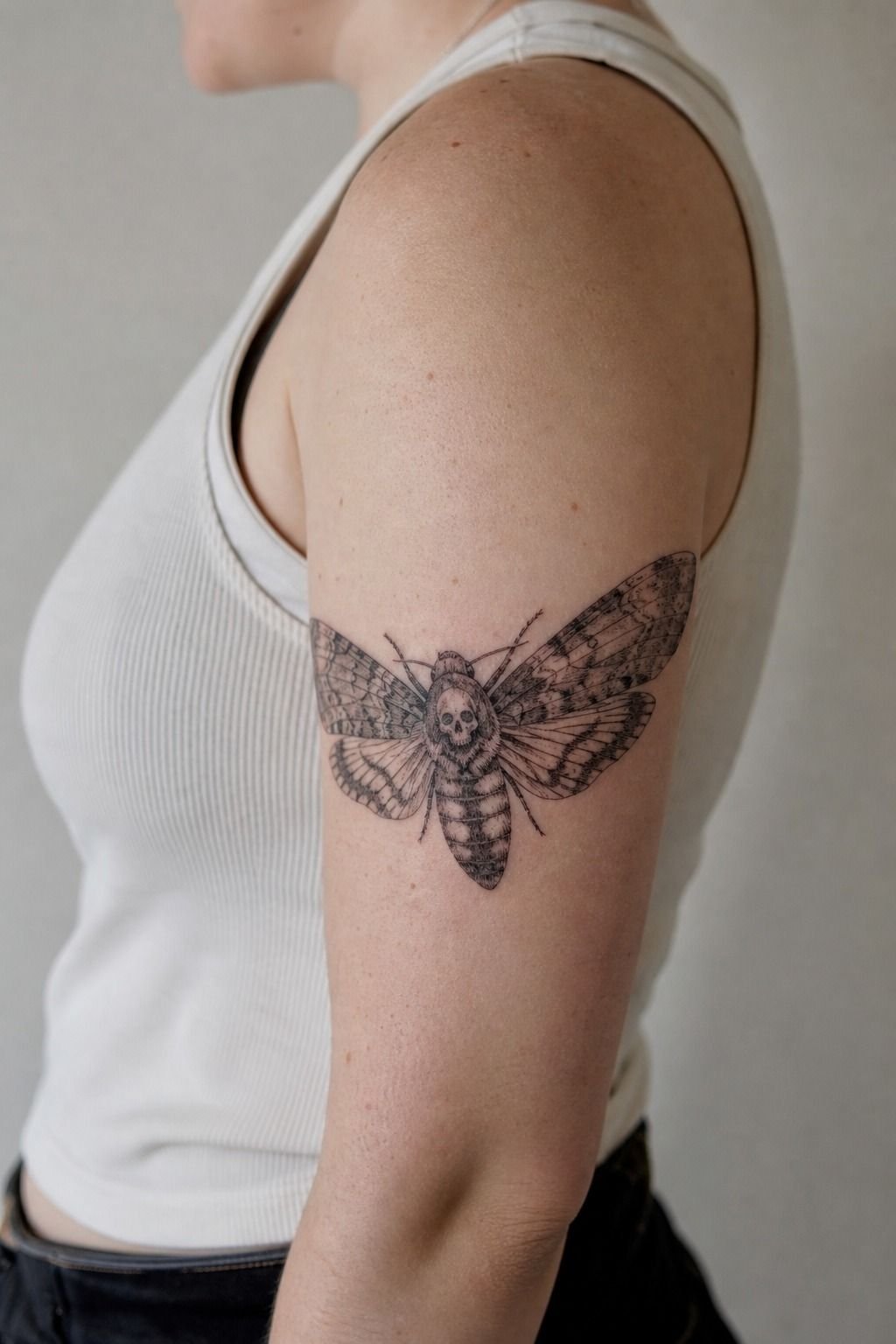
Booking the right artist matters more than picking the perfect Pinterest reference.
The Three-Contrast Rule I Use Before We Stencil
Here’s the framework I come back to when a deathhead moth design still feels off: silhouette contrast, skull contrast, and placement contrast. If one of those is weak, the tattoo usually feels weak too. You can have gorgeous linework and still lose the whole piece if the moth body disappears into the wing pattern or the placement fights the shape.
I’ve had clients come in convinced they needed more detail when what they really needed was more separation. More open skin between wing cells.
A darker thorax. A skull with fewer cracks and stronger sockets. That is it.
The cool part is you don’t need a giant tattoo to pull this off. You just need a design that knows what matters first.
And this is where a good artist earns their rate. They’ll edit with restraint.
They’ll tell you when your reference is trying to do too much. They’ll protect the long game, because the first photo is not the whole job. Healing is part of the design.
Aging is part of the design. If your moth still looks clean after the peel, after the silver skin, after a full season of normal life, that’s the win.
But contrast is not only about black versus skin. It’s also about line weight, empty pockets, and where the eye lands first.
I’ll often have someone step back from the stencil, turn slightly, then look again in a mirror. If the skull vanishes, we simplify the center.
If the outer wings vanish, we sharpen the silhouette. If both are competing, I’ll darken one zone and quiet the other.
That tiny edit can save the whole tattoo!
And one more thing: placement changes contrast more than people expect. A moth that reads clean on upper arm can get visually noisier on sternum or ribs because the body curves and the skin moves.
That doesn’t mean those placements are wrong. It means you design for them instead of forcing the same stencil everywhere.
The Two-Distance Test I Trust Most
When I’m designing a moth like this, I’m not judging it nose-to-skin. I’m judging it from two honest distances: mirror distance and casual glance distance.
If the silhouette lands at one and the skull lands at the other, the design is doing its job. If either one disappears, I simplify.
That sounds strict, but it saves people from the most common regret I hear: “I wish I had gone a little bigger” or “I wish we’d left more open skin.” Those are fixable in design stage and annoying after the tattoo is healed. And honestly, deathhead moth tattoos reward restraint. You don’t need every wing vein.
You need enough. Enough black.
Enough open skin. Enough shape to hold.
I also think this subject works best when you let it stay a little graphic. Not cartoonish.
Not flat. Just decisive. A clean moth with a readable skull ages nicer than a tiny over-rendered one every single time.
What People Always Want to Know
How much does a Deathhead Moth Tattoo usually cost?
Usually, a deathhead moth tattoo starts around the typical shop minimum and climbs with size and detail. Most people pay from about $50 to $100 minimum, or $100 to $250 per hour for custom work. In France, an established artist may charge about €120 to €200 per hour.
Use the estimate as a planning range, because city, placement, and artist demand can change the final price.
– Small fine line moth – Medium custom blackwork piece – Artist demand and city pricing
Are Deathhead Moth Tattoo a good idea for a first tattoo?
Yes, they can be a great first tattoo if you keep the design clean and pick a forgiving placement. Forearm, shoulder, and thigh usually heal more predictably than ribs, hands, or sternum for first-timers.
– Clear silhouette – Tolerable pain zones – Easy aftercare access
How do I choose a tattoo artist for Deathhead Moth Tattoo?
Choose an artist whose portfolio already shows crisp moths, healed linework, or solid black fill. Healed photos tell you more than fresh photos because you can see whether the lines stayed clean and the contrast held. And if you want to compare symbolism before you book, death moth tattoo meaning is a useful reference.
– Fine line or blackwork specialty – Studio hygiene and clear aftercare – Honest sizing advice
How much do Deathhead Moth Tattoo hurt?
They hurt a normal tattoo amount, but placement changes everything. Ribs, feet, hands, ankle, and sternum are usually the spicier zones, while shoulder, outer forearm, and thigh are usually easier to sit through.
– Sharp line pain on bone – Dull burn in shading – Breaks when needed
How long does a Deathhead Moth Tattoo take to heal?
Surface healing is usually about 2 to 4 weeks, and full settling is closer to 2 to 3 months. Gentle washing and light moisture help it heal nice without suffocating the skin.
– Unscented soap – Thin ointment layer – No pools, sun, or picking
What’s the best placement for Deathhead Moth Tattoo?
For most people, forearm or between the shoulder blades is the sweet spot. Both give you enough detail clearance and better long-term wear than tiny wrist, hand, or ankle versions packed too tight.
– Forearm for visibility – Upper back for symmetry – Sternum for bold anatomy-led placement
Start With The Three-Inch Rule First
If I had to pick one step, I would start with sizing the moth at three inches or bigger. Too-small skull details fight each other, and that fight never heals better later.
Get the scale right first. Everything else lands.