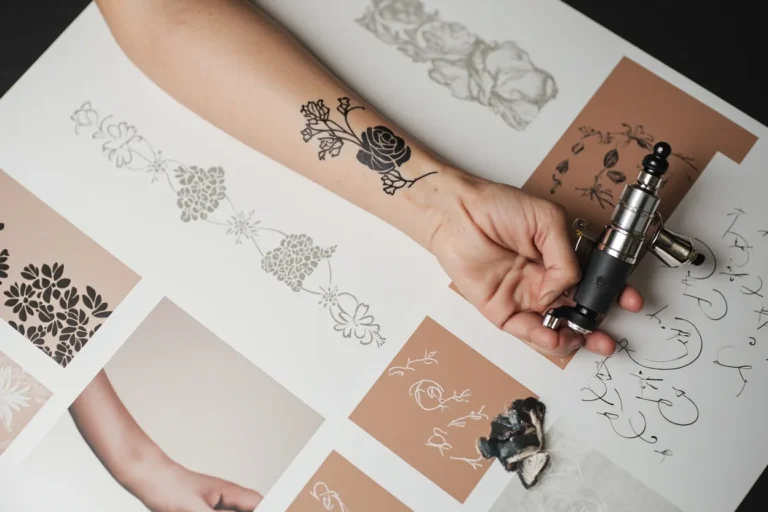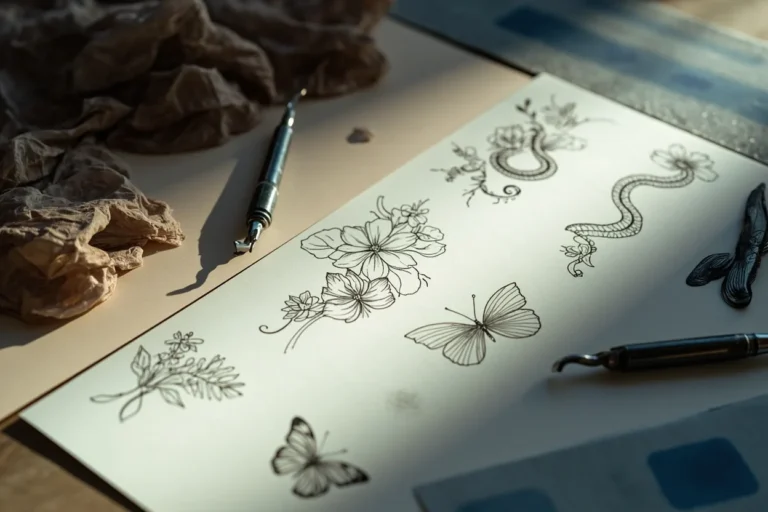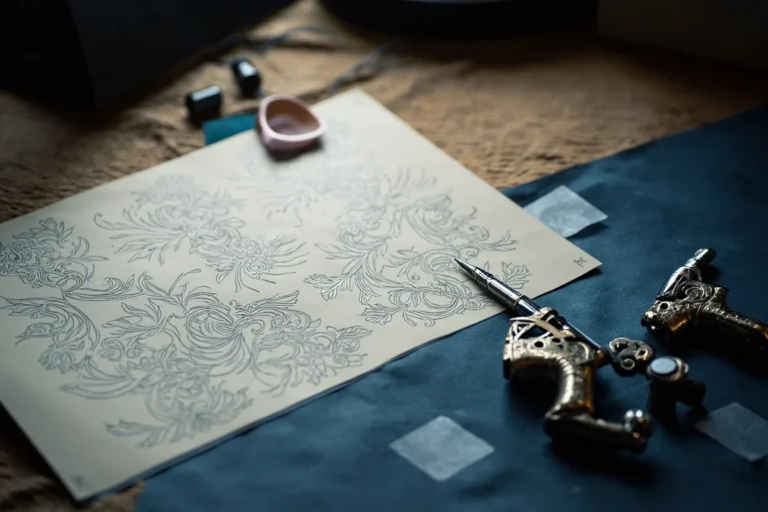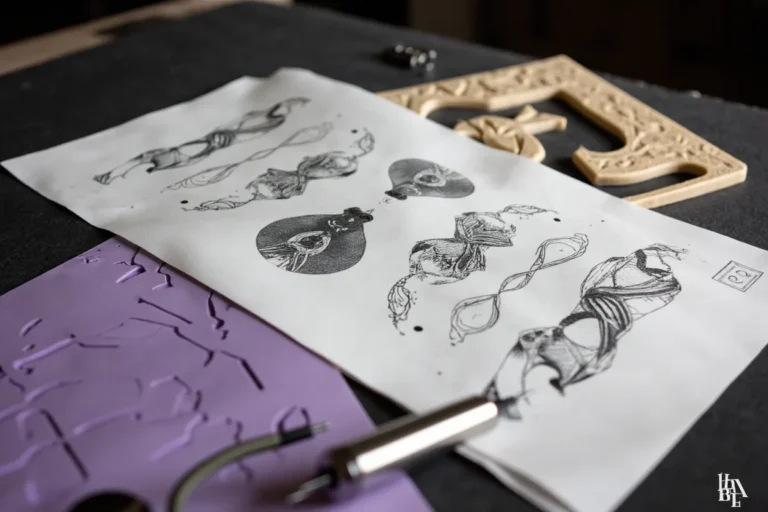
Patchwork tattoo sleeve ideas look casual when they are finished well. The planning is not casual. Spacing, scale, style mix, and future filler decide whether the sleeve feels collected or cluttered.
Quick answer: Good patchwork sleeve ideas mix separate tattoos with consistent spacing, compatible styles, strong focal pieces, small fillers, and a plan for the wrist, inner arm, elbow, and shoulder before the arm gets crowded.
Patchwork sleeve building blocks
A patchwork sleeve can be traditional, blackwork, fine line, illustrative, or mixed, but it needs visual rules.
| Direction | Best fit | What to watch |
|---|---|---|
| Anchor piece | First large tattoo on the arm | Sets the scale for everything else |
| Small filler | Stars, dots, leaves, sparks | Too much filler looks noisy |
| Theme cluster | Animals, florals, symbols | Can become repetitive |
| Mixed styles | Collected look | Needs spacing discipline |
| Negative space | Lets the arm breathe | Do not fill too early |
Every patch needs a clear border, even if that border is just negative space. Most artists use a 1-3 inch gap between pieces so the skin itself acts as a frame. Without that breathing room, patches blur together after healing and the whole sleeve reads as one muddy blob. Pick subjects that each stand alone at arm’s length: a bold panther, a classic ship, a skull, a rose. Each one should make sense without the others.
Mix scales intentionally. Drop a large centerpiece on the outer forearm or bicep, then fill with medium patches on the inner arm and smaller fillers at the wrist and elbow ditch. Black and grey ages cleaner than heavily saturated color in high-wear zones like the inner wrist, so plan your palette around longevity, not just what looks cool on screen.
Plan the awkward zones
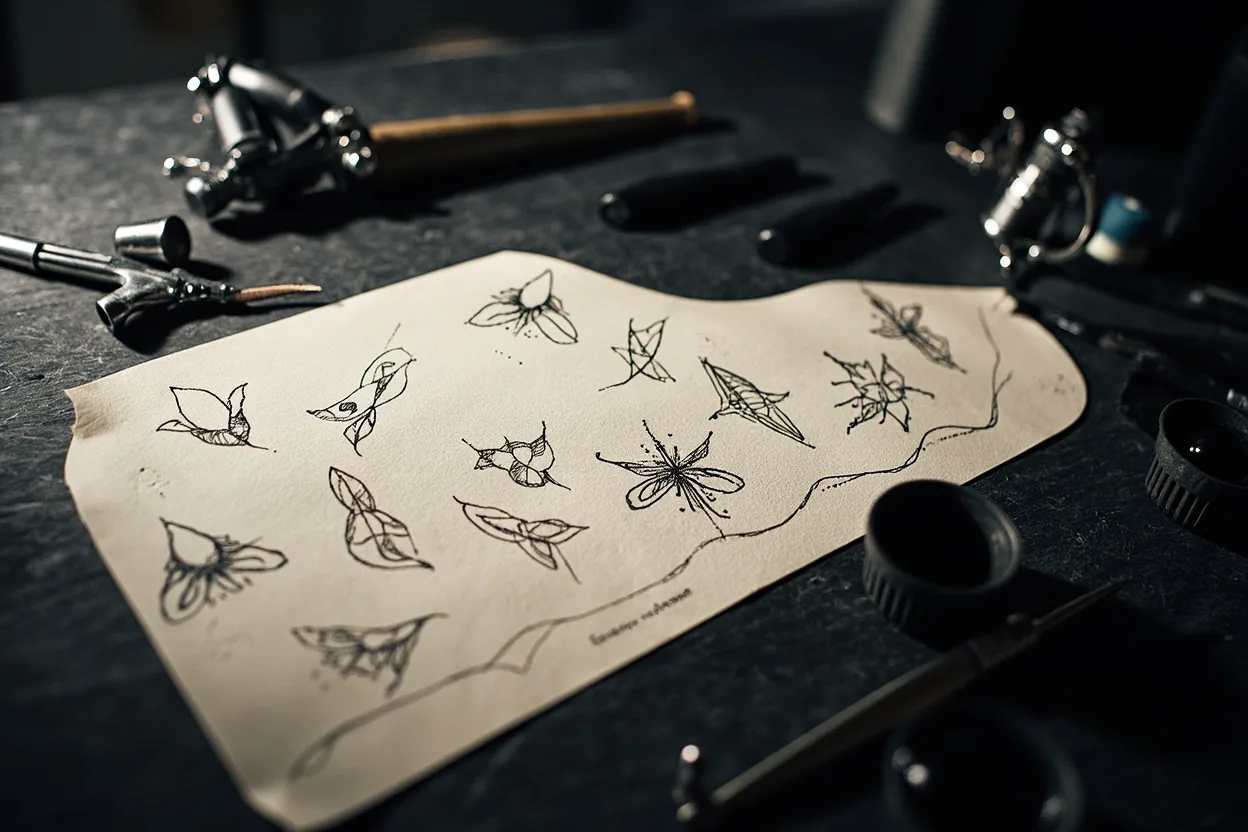
The blank skin between panels is doing as much work as the ink.
Elbows, inner arms, wrists, and shoulder caps are the zones that make patchwork sleeves look either intentional or random. Do not save them all for last without a plan.
If you already have a few small tattoos, take photos of the whole arm and ask an artist how to build around them. The next tattoo should help the sleeve, not just fill a blank spot.
The ditch, the wrist crease, and the inner elbow are the spots people ignore until they’re mid-sleeve and stuck. The elbow ditch is spicy, heals rough, and blows out easily if the artist pushes too hard. Keep patches there small and bold. Thin fine-line work in the ditch will fade to nothing in two years. Stick to solid shapes with clean edges that can survive the constant folding and friction.
The outer elbow is a different problem. It’s a hard curved surface that moves constantly. A patch placed right on the point of the elbow will stretch and distort every time you bend your arm. Most experienced artists recommend wrapping small fillers around it rather than centering a main piece there. The inner upper arm is a gentler zone and a great spot to land a medium-sized detailed piece that needs time to read.
Questions for the artist
Patchwork is easier when the artist can think beyond one appointment.
- Ask where the next three tattoos could go.
- Ask how much negative space to preserve.
- Ask if the current idea is too small for the sleeve.
- Ask what filler should wait until later.
Ask your artist how they handle gap management as the sleeve grows. Some artists plan the negative space from session one, others improvise, and both approaches can work but you need to know which one you’re getting. Ask to see healed photos of their patchwork sleeves specifically, not fresh shots. A portfolio full of fresh ink tells you nothing about how their work holds up at six months.
Ask about line weight consistency across patches. If one piece has micro-fine lines and the next has bold traditional outlines, the sleeve will look cobbled together rather than curated. A good patchwork artist adjusts line weight and shading style to match across pieces, even when the subjects are totally different. Also ask how many sessions they estimate and whether they prefer to outline everything first or finish patch by patch.
Patchwork mistakes
The biggest mistake is filling every gap too early. Negative space is what lets individual tattoos breathe.
Another mistake is mixing line weights without intention. A fragile fine line piece beside heavy traditional work can look accidental unless the spacing supports it.
The biggest mistake is rushing to fill every inch of skin. Patchwork sleeves need negative space to work. Clients come in after two sessions panicking about the gaps and beg to fill them immediately. That impulse kills the concept. The white space is structural. Give each patch room to breathe and the eye will travel around the arm naturally instead of getting lost in noise.
Second mistake is mixing too many styles without a unifying element. Neo-trad patches next to realism next to watercolor next to traditional all on the same arm looks chaotic, not eclectic. Pick a consistent line weight, a dominant color palette, or a shared subject theme to tie it together. Also, do not skip sunscreen once it’s healed. UV is the fastest way to destroy saturated color and turn crispy linework into a soft, faded mess inside three years.