A hummingbird tattoo usually means joy, movement, resilience, lightness, beauty, healing, and finding sweetness after hard seasons. The best version is not just the symbol copied from a reference board. It is the symbol shaped around placement, style, scale, and the amount of context you want other people to read.
Quick answer: A hummingbird tattoo usually means joy, movement, resilience, lightness, beauty, healing, and finding sweetness after hard seasons.
What the Symbol Actually Carries
From observation to meaning
The hummingbird has been watched closely for a long time. Its heart beats roughly 1,200 times per minute in flight. It can hover, fly backward, and dart between flowers with a speed that makes the movement feel almost mechanical. That physical strangeness is what people respond to in tattoo form. The bird does not behave like other birds. It suspends itself in air, drinks while flying, and burns fuel at a rate that would kill most animals its size.
That biology translates into meaning. Joy and lightness are the obvious readings. Resilience and survival are the deeper ones. A hummingbird must feed constantly or die. It crosses improbable distances during migration. Those facts are often linked to personal stories of recovery, of keeping going when the body or the situation says stop.
Cultural threads to know
The hummingbird appears in Aztec material culture, often linked to Huitzilopochtli and to warrior symbolism. In Caribbean and some Central American folk traditions, it is often linked to spirits and to messengers between worlds. Some Indigenous nations of North America hold the hummingbird as a healer or a bringer of good fortune. These are living associations, not dead facts. If you are drawn to one of these lineages, the respectful move is to learn which specific tradition you are referencing and whether your use of the symbol aligns with how that community treats it.
You do not need to claim any of these backgrounds to get the tattoo. You do need to know what strangers may read into your choice, and what you are choosing to carry whether you intended it or not.
Design That Works on Skin
Silhouette first, detail second
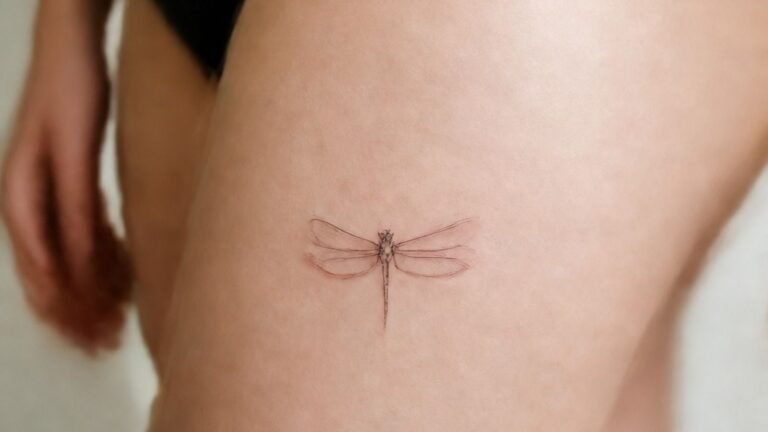
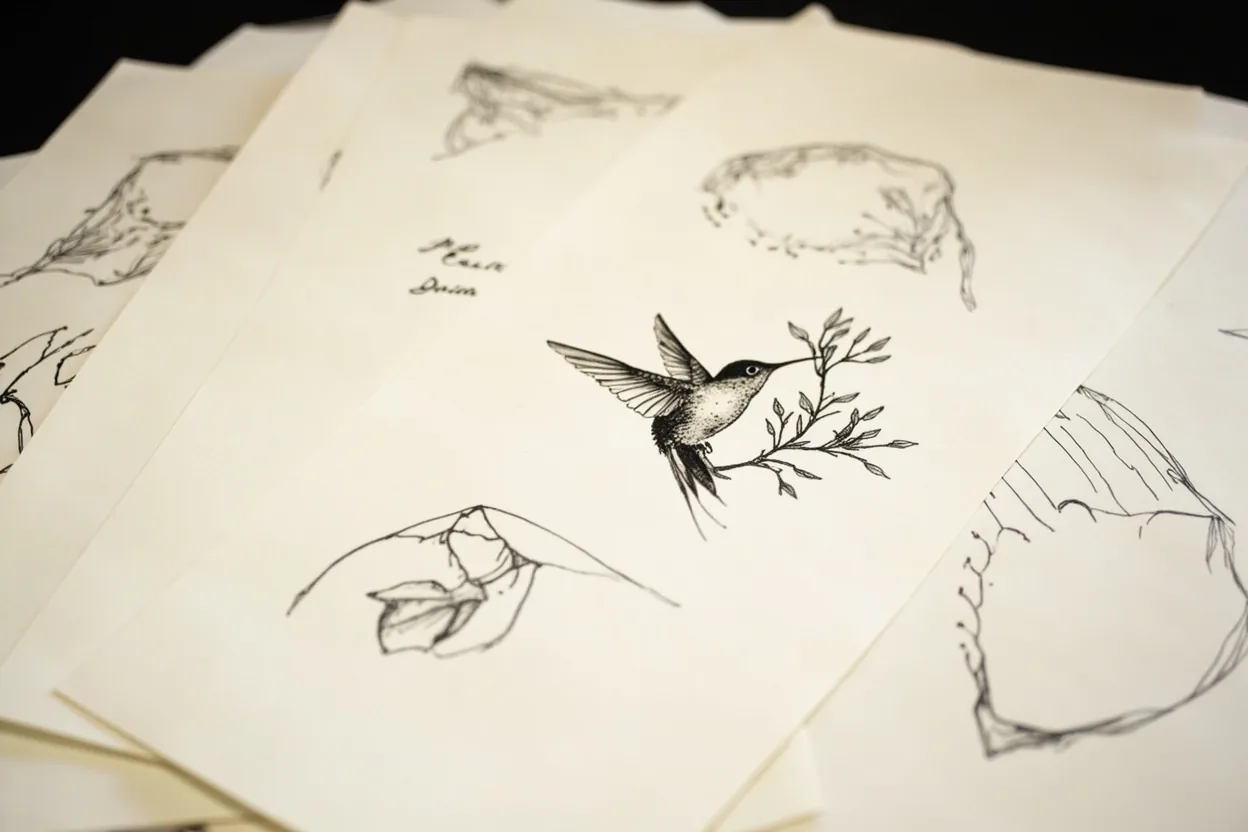
The hummingbird is recognizable by its proportions: long thin beak, compact body, wings that blur or extend in a characteristic arc. If you lose any of those three elements, you lose the symbol. This is why tiny hummingbird tattoos so often fail. At under two inches, the beak becomes a needle, the body becomes a dot, and the wings become unreadable grey.
Start with a clean silhouette. Hold your phone at arm’s length and look at the design. If you cannot identify the bird immediately, the tattoo needs more size, more contrast, or fewer competing details.
Style and scale together
Fine line hummingbirds can look elegant on wrist, inner arm, ankle, collarbone, or ribs. The risk is that thin lines soften and spread over years. Ask the artist to show healed photos of their fine line work, not just fresh tattoos. Look specifically for whether the beak and wing edges still hold.
Bolder versions work better on forearm, upper arm, thigh, calf, shoulder blade, or chest. Traditional American, blackwork, dotwork, and illustrative styles give the symbol more visual weight and more longevity. The tradeoff is that a bold hummingbird reads as more graphic, less delicate. Choose based on which feeling matches your meaning.
Color versus black and grey
Hummingbirds in nature carry iridescent throat feathers, emerald backs, and rose or amber chests. Color can capture that. The practical reality is that bright reds and greens fade faster than black, and touch-ups are more complex when the palette is specific. Black and grey or single-needle blackwork can feel more timeless and require less maintenance. If you want color, jewel tones with strong saturation tend to hold better than pastels. Ask your artist which pigments they have seen age well in their own portfolio.
Placement and How It Reads
Visible versus private
Choose a visible placement if the tattoo is part of your daily identity and you are comfortable with questions. Forearm, wrist, hand-adjacent areas, and neck placements put the symbol in conversation with everyone you meet. That can be exactly what you want, or it can become a burden you did not anticipate.
Choose a private placement if the meaning is personal, memorial, or still developing. Rib, hip, inner arm, ankle, back shoulder, and sternum placements let the tattoo stay yours. You show it when you choose. The rib and sternum are more painful and harder to heal because of movement and friction from clothing. Plan for that in your booking and aftercare.
Following the body
A hummingbird in flight needs direction. Ask the artist where the beak should point, how the wings should angle, and whether a flower or motion line should sit to make the tattoo follow your body’s lines rather than floating like a sticker. Collarbone and shoulder placements give the bird room to hover or angle upward. Ankle and wrist placements work best when the bird is simplified and oriented to read from the viewer’s perspective, not upside down to you.
The stencil test
Before you approve anything, have the artist apply the stencil at actual size. A design that looks balanced on a screen can feel wrong once it sits on real skin with its curves and movement. Walk around with the stencil for a few minutes. Check it in a mirror from a normal distance. If it does not read clearly, adjust before the needle starts.
Making It Yours
One personal decision
The fastest way to make a hummingbird tattoo feel generic is to ask for everything at once. Joy, resilience, healing, memory, beauty, movement. The symbol collapses under too many meanings. Pick one emotional center and build around it.
Add one personal element, not five decorative extras. A specific flower your grandmother grew. A direction that matches a meaningful location. A style reference from art you actually love. A placement tied to a specific moment. The tattoo becomes yours through restraint, not accumulation.
References for mood, not copies
Bring your artist images that show feeling: the weight of a line, the balance of negative space, the temperature of a color palette. Do not bring a Pinterest image and ask for the same tattoo. A good artist will keep the meaning while changing the angle, line weight, supporting details, and scale so the design belongs to your body and your story.
What to Ask Before You Book
Is this a good first tattoo?
It can be, if the design is not too small and the placement matches your comfort with visibility. A first tattoo is often a learning experience in how your skin heals and how you feel about permanence. A medium-sized hummingbird with clean outline and moderate detail gives you that education without the risks of micro-scale work or highly visible placement.
What style ages best?
Clean outlines, enough contrast, and simplified details age better than cramped micro detail. Fine line can work, but it needs realistic scale and an artist who understands needle depth and saturation for small work. Ask to see healed photos from two to five years prior. Fresh tattoos lie.
Where should I place it?
Wrist, forearm, and collarbone for visibility. Shoulder blade, rib, and hip for privacy. Upper arm and thigh for flexibility, you can show or cover easily. Finger and hand placements fade fast and hurt more. Behind the ear is popular but often ends up partially hidden by hair; decide if that matters to you.
How do I brief the artist?
Tell them which meaning should lead: joy, resilience, or lightness. That choice should influence the pose, line weight, and supporting symbols. Ask for one stripped-back version and one with more atmosphere. For a hummingbird, the simpler version usually ages better. The atmospheric version may photograph better on day one. Choose which matters more to you.
The Bottom Line
A hummingbird tattoo works when the symbol is readable, the meaning is focused, and the design is scaled to your specific body. It fails when it is too small, too crowded, or too borrowed from someone else’s reference image.
The bird’s actual biology gives you plenty to work with: constant motion, impossible energy, survival through relentless feeding, migration across distances that seem too far for the body. You do not need to invent mythology. You need to decide which of those real qualities speaks to your own experience, and then let the artist shape the visual form around that decision.
Book the consultation. Bring your one clear meaning. Ask for the stencil at size. Look at healed work, not just fresh photos. The tattoo will be with you for a long time. The time you spend getting the design right is the part you will not regret.
Frequently Asked Questions
What does a hummingbird tattoo mean?
Joy, movement, resilience, lightness, beauty, healing, and finding sweetness after difficult periods. The meaning deepens when you choose one emotional center rather than trying to include all of them.
Do hummingbird tattoos fade quickly?
Small or fine-line versions with thin details are more likely to blur or fade over time. Bold outlines and simplified shapes hold better. Color, especially bright reds and greens, may need touch-ups more often than black and grey.
What is the best placement for a hummingbird tattoo?
Wrist, collarbone, and forearm for visibility. Shoulder blade, rib, and hip for privacy. Upper arm and thigh for flexibility. Avoid going under two inches in size, as details collapse and the symbol becomes unreadable.
How much does a hummingbird tattoo cost?
In the US, expect roughly $150 to $400 depending on the artist’s rate, detail level, color work, and your geographic area. Highly experienced artists in major cities may charge more.
Is a hummingbird tattoo culturally appropriative?
The hummingbird appears in several living traditions, including Aztec, Caribbean, and some Indigenous North American cultures. You do not need to belong to these backgrounds to get the tattoo, but you should know what associations you may be invoking and choose knowingly rather than blindly.