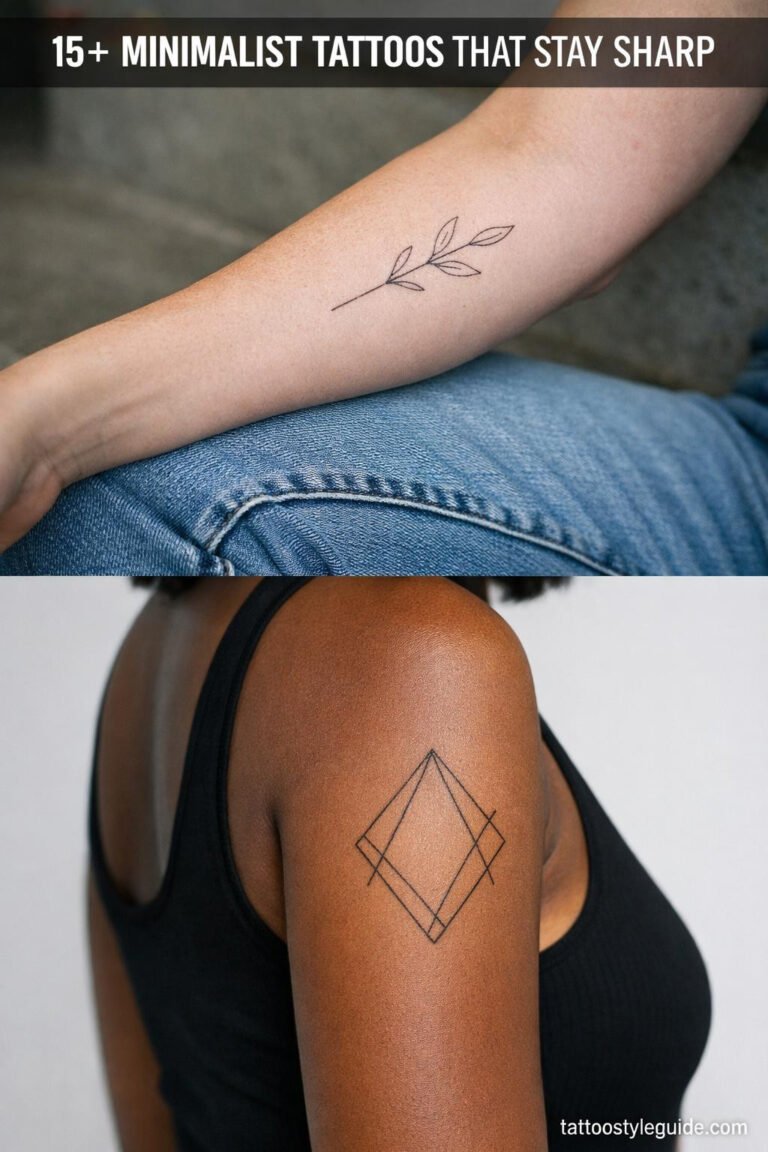
Tiny tattoos with meaning are popular because they feel private, low-risk, and easy to wear. The problem is that meaning often makes people add detail. Tiny tattoos need the opposite: fewer lines, stronger spacing, and one idea at a time.
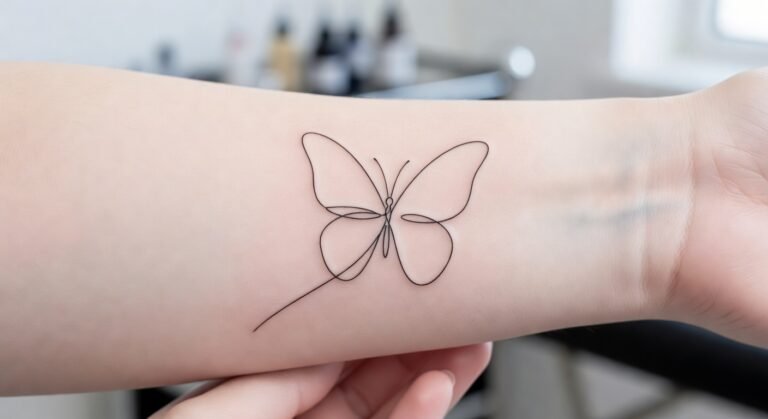
Quick answer: The best tiny tattoos with meaning are simple symbols that stay readable: birth flowers, initials, dates, tiny stars, moons, butterflies, hearts, small animals, coordinates, handwriting fragments, or personal objects drawn with clean spacing.
Choose one meaning
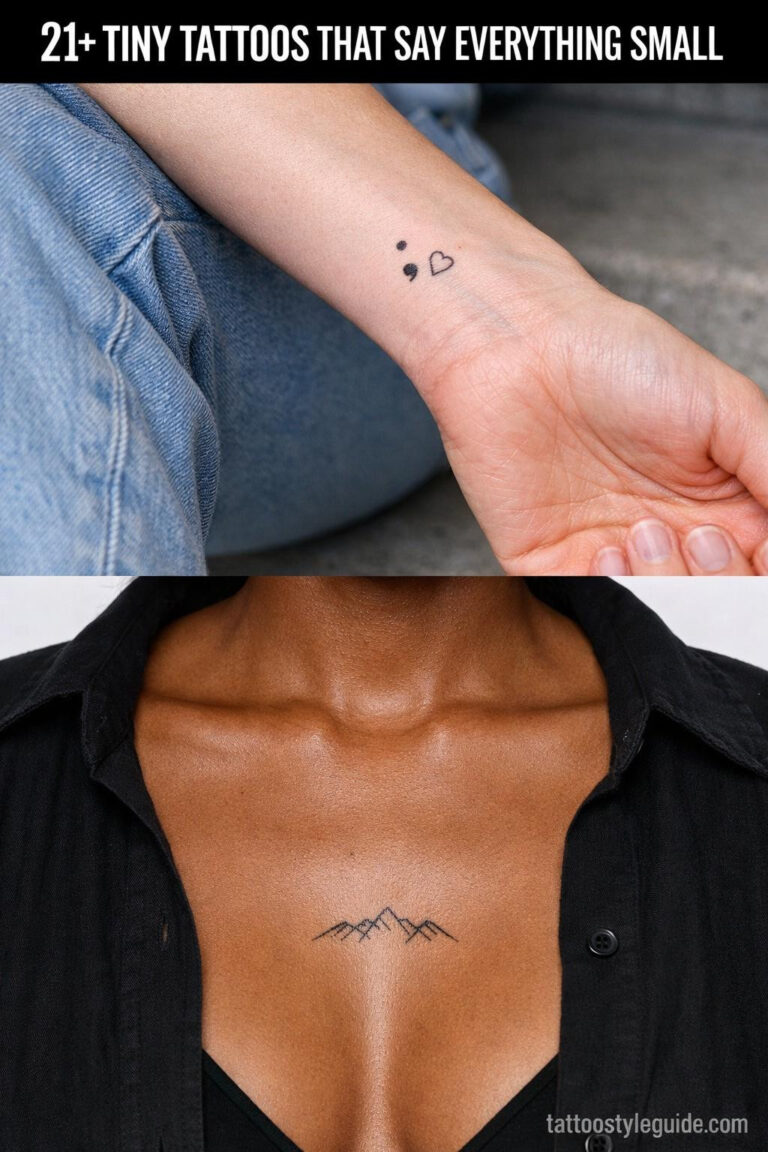
A tiny tattoo cannot carry everything. If it is for a person, choose one signal: their flower, initial, handwriting, date, or favorite object. If it is for recovery, choose one symbol: a star, small flame, mountain, snake, or line that means movement forward.
The tattoo gets stronger when it stops trying to explain itself.
Pick one symbol and commit to it. A tiny tattoo reads strongest when it carries a single, clear intention. A semicolon, a small wave, a birth flower, a coordinate point, a Roman numeral date. One thing. Stacking two or three ideas into a half-inch space turns all of them into visual noise that fades into a blob by year three.
Talk to your artist about what the piece means before they draw anything. A good fine-line artist will adjust the weight of the line, the scale, and the negative space around the design to make that meaning land. That conversation changes the final piece, and it shows.
Ideas that work tiny
A tiny tattoo that lasts is one your skin can actually hold.
| Idea | Meaning angle | Why it works small |
|---|---|---|
| Initial | Person, family, self | Clear shape and low detail |
| Birth flower | Month, family, memory | Works if petals are simplified |
| Star | Hope, direction, luck | Strong silhouette |
| Butterfly | Change, grief, freedom | Readable when wing detail is limited |
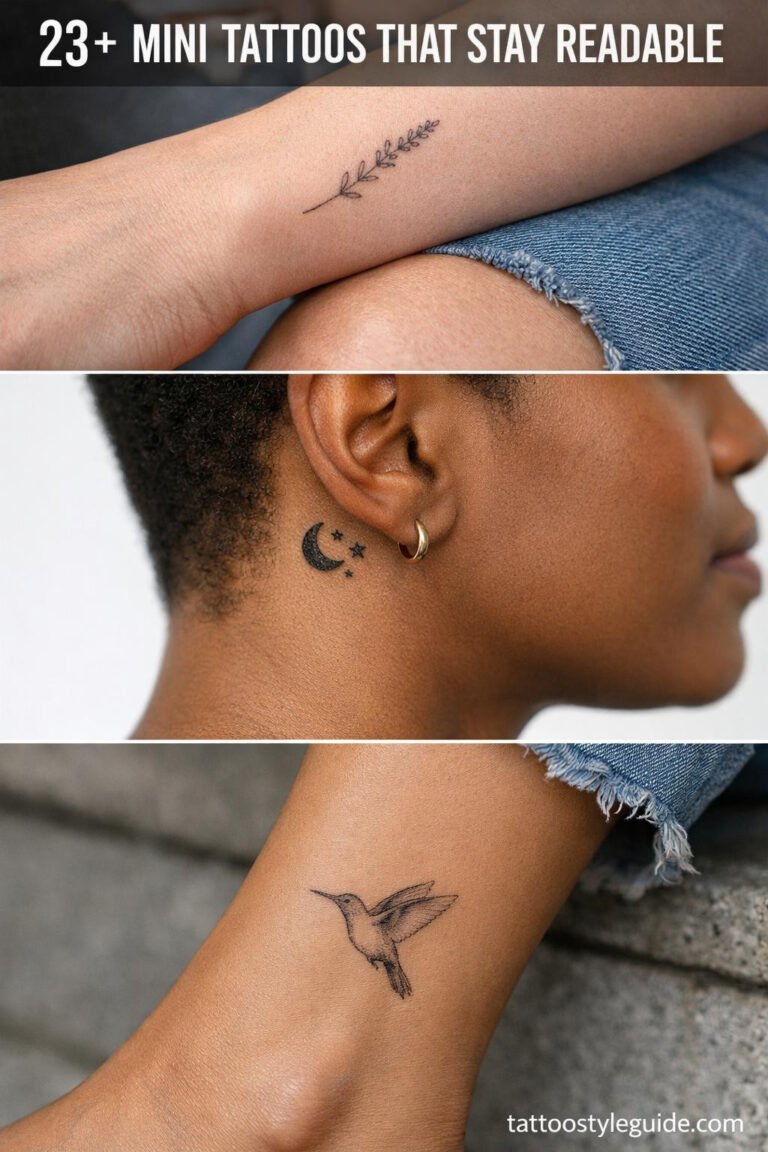
| Moon | Cycles, time, softness | Simple outline carries the idea |
| Tiny animal | Personality, memory, protection | Best as a silhouette |
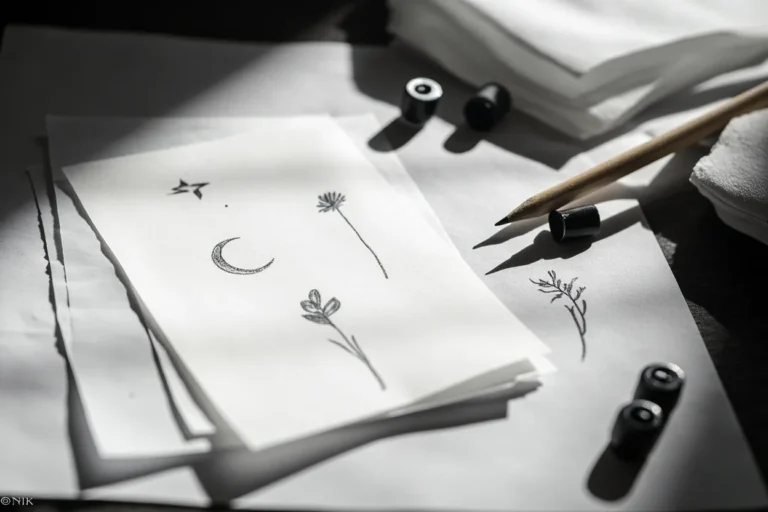
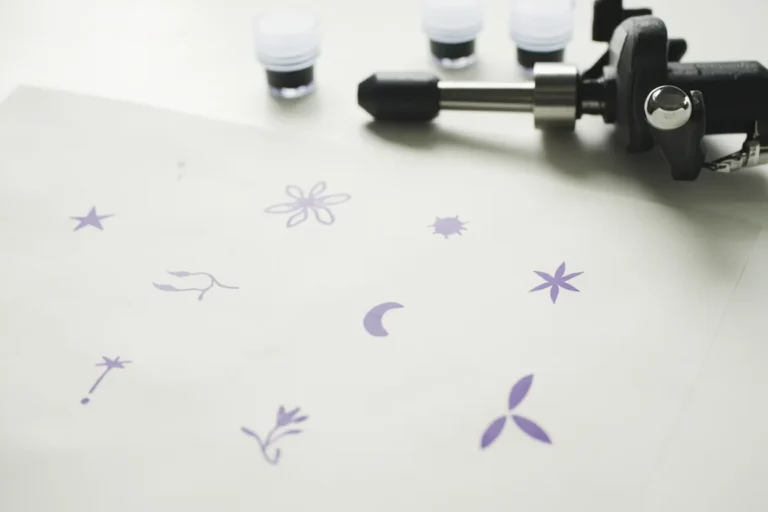
Some designs survive miniaturization and some don’t. Single-stem botanicals, geometric shapes with clean edges, constellation dots, small script in a bold serif font, outlined animals with minimal internal detail, arrows, moons, simple runes. These all hold up at half an inch to an inch because they have strong outer silhouettes and don’t depend on fine interior fill to read.
Avoid portraits, shaded roses with heavy petal layering, anything requiring gradient fills smaller than a dime, and intricate mandalas. That level of detail disappears as the ink spreads during healing. What looked crispy on the stencil becomes a dark smudge by week three. Your artist isn’t cutting corners, the skin just doesn’t hold that resolution at small scale.
Where tiny tattoos age better
Put tiny tattoos on skin that does not fight the design every day. Forearm, upper arm, shoulder, rib, ankle, and collarbone are usually safer than fingers, palms, feet, or the side of the hand.
If you want a tiny hand tattoo, make it bolder than you think. The wrist, hand and finger tattoo guides explain the fading risk.
Inner wrist, upper arm, behind the ear, sternum, and ribs are the go-to placements for tiny meaningful pieces, but they age differently. Inner wrist sits in a low-wear zone with minimal sun exposure and low friction. Lines stay readable for years there. Behind the ear is low-wear too, but the skin is thin and the healing can be patchy. Ribs are high-wear for anything rubbing against waistbands, plan on a touch-up sooner.
Fingers and hands look great fresh but they’re brutal on ink. The skin flexes constantly, gets washed dozens of times a day, and sees UV. Expect a finger tattoo to need a refresh every two to four years just to stay legible. Feet and toes are similar. If longevity matters to you, keep meaningful symbols off high-friction zones or size them up enough that blowout doesn’t erase the design.
Keep text short
One word can work. A full sentence in tiny script is usually a bad trade. Letters need spacing. Loops close. Ink spreads. A meaningful phrase may be better as one word, one initial, or the person’s handwriting reduced to a short mark.
One word almost always beats a phrase. ‘Breathe’ beats ‘remember to breathe.’ ‘Always’ beats ‘love always.’ The fewer letters, the thicker each letterform can be, and the longer it stays readable. A good rule is nothing longer than eight to ten characters at under two inches. Beyond that, your artist has to drop below 4pt equivalent line weight, and that heals soft and spreads fast.
Font choice matters more than most people realize at this size. Thin hairline scripts look stunning on paper and in fresh photos, but they blur within the first year on most skin types. A slightly heavier serif or a simple print font with consistent stroke weight holds its shape for a decade. Ask your artist to show you healed photos of their small text work, not just fresh pieces, before you decide on a style.
FAQ
What tiny tattoos have meaning?
Meaningful tiny tattoos include birth flowers, initials, dates, tiny stars, moons, butterflies, simple animals, hearts, coordinates, and small objects linked to a personal memory.
How tiny is too tiny for a tattoo?
Too tiny means the lines sit so close they may blur together after healing. If the artist cannot preserve spacing, the design needs more size or less detail.
Where should you put a tiny meaningful tattoo?
Outer wrist, forearm, ankle, shoulder, rib, collarbone, and behind the ear can work, but hands, fingers, feet, and palms fade faster.