A tattoo consultation is a short planning appointment where your idea stops being a vague picture in your head and becomes something an artist can quote, schedule, and draw. Done well, you walk out with a clear design direction, an accurate price, and real confidence in the studio. Done badly, you find out before any ink is permanent.
Quick answer: A tattoo consultation usually lasts 20 to 60 minutes and covers your concept, references, placement, size, style, feasibility, pricing, deposit, session count, and aftercare. Bring 2 to 5 references, a placement photo, ID, and a short list of questions. The biggest red flags are an artist who rushes you, hides pricing, or agrees to everything without a single suggestion.
What actually happens at a consultation
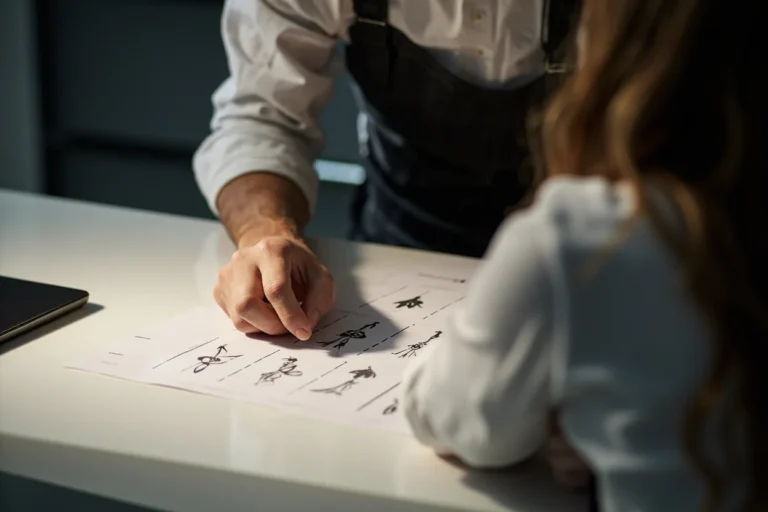
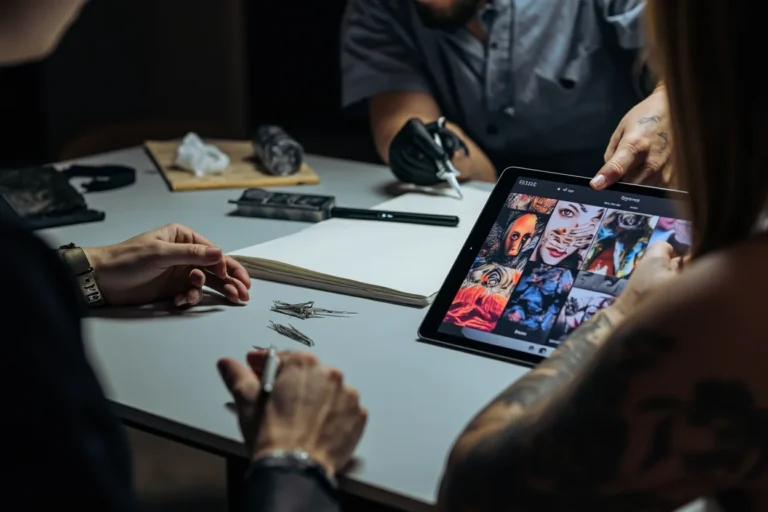
Most first consultations run 20 to 60 minutes, in person or sometimes by video if you are traveling. The flow is fairly consistent: you explain your idea, meaning, and style preference; you look at references together; the artist roughs out composition or at least talks it through; and you discuss how the design will flow with your muscles, joints, and any existing tattoos.
From there the conversation turns practical. The artist talks feasibility, meaning detail versus size, readability over time, and how your skin tone affects color choices. Then you cover pricing, deposit, and how many sessions the piece is likely to need. Some studios will place a paper stencil or use an iPad overlay on your body so you can see the size before committing to anything.
What to bring
The consultation is not small talk, it is the entire difference between okay and unforgettable.
You do not need a finished design. You need clear inputs so the artist can quote and plan accurately. The goal is to give them signal, not noise.
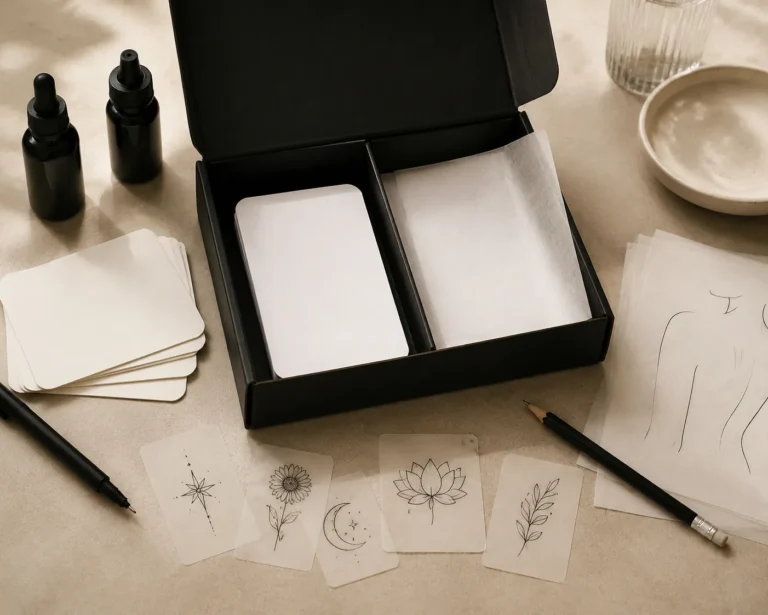
- 2 to 5 reference images of style and mood, not thirty screenshots.
- A placement photo of the body area, or be ready to show it in person.
- Any must-include elements such as dates, names, or coordinates, written down.
- A rough size in centimeters or inches, or a comparison like “phone size.”
- Valid ID and deposit money in case you are ready to book on the spot.
Leave the giant Pinterest board, another artist’s finished design you want copied exactly, and the entourage that will slow everything down. Separating the references that show style from the ones that show subject does more for the conversation than volume ever will.
The questions you should ask
Good artists expect questions and answer them calmly. If yours gets defensive, that is information too. Group your questions into four areas so you do not forget anything once you are in the chair.
| Topic | What to ask | Why it matters |
|---|---|---|
| Artist and studio | Styles you specialize in, healed work, licensing and hygiene | Confirms skill and safety |
| Design | Is this realistic at this size, how will it age | Protects long-term readability |
| Pricing | Hourly or flat, total estimate, what raises the price | Prevents budget surprises |
| Deposit and policy | Amount, how it applies, reschedule rules | Defines your commitment |
| Aftercare | Healing for this placement, recommended products | Affects how the tattoo settles |
Asking to see healed work rather than only fresh photos is one of the most revealing questions you can ask. If you want the full breakdown of how to judge those photos, see how to read a tattoo portfolio.
How deposits usually work
Deposits are standard and they protect the artist’s time for custom drawing and a reserved slot. The amount is often a fixed fee or a portion of the expected cost. It typically holds your date and gets deducted from the final price at your last session. If you no-show or cancel late, you usually lose it.
Major last-minute changes, like switching to a completely different concept or a much larger piece, can require a new deposit because that is new design time. A professional studio gives you the deposit policy in writing before you pay. The dedicated tattoo deposit guide covers the edge cases in more detail.
Pricing: hourly versus flat rate
Tattoo pricing depends on size, detail, style, placement, the artist’s experience, and your city. Two models dominate. Hourly rates are common for large or open-ended work like sleeves, back pieces, and realism projects. They are transparent for big work, but the final total stays an estimate until the piece is done.
Flat or per-piece rates are common for small and medium tattoos or flash, where the artist knows almost exactly how long the work will take. You get the price upfront, which is easier for budgeting. Whichever model applies, ask for a written quote or documented estimate and confirm what is included, such as design time and any touch-ups.
Placement and sizing
A large part of the consultation is about how the tattoo lives on your body, not how it looks on paper. A good artist will cover how the design follows your anatomy in motion, how visible it is for work or travel, how painful and forgiving the placement is, and whether the size actually supports the detail you want. Tiny tattoos cannot hold ultra-fine detail forever, and a good artist will say so and suggest enlarging or simplifying.
Warning signs of a bad consultation
One of these might be a bad day. Several together is a reason to keep looking. Watch the environment first: a cluttered studio, no visible license, or an artist who does not change gloves between tasks. Then watch the behavior. Being rushed, pressured to book immediately, or brushed off when you ask for healed work are all red flags.
Pay close attention to one thing in particular. An artist who agrees to everything you say, with no professional feedback at all, is not being agreeable. Good artists push back when something will not work. Prices far below the local market in a rough-looking shop, and vague non-answers about pricing or sessions, belong in the same warning category. If your gut says the visit feels off, it is completely fine to thank them, leave, and choose someone else.
How to prep as a first-timer
A little preparation makes the whole appointment smoother. Before you go, research the artist’s style and healed work so you already trust the match, and decide your must-haves versus your nice-to-haves. On the day, arrive on time and reasonably sober with something in your stomach, wear clothing that makes the placement easy to access, and take notes or ask them to email the key details.
Before you book or apply it
- Ask what size the tattoo needs to age well.
- Ask how many sessions the piece is likely to take.
- Ask when you will see the design and what previews are included.
- Get the deposit and reschedule policy in writing.
The consultation is your one low-stakes chance to get everything right before anything is permanent. Treat it as a conversation, not a formality. For the wider picture, the tattoo planning guide covers timing and budget, the custom tattoo design process explains what happens to your idea after you leave, and choosing a tattoo artist covers the decision that comes first.
Reader questions before you book
Are tattoo consultations free?
Many studios offer a short consultation at no charge, while some apply a fee that is later deducted from your deposit or final price. Ask when you book so there are no surprises.
Do I need a finished design for the consultation?
No. You need a clear concept, a few strong references, a placement, and a rough size. The artist handles the actual drawing afterward as part of the custom process.
What should I not do at a tattoo consultation?
Do not hide your budget, placement concerns, or uncertainty, and do not insist on copying another artist’s finished design detail for detail. The artist cannot solve what you will not tell them.