Laser tattoo removal before a cover-up is often about lightening, not erasing. A few sessions can open design options that a dark old tattoo would otherwise block.
Quick answer: Laser before a cover-up can lighten old ink so the new tattoo does not have to be as dark or large. It may take multiple sessions, healing time, and coordination between a laser provider and cover-up tattoo artist.
When laser helps a cover-up
Laser is most useful when old ink is too dark, dense, or badly placed for the new idea.
| Option | Best use | Keep in mind |
|---|---|---|
| Dark lettering | Makes floral or animal cover easier | Multiple sessions may be needed |
| Dense black tattoo | Creates more options | May not fully disappear |
| Crowded old design | Reduces visual noise | Takes patience |
| Color tattoo | Depends on pigment response | Some colors are harder |
| Scarred tattoo | Needs professional evaluation | Skin texture matters |
Laser doesn’t have to erase a tattoo completely to make a cover-up possible. Even two or three sessions can drop a dark, saturated piece down enough that your cover artist has real options instead of just black ink on black ink. We’re talking about fading a dense tribal arm band or a blown-out script so the new design can breathe, hold contrast, and actually read from across the room.
The sweet spot is usually 60 to 70 percent lightening. That’s where cover-up designs stop looking muddy and start looking intentional. Your cover artist will tell you when you’re there. Don’t guess on your own.
What makes this work on real skin
You are not erasing a tattoo, you are buying your next artist options.
A cover-up artist may recommend laser when the old tattoo would force the new design into a bad choice. That is not a delay tactic. It can prevent a bigger, darker regret.
The skin needs time to heal between laser and tattooing. Rushing the new tattoo onto irritated skin is not worth it.
Skin that’s been lasered responds differently than fresh skin. You get some texture changes, a little raised scarring in spots, and the dermis is more sensitive. That matters for how ink settles. Fine line work over a heavily lasered area can look crispy right after the session but may heal patchy because the skin structure underneath isn’t the same as untouched skin.
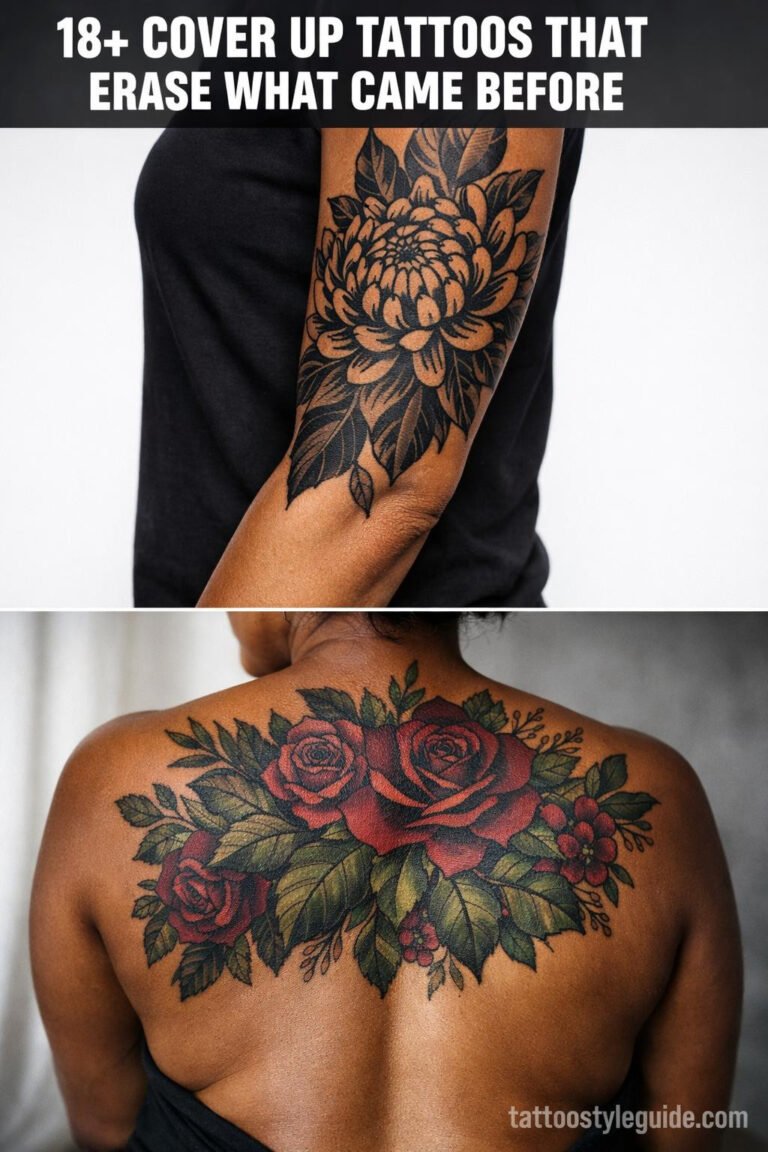
Bold, saturated fills and thick black lines hold better over lasered skin than delicate single-needle work. High-wear zones like the wrist crease, elbow ditch, and finger base lose detail faster anyway. Add laser texture to that and fine line in those spots will fade fast. Go bold where you can.
Before you book or apply it
Consult both a qualified laser provider and a cover-up artist before choosing the final design.
- Ask how light the old tattoo needs to be.
- Ask how long to wait after laser before tattooing.
- Ask what colors may respond slowly.
- Protect treated skin from sun as instructed.
Wait a minimum of eight weeks between your last laser session and your cover-up appointment. The skin needs to fully heal and settle. Rushing it means your artist is tattooing inflamed tissue, which leads to blowout risk and uneven ink absorption. Some shops want twelve weeks. Listen to them.
During that waiting period, keep the area moisturized and out of direct sun. Sunburned or dry, peeling skin takes ink badly. Come in with healed, hydrated skin and your artist will have a much cleaner canvas. Also bring clear reference photos of both the old tattoo and the cover-up design you want.
Mistakes to avoid
Do not assume laser must remove the tattoo completely. Lightening can be enough for a strong cover-up.
Do not book the cover-up date before you know how your skin responds to laser.
Safety source note: This guide keeps safety advice conservative and points readers to primary public-health or dermatology sources.
Don’t book your cover-up with a different artist than the one who planned your laser sessions. The two need to be on the same page about how much fading is enough. A cover artist who hasn’t seen the old tattoo in person, only in a photo, can’t accurately judge ink density under the skin or plan around the blowout edges that are still lurking.
Another mistake is going too light with the cover design thinking the laser did all the work. Lighten up a tattoo and then try to cover it with pastel watercolor style ink and you’ll end up with a muddy mess in six months. Lean into bold fills, whip shade backgrounds, and designs with strong composition. Bold will hold, especially over skin that’s already been through sessions.