Most tattoo artists charge for designs the same way they charge for the tattoo itself, by the hour or as a flat session rate. Custom drawings typically run $50, $200 per hour of design time, though many artists roll prep work into the overall tattoo price rather than billing separately. The real question isn’t what to charge in isolation; it’s how to structure your pricing so you get paid fairly for every hour you work, whether that needle is in skin or your pencil is on paper.
Why Design Work Deserves Its Own Price Tag
I’ve watched too many young artists burn out drawing for free. They think the “design” is just the hook to land the tattoo appointment. But that sketch? It’s hours of reference gathering, composition, sometimes redrawing three times because the client “saw something on Pinterest.” In my chair, I tell people straight: the drawing is half the battle. Bad design can’t be saved by good tattooing.
Time You Don’t Get Back
A palm-sized custom piece might take two hours to design. A full sleeve layout? I’ve spent eight to twelve hours before touching skin. That’s real time, time you could be tattooing, sleeping, or having a life. Track it. I started logging my prep hours years ago and was shocked: I was giving away 15, 20 hours a week in unpaid labor.
- Reference collection: 30 min, 2 hours
- Thumbnail sketches and composition: 1, 3 hours
- Final rendering and stencil prep: 1, 4 hours
- Client revisions (the killer): 30 min, hours of back-and-forth
The “Consultation Trap”
We see this a lot in busy shops. Artist does a free consult, spends an hour talking, draws for two hours, client ghosts. Happened to me twice in one month when I was starting out. Now? Consultations over 30 minutes get billed, and design deposits are non-negotiable.
How to Structure Your Design Fees
There’s no single right way. What matters is consistency and transparency. Clients smell uncertainty, and they’ll negotiate you into the dirt if you hesitate.
Hourly Design Rate
This is my preference. I charge 60% of my tattoo hourly rate for design time. So if I’m $200/hour tattooing, design work is $120/hour. Why less? Because I’m not dealing with setup, teardown, materials, or the physical toll. But it’s not free. I bill in 15-minute increments after the first hour. Client gets a rough time estimate upfront. No surprises.
Flat Design Fee
Some artists prefer this for simplicity. Small custom piece: $150, $300. Half sleeve layout: $400, $800. Full back piece design: $1,000+. The risk is scope creep, client wants “just one more element” five times. If you go flat, define revisions clearly in writing. I know artists who allow two rounds of changes, then charge hourly after that. Smart.
- Simple flash-style custom: $50, $150
- Palm to hand-sized original: $150, $400
- Large complex custom (sleeve, back piece): $500, $2,000+
Design Deposit Model
Most shops I respect use this now. Client pays $100, $500 upfront (applied to final tattoo price). If they no-show or cancel within 48 hours, artist keeps the deposit. This covers design time and protects against flakes. I’ve had deposits save my week when a client bailed after I’d already drawn for four hours.
What Affects How Much You Should Charge
Geography matters. My rates in Portland wouldn’t fly in rural Mississippi, and they’d be low for Manhattan. But beyond location, these factors genuinely move the needle.
Your experience level. A two-year apprentice shouldn’t charge what a fifteen-year veteran does. But don’t undersell to “build portfolio.” I did that. It attracts nightmare clients who haggle over everything and tip nothing. Price communicates value.
Complexity and style. A bold traditional eagle takes me 45 minutes to design. A photorealistic portrait with custom background? Four hours minimum. Japanese work with proper reference and symbolism? Even longer. I charge more for styles that demand more precision, fine line, realism, ornamental.
Client usage rights. Here’s where artists get exploited. If a client wants to use your design for merchandise, album art, or reproduction, that’s a separate licensing conversation. I learned this the hard way when a band got my tattoo design printed on 500 shirts. Now I have simple language in my booking form: tattoo design is for personal use only. Commercial licensing? That’s a different contract and a different fee.
Revision scope. The first draft is included. Changing the entire concept because they “thought about it more”? That’s a new design fee. I say this gently but firmly in my chair: “I want you stoked, but I also need to respect my time.”
When to Charge Separately vs. Roll It In
This confuses newer artists. Do I bill design separately or include it in the tattoo price?
Include in Tattoo Price
Works for: walk-in style pieces, small custom work, repeat clients who trust your vision, flash with minor customization. I do this for anything under two hours of tattoo time. Simpler for everyone, and my hourly rate already accounts for light prep.
Charge Separately
Works for: large-scale custom work, clients who want to “think about it” before booking, designs the client might take elsewhere (yes, this happens), or when you’re clearly designing more than tattooing. I had a client in 2019 who wanted three full sleeve concepts to “choose between.” That’s three separate design fees. He paid happily because I explained the value upfront.
- Small, straightforward: Roll into tattoo price
- Medium custom with some back-and-forth: Deposit model
- Large, complex, or indecisive client: Separate design fee, clearly contracted
Red Flags and Hard Lessons
I’ve been burned enough to spot trouble. These are my non-negotiables now.
Don’t draw before money changes hands. Ever. I don’t care how “serious” they seem. The most enthusiastic clients sometimes vanish fastest. Get that deposit.
Don’t send high-res files before the appointment. I send watermarked progress photos, enough to approve direction, not enough to steal. Had a client take my drawing to a cheaper artist once. Never again.
Don’t negotiate against yourself. If they say “that’s more than I expected,” explain the time involved. Don’t immediately drop your price. I tell clients: “This is what it takes to do it right. I’m not willing to do it halfway.” Most respect that. The ones who don’t? Not your clients anyway.
Don’t forget the physical costs. Paper, ink, iPad Procreate subscription, reference books, the hours maintaining your portfolio, these are real expenses. Your design fee isn’t pure profit.
Talking to Clients About Design Fees
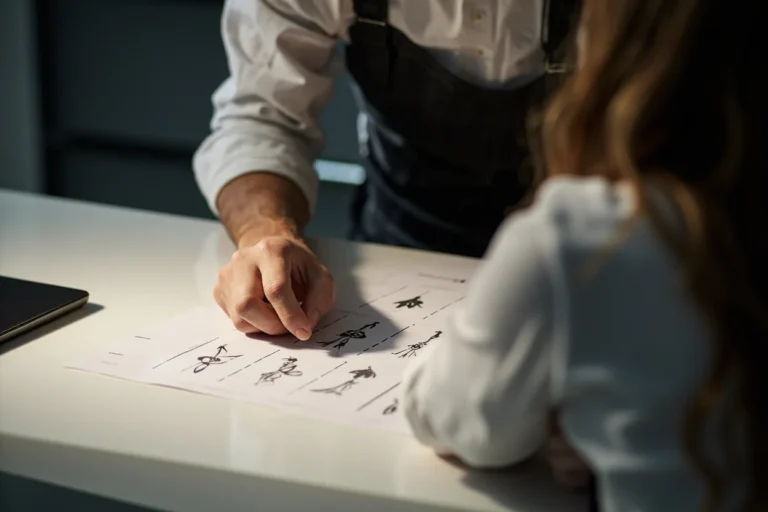
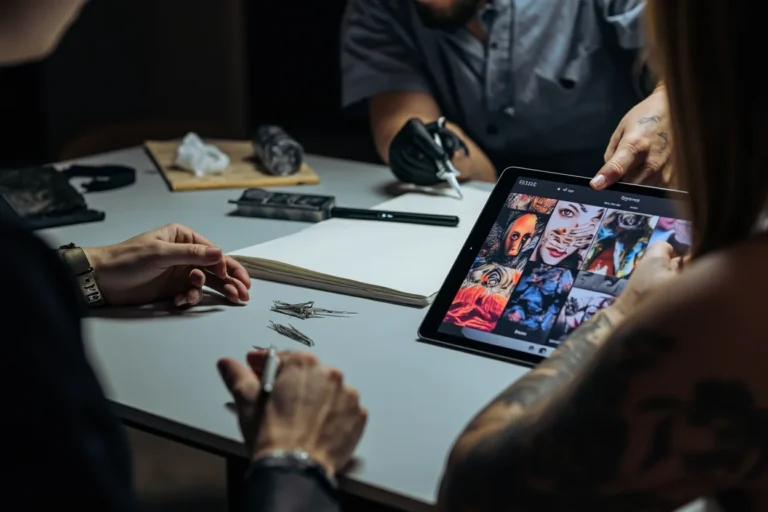
Most price resistance comes from clients not understanding what they’re paying for. I walk them through it casually: “So I’ll spend probably three hours on this before you sit down. That’s three hours of focused creative work, same as if I were tattooing someone else.” Visuals help. I show rough sketches, reference boards, explain the decision-making. Suddenly $200 for design time feels reasonable.
Be confident but not defensive. I used to apologize for my prices. Now I state them like weather, just a fact, not up for debate. “Design fee is $150, applied to your session. I’ll need that to start drawing.” Period.
Key Takeaways
Design work is real work. Price it that way. Whether you bill hourly, flat fee, or through deposits, the structure matters less than the principle: your creative time has value. Start tracking your actual prep hours. Use deposits religiously. Define revision limits in writing. Adjust for complexity and your experience level. And never, ever apologize for running a business.
The artists I know who’ve lasted decades all figured this out eventually. Some learned slower than others, I sure did. But once you respect your own design time, clients tend to follow suit. The ones who won’t? Let them be someone else’s headache. You’ve got drawings to finish and skin to mark.
Frequently Asked Questions
Do I have to charge separately for every tattoo design?
Not necessarily. Many artists roll small design fees into their hourly or flat session rate. For larger custom work though, separating the design fee protects your time and sets clear expectations.
What if a client wants to see the design before paying a deposit?
I don’t send finished designs without deposit. I’ll describe concepts or show rough direction, but the detailed drawing comes after commitment. Anyone who balks at this usually wasn’t serious about booking.
How do I handle a client who says my design fee is too expensive?
Explain the actual hours involved and compare to your tattoo rate. If they still resist, they may not value custom work. I’d rather lose that booking than spend unpaid hours drawing for someone who doesn’t respect the craft.
Can I charge more for design if the client wants to use it for something besides a tattoo?
Absolutely. Commercial usage, merchandise, prints, branding, requires separate licensing. I keep simple rights language in my booking forms and charge 1.5, 3x my design rate for commercial licenses.
Related Tattoo Guides
- How to Shade a Tattoo: A Working Artist s Guide
- Getting a Spain Tattoo: Styles, Placements What to Expect
- Does a Leg Tattoo Hurt? A Real Tattoo Artist Breaks It Down
- Explore more