A tattoo that represents healing doesn’t need a lotus or a semicolon stamped on your wrist like everyone else’s. I’ve been tattooing recovery pieces for years, and my early mistake was reaching for the symbol catalog instead of asking what the healing actually felt like. The best ones I’ve done barely read as “healing tattoos” at all. Here are 13 ideas that hold meaning without the cliché, plus honest notes on pain, cost, and how each one ages.
- Fine Line Floral Wraparound for Emotional Healing
- Semicolon Behind the Ear as a Quiet Recovery Marker
- Kintsugi Gold Seams Reworked on the Forearm
- Snake Shedding Skin Along the Collarbone
- Botanical Band-Aid Tattoo Over a Self-Harm Scar
- Blackout Phoenix Rising on the Upper Arm
- Tiny Stitched Heart on the Wrist
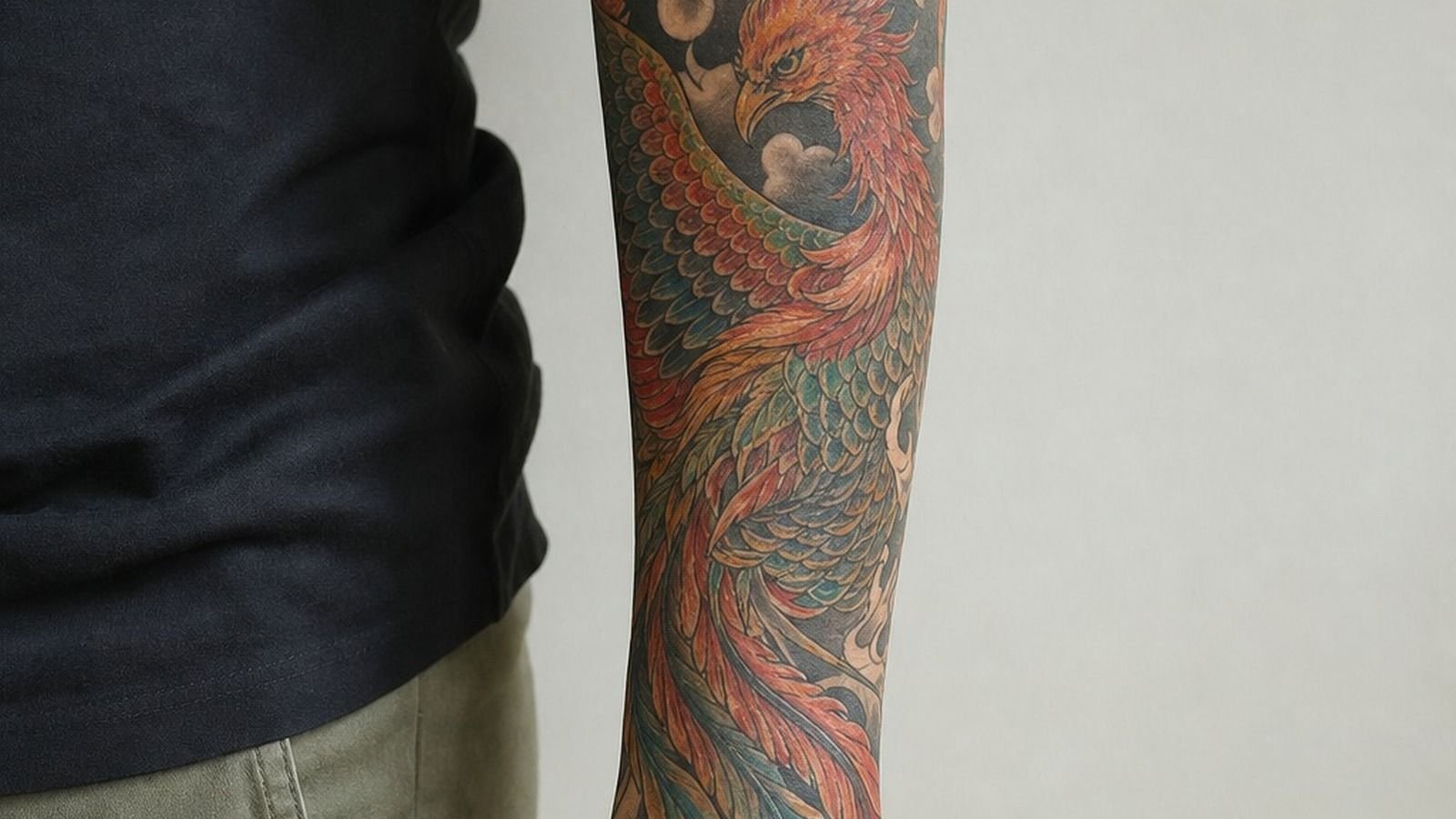
- Japanese Phoenix Irezumi Sleeve Rebuild
- Watercolor Lavender Sprig for Anxiety Recovery
- Ribcage Script: “Still Here” in Soft Lettering
- Scar-Cover Mandala on the Outer Thigh
- Tebori Koi Swimming Upstream on the Calf
- Minimalist DNA Strand with a Blooming Rose
1Fine Line Floral Wraparound for Emotional Healing
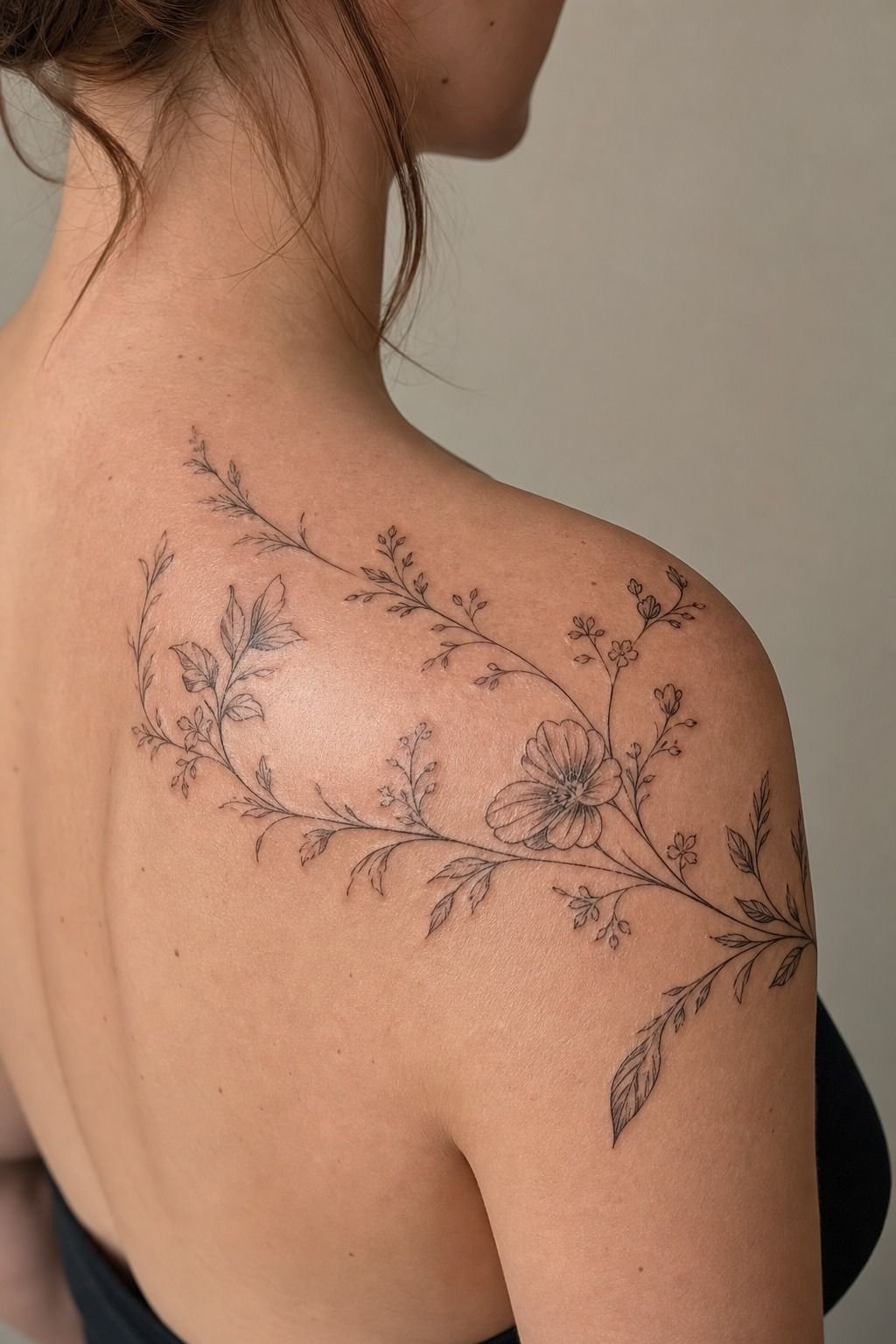
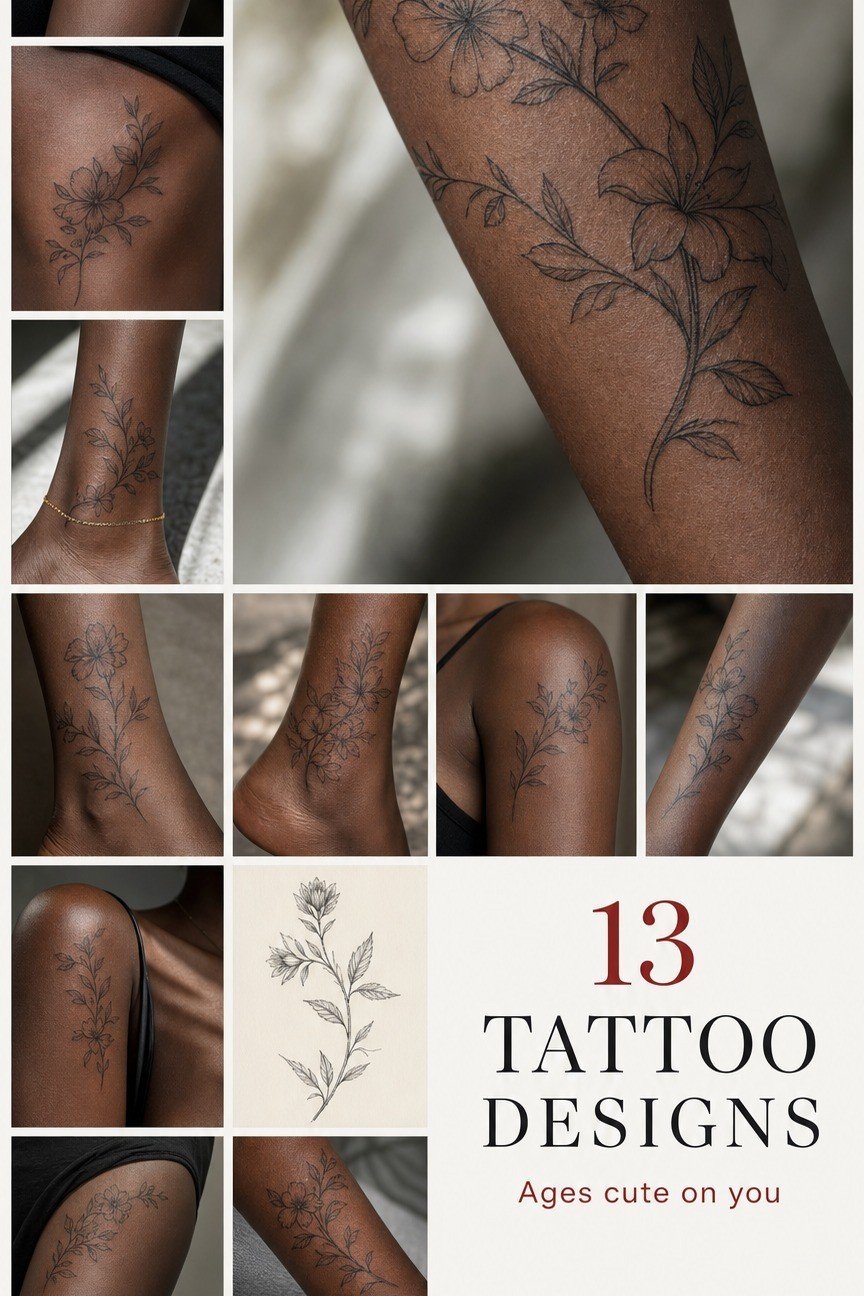
A wraparound floral on the shoulder is my default answer when someone wants self healing tattoo ideas that stay quiet. The design in front of you is three botanical stems in single-needle fine line, wrapping from the front of the shoulder toward the blade so it moves with you.
That flow matters. A tattoo that sits still on skin that never sits still reads stiff in a year.
Ask your artist for 3RL linework with soft pepper shading inside the petals, not heavy fill. It’s gentle, organic, and it heals nice because there’s minimal trauma to the skin. Shoulder placement is also kind: low pain, low wear, and it hides under a tee when you don’t want the questions.
Budget two to three hours for a piece this size, so roughly $250 to $500 at typical US rates of $100 to $250 an hour. If you’re nervous about the healing process tattoo side of things, my day-by-day healing stages breakdown walks you through every weird phase. And if florals speak to you, I keep a running list of self healing tattoo ideas in this same vein.
2Semicolon Behind the Ear as a Quiet Recovery Marker
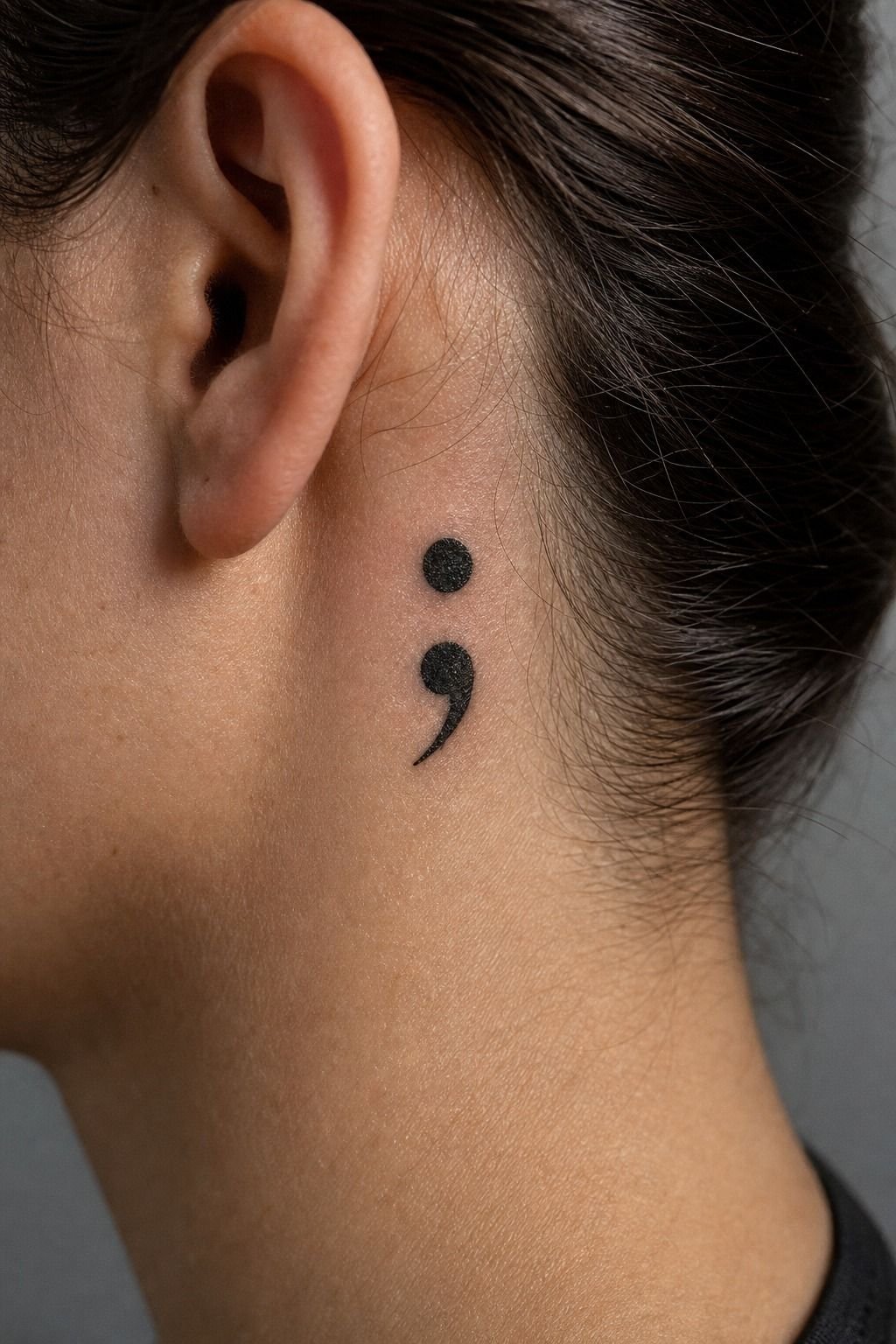
Yes, the semicolon is everywhere. But placement changes everything, and behind the ear turns a loud symbol into something intimate that only shows when your hair’s up. The macro shot here is what you want: crisp, small, no blowout into the hairline.
This is a 20-minute appointment. Most shops charge their minimum, so $50 to $100 depending on your city. Pain-wise it’s spicy for its size because you’re on bone, but it’s over before you’ve finished complaining about it.
Honestly, the buzz against your skull bothers people more than the needle.
One warning: behind the ear is a sneaky high-friction zone. Glasses arms, phone presses, shampoo.
Keep your hands off it and wash gentle with unscented soap. If you’re unsure what to put on a healing tattoo, I wrote the whole ointment rundown so you don’t suffocate the thing.
A thin layer, twice a day, done. This one’s a serene little marker you’ll forget is there until someone spots it and smiles.
3Kintsugi Gold Seams Reworked on the Forearm
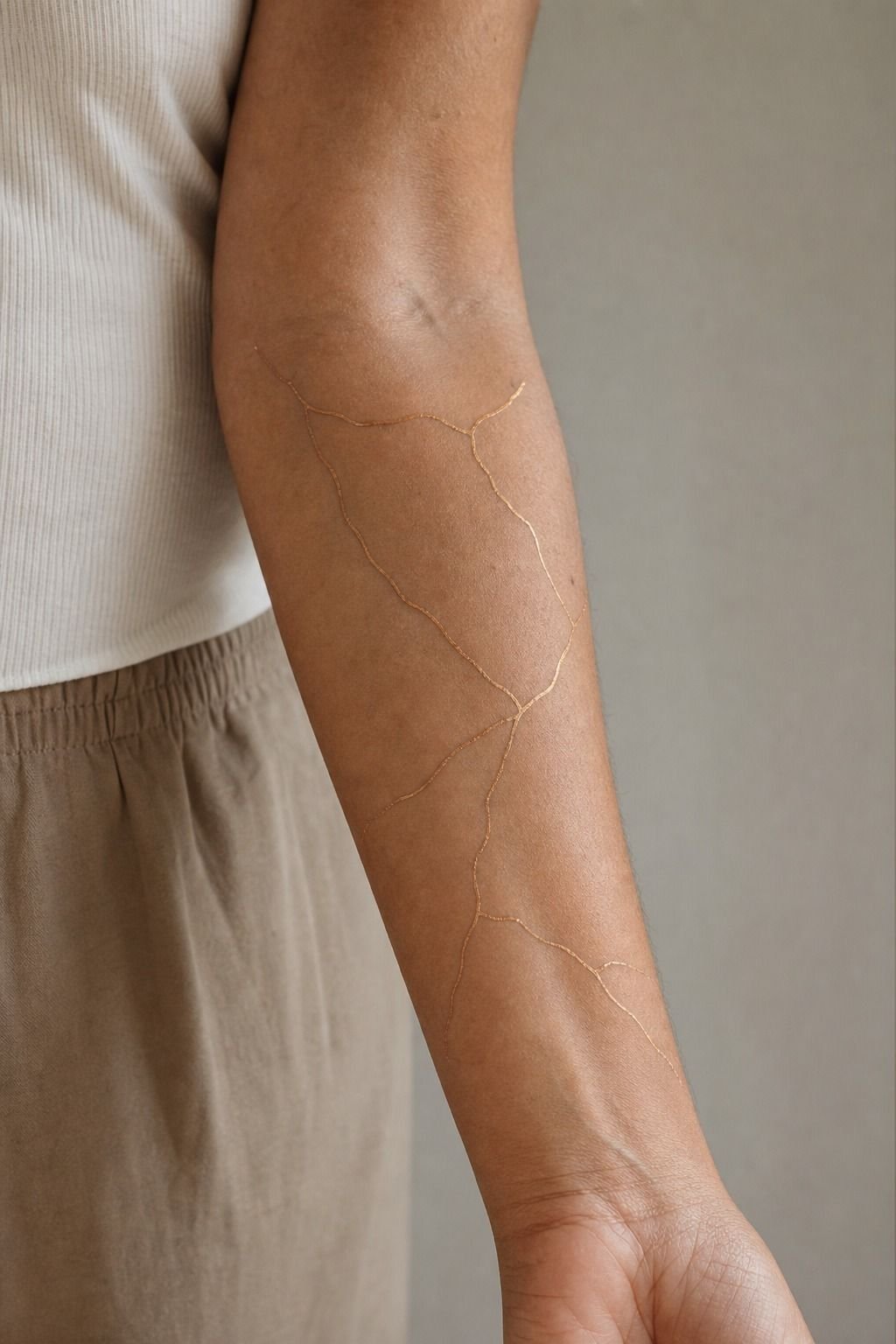
Kintsugi is the Japanese art of repairing broken pottery with gold, and as a healing metaphor it’s almost too perfect.
4Snake Shedding Skin Along the Collarbone
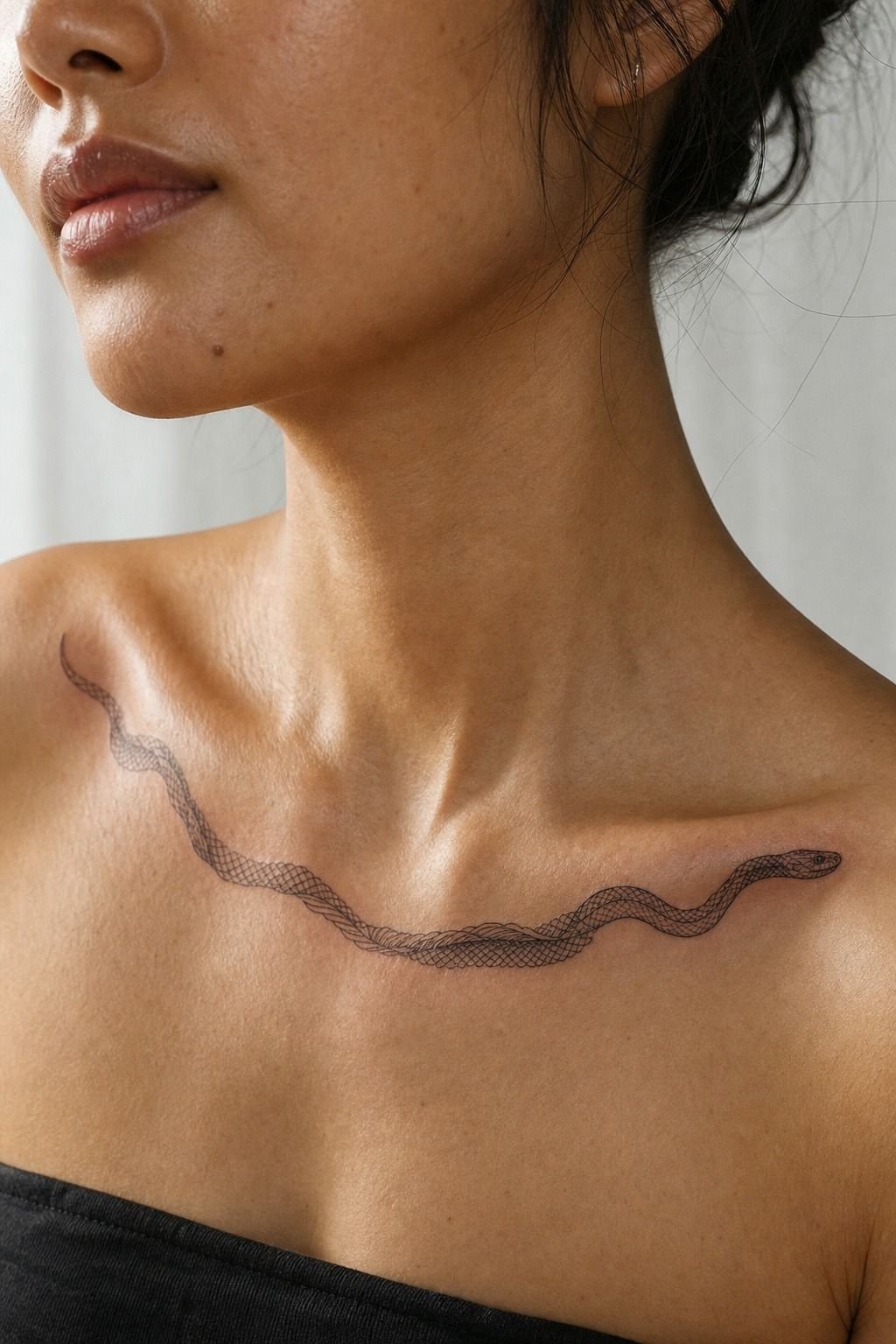
A snake mid-shed is the most literal growth metaphor on this list, and along the collarbone it gets this elegant, slightly dangerous curve that follows your anatomy. The placement shot shows how it sits: head near the shoulder point, body gliding inward. Snakes are growth, rebirth, leaving the old skin behind.
You don’t need to explain it to anyone.
Fair warning, the collarbone is bony and the pain is real. It’s not the worst spot I’ve tattooed, but you’ll feel every line. Keep the design fine line with whip shading so sessions stay short, around two hours, and you can tap out for five if you need to.
The trap here is going too small. A tiny snake with detailed scales turns to soup in five years, all those little lines blur together.
Bump the size up, simplify the scale pattern to a few flowing lines, and let negative space do the work. When it starts peeling like a sunburn, don’t pick at the flakes or you’ll pull color out.
If the shedding phase weirds you out, my post on whether tattoo peeling is normal will calm you down fast.
5Botanical Band-Aid Tattoo Over a Self-Harm Scar
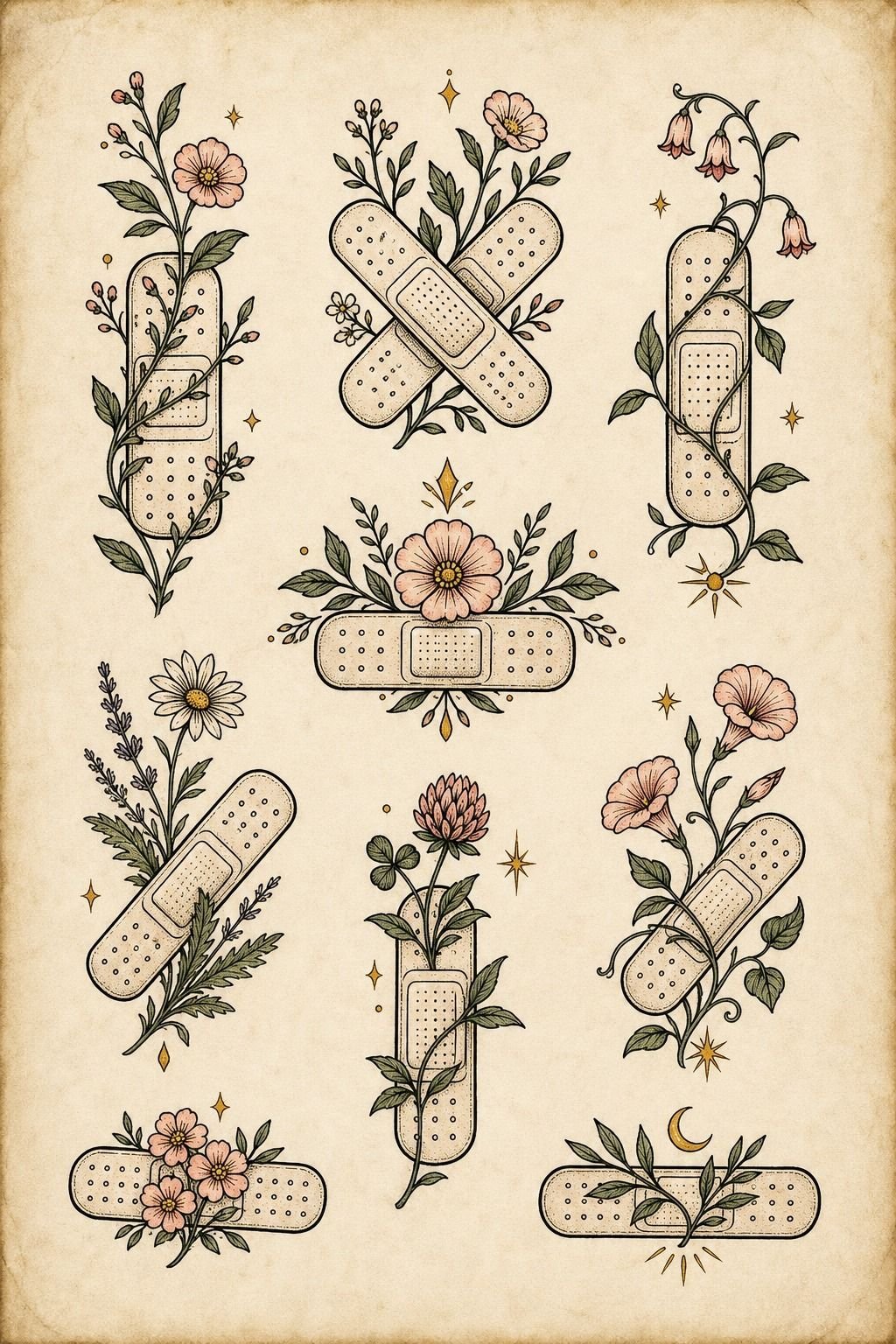
This one’s close to my heart, so I’ll be straight with you. The flash sheet shows what I mean by botanical band-aid: a sprig of lavender or fern drawn in the shape of a bandage, placed right over a scar line. It’s tender without being precious about it.
Two non-negotiables. First, the scar needs to be fully healed, and I mean at least a year old, ideally two.
Scar tissue that’s still remodeling won’t hold ink predictably. Second, find an artist who’s done scar cover work before, because scarred skin drinks ink unevenly and a scratcher will chew it up.
Design-wise, simple stems with bold clean outlines age better over scar tissue than whisper-thin fine line. The band-aid shape gives the piece structure, and the botanical fills it with something soft and alive.
Sessions run one to two hours for small scar lines. I get asked about these constantly, and I keep updated examples in my self healing tattoo ideas roundup.
If this is your piece, take your time choosing the artist. It deserves the right hands!
6Blackout Phoenix Rising on the Upper Arm
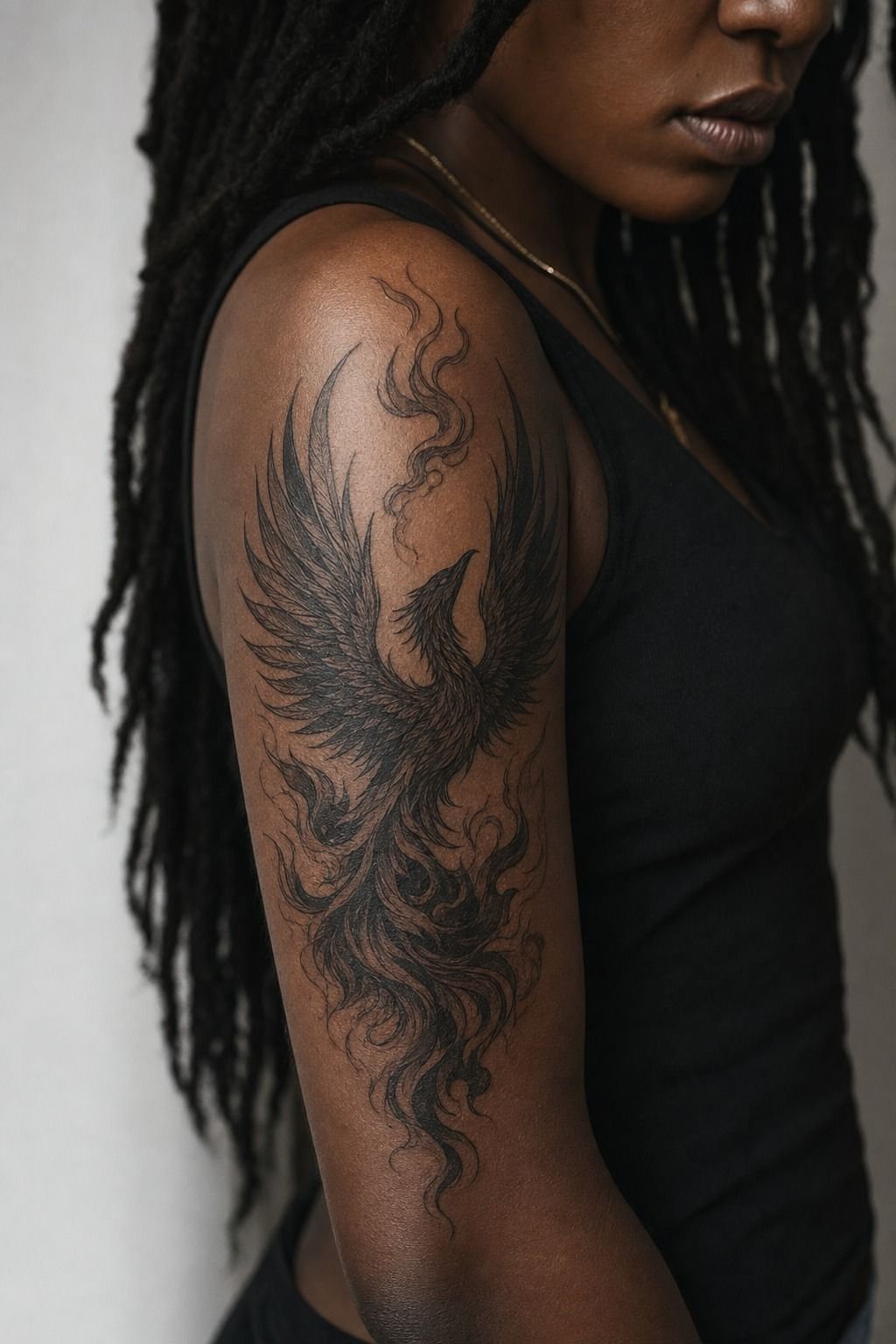
On deep ebony skin, a phoenix doesn’t need color to be breathtaking. This piece is blackwork with negative space, the bird carved out of a solid black fill so the skin itself becomes the feathers.
It’s dramatic, moody, and it reads from across the room. That’s the whole point of blackout work.
Here’s my honest take: on dark skin tones, saturated black and strong contrast will always outperform delicate color packing. Bold will hold. A phoenix done in chunky black shapes with clean negative space will still look intentional in fifteen years, where a soft pastel version fades into a smudge.
Expect a long session, four to six hours depending on size, because solid black fill done right means one solid pass, not scratching at it fifty times and overworking the skin. Upper arm is a chill pain zone, which helps when you’re sitting that long. Afterward, track the stages with my tattoo healing stages day by day guide, because big black areas go through a dramatic silver-skin phase that panics first-timers for no reason.
7Tiny Stitched Heart on the Wrist
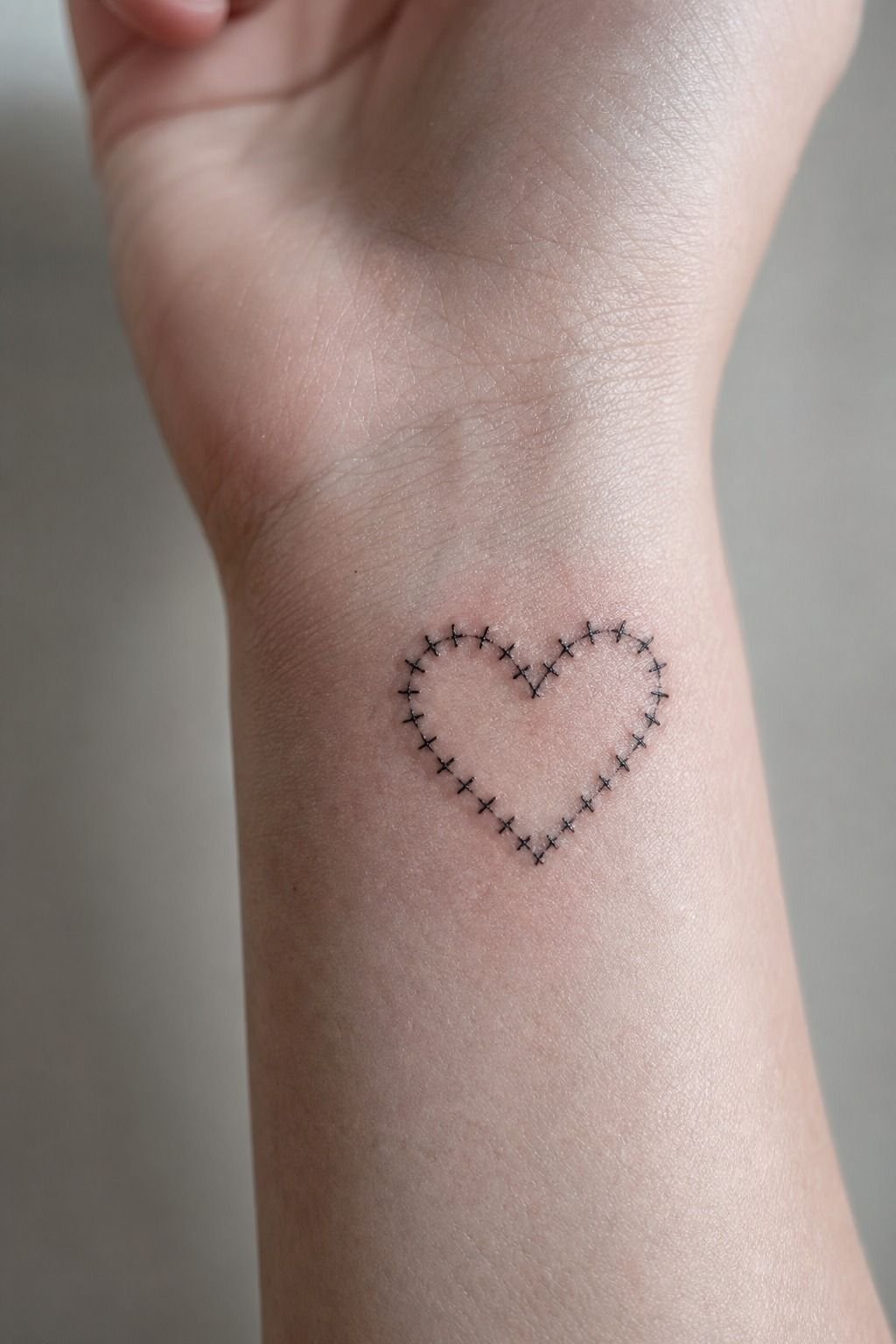
A heart with visible stitch marks, like it’s been sewn back together. As tattoos that represent strength go, this one whispers instead of shouts, and the wrist macro shows why it works: a dozen tiny lines, a little crosshatch thread, nothing more.
Keep it around one inch. I know the urge is to go smaller, but under an inch those stitch details merge into a blob within a couple of years. One clean pull per line with a tight 3RL, no fuzz, and a dot of shading in the heart’s center if you want depth.
Now the honesty: the wrist is a high-wear zone. Watches, sleeves, hand-washing fifty times a day, sun exposure every time you drive.
This tattoo will need a touch-up in its life, maybe more than one, and you should walk in knowing that. If that maintenance deal doesn’t bother you, it’s a comforting daily glance at something you survived.
At shop minimum pricing, $50 to $100, it’s also the cheapest meaningful tattoo on this list.
8Japanese Phoenix Irezumi Sleeve Rebuild
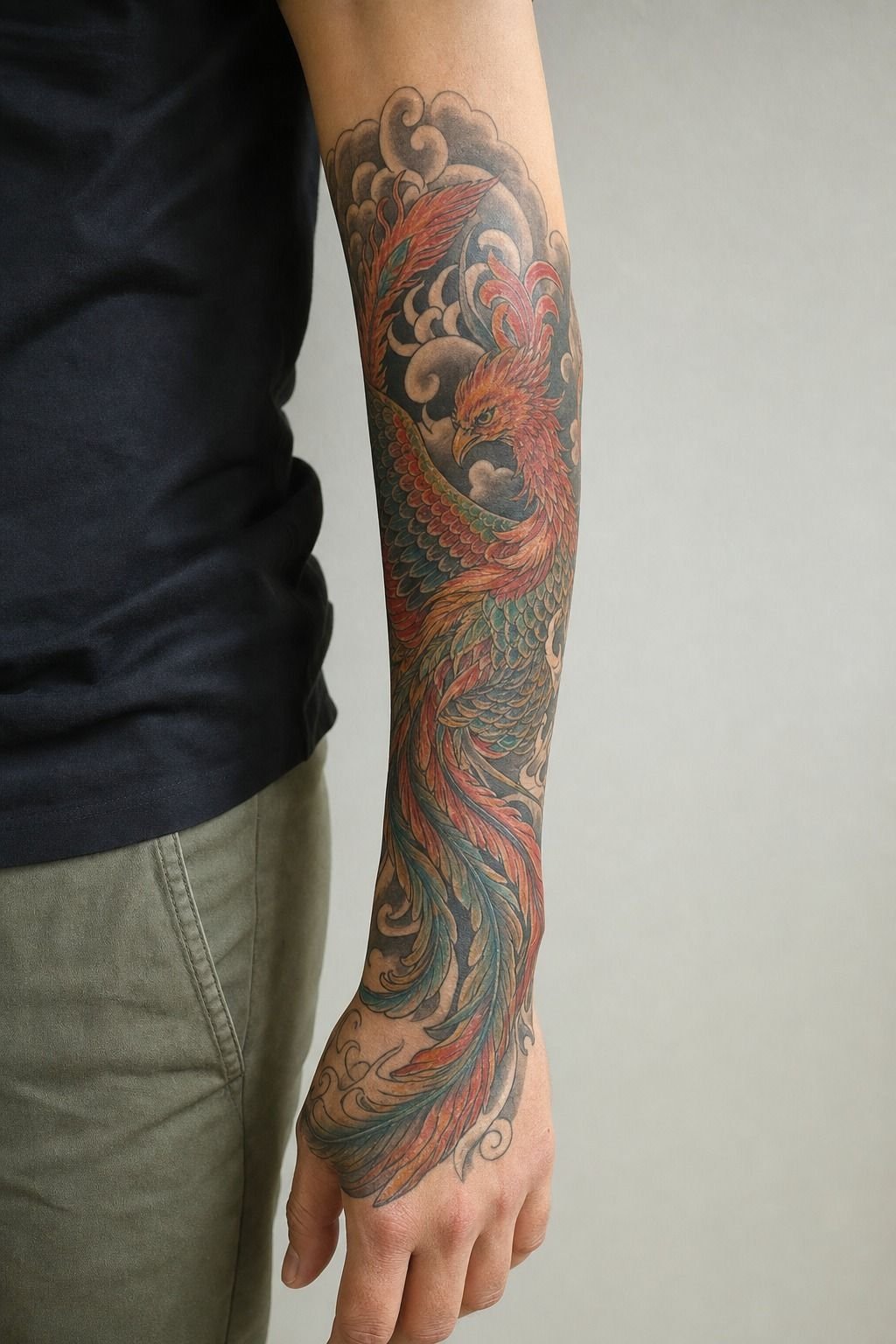
If blackout is the whisper, irezumi is the full speech.
9Watercolor Lavender Sprig for Anxiety Recovery
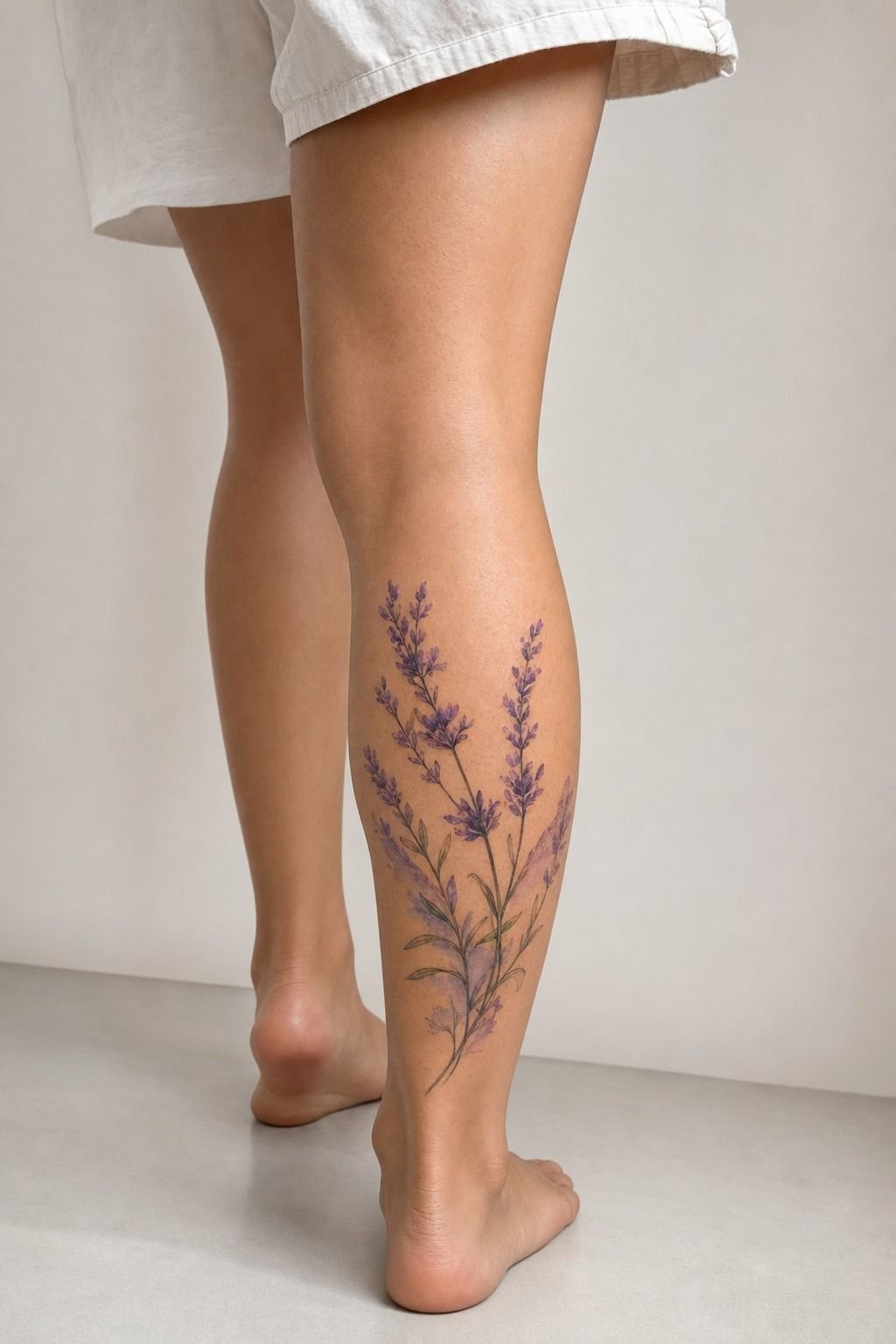
Lavender for calm isn’t subtle symbolism, but a watercolor sprig wrapping the calf earns it. The wash in this piece is that dreamy violet bleed, and here’s the part most Pinterest posts skip: watercolor tattoos need to be anchored with line or they dissolve. The stem and leaf outlines are doing the structural work while the color floats free.
Without that anchor, watercolor fades to a bruise-looking smudge in three to five years. With it, the linework holds the design’s shape even as the wash softens, and the softening is kind of the point. It’s a gentle, soothing piece about a nervous system learning to settle.
The calf is a solid pick: low-wear, moderate pain, and a big flat canvas for the wrap. Sun is watercolor’s enemy though, more than any other style.
SPF 50 every time it’s out, no exceptions. If your color ever looks washed out mid-heal, check my post on tattoos looking faded while healing before you panic.
Nine times out of ten it’s just the milky healing skin, not lost ink.
10Ribcage Script: “Still Here” in Soft Lettering
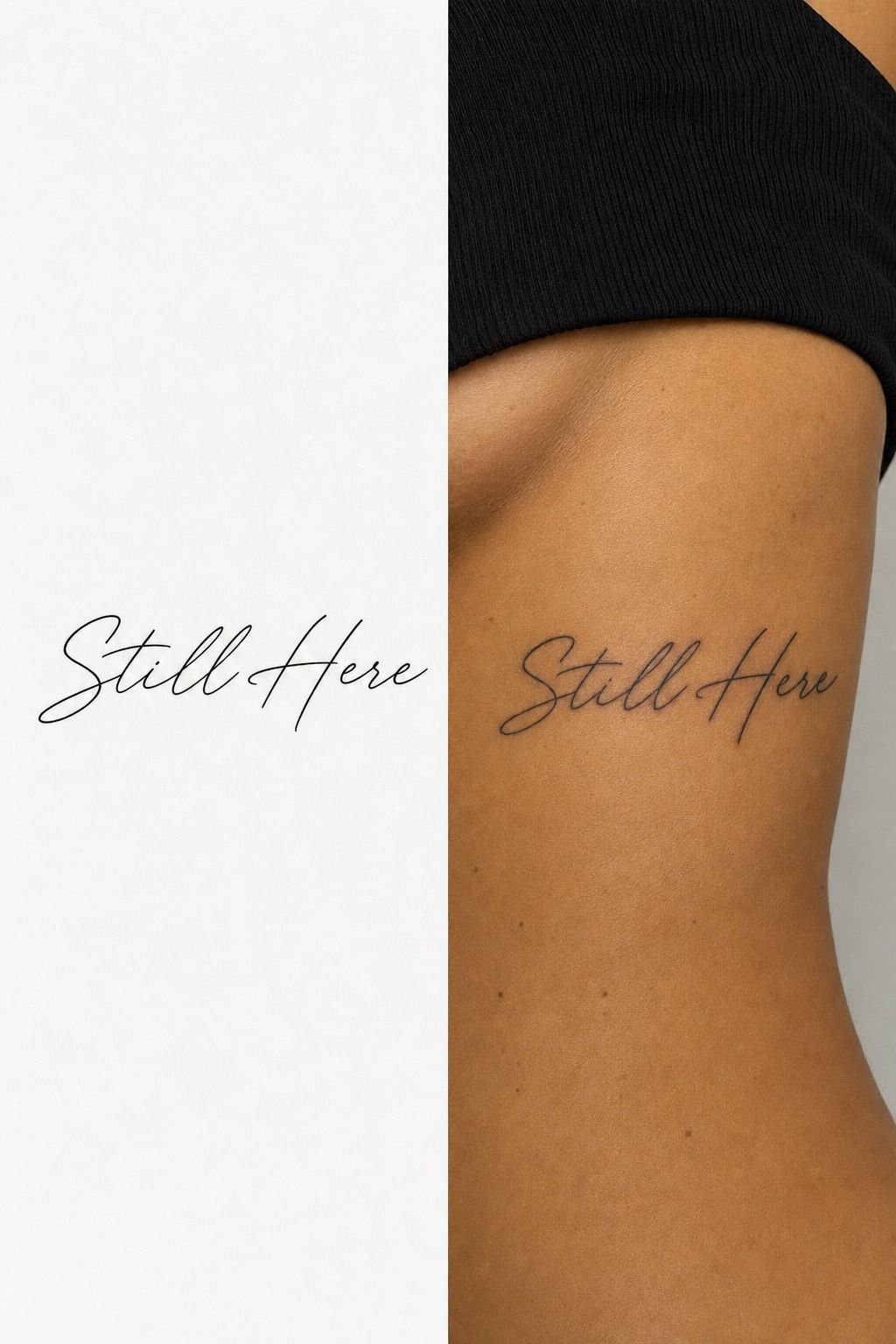
Two words. That’s it. The split image shows the stencil on the left and the healed result on the right, which is exactly how you should judge any lettering artist: stencil promise versus healed reality.
“Still here” works because it’s specific without explaining itself. Script tattoos fail when people cram a whole paragraph onto their ribs. Keep it short, keep the letters at least half an inch tall, and pick a soft italic or fine cursive with enough spacing that the letters won’t grow together as the lines naturally widen over the years.
Real talk about the ribs: this is one of the spiciest placements on the body. Thin skin, bone right there, and you can’t stop breathing to hold still.
Lines feel sharper here than on your arm, and the whole thing’s a dull burn by the end. A piece this small is quick though, 30 to 45 minutes, so you’re toughing out a sprint, not a marathon.
Aftercare matters double on ribs because of bra and waistband friction, so read up on what to put on a healing tattoo and keep clothing loose for two weeks.
11Scar-Cover Mandala on the Outer Thigh
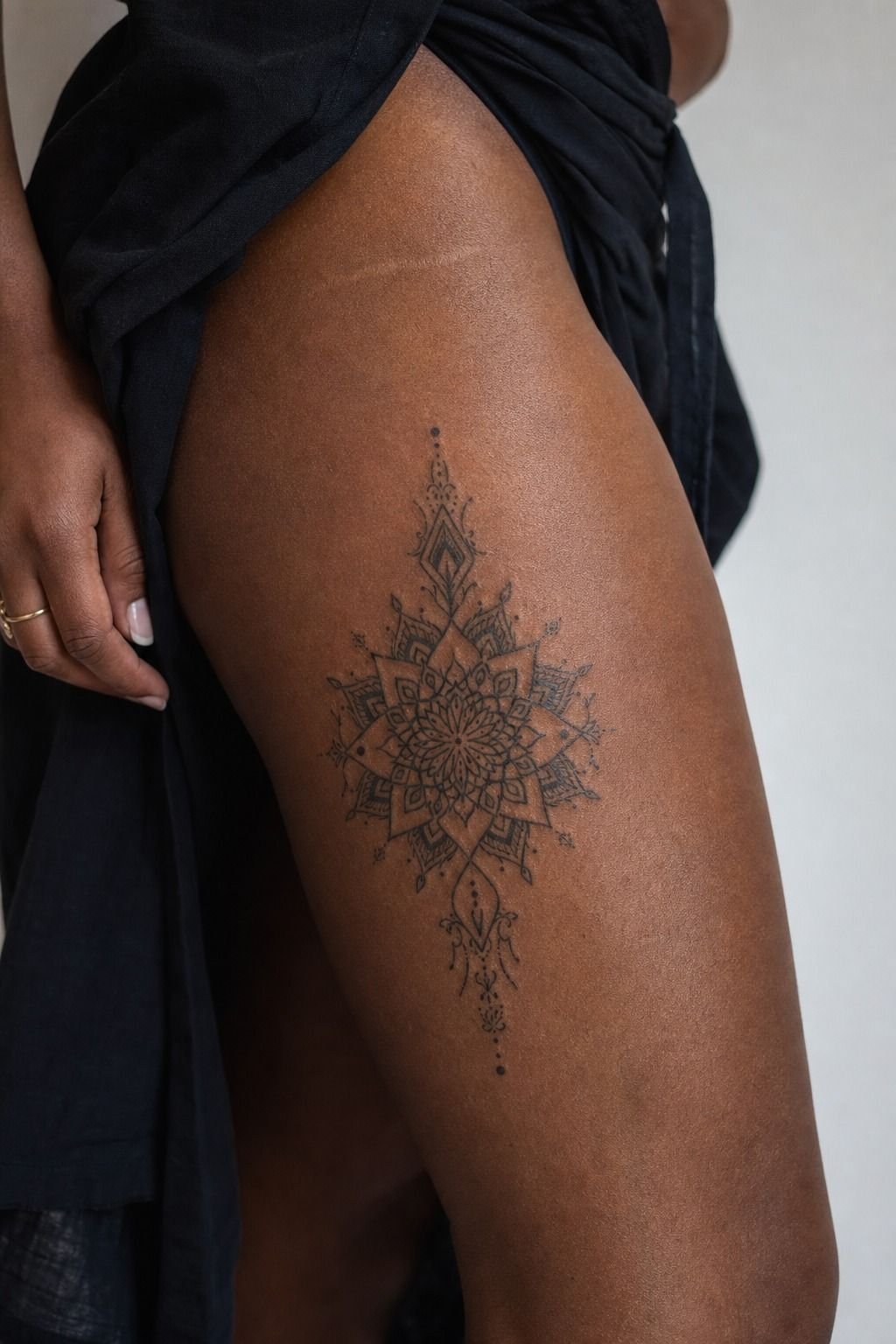
A mandala is symmetry built from broken pieces, which makes it a quietly perfect scar cover. On the deep brown skin in this shot, the work is geometric linework with dotwork shading, and the thigh gives it room to breathe.
Big canvas, low pain, low wear. The outer thigh is one of the most forgiving placements you’ll ever sit for.
Covering a scar with a mandala works because the geometry doesn’t depend on smooth skin. A portrait over scar tissue shows every texture change.
A mandala just absorbs it into the pattern, and the scar becomes part of the design instead of a flaw under it. That’s a healing energy tattoo in the truest sense.
Size matters here: go six inches or larger so the dotwork and line gaps stay open. Small mandalas close up and turn into grey circles.
Same scar rule as the band-aid piece, fully healed for a year minimum. Sessions run three to five hours for this scale. And bring snacks, because thigh pieces are long sittings even when they don’t hurt much.
12Tebori Koi Swimming Upstream on the Calf
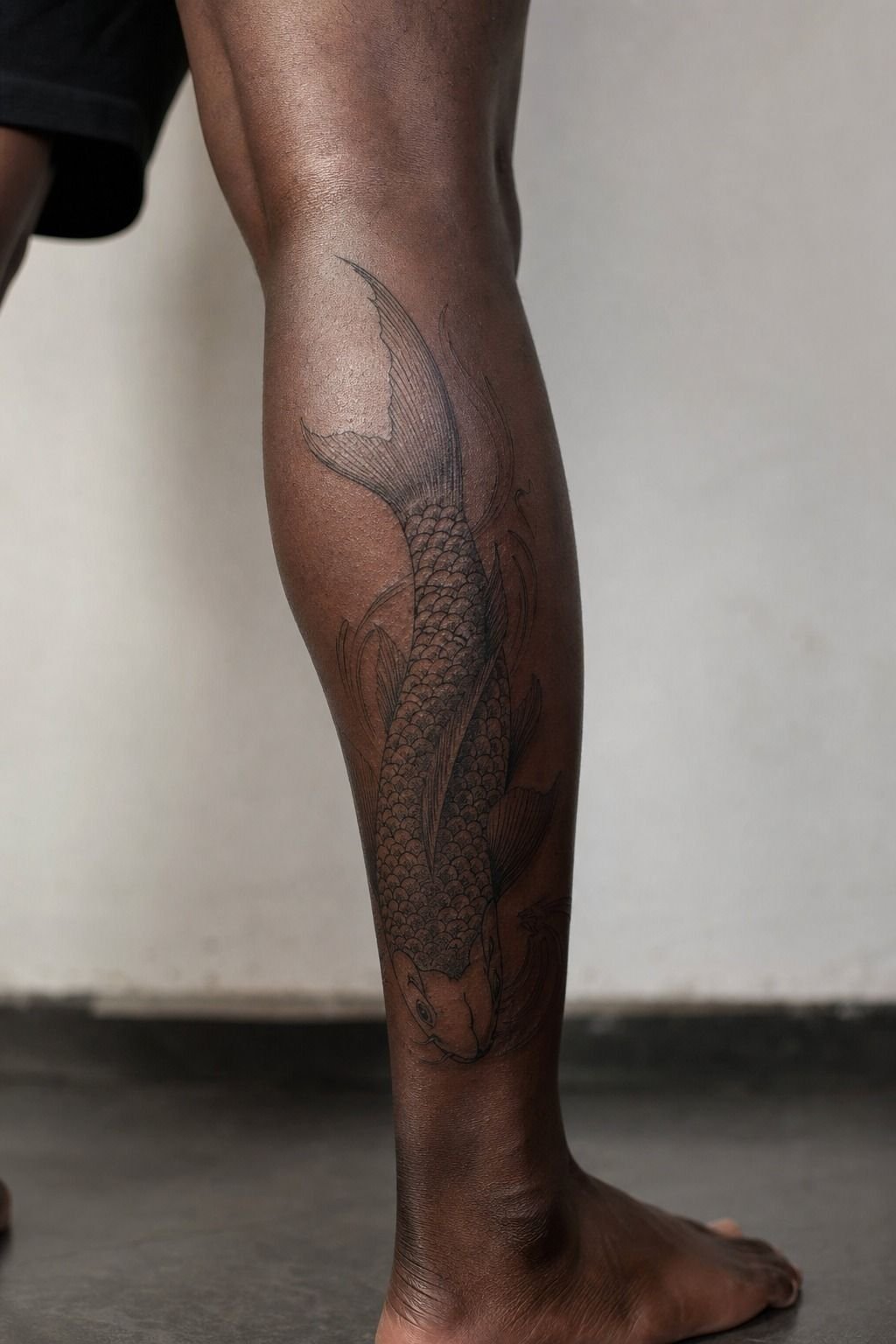
A koi swimming upstream is perseverance in its oldest form.
13Minimalist DNA Strand with a Blooming Rose
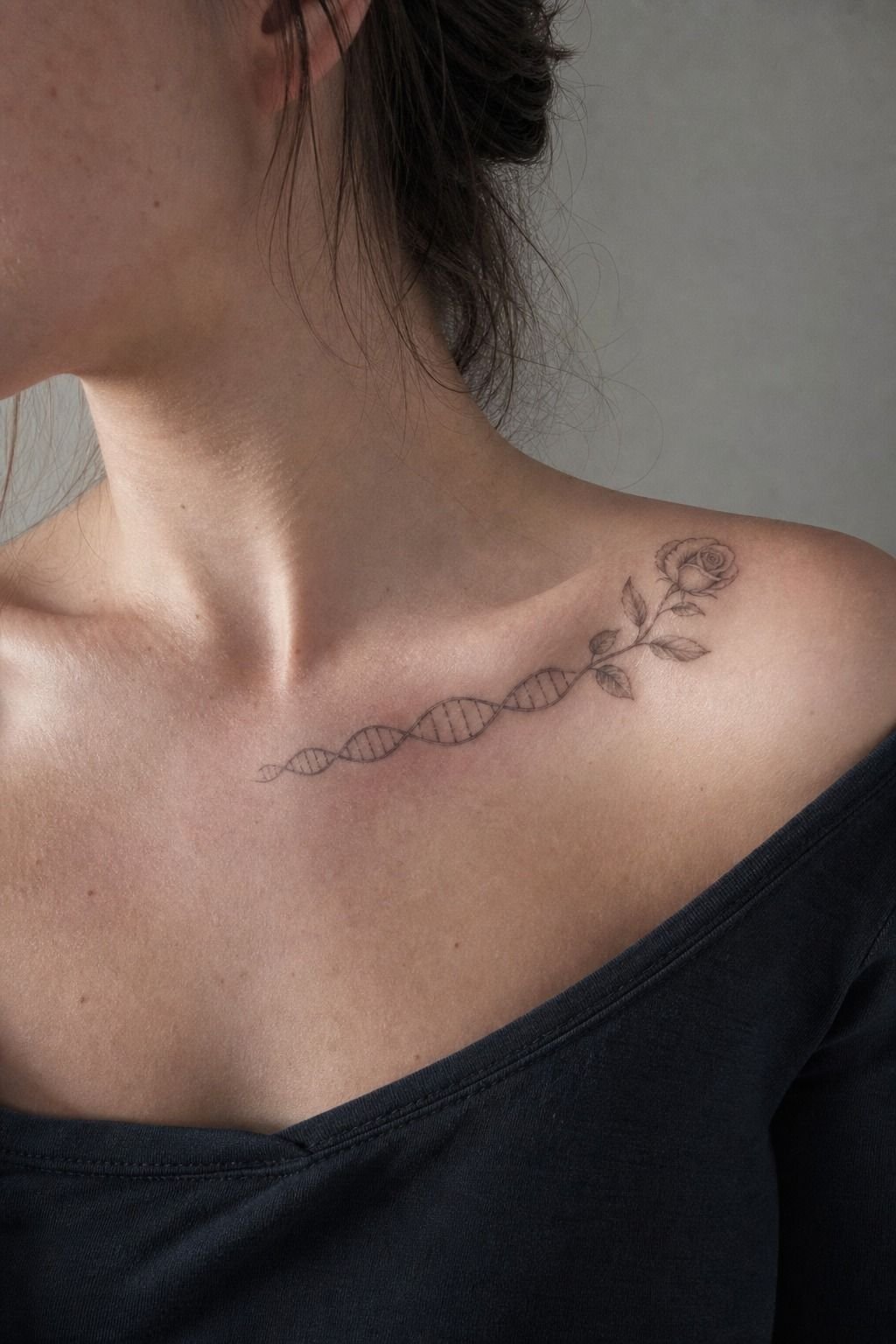
The last one is for the science brains. A minimalist DNA helix where one rung blooms into a rose: growth written into your own code. On the collarbone it reads airy and refined, and the healed photo shows the lines staying crispy, which tells you the artist didn’t go microscopic.
This is the design I’d nudge bigger than you think you want. At two inches it’s elegant.
At one inch, the helix rungs blur into a ladder smudge within a few years, and the rose loses its petals to the blur. Give the design three inches along the collarbone and it’ll age cute on you.
Pain sits in that bony medium-high range, but a minimalist piece like this is a one-hour appointment, sometimes less. The collarbone area can stay red a touch longer than fleshier spots (bone underneath, thinner skin), so if yours looks angry at day five, my post on how long tattoo redness lasts while healing separates normal from “call your artist.” It’s a serene, modern closer for this list, and a beautiful first tattoo if you want meaning without the obvious symbols.
Why I Steer Clients Away From the Symbol Catalog
Here’s something I only say inside the studio: most healing tattoos fail emotionally before they fail on skin. Someone comes in raw from a bad year, points at a Pinterest board of lotus flowers and semicolons, and wants whatever symbol the internet assigned to their experience.
And I get it. When you’re hurting, borrowing a ready-made meaning feels safer than inventing your own.
But I’ve watched this play out for years. The clients who picked the generic symbol come back two years later asking about cover-ups or additions, because the tattoo reminds them of the pain but not of the getting-through-it.
The ones who sat with me for an extra twenty minutes, who told me the actual story, the hospital bracelet, the Tuesday everything changed, the person who stayed, those clients never come back to fix anything. Their tattoo means something because it’s theirs, not because a symbol dictionary said so.
I made this mistake myself early in my career. A client wanted “something for anxiety” and I tattooed a wave on her wrist because waves were the anxiety symbol that year. She was happy that day.
Eighteen months later she was in my chair getting it worked into a bigger piece because, her words, it felt like wearing someone else’s diagnosis. That one stung, and it changed how I consult.
So here’s my framework, and you can steal it for your own consult. Ask yourself three things.
What did the healing feel like physically: slow, jagged, stitched, rebuilt? What object or image was actually present in your story?
And do you want strangers to recognize the meaning, or do you want it private? Answer those honestly and you’ll land somewhere closer to a kintsugi seam or a stitched heart than to clip-art lotus number four thousand. A healing tattoo should document your specific survival.
Generic symbols document a trend. You deserve the first one.
What People Always Want to Know
How much does a tattoo that represents healing usually cost?
Most small healing pieces run $100 to $300 depending on size and placement. Shop minimums sit around $50 to $100, hourly rates average $100 to $250 in the US, and big work like sleeves climbs into the thousands across multiple sessions.
Are healing tattoos a good idea for a first tattoo?
Yes, and they’re some of my favorite firsts. A small fine-line piece on the forearm or shoulder is low pain, forgiving to heal, and meaningful enough that you won’t outgrow it. Just pick a size that lets the lines breathe.
How do I choose an artist for a healing tattoo?
Healed portfolio photos first, fresh ones second. You want crispy linework in photos taken months after the session, a specialty that matches your style, and a clean studio. For scar work, ask directly if they’ve tattooed over scar tissue before.
How much do healing tattoos hurt?
Depends entirely on placement. Ribs, sternum, feet, and hands are the spicy zones. Forearm, outer thigh, shoulder, and upper arm are the chill seats. Lines feel sharp, shading’s a dull burn, and short pieces under two hours are very doable.
How long does a healing tattoo take to heal?
Surface healing runs two to three weeks, full settling takes two to three months. Wash gentle with unscented soap, moisturize thin, and keep it out of the sun and the pool. My day-by-day healing stages post covers every phase so nothing surprises you.
What’s the best placement for a healing tattoo?
The forearm and shoulder win for a reason: low pain, low wear, and lines that stay clean for years. If the tattoo’s just for you, the ribcage or thigh keeps it private and ages beautifully too.
Can I get a tattoo while I’m still healing from another one?
You can, but I’d wait until the first piece is past the peeling stage at minimum. Your immune system is doing repair work, and stacking sessions slows both heals. I broke down the timing in getting tattooed while one is still healing.
Where I’d Start First
If I had to pick one, I’d start with the kintsugi forearm. It carries the whole healing story in the design itself, and the forearm heals easy and shows off clean for decades. Pin it for later and browse my self healing tattoo ideas while you save up.