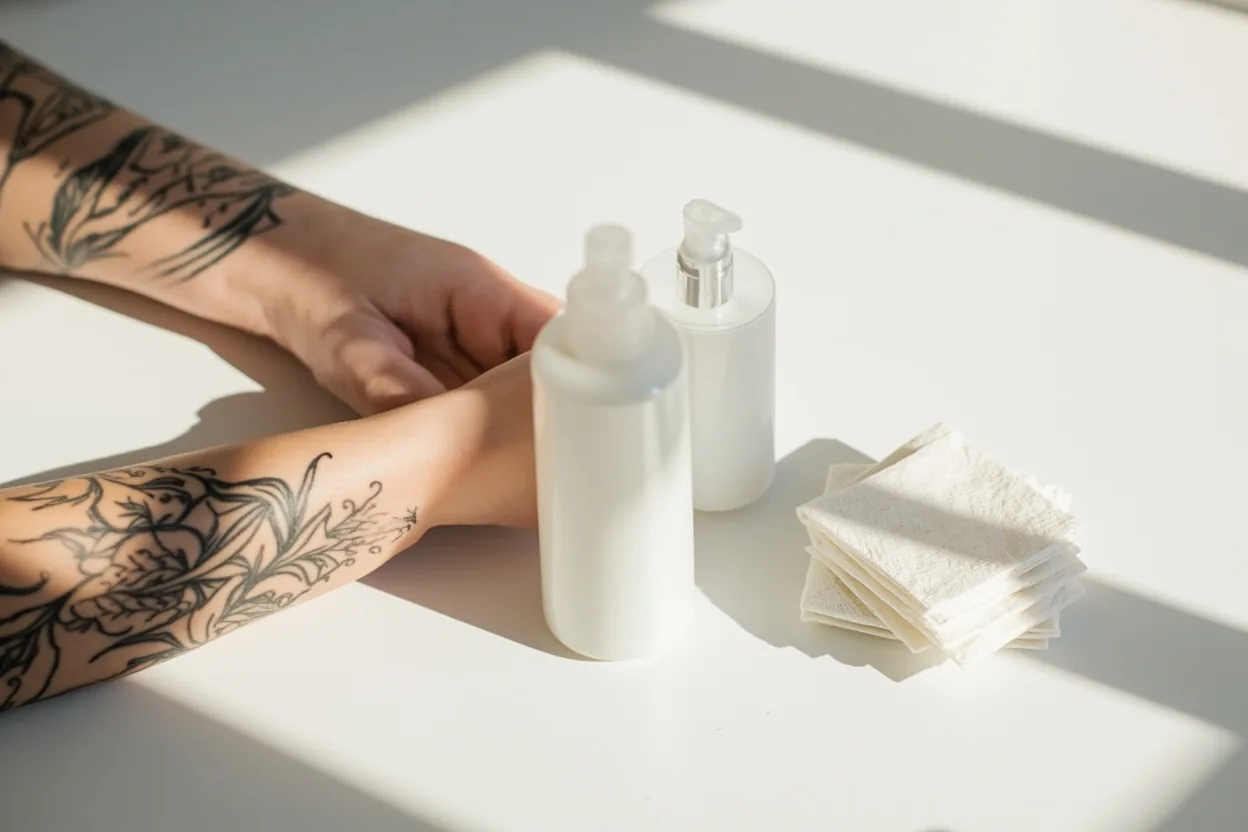
A healing tattoo can look worse before it looks good. The skin gets shiny, cloudy, flaky, tight, and sometimes weirdly dull. That does not mean the artist failed. It means your body is closing a wound with pigment inside it.
Quick answer: Tattoo healing usually moves from tenderness and oozing, to tightness, to peeling and itching, to a dull settled phase. Many tattoos look surface-healed in two to four weeks, but deeper skin recovery and final settling can take longer.
What the First Week Looks Like
Day 0: the wound is fresh
The artist just put pigment into the skin with repeated needle passes. Redness and swelling make sense. So does tenderness. What matters is whether the sensation calms down over the next couple of days.
The wrap is there to protect the tattoo on the way home and through the first vulnerable window. Wait for the time your artist gave you. You can photograph it later. You cannot undo bad first-hour hygiene.
Days 1 to 3: swelling should start calming
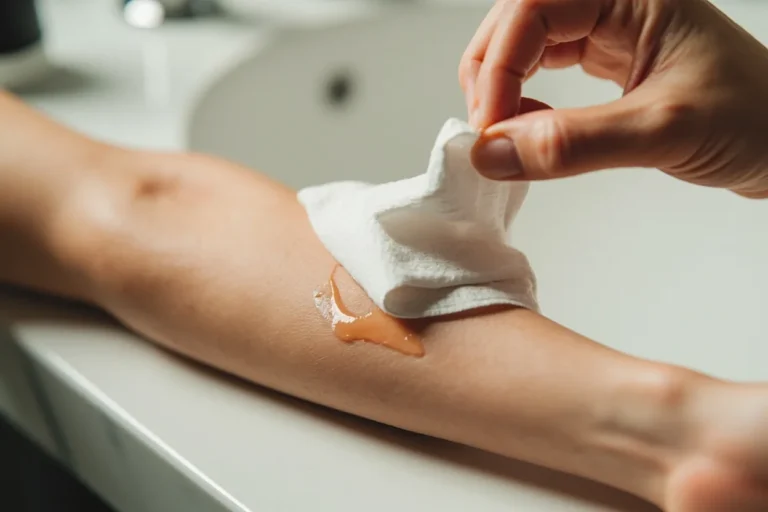
The tattoo may still feel warm. It may leak a little plasma or ink. Wash it the way your artist told you to wash it, then leave it alone. The person who touches a fresh tattoo twelve times an hour is usually the person who complains it got angry.
If pain is getting worse instead of better, or redness is spreading beyond the tattoo, pay attention. The Mayo Clinic notes that infection can come from contaminated ink, non-sterile equipment, or unsafe studio practices. Aftercare matters, but the shop matters too.
Days 4 to 7: the cloudy phase
Your tattoo may look milky or gray. The color seems to vanish under a thin film. This is often dead epidermis separating, and the pigment is usually intact underneath. Do not pick at flaking skin. Do not add more ointment to force clarity. Let the layer shed on its own.
The Ugly Middle: Peeling and Itching
Days 7 to 14: peeling is normal
This is the stage that scares first-timers. The tattoo can look faded under flakes. Black may look gray. Color may look muted. Let the flakes come off on their own.
Do not scratch. Tap around the tattoo if you must. Put on a thin layer of moisturizer if the skin feels tight. If you see thick scabbing, heavy cracking, or wet yellow discharge, stop guessing and ask your artist or a clinician for help.
People sometimes switch products mid-heal or pile on thick layers of unscented lotion. This suffocates the skin and can extend peeling by several extra days. Use less than you think you need.
Why placement changes the timeline
Hands, feet, ankles, and joints move more and rub more. They often peel longer and settle slower. A tattoo on the outer thigh or upper arm usually behaves better than one on the palm or inside of a finger. If your artist warned you about a tricky spot, believe them and add patience.
When the Surface Looks Healed
Weeks 2 to 4: the shiny settled look
The tattoo often looks mostly healed here, but the skin can still be fragile. Avoid swimming and aggressive exfoliation until your artist clears it. If the tattoo sits on a high-friction area, give it extra time.
This is also when touch-up questions start. Do not judge tiny dropouts too early. Let the tattoo settle before asking for a fix. Most artists want to see healed work, not half-peeled panic photos.
Months 2 to 6: the long settling
Surface healing and deeper dermal settling are different processes. The tattoo may look slightly raised or catch light differently for months. This is often normal. Sunscreen helps prevent fading once the skin is fully closed. Your artist can tell you when to start.
Signs That Need Medical Attention
- Redness that expands after the first couple of days.
- Heat, swelling, or pain that gets worse.
- Pus, foul smell, red streaks, or fever.
- Rash, bumps, or reaction that keeps spreading.
A review in the National Library of Medicine notes that tattoo-related bacterial infections are documented in the medical literature. Most tattoos heal without drama, but pretending infection is just normal healing is how small problems become serious ones.
Common Questions
How long does a tattoo take to heal?
Surface healing often takes about two to four weeks, while deeper skin settling can continue for months. Size, placement, skin type, and aftercare all change the timeline.
Is peeling normal after a tattoo?
Yes. Peeling usually starts in the first week and can look like a sunburn flaking off. Do not pick it, even if the tattoo looks dull underneath.
What are bad signs during tattoo healing?
Spreading redness, worsening pain, heat, pus, fever, red streaking, or swelling that does not improve are warning signs. Contact a medical professional.
Why does my tattoo look faded while peeling?
The dead skin layer creates a veil over the pigment. The color is usually still there. Judge the tattoo after peeling finishes and the skin settles.
Can I work out with a new tattoo?
Light activity is usually fine after the first few days if you can keep the area clean and dry. Avoid gyms, pools, and heavy sweating on the tattoo until the surface is healed. Friction from clothing or equipment can irritate the area.
The Bottom Line
The first two weeks of tattoo healing look alarming on purpose: oozing, peeling, and dullness are your skin rebuilding itself, not signs of a bad tattoo. Only heat, swelling past day three, or foul smell warrant a call to your artist or doctor. Most people who panic in week one are looking at normal repair. Wait. Keep it clean. Use less product than you want to. Let the flakes fall.
Frequently Asked Questions
How long does a tattoo take to heal?
Surface healing often takes about two to four weeks, while deeper skin settling can continue for months. Size, placement, skin type, and aftercare all change the timeline.
Is peeling normal after a tattoo?
Yes. Peeling usually starts in the first week and can look like a sunburn flaking off. Do not pick it, even if the tattoo looks dull underneath.
What are bad signs during tattoo healing?
Spreading redness, worsening pain, heat, pus, fever, red streaking, or swelling that does not improve are warning signs. Contact a medical professional.
Why does my tattoo look faded while peeling?
The dead skin layer creates a veil over the pigment. The color is usually still there. Judge the tattoo after peeling finishes and the skin settles.
Can I work out with a new tattoo?
Light activity is usually fine after the first few days if you can keep the area clean and dry. Avoid gyms, pools, and heavy sweating on the tattoo until the surface is healed. Friction from clothing or equipment can irritate the area.