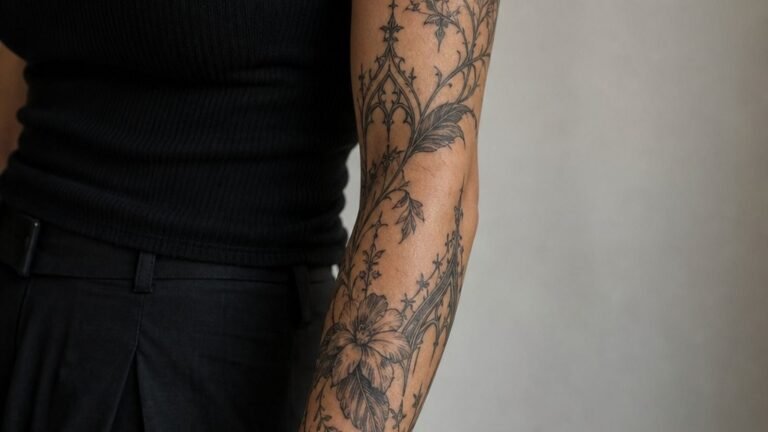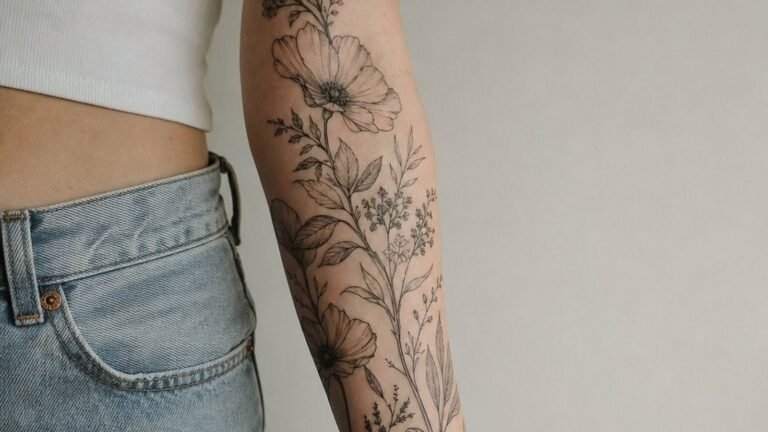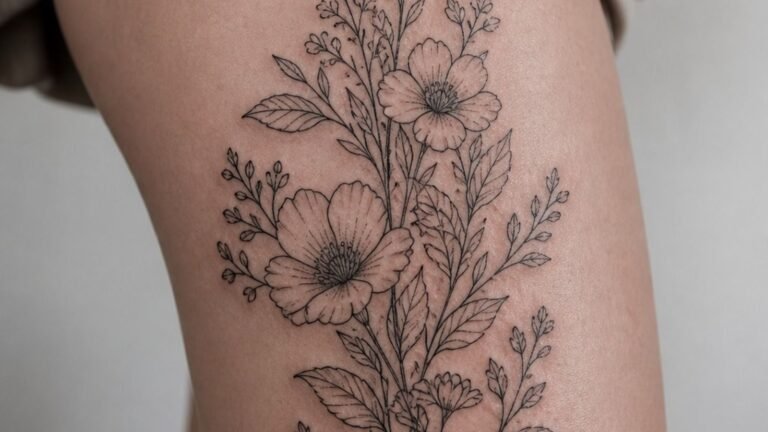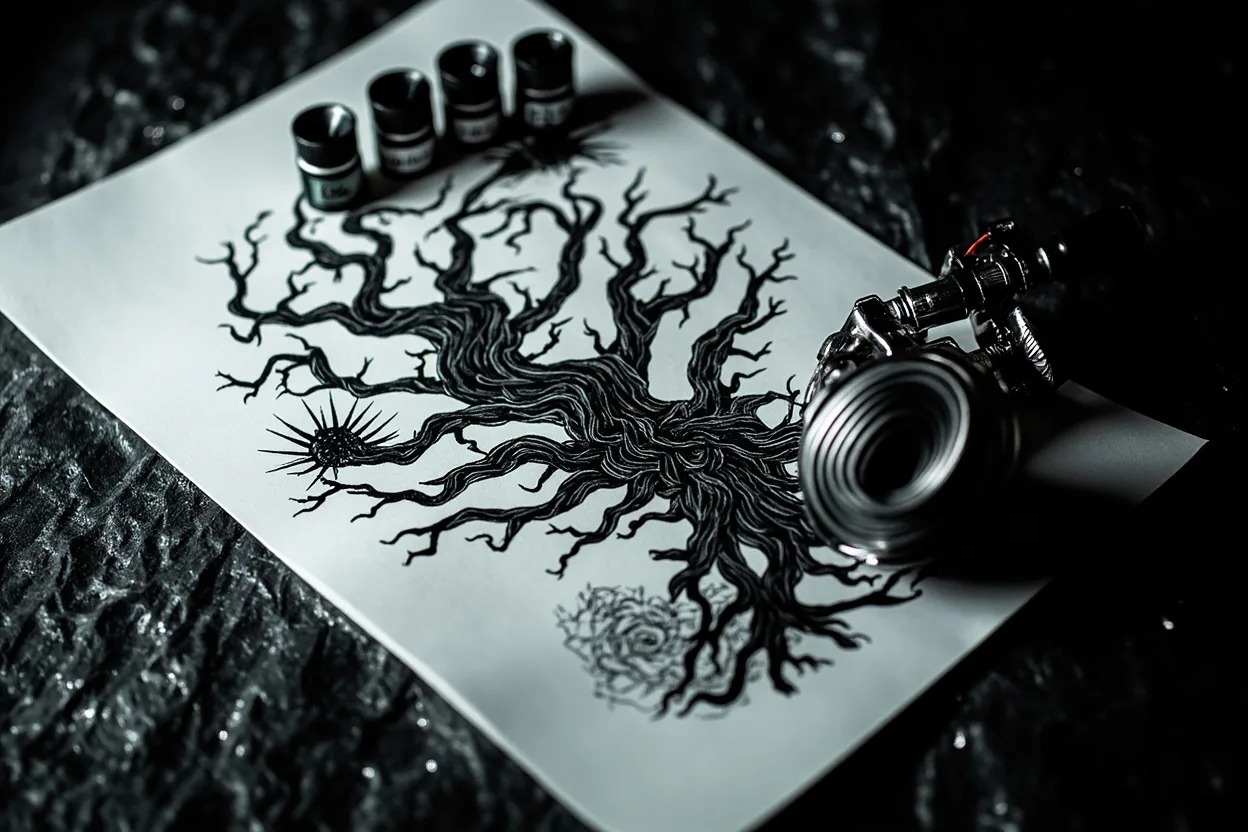
A poison tree tattoo carries weight that lighter nature imagery cannot hold. It speaks to anger that was watered instead of released, to growth that happened in shadow, and to the moment someone recognizes what resentment has built inside them.
Where the Symbol Comes From
The image is most often linked to William Blake’s 1794 poem “A Poison Tree,” where suppressed anger grows into a fruit that kills. The poem does not give a simple moral. It observes how silence and cultivation can turn emotion into something deadly. That ambiguity is what makes the symbol work for a tattoo. It is not a redemption arc or a villain origin story. It is a warning that growth can happen in any soil.
Before Blake, poison plants appeared in folklore and medical texts as literal warnings. The modern tattoo meaning blends those two threads: the literary idea of emotional poison, and the older recognition that beautiful things can kill. You do not need to know the poem to wear the symbol, but the design lands harder when the artist understands both roots.
What the tree actually represents
Most people choose this tattoo for one of five directions. The design details should match the direction, or the image will feel borrowed rather than chosen.
- Anger that grew unchecked. The tree is dark, roots exposed, fruit heavy and wrong. This is not about a single outburst. It is about the slow construction of something harmful.
- Recognition of a pattern. The tree may be split, or one branch may show life while the rest decays. This marks the moment of seeing, not necessarily the moment of fixing.
- Recovery from toxic attachment. A cut root, falling fruit, or light behind the tree can signal release. The danger is still visible, but it is no longer fed.
- Warning to yourself or others. Thorns, serpents, smoke, or a single gleaming poison apple. The tree is beautiful because it must be to lure.
- Shadow work. The tree grows from what was buried. This is the most personal reading, and usually the hardest to design without becoming generic.
How to Design It Without Losing Meaning
A poison tree fails as a tattoo when it looks like a Halloween decoration. The danger needs to feel organic, not theatrical. Blackwork and gothic engraving styles work well because they carry weight. Fine line can work if the scale is large enough for the roots and branches to hold detail after healing.
Elements that sharpen the symbol
The fruit is the natural focal point. In Blake’s poem, the enemy steals the apple and dies. A single fruit rendered with care, perhaps in color against a black-and-grey tree, pulls the eye and carries the narrative. Thorned branches, smoke rising from split bark, or a serpent coiled in the roots can add layers without clutter.
Avoid the common mistake of choosing a healthy, lush tree because it looks better on skin. That inverts the meaning entirely. The tree should show stress: twisted branches, bare sections, roots that seem to strangle more than anchor. If you want contrast, let one living branch or a small opening of light do the work. Do not make the whole tree secretly thriving.
What fades and what lasts
Fine root systems look intricate in drawings but blur into grey noise on skin over time. Ask your artist to simplify the root structure into readable shapes. Tiny text woven into branches ages even worse. If you want a line from the poem, place it separately, in a location where lettering stays sharp, and keep it large enough to read at a glance.
Negative space around the branches prevents the tree from becoming a solid black mass after healing. The silhouette should read as a tree even from across the room. Details are for close inspection, not for carrying the whole design.
Placement and Scale
The poison tree usually needs vertical space. A forearm or calf gives the trunk enough length without compressing the branches. The upper arm and shoulder blade work better if the design spreads outward rather than grows upward. Rib and sternum placements feel more private, which suits the symbol, but the root system must be simplified so it does not tangle into unreadable grey.
If this tattoo will join a larger sleeve, plan where the roots end. Roots can connect to other imagery, but only if that connection is designed from the start, not added later as filler. A poison tree that floats without ground connection loses its anchor, both visually and symbolically.
Style directions that fit
- Blackwork or gothic engraving: Heavy, historical, unflinching. The weight matches the subject.
- Dark botanical illustration: Scientific precision applied to something dangerous. Good for smaller scales.
- Illustrative with selective color: The poison fruit in red or sickly green against dead branches. The contrast makes the threat visible.
- Split composition: One side dead, one side showing the first sign of something else. Hard to execute without looking like two tattoos forced together.
Making the Tattoo Yours
The most common flaw in poison tree tattoos is trying to say everything at once. Anger, recovery, warning, and shadow growth cannot all shout at the same volume. Choose one primary direction and let the others whisper.
Talk to your artist about the emotional weight, not just the visual reference. Bring them the poem, or bring them your own reason. A good artist will hear whether the tree should lean, whether the fruit should hang heavy or fall, whether the roots should grip or begin to sever. The symbol is old, but your reason for wearing it is not. The design should feel chosen, not assigned.
If you are still deciding between this and a more conventional tree of life, consider what you want to carry. A tree of life promises connection and renewal. A poison tree promises honesty about what grows in darkness. Neither is better. But they are not the same tattoo with different lighting.
What to Remember
A poison tree tattoo works when the darkness feels earned, not decorative. The best versions do not try to look pretty. They try to look true. Keep the root structure readable, the fruit intentional, and the meaning specific enough that someone who sees it years from now will still understand what you were warning against, or what you finally recognized in yourself.
The symbol has survived since Blake’s poem because it describes something common and rarely spoken: the way we can farm our own harm. Wearing it on skin is a choice to stop farming, or to remember that you did, or to warn yourself that you could again. The tree is not the enemy. The cultivation is. Make sure your design knows the difference.
Frequently Asked Questions
Is a poison tree tattoo always negative?
No. It can mark recognition of a destructive pattern, recovery from toxic attachment, or a warning to yourself. The design details determine whether it reads as dark, reflective, or freeing.
What style works best for a poison tree tattoo?
Blackwork, gothic engraving, dark botanical illustration, and illustrative styles with selective color all carry the weight this symbol needs. Fine line works only at larger scales.
Where should a poison tree tattoo go?
Forearm, calf, upper arm, shoulder blade, ribs, or sternum. The design usually needs vertical space for the trunk, though shoulder placements can spread outward instead.
Can I add text from Blake’s poem?
Yes, but keep lettering separate from dense roots or branches, and large enough to stay readable as it ages. Tiny text inside a tree usually becomes visual noise within a few years.