Firefly tattoos hit different because the insect itself is already doing something remarkable: making its own light in the dark. That core image carries real weight, and it’s why people keep coming back to this design across every style from fine line to neo-trad.
The meaning is almost always personal but anchors to a few honest themes. Hope. Childhood wonder. The idea that beauty is temporary and that’s exactly what makes it worth chasing. No manufactured symbolism here. The firefly earns it.
Core Symbolism: What a Firefly Tattoo Actually Means
Fireflies produce their own light, full stop. That biological fact drives the primary reading: you carry your own light even when everything around you is dark. It’s one of the more grounded tattoo meanings out there because it’s not metaphor stretched thin. People who’ve survived depression, grief, or a rough stretch of years gravitate toward it hard. The firefly becomes proof that light can come from within.
The second major meaning is impermanence. Fireflies have a short season. They flash, they disappear. That maps directly onto how people feel about precious moments, lost loved ones, or chapters of life that ended too soon. Some clients get this piece in memory of someone. Others get it as a reminder to stay present. Both read clean and honest.
Cultural and Historical Background
The glow is the whole point, without it, it's just a bug.
In Japan, fireflies, called hotaru, carry significant cultural weight. They appear in poetry going back centuries and are tied to the souls of the dead, particularly soldiers fallen in battle. The Genji firefly chapter of The Tale of Genji uses them as a metaphor for longing and desire. Japanese collectors pulling from this tradition often pair fireflies with water, reeds, or a summer moon to lock in that specific cultural context.
In American and broader Western folk tradition, fireflies are tied to summer nights, rural childhood, and a sense of magic that feels accessible rather than mythic. Lightning bugs in a jar is a nearly universal memory for people who grew up in the eastern half of the US. That nostalgia is real and legitimate as tattoo fuel. It’s not deep mythology, but lived experience hits just as hard on skin.
Popular Design Variations
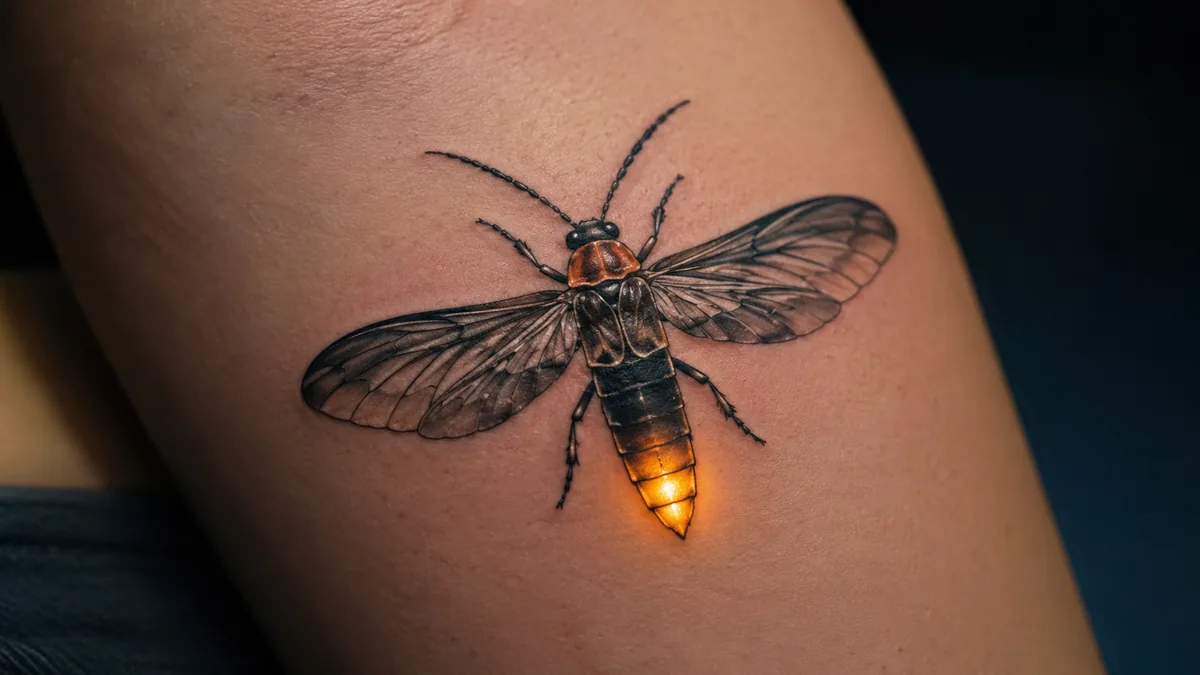
The most requested version is a single firefly with its abdomen lit up, wings spread or folded, rendered in fine line or illustrative style. That glowing abdomen is the whole point visually, so artists often use a warm yellow-green, a soft gold, or even a subtle white highlight over a colored base to sell the bioluminescence. Some clients want a swarm, a loose cluster of fireflies rising from tall grass or floating against a night sky. That reads more dreamy and romantic.
Geometric and blackwork interpretations exist but are less common. They flatten the organic glow effect that makes the insect recognizable, so you lose some of the meaning in translation. Neo-trad fireflies with bold outlines and saturated fill are solid if you want something that reads from across the room and ages without grief. Realism and watercolor styles both work, though watercolor needs a clean black base underneath or it fades fast and loses definition within a few years.
Color vs. Black and Grey
Color is the natural home for this tattoo. The luminous yellow-green of a lit firefly is the design’s visual anchor, and a good color artist can make that abdomen look like it’s actually glowing using strategic negative space, white ink highlights over healed yellow, or a subtle gradient from warm gold to cool green. Saturated color in a low-wear spot heals crisp and holds the read you want for years.
Black and grey works when the client wants something softer, more melancholic, or tied to memorial meaning. A grey-wash firefly with a white highlight on the lantern reads quiet and elegant rather than bright and playful. The emotional register shifts. Some artists whip shade the wings to create texture and movement without relying on color at all. Know what mood you want before you commit to a palette, because color and monochrome tell different stories with the same insect.
Best Placements and How the Tattoo Ages
Fine line firefly tattoos land beautifully on the inner forearm, behind the ear, the collarbone, the ribcage, and the ankle. These are low-distortion zones where delicate linework stays tight. The ribcage and inner arm can be spicy for pain, but the skin quality there is excellent for detail work. Behind the ear is low-wear but the surface is small and curved, so keep the design tight or the lines blow out during healing.
A single firefly in fine line will need a touch-up at five to seven years if placed somewhere with sun exposure or friction. Ankles and wrists see more wear, so expect some softening faster there. Larger illustrative or neo-trad versions in bold color hold far longer. Bold will hold is real. If you want this tattoo to stay crisp at the ten-year mark without a refresh, size up slightly and go bolder than your instinct tells you. Fine line is beautiful fresh but it requires commitment to maintenance.
Color Palette Details Worth Knowing
Yellow and warm gold are workhorses in this design and they heal well in most skin tones, though they can shift slightly warmer over time. Adding a ring of soft green around the glow point keeps the bioluminescent read intact as the yellow mellows. On deeper skin tones, a more saturated, almost electric yellow-green reads better than a pale lemon. Talk to your artist about what pops on your specific complexion rather than pulling a reference that was shot on different skin.
White ink used as a standalone highlight fades fast on most clients, sometimes within a year. The better approach is white ink over a healed light color base, which gives the illusion of brightness without the disappearing act. Artists who know firefly tattoos well account for this in the design stage. If an artist promises a glowing white abdomen with nothing underneath, push back and ask how they plan to make it last. That conversation tells you a lot about their experience level.
Who Gets This Tattoo and How to Make It Personal
Survivors of mental health struggles, people marking a turning point, and anyone who lost someone important make up a large portion of firefly clients. The light-in-darkness meaning lands with people who’ve lived it. Memorial pieces often include a birth or death date worked into the design, a name in the wings or the grass below, or a specific detail, like the person’s favorite flower, woven into the surrounding scene to anchor it to one specific human being rather than a generic concept.
Childhood nostalgia is the other big driver. People who spent summers catching lightning bugs in the backyard want to carry that feeling permanently. To personalize it, bring your artist a specific detail: the mason jar you used, the porch screen door, a firefly that meant something. Great artists can fold a specific reference into the design so it stops being a firefly tattoo and starts being your firefly tattoo. That gap between generic and specific is where the best work lives.