
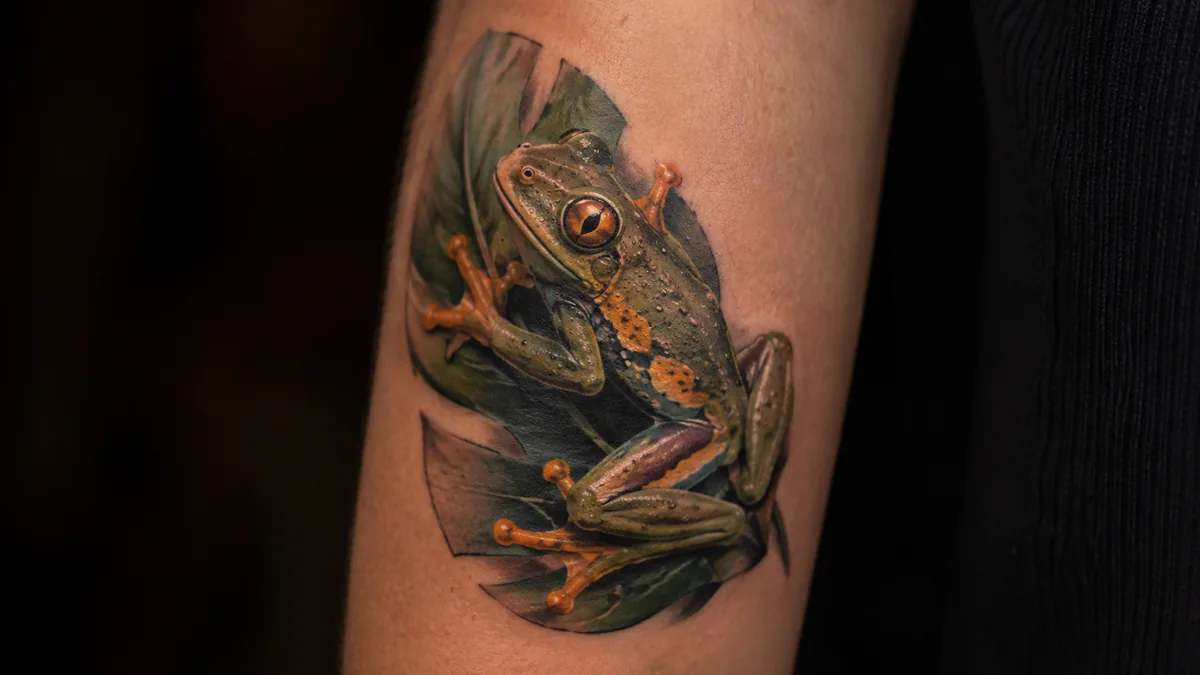
The coqui is a tiny tree frog native to Puerto Rico, and its call, that unmistakable ko-KEE sound, is one of the most recognized symbols of the island. When someone gets a coqui tattoo, they’re not just getting a frog. They’re wearing their identity, their roots, and their pride on their skin.
This piece carries real weight. It’s a declaration of where you come from and what that means to you. Whether you grew up in San Juan or were raised in the diaspora in New York or Orlando, a coqui tattoo connects you back to the island in a way that’s deeply personal and instantly understood by anyone who knows Puerto Rican culture.
Core Meaning: What the Coqui Tattoo Symbolizes
The coqui represents Puerto Rican identity above everything else. It’s a cultural emblem the way the bald eagle is for the US or the maple leaf is for Canada. People get this tattoo to say, this is who I am and where I come from, full stop. The symbolism runs deep in the diaspora especially, where the tattoo becomes a physical anchor to a homeland many people never got to stay in.
Beyond national pride, the coqui also carries meanings of resilience and adaptability. The frog itself is tough for its size, surviving in a diverse range of environments across the island. For many wearers, that mirrors their own story: leaving home, building a life somewhere new, holding onto culture while navigating a different world. Small but loud. That’s the whole vibe.
Puerto Rican Cultural Background
You don't have to explain where you're from when the coqui speaks for you.
The coqui, specifically Eleutherodactylus coqui, is endemic to Puerto Rico. That means it exists naturally nowhere else on earth, which is exactly why it became such a powerful symbol of the island. There’s a saying you hear constantly: ‘Soy de aqui, como el coqui,’ meaning I’m from here, like the coqui. The frog is woven into the culture through music, art, folklore, and everyday speech.
In pre-Columbian Taino culture, frogs and coqui imagery appeared in petroglyphs and ceremonial objects. The Taino people regarded the coqui as a protective spirit, connected to rain, fertility, and the natural world. That indigenous layer adds another dimension to the tattoo for people who want to honor their full heritage, not just the modern Puerto Rican identity but the roots that go back centuries before colonization.
Popular Design Variations
The most straightforward version is a realistic or semi-realistic frog sitting on a palm frond, a banana leaf, or a stone, rendered in clean black and grey with solid shading. This reads well at any size and ages reliably. A lot of artists add the Puerto Rican flag, either as the background or incorporated into the frog’s body, which pushes the meaning front and center with no ambiguity.
Neo-traditional versions are also popular, with bold outlines, saturated greens and yellows, and stylized foliage framing the frog. Some clients go for a minimalist fine line approach, just the outline of the frog with maybe a few stippled texture marks. Geometric versions exist too, incorporating Taino tribal patterns into or around the figure. Each style lands differently, but they all carry the same core meaning. Pick the style that fits your existing work and how you want the piece to hold long-term.
Color vs. Black and Grey
Color coqui tattoos are bold and eye-catching. Real coqui frogs range from brown to olive green to yellowish, so there’s room to go naturalistic or to push it into vivid greens, electric yellows, even turquoise tones depending on the overall design. Saturated color with a clean black outline holds better over time than pale pastels or heavy watercolor blending, which can look muddy after a few years, especially in high-wear zones.
Black and grey is the safer long-game choice for fine detail work. A good artist can whip shade the texture of the frog’s skin and build depth without relying on color to carry the piece. It also tends to age more predictably, staying crisp for longer on most skin tones. If you’re placing it somewhere that sees a lot of sun or friction, black and grey with bold linework is going to hold its shape far better over the years than delicate color work.
Best Placements and How the Tattoo Ages
The calf is probably the most popular placement for a coqui tattoo. It’s a decent canvas, relatively low wear, and the frog shape works naturally with the muscle curve. The upper arm and forearm are also common, especially for standalone pieces or additions to a sleeve with Puerto Rican cultural imagery. These spots heal nicely and stay readable over time without too much distortion.
Avoid the inner elbow crease, fingers, and sides of feet for anything with fine line detail. High-wear zones cause blowout and fading faster than you’d want. The ribs and sternum are popular for bigger pieces but those areas are spicy on the pain scale, borderline brutal depending on your tolerance. For a small to medium coqui, the shoulder, upper back, and ankle all offer solid placement options. Bold will hold, so whatever placement you choose, make sure the linework is thick enough to survive long-term.
Who Gets This Tattoo and How to Make It Personal
Puerto Ricans and people of Puerto Rican descent are the primary audience for this tattoo, but it’s not exclusively theirs in a gatekeeping sense. Anyone with a genuine connection to the island, through family, time lived there, or a deep personal relationship to the culture, can wear it meaningfully. The tattoo is most powerful when it comes with a real story attached, not just an aesthetic choice.
To make it personal, think about what else you’d combine it with. A coqui alongside a ceiba tree, a Taino sun symbol, a specific municipality’s coat of arms, or a loved one’s name all tell a fuller story. Some people work it into larger Puerto Rican pride sleeves alongside the flag, the flamboyán flower, and the vejigante mask. The frog alone is strong. But the frog in context, placed intentionally within a larger body of work, becomes something that really hits.









