
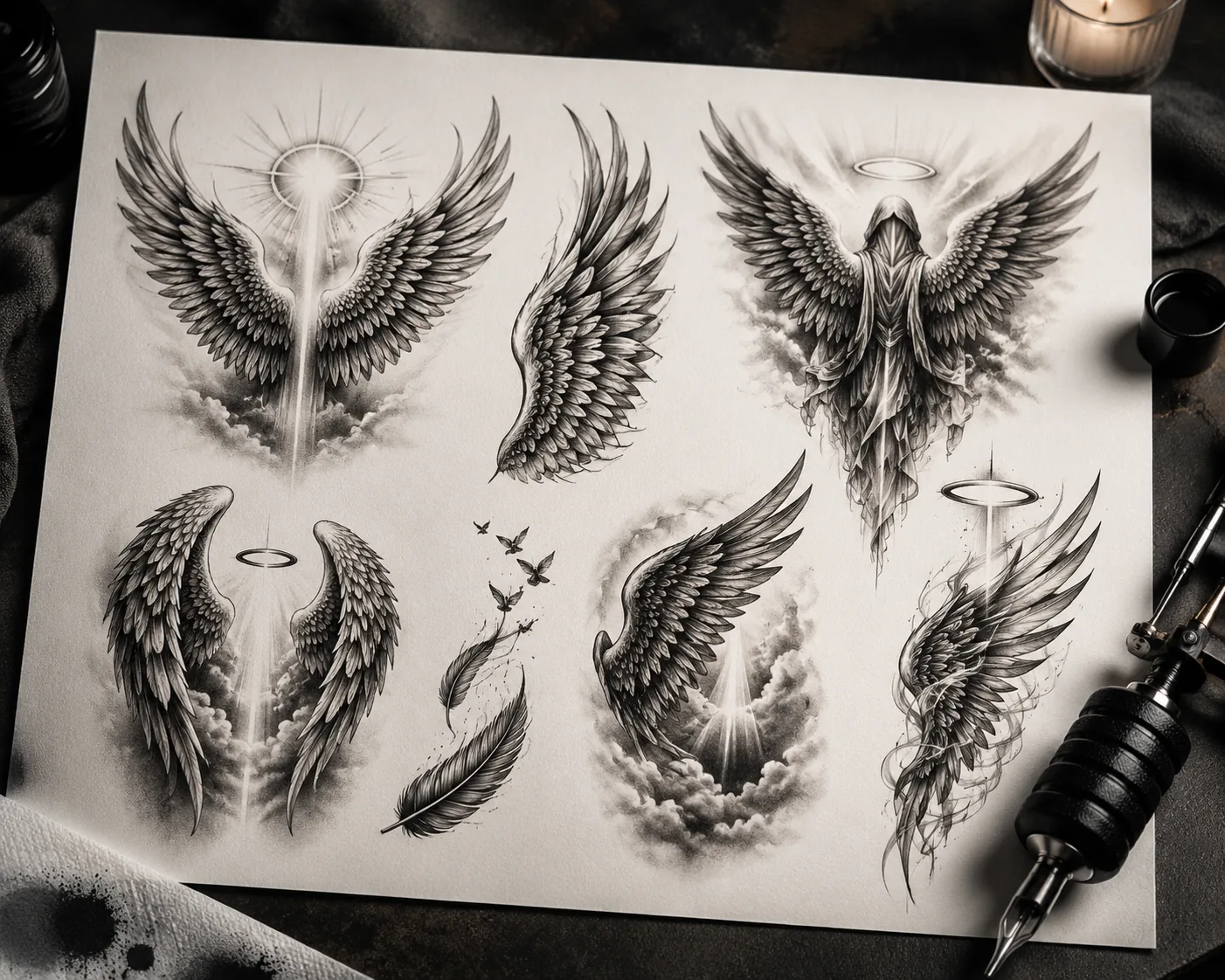
Angel tattoo ideas work because the image can move in several directions without losing the core idea: protection, memory, faith, innocence, grief, guidance or a fall from grace. The hard part is choosing one direction before the tattoo becomes a collage of wings, clouds and vague light.
Quick answer: The best angel tattoo ideas use one clear role: guardian, memorial, cherub, wing, fallen angel, praying angel or fine line symbol. Choose the role first, then pick placement and scale around the detail level.
Finding the Right Angel Role
A guardian angel and a fallen angel should not be briefed the same way. One needs calm structure, upward movement and protection. The other needs weight, shadow and a pose that suggests loss or defiance. If you walk into a shop with only the word “angel,” you will get whatever the artist defaults to, and that default is rarely personal.
Memorial angel tattoos usually work best when the angel is not overloaded with every grief symbol at once. A small wing with a date, a single halo, or a quiet figure near the heart can carry more feeling than a full scene with clouds, script, roses and a clock. The restraint is what makes it feel lived rather than performed.
If faith is the point, tell the artist whether the design should feel devotional, protective or symbolic. A cross, praying hands, halo and scripture all change the tone. The tattoo should match what you actually believe, not just what looked good in a saved image.
Guardian Angels
Guardian angel tattoos often show a figure watching over someone, sometimes with a hand extended or wings curved forward in shelter. These work well on the shoulder blade, upper arm or chest because the placement itself feels like coverage. The risk is stiffness: poses copied from generic stock art look wooden and lifeless. Ask the artist to adjust the weight distribution, the turn of the head, the fold of the robes so the figure feels alert rather than posed.
Fallen Angels
Fallen angel designs need shadow and posture, not just black wings. The figure might be kneeling, looking downward, or caught mid-fall with one wing damaged. These often read as rebellion, loss, or transformation depending on the face and the surrounding darkness. The back, thigh, upper arm and calf give enough room for the narrative to unfold. A fallen angel compressed into a small space usually looks like a dark blob with feathers.
Memorial Angels
Memorial pieces demand the most care. Dates and script need breathing room; crowding them into a corner because you want everything hidden often makes the text illegible within a few years. Consider whether the angel should be a portrait of the person who passed, or a figure representing their presence. Portraits require an artist with specific realism experience. Symbolic memorials, a wing, a halo, a quiet figure with a name, allow more stylists to do meaningful work.
Wing Tattoos and the Scale Problem
Wings are detail traps. Every feather looks clean on a reference sheet, then the design shrinks to fit a wrist and the texture turns into hair. If the wing is the whole tattoo, give it enough length for separate feather groups to read as distinct shapes. A single undifferentiated mass of grey shading is what happens when ambition meets insufficient space.
Back wings can be dramatic, but they are a commitment in time, money and visibility. They also require you to lie still for long sessions face-down, which is harder than it sounds. Collarbone wings feel lighter and more wearable, though the bone proximity makes the tattoo more painful and the healing more finicky. A single wing on the forearm or ankle can be enough if the outline is strong and the shading stays controlled.
Fine Line Wings
Fine line wings work when the artist simplifies. Too many feather lines will heal into a grey fan. Ask to see healed examples, not just fresh photos. The difference between a crisp fine line wing and a muddy one is usually visible at six months, not six days. If the artist cannot show you healed work, that is a signal to pause.
Single Wing vs. Pair
A single wing can suggest protection, flight, or incompleteness depending on the context. A pair spread across the back reads as power and openness. The single wing is easier to place, easier to hide, and often more interesting because it invites the viewer to imagine the rest. Do not default to a pair because it seems complete; choose based on what the asymmetry or symmetry does for your meaning.
Placement and What It Changes
Shoulders and upper arms suit guardian figures because the curve gives the tattoo a natural frame. The back works for larger wings or a full figure. The chest and ribs work for memorial pieces when the meaning is private, though ribs are among the most painful placements and the skin there shifts with breathing, which can affect how the tattoo settles.
Forearms are good for a single wing, a small guardian symbol, or a vertical angel figure. The visibility means you will see it often, which matters for a memorial piece you want to keep present, but also means you cannot hide it for professional settings without long sleeves.
Faces and Size Limits
If the angel has a face, do not go too small. Tiny faces age badly; features blur, expressions flatten into ambiguity. A silhouette, covered face, or back-facing figure is often a cleaner choice for medium placements. If you need a small angel and want emotion, consider hands clasped in prayer, a single wing, or a halo with a name rather than attempting a miniature portrait.
Hands, Fingers, Neck
Hands, fingers and neck placements make the tattoo much more public. This can be fine, but it changes how the symbol is read. An angel on the hand is a statement, not a private comfort. The skin on hands also ages faster and holds ink less predictably. Many artists will not do fingers at all, or will warn you that the tattoo will need significant touch-up within a few years.
Style Choices That Matter
Black and grey realism feels reverent and weighty. It suits memorials, guardians, and any piece where the emotional tone is serious. Fine line feels private, intimate, almost whispered. It works for small wings, halos, and symbolic figures where the delicacy is part of the point. Traditional flash feels bolder and less solemn; an angel in this style reads as Americana, not cathedral. Gothic angel work can turn the same subject into grief, rebellion or judgment depending on the expression and the surrounding imagery.
Pick one visual anchor: wing shape, posture, halo quality, light source, sword, prayer pose, or memorial detail. Let that anchor do the work. The more symbols you add, the less the tattoo says. An angel with a sword, a halo, a banner with text, roses, clouds, and a cross becomes a checklist, not a statement.
Bring references for mood, not a single image to copy. A good artist can build a new angel from the wing shape, pose and placement you want. Your job is to know what you want it to feel like. Their job is to make that feeling visible.
Before You Book
Ask for healed examples of wings or small figure work. Fresh tattoos look sharper and darker than they will in two years. The healed photo tells you whether the artist understands how ink settles and spreads in skin.
Decide whether the angel should read as protective, memorial, faithful or dark before drawing starts. Changing the emotional direction mid-process wastes your time and the artist’s patience. If you are unsure, spend more time with reference images and less time in the consultation chair.
For memorial portraits, bring two or three clear reference photos of your loved one. The face is everything in realism, and your artist needs sharp eyes, not a blurry phone snapshot. If you only have one photo and it is low quality, consider a symbolic memorial instead. A bad portrait of someone you love is worse than a good wing with their name.
What to Remember
Angel tattoos carry real weight. Memorial pieces especially demand a style that matches the emotional intent, not just what looks striking on a screen. The most common regret is adding too many symbols because each one felt important in the moment. The second most common regret is sizing down a design that needed more space to breathe.
Choose placement based on how much room the detail needs and how visible you want the tattoo to be. Choose style based on the feeling you want to live with, not the trend you saw last month. The angel should feel like it belongs to you, not like it belongs to the genre.
Frequently Asked Questions
What does an angel tattoo usually mean?
Angel tattoos often mean protection, guidance, faith, memory, innocence, grief or spiritual support. Fallen angel designs can suggest rebellion, loss or transformation. The meaning depends on the pose, style and symbols you choose, not on a fixed dictionary definition.
Where do angel tattoos look best?
Upper arm, shoulder blade, back, chest, ribs, forearm and collarbone are the safest placements because they give wings and figures enough room to read clearly. Small or highly detailed faces need more space than you might expect.
Are angel wing tattoos good small tattoos?
They can work small, but only if the feather detail is simplified. Very small wings often blur unless the artist uses a clean outline and limited texture. Ask to see healed examples before committing to a small wing design.
How do I keep an angel tattoo from looking generic?
Pick one visual anchor, wing shape, posture, halo, or memorial detail, and let it carry the design. Avoid adding every symbol you associate with the meaning. Bring mood references rather than a single image to copy, and choose an artist whose healed work matches your intended style.









