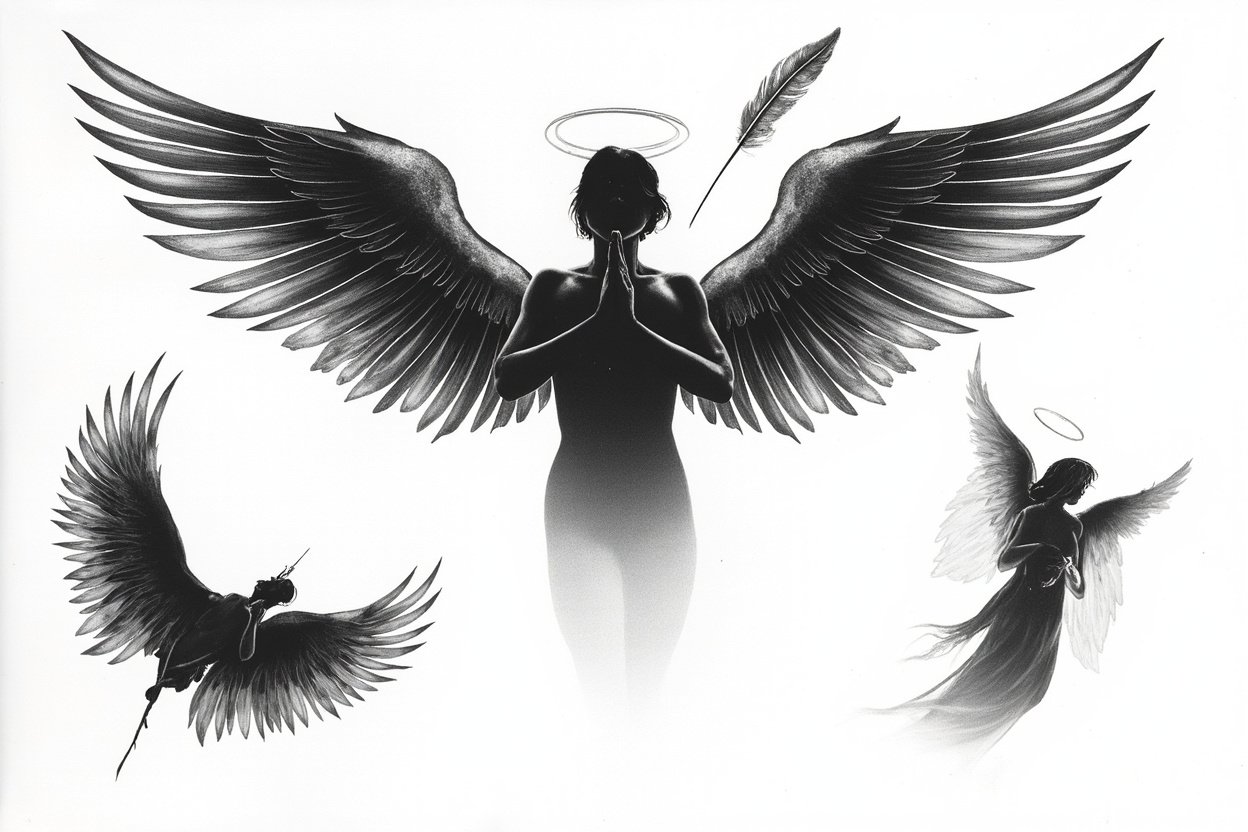
An angel tattoo usually means protection, guidance, faith, or the memory of someone gone. The exact meaning shifts with the figure you choose. A guardian angel reads as comfort and watchfulness, while a fallen angel speaks to struggle, doubt, and lost innocence.
Quick answer: Angel tattoos symbolize protection, divine guidance, faith, and remembrance. Guardian angels and praying angels lean toward grief and watchful comfort. Archangel Michael signals courage and justice. Fallen angels carry rebellion and inner conflict. The figure you pick decides which meaning comes through first.
What an Angel Tattoo Means
Across Jewish, Christian, and Islamic tradition, angels are messengers that move between heaven and earth. That single idea, a being that watches and carries word from a higher place, is the root of almost every angel tattoo meaning people choose today.
Most people who get angel tattoos land on one of a few intentions. Protection, the sense of a guardian presence. Guidance, the belief that something larger is steering a hard moment. Faith, a quiet declaration of belief. Memorial, honoring someone who died. Innocence, often through a childlike cherub. And inner conflict, the pull between virtue and temptation that a fallen angel makes visible.
None of these meanings are fixed by doctrine. They come from how studios and clients describe their own tattoos, which is why the same wings can mean grief on one person and freedom on another. The figure, the posture, and the details you add are what set the reading.
Angel Tattoo Meanings by Figure
Guardian Angel
A guardian angel shows an angel watching, reaching out, or spreading wings over a person, a name, or a symbol. It reads as protection and comfort, the belief that a specific angel, or a loved one now passed, is guiding and guarding you. This is the most common angel tattoo people choose when the goal is reassurance rather than overt religious statement.
Praying Angel
Praying angels sit close to the guardian idea but lean harder into grief. Kneeling, or with hands pressed together, they carry ongoing prayers for the dead and the hope that heaven hears a request for healing or forgiveness. If you want a memorial piece, the praying angel is the figure most studios reach for first.
Archangel Michael
Archangel Michael is usually shown armed, with a sword, armor, or a set of scales, often standing over a defeated dragon or demon. The meaning is spiritual warfare made literal: courage, justice, the strength to face adversity and protect others. In Christian symbolism he stands for divine justice and the fight against evil. This is a demanding piece. The weapon, the wings, and the figure under his feet all need space, so Michael works best on a thigh, back, or full upper arm. Shrink him onto a forearm and the scene loses the contrast that makes it readable.
Cherub or Child Angel
Cherubs carry innocence, love, and purity. They appear in memorial work for children and in pieces about parental love. The risk here is sentimental overload: soft features can turn stiff or doll-like if the artist lacks experience with child portraiture. Look for an artist who has done baby or child portraits before, even in other styles.
Angel Wings Only
Wings without a body suggest protection, remembrance, and transcendence. They frame names and dates well, and they carry the idea of life after death without spelling it out. Feather detail and symmetry matter enormously; uneven wings read as a mistake, not a style choice.
Fallen Angel
The fallen angel droops or breaks its wings, lowers its posture, and carries lost innocence, rebellion, and hard lessons. This is the figure for personal struggle, for questioning faith, for surviving something that changed you. It is not a casual aesthetic choice; wear it only if you want those questions visible on your skin.
Design Choices That Shape the Meaning
Style and Realism
Realistic angel tattoos, often in black and grey, carry gravity and permanence. They suit memorial work and serious religious commitment. Neo-traditional angels, with bold lines and limited color, read more graphic and accessible, less somber. Fine-line cherubs feel delicate and personal but fade faster and require touch-ups. Blackwork silhouettes strip the figure to its outline, making the symbol more important than the individual face.
Color vs. Black and Grey
Black and grey dominates angel work because it carries shadow, depth, and the suggestion of stone or old master painting. Color can work: gold for halos, deep blue for Mary’s robes in certain Madonna-and-angel pieces, red for Michael’s sword. But color ages differently, and bright angel tattoos can look unexpectedly cheerful in a way that undermines grief or solemnity. Discuss aging with your artist before committing to a palette.
Scale and Placement
Angel tattoos need room. Wings need span. Faces need inches to show expression. A four-inch minimum is a practical floor for any figure with facial detail or feather texture. The upper back and chest give the most canvas for wings and full scenes. The forearm works for single figures or small cherubs. The sternum and ribs are painful and limit the artist’s working angle, so complex scenes there cost more in discomfort and often in money. Hands and wrists are poor choices for detailed angel work; fine lines blur and the subject matter deserves more space than a hand can give it.
Historical Roots and Modern Use
Angel imagery in tattooing has no single origin point. Religious iconography in European art, often linked to medieval and Renaissance church painting, shaped how Western tattoo artists draw wings and drapery. Sailor and military tattoo traditions included guardian figures, sometimes angels, sometimes merged with patriotic symbols. The 1990s and 2000s saw a surge in tribal-and-angel hybrid designs that now look dated; the current preference leans toward either full realism or deliberate stylization, not the halfway compromise of that era.
Today, angel tattoos appear across belief systems. Non-Christians wear them as general spiritual symbols. Atheists sometimes choose fallen angels to mark their rejection of religious upbringing. The meaning has become personal rather than doctrinal, which is neither good nor bad, but it means you should know your own reason before sitting in the chair. An artist can draw it, but only you can answer why.
Working With Your Artist
Bring reference that matters to you, not just Pinterest boards. A real photograph of a person you are memorializing, a painting that captured the mood you want, a sketch you made yourself. The more specific your source, the less likely you are to receive a generic angel with your initials swapped in.
Ask to see healed photos, not just fresh work. Angel tattoos rely on smooth shading and fine linework that looks flawless when new but can muddle as skin settles. An artist with five-year healed examples is giving you useful information.
Discuss the eyes. In realistic angel tattoos, the gaze direction and expression carry enormous weight. Downcast suggests mourning or humility. Forward and open suggests vigilance. Closed suggests peace or death. Do not leave this to the artist’s default.
What to Remember
An angel tattoo is a long commitment to a symbol that other people will read quickly and assume they understand. Choose the figure that matches your actual intention, not the one that photographs best. Give it enough space to hold detail. Work with an artist who has done similar pieces before, and ask for healed evidence. Protect the meaning by being specific about posture, gaze, and supporting details. The tattoo will outlast the reason you think you are getting it, so make sure the reason is real.
Frequently Asked Questions
What does a guardian angel tattoo mean?
It means protection, comfort, and the belief that you are being watched over, either by a divine being or by a loved one who has died.
Is an angel tattoo only for religious people?
No. Many people wear angel tattoos as general symbols of guidance, memorial, or personal struggle without holding specific religious beliefs.
What is the best placement for an angel tattoo?
The upper back, chest, and full upper arm offer enough space for detail. Small areas like hands and wrists blur quickly and rarely suit complex angel imagery.
How much does an angel tattoo cost?
In many US markets, detailed angel figures range from $200 to $800, with fine-line cherubs starting around $150. Large custom pieces by experienced artists cost more.
What does a fallen angel tattoo represent?
Lost innocence, rebellion, inner conflict, and the hard lessons that come from questioning faith or surviving difficult personal change.