
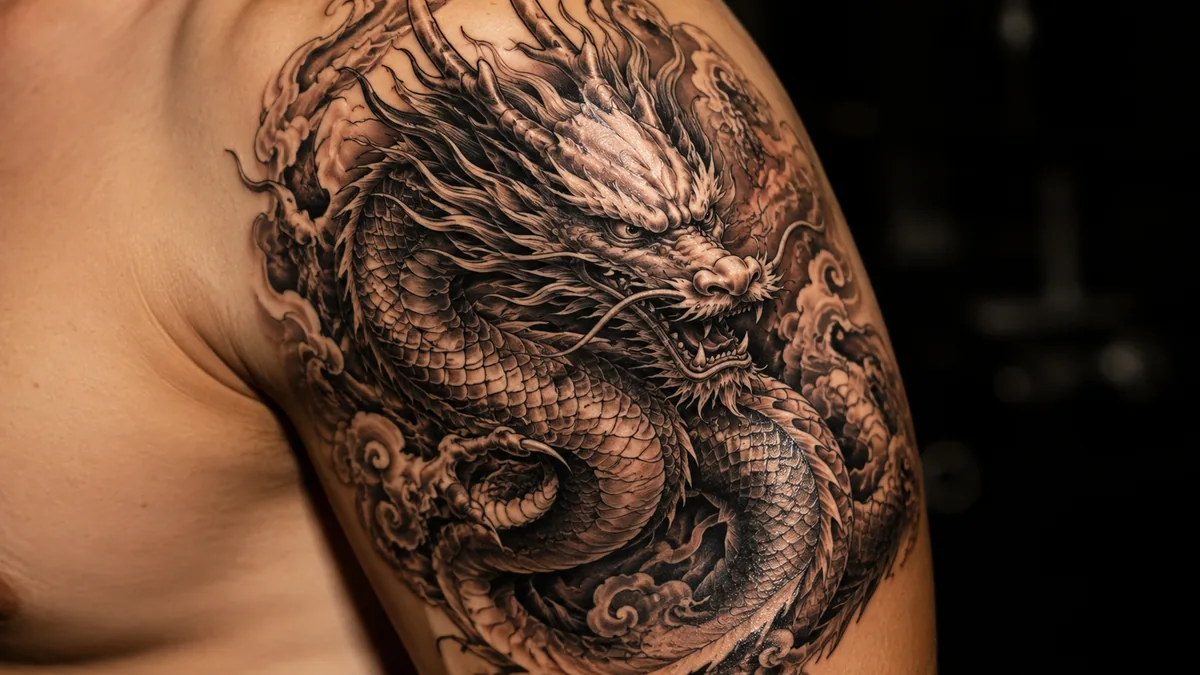
The Chinese dragon is one of the most requested tattoos in any serious shop, and for good reason. It carries real weight, real meaning, and when it’s done right, it reads from across the room. This isn’t just a cool piece of flash. It’s one of the most loaded symbols you can put on your body.
Most people know it looks strong. Fewer people know why. Chinese dragons aren’t the fire-breathing villains of Western mythology. They’re divine, benevolent, and deeply tied to prosperity, natural forces, and personal power. Getting the meaning straight before you sit down matters.
Core Symbolism: What a Chinese Dragon Tattoo Actually Means
Chinese dragons represent power, wisdom, good fortune, and protection. They’re not evil. In Chinese culture, the dragon is a sacred creature tied to the emperor, the heavens, and the forces of nature. People get this tattoo to carry that energy on their skin. It’s a statement of strength, but also of guidance and luck.
A lot of clients come in saying they want it because it looks fierce. That’s fine, but the symbol runs deeper. It also means transformation, ambition, and the balance between strength and wisdom. You’re not just getting a monster. You’re getting a guardian. That distinction changes how you approach the design and the placement.
Historical and Cultural Background
In Chinese art, the dragon doesn't destroy, it delivers rain, luck, and imperial will.
In Chinese history, the dragon was the symbol of the emperor and imperial authority. The five-clawed dragon was reserved strictly for the emperor. Four-clawed versions were for nobility. That distinction still shows up in tattoo culture today, though most artists won’t turn you away for the wrong claw count. Knowing the history just makes your piece more intentional.
Dragons in Chinese mythology control water, weather, and rivers. They’re celestial beings, not earthbound monsters. The long dragon, the most common type rendered in tattoos, is serpentine, clawless or clawed, and wingless. That sinuous, flowing body is what separates it visually and culturally from a Japanese ryu or a Western dragon. Each is its own thing. Don’t conflate them.
Popular Design Variations
The most classic approach is the full coiling body wrapping around an arm, leg, or torso. You’ve got the head as the focal point, the body wrapping through clouds or waves, and the tail fading into a wisp. Some clients go for just the head, rendered large on the chest or thigh. That works if you want impact without a full bodysuit commitment. Both read strong.
Traditional Chinese style uses flat, graphic shapes with heavy outlines, bold fill, and stylized cloud and flame motifs. Neo-traditional adds dimension and more illustrative rendering. Fine line Chinese dragons are trending hard right now but age rougher. Thin lines blur and blow out over time, especially on high-wear zones like fingers, inner arms, and feet. Bold will hold. Keep that in mind.
Color vs. Black and Grey
Color dragons are traditional and pull from a specific palette. Red means good luck and celebration. Gold means prosperity and imperial power. Green ties to nature and vitality. Blue connects to wisdom and healing. Black represents authority and mystery. These aren’t random choices. If you pick a color, know what it signals, because people familiar with the symbolism will read it.
Black and grey Chinese dragons are everywhere in American shops right now and they hold up beautifully over time. A solid black and grey piece with clean whip shading gives you contrast that stays crispy for years. Full color saturated work hits harder fresh but needs touch-ups more often, especially in direct sun. Both are solid choices. It comes down to how much maintenance you’re willing to commit to.
Best Placements and How the Tattoo Ages
The spine is the single best placement for a Chinese dragon. The natural curve of the spine mirrors the sinuous dragon body perfectly, and it’s a low-wear, low-sun-exposure zone. The sleeve, both full and half, is a close second. Thigh and ribs work well for larger pieces too. These placements give the artist room to stretch the design and let it breathe.
Avoid cramming a detailed dragon into a small, high-wear spot. The inner wrist, ankle, and behind the ear are too tight for anything complex. Fine details in those zones blow out within a few years. A dragon that loses its scales and facial definition in the heal process isn’t a dragon anymore. Size it appropriately for the placement, and your piece will still look solid in twenty years.
Pain Levels by Placement
The spine looks incredible but it’s spicy from top to bottom, especially around the lower lumbar. Ribs are rough, no way around it. If you’re getting a full wrap from ribs to hip, plan for the rib section to test you. Outer thigh and outer upper arm are the friendliest zones for large-scale dragon work. Decent amount of muscle and fat, less nerve density.
Inner arm, inner thigh, and the ditch of the elbow get tender fast. If your dragon design wraps through those zones, your artist will probably push through quickly to keep the linework tight before you start moving. Good communication with your artist matters more on a large complex piece than on anything small. Tell them when you need a break. A tense body produces shaky lines.
Who Gets This Tattoo and How to Make It Personal
Chinese dragon tattoos cross every demographic in the shop. Men and women both get them. People of Chinese heritage get them as a cultural connection. People with no Chinese background get them for the symbolism or the aesthetic. Both are legitimate reasons. Nobody owns a symbol, but wearing one with intention always produces a better result than wearing one just because it looks cool.
To make yours personal, think about what specific meaning you want to carry. Protective dragon over a scar or a hard chapter in your life. A dragon rising upward for ambition. A dragon coiling around a peony for fortune and beauty combined. Adding meaningful elements like specific flowers, clouds, water, or flames tightens the narrative. Talk it through with your artist. A good consultation produces a piece that means something every time you look at it.









