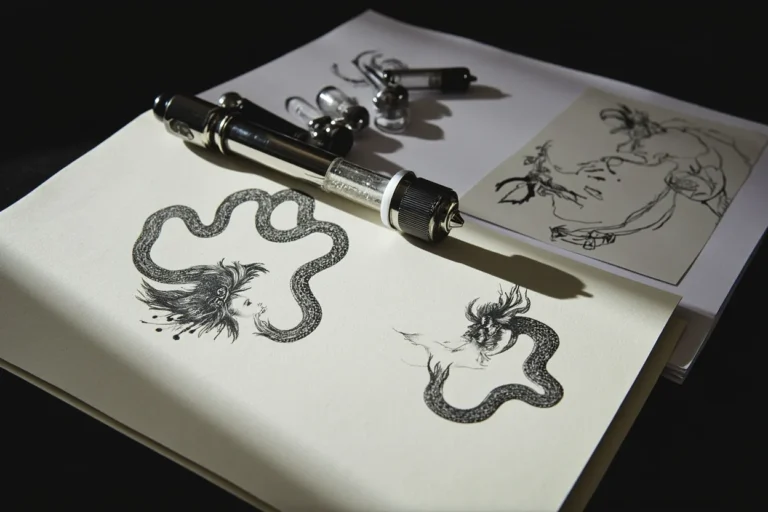
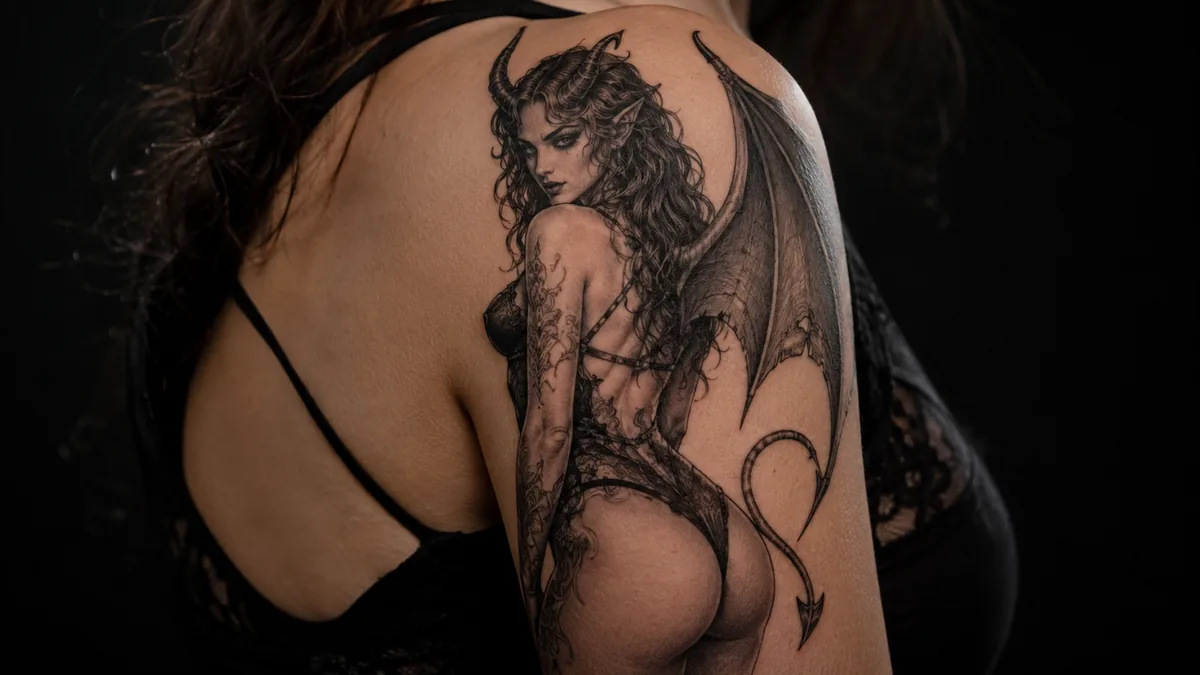
A succubus tattoo depicts a female demon associated in folklore with sexual encounters during sleep. You might choose that figure for temptation, personal power or an interest in horror imagery. Those are possible intentions for a design; the tattoo alone cannot tell an observer which one you mean.
An abstract ‘succubus mark’ needs its own reference. Ask which work, character or artist the mark comes from, and keep the complete image rather than just a cropped symbol. The dictionary definition of a succubus does not supply a single tattoo glyph or a code for every heart, horn or wing in a design.
Core Meaning: Folklore and Personal Interpretation
Temptation and feminine power can be meanings you choose to give the image. Put that intention in your own words: what should the figure be doing, and what part of the design expresses it? A personal reading does not establish the same meaning for someone else’s tattoo.
Succubus and incubus are related terms, but check which one you intend. American Heritage defines the succubus as female and describes the incubus as a spirit said to have intercourse with women during sleep. These are descriptions of imagined creatures, not evidence of a wearer’s gender, sexuality or psychological state.
Folklore and Historical Background
Choose a visual reference before assigning a history to the design.
The American Heritage Dictionary traces the English word through Medieval Latin. That is a word history, rather than a date for the first tattoo or proof that every horned female figure belongs to one tradition. Keep the name of the creature separate from claims about the origin of a particular drawing.
Lilith can also be a specific art reference. The Metropolitan Museum’s record for Lady Lilith, dated 1867 and attributed to Dante Gabriel Rossetti and Henry Treffry Dunn, describes a woman combing her hair and relates the character to Jewish literature. If that is your reference, name the artwork and the features you want to borrow instead of treating Lilith and every succubus image as interchangeable.
From Meaning to Composition
Decide what the figure is doing before adding symbols around her. A standing portrait, a seated figure and a creature in flight give you different poses to compare. Choose the pose in the sketch, then check which details remain visible within it.
If the design is meant to express self-determination or a change in your life, write a short explanation for the artist. You can choose how much of that explanation to share. Decide which part of the meaning you want visible in the image and which part you prefer to keep private.
Design Variations and Style Choices
For a full figure, compare the outline with and without wings, horns or a tail. You may want those features, but agree on their shape and position in the drawing. Check where they overlap the hair, arms or background so the artist can see which parts you want distinct.
A portrait version can concentrate on the face and expression; a full figure also needs a pose and room for any extended wings. Ask to compare those two versions at the size you are considering. Keep the details that matter to your idea, rather than adding every feature from several reference images.
Color vs. Black and Grey
For a color version, choose a limited palette in the sketch. You could compare one accent color with a version that uses several, then decide where that color belongs: the eyes, wings, clothing or background. Mark the areas where you want the accent to recur so they appear in the sketch you approve.
For black and grey, compare the light and dark areas in the draft. Can you distinguish the face from the hair and the wings from the background? Mark any area you want clearer and ask for a revised sketch. That gives you a concrete question to discuss instead of choosing by a style name alone.
Placement and Design Scale
Compare a portrait and a full figure on the location you are considering, such as the upper arm, thigh or back. Include the complete wingspan if the wings matter to the design. Check the outline on the body rather than assuming that a flat reference image will fit unchanged.
Before booking, agree on the proposed location, size and version of the sketch. Ask the artist for examples of comparable healed work and for a quote that states what is included. Keep the sketch and quoted scope together, especially if you revise the size or background.
Choosing a Personal Meaning
You can choose the creature for a personal theme or simply because you want a fantasy design. Explain your own choice if you wish, while leaving other people’s reasons to them. A succubus image does not identify a religious belief, a sexual identity or a history of trauma.
A useful brief might ask for a seated female demon, folded wings, one red accent and no background, with an intended theme of personal independence. Change each part of that example to suit your idea. If you add a moon, a sigil or a character reference, include its source and the meaning you want it to have.