
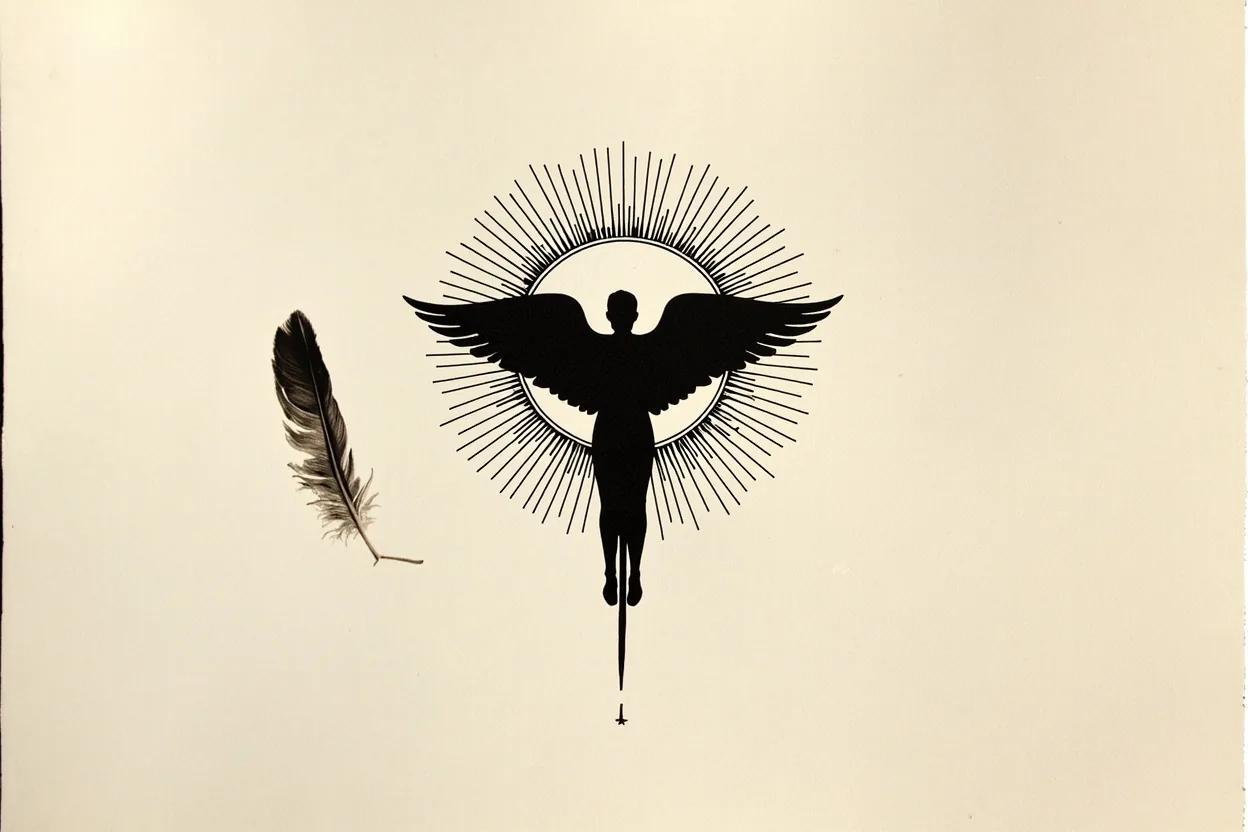
An Icarus tattoo carries the weight of ambition and its consequences. The image of a young man falling from the sky, wings dissolving, has survived for centuries because it speaks to anyone who has reached too far, burned too bright, or refused to stay earthbound. What matters is not the symbol itself but the version you choose to wear.
What the Myth Actually Holds
The story comes from Ovid’s Metamorphoses, written early in the first century CE. Daedalus, the master craftsman, builds wings from feathers and wax for himself and his son Icarus to escape imprisonment on Crete. He warns the boy: fly too low and the damp sea weighs the feathers; fly too high and the sun melts the wax. Icarus, exhilarated, ignores the warning. The wax softens. He falls into the Aegean and drowns.
The myth is often linked to youthful recklessness, but it also carries older threads of parental warning, the limits of human invention, and the punishment for ignoring natural boundaries. Some later readings, including twentieth-century interpretations, have reclaimed Icarus as a figure of necessary daring, the price of flight worth paying.
A tattoo based on this story works best when you know which thread you are pulling. Ambition? Warning? Grief? The refusal to apologize for wanting more? The same image can carry opposite meanings depending on pose, style, and what you leave out.
Common Meaning Angles
Ambition and its cost. The most direct reading: you reached, you fell, you survived to tell the story. The tattoo marks the attempt as honorable even in failure.
Warning against pride. Some wear Icarus as a reminder to check altitude, to listen to the cautions they are prone to ignore. The image becomes a private checkpoint.
Freedom over safety. The opposite reading: the fall was worth the flight. The tattoo celebrates the choice to risk rather than remain grounded.
Youth and its limits. Often chosen after a major transition, leaving a structured path, recovering from a crash, mourning a period of believing in unlimited possibility.
Design Directions That Hold Up
The silhouette of a falling figure, arms spread, wings fragmenting, is the most recognizable and most emotionally direct version. It needs space to read. A small falling Icarus on a wrist or ankle often becomes a grey blur within a few years. The diagonal lines of the body and the wing fragments require enough size to maintain their separation.
A wing paired with sun imagery is subtler. It suggests aspiration without depicting collapse. This version works better for smaller scales and for placements where a full figure would feel crowded. The risk is vagueness: without the falling body, the image can read as generic angel or eagle imagery unless the style or surrounding context clarifies the reference.
Single broken feathers or melting wax drops are the most personal and least mythologically literal. They invite question and explanation. They also age well, since simple shapes with clear outlines hold their definition better than detailed figurative work.
Traditional tattoo styling, bold lines, limited color, strong black fill, gives Icarus imagery graphic power and longevity. Fine line approaches can feel ethereal but demand larger scale and simpler composition to avoid the softening that happens as ink settles and skin changes.
What to Avoid
Extended, glorious wings without the fall element strips the image of its meaning. You are left with a powerful angel, not a warned and fallen boy. If you want triumph, consider whether another symbol serves you better. Icarus is specifically about the moment after triumph collapses.
Too many supporting symbols dilute the story. A sun, an ocean wave, a quote, a date, and a constellation together compete for attention. Choose one addition at most, or none.
Placement and Scale
The vertical fall of Icarus suits vertical placements: ribs, side of torso, outer thigh, calf, forearm lengthwise. The diagonal composition can also follow the curve of a shoulder or the slope of a chest piece.
Visible placements, forearm, wrist, hand-adjacent areas, neck, invite conversation. This suits you if the meaning is public and you are comfortable explaining it. Private placements, rib, hip, inner arm, upper back, sternum, let the tattoo remain yours. The sternum in particular suits the falling figure, with the body descending toward the abdomen, though pain levels there are significant and the area heals slowly due to movement and friction.
Before committing, ask your artist to apply the stencil at the exact intended size and live with it for a day. Screen mockups distort scale. A design that looks balanced on a monitor often feels too small or too large once it occupies real skin.
Working with the Body
The direction of fall matters. A figure falling with the limb’s natural line feels integrated; a figure crossing against the limb’s axis creates tension. Neither is wrong, but the choice should be deliberate. Discuss with your artist whether the sun sits above the figure, beside it, or is implied off-frame. Each arrangement changes the emotional timing: before the fall, during the fall, or the aftermath.
Making It Yours
The strongest Icarus tattoos contain one personal decision that narrows the general symbol to a specific story. This might be a direction (falling toward something, away from something), a style reference (Baroque drama, Greek vase simplicity, modern graphic reduction), a color choice (gold for the sun and wax, blue for the sea, red for warning), or a placement tied to a particular memory or body history.
Bring your artist mood references rather than copies. A photograph of a painting you respond to, a piece of music, a poem, these communicate emotional intent without restricting the artist to reproducing another tattoo. The best result comes from collaboration: your meaning, their translation into line and shadow.
Ask for two versions in early consultation: one stripped to essentials, one with more atmosphere. The simpler version almost always ages better. The more elaborate version may photograph more impressively on the day it is finished. Choose based on which quality matters more to you over years, not hours.
Before You Book
Is this a good first tattoo?
It can be, if the design is not too small and the placement matches your comfort with visibility. A first tattoo often carries extra emotional weight, and Icarus as a symbol of failed flight can feel uncomfortably prophetic if you are already anxious about the process. Consider whether the meaning supports or amplifies your nerves.
Will people assume it is an angel?
Some will, especially with wing-focused designs. If this bothers you, include the sun, the falling posture, or enough context in surrounding imagery that the reference becomes clear. Alternatively, accept the ambiguity. Not every tattoo needs to be immediately legible to strangers.
How do I brief an artist well?
Lead with the meaning that matters most: ambition, warning, freedom, or grief. That choice should shape pose, line weight, and negative space. Ask how the design reads from ten feet away, not just in close-up photographs. A tattoo spends most of its life seen at conversational distance, not under studio lighting.
What to Remember
An Icarus tattoo is not a badge of failure or a feature of daring. It is a reminder that flight and fall are the same story seen from different moments. The symbol has lasted because humans keep repeating the pattern: reaching, rising, melting, surviving. Your version should capture the moment that belongs to you, the warning, the attempt, the descent, or the quiet after hitting water.
Choose clarity over decoration. Choose the fall that means something specific. Choose an artist who understands that the best myth tattoos do not illustrate stories but translate them into personal, permanent form.
Frequently Asked Questions
What does an Icarus tattoo symbolize?
Ambition and its cost, the danger of pride, the value of risk, or youth and its limits. The meaning depends on which part of the myth you emphasize: the flight, the warning, the fall, or the refusal to stay grounded.
What is the best placement for an Icarus tattoo?
Vertical placements suit the falling figure: ribs, thigh, calf, forearm, side of torso. The design needs enough space to maintain the separation between body, wings, and sun elements.
How do I keep an Icarus tattoo from looking generic?
Include the fall, not just glorious wings. Add one personal element: a direction, a style reference, a color, or a placement tied to your story. Avoid cluttering with multiple symbols.
Does an Icarus tattoo work as a first tattoo?
Yes, if the scale is large enough to age well and the meaning supports rather than amplifies any anxiety about the process. Avoid very small or highly detailed versions for a first piece.
What style works best for Icarus imagery?
Traditional and bold illustrative styles age most reliably. Fine line can work at larger scales with simpler composition. The key is strong outline and enough contrast to read from a distance.









