The beetle is one of those tattoos that means more than it looks like it should. Small insect, big symbolism. Across cultures and centuries, beetles have carried serious weight as symbols of transformation, protection, endurance, and rebirth. That’s a lot of meaning packed into something you can fit on a wrist.
Most people come in with a rough idea of what the beetle represents to them personally, but the full picture is deeper and wider than most expect. If you’re drawn to the Egyptian scarab or a simpler naturalistic beetle, here’s what this tattoo actually means and how to make it land right on skin.
Core Symbolism: What a Beetle Tattoo Means
The beetle’s most universal meaning is transformation. These insects go through complete metamorphosis, and that life cycle maps directly onto personal change, hard seasons survived, and coming out the other side different. People who’ve been through addiction recovery, loss, illness, or major life shifts gravitate toward this one for exactly that reason. It reads as proof of endurance.
Beetles also carry strong associations with protection and resilience. Their hard exoskeleton is basically armor. That physicality translates into a tattoo meaning toughness, self-reliance, and the ability to take a hit and keep moving. Some also tie it to luck and good fortune, especially in European folk traditions where certain beetles spotting you was considered a blessing.
The Scarab: Ancient Egyptian Roots
Something that rolls dung for a living became the symbol ancient Egyptians put on their hearts.
If you’re getting a beetle tattoo and want historical depth, the scarab is where the real weight lives. In ancient Egypt, the scarab beetle, specifically the dung beetle Scarabaeus sacer, was sacred to the sun god Khepri. Egyptians watched dung beetles roll balls of dung across the ground and saw the sun being pushed across the sky. That connection made the scarab a symbol of the sun, creation, and the cycle of life and death.
Scarab amulets were placed on mummies to protect the heart during the weighing of the soul. They were one of the most commonly worn protective symbols in ancient Egyptian culture. When people get a scarab tattoo today, they’re tapping into that lineage of protection, solar energy, and the soul’s journey. It’s not borrowed symbolism. It’s genuinely earned.
Other Cultural Takes on Beetle Symbolism
Outside of Egypt, beetles show up with meaning in several other traditions. In Native American cultures, beetles are often associated with patience and steady progress. Some tribes see them as symbols of the earth, grounding, and connection to the natural world. In parts of Asia, beetles are tied to good luck, strength, and even warrior spirit, particularly the stag beetle, which was admired for its impressive horns and fighting ability.
In European folk beliefs, a ladybug landing on you was a sign of good luck, and while the ladybug is technically a beetle, that luck association extends into beetle imagery more broadly. Japanese tattoo culture has a long tradition of insects as subjects, with beetles representing strength and tenacity. The stag beetle in Japanese art is a classic, showing up in woodblock prints long before it became a tattoo staple.
Design Variations and Style Options
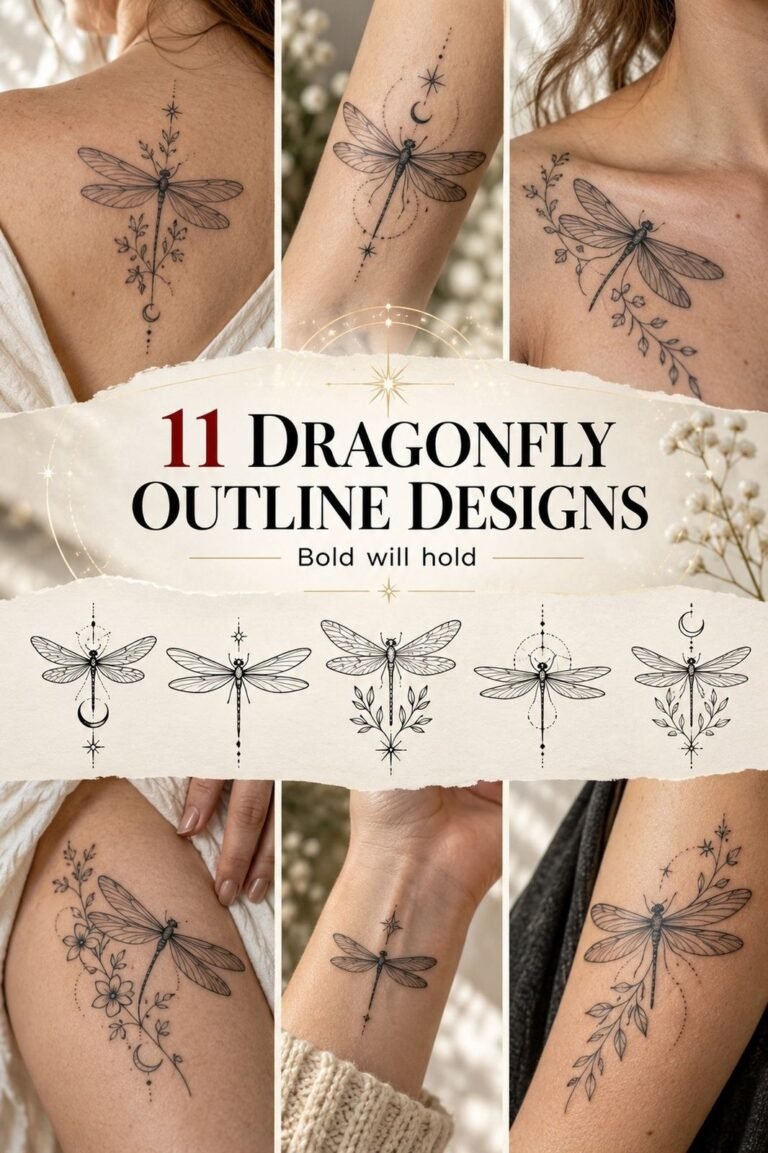
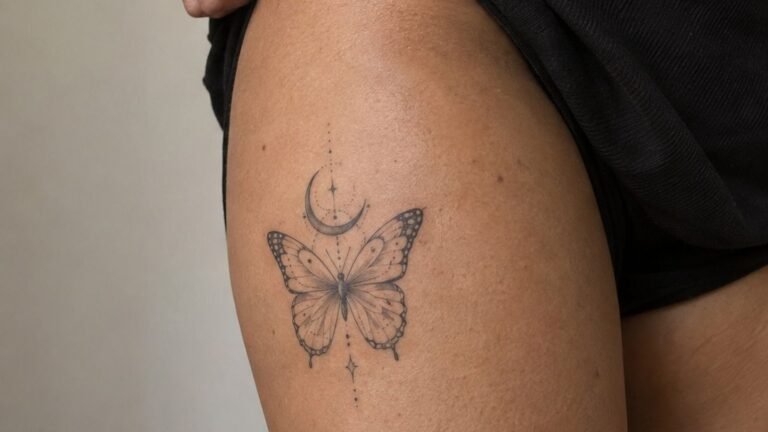
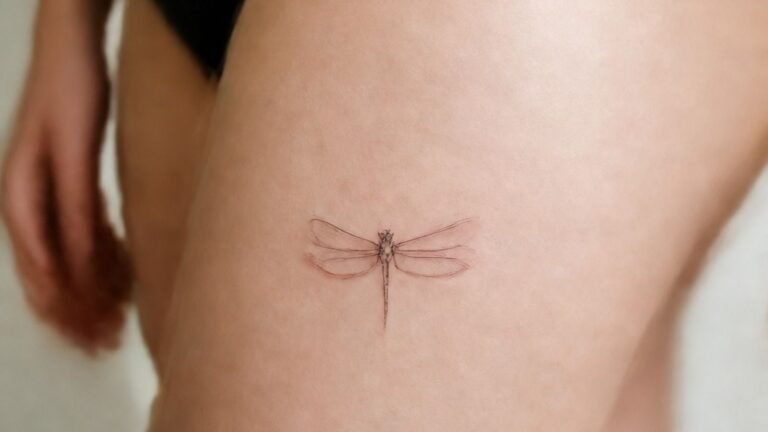
Scarab designs are the most popular and work across styles. Traditional American scarabs with bold outlines and limited palette look sharp and age incredibly well. Neo-traditional versions add dimension with rich color fills and detailed linework. Fine line scarabs have blown up recently, pulling the design into a more delicate, illustrative space that works well for smaller placements. The fine line look is clean, but know that thin lines in high-wear areas will soften faster than bold work.
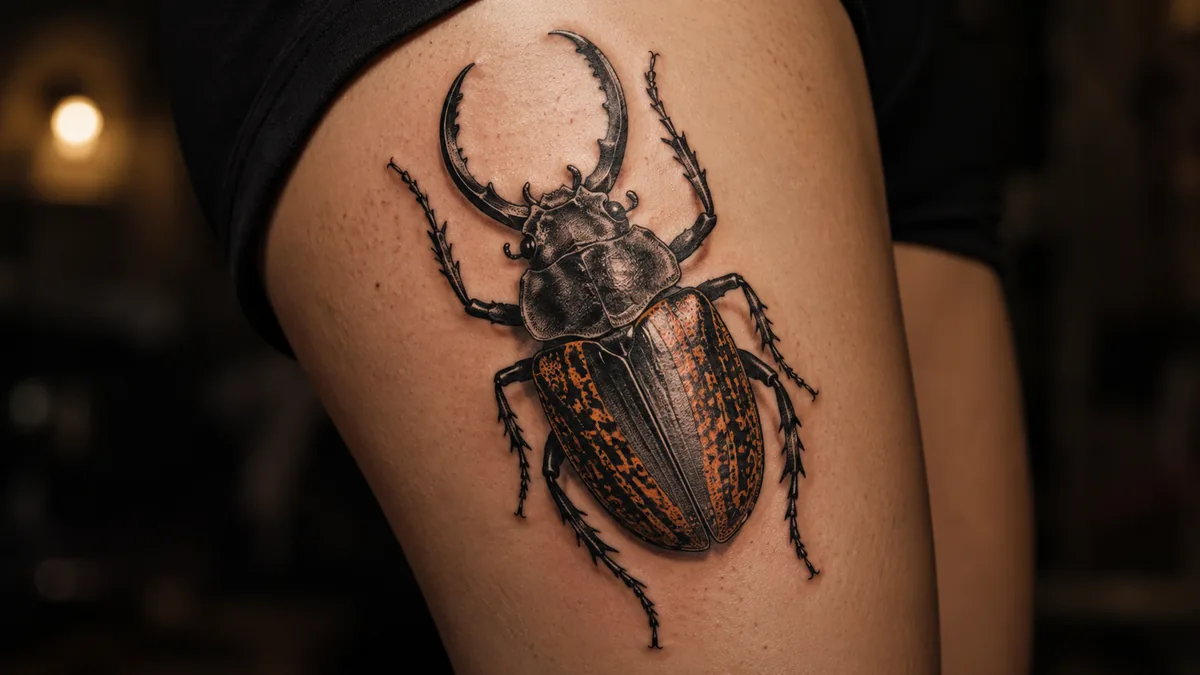
Naturalistic beetles are another direction entirely. A hyper-realistic rhinoceros beetle or stag beetle in black and grey can be a full sleeve focal piece or a strong standalone. Geometric beetle designs incorporating mandalas or sacred geometry are common, leaning into the beetle’s symbolic weight with structured linework. Watercolor beetles show up too, though that style needs a solid outline to hold its shape over time. Bold will hold. Always.
Color vs. Black and Grey
Color beetle tattoos are visually stunning when done right. Metallic greens, deep blues, iridescent purples, these are real beetle colors and they translate beautifully into saturated ink. A jewel-toned scarab in rich emerald green with gold accents looks incredible fresh and, if placed right and cared for, holds that vibrancy for years. Jewel tones in particular are a natural fit here since real beetles genuinely look like living gemstones.
Black and grey is the other dominant approach, and honestly it’s hard to beat for longevity and versatility. A well-executed black and grey beetle with whip shading and crisp linework reads from across the room and ages gracefully. The depth you can get with a grey wash on a beetle’s exoskeleton mimics the dimensional quality of the real insect. Either direction works. The choice usually comes down to how bold you want the piece to sit on your skin.
Placement, Pain, and How It Ages
Beetles fit a wide range of sizes, which gives you a lot of placement flexibility. Small beetles work on fingers, behind the ear, and on the inner wrist, but fingers and hands are high-wear zones. Ink migrates and fades faster there. Expect touch-ups. The inner wrist is better but still exposed to sun and friction. For fine line work especially, go for protected spots: inner upper arm, sternum, ribs, back of the calf. These areas give the ink the best chance to stay crisp.
Mid-size and large beetles own the forearm, upper arm, thigh, and back. A detailed stag beetle on the forearm is a classic placement that heals nice and stays readable. The ribs and sternum are spicy but popular for naturalistic pieces where the rib cage adds an anatomical layer to the design. Knee and elbow ditches are notorious for blowout risk and inconsistent healing, so avoid placing the main focal detail there. Bold outlines and solid fills will always outlast fine line work regardless of placement.
Who Gets Beetle Tattoos and How to Make It Personal
People who get beetle tattoos tend to fall into a few clear camps. Entomology fans who just genuinely love insects and want accurate, beautiful renderings of real species. Egyptology enthusiasts who connect with the scarab’s cultural and spiritual history. And people marking a period of transformation, survival, or renewal in their own life. The symbolism is flexible enough to hold personal meaning without needing a script to explain it.
The strongest beetle tattoos get personal through specificity. Choose a species that resonates, the rhinoceros beetle for strength, the scarab for protection and rebirth, the firefly beetle for illumination and hope. Add elements that connect to your story: birth flowers, geometric frames, specific colors that carry meaning to you. Talk to your artist about incorporating the beetle into a larger composition if you want it to grow later. A well-placed beetle with a clear concept behind it is a tattoo you’ll never second-guess.